






In This Article (10 sections)
2 Fights 2 Tight Spaces Early Access Trailer, Story, and Espionage Setting
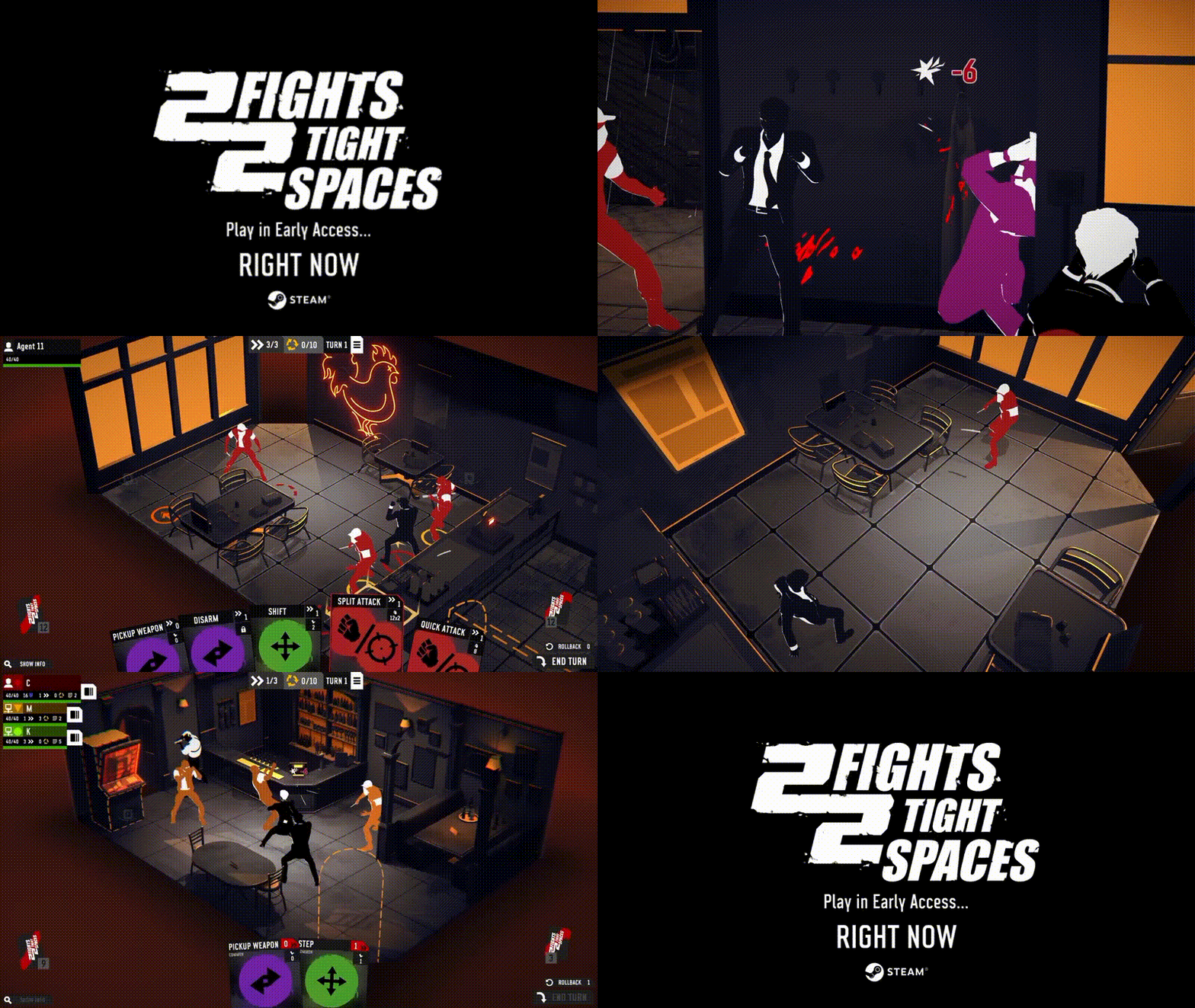
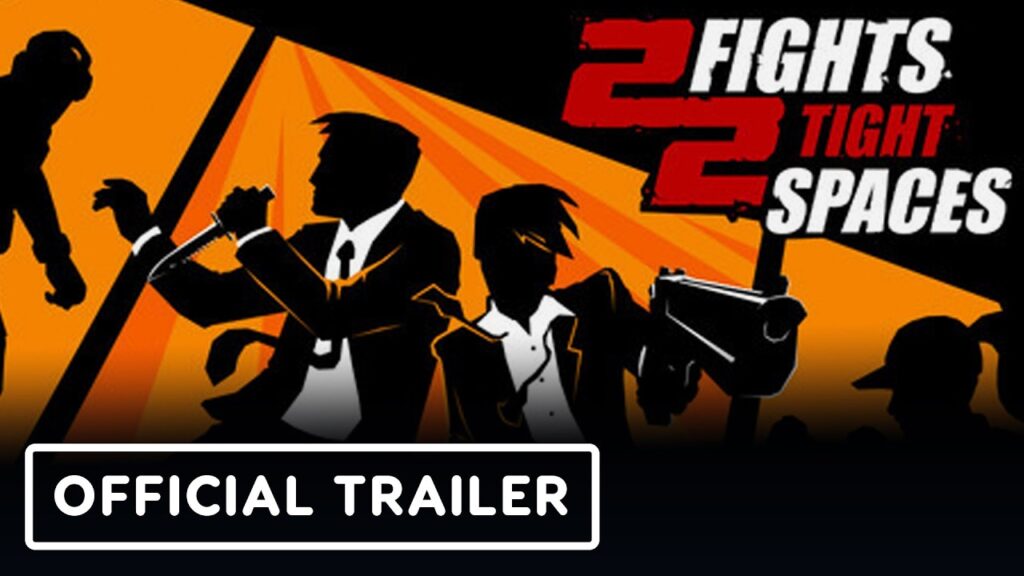
The 2 Fights 2 Tight Spaces Early Access launch trailer presents the sequel as a tactical evolution of the systems introduced in Fights in Tight Spaces. Turn-based encounters still unfold inside compact environments where every square matters, but the sequel places greater emphasis on card synergy, environmental interaction, cooperative planning, and flexible strategies that can change according to the conditions of each fight.
Three ideas define the trailer: deeper tactical decision-making, expanded cooperative mechanics, and a broader progression structure designed to support repeated playthroughs. Rather than merely increasing the number of attacks or enemies, 2 Fights 2 Tight Spaces makes positioning and adaptation more important. Team composition, enemy behavior, randomized card draws, and environmental layouts can all change how an encounter develops, preventing one sequence of moves from solving every situation.
The trailer maintains the minimalist visual identity associated with the series. Clean interface elements communicate available actions and enemy intentions, while stylized animations and sharp impact frames give successful attacks a cinematic quality. This presentation is especially important in a tactical game because players must understand where characters are standing, what each card will do, and how an action will affect the surrounding space before committing to a move.
The story continues the blend of espionage, covert operations, and choreographed action established by the original game. Agents are deployed into office complexes, industrial zones, underground facilities, and confined urban locations where careful planning is more effective than uncontrolled force. These spaces are not chosen only for their visual themes. Their narrow layouts reinforce the central idea that controlling movement and positioning can determine the outcome of a mission.
Narrative progression is communicated through mission structure, changing objectives, environmental details, and character interactions between operations rather than lengthy exposition. Competing factions and more complicated organizations increase the scale of the conflict, turning individual assignments into parts of a wider campaign with escalating stakes. The player is no longer simply resolving disconnected tactical puzzles but participating in an evolving operational story.
Steam Early Access, Gameplay Changes, and Two-Player Co-Op
2 Fights 2 Tight Spaces launched into Steam Early Access so Ground Shatter could develop its tactical systems alongside the community. The available PC version contains a substantial part of the intended gameplay loop, while future development is expected to expand missions, cooperative features, enemy variety, cards, and balance. Early Access gives players an opportunity to experience the core design while providing feedback that can influence how the final version develops.
Community testing is particularly valuable for a game that combines deck-building with spatial strategy. A card that appears balanced in isolation may become excessively powerful when combined with another effect, a particular stance, or a favorable environmental position. Early player data can reveal dominant strategies, weak cards, pacing problems, and difficulty spikes that may not become obvious during internal testing.
The sequel retains the turn-based foundation of Fights in Tight Spaces but expands the amount of planning required across several turns. The original game frequently presented encounters as compact tactical problems centered on one operative. The sequel encourages players to think about card combinations, environmental control, team positioning, enemy responses, and future resource needs at the same time.
Enemy behavior has also become more reactive. Opponents respond more intelligently to positioning, making it important to read their intentions and consider how they may restrict movement on the following turn. The adjusted pacing reduces unnecessary downtime between major decisions without removing the deliberate planning that defines the combat.
Cooperative PvE is the largest structural addition. Two players can work together within the turn-based framework, coordinating movement, attacks, card use, and resource management against shared enemy threats. Instead of one person controlling every part of the plan, each player must understand both an individual role and the needs of the wider team.
Communication consequently becomes one of the most important cooperative tools. Players must discuss which enemy should be controlled first, where each operative should move, which cards should be preserved, and how attacks can be chained without blocking a teammate. The PvE format keeps that coordination focused on shared objectives rather than direct competition, giving the sequel a collaborative tactical identity alongside its solo experience.

Polymorphic Cards, Environmental Combat, and Agent 11’S Return
The deck-building system remains the foundation of 2 Fights 2 Tight Spaces, but cards are designed to operate with greater flexibility than simple attacks or defensive commands. The sequel introduces interactions described as polymorphic mechanics, meaning a card can change its function or value according to positioning, stance, environmental conditions, or the current combat situation.
This makes deck construction less dependent on creating one rigid sequence that must be repeated whenever the correct cards appear. Players instead build adaptable frameworks containing options that can solve several types of problems. A card that is ineffective from one position may become essential after a stance change, environmental interaction, or movement effect creates the correct conditions.
The flexibility encourages experimentation with combinations that may initially appear weak or unrelated. Players must consider not only the printed purpose of a card but also how its value changes when paired with another effect. Strong decks are therefore defined by their ability to respond to unexpected developments rather than by one powerful combination that works in every encounter.
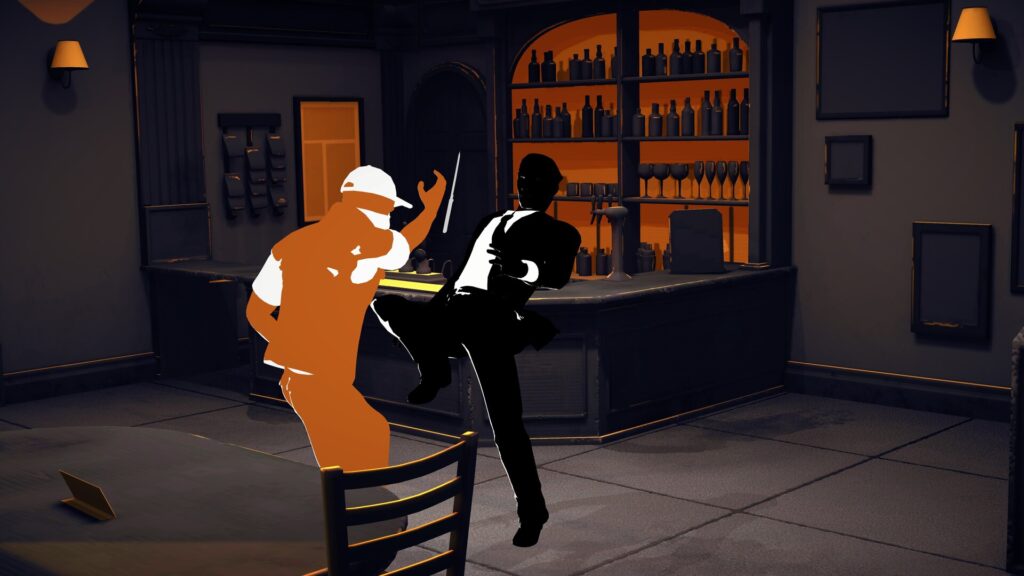
Environmental combat supports that adaptability by treating the battlefield as an active part of the deck-building system. Walls, tables, barriers, and other interactive objects can influence movement, restrict escape routes, or alter the outcome of attacks. Positioning an enemy near an obstacle may increase the effectiveness of a strike, prevent movement, or create an opening for another action.
Layouts are more variable, allowing familiar cards to produce different results according to the structure of the room. Players must evaluate where enemies are standing, which routes remain open, and how surrounding objects can be used to redirect the flow of combat. Space itself becomes a weapon, and controlling it can be more valuable than dealing the greatest possible amount of immediate damage.
Agent 11 returns as the recognizable operative connecting these tactical systems to the story. Their progression reflects the player’s increasing knowledge of cards, positioning, and combat interactions, while more complicated missions place that growing mastery inside an escalating narrative. Agent 11 consequently functions as more than a neutral avatar. The character provides continuity with the original game and gives the sequel’s abstract strategy a consistent human focus.

Enemy Factions, Cooperative Roles, Card Upgrades, and Combat Stances
The Early Access version introduces enemy factions with distinct behavior and tactical priorities. These groups are not merely visual variations using identical attacks. Their differences are intended to force players to reconsider deck composition, positioning, and resource use according to the opponents present in a mission.
Some enemies specialize in aggressive close-range pressure. They can reduce the amount of safe space available and force players to use defensive movement, crowd control, or immediate damage before becoming trapped. Other enemies emphasize ranged control, threatening important positions from a distance and limiting where the operatives can move safely. A strategy that performs well against one faction may become unreliable against another.
This variety prevents one deck or combat routine from dominating every mission. Players must maintain enough flexibility to deal with enemies that approach, attack, and control space in different ways. The challenge comes from identifying a faction’s priorities quickly and adapting before its preferred tactics take control of the room.
Online cooperation adds another level to those decisions because the two players must manage both immediate actions and long-term resources together. One operative may specialize in controlling enemy positions, creating safer movement lanes, or interrupting attacks, while the other concentrates on high-damage combinations. These roles do not need to remain fixed, but assigning responsibilities can help the team avoid wasting cards or competing for the same tactical space.
Different divisions of responsibility can make cooperative sessions feel substantially different. Two aggressive players may attempt to remove threats before the enemy can respond, while a more balanced team may combine defensive control with carefully timed damage. Discussing future turns becomes part of the gameplay because one action can determine whether a teammate’s planned card remains usable.
Card upgrades allow the deck to develop over time by increasing effectiveness and opening additional tactical possibilities. Stances deepen those upgrades by changing how certain cards behave according to the operative’s current combat posture or state. Switching stances can create new combinations, improve defensive options, or make a previously unsuitable card useful in the present situation.
Weapon transitions provide another form of adaptation. Players can adjust their available tools according to mission requirements instead of depending on one unchanging loadout. Combined with card upgrades and stances, these transitions create a combat system in which the best option can change repeatedly during a run.
Rogue-Lite Progression, Early Access Roadmap, and Ground Shatter’s Development Plan
Replayability is supported by rogue-lite progression that combines temporary run conditions with persistent growth. Certain elements reset after a run, but players continue unlocking cards, abilities, and tactical options that expand what can appear or be used during future attempts. Failure can therefore provide knowledge and progression rather than simply returning the player to an unchanged starting point.
Randomized mission structures further reduce predictability. Encounter layouts, enemy combinations, available cards, and tactical conditions can introduce new variables into familiar systems, encouraging adaptation rather than memorization. A successful strategy from one run may need to be modified when the same type of mission presents different opponents or environmental constraints.
The Early Access roadmap is focused on expanding and refining the experience through additions such as:
- New missions
- Additional enemy types
- Expanded cooperative features
- Deeper deck-building options
- Continued balance adjustments
Balancing will remain especially important because solo and cooperative play create different tactical conditions. A card that feels fair when controlled by one player may become considerably stronger when two players coordinate complementary effects. Ground Shatter must also ensure that cooperative strategies remain rewarding without making solo play feel incomplete or unnecessarily restrictive.
The developer chose Early Access to receive feedback while these systems are still flexible enough to change. Community data can help identify ineffective cards, dominant combinations, confusing cooperative rules, overly difficult encounters, and sections where the pacing slows unexpectedly. These observations allow the studio to revise interconnected systems before they become fixed in the final release.
Ground Shatter’s approach treats Early Access as an active development process rather than a simple opportunity to sell an unfinished game. The objective is to improve card synergy, enemy behavior, cooperative mechanics, mission pacing, and difficulty through continued testing, giving the final release a stronger and more balanced tactical foundation.

Is 2 Fights 2 Tight Spaces Worth Playing in Early Access?
2 Fights 2 Tight Spaces offers a worthwhile Early Access experience for players who enjoy tactical combat, deck-building, environmental strategy, and cooperative planning. Its central systems already provide meaningful decisions because cards, positioning, enemy behavior, and battlefield objects must be considered together rather than treated as separate mechanics.
The game is still evolving, so players expecting a completely finished campaign, finalized balance, or the full selection of planned content may prefer to wait. Early Access can include changing cards, adjusted enemy behavior, revised progression, incomplete features, and difficulty that continues to be tuned through updates.
Players comfortable with that development process receive the opportunity to explore new strategies and influence how the game changes. The combination of polymorphic cards, reactive environments, faction-specific threats, cooperative roles, stances, weapon transitions, and rogue-lite progression already gives the sequel a clear identity. Its strongest appeal is not simply that it offers more content than the original, but that it creates more relationships between every tactical system.

Frequently Asked Questions (FAQs)
- What is 2 Fights 2 Tight Spaces about?
2 Fights 2 Tight Spaces is a tactical deck-building game centered on turn-based battles inside compact environments. Players use card-based actions, careful positioning, environmental objects, and strategic planning to complete espionage missions while dealing with enemies that can control different parts of the battlefield. - Is the game single-player or multiplayer?
The game supports both single-player gameplay and cooperative PvE multiplayer. Solo players can manage the tactical decisions themselves, while co-op allows two players to coordinate their actions, cards, movement, and resources against shared enemy encounters. - What platforms is the game available on?
The Early Access version is currently available on PC through Steam. The provided material does not confirm additional platforms, so console availability should not be assumed unless Ground Shatter announces it separately. - How does co-op mode work?
Two players work together within the turn-based combat system, with each participant contributing to movement, card use, positioning, and threat management. Effective teams communicate before acting so that one player’s move creates an opening for the other instead of blocking a planned attack or consuming a needed resource. - Is it necessary to play the first game?
No. The sequel is designed to be accessible to new players while expanding the systems established by Fights in Tight Spaces. Returning players will recognize the turn-based deck-building foundation and Agent 11, but newcomers can learn the mechanics without completing the original game first. - What makes combat different from other strategy games?
Combat combines deck-building with precise spatial positioning in small environments. Cards determine available actions, but their effectiveness depends on where characters are standing, how enemies intend to move, which objects are nearby, and whether the player can control the limited space safely. - Are there different enemy factions?
Yes. The game introduces multiple factions with distinct behaviors and tactical priorities. Some enemies create close-range pressure, while others use ranged control to restrict movement, forcing players to adjust their decks and strategies according to the opposition. - Does the game include progression systems?
Yes. Rogue-lite progression allows players to unlock additional cards, abilities, upgrades, and tactical options over time. Some run-specific elements reset, but persistent unlocks gradually expand the strategies available during later attempts. - Will the game receive updates during Early Access?
Yes. Ground Shatter plans to continue updating the game with additional missions, enemy types, cooperative features, deck-building options, and balance changes. Player feedback will help the developer identify dominant strategies, pacing problems, difficulty spikes, and systems requiring further refinement. - Is it beginner-friendly?
The game has a learning curve because players must understand cards, positioning, enemy intentions, environmental interactions, and resource management. However, the mechanics are introduced gradually, giving newcomers time to understand the tactical foundation before facing more complicated factions, combinations, and cooperative decisions.
Conclusion
2 Fights 2 Tight Spaces represents a significant evolution in tactical deck-building design, combining environmental strategy, cooperative gameplay, and modular card systems into a cohesive Early Access experience. Its emphasis on adaptability, replayability, and systemic depth positions it as a strong contender in the modern strategy genre. While still in development, its foundation already demonstrates a high level of design ambition and mechanical refinement.
Sources and Citations
- Ground Shatter Developer Updates and Official Communications on Early Access Release
https://store.steampowered.com/app/3734890/2_Fights_in_2_Tight_Spaces/ - Ground Shatter / Panic Department Official Press Release – Early Access Launch
https://panicdepartment.com/news - Steam Early Access Listing and Product Page Information for 2 Fights in 2 Tight Spaces
https://store.steampowered.com/app/3734890/2_Fights_in_2_Tight_Spaces/ - Official Early Access Launch Trailer (YouTube)
https://www.youtube.com/watch?v=ulEzQDTiVNs - Steam Community – Official Announcements and Developer Posts
https://steamcommunity.com/app/1265820 - PC Gamer – “My Favourite Card-Battling Action Brawler Just Got a Sequel”
https://www.pcgamer.com/games/action/my-favourite-card-battling-action-brawler-just-got-a-sequel-and-you-can-play-it-right-now/ - Game Informer – 2 Fights in 2 Tight Spaces (Early Access)
https://gameinformer.com/product/2-fights-2-tight-spaces - SteamDB – 2 Fights in 2 Tight Spaces Metadata, Updates, and Trailer Information
https://steamdb.info/app/3734890/info/ - Reddit – Community Feedback and Early Player Discussions (r/roguelites)
https://www.reddit.com/r/roguelites/comments/1u7ainy/our_indie_game_2_fights_2_tight_spaces_the/ - Reddit – Community Feedback and UI/Game Balance Discussion (r/FightsinTightSpaces)
https://www.reddit.com/r/FightsinTightSpaces/comments/1u2jkwi/2_fights_in_2_tight_spaces_out_now/
Recommendations
- Project Windless: PUBG Company KRAFTON Announces Open-World Action RPG with a Giant Chicken Warrior (Black Myth: Wukong X Dynasty Warriors Vibes)
- Clair Obscur: Expedition 33 Wins Game of the Year at the 2026 D.I.C.E. Awards
- Smiling Friends Ends After Season 3: Why the Adult Swim Hit Is Over and What Happens Next
- Get A Free Fortnite Skin And Car During Rocket League Crossover Event (Rivals & Rockets) — How to Unlock Dueling Dragons Jackie + Havoc Car Body
- Why Does Hair Look Bad in Video Games? Exploring the Challenges of Realistic Hair Rendering
- Pokemon Champions Will Not Support All 1000+ Pokemon At Launch: Full Roster, Final Evolutions, and Season Plans Explained
- Venom Animated Movie From Final Destination: What Fans Mean, Rumors Explained, and What Could Actually Happen
- Cyberpunk TCG Launches Kickstarter Campaign, Raises Over $3 Million in Less Than an Hour – Everything You Need to Know
- Pokémon Go Choose Your Path Fossil Fun June 2026 Timed Research Bonuses
- Harry Potter HBO Teaser Reveals Anton Lesser as Ollivander



































































































