



Why premium games are becoming a hobby for wealthy individuals
Industry analysts note that as development and retail costs climb, the paid (“premium”) games market is increasingly dominated by high-income players. Circana’s Mat Piscatella observes that a “bigger portion of the market” is now affluent gamers, while those with lower incomes are “really struggling”. Big-budget AAA titles (often costing $300M+ to make) now target enthusiasts who can afford the steep prices. In effect, only players with “money to burn” continue buying $60–$70 games at launch, while average consumers turn elsewhere. This has turned premium gaming into a more exclusive hobby, disproportionately pursued by wealthier individuals.
Mat Piscatella Circana explains the split between premium and free-to-play gamers
Mat Piscatella highlights a clear divide in spending habits: affluent gamers mostly purchase premium titles, whereas budget-conscious players flock to free-to-play and service-based games. According to Piscatella, those with lower incomes “prefer service games and free-to-play titles,” so a growing share of gaming hours and revenue now goes to franchises like Fortnite, Minecraft, and Roblox. In other words, the premium segment increasingly relies on well-off customers, while “the rest of the market is basically left to Fortnite, Minecraft, Roblox and mobile content”.
Are $70 AAA games pricing out average players in 2026?
Yes – to many players, $70 flagship games are beyond reach. Analysts point out that the high price tag is discouraging for average-income consumers. In the premium space there are now “>$70-hour flagship games” enjoyed by affluent buyers, while less-well-off players get “nickeled and dimed by supposedly free games”. A recent survey found more than 75% of gamers saying that higher game prices are already affecting their buying decisions. In practice, many budget gamers are delaying purchases, waiting for deep discounts, or turning to cheaper alternatives (like monthly subscriptions) instead of paying full price on day one.
K-shaped economy in gaming: what it means for premium game sales
Experts describe a K-shaped recovery in gaming: one branch up for rich gamers, down or flat for others. In this “K-shaped” scenario, higher-income players keep spending or even increase spending on premium titles, while average and lower-income players cut back. Piscatella explains that the result is a split market: “rich get richer and the poor get poorer… and there’s just nobody in between”. For premium game sales, this means continued strength at the high end (among the wealthy core audience) but weakening demand among price-sensitive segments.
Why Fortnite, Roblox, and Minecraft keep growing as premium spending narrows
Free-to-play blockbusters have exploded as premium spending shrinks. Notably, Roblox alone drove a huge share of industry growth in 2025: it accounted for 67% of global gaming growth outside China. In that year Roblox boasted ~150 million daily active users and over 10 billion monthly hours of play – more monthly engagement than Steam, PlayStation, and Fortnite combined. Likewise, Fortnite remains a cultural juggernaut with massive engagement, and Minecraft (while a paid game) continues to expand through updates. These games’ broad accessibility and ongoing live-service models attract budget gamers and younger audiences, offsetting the narrowing base for expensive AAA titles.

Premium games vs free-to-play: which model is winning in today’s market?
The answer is nuanced: both models thrive in different segments. On PC, premium releases are still strong revenue drivers. For example, Newzoo reports that all of 2025’s top-10 PC games were full-price premium titles, reflecting how the core PC audience will pay up for big new games. By contrast, the console and mobile markets see many free-to-play and live-service games leading the charts. Overall, premium games tend to excel in generating big launch revenues from core fans, while free-to-play titles win by engaging huge audiences over time. Neither model has “won” outright; instead they coexist. Analysts suggest that industry players need to optimise for both high spenders and price-sensitive consumers, using a mix of up-front sales and ongoing monetisation.
How inflation and cost of living changes affect video game buying habits
Rising living costs are making many gamers more price-conscious. In a global survey, 75% of players said higher game prices are already shaping their purchase decisions. In practical terms, this means some consumers are cutting back on new titles or waiting for deals. However, this “cost-of-living squeeze” isn’t felt equally. Well-off players often experience a kind of “quiet inflation” in games – paying $70 for a new release or upgrading hardware – without it seeming out of the ordinary. By contrast, tighter budgets push others toward cheaper options like subscriptions, bundles, or free-to-play games that spread costs over time.
Are consoles becoming a luxury platform for high-income players?
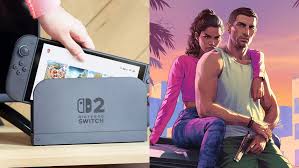
The data suggests consoles are indeed skewing upscale. Analysts note that a large share of console hardware sales now comes from wealthy households: for example, 43% of U.S. console purchases went to homes earning over $100K. Modern consoles (PS5, Switch 2, Xbox Series X) are expensive devices, and early adopters tend to be affluent. This pattern reinforces the perception of consoles – and the big-budget games on them – as relatively luxury products in today’s market. Mid- and low-income gamers may find it harder to justify buying new hardware at launch or paying full price for games on those platforms.

Why subscriptions like Game Pass and PlayStation Plus attract budget gamers
Subscription services appeal to cost-conscious players by offering high value for a fixed price. Services like Xbox Game Pass and PlayStation Plus bundle dozens of games (including many AAA titles) for a monthly fee. Analysts report that these subscriptions saw solid growth in 2025 as budget gamers joined to access a library of games. BCG research finds younger generations increasingly prefer access models: many choose to pay for game subscriptions or live services rather than purchasing each game individually. In other words, a family on a budget may get far more playtime from $15–20 a month of Game Pass than buying one $70 game.
Microtransactions in free-to-play games: are lower-income players paying more over time?
Free-to-play titles monetise through in-game purchases and ads instead of upfront fees. While this lets anyone try the game, the spending burden often falls on a subset of players. It’s misleading to assume poor players pay more; in fact, most microtransaction revenue comes from a small fraction of users (often not the poorest). However, analysts warn that “supposedly free games” can end up “nickel-and-diming” players with many small purchases. Overall industry trends show alternative monetisation (microtransactions, DLC, etc.) expanding rapidly – meaning consumers as a whole will spend a growing share of their gaming budget on in-game purchases, even if they never pay a big up-front price.
What publishers can do if fewer people buy full-price games
Publishers are exploring new strategies to make up for declining full-price sales. One approach is flexible pricing and windowing: launching games at premium price but later moving them into subscription libraries or deep discounts. BCG advises studios to “launch with a premium price, time discounts carefully, and use subscription access to collect long-tail revenues”. Other tactics include shifting towards live-service models and adding in-game monetisation (season passes, microtransactions, ads). By focusing on recurring revenue – through DLC, subscriptions or advertising – publishers aim to reach both the wealthy and more frugal gamers. In short, the industry is moving to blend premium and service models to optimise revenues from all segments.

Do premium game budgets and development costs force higher prices?
Yes. Modern AAA development budgets have ballooned into the hundreds of millions of dollars. Insider reports and surveys indicate blockbuster titles often cost $300 million or more to make. Such enormous investments put strong pressure on pricing. Higher costs must be recouped through larger initial price tags and/or extensive post-launch monetisation. This reality partly explains why publishers feel compelled to charge $60–$70 (or higher) for new games – they simply have much more to recover than in the past.
GTA 6 and the future of premium game pricing
Grand Theft Auto 6 (GTA 6) is a prime example of these trends. Rumors of an $80 or $100 price tag caused concern among fans, but Take-Two’s CEO Strauss Zelnick has been careful to manage expectations. He stated that the company feels “a compact with the consumer” on pricing and strives to “deliver way more value than what we charge”. In other words, while GTA 6 may carry a higher base price (for instance $70–80), Take-Two aims to justify it with content value.
Zelnick emphasized making the game “more affordable and accessible”, suggesting the core game might stay at current AAA price points. However, he also hinted that post-launch monetisation (GTA Online and expensive collector editions) will drive additional revenue, reflecting a future where base game pricing is bundled with live-service profits.
Indie games as an alternative to expensive AAA releases
Smaller indie games offer a lower-cost outlet for gamers unwilling to pay AAA prices. PC gaming in particular is seen as a “bright spot” where players are eager to try new, affordable games. Tens of thousands of indie titles are released on Steam each year (over 20,000 in 2025), often at much lower price points. Many analysts hail this as an “indie golden age”: a single $10–$20 indie game can provide hours of unique entertainment. For budget-conscious gamers, such games can deliver excellent value. In the current market, indie titles serve as a vibrant counterbalance to $70 AAA blockbusters, enabling players to enjoy high-quality experiences without the premium price tag.
Predictions for the future of premium gaming and who it’s really for
Looking ahead, the premium games market is expected to further concentrate on core enthusiasts. BCG predicts that by 2030, gaming will see an “explosion of content” and new audiences via cloud and user-generated content, but traditional AAA will face “continued pressure”. Top developers will likely focus on a few blockbuster franchises, franchise licensing, and subscription or brand strategies. In effect, expensive AAA titles will become even more like luxury products aimed at players willing to pay for big experiences.
Strauss Zelnick’s comments reflect this balance: he stresses value to justify premium costs and insists games remain entertaining. But it’s clear that the average gamer will increasingly turn to cheaper or subscription-based options, leaving AAA games primarily for a wealthier, hardcore audience.
Frequently Asked Questions (FAQs)
- Are $70–$80 AAA games pricing out average players?
Yes. Analysts warn that the new $70 price point is too high for many, especially given inflation. A recent report notes $70 games are mainly bought by consumers “with money to burn,” while others skip them. In practice, many average-income gamers are postponing purchases or switching to cheaper alternatives. - Is video gaming becoming a hobby only for the wealthy?
Trends suggest it is leaning that way. Commentators point out that today’s premium game and console markets are dominated by high-income households. With AAA budgets and hardware costs so high, only players with ample disposable income can fully participate in every new release. - What does a “K-shaped economy” mean in gaming?
It refers to a split recovery: high-income gamers drive growth at the top while others lag. In gaming, it means the rich continue spending (powering premium sales) whereas lower-income players cut back. Mat Piscatella uses this term to describe how the affluent keep buying expensive games while others fall behind. - What’s the difference between premium and free-to-play games?
Premium games charge an upfront fee (e.g. $60–$70 for an AAA title) for the full experience. Free-to-play games are free to download and play but make money via in-game purchases, ads, or subscriptions. Each model appeals to different segments: premium for committed fans who pay for ownership, free-to-play for a mass audience willing to optionally spend over time. - Why are games like Fortnite and Roblox so popular right now?
Because they are free, accessible, and constantly updated. These games offer ongoing content (seasons, events) without any purchase barrier, attracting a huge player base. As high-priced releases narrow, games like Fortnite and Roblox have capitalized by drawing in the vast audience seeking entertainment without paying upfront. - Should I get an Xbox Game Pass or PlayStation Plus subscription if I’m on a budget?
Many analysts say yes. Subscriptions bundle dozens of games (including new releases) for a flat monthly fee, which is often far more cost-effective for budget gamers than buying each $70 release. In fact, younger gamers increasingly prefer these subscription services over individual purchases, since you can play a wide range of games for one predictable price. - Are microtransactions making gaming more expensive for poorer players?
Not necessarily. Free-to-play games rely on microtransactions, but typically only a subset of players (often not the lowest-income) pay heavily. However, industry revenue from in-game purchases is growing, meaning the average consumer may end up spending in small bits instead of one upfront fee. As one expert put it, lower-income players can still end up “nickeled and dimed” by many small purchases in free games, even though each transaction is small. - What can publishers do if fewer people buy full-priced games?
Publishers can pivot to new models. BCG recommends tactics like launching at full price but then adding game access via subscriptions or big discounts later. They can also shift to live-service and free-to-play models with in-game purchases, or incorporate advertising to make up revenue. In short, studios will use a mix of subscription deals, microtransactions, DLC and clever pricing to capture both big spenders and budget-conscious consumers. - Will AAA game prices keep rising (to $80 or more)?
It’s uncertain. Rumors about $80 or even $100 price tags for titles like GTA 6 caused concern, but Take-Two’s CEO has suggested the company won’t hike the base price without adding value. He assures players that GTA 6 will “deliver way more value than what we charge,” implying the main game may remain around the current high price point. Additional content and deluxe editions (which can cost $100+) are likely where extra revenue comes from, rather than universally raising everyone’s price. - Are indie games a good cheaper alternative to AAA titles?
Yes. The indie game scene is booming, especially on PC, where small studios release innovative games at much lower prices. In 2025, over 20,000 games launched on Steam, and analysts call it an indie “golden age”. Many of these games cost $20 or less (some even under $10), offering great entertainment value. For gamers tired of $70 launches, indie titles and smaller studio games are often a high-quality, affordable alternative.
Conclusion
The evidence shows that today’s triple-A game market is increasingly catered to affluent consumers. Soaring development costs and $60–$70 price tags have made big-budget games more of a luxury, enjoyed mainly by high-income players. Meanwhile, average gamers are turning to free-to-play hits, subscription libraries, and indie offerings for entertainment. Publishers are responding with hybrid models (live services, discounts, ads) to straddle this divide. In the coming years, we can expect premium AAA titles to remain the province of die-hard fans and collectors, while the broader audience finds alternatives that fit their budgets.
Sources
Piscatella interview (Edge via PC Gamer)
- Article: “Circana’s Mat Piscatella says the industry is ‘uncertain’ and it might be 2025 before we see growth again”
- URL:pcgamer.com/gaming-industry/industry-analyst-mat-piscatella-on-how-long-it-might-take-for-the-games-industry-to-get-back-to-growth/
GamesRadar+ analysis “AAA games like the $70 Ghost of Yotei…”
- Article: “With the $70 Ghost of Yotei, the era of the ‘small’ triple-A game feels further away than ever”
- URL:gamesradar.com/games/adventure/ghost-of-yotei-70-dollars-aaa-pricing-analysis/
GamesRadar+ report on GTA 6 pricing (Strauss Zelnick)
- Article: “Take-Two CEO on GTA 6 pricing and the industry’s standard $70 cost: ‘We want to deliver more value than what we charge'”
- URL:gamesradar.com/games/grand-theft-auto/take-two-ceo-on-gta-6-pricing-and-the-industries-standard-70-cost/
PC Gamer report on Roblox engagement
- Article: “Roblox is so big that its players spent 16.7 billion hours in-game in just three months”
- URL:pcgamer.com/gaming-industry/roblox-q1-2024-engagement-report/
Newzoo 2025 PC & Console Market Review
- Report: “The PC & Console Gaming Report 2025: Market Size, Trends, and Consumer Insights”
- URL:newzoo.com/resources/blog/pc-console-gaming-report-2025
WNHub/Circana report on AAA budgets
- Article: “Mat Piscatella: Triple-A development costs have reached a point where even ‘hits’ can struggle to break even”
- URL:wnhub.io/news/business/circana-aaa-budget-growth-report
BCG “Video Gaming Report 2026”
- Report: “Global Video Gaming Report 2026: Navigating the New Playbook for Growth”
- URL:bcg.com/publications/2026/video-gaming-industry-outlook
GamesRadar+ on Steam indie growth
URL:gamesradar.com/games/steam-indie-game-growth-market-analysis/
Article: “Steam’s indie scene is growing faster than the AAA market, according to new industry data”
Recommended
- The Legend of Vox Machina Season 4 Release Date Announced: June 3, 2026 Premiere on Prime Video
- How Mega Cat Studios Adapted God of War Into a Retro Pixel Art Game
- Battlefield 6 Takes Home Game of the Year at UKIE Video Game Awards 2026
- The Witcher Comics Comes to WEBTOON: Release Date, Where to Read, and What to Expect
- How to Create a Trailer in Unreal Engine 5: Step-by-Step Guide for Cinematic Results
- How to Use Decals and Stickers in Substance Painter: A Complete Guide for 3D Artists
- How to Make a 3D VTuber Avatar: The Complete Guide for Beginners and Content Creators
- Love Death and Robots on Netflix: Everything You Need to Know About the Groundbreaking Animated Anthology Series
- Marathon Is Embracing The Jank: Duos Mode Comes To Perimeter As A Limited-Time Test
- Top Ways to Make 3D Characters: Blender, FaceGen, Metahuman, and CC3 Compared