





Who Bought 5% of Capcom?
The Electronic Gaming Development Company (EGDC), a Saudi investment firm, disclosed the acquisition of 26,788,500 shares (approximately 5.03%) of Capcom in March 2026.
- Collective Ownership: This stake is separate from the 5% stake acquired by Saudi Arabia’s Public Investment Fund (PIF) in 2022.
- Total Saudi Holding: Combined, Saudi-linked entities now own over 10% of Capcom’s total shares.
- SNK Connection: EGDC is the same entity that currently owns 100% of the Japanese developer SNK.
What Is EGDC and Who Owns It?
Founded in 2020, EGDC is a subsidiary of the MiSK Foundation, a non-profit chaired by Saudi Crown Prince Mohammed bin Salman (MBS).
- Purpose: EGDC serves as a vehicle for the Crown Prince’s personal and state-backed investments in gaming and esports.
- Portfolio: Beyond Capcom, EGDC’s most notable asset is SNK Corporation (The King of Fighters, Fatal Fury).
- Strategy: The firm targets legendary Japanese game developers, aligning with Saudi Arabia’s “Vision 2030” to diversify its economy into entertainment.
How Many Capcom Shares Did EGDC Buy?
- Volume: 26,788,500 shares.
- Ownership Level: 5.03% of Capcom’s roughly 533 million issued shares.
- Estimated Value: While a 5% stake cost ~$332 million in 2022, Capcom’s growth suggests EGDC’s 2026 investment is worth between $500 million and $600 million.
- Investment Type: Categorized as a “pure investment,” meaning shares were purchased on the open market for financial gain rather than as part of a takeover attempt.
Disclosure and the 5% Rule
The stake became public on March 13, 2026, following a mandatory filing with Japan’s Kanto Local Finance Bureau.
- Japan’s “5% Rule”: Under the Financial Instruments and Exchange Act, any investor exceeding 5% ownership in a listed company must submit a Large Shareholding Report within five business days.
- Transparency: This regulation prevents “stealth takeovers” and ensures market participants are aware of significant minority shareholders.
Why Did EGDC Invest in Capcom?
The official filing lists the purpose as “pure investment” for profit via dividends and stock appreciation. Secondary motivations include:
- Financial Success: Capcom has reported record profits for eight consecutive years (as of 2024) and maintained 10% operating income growth for a decade.
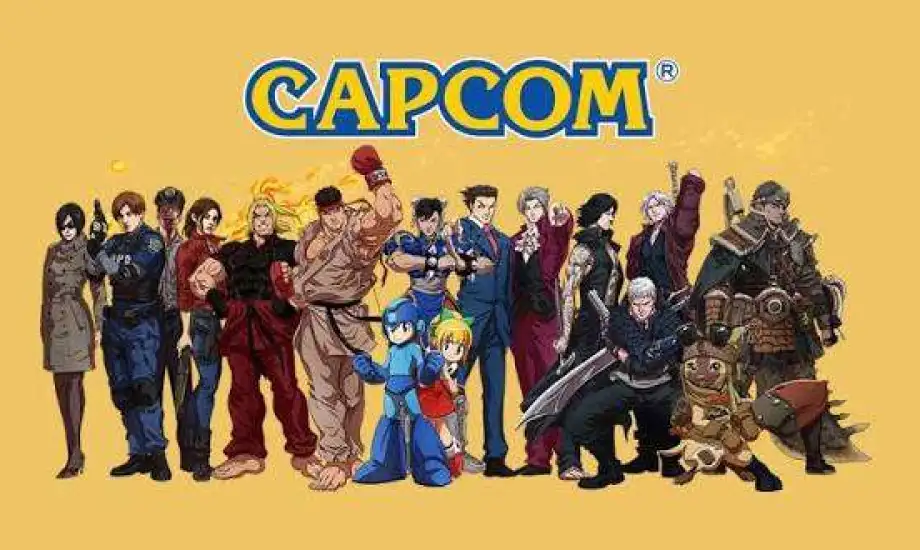
- Strong Intellectual Property: Blockbuster franchises like Resident Evil, Street Fighter, and Monster Hunter provide consistent, diversified revenue.
- Market Opportunity: Japanese gaming firms are often viewed as having high growth potential relative to Western peers.
- Cultural Alignment: Crown Prince MBS is a known fan of Japanese gaming; investing in these pillars supports Saudi Arabia’s goal of becoming a global gaming hub.
Potential Impact on Capcom’s Franchises
While EGDC is a passive investor and does not have creative control, the stake carries several implications for major series:
Street Fighter and Fighting Games
- Esports Growth: Saudi Arabia previously hosted a $1 million Street Fighter 6 invitational. Further investment could lead to larger prize pools and more Middle Eastern events.
- Crossover Potential: Because EGDC owns SNK and holds a stake in Capcom, fans speculate on a revival of the Capcom vs. SNK series.
- Cultural Engagement: Capcom has already introduced Middle Eastern characters (Rashid) and partnered with Saudi esports federations for early demos.
Resident Evil and Monster Hunter
- Business Stability: The investment acts as a “vote of confidence” in Capcom’s core franchises, likely encouraging the company to maintain high budgets for flagship sequels.
- No Creative Interference: Experts do not expect changes to game content, horror elements, or artistic direction, as EGDC’s interest is purely financial.
- Regional Promotion: There is potential for Capcom-themed attractions or exclusive early demos at entertainment complexes being built in Saudi Arabia.
EGDC’s arrival means Saudi interests collectively form one of the largest shareholder groups after the Tsujimoto family and Master Trust. However, no single Saudi entity is larger than the top Japanese holders. This distribution means that Capcom’s control is still very much in domestic hands and aligned with management.
Capcom’s major shareholders now reflect a mix of the founding family, domestic financial institutions, global investors, and Saudi sovereign investors. This diversification is typical for a large publicly traded Japanese company in 2026. It also means Capcom has multiple stakeholders to answer to. The company will likely continue balancing the desires of long-term family ownership (which usually prioritizes company legacy and stability) with those of financial investors (who prioritize growth and returns).
Saudi’s involvement adds another layer, but as we discussed, at ~10% combined, they are influential but not dominant. Capcom’s leadership will certainly be aware of their presence – for example, if an issue arises that Saudi investors might feel strongly about, Capcom might proactively communicate or reassure (like emphasizing the “pure investment” nature to quell any fan worries). But overall, the share register indicates Capcom is still broadly held, and EGDC is now one notable name on the list of top shareholders in Capcom’s investor relations reports going forward.
Frequently Asked Questions (FAQs)
- Who exactly is the Saudi company that bought 5% of Capcom?
The buyer is the Electronic Gaming Development Company (EGDC), a Saudi investment firm owned by Crown Prince Mohammed bin Salman through his MiSK Foundation. Founded in 2020 and known for acquiring a majority of SNK Corporation, EGDC disclosed a 5.03% stake (approximately 26.8 million shares) in Capcom in March 2026. - Is EGDC part of Saudi Arabia’s Public Investment Fund (PIF)?
Not directly. While EGDC is separate from the PIF and operates under the MiSK Foundation, it is supported by PIF funding. Because the PIF already purchased a ~5% stake in 2022, Saudi interests in Capcom now come through two distinct but related channels, both tied to Saudi leadership. - When did this Capcom stake purchase happen and how did people find out?
The purchase became public on March 13, 2026, when EGDC filed a mandatory large shareholding report in Japan. News outlets began reporting the details around March 16, 2026. Japanese law requires this disclosure once an investor crosses the 5% ownership threshold. - Why did Saudi Arabia (EGDC) choose to invest in Capcom?
EGDC labeled the move a “pure investment,” citing Capcom’s profitability and strong growth driven by franchises like Street Fighter, Resident Evil, and Monster Hunter. Strategically, this aligns with Saudi Arabia’s Vision 2030 plan to diversify its economy by becoming a major global player in the gaming industry. - How much money is 5% of Capcom worth?
With Capcom’s market capitalization reaching approximately $10 billion in early 2026, a 5% stake is estimated to be worth between $500 million and $600 million. This is a significant increase from the $332 million valuation of the PIF’s 5% stake in 2022. - Does this 5% stake give Saudi Arabia control over Capcom or its games?
No. A 5% stake is a minority holding that offers no management control. Capcom remains under the direction of its board, the founding Tsujimoto family, and institutional investors. EGDC cannot force creative changes or dictate company policy; their influence is limited to standard shareholder voting rights. - Will Capcom’s games (Street Fighter, Resident Evil, etc.) change because of the Saudi investor?
There is no indication that game content will change. Capcom develops games for a global audience and has no incentive to alter its style or tone for a single minority investor. EGDC has explicitly stated the stake is for financial purposes, though the investment may encourage more regional promotions or esports events in the Middle East. - Are fans or others reacting negatively to Saudi Arabia owning part of Capcom?
Reactions are mixed. While many fans are indifferent as long as game quality remains high, others have raised ethical concerns regarding Saudi Arabia’s human rights record. Critics often view these investments as “image laundering” or “sportswashing.” Despite online debate, there has been no large-scale boycott, and Capcom has remained focused on its products. - What other gaming companies has Saudi Arabia invested in?
Saudi Arabia has become a major industry player through several high-profile investments:- Nintendo: The PIF owns over 6% of shares.
- SNK Corporation: Fully acquired by Prince MBS via EGDC.
- Electronic Arts (EA) & Take-Two: Significant stakes held via Savvy Games Group.
- Esports: Acquisition of ESL and FaceIt, along with the Gamers8 festival.
- Other: Stakes in Nexon, Embracer Group, and various mobile developers.
- Could Saudi Arabia (EGDC or PIF) try to buy out Capcom completely in the future?
While Saudi funds have shown interest in massive deals, a full buyout is unlikely in the near term. Capcom is valued at ~$10 billion and prioritizes independence. Such a move would face high costs, resistance from Capcom management, and scrutiny from Japanese regulators protective of iconic cultural brands.26 Capcom is far from being Saudi-owned – they just have a minority slice. The most likely scenario is Saudi remains a significant minority investor and benefits from Capcom’s success without an outright acquisition.
Conclusion
The purchase of a 5% stake in Capcom by Saudi Arabia’s EGDC is a noteworthy development in the gaming industry’s ongoing investment saga. It underscores Capcom’s stature as a highly attractive company, given its string of successful games and robust financial health. For Saudi Arabia, this move is part of a broader strategy to invest in and influence the global entertainment and gaming sector, leveraging its vast wealth to gain footholds in top-tier companies.
From Capcom’s perspective, the investment is essentially a double-edged vote of confidence – one more big investor believing in Capcom’s future. In practical terms, Capcom remains the same company it was before: it’s still run by its Japanese leadership, still focused on delivering hit games in franchises like Street Fighter, Resident Evil, Monster Hunter, and beyond. The Saudi stake is a passive one, aiming to ride the wave of Capcom’s success rather than steer it.
For gamers and fans, the immediate impact is negligible in terms of game content. Street Fighter will still throw down, Resident Evil will still terrify, Monster Hunter will still thrill – and there’s no evidence of creative interference. If anything, the Saudi involvement may manifest in the form of bigger esports prize pools, more events in new regions, or collaborative promotions (as we’ve seen with Street Fighter tournaments in Riyadh). There’s also a subtle possibility that the shared Saudi connection between SNK and Capcom could rekindle collaborative projects that fans dream of (Capcom vs. SNK revival, anyone?).
On the corporate side, having over 10% of Capcom in Saudi-related hands (EGDC + PIF) does make the company’s share register more international. Capcom’s major shareholders now include not just domestic funds and the founding family, but a significant Middle Eastern sovereign presence. This could potentially play a role in Capcom’s long-term strategy (for instance, Capcom might be more attuned to its Middle Eastern market or consider Saudi partnerships to keep those stakeholders happy). However, Capcom will be keen to maintain its independence and neutral image – it’s unlikely to tailor its content or policies to any single investor’s desires.
Zooming out, this event is part of a larger pattern: the globalization of game company ownership. We’ve seen Chinese tech giants invest in or acquire gaming studios worldwide in the past decade; now we’re seeing Middle Eastern wealth funds do something similar. It speaks to the cultural and economic power of gaming that countries are investing at the national strategy level. For better or worse, your favorite game companies might have shareholders from around the world.
Ultimately, Capcom’s job is to keep making great games, and as long as it does that, its array of shareholders (whether in Tokyo, New York, or Riyadh) will be satisfied. The Saudi Arabian 5% purchase is a fascinating intersection of global finance and gaming, but for the average player, it won’t change the experience on the screen. Capcom remains Capcom – now with a new high-profile investor watching eagerly from the sidelines as the company continues its hot streak into 2026 and beyond.
Sources and Citation
- Shacknews – “The Saudi company that owns SNK disclosed a 5% stake in Capcom” (March 16, 2026)
https://www.shacknews.com/article/148325/egdc-5-percent-stake-capcom-street-fighter-6 - Automaton West – “Saudi Arabian investment firm that owns SNK has acquired a significant stake in Capcom” (March 16, 2026)
https://automaton-media.com/en/news/saudi-arabian-investment-firm-that-owns-snk-has-acquired-a-significant-stake-in-capcom/ - GameDeveloper.com – “Saudi Arabia firm EGDC now owns 5% stake in Capcom” (March 17, 2026)
https://www.gamedeveloper.com/business/saudi-arabia-firm-egdc-now-owns-5-stake-in-capcom - Arab News – “Saudi Arabia’s PIF holds $1.2bn stake in Japanese gaming firms Capcom, Nexon” (Feb. 4, 2022)
https://www.arabnews.com/node/2018281/business-economy - Miura & Partners (mmn-law) – “Submission of a Large Shareholding Report (5% Rule)” (PDF)
https://www.mmn-law.gr.jp/en/assets/img/mmn/Submission%20of%20a%20Large%20Shareholding%20Report_251209MMN.pdf - DLA Piper – “Recent developments on TOB rules and shareholding transparency in Japan” (Jan. 16, 2026)
https://www.dlapiper.com/insights/publications/2026/01/recent-developments-on-tob-rules-and-shareholding-transparency-in-japan - Capcom IR – Stock Data (as of Dec. 31, 2025)
https://www.capcom.co.jp/ir/english/stock/stockdata.html - Capcom IR – Press Release, May 13, 2025
https://www.capcom.co.jp/ir/english/news/html/e250513b.html - Arab News – “$1m Street Fighter 6 set to kick off at Gamers8: The Land of Heroes in Riyadh” (Aug. 9, 2023)
https://www.arabnews.com/node/2352066/sport - Reuters – “Saudi Arabia’s wealth fund raises Nintendo stake to 6%” (Jan. 12, 2023)
https://www.reuters.com/markets/deals/saudi-arabias-wealth-fund-raises-nintendo-stake-6-2023-01-12/
Recommended
- How to Export Metahuman to Maya: A Step-by-Step Guide for Seamless Integration and Customization
- 3D Grease Pencil Tutorial for Blender: How to Create 2D Art in 3D Space Step by Step
- Mastering the Arcane Art Style in Blender: A Comprehensive Workflow Guide to Replicating Arcane’s Visual Aesthetics
- How to Make a MetaHuman Talk: Ultimate Guide to Voice and Facial Animation
- Understanding Interpolate Hair Curves geometry nodes preset
- Blender Redistribute Curve Points Geometry Nodes Preset: A Comprehensive Guide
- Blender Restore Curve Segment Length Geometry Nodes Preset: Complete Guide
- Suikoden Anime Trailer Breakdown: Suikoden: The Anime PV1 Reveals Cast, Story Clues, and October 2026 Release
- How to Retarget Any Animation in Unreal Engine: Mixamo, CC3, Daz3D, and Metahuman Workflow Guide
- Blender Roll Hair Curves Geometry Nodes Preset: Comprehensive Guide