





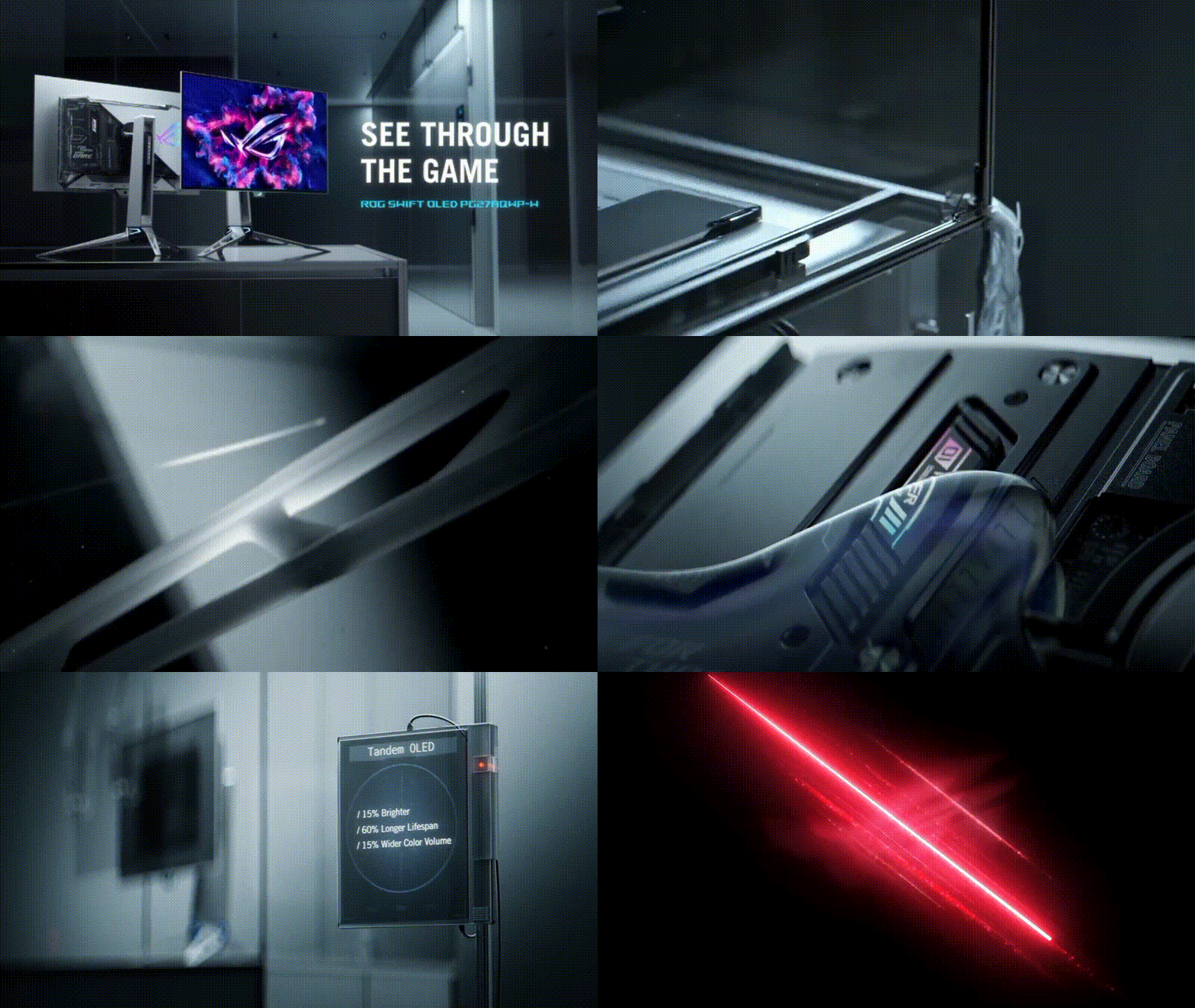
ASUS ROG 720Hz OLED Monitor, the gaming display landscape is undergoing a major shift as OLED technology merges with extreme refresh-rate engineering. At the center of this evolution is the new high-end gaming monitor lineup from ASUS under its Republic of Gamers (ROG) branding. The flagship concept of a 720Hz OLED monitor, especially the ROG Swift OLED PG27AQWP-W, represents one of the most ambitious attempts to push competitive gaming displays beyond traditional limits.
The key innovation behind the Swift PG27AQWP-W is its dual-mode refresh architecture. In standard OLED operation, the monitor prioritizes resolution and color accuracy, while in esports mode, it dramatically reduces resolution output to unlock ultra-high refresh rates. This dual-path design allows the display to maintain OLED-level contrast while targeting latency levels previously only seen in specialized TN esports panels.
The result is a monitor aimed directly at professional FPS and MOBA players who demand near-instant visual feedback. Combined with OLED pixel response times close to instantaneous switching, the 720Hz capability focuses on eliminating motion blur and reducing input lag to near-theoretical minimums.
In This Article (18 sections)
ASUS ROG Strix OLED 540Hz Monitor Explained: Competitive Gaming Performance Breakdown
Alongside its flagship Swift model, ASUS is also targeting a broader competitive gaming audience with the ROG Strix OLED 540Hz monitor lineup. This includes models like the ROG Strix OLED XG27AQWMG, designed for high-level esports players who want extreme refresh rates without fully stepping into experimental 720Hz territory.
The 540Hz panel is optimized for more consistent real-world esports performance. Unlike experimental dual-mode 720Hz displays, the Strix OLED maintains higher native resolution stability while still achieving ultra-high refresh output. This makes it particularly appealing for competitive players in titles such as Counter-Strike, Valorant, and Apex Legends.
Performance breakdowns show that 540Hz OLED significantly reduces motion persistence, allowing faster target tracking and clearer motion transitions during rapid camera movement. This creates a noticeable competitive advantage in fast-twitch scenarios, especially in close-range engagements.

ROG Swift OLED PG27AQWP-W Full Specs: 720Hz Dual-Mode Gaming Display
The ROG Swift OLED PG27AQWP-W represents the pinnacle of experimental gaming display engineering from ASUS.
Key expected specifications include:
- 27-inch OLED panel
- Dual-mode refresh rate: up to 720Hz (esports mode)
- Standard 1440p or higher native resolution mode
- Sub-0.1ms pixel response time
- HDR OLED contrast with near-infinite blacks
- Adaptive sync support (VRR/G-Sync compatible class)
- Advanced burn-in mitigation systems
The dual-mode system is the defining feature. In high-resolution mode, the display behaves like a premium OLED monitor optimized for cinematic visuals and immersive gaming. When switched to esports mode, the resolution is dynamically reduced to allow the extreme 720Hz refresh rate to function without bandwidth bottlenecks.
This makes it one of the most flexible competitive displays ever designed.
ROG Strix OLED XG27AQWMG Features: 540Hz Refresh Rate and Tandem OLED Technology
The ROG Strix OLED XG27AQWMG introduces Tandem OLED technology, a major advancement in panel engineering from ASUS and its display partners.
Key features include:
- 540Hz refresh rate for esports performance
- Tandem OLED stack architecture
- Improved brightness output compared to earlier OLED generations
- Enhanced longevity and reduced burn-in risk
- Wide color gamut coverage for HDR gaming
- Optimized thermal control for sustained performance
Tandem OLED uses multiple organic emission layers to increase brightness efficiency while reducing strain on individual pixel layers. This leads to better durability and more consistent performance over long gaming sessions.
For competitive players, this means a display that maintains speed without sacrificing long-term panel health.
ASUS Tandem OLED Technology Explained: Brighter, Longer-Lasting Gaming Panels
Tandem OLED is a structural improvement in OLED panel design that stacks multiple emission layers instead of relying on a single organic layer. This innovation, used across advanced ROG OLED displays from ASUS, significantly improves efficiency.
Key benefits include:
- Higher brightness output without excessive power draw
- Reduced pixel degradation over time
- Improved thermal stability during high refresh operation
- More consistent HDR performance
- Longer usable lifespan for competitive gaming use cases
In gaming scenarios, Tandem OLED helps maintain clarity in bright environments and prevents dimming during sustained high-refresh gameplay. This is critical for esports professionals who often play in controlled but high-intensity environments.
720Hz vs 540Hz OLED Monitors: Which ASUS ROG Display is Better for Esports?
The comparison between 720Hz and 540Hz OLED monitors from ASUS is not just about raw numbers, it is about real-world usability.
720Hz advantages:
- Lowest possible motion blur
- Ultra-low input latency ceiling
- Future-proof esports performance
- Best suited for experimental competitive setups
540Hz advantages:
- More stable native performance
- Better resolution retention
- Higher practical compatibility across games
- Less hardware strain required
In practice, most professional esports players may find 540Hz sufficient, while 720Hz targets elite-tier or experimental competitive environments where every millisecond matters.

ASUS ROG Swift OLED 720Hz Mode Explained: How Dual-Resolution Gaming Works
The ROG Swift OLED PG27AQWP-W uses a dual-resolution system to enable 720Hz output.
Here’s how it works:
- The monitor operates at full resolution for standard gaming
- In esports mode, resolution is reduced dynamically
- Lower resolution reduces pixel processing load
- This frees bandwidth for ultra-high refresh rates
- OLED response ensures instantaneous pixel switching
This system is designed specifically for competitive FPS titles where clarity of motion is more important than ultra-high resolution detail.
ASUS ROG Strix OLED 280Hz and 540Hz Variants: What Gamers Need to Know
The Strix OLED lineup from ASUS is expected to include multiple refresh rate tiers, including 280Hz and 540Hz models.
- 280Hz models target mainstream competitive gamers
- 540Hz models target serious esports professionals
- Shared OLED panel architecture ensures consistent image quality
- Differences lie mainly in refresh ceiling and tuning
This tiered approach allows gamers to choose based on budget, GPU capability, and competitive requirements.
Display Performance Comparison: ASUS ROG OLED vs Previous-Gen Gaming Monitors
Compared to older LCD-based esports monitors, OLED displays from ASUS offer significant improvements:
- Near-zero response time vs LCD ghosting
- Perfect black levels vs backlight bleed
- Higher contrast ratios for better target visibility
- Improved motion clarity at extreme refresh rates
Previous-gen 240Hz and 360Hz LCD panels are now significantly outclassed in motion fidelity by modern OLED esports monitors.
TrueBlack Glossy Coating Explained: Why ASUS OLED Displays Look Better
TrueBlack Glossy Coating is a surface enhancement used in ROG OLED monitors from ASUS.
It improves:
- Perceived contrast in dark environments
- Color depth and vibrancy
- Reflection handling compared to standard glossy panels
- Image clarity in HDR content
This coating works alongside OLED’s inherent contrast advantage to produce deeper blacks and sharper highlights.

ASUS OLED Care Pro Features: Neo Proximity Sensor and Burn-in Protection
Burn-in prevention is a major focus in OLED gaming displays from ASUS.
Key protections include:
- Neo Proximity Sensor (dimming when user is away)
- Pixel shifting to reduce static image retention
- Automatic brightness adjustment systems
- Panel refresh cycles during idle periods
These technologies extend OLED lifespan significantly, making high-refresh OLED viable for long-term competitive use.
Why ASUS 720Hz OLED Monitors Are Designed for Competitive FPS Gaming
The 720Hz concept is specifically targeted at FPS esports titles where reaction time is critical.
Benefits include:
- Faster target acquisition
- Reduced motion blur during flick shots
- Lower perceived input lag
- Improved tracking in high-speed engagements
Games like Valorant, CS2, and Overwatch benefit most from these advancements, where frame timing differences can affect competitive outcomes.
ASUS ROG OLED Monitor Release Date, Price, and Availability Updates
As of current industry expectations, ASUS is positioning its ROG OLED monitors for phased release depending on region and production scaling.
General expectations:
- 540Hz Strix models arrive first
- 720Hz Swift models follow as premium flagship release
- Pricing positioned in ultra-high-end esports category
- Limited initial availability due to advanced panel production constraints
Exact global rollout timing may vary depending on manufacturing capacity.
Is 720Hz Overkill? Real-World Benefits of Ultra-High Refresh Rate OLED Displays
The debate around 720Hz from ASUS centers on perceptual limits.
Arguments for overkill:
- Human visual perception limits diminishing returns
- Requires extremely powerful GPU output
- Benefits may be subtle outside esports scenarios
Arguments for value:
- Competitive advantage in professional gaming
- Reduced latency pipeline end-to-end
- Future-proofing for next-gen esports standards
Ultimately, 720Hz is most beneficial in elite competitive environments rather than casual gaming.

Best ASUS ROG OLED Gaming Monitors in 2026: Swift vs Strix Lineup Breakdown
The OLED gaming lineup from ASUS can be broadly categorized:
Swift Series:
- Extreme performance focus
- 720Hz experimental flagship
- Dual-mode resolution system
Strix Series:
- Balanced esports performance
- 540Hz optimized stability
- Broader accessibility
Swift is for peak performance enthusiasts, while Strix is for competitive professionals seeking consistency.
Frequently Asked Questions (FAQs)
- What is the ASUS ROG 720Hz OLED Monitor?
It is a next-generation esports display concept offering ultra-high refresh rates using a dual-mode OLED system. - What is the Difference Between 540Hz and 720Hz OLED?
540Hz prioritizes stability, while 720Hz pushes maximum motion clarity and lower latency. - Are These Monitors Good for FPS Games?
Yes, they are designed specifically for competitive FPS gaming. - Does OLED Suffer from Burn-In?
Modern ASUS OLED monitors include advanced burn-in protection systems to reduce risk. - What is Tandem OLED Technology?
It is a stacked OLED structure that improves brightness, durability, and efficiency. - is 720Hz Noticeable to the Human Eye?
In direct gameplay, differences are subtle but can matter in competitive scenarios. - Which is Better for Esports: Swift or Strix?
Swift targets extreme performance; Strix targets balanced competitive use. - Do These Monitors Support HDR?
Yes, OLED technology inherently supports high dynamic range output. - Will I Need a Powerful GPU?
Yes, especially for high-resolution modes at high refresh rates. - Are These Monitors Available Now?
Availability depends on region and release phase from ASUS rollout plans.

Conclusion
The new OLED gaming monitors from ASUS represent a major step forward in esports display engineering. With the introduction of the ROG Swift OLED PG27AQWP-W and the ROG Strix OLED XG27AQWMG, the company is pushing refresh rate boundaries into previously unreachable territory.
Whether through 720Hz experimental dual-mode performance or 540Hz stabilized competitive output, these displays signal a future where motion clarity, responsiveness, and OLED image quality converge into a new esports standard.
Sources and Citations
- ASUS Official Website
https://www.asus.com - Republic of Gamers (ROG) Product Information
https://rog.asus.com - OLED Display Technology Overview (Industry Reference)
https://en.wikipedia.org/wiki/OLED - High Refresh Rate Gaming Display Concepts (General Industry Analysis)
https://www.tomshardware.com - Esports Display Performance Research Overview
https://www.techpowerup.com
Recommendations
- Top 20 Hottest Video Game Characters: Icons of Beauty and Aura in Gaming
- Review of the Adventures of Elliot: the Millennium Tales, the JRPG Passes with Good Grades
- Invincible VS in Unreal Engine Features Rollback Netcode, Destructible Arenas, and Cinematic Combat
- Analysts Say GTA 6 Could Sell over 25M Copies on Day One Amid “Terrifying” Expectations: What that Means for Price, Preorders, and Release Plans
- Starfield Comes to PS5 with PS5 Pro Enhancements and New DLC: April 7 Release Date, Free Lanes Update, and Terran Armada Explained
- Marathon First Wipe Explained: What Carries over in Season 2
- Minishoot’ Adventures Review
- Xsolla Accessibility, Social Impact & Entertainment IP Licensing at London Games Festival 2026
- Arms of God is a Doom-Inspired Bullet Heaven Roguelite
- The Odyssey Trailer: Odysseus’ Dog Argos, Charlize Theron’s First Look, Tom Holland vs Robert Pattinson, and Everything We Know



































































































