









In This Article (7 sections)
Burglin’ Gnomes Gameplay, High Gnome Tasks, Loot and Crafting Progression
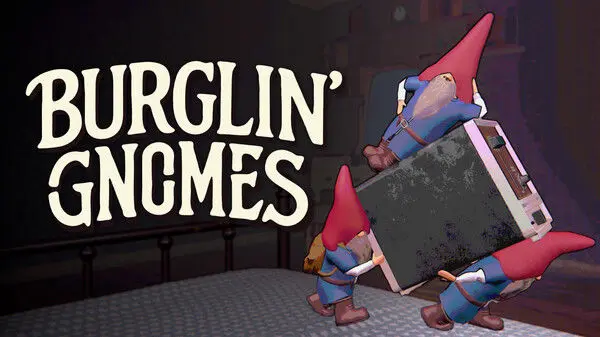
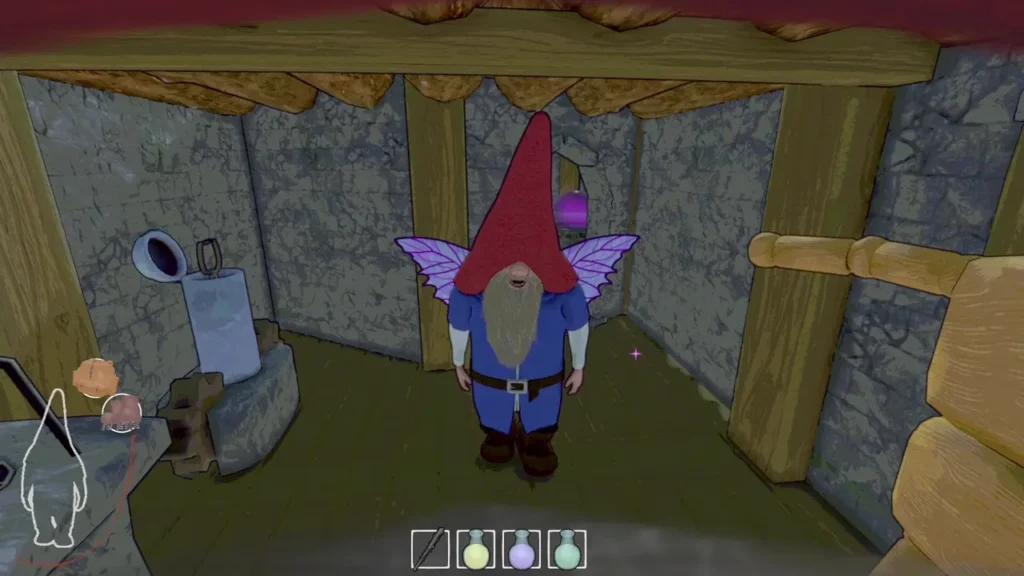
Burglin’ Gnomes is a cooperative stealth survival game centered on chaotic infiltration missions, emergent gameplay systems, and procedurally generated environments. Players become mischievous gnomes who enter human houses, estates, workshops, and guarded facilities to steal valuable items, complete tasks for the mysterious High Gnome, gather crafting resources, and return safely to their hidden sanctuary. The game combines stealth, survival crafting, and roguelike unpredictability, with changing hazards and enemy behavior ensuring that missions cannot always be approached in exactly the same way.
The High Burglin’ Gnomes functions as both a narrative figure and an important part of progression. Tasks can range from straightforward theft objectives to longer infiltration challenges requiring several actions before extraction. Completing these requests increases High Gnome favor and can unlock advanced crafting recipes and sanctuary improvements.
High Gnome objectives can include:
- Stealing rare household artifacts without alerting humans
- Sabotaging environmental objects such as lighting systems
- Collecting particular crafting materials from restricted locations
- Completing missions without triggering detection
The difficulty of these tasks scales according to player success, giving consistently successful teams increasingly complicated objectives. Completing requests efficiently therefore depends on preparation rather than simply moving through a location as quickly as possible. Teams should understand the environment, establish responsibilities before entering dangerous areas, and prioritize the objectives most important to the current mission.
Useful Burglin’ Gnomes approaches include:
- Scouting the environment before committing to an infiltration route
- Assigning clear responsibilities to each player
- Prioritizing valuable objectives early in the mission
- Using distractions to separate threats and create safer routes
- Establishing an extraction plan before carrying large amounts of loot
Loot itself is divided into common, rare, and High Gnome artifact categories. Common household items supply materials for basic crafting, while rare items provide more advanced resources such as enchanted metals and unstable liquids. High Gnome artifacts are particularly important because they contribute directly to progression and can reveal additional lore.
Not every item deserves the same priority during an infiltration. Filling inventory space with common materials can become counterproductive when it prevents the team from extracting more valuable objects. Experienced players need to identify which items support the current High Gnome request, which are required for crafting, and which can safely be ignored. Certain combinations can also contribute to hidden crafting recipes.
Crafting turns materials recovered during missions into equipment that improves later runs. Available equipment includes:
- Stealth boots that reduce movement noise
- Smoke acorns for emergency escapes
- Grappling threads for vertical movement
- Distraction bells for manipulating enemy attention
Advanced crafting depends on both resource collection and blueprint progression through High Gnome tasks. Some recipes become available only after completing particular task chains, connecting successful missions directly with future equipment development. Unconventional material combinations can also create unstable but powerful equipment variants, adding additional risk and experimentation to the crafting system.
The sanctuary serves as the central progression hub between missions. Improvements provide faster crafting, additional equipment tiers, greater storage capacity, training opportunities, and passive advantages that can help during later infiltrations.
Sanctuary upgrades include:
- Crafting stations for advanced equipment
- Storage expansions for managing recovered loot
- Training areas for improving skills
- High Gnome altars that improve task rewards
These upgrades become increasingly important as missions grow more demanding. Higher level infiltration runs require better preparation, stronger equipment, and enough storage and crafting capacity to turn successful thefts into lasting progression. The relationship between missions and the sanctuary therefore creates a repeating cycle: infiltrate a location, complete High Gnome requests, collect valuable resources, escape, improve equipment and facilities, then return better prepared for more difficult assignments.
Burglin’ Gnomes Co Op Heists, Stealth Mechanics, Enemies and Survival Strategies
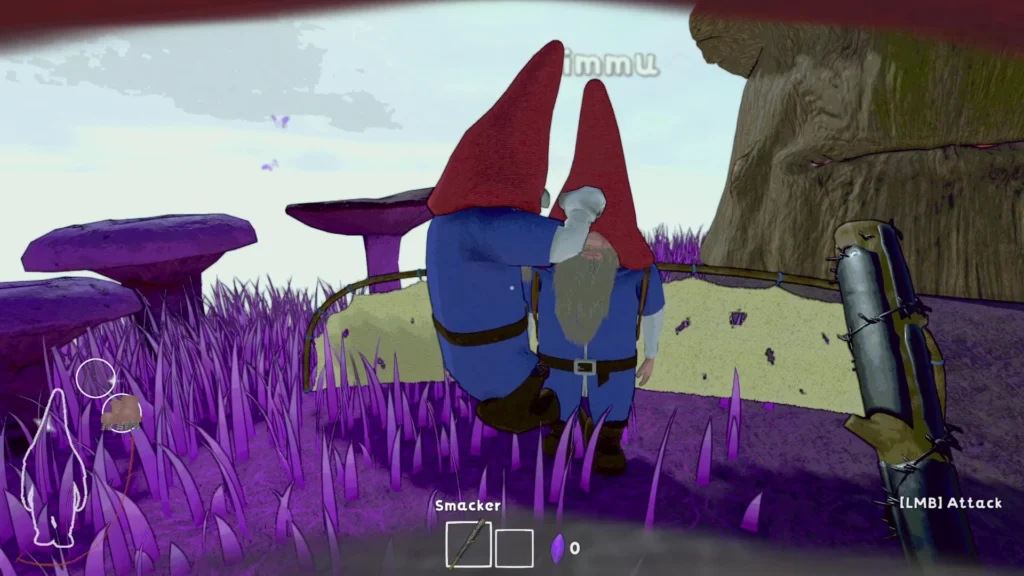
Burglin’ Gnomes Cooperative play forms the foundation of Burglin’ Gnomes. Teams of up to four players coordinate infiltration missions where communication, timing, and role specialization can determine whether everyone escapes with the loot or triggers a household wide alert.
Players can organize themselves around several responsibilities:
- Scout: Identifies patrol routes, hazards, and safer paths
- Thief: Concentrates on quickly collecting important loot
- Crafter: Gathers materials needed for equipment and upgrades
- Trickster: Creates distractions and manipulates enemy attention
These Burglin’ Gnomes roles do not eliminate the need for cooperation. One player might create noise to draw a homeowner away while another enters a protected storage area. A scout can identify a safe route, but the rest of the team still needs to move at the correct time. If a teammate is captured or spotted, human behavior becomes more dangerous as the location enters a heightened alert state.
Revival mechanics give teammates an opportunity to rescue fallen gnomes, but attempting a rescue can expose additional players. Teams therefore need to judge whether an immediate recovery is safe or whether they should first manipulate enemy positions.
Stealth revolves around layered detection involving humans, pets, environmental conditions, visibility, and noise. Important principles include:
- Line of sight changes with lighting and positioning
- Sound propagation varies according to the surface
- Humans can investigate suspicious activity before entering full alert
- Shadows provide partial concealment rather than complete invisibility
The suspicion system gives players an opportunity to respond before an investigation becomes complete detection. Managing that window is essential. Continuing to collect loot while suspicion rises can turn a recoverable situation into a failed mission.
Beginners benefit from patience more than aggression. Human spaces contain numerous opportunities to accidentally create noise or expose a route. Knocking over a small object can be enough to attract unwanted attention, particularly when another player is simultaneously attempting to enter a restricted area.
Useful Burglin’ Gnomes survival habits include:
- Observe patrol patterns before moving
- Use cluttered areas for concealment rather than crossing exposed spaces unnecessarily
- Avoid carrying excessive amounts of noisy equipment
- Maintain an escape route while exploring
- Retreat when detection risk becomes unnecessarily high
- Avoid assuming that a previously safe room remains safe
Threats are primarily detection based rather than conventional combat enemies in Burglin’ Gnomes. Homeowners follow unpredictable patrol patterns, security guards protect high value areas, and guests introduce additional movement that can complicate a previously understood route.
Pets create another layer of pressure. Dogs are especially dangerous because of their sensitivity to sound, while roaming animals can enter areas players assumed were temporarily clear. Environmental dangers include collapsing furniture, trapped drawers and cabinets, and magical anomalies associated with High Gnome experiments.
Each threat requires a different response. A distraction effective against a human may not solve a problem created by a roaming pet, while an environmental trap cannot necessarily be avoided using the same timing employed against a patrol. Adaptability therefore matters as much as memorizing individual behaviors.
Cooperative teams benefit from establishing procedures before something goes wrong. Strong strategies include assigning one player to scout, coordinating distraction chains across several rooms, synchronizing loot extraction, and establishing emergency regroup locations. Short callouts such as “clear” and “alert” can communicate enough information for immediate decisions without requiring lengthy explanations during dangerous moments.
Advanced teams can take this coordination further by splitting responsibilities across different sections of a location and timing actions so that several objectives progress simultaneously. The benefit is greater coverage and faster completion, but separating the team also increases the consequences of poor communication. A player who creates an unexpected alert in one area can disrupt teammates working elsewhere.
Burglin’ Gnomes Procedural Houses, Advanced Heist Planning and Speed Run Strategies
Procedurally generated environments prevent Burglin’ Gnomes from becoming a game of simply memorizing one perfect infiltration route. Missions can alter room arrangements, loot locations, obstacles, and enemy patrol paths, forcing teams to reassess the environment rather than automatically repeating a previous solution.
Variations include:
- Rearranged rooms between runs
- Randomized loot positions
- Changing environmental obstacles
- Altered enemy patrol routes
Procedural generation strengthens replayability because familiar strategies still need to be adapted to the current layout. A route that provided quick access to valuable loot during one mission may become inefficient or dangerous during the next. Players therefore benefit more from learning general stealth principles and understanding enemy behavior than memorizing a fixed sequence of movements.
Scouting remains important even for experienced teams. Before committing everyone to a route, determine where important objectives appear, which rooms contain useful loot, where patrols overlap, and which areas can function as emergency escape or regroup locations. This allows the team to build a temporary plan around the generated environment.
Advanced play focuses on maximizing useful loot while minimizing the amount of time spent exposed to danger. Important techniques include:
- Mapping a route before committing to the main infiltration
- Splitting the team when the environment safely allows it
- Coordinating distractions across different rooms
- Timing extraction around enemy movement
- Prioritizing mission critical and rare loot
- Maintaining predetermined regroup locations
The objective is not necessarily to empty every room. Remaining inside a dangerous environment for additional low value loot can turn an otherwise successful mission into a failure. Advanced teams need to recognize when the important objectives have been completed and extraction provides greater value than continuing to search.
Speed focused runs place even greater importance on understanding AI reactions and environmental triggers. Faster completion does not come simply from moving quickly. Efficient teams reduce unnecessary movement, coordinate simultaneous actions, manipulate patrols intentionally, and avoid alerts that would force them to abandon their planned route.
High level play therefore combines precision with flexibility. A team can prepare an ideal route, but procedural changes or unexpected AI behavior may invalidate part of that plan. Successful players need to recognize the change quickly and substitute another approach without creating additional danger.
This makes optimization fundamentally cooperative. One player creating a distraction at exactly the right moment can allow several teammates to complete objectives simultaneously. Conversely, poorly timed actions can increase suspicion across the location and eliminate the advantage gained through careful planning.
The strongest teams consequently balance speed with control. They scout enough to understand the generated environment, divide responsibilities without losing communication, collect the items that matter most, and leave before unnecessary risks overwhelm the benefits of staying longer. Burglin’ Gnomes rewards players who treat every heist as a changing problem rather than a fixed route that can be solved once and repeated indefinitely.

Frequently Asked Questions (FAQs)
- What is the main goal of Burglin’ Gnomes?
The main goal is to complete tasks assigned by the High Gnome while infiltrating human locations, stealing valuable loot, and escaping safely. Successful missions provide resources that support crafting and progression, allowing players to prepare for increasingly difficult heists and more demanding objectives. - Is Burglin’ Gnomes single-player or multiplayer?
Burglin’ Gnomes supports both single player and multiplayer, although its systems are primarily designed around cooperative play. Teams can divide responsibilities such as scouting, collecting loot, creating distractions, and watching for threats, making communication and coordinated timing especially valuable during complicated missions. - What happens if you get detected?
Detection raises the enemy alert level and makes the current infiltration considerably more difficult. Humans become more aggressive, safe movement opportunities decrease, and the team may need to abandon its original route. Players who notice suspicion building early can retreat, hide, or redirect enemy attention before the situation develops into a larger alert. - How important is crafting?
Crafting is an important part of survival and long term progression because collected materials can be converted into equipment that makes later missions easier to manage. Useful gear can improve stealth, provide emergency escape options, create distractions, or open additional traversal possibilities. As missions become harder, entering them with suitable equipment becomes increasingly important. - What are High-Gnome tasks?
High Gnome tasks are mission objectives that provide direction and contribute to progression. They can require players to steal particular objects, collect specific materials, sabotage parts of the environment, or complete an infiltration under certain conditions. Completing these objectives can increase High Gnome favor and unlock additional rewards, crafting options, and sanctuary improvements. - What types of loot should players prioritize in Burglin’ Gnomes?
Players should prioritize loot according to their current objectives and progression needs. Rare items and High Gnome artifacts generally offer greater long term value than common household materials, while specific crafting resources may be necessary for equipment upgrades. Carrying unnecessary low value items can also make an infiltration less efficient when more important loot is available. - How can players avoid detection during a heist?
Players should observe patrol routes, control the amount of noise they create, remain aware of lighting and line of sight, and use environmental cover whenever possible. Distractions can move humans away from important routes or objectives, while monitoring suspicion gives players an opportunity to retreat before a minor disturbance develops into a full alert. - Are house layouts always the same?
No. House layouts are procedurally generated, so important parts of an infiltration can change between runs. Rooms, loot positions, environmental obstacles, and enemy patrol routes can vary, preventing players from relying entirely on memorized paths. Scouting and adapting to the current layout therefore remain important even after completing many missions. - Can you revive teammates?
Yes. Fallen teammates can be rescued, but reaching them safely may require careful coordination. If humans or other threats are nearby, rushing directly toward a fallen gnome can expose additional players and make the situation worse. Teams may need to create a distraction, wait for enemies to move, or establish a safer route before attempting the rescue. - What is the hardest part of the game?
One of the biggest challenges is maintaining stealth while dealing with unpredictable AI behavior and completing High Gnome objectives at the same time. Humans, pets, environmental hazards, changing layouts, and unexpected alerts can disrupt even a carefully planned route. Success therefore depends on observation, communication, quick adaptation, and knowing when pursuing additional loot is no longer worth the risk.
Conclusion
Burglin’ Gnomes stands out as a hybrid stealth survival co op experience built on unpredictability, teamwork, and adaptive strategy. From High Gnome tasks to procedural house layouts, every system is designed to challenge player coordination and decision making. The crafting and stealth systems work together to create a layered gameplay loop that rewards patience, planning, and creativity.
Whether playing solo or in a coordinated team, success depends on understanding both the environment and the evolving demands of the High Gnome. Mastery comes from repetition, experimentation, and refining strategies across increasingly complex heists.
Sources and Citations
- Roguelike design and procedural generation, GDC 2015 : David Pittman explains the algorithms behind Eldritch’s procedural levels and how designers shape the player’s experience when environments are generated automatically. The talk connects practical level generation with broader roguelike design decisions. gdcvault.com
Citation: Level Design in a Day: Procedural Level Design in Eldritch. (GDC Vault) - Stealth mechanics in indie games, Mark of the Ninja : Lead designer Nels Anderson discusses adapting stealth gameplay to a two dimensional perspective. His presentation examines player choice and the design process behind rethinking established stealth conventions. gdcvault.com
Citation: Of Choice and Breaking New Ground: Designing Mark of the Ninja. (GDC Vault) - Asymmetric cooperative systems, related research from 2019 : John Harris and Mark Hancock investigate how different player roles, abilities, interfaces, and degrees of mutual dependence affect social engagement. This provides research background for cooperative asymmetry, although the experiments do not specifically evaluate commercial survival games. University of Waterloo
Citation: To Asymmetry and Beyond!: Improving Social Connectedness by Increasing Designed Interdependence in Cooperative Play. (University of Waterloo) - Environmental AI and immersive simulation, GDC 2017 : Arkane Studios developers Laurent Couvidou and Xavier Sadoulet explain Dishonored 2’s AI systems. Topics include coordination between NPCs, spatial reasoning during stealth and searches, and rules governing dialogue and animation. gdcvault.com
Citation: Taking Back What’s Ours: The AI of Dishonored 2. (GDC Vault) - Crafting system design patterns, 2017 : April Grow and colleagues analyze 64 crafting systems across 47 games, including Minecraft. Their framework examines recipes, resource constraints, variable results, creative freedom, and progression, providing a structured reference for discussing sandbox crafting mechanics. dhq-static.digitalhumanities.org
Citation: Crafting in Games. (Digital Humanities Quarterly) - Player progression in objective driven roguelikes, Hades : Supergiant Games’ official Steam description explains how permanent Mirror of Night upgrades strengthen players across repeated escape attempts. It provides a concrete example of persistent progression supporting a recurring gameplay objective. store.steampowered.com
Citation: Hades: Official Game Description. (Supergiant Games) - Academic research on procedural level generation, 2024 : Oliver Withington, Michael Cook, and Laurissa Tokarchuk examine how researchers evaluate procedural level generators. Their paper proposes a classification of evaluation approaches and identifies weaknesses in existing methods and research practices. King’s College London
Citation: On the Evaluation of Procedural Level Generation Systems. (King’s College London) - Player coordination and communication, related research from 2022 : James Simpson and colleagues study communication in teams with different roles and unequal access to information. Their experiments examine how restricted visibility changes coordination, providing relevant background for cooperative stealth UX without directly testing stealth games. PMC
Citation: Conversation Dynamics in a Multiplayer Video Game with Knowledge Asymmetry. (Frontiers in Psychology)
Recommended
- What is the difference between Perspective and Orthographic Camera in Blender?
- Assassin’s Creed Shadows Final Update Sets Up a New Story for Naoe and Yasuke
- Ronja Stucken’s Nymera: Alien Shaman CG Character Workflow
- One Piece: Elbaph Arc Premiere Review (Episode 1156) Release Date, Where to Watch, and Full Breakdown
- Hell Maiden Action Game with Roguelike and Bullet Hell Elements in Which You Must Journey Through the Depths of Hell to Defeat Demons and Earn Your Way to Paradise
- HYPERyuki Snowboard Syndicate Gameplay Trailer Explained
- Expeditions: Samurai: Release Date, Gameplay, Story, and Historical RPG Details
- Backrooms Dominates the Box Office While the Mandalorian and Grogu Continues to Struggle
- Final Fantasy X/X-2 HD Remaster Switch 2 Release Guide and New Features



































































































