







In This Article (8 sections)
What Mark Darrah Would Change About Dragon Age: Origins
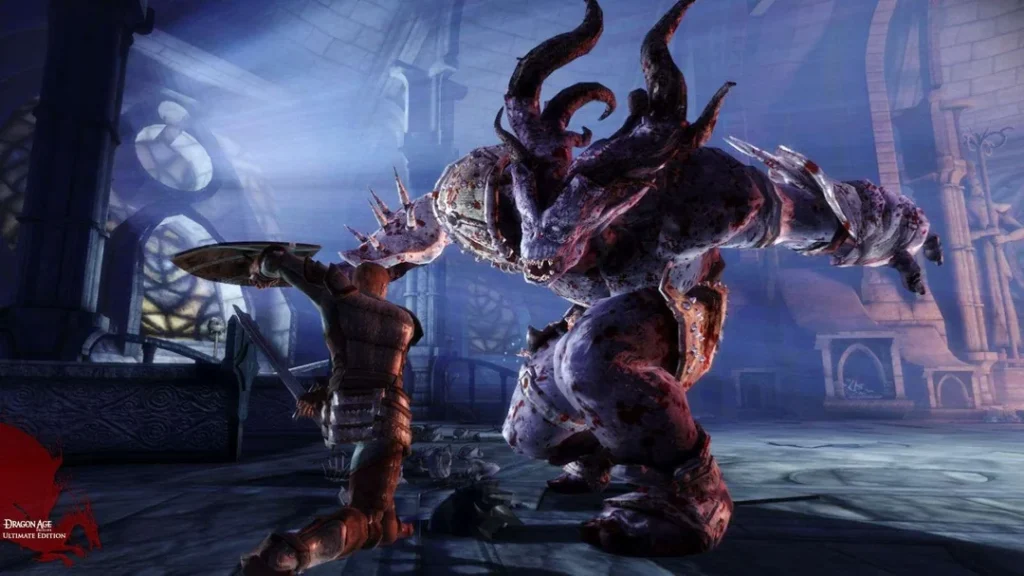
Nearly two decades after Dragon Age: Origins established Thedas as one of BioWare’s signature fantasy settings, former Dragon Age executive producer and director Mark Darrah has reflected on what he would change if he could revisit the series. His September 2026 comments focused less on rewriting Dragon Age mythology and more on structural, pacing and narrative decisions that he believes could have been handled differently.
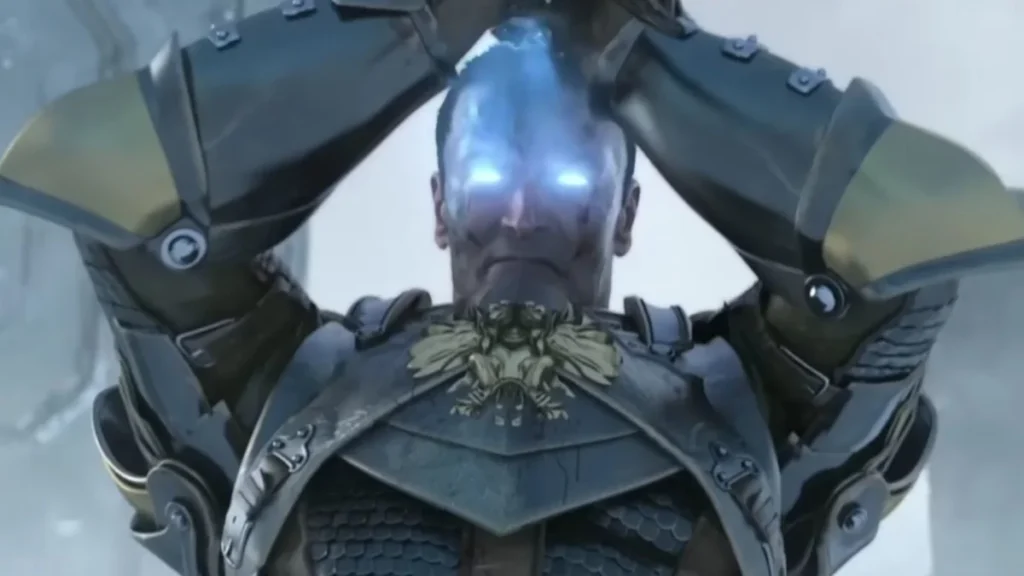
For Origins, his most direct criticism concerns the Fade sequence during the Mage Tower storyline. Darrah said he would either remove much of it or dramatically shorten it, describing the section as material that was not especially strong and functioned partly as filler. He also recalled that it was produced relatively quickly late in development, helping explain why he now considers its size disproportionate to its value.
During the Broken Circle quest, the player is drawn into the Fade, separated from the normal party structure and required to navigate dreamlike environments while acquiring transformation abilities that open previously inaccessible paths. Once the section begins, players cannot simply leave and resume normal exploration, which makes its length particularly noticeable. The larger pacing problem is that the Circle Tower has already established an urgent crisis, but the main conflict effectively pauses while the player works through a lengthy mechanically distinct diversion. Darrah’s criticism therefore concerns more than difficulty.
It is about how much mandatory time the section demands compared with how much it contributes to the surrounding critical path. His alternative would not necessarily eliminate the Fade as a concept, since it remains important to Dragon Age lore. He also suggested that the sequence could instead be broken into shorter, easier-to-digest sections, preserving unusual Fade gameplay without trapping the player there for such an extended period.
Darrah would also add another playable origin, specifically revisiting an Avvar origin that had been considered during development. The concept would have provided another human starting background and connected the protagonist more directly with Avvar culture and the Korcari Wilds. Because Origins makes the protagonist’s background a playable opening rather than a simple biography selected from a menu, adding one would have required dedicated environments, characters, writing, quest scripting, voice work and later recognition of that background throughout the campaign. Darrah acknowledged that origins were expensive to produce, which helps explain why an apparently straightforward request for another starting option represented a significant development commitment.
He did not provide an elaborate explanation for why he personally preferred the Avvar concept, so a more detailed motive should not be attributed to him. However, an Avvar origin could have expanded the range of human cultures represented at the beginning of the game rather than simply creating another variation on Ferelden’s dominant social structures. The idea is particularly interesting retrospectively because Avvar culture later received much greater attention in Dragon Age: Inquisition, especially through the Jaws of Hakkon expansion. Darrah’s choice suggests that, if he were adding substantial content to Origins today, he would prioritise greater role-playing identity and replay value rather than simply introducing another combat area.
How Mark Darrah Would Redesign Dragon Age 2’S Choices, Ending and Progression
For Dragon Age 2, Darrah identified several changes involving its ending, environmental variety and Act One economy. He said he would probably add a couple of additional level spaces, an understandable retrospective adjustment for a game frequently associated with reused environments and a tightly constrained production scope. He also questioned how the Act One economy supports the expedition storyline. The plot establishes a financial goal, but Darrah suggested that the critical path provides enough money that the intended incentive to complete additional side content becomes weaker. His preferred solution would involve changing the gold balance and potentially removing one critical-path mission so that optional activities contribute more meaningfully to Hawke’s attempt to finance the expedition.
His most consequential proposed change concerns First Enchanter Orsino. Near the end of Dragon Age 2, Hawke chooses whether to support the mages associated with Orsino or the templars commanded by Knight-Commander Meredith, yet Orsino ultimately becomes a boss even if the player has chosen to defend the mages. Darrah’s preferred correction is straightforward: players who side with the mages should not have to fight Orsino. The encounter could remain on a route where Hawke opposes his faction, but forcing essentially the same confrontation onto the pro-mage path weakens the mechanical consequences of the player’s allegiance.
The issue is not merely that both routes contain a repeated boss encounter. If Hawke supports the mages because the player believes they are being treated unjustly, the story still pushes Orsino towards forbidden magic and transforms him into the kind of dangerous threat Meredith has warned about. As a result, the mage route can provide evidence that appears to validate her fears even when the player has spent the finale opposing her treatment of mages.
Darrah’s criticism that the game effectively makes Meredith look “right” should therefore be understood as a criticism of narrative construction rather than a claim that all of Meredith’s actions are morally justified. The central conflict asks players to consider repression, freedom, magical danger and institutional abuse, yet forcing Orsino to embody the templars’ worst accusation on every route weakens the ideological distinction between the two choices.
Removing the Orsino battle from the pro-mage route would allow the choice to affect the actual sequence of endgame events instead of merely changing dialogue and framing before converging on substantially the same encounter. Hawke could genuinely support Orsino through that stage of the finale before confronting Meredith, while an opposing route could retain Orsino as an enemy. Combined with more environmental variety and an Act One economy that gives optional quests greater purpose, Darrah’s proposed changes follow the same principle seen elsewhere in his retrospective comments: optional content should give players meaningful reasons to engage with it, while mandatory content should not weaken pacing or flatten important decisions.
Why Mark Darrah Would Make Dragon Age: Inquisition Smaller and Less Restrictive
Darrah’s proposed changes to Dragon Age: Inquisition focus primarily on scale, player guidance and progression. Rather than adding more content, he said he would likely remove one of the game’s large exploration areas, with the Hissing Wastes offered as a probable candidate. He would also substantially reduce the Power requirements that gate critical-path missions, estimating that some thresholds could be lowered by approximately 40 to 60 per cent. The objective would be to allow players primarily interested in the central story to progress more naturally rather than requiring them to accumulate as much Power through secondary activities before another major mission becomes available.
Power itself would not necessarily need to disappear. Lower thresholds could preserve the progression system while reducing its influence over the campaign’s pacing. Exploration, rifts, regional storylines and other activities could remain rewarding choices without feeling like mandatory preparation for the next section of the main plot. Combined with the removal of at least one large region, the result would be a more directed version of Inquisition in which substantial optional breadth remains available but interferes less with narrative momentum.
The Hinterlands represents another part of the same pacing problem, although Darrah’s comments distinguish it from the region he would actually cut. The Hinterlands is the first enormous area many players encounter and contains enough activities to encourage completionist players to remain there much longer than necessary.
Darrah’s proposed solution is not to remove the Hinterlands but to ensure that the game launches with the stronger guidance later introduced to encourage players to leave the area and continue into the wider campaign. The problem was therefore not merely that the region existed, but that the opening structure could make players feel as though they were expected to clear it before progressing. Stronger messaging would communicate that Inquisition is designed around leaving regions and returning later instead of exhausting every available objective immediately.
Taken together, lower Power requirements, clearer early-game direction and a somewhat smaller overall footprint would make Darrah’s redesigned Inquisition considerably more focused without abandoning its open-area structure. Players could still explore large regions and pursue extensive side content, but they would have clearer permission to engage only with the material that interests them. His proposed changes therefore target the boundary between optional breadth and required progression rather than rejecting exploration itself.
Dragon Age: the Veilguard and Mark Darrah’s Broader Redesign Philosophy
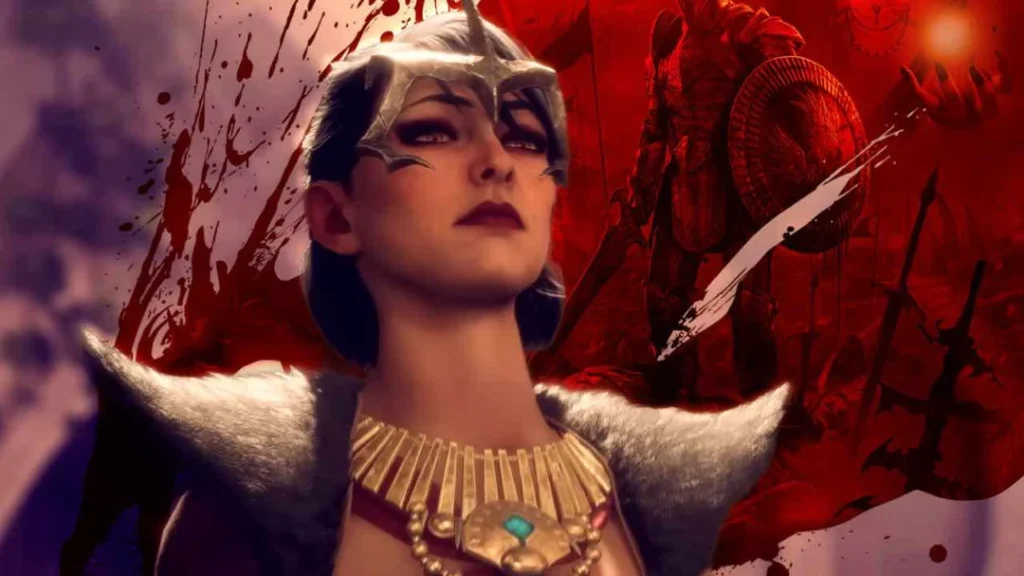
Darrah’s answer for Dragon Age: The Veilguard was considerably simpler. Asked what he would add, he identified Dragon Age Keep and said he had encouraged the team to include it, while acknowledging that implementing such a system would have required additional work. He did not offer an equally clear answer about something he would remove. This distinguishes his Veilguard comments from his thoughts on Origins, Dragon Age 2 and Inquisition, where he could identify specific sequences, encounters or structural elements he would cut or substantially modify. With The Veilguard, his immediate concern was stronger continuity support.
Darrah’s perspective also carries additional context because he was not simply observing The Veilguard from outside BioWare. After leaving the studio, he later returned as a consultant during the game’s development. His recommendation for Dragon Age Keep therefore sits alongside his broader retrospective view of a series he helped shape across multiple entries.
Although Darrah has not presented a single comprehensive plan for rebuilding Dragon Age, his individual answers form a consistent direction. Origins would receive a much shorter or more fragmented Fade sequence and potentially another playable cultural origin. Dragon Age 2 would gain more environmental variety, a more purposeful Act One economy and endgame consequences that diverge more substantially according to the player’s allegiance. Inquisition would become smaller, less aggressively gated by Power and clearer about when players should move beyond its first major region. The Veilguard would have stronger Dragon Age Keep support for continuity with earlier games.
Across these suggestions, Darrah repeatedly targets situations in which players are prevented from advancing at the pace suggested by the main narrative or where apparently significant choices converge too quickly on the same outcome. His retrospective fixes generally favour tighter pacing, clearer consequences, stronger incentives for optional content and less material that primarily extends playtime. The broader philosophy can reasonably be described as less mandatory friction and more meaningful choice, although that is an interpretation of his separate proposals rather than a phrase Darrah himself used. His comments ultimately highlight the difference between simply having more content in a role-playing game and ensuring that the content meaningfully serves the player’s experience.

Frequently Asked Questions (FAQs)
- What would Mark Darrah remove from Dragon Age: Origins?
Darrah said he would remove or dramatically reduce the Fade sequence associated with the Mage Tower. His criticism was aimed mainly at the playable section’s length and execution rather than the Fade itself as part of Dragon Age lore. He viewed the sequence as weaker than the surrounding material and as content that functioned partly like filler, making it one of the clearest areas he would streamline if revisiting Origins. - Why does Mark Darrah dislike the Dragon Age: Origins Fade sequence?
His criticism centres on both quality and pacing. Once the player enters the Fade during the Mage Tower storyline, the normal party-based structure is interrupted and the player must complete a lengthy series of dreamlike areas before returning to the main quest. Darrah also recalled that the sequence was produced relatively quickly late in development. His concern was therefore not simply that the section was difficult, but that it demanded a substantial amount of mandatory playtime while temporarily halting the momentum of the Circle Tower storyline. - What would Mark Darrah add to Dragon Age: Origins?
He would add an Avvar origin, reviving an additional human-origin concept that had been considered during development. Origins are fully playable opening scenarios that establish the protagonist’s background, relationships and cultural context before the Grey Warden storyline begins. An Avvar version would therefore have offered another distinct way for players to enter the world of Ferelden rather than simply adding another biography or dialogue option. - Why was the Avvar origin not included in Dragon Age: Origins?
Darrah emphasised that another human origin would have been expensive to produce. Each playable origin requires its own environments, characters, dialogue, quest scripting, voice work and later recognition of the protagonist’s background throughout the game. That makes an additional origin considerably more demanding than adding a simple character-history choice. His comments indicate that production cost was a major reason an extra origin was difficult to justify. - What would Mark Darrah change about Orsino in Dragon Age 2?
His clearest proposal is that players who side with the mages should not subsequently be forced to fight Orsino. In the finished game, Orsino becomes a boss regardless of whether Hawke supports the mages or opposes them. Darrah’s preferred version would allow the player’s allegiance to change the actual sequence of endgame encounters, making the pro-mage route more distinct instead of funneling both choices through essentially the same confrontation. - Why does Darrah think the Dragon Age 2 ending favours Meredith’s argument?
Because Orsino resorts to forbidden magic and becomes an enemy even when Hawke supports the mages, the ending can appear to validate Meredith’s warnings that dangerous magical practices have become uncontrollable. Darrah’s point was about how the story frames the conflict, not that Meredith is morally justified in everything she does. By forcing Orsino into the same role on both routes, the game weakens the ideological distinction between defending the mages and siding against them. - Would Mark Darrah remove the Hinterlands from Dragon Age: Inquisition?
That is not what he specifically proposed. Darrah indicated that the Hissing Wastes would probably be the large region he would cut. His concern with the Hinterlands was instead about player guidance. Because it is the first enormous area many players encounter, completionist players can spend far longer there than necessary. Darrah said stronger messaging should make it clear that players are expected to leave, continue the main story and return to regions later rather than trying to clear everything immediately. - How much would Mark Darrah reduce Inquisition’s Power requirements?
He suggested lowering the Power required for critical-path missions by approximately 40 to 60 per cent. Power is used to unlock major operations and story missions, so high requirements can push players into completing additional side activities before they are allowed to continue the campaign. Reducing those thresholds would keep the system in place while making optional exploration feel less like mandatory preparation for progressing through the main story. - What would Mark Darrah add to Dragon Age: The Veilguard?
His answer was Dragon Age Keep, which would provide stronger support for continuity and previous world-state choices. Darrah said he had encouraged the team to include it, although he also acknowledged that implementing such a system would have required additional work. Unlike his comments about the earlier games, where he identified specific material he would remove or restructure, his most immediate Veilguard change focused on better continuity support. - Did Mark Darrah say Dragon Age should be completely remade?
No. The September 2026 discussion concerned specific things he would add, remove or change if revisiting individual games. His suggestions included shortening the Fade in Origins, changing Orsino’s role in Dragon Age 2, reducing Inquisition’s size and progression barriers, and adding Dragon Age Keep support to The Veilguard. These comments amount to a series of retrospective design changes rather than an announced plan to completely remake the Dragon Age franchise.
Conclusion
Mark Darrah’s retrospective assessment of Dragon Age is revealing precisely because most of his proposed fixes are not extravagant. He does not argue that Dragon Age: Origins needs a different central plot, that Dragon Age 2 needs an entirely new cast, or that Inquisition needs to abandon exploration. Instead, he focuses on where otherwise successful ideas became too long, too restrictive or insufficiently responsive to player choice.
In Origins, that means shortening or removing the Mage Tower Fade section while potentially expanding role-playing through an Avvar origin. In Dragon Age 2, it means allowing the choice between mages and templars to produce a more genuinely different finale, particularly by avoiding the Orsino fight on the mage route. In Inquisition, it means cutting excess scale, reducing Power gates and making it clearer that players do not need to exhaust the first massive region before advancing. In The Veilguard, his most concrete addition is Dragon Age Keep.
The result is a remarkably consistent vision: a Dragon Age series with less compulsory filler, stronger pacing and decisions that alter gameplay as clearly as they alter dialogue. Darrah’s comments are therefore more than a collection of developer regrets. They are an illuminating postmortem on how even celebrated role-playing games can benefit from restraint, clearer structural signals and more meaningful consequences.
Sources and Citations
- Dork, September 24, 2026: Reports Mark Darrah’s comments on what he would change across the Dragon Age series. It confirms that he would cut or substantially reduce the Fade sequence in Dragon Age: Origins, add an Avvar origin if resources allowed, avoid forcing a fight with Orsino when siding with the mages in Dragon Age 2, and reduce Inquisition’s Power requirements while trimming oversized areas. Read Dork
Mark Darrah has shared the Dragon Age changes he’d make, starting with The Fade - Kotaku, September 23, 2026: Provides detailed reporting on Darrah’s retrospective design changes, especially his criticism of the Fade as filler, his interest in an Avvar origin, his view that the Orsino confrontation weakens the mage route, and his belief that Inquisition’s Power gates hurt pacing. Kotaku
Dragon Age Director Finally Says What Fans Have Been Thinking For Years: The Fade Needs To Go - Gamer Fridge, September 28, 2026: Gives the most complete secondary summary of Darrah’s answers across all four main games. It covers the Avvar origin, extra Dragon Age 2 level spaces, changes to Act One gold and sidequest incentives, removal of the Orsino fight on the mage route, cutting the Hissing Wastes or another large Inquisition area, reducing Power requirements by roughly 40% to 60%, and adding Dragon Age Keep to The Veilguard. Gamer Fridge
Former Dragon Age executive producer Mark Darrah explains what he’d change about each game - PC Gamer, September 2026: Additional contemporary coverage independently reproduces Darrah’s broader comments, including the Fade, Avvar origin, Orsino, Dragon Age 2 environments and economy, Hissing Wastes, Power requirements, and Dragon Age Keep. This is useful corroboration for details that go beyond the narrower Dork and Kotaku summaries. PC Gamer
Former Dragon Age executive producer Mark Darrah explains what he’d change about each game - Joking Joystick, September 24, 2026: Contemporary analysis of the same remarks focuses on the common thread running through Darrah’s suggestions: tighter pacing, more meaningful player choice, smaller progression barriers, and restoring stronger world-state continuity in The Veilguard. Joking Joystick
Mark Darrah’s Dragon Age Revisions Target the Series’ Biggest Pacing and Choice Problems - BioWare, Dragon Age Keep: BioWare’s original Dragon Age Keep announcement, written by Mark Darrah, explains the system’s purpose of preserving and customizing prior world-state choices for later Dragon Age games. It provides primary-source context for why Darrah later identified Keep support as the feature he would add to The Veilguard. blog.bioware.com
The Dragon Age Keep | BioWare Blog
Recommendations
- Vivian Kubrick Debunks Eyes Wide Shut Deleted Scenes Theory
- Battlefield 6 2026 Roadmap: More Maps, “Legendary” Battlefield 4 & Battlefield 3 Remakes, and Wake Island’s Return
- Apple TV’s Widow’s Bay is the First Breakout TV Hit of 2026: Why Everyone is Talking About the Horror Comedy
- Pitchify Launches New Service to Connect Developers and Publishers: How Pitch Direct Works
- Pokémon Pokopia Bubbly Basin DLC Release: Date, New Pokémon, and Everything You Need to Know
- Nordic Game 2026 (NG26 Spring): Dates, Venue, Passes, Speakers, Expo & Awards in Malmö
- Subnautica 2 Early Access Roadmap: Co-Op Updates, Sprinting, and More
- Virtua Fighter 6 Leak Explained
- The Future of 3D Modeling: Insights on AI Advancements
- GTA 6 is Already Outselling Everything Else: Why Pre-Orders Are Dominating Gaming



































































































