






In This Article (8 sections)
Glen Schofield’s Claims About Krafton, the Release Deadline, and the Callisto Protocol’s Development
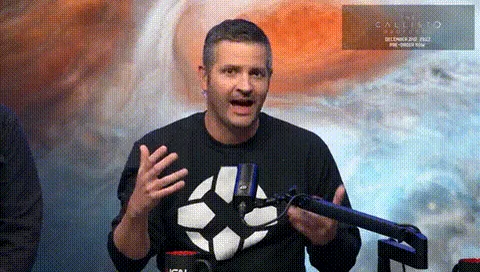
Glen Schofield has repeatedly argued that The Callisto Protocol reached players before Striking Distance Studios had enough time to finish and refine the game as intended. His account connects the December 2, 2022 release to pandemic disruption, remote development, platform requirements, increased production costs, and a development extension he says was discussed but never granted. In his 2024 comments, Schofield said he wanted roughly three and a half additional months and recalled receiving assurances in September or October 2021 that the team would have the time it needed.
According to him, the situation changed when Krafton reaffirmed a December 2022 deadline the following January, leaving the studio without the extension he expected. His October 2026 GamesIndustry.biz interview renewed those allegations, but they remain retrospective claims from the former studio chief rather than conclusions established by publicly available production contracts or internal scheduling records.
The phrase “released too early” therefore needs careful interpretation. The Callisto Protocol did not suddenly launch before the date advertised to consumers, because PlayStation was already promoting December 2, 2022 as the release date by August of that year. March 2023 instead refers to the additional development window Schofield says the project needed internally, not to a previously announced public launch that was later moved forward. His complaint is that Krafton refused an internal extension of approximately three months, forcing the team to meet an existing public commitment despite what he regarded as unfinished work. That distinction matters because a game can arrive exactly when advertised while still falling short of the readiness standard its developers wanted to achieve.
Schofield has also said that shortening the schedule did not necessarily reduce costs because the studio needed additional people and outside support to compensate for lost time. Late staffing increases can introduce their own coordination costs because new developers need onboarding, guidance, access to tools, and an understanding of systems already built by other teams.
More money can increase capacity, but it cannot immediately remove dependencies or give new contributors the same project knowledge as developers who have been involved for years. This forms an important part of Schofield’s argument that a longer schedule could have been more efficient than trying to accelerate the final stages. It remains impossible to prove that a three-month delay would have solved every technical, design, or production issue, but his account challenges the assumption that shipping sooner necessarily represented the simpler or cheaper option.
COVID added another layer of disruption by affecting both employee health and the way the studio worked. Schofield has described recurring illness among staff and periods when the company’s small Spanish team could not operate normally, which could delay work dependent on specialized technical knowledge. Striking Distance had also only been founded in 2019, meaning its first major game was being developed while the organization itself was still establishing workflows and relationships.
Remote production required reliable ways to share builds, review visual work, reproduce bugs, protect confidential material, and coordinate teams that might previously have solved problems through faster in-person communication. Remote work itself is not inherently unsuitable for complex development, but a relatively young studio adapting abruptly during a pandemic faced a different challenge from an experienced distributed company built around those processes from the beginning.
Platform scope complicated production further. Recent reporting on Schofield’s 2026 GamesIndustry.biz interview says Krafton required a PlayStation 4 version, while a separate GamesBeat interview published that year quotes him describing the project as originally beginning on PS4 before Krafton required PS5 support and associating the broader platform expansion with approximately $20 million in additional cost.
Those accounts emphasize different stages of the platform plan, so they should not be combined into a claim that one particular console alone caused the entire budget increase. What is confirmed is that The Callisto Protocol became a cross-generation release, requiring development and testing across hardware with different capabilities. That approach increased the potential audience while also adding optimization, certification, testing, and technical requirements that had to be completed within the same overall production schedule.
Budget reporting also needs similar caution. Contemporary reports cited spending of roughly 200 billion South Korean won, or around $160 million at the exchange rates used at the time, while Schofield later estimated total expenditure at approximately $150 million and described an initial budget closer to $100 million. Those figures may refer to different combinations of studio funding, game development, platform requirements, publishing, or marketing rather than one audited cost for the finished software alone.
The broader point is that Striking Distance was simultaneously building an organization and developing a technically ambitious new intellectual property, creating costs beyond individual environments, characters, and gameplay systems. A large budget could buy additional people and services, but it could not create unlimited time or instantly remove the inefficiencies caused by late changes and disrupted workflows.

The Callisto Protocol’s PC Problems, Reviews, Sales Expectations, and Krafton’s Response
The clearest evidence of The Callisto Protocol’s troubled launch came from the PC version, where players immediately reported severe stuttering and other performance problems. Early Steam reception fell into the “Mostly Negative” range as players described interruptions that could undermine the atmosphere even on systems otherwise capable of running the game. Shader compilation became a major focus because graphics preparation performed during gameplay can cause sudden pauses, regardless of whether the average frame rate appears acceptable.
The official patch archive confirms that the developers addressed the issue directly, with an early PC update referring to changes to the pipeline state object cache intended to reduce stuttering. Schofield also attributed the immediate problem to an error and said an early patch improved the situation, although that specific defect should remain distinct from his broader criticism of the production schedule.
Performance problems had an especially visible effect because The Callisto Protocol relied heavily on presentation, timing, animation, lighting, and sound to build tension. A technical hitch during a sudden attack or scripted scare can destroy the rhythm of a sequence even if the game resumes normally seconds later. That made launch stability more than a purely numerical frame-rate issue and helped shape early player impressions before later updates improved the experience.
The existence of later fixes does not erase what launch customers encountered, just as launch criticism does not mean every later player experienced the same technical version. Any discussion of reception should therefore identify the platform and period being described rather than treating all players as if they encountered one permanent build.
Critical reviews were divided rather than uniformly negative. GameSpot awarded The Callisto Protocol 5 out of 10, IGN gave it 7 out of 10 in the roundup cited, and PC Gamer scored it 79 out of 100, demonstrating substantial differences in how reviewers judged the experience. GameSpot focused heavily on the relationship between deliberate combat mechanics and encounters involving multiple enemies, arguing that actions such as healing or switching weapons could leave Jacob exposed when situations demanded faster reactions.
The review also questioned the shift from horror toward larger action sequences, showing that some complaints concerned design rather than technical performance. Those distinctions matter because an additional three months might plausibly have improved optimization and polish without necessarily changing every reviewer’s opinion about combat pacing, encounter structure, or narrative design.
Commercial expectations were also extremely high. Contemporary financial reporting described forecasts of approximately five million copies, while analysts later reduced expectations toward roughly two million. Those were changing forecasts rather than a definitive statement that exactly two million copies had been sold, but they show how confidence in the project’s commercial trajectory weakened after launch. Technical complaints, mixed reviews, pricing, competition, and the difficulty of introducing a new intellectual property could all have influenced demand, yet the available evidence does not isolate how much each factor contributed. A discounted sale, promotional copy, subscription player, and full-price launch purchase also generate different financial outcomes, so player count and commercial return should not be treated as interchangeable measures.
Schofield has subsequently said that Krafton considered The Callisto Protocol a “complete failure,” but that phrase represents his characterization of the publisher’s judgment rather than a newly issued Krafton statement. His frustration appears to reflect a difference in how the project’s future was evaluated. Developers could look at extensive post-launch work and see a product capable of improvement, while a publisher could focus on the scale of investment, original sales expectations, and the opportunity cost of continuing to finance the property.
Both perspectives can exist simultaneously because they evaluate different aspects of the same project. Schofield had also envisioned The Callisto Protocol as the foundation for a larger franchise, which helps explain why he viewed the first game as something that could be improved rather than the only opportunity to justify the investment.
That disagreement is central to his later criticism of the release decision. If the publisher judged the project primarily by launch performance, then the condition of the game on December 2 carried enormous commercial importance. If Schofield believed additional time could have reduced technical problems and improved player reception, the refusal to delay would naturally appear more consequential in hindsight. At the same time, no available evidence can demonstrate precisely how much a March 2023 release would have changed reviews, sales, or profitability. The counterfactual remains inherently uncertain, even if the documented launch problems make his argument understandable.
The 86-Patch Claim, Post-Launch Updates, DLC, and Schofield’s Departure
Schofield has emphasized the amount of work performed after launch by claiming that the team delivered 86 patches while improving the game and completing additional content. That number should remain attributed to him because the publicly visible update archive does not provide a simple way to independently count 86 separate consumer-facing releases. Different platforms, internal builds, hotfixes, certification packages, and individual fixes could all contribute to an internal count, but the available evidence does not explain his methodology. The lack of an independently reproducible total does not change the fact that The Callisto Protocol received extensive post-launch support. Official patch notes document substantial changes to stability, progression, combat behavior, accessibility-related presentation, and several gameplay systems.
Some updates altered the game more meaningfully than ordinary bug fixes. A December 2022 combat update accelerated actions and modified enemy behavior around the player, directly affecting the rhythm of encounters criticized in early reviews. Later updates introduced New Game Plus, Hardcore Mode, cutscene skipping, and Dismemberment Mode, creating additional reasons to replay the campaign under different conditions. These changes demonstrate that the developers continued modifying both technical and gameplay aspects of the experience after release. A raw patch count remains less informative than the practical changes those updates produced for players.
Paid downloadable content expanded the game further. PlayStation’s description of the season pass identified Contagion as a harsher survival experience and Riot as a wave-based combat mode, giving players alternative ways to use the game’s combat and resource systems. Final Transmission then extended Jacob’s story and served as a concluding narrative chapter rather than a numbered sequel. Official PlayStation material described its June 2023 release with an initial period of PlayStation availability, while the Xbox listing records June 29, 2023. Together, these additions show that post-launch development continued well beyond stabilizing the original campaign.
The resulting version of The Callisto Protocol is therefore meaningfully different from the software reviewed during its launch period. Later players gained performance improvements, revised combat behavior, additional modes, quality-of-life changes, and story content that early reviewers did not have. Recognizing that evolution does not invalidate the historical criticism because consumers who purchased the game in December 2022 experienced the original launch version. Likewise, acknowledging the launch problems should not erase the work performed afterward. The most accurate account keeps both stages visible.
Schofield left Striking Distance Studios in September 2023, less than a year after the game’s release, with former chief development officer and general manager Steve Papoutsis named as his successor as CEO. Contemporary reporting described Schofield’s departure as a decision to pursue other opportunities, and Krafton characterized the leadership departures as voluntary. The timing followed both the main launch period and Final Transmission, while also coming after layoffs at the studio. GamesBeat reported 32 job losses before Schofield’s exit, adding another sign of the organizational pressure surrounding the project.
His later interviews provide context for how he remembers those events, particularly his frustration with the release deadline and the strain surrounding production. They do not, however, replace the contemporary record or prove that private disagreements were the direct cause of his departure. A founder leaving after a difficult launch naturally invites speculation, but timing alone does not establish that he was removed. The relevant confirmed facts are that layoffs occurred, Schofield later departed, Krafton described that departure as voluntary, and the studio continued under different leadership. Any stronger explanation would require additional evidence.

What Schofield’s Claims Mean for the Unmade Callisto Protocol Sequel
Schofield has continued discussing ideas for a sequel, showing that he viewed The Callisto Protocol as a property capable of expansion beyond its first game. His recent description involves a much larger setting built around a huge accumulation of spacecraft connected with a space station, with the threat expanding from a contained outbreak into a broader plague. That concept would move away from the first game’s more confined environments and potentially create opportunities for different ships, histories, and locations. Those possibilities remain interpretations of his premise rather than confirmed systems or levels from a game in production. The idea exists as an unrealized proposal, not as an announced sequel.
His interest in continuing the series predates the later controversy. In October 2022, before the first game launched, GameSpot reported that Schofield already had ideas for another installment while still describing The Callisto Protocol as intended to function as a standalone experience. That history reinforces the idea that he saw the original game as both a complete story and a possible foundation for a larger property. His later disappointment therefore concerns not only the reception of the first game but also the loss of an opportunity to develop concepts beyond it. A creative plan, however, does not automatically create a viable commercial project.
A sequel would require a publisher willing to fund it, a development team capable of building it, leadership, staffing, a sustainable budget, and evidence that enough players would support another release. Those conditions are especially important after a first game reportedly fell short of ambitious financial expectations. Schofield’s description demonstrates creative potential but does not establish that Krafton or Striking Distance intends to revive the concept. The sources reviewed do not identify active production, a development schedule, a publisher commitment, or a release date.
His broader argument is that The Callisto Protocol might have built a stronger foundation for future games if the original launch had been delayed and refined. That view is understandable given his belief that the team needed more time and his emphasis on the work performed through dozens of post-launch updates.
However, no evidence can demonstrate exactly how the market would have responded to an alternative March 2023 version or whether improved launch stability would have been enough to justify a sequel. Some criticisms were technical, while others involved combat, pacing, and narrative choices that additional time might not have fundamentally changed. A delayed version could have been better without necessarily becoming the commercial success required to sustain a franchise.
The lasting significance of Schofield’s comments therefore lies less in proving a single cause for The Callisto Protocol’s difficulties than in showing how production decisions, schedule pressure, organizational disruption, technical readiness, and commercial expectations can interact. The December 2022 launch is documented, as are the PC stuttering complaints, mixed reviews, extensive updates, DLC, and Schofield’s later departure.
His claim that Krafton denied approximately three additional months provides one explanation for why those problems reached customers when they did, but it remains his retrospective account of internal decisions. The available evidence supports the conclusion that the game launched under substantial pressure and required significant post-release work, while the exact degree to which a delay would have changed its fate remains unknowable.

Frequently Asked Questions (FAQs)
- What does Glen Schofield claim Krafton did to The Callisto Protocol?
Schofield says Krafton required Striking Distance Studios to release The Callisto Protocol in December 2022 even though he believed the team needed roughly three additional months of development. He has connected that need for more time to pandemic disruption, staff illness, remote-working difficulties, increased platform requirements, and the amount of work still remaining near launch. His criticism concerns the internal production schedule rather than the publicly announced release date, which remained December 2, 2022. He has also expressed regret about agreeing to ship the game under those circumstances, acknowledging his own leadership role rather than placing every responsibility on the publisher. The claim remains his retrospective account of internal decision-making because the complete production agreements and scheduling documents have not been made public. - Was The Callisto Protocol officially delayed from December 2022 to March 2023?
No public delay from March 2023 to December 2022 is established by the sources reviewed. December 2, 2022 had already been publicly promoted as the game’s release date months before launch. March 2023 instead represents the approximate additional development window Schofield says he believed the team would receive. His allegation is therefore that Krafton refused an internal extension, not that the publisher publicly announced a March release and then moved the game forward. That distinction prevents the production disagreement from being confused with a consumer-facing release-date change. - When did The Callisto Protocol actually launch?
The Callisto Protocol launched on December 2, 2022 for PlayStation 4, PlayStation 5, Xbox One, Xbox Series X|S, and PC. Its cross-generation release is relevant because supporting several hardware configurations adds testing, optimization, certification, and performance requirements. Older and newer consoles can have substantially different processing, memory, and storage capabilities, requiring developers to make the same underlying game work across multiple environments. Schofield has discussed platform expansion as part of the wider production pressure surrounding the project. However, supporting several systems does not by itself establish that cross-generation development caused the launch problems. - Did COVID affect the development team?
Yes, according to Schofield’s account. He has described recurring illness among employees and periods when the studio’s small Spanish team could not operate normally, creating interruptions that could affect other dependent areas of production. The pandemic also forced changes in working arrangements while Striking Distance Studios was still a relatively young company developing its first major game. Losing specialists or slowing communication can have effects that continue even after individual employees return because unfinished work accumulates across connected teams. COVID therefore provides important context for the schedule dispute, although it does not prove that every technical or creative weakness in the finished game resulted from the pandemic. - Why was the PC version criticized at launch?
Severe stuttering was one of the most prominent complaints about the PC release. Contemporary coverage connected much of the problem with shader compilation and related graphics preparation occurring during play, which could create noticeable pauses even when average frame-rate measurements appeared reasonable. The official patch archive confirms that Striking Distance addressed related behavior by updating the pipeline state object cache and later providing additional shader-compilation information. These interruptions were particularly damaging in a horror game because sudden pauses could disrupt carefully timed combat, animation, lighting, and scares. An early patch improved the situation, but later fixes do not change the fact that launch customers initially encountered the problem. - How much did The Callisto Protocol cost to develop?
There is no single fully reconciled public production ledger establishing one definitive figure. Contemporary reporting cited approximately 200 billion South Korean won, converted at the time to roughly $160 million, while Schofield later estimated expenditure at around $150 million. He has also referred to an earlier budget closer to $100 million before additional platform and production obligations increased costs. These numbers may cover different combinations of development, studio expansion, marketing, publishing, technology, and other expenses. They are therefore best described as reported estimates rather than one independently audited figure for the finished game alone. - Did the team release exactly 86 public updates?
Schofield says the team delivered 86 patches while continuing to improve The Callisto Protocol and complete its additional content. The publicly accessible patch archive confirms extensive post-launch support, but it does not provide a simple way to reproduce that exact total from individually numbered consumer updates. His count may include platform-specific releases, internal classifications, hotfixes, or other updates, but the available evidence does not establish his counting method. The exact number is less informative than the documented changes themselves, which addressed performance, combat, progression, accessibility-related presentation, and additional modes. The 86 figure should therefore remain attributed to Schofield rather than presented as an independently verified public patch count. - What is Final Transmission?
Final Transmission is the story expansion for The Callisto Protocol and extends Jacob Lee’s narrative beyond the base campaign. Its premise involves attempting to retrieve important data and prevent the biophage threat from spreading beyond Black Iron Prison. The expansion adds a concluding story chapter rather than functioning as a numbered sequel or an entirely separate game. It arrived in June 2023, with PlayStation receiving an initial period of access before its wider release, while the Xbox listing records June 29. Final Transmission was part of the game’s broader post-launch support alongside modes such as Contagion, Riot, New Game Plus, and Hardcore Mode. - Was Glen Schofield fired from Striking Distance Studios?
The contemporary reporting reviewed does not establish that Schofield was fired. His departure was announced in September 2023, with Krafton describing the leadership changes as voluntary and reporting stating that he was leaving to pursue other opportunities. Steve Papoutsis, previously chief development officer and general manager, succeeded him as CEO. The departure occurred after the game’s difficult launch, extensive post-release work, Final Transmission, and layoffs affecting the studio, which naturally encouraged speculation about the circumstances. Schofield’s later criticism of Krafton provides additional context about disagreements during development, but it does not justify replacing the documented account with an unsupported claim that he was dismissed. - Is The Callisto Protocol 2 confirmed?
No. The reviewed sources do not establish that The Callisto Protocol 2 or another official sequel is currently in development. Schofield has discussed wanting to continue the property and has described an unrealized concept involving a much larger setting built around numerous spacecraft and a space station, with the threat expanding into a broader plague. He had also spoken about sequel ideas before the first game launched, showing that he viewed the property as capable of supporting additional stories. However, creative concepts are different from a funded production with an approved team, publisher, schedule, and release target. Until such a project is formally announced, Schofield’s ideas should be described as unrealized sequel plans rather than confirmation of The Callisto Protocol 2

Conclusion
Schofield’s account offers a significant explanation for why The Callisto Protocol reached players in the condition it did, describing a studio dealing simultaneously with pandemic disruption, staffing and workflow challenges, expanding production demands, and a release schedule he believed left too little time for final refinement. The documented launch history supports several parts of that broader picture: the game shipped on December 2, 2022, the PC version immediately drew serious stuttering complaints, critical reception was divided, and Striking Distance spent the following months making substantial technical and gameplay changes.
Commercial expectations were also reduced after release, while Schofield eventually left the studio in September 2023 after the main launch period and Final Transmission. Taken together, those events show that the project faced genuine technical, organizational, and commercial difficulties rather than a single isolated launch problem.
The limits of the evidence are equally important. Schofield’s retrospective interviews do not independently verify every internal assurance he says was made, Krafton’s complete reasoning for maintaining the December deadline, or exactly how another three months would have changed the finished game. His different descriptions of platform requirements also need to remain attributed rather than combined into one definitive explanation, and his claim that the team delivered 86 patches cannot be reproduced straightforwardly from the public update archive.
Additional development time could plausibly have improved optimization, testing, polish, and some elements later addressed through updates, but several reviews also criticized combat design, pacing, and other creative choices that a delay might not have resolved. The strongest conclusion is therefore that The Callisto Protocol launched under substantial production pressure and required significant post-release work, while the question of whether a March 2023 release would have fundamentally changed its commercial and critical trajectory remains unanswered.
Sources and Citations
- VGC: Schofield’s August 2024 account of the disputed development extension
- VGC reported on August 7, 2024 that Glen Schofield said The Callisto Protocol suffered because Krafton insisted on shipping it before he believed it was ready. Schofield said he wanted roughly three and a half additional months and believed during September or October 2021 that the project would receive more time, before Krafton later reaffirmed the existing schedule. This is the strongest source for his claim that the game needed a development extension, but it remains Schofield’s retrospective account rather than independently verified internal scheduling documentation. VGC
- Citation: VGC: Callisto Protocol Director Claims Krafton Insisted on Releasing the Game Too Soon
- PC Gamer: Schofield’s October 2026 comments about being forced to ship
- PC Gamer’s October 2026 report quotes Schofield saying he was “forced to ship” the game and criticizing the decision in light of COVID-related disruption. He described recurring staff illness and periods when the studio’s small Spanish team was effectively shut down, including interruptions affecting rendering work. This source is useful for the pandemic and staffing-pressure side of his argument and for establishing that he continued making the same core allegation in 2026. PC Gamer
- Citation: PC Gamer: Dead Space Creator Says He Was Forced to Ship The Callisto Protocol
- GamesBeat: Schofield’s retirement interview and retrospective budget estimates
- GamesBeat’s 2026 interview provides Schofield’s later financial and production estimates. He said the project ultimately cost about $150 million, compared with an original budget of roughly $100 million, and associated expanded platform requirements with higher costs. He also repeated that he had wanted more development time and said the team made 86 patches over the following three or four months. The budget and patch figures should remain attributed to Schofield because they are retrospective estimates rather than audited public totals. GamesBeat
- Citation: GamesBeat: Why Glen Schofield Has Decided to Retire From Making Video Games
- Striking Distance Studios: Official patch notes
- Striking Distance’s official patch archive is the best first-party record for the substantial post-launch work performed on The Callisto Protocol. It documents updates addressing PC stuttering, stability, combat behavior, progression, New Game Plus, Hardcore Mode, Dismemberment Mode, and other technical and gameplay changes. The archive supports the broader claim that the game required extensive post-release work, although it does not provide an obvious public count that independently verifies Schofield’s exact “86 patches” figure.
- Citation: Striking Distance Studios: The Callisto Protocol Patch Notes
- PlayStation Blog: August 2022 Glen Schofield interview
- Sony’s August 23, 2022 interview provides valuable contemporary evidence from before launch. Schofield described the challenge of building a new studio, new team, new IP, and new game during the pandemic. The same interview discusses development for a new console generation and explicitly places the project on its path toward the December 2, 2022 release. PlayStation.Blog
- Citation: PlayStation Blog: The Callisto Protocol Glen Schofield Interview
- PlayStation Blog: December 2 release date confirmation
- A separate August 23, 2022 PlayStation Blog post explicitly states that The Callisto Protocol would launch on PS4 and PS5 on December 2, 2022. This is important because it establishes that December 2 was publicly announced months before release. Therefore, Schofield’s later reference to needing until approximately March 2023 should be described as a desired internal extension, not as a publicly announced March release that Krafton moved forward. PlayStation.Blog
- Citation: PlayStation Blog: New Combat and Gameplay Details for The Callisto Protocol
- GameSpot: The Callisto Protocol review
- GameSpot awarded the game 5/10 and criticized the way its melee-focused combat struggled during larger multi-enemy encounters. The review also argued that the experience shifted away from its stronger horror opening toward increasingly action-heavy spectacle. This source is useful for distinguishing design criticism from purely technical launch problems, since additional development time might have improved optimization without necessarily resolving every reviewer’s concerns about combat structure or pacing. GameSpot
- Citation: GameSpot: The Callisto Protocol Review, I Don’t Belong Here
- Game World Observer: Development investment and sales projections
- Game World Observer reported in January 2023 that the project was associated with approximately ₩200 billion, or about $161.5 million, in development investment. It also reported that Krafton had expected roughly five million worldwide sales, while Korea Investment & Securities later reduced its projection from four million to approximately 2.1 million units. These figures represent reported investment and analyst forecasts rather than a definitive audited development budget or confirmed lifetime sales total. Game World Observer
- Citation: Game World Observer: The Callisto Protocol Fails to Recoup Its $160 Million Budget
- GamesBeat: Schofield’s September 2023 departure from Striking Distance Studios
- GamesBeat reported on September 20, 2023 that Schofield was leaving the studio he founded to pursue other opportunities. The report states that Steve Papoutsis would become CEO and notes that Striking Distance had gone through 32 layoffs earlier that year. This supports the timing and succession details surrounding Schofield’s departure but does not establish that he was fired. GamesBeat
- Citation: GamesBeat: Founder Glen Schofield Leaves Striking Distance Studios
- Game World Observer: Additional context on Schofield’s departure and launch reception
- Game World Observer independently reported that Schofield left following the game’s disappointing commercial performance, with Steve Papoutsis succeeding him. Its retrospective also records the earlier layoffs, the game’s mixed critical reception, launch PC stuttering complaints, and reduced sales expectations. The article provides useful context, but descriptions such as “commercial failure” are editorial characterization rather than a direct Krafton statement. Game World Observer
- Citation: Game World Observer: Glen Schofield Leaves Striking Distance Studios
Recommendations
- Vivian Kubrick Debunks Eyes Wide Shut Deleted Scenes Theory
- Battlefield 6 2026 Roadmap: More Maps, “Legendary” Battlefield 4 & Battlefield 3 Remakes, and Wake Island’s Return
- Apple TV’s Widow’s Bay is the First Breakout TV Hit of 2026: Why Everyone is Talking About the Horror Comedy
- Pitchify Launches New Service to Connect Developers and Publishers: How Pitch Direct Works
- Pokémon Pokopia Bubbly Basin DLC Release: Date, New Pokémon, and Everything You Need to Know
- Nordic Game 2026 (NG26 Spring): Dates, Venue, Passes, Speakers, Expo & Awards in Malmö
- Subnautica 2 Early Access Roadmap: Co-Op Updates, Sprinting, and More
- Virtua Fighter 6 Leak Explained
- The Future of 3D Modeling: Insights on AI Advancements
- GTA 6 is Already Outselling Everything Else: Why Pre-Orders Are Dominating Gaming



































































































