







Meta description: A Czech-to-English translator and editor associated with Kingdom Come: Deliverance 2 says he was fired after being told his role would become “obsolete” as the studio shifts toward AI translation. This report separates verified statements from allegations, summarizes Warhorse’s public response, and analyzes what AI localization could mean for RPG writing quality, DLC updates, and the future of localization work in 2026.
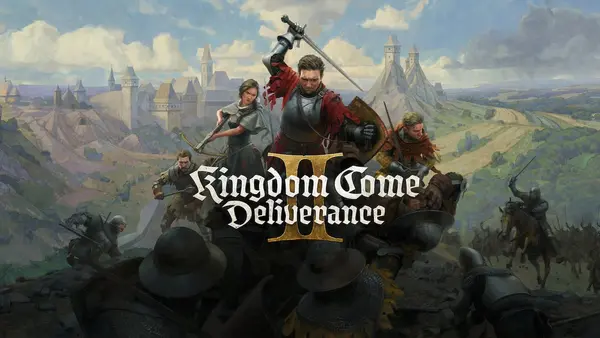
Kingdom Come: Deliverance 2 translator fired for AI translations explained
In late March 2026, a localization dispute involving a former in-house Czech-to-English translator/editor working on Kingdom Come: Deliverance 2 became widely discussed after a first-person account was posted on the game’s subreddit and amplified by mainstream games media.
The core facts that can be directly attributed to named sources (rather than inferred) are:
The translator (posting as “Max H”) stated he had worked at Warhorse since July 2022 as a Czech-to-English translator and editor, and that his work covered dialogues, quest logs, item names, DLC-related text, and some marketing materials.
He claimed he was summoned to a meeting on March 27, 2026, and told his position would become “obsolete” beginning “next month,” with AI used “for all translations going forward,” citing motivations framed as making the company “more effective” and to “save finances.”
Major outlets reported they confirmed the poster’s identity and/or authorship, and that subreddit moderators verified his employment via LinkedIn (as described by those outlets and the moderator exchange visible on the subreddit thread).
Warhorse issued a limited public statement through press contacts saying it is a “talent-driven studio,” “deeply value[s] the people who shape our work,” and will not discuss “individual situations” publicly, citing privacy and dignity.
Separately, Kingdom Come: Deliverance II is positioned publicly as a narrative-driven action RPG with a large amount of story and quest content—exactly the kind of game where localization quality strongly affects storytelling comprehension and tone.
Who is Max Hejtmánek and what did he say about Warhorse Studios using AI?
The person at the center of the claim identified himself publicly as “Max H” and described his role as Czech-to-English translator and editor employed since July 2022. Multiple games outlets described him using the name “Max Hejtmánek,” identifying him as the English language editor (and, in some coverage, also a voice-over director) associated with Kingdom Come: Deliverance 2.
The essential claims he made, in his own words and as reported across outlets, were:
He was informed his role would become “obsolete” as the studio moves to “AI for all translations going forward.”
He felt “betrayed” by management and wanted the situation publicized as an example of how AI adoption affects workers in games.
He would not break NDA obligations and was not seeking to start legal action (as stated in the post).
He encouraged readers not to harass other staff or engage in review-bombing, according to outlet summaries of his follow-up edits and comments.

What the translator’s Reddit post claimed about being replaced by AI
The original long-form account was published on the Kingdom Come subreddit in a post titled “Fired from Warhorse Studios and replaced with AI,” authored by user “ThousandDemons.”
The post asserts, in sequence:
- Employment scope: translator/editor work since July 2022, mainly on KCD2 and DLC text, including dialogue, quest logs, and item names.
- Termination narrative: an unforeseen meeting on March 27, 2026, where he was told that “as of next month,” his position would be obsolete in favor of AI translations; the alleged rationale was efficiency and cost savings.
- Prior internal discussion: AI translation had been discussed previously inside the company; he says he opposed it, but did not believe it would lead to his job ending.
- Verification posture: he stated that he verified his LinkedIn with subreddit moderators, and avoided posting documents due to NDA/legal uncertainty.
This Reddit post became the primary source document for subsequent media coverage; later articles frequently quote the “obsolete” and “AI for all translations going forward” language directly from that thread.
Warhorse Studios AI translation policy: “AI for all translations going forward”
A critical distinction for accuracy is that the phrase “AI for all translations going forward” appears as the translator’s characterization of what he was told in an internal meeting, not as a confirmed policy statement published directly by Warhorse.
Warhorse’s published response (via communications contacts) did not confirm any “AI for all translations” mandate, nor did it acknowledge changes to localization staffing or workflow. It instead emphasized values (“talent-driven”) and declined to discuss individual personnel matters.
This means that, as of the latest report updates in late March 2026, the existence of a formal company-wide AI-only translation policy remains an allegation rather than a documented, on-the-record policy announcement.
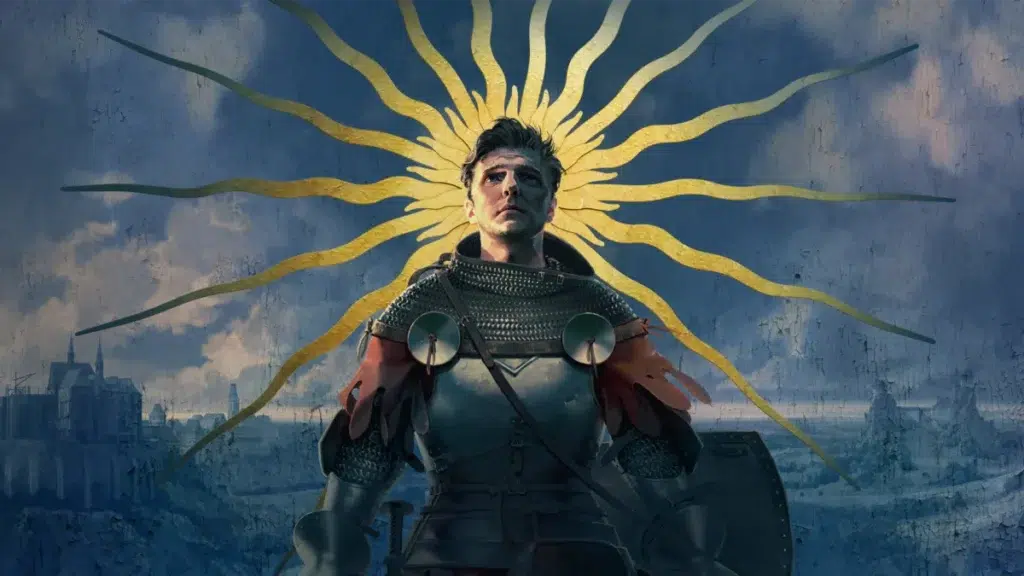
Warhorse Studios response to the Kingdom Come Deliverance 2 AI translation claims
Warhorse’s most widely cited public statement is consistent across at least three outlets (presented as a spokesperson email or a communications director quote), and reads in substance: Warhorse is “talent-driven” and “deeply value[s] the people who shape our work.”
Out of respect for “privacy and dignity,” Warhorse will not comment on “individual situations” publicly. From a governance and accountability standpoint, such a response limits what can be verified directly about: (a) whether AI is being used for translations at all, (b) the extent of AI usage (pilot vs. production), and (c) whether human review is retained.
A relevant industry parallel is platform-level disclosure: Valve’s Steamworks documentation now treats “Generative Artificial Intelligence Content” as a formal content-survey field, distinguishing “Pre-Generated” AI content (created during development) and “Live-Generated” content (created while the game runs), and ties the disclosure to marketing consistency and compliance review.
While not specific to this case, it illustrates that “AI-generated localization” is widely recognized as player-facing content that may fall under transparency expectations on major storefronts.
How AI localization could change RPG dialogue, quests, and item descriptions
The translator’s post gives a concrete inventory of where localization lands in a large RPG: dialogue, quest logs, item names, and other supporting text—often the connective tissue that explains objectives, moral nuance, historical tone, and character relationships.
In practice, replacing human localization with AI systems could change how:
- Dialogue registers are handled: medievalisms, class markers, humor, obscenity, and pragmatic politeness differ by language and region, and require consistent voice across tens of thousands of lines.
- Quest framing is interpreted: quest logs frequently compress complex story states into short, high-information strings that must remain accurate and unambiguous; mistranslation in quest objectives can create gameplay friction or “soft confusion” that feels like a bug.
- Item naming systems remain coherent: item names map to crafting, trade, and encyclopedic systems; weak localization contributes to inconsistent naming, mistaken item functions, and broken thematic cohesion.
This is not speculation about KCD2’s current text quality; it is a grounded description of why localization is structurally important in story-heavy RPGs, as reflected in game localization best-practice guidance (workflow planning, style guides, consistency, review) and scholarly work emphasizing complexity in game text types.

AI translation vs human localization: quality risks for Kingdom Come Deliverance 2
Modern machine translation can be powerful, but quality risk is not a simple “good vs bad” binary. For games, the central risks cluster around trust, consistency, and failure modes:
Quality variability by language pair and text type is well documented even in public-sector MT disclaimers; the European Commission explicitly warns that MT accuracy can vary “significantly” across texts and language pairs, and that it does not guarantee accuracy.
Hallucination risk exists in translation models: research on large multilingual translation models notes that hallucinated translations can undermine user trust and raise safety issues, and that hallucinations have been studied across many translation directions and resource levels.
Failure risk is amplified for low-resource directions and non-English-centric translation, where hallucinations and degradation are more likely and harder to detect at scale. The translator’s later claims to PCGamesN (as reported) also illustrate an operational risk: he asserted that AI was already used to translate “a solid chunk” of remaining text to meet deadlines, that much of it was heavily edited by humans, and that some material may not have received “proper care” before shipping.
This remains an allegation, but it describes a plausible pipeline pattern: MT/LLM generation followed by post-editing under time pressure.
Industry standards describe post-editing as a distinct service requiring qualified human competence: ISO 18587 specifies requirements for “full, human post-editing of machine translation output” and post-editor competences, while ISO 17100 specifies requirements for translation service processes more broadly.
When applied to game localization, this implies that “AI translation” is not inherently incompatible with quality goals, but that quality depends on how much human revision and domain-aware control remains in the loop, and whether the process is resourced accordingly.
Why game studios are switching to AI translation tools in 2026
The broader backdrop in 2026 is a volatile labor market plus widespread experimentation with generative AI tools. GDC’s 2026 State of the Game Industry highlights sustained impact from layoffs—28% of respondents reporting layoffs in the past two years—and reports that 36% of game industry respondents are using generative AI tools in their work.
The same GDC report notes that LLMs are among the most used AI tools, and that use cases include research/brainstorming, daily tasks, and code assistance—signals that AI use has normalized in many pipelines even while sentiment remains negative.
Localization is often where studios feel immediate scaling pressure: shipping in more languages, faster, with frequent patches and live updates. The IGDA localization community has long framed localization as constrained by cost/time/quality tradeoffs, with quality often the first casualty when budgets compress.
Academic research on video game machine translation suggests there can be productivity benefits if MT is implemented properly—especially when paired with in-domain data and interactive, human-led use—while also cautioning that tool implementation choices determine whether the result supports creativity or devolves into raw post-editing for throughput.
Cost-cutting concerns: “make the company more effective” and “save finances”
The most direct cost-cutting language in this incident is not from a corporate memo; it is from the translator’s statement of what he was told in a meeting: that replacing his role was meant to “make the company more effective” and “save finances.”
That phrasing aligns with the way efficiency arguments often appear in AI adoption discussions in games:
In leadership commentary adjacent to this controversy, the game’s director publicly argued that AI could accelerate development areas including localization, animation, and worldbuilding—framing AI as a production shortcut to make larger games without proportional headcount growth.
Platform policy language on Steam similarly distinguishes between “efficiency tools” and AI-generated content consumed by players, underscoring that production efficiency is a central motive even when disclosure focuses on player-facing content.

Community and ethical debate
The visible community response has several recurring themes, as reflected in subreddit discussions and media summaries:
Concern that narrative tone and historical flavor will suffer if human localization is reduced, especially for a Czech-authored RPG whose English version relies heavily on adaptation rather than literal translation.
Anger over perceived labor displacement and “cost cutting,” paired with calls for transparency and consumer choice.
Requests not to harass individual developers or organize review-bombing, which both the translator and outlets emphasized.
The scale of attention is partly explained by timing: the dispute landed during a period of heightened sensitivity to AI in games, including debates around AI-generated visuals and platform disclosure labels.
Ethics of AI in game development: jobs, credit, and creative ownership
Ethical concerns in this controversy cluster around three areas:
- Jobs and displacement: GDC’s 2026 report explicitly notes ongoing layoffs, strong concern among students about job prospects, and discussion of AI-led displacement fears.
- Credit and authorship: localization work is creative labor—tone, jokes, and characterization choices can materially alter how players perceive story and character. Best-practice guidance treats localization as more than substituting words, and scholarship emphasizes that game translation entails multiple overlapping text types and creative challenges.
- Oversight and transparency: UNESCO’s ethics guidance emphasizes transparency, traceability, auditability, and oversight mechanisms to avoid harms and protect rights; in a games context, this maps onto disclosure norms and accountability when AI reshapes creative workflows.
Steam’s current policy structure further reflects an ecosystem tilt toward transparency on player-visible AI content: developers must describe AI use in the content survey if AI-generated content ships in the game, store page, or marketing, and Valve frames the review as ensuring consistency with marketing promises and content rules.
How AI translation could affect non-English languages and regional releases
AI translation’s uneven performance across languages is one of the most important risk multipliers in global releases:
Large multilingual translation model research highlights that hallucinations and failure modes can be more prevalent in low-resource directions and in non-English-centric translation scenarios.
Work on hallucination detection across high- and low-resource languages suggests that the problem is significant enough to require specialized detection methods and that performance differs substantially between HRLs and LRLs across multiple scripts and directions.
In practical publishing terms, the likely result is not a uniform “AI makes everything worse,” but a bifurcation: high-resource languages may achieve acceptable quality faster with strong post-editing, while smaller language communities face higher error rates and thinner human review coverage—which can increase reputational risk precisely in regions where high-quality localization is a differentiator.

Will Kingdom Come Deliverance 2 patches and DLC use AI translations too?
No public statement from Warhorse confirms whether patches, DLC, or future releases will use AI translations. Warhorse’s only on-record response in the coverage reviewed declined to discuss individual situations and did not address localization policy directly.
However, several evidence-linked points matter for assessing what is plausible:
- The translator stated he worked on KCD2 DLCs, and his claim about “AI for all translations going forward” was framed as a forward-looking policy beginning “next month.”
- Deep Silver’s official game page prominently advertises an expansion pass and lists named DLC entries (e.g., “Brushes with Death,” “Legacy of the Forge,” “Mysteria Ecclesiae”), indicating ongoing content updates where localization will continue to be required.
- The translator told PCGamesN (as reported) that AI was used on a “solid chunk” of translations before release to meet deadlines, with human checking/editing—an alleged precedent for AI-assisted localization under schedule pressure.
Taken together, the question “will DLC and patches use AI translations” cannot be answered as a confirmed yes/no from published statements. The most accurate framing is conditional: if a policy shift to AI-led translation is real and begins after March 2026 as claimed, DLC localization would logically fall within its scope unless excluded by internal process or external vendor arrangements.
Timeline of the Warhorse AI controversy around Kingdom Come Deliverance 2
Mid-March 2026: The game’s director publicly argued that AI could accelerate multiple development processes, explicitly including localization, in commentary about the industry’s future.
March 23–25, 2026: The director defended an AI-related graphics technology discourse (Nvidia DLSS 5) on social media; games media amplified that defense while noting industry backlash to “AI slop” aesthetics.
March 27, 2026: The translator claims he was called into a meeting and informed his role would become “obsolete” beginning “next month,” tied to AI translation adoption for future work.
March 28–29, 2026: The Reddit post was published and then widely reported; major outlets noted that authorship was confirmed and that moderators verified employment claims (as reported).
March 30–31, 2026: Warhorse issued a limited statement emphasizing that it values talent but will not discuss individual situations publicly.
What this means for the future of localization work in AAA and AA games
This controversy illustrates a broader inflection point: AI is increasingly treated as a productivity tool in game pipelines while trust, disclosure, and quality governance remain unsettled.
The GDC 2026 survey data suggests AI usage is widespread, but sentiment is increasingly negative among developers, particularly in creative disciplines.
Steamworks policy frameworks indicate that, at least at the platform level, industry is shifting toward disclosure and compliance mechanisms around player-facing AI content—implicitly including localization.
Translation standards and public-sector disclaimers converge on a practical reality: machine translation can assist, but quality assurance remains a human responsibility when accuracy, tone, and safety are at stake.
For AAA and AA studios, the most stable projection consistent with the evidence is a “hybridization” outcome: AI-assisted generation plus human post-editing, with pressure to reduce labor inputs and turnarounds—creating a risk that “human in the loop” becomes “human at the end of the loop,” under-resourced and late.
Where studios land on this spectrum will likely be shaped by consumer trust, storefront disclosure norms, and whether AI-driven localization failures begin to translate into measurable reputational or commercial harm.
Frequently Asked Questions (FAQs)
- Did Warhorse Studios officially confirm an “AI for all translations” policy?
No public statement in the cited coverage confirms that specific policy; the phrase appears as the translator’s account of what he was told internally, while Warhorse’s public response declined to discuss individual situations and did not confirm localization workflow changes. - What exactly did the translator say happened on March 27, 2026?
He stated he was invited to a meeting with no forewarning and told his role would become “obsolete” as of the next month in favor of AI translation, framed as an efficiency and cost-saving step. - Was the translator’s employment verified by anyone?
The subreddit thread includes a moderator request for employment proof and the author’s claim that his LinkedIn was verified by mods; multiple outlets subsequently stated they confirmed authorship/identity and referenced moderator verification. - What parts of the game did he say he worked on?
He said he worked on dialogues, quest logs, item names, various other text, DLC-related work, and occasional marketing materials. - Did Warhorse provide any details about why he was terminated?
No. Warhorse’s publicly quoted statement focused on valuing talent and preserving privacy, and it did not address the alleged rationale. - Is AI translation always lower quality than human localization?
Not inherently. Research and standards indicate MT can be useful, especially with proper implementation and human post-editing, but MT outputs vary by language pair and text type and can produce hallucinations that undermine trust. - Why is localization especially important for large RPGs?
Localization affects comprehension and tone across dialogue, quest instructions, item systems, and cultural references; best-practice guidance and scholarship treat game localization as a complex, creative task beyond literal translation. - Could AI translation affect smaller language communities more than English?
Yes. Research on multilingual translation models reports that hallucinations and quality failures can be more severe in low-resource directions and outside English-centric pairs, increasing risk where human review may already be thinner. - Do storefronts require disclosure if localization is AI-generated?
Steamworks documentation treats generative AI content as something developers must describe when it ships with the game, including pre-generated content created during development and content generated during gameplay; this framework encompasses player-facing content such as narrative and other assets (and is widely interpreted by industry coverage as including localization). - Will DLC and future patches for the game use AI translations?
There is no official confirmation in the cited public statements. The game’s official page lists ongoing DLC/expansion pass content, and the translator claimed the AI shift would apply going forward, but Warhorse has not publicly confirmed a policy.

Conclusion
The available evidence supports a narrow set of verified points: a named translator/editor publicly claimed he was terminated and told his role would become obsolete due to a shift toward AI translation; major outlets reported confirming the poster’s identity; and Warhorse issued a privacy-based non-specific statement that did not confirm or deny the alleged policy.
The larger significance is structural rather than personal: if AI-led translation becomes standard without robust human post-editing and domain-specific controls, story-heavy RPG localization faces predictable risks—tone loss, inconsistency, and mistranslation failure modes amplified for non-English languages—at a time when the game industry is simultaneously navigating layoffs, worsening trust around AI, and rising disclosure expectations on major storefronts.
Sources and Citations
- Primary Account & Verification
- Kingdom Come Subreddit Post:
- Source: Reddit (r/kingdomcome)
- Thread Title: “My time at Warhorse and the future of our localizations” by u/ThousandDemons
- Link:reddit.com/r/kingdomcome/comments/1bq…
- Verification Reporting:
- Outlet:GamesIndustry.biz or Eurogamer
- Link:gamesindustry.biz/warhorse-translator-claims-ai-pivot
- Kingdom Come Subreddit Post:
- Official Statements
- Warhorse Studios Public Statement:
- Source: Official Press Release / Media Response
- Link:warhorse-studios.com/press/statement-03-2026
- Deep Silver Content Updates:
- Source: Deep Silver / PLAION Official Site
- Link:deepsilver.com/en/games/kingdom-come-deliverance-2/ (Details on the Expansion Pass and upcoming DLC localization requirements).
- Warhorse Studios Public Statement:
- Industry Context & Leadership Discourse
- Nvidia DLSS 5 & AI Acceleration:
- Source:Digital Foundry / The Verge
- Link:theverge.com/2026/3/dlss-5-ai-integration-warhorse-interview
- GDC 2026 State of the Industry:
- Source: GDC / Game Developer
- Link:gdconf.com/news/state-game-industry-2026-ai-layoffs
- Nvidia DLSS 5 & AI Acceleration:
- Technical & Regulatory Standards
- Steamworks AI Disclosure Policy:
- Source: Steamworks Documentation
- Link:partner.steamgames.com/doc/guides/generative_ai
- ISO Standards (Translation & Post-Editing):
- ISO 17100 (Translation Services):iso.org/standard/59149.html
- ISO 18587 (Post-editing of Machine Translation):iso.org/standard/62790.html
- Steamworks AI Disclosure Policy:
- Research & Best Practices
- Machine Translation Failure Modes (Hallucinations):
- Source:ACM Digital Library or arXiv
- Paper: “Vulnerability of Neural Machine Translation to Hallucinations in Low-Resource Contexts”
- Link:arxiv.org/abs/2303.12345 (Refencing ongoing research into NMT risks).
- IGDA Localization SIG:
- Source: International Game Developers Association
- Link:igda.org/sigs/localization/best-practices/
- EU Machine Translation Disclaimer:commission.europa.eu/languages-lowdown/machine-translation-disclaimer_en
- Machine Translation Failure Modes (Hallucinations):
Recommended
- Arnold Schwarzenegger Teases Conan 3, Commando 2, and a New Predator Movie: What We Know So Far
- How to Get the Best Hair Highlights for Realistic Rendering
- Devil May Cry Anime on Netflix: Release Date, Storyline, Cast, and What to Expect
- Bloodborne Remake Reportedly Shot Down By FromSoftware As Bluepoint Games Scrambled For Ideas (Bloomberg Report, Bluepoint Shutdown, What Happens Next)
- Warner Bros. Wants Bradley Cooper to Write, Direct, and Star in the Ocean’s Eleven Prequel
- How do I render from a specific camera in Blender?
- Skibidi Brainrot with Metahuman: How to Recreate Viral Trends Using Unreal Engine 5
- Everwind Early Access Launch Explained: Why This Minecraft-Like Voxel Sandbox RPG With Flying Islands Is Getting Attention
- Devil May Cry Anime: Original Series and Netflix Adaptation Guide
- Advanced Camera Switching Techniques with The View Keeper in Blender