







In This Article (8 sections)
Why Live-Service Gaming Has Become a Winner-Takes-Most Market
The live-service gaming market is increasingly dominated by a small group of blockbuster titles that capture most players’ attention and spending. Veteran developer Scott Hartsman estimates that the top two or three games can account for roughly 66% to 80% of activity and revenue within their genres, leaving competitors to divide the remainder. His observation that the median live game attracts virtually no sustained activity illustrates how unevenly success is distributed. A game’s relative popularity therefore does not guarantee profitability: even a competitive position may be insufficient if its audience and revenue cannot support its operating costs.
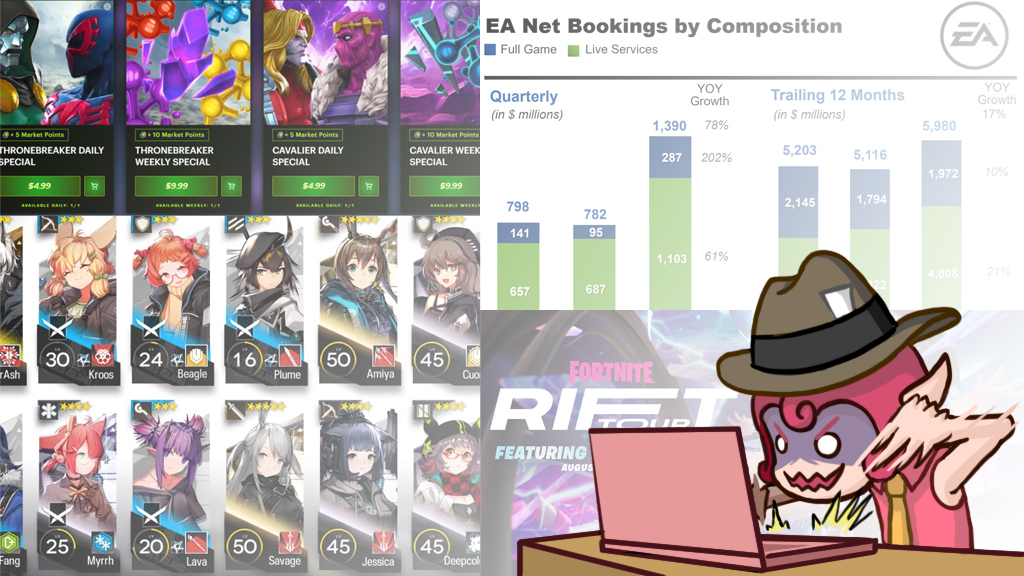
Market saturation has intensified this imbalance. Publishers pursuing the next Fortnite have flooded the market with multiplayer shooters, battle royales, and persistent online worlds, but players have limited time to divide between them. As Hartsman explains, a new live game must be compelling enough to take players away from something they already play. Good execution alone may not provide that incentive, particularly when a newcomer resembles an established title with a larger community, stronger brand recognition, and years of accumulated content.
Social connections make those established games especially difficult to displace. Epic Games’ Tim Sweeney has observed that some expensive new releases underperform because players gravitate toward bigger games where more of their friends already gather. This is a network effect: each additional player can make a game more valuable to others by improving matchmaking, strengthening communities, and increasing opportunities to play together. Popular games consequently become more attractive because they are already popular, while smaller titles risk losing players when their communities feel inactive.
Fortnite demonstrates how these advantages can reinforce one another. Following the launch of Fortnite: Battle Royale in 2017, Epic continually expanded the experience through weapons, maps, modes, live events, and collaborations with major entertainment brands. Epic’s reported holiday-season peak of 110 million active users illustrates the scale it achieved. Concerts and partnerships involving properties such as Marvel, Star Wars, and Disney helped turn Fortnite into more than a multiplayer game. It became a social and entertainment destination, combining ongoing updates with a community that gives players compelling reasons to remain.

How Retention, Battle Passes, and Social Features Drive Player Spending
For live-service games, a successful launch is only the beginning. Their business models depend on keeping players engaged over months or years, rather than relying exclusively on a one-time purchase. A returning player may continue buying cosmetics, expansions, subscriptions, or battle passes long after release, making sustained participation more valuable than a temporary sales spike. Successful titles can attract hundreds or thousands of hours of play, while games that rapidly lose their audience struggle to generate enough recurring revenue to maintain development.
Earlier successes such as Destiny and Overwatch helped establish this approach. Destiny, launched in 2014, combined first-person shooting with an evolving online world supported by expansions and seasonal content. Overwatch, released in 2016, used regular character additions, seasonal events, and cosmetic monetization to keep its hero-shooter community engaged. Both demonstrated how a single game could develop over several years instead of depending entirely on sequels. Their success helped persuade publishers that sustained content production and community investment could support long-term businesses.
Modern live-service games compete for both time and money through accessible entry points and ongoing purchases. Free-to-play access or a low initial price reduces the barrier to trying a game, while cosmetics, battle passes, and expansions provide opportunities to spend afterward. Cross-platform play, straightforward matchmaking, clans, chat, and streamer support help players connect and remain involved. These features reinforce the same social advantage Sweeney identifies: a game becomes more appealing when it makes playing with friends easier.
Battle passes and seasonal updates give that engagement a predictable structure. A battle pass generally provides a tiered progression system, with paid access unlocking additional rewards, while seasonal content introduces fresh challenges, maps, modes, or story events. Games including Fortnite, Rainbow Six Siege, Rocket League, and Dota 2 have used battle passes to encourage repeat participation. Limited-time rewards give players an incentive to return before a season ends, while regular updates provide something new to explore. Together, these systems turn occasional play into an ongoing routine and strengthen players’ investment in a particular game.
Why Rising Development Costs Have Not Stopped Publishers Chasing the Next Fortnite
Building a live-service game requires more than producing a polished release. Studios must also sustain updates, events, balance changes, technical fixes, and community support, often across multiple platforms. Teams work throughout the year while publishers fund servers, infrastructure, and live operations. These continuing obligations increase the financial stakes because a game with weak retention still incurs substantial expenses. Attracting an audience matters, but keeping that audience large and engaged enough to finance ongoing support is what determines whether the model remains viable.
Sony’s live-service setbacks illustrate these risks. After investing in Firewalk Studios’ Concord, PlayStation took the game offline and ultimately decided to end it permanently and close the studio. Other canceled projects, alongside the reported closure of Bluepoint Games in early 2026 following unsuccessful live-service efforts, underline the consequences of falling short. Such decisions show how quickly ambitious plans can become unsustainable when development spending is not matched by player demand. They also explain why publishers increasingly scrutinize project quality, budgets, and long-term operating commitments.
The potential rewards nevertheless remain substantial. Unlike a conventional release that depends heavily on initial sales, a successful live-service game can generate revenue repeatedly from the same audience. A relatively small proportion of committed spenders can contribute significantly to that income, particularly when the overall player base is large. Fortnite’s success with cosmetics, battle passes, and branded experiences demonstrates why publishers continue pursuing the model despite its failures: a breakout hit can support years of content development and produce returns that unsuccessful competitors never approach.
Publishers also pursue multiple projects in the hope that one major success will justify the wider investment. Sony executives have described the company’s commitment to live-service gaming as unchanged even while delaying projects to improve quality. That strategy reflects the tension at the center of the market. Recurring revenue offers a powerful incentive to keep investing, but each additional project requires money, staff, and enough differentiation to compete with established games. The opportunity remains attractive precisely because the biggest successes are so valuable, even though that concentration makes them difficult to replicate.

How Smaller Developers Can Compete and What Market Concentration Means for Gaming
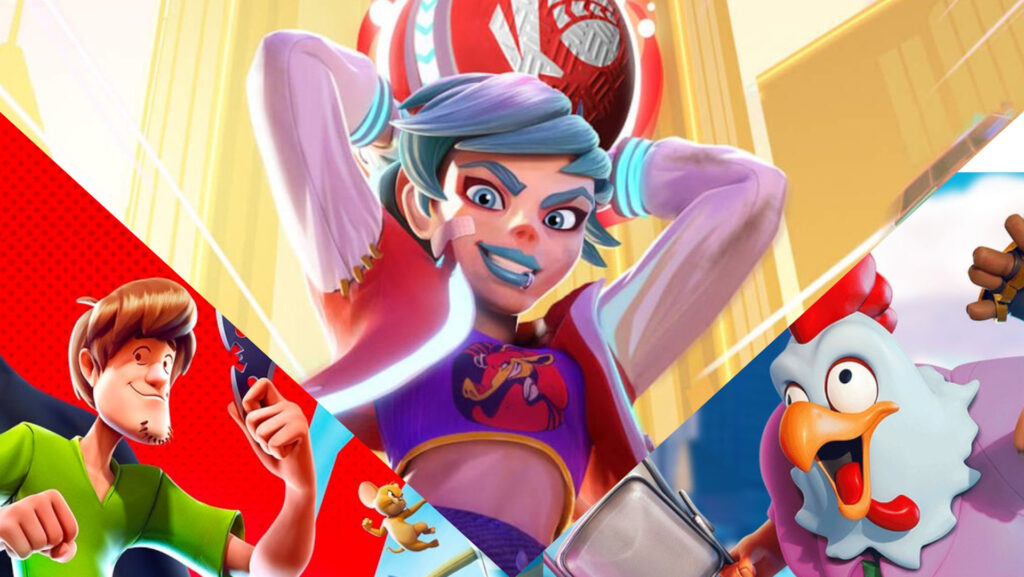
Market saturation places particular pressure on smaller developers, which must fund servers, updates, and community management without the financial reserves or marketing reach of major publishers. Hartsman’s observation about the near-zero activity of the median live game highlights how little attention many releases receive. Shutdowns involving games such as Knockout City and Rumbleverse demonstrate that an appealing concept does not necessarily produce an audience large enough to sustain ongoing operations. When revenue falls short, teams may have to abandon the live-service model, change direction, or face closure.
Competing directly with Fortnite or Roblox is therefore exceptionally difficult, but smaller games do not necessarily need to reproduce their scale to offer something worthwhile. Their strongest opportunities lie in giving a particular audience a compelling reason to choose them. The approaches described by developers and analysts include:
- Serving an underserved niche: A distinctive subgenre or tightly focused community can give a game an identity that larger competitors do not adequately address.
- Offering meaningful gameplay or technical differences: Novel mechanics, useful cross-platform access, or player-generated content can create reasons to try something beyond an established favorite.
- Building early momentum through partnerships or recognizable properties: Existing communities and intellectual property can help a smaller release attract attention that would otherwise be difficult to secure.
None of these approaches guarantees mainstream success. A differentiated game still needs enough returning players and revenue to support its operating costs, and established competitors retain substantial network and marketing advantages. Some smaller titles may sustain modest communities rather than become global hits, while others may need to pivot when growth stalls. The important distinction is between pursuing a viable audience and assuming that every successful live-service game must become the next Fortnite.
If market concentration continues, gaming could become more sharply divided between a handful of dominant live-service platforms and other categories, including single-player, independent, and niche games. More investment could flow toward maintaining established flagship titles, while other studios concentrate on experiences that do not require the same scale of continuous engagement. Major live games may also expand further into entertainment hubs incorporating concerts, films, and social features, increasing their competition with activities beyond gaming.
That concentration could also produce player resistance or regulatory scrutiny if the biggest platforms are perceived as limiting competition. At the same time, publishers may reconsider how they measure success, placing greater weight on longevity and community health rather than blockbuster returns alone. Alternative models, including community-driven economies or streaming-based experiences, could create different opportunities. The broader challenge will be balancing investment in recurring-revenue games with other types of development, rather than assuming that every studio can succeed in a market increasingly controlled by a few dominant titles.
Frequently Asked Questions (FAQs)
- What is a “winner-takes-all” live-service game?
The term describes a market in which a small number of games capture most player activity and revenue, rather than a particular type of game. The estimate cited in the article puts the leading two or three titles at roughly 66% to 80% of activity within their genre. “Winner-takes-most” is therefore more precise: smaller competitors can survive, but they must compete for a much smaller share of attention and spending. - Why do players flock to games like Fortnite or Roblox?
These platforms combine regularly refreshed experiences with large communities, giving players both entertainment and somewhere to socialize. Friends, familiar activities, and new events provide overlapping reasons to return. Once a group regularly plays together, switching becomes more difficult because a competing game must attract more than one individual. A newcomer needs to offer enough appeal to persuade friends to move together or spend less time in their established favorite. - How do network effects influence live-service games?
Network effects occur when additional players make a game more useful or enjoyable for others. A larger active population can support faster matchmaking, more active communities, and greater opportunities to find friends or teammates. These advantages attract further players, reinforcing the game’s popularity. The reverse can happen when participation declines: difficulty finding matches or companions may encourage remaining players to leave, making recovery harder. - What role do battle passes and seasonal updates play in player loyalty?
Battle passes provide structured progression through challenges and rewards, often within a limited season. Seasonal updates give players something new to explore, such as maps, modes, events, or story content. Together, they create regular reasons to return and goals that extend beyond an individual match. Time-limited rewards can strengthen that incentive, but lasting loyalty still depends on whether players enjoy the experience rather than simply feel pressured to finish a pass. - Why is retaining players more important than selling game copies?
Live-service games depend on continued participation because their operating costs and revenue opportunities extend well beyond launch. Returning players may purchase cosmetics, expansions, battle passes, or subscriptions while also keeping multiplayer communities active. Strong initial sales can help fund development, but they do not guarantee enough ongoing income to support servers and updates. Retention matters because it sustains both the business and the social experience that attracts other players. - What makes launching new multiplayer games difficult today?
New releases compete against established games that already have recognizable brands, extensive content, and committed communities. Players have limited gaming time, so a newcomer must give them a compelling reason to change their habits. Similar gameplay with fewer features or fewer friends available may not be enough. A distinctive mechanic, underserved audience, or substantially better experience can help, but the game must also retain the attention it initially attracts. - Why are development costs rising for live-service games?
Developers must build the original game and then maintain an ongoing production operation. New content, balance adjustments, technical fixes, servers, and community support require continuing staff and infrastructure spending. Supporting more platforms or delivering more frequent updates can increase those demands further. When participation falls below expectations, expenses do not automatically decline at the same rate, which helps explain why an underperforming project can become difficult to sustain. - How did games like Destiny and Overwatch influence this market?
Destiny, released in 2014, and Overwatch, released in 2016, provided influential examples of games sustained through ongoing updates. Destiny emphasized an evolving shooter experience supported by expansions and later seasonal content, while Overwatch maintained interest through events, character additions, and cosmetic rewards. Their success helped establish the appeal of a game becoming a long-term pastime rather than a one-time purchase, encouraging publishers to invest in continuing content and community development. - Why do publishers still make new live-service games if so many fail?
A successful live-service game can generate recurring revenue over several years instead of depending mainly on launch sales. That potential makes a major hit attractive enough for publishers to keep pursuing the model despite previous failures. Some invest in several projects hoping one will become a durable business. However, high revenue potential does not guarantee profitability: development spending, ongoing support costs, and the ability to retain players still determine whether the investment succeeds. - Can small studios compete in this market?
Yes, but competing directly with the scale and marketing budgets of Fortnite or Roblox is exceptionally difficult. Smaller studios have a stronger opportunity when they serve a specific community, offer distinctive gameplay, or address an underserved niche. Success does not necessarily require a blockbuster audience, provided operating costs match the revenue that community can support. The challenge is attracting enough committed players to sustain updates without taking on expenses that require unrealistic growth.
Conclusion
Live-service gaming has evolved into an industry where a few blockbusters dominate. Titles like Fortnite demonstrate how network effects, constant content updates, and clever monetization can vault a game to the top of the market. However, this also means most other live-service efforts face steep odds. As experts observe, only the most compelling games succeed in pulling players away from existing communities. In recent years, the high costs and fierce competition have even forced major publishers to cancel or shut down live-service projects (e.g., Sony’s closures of Concord and Bluepoint Games).
Even so, companies continue investing in new live-service games, driven by the potential for enduring revenue. Going forward, the live-service model may become even more concentrated. A few top games could maintain huge audiences, while smaller developers explore innovative niches or other genres. In any case, understanding the factors behind this winner-takes-all market, from player retention and network effects to battle pass economics, is key to navigating the future of gaming.
Sources and Citations
- PC Gamer’s report on Tim Sweeney’s industry commentary, October 1, 2024
- Andy Chalk’s report documents Sweeney’s remarks at Unreal Fest in Seattle, where he argued that players increasingly gravitate toward large games that connect them with friends. It covers his comparison between underperforming high-budget releases and Fortnite’s social features, events and entertainment partnerships. This supports attributing that argument to Sweeney, but his comments were made in 2024, not at GDC 2025, and represent an executive’s interpretation rather than independent proof that every live-service project will succeed. PC Gamer
- Citation: PC Gamer: Tim Sweeney on the Games Industry’s “Generational Change”
- Push Square’s coverage of Sweeney’s comments, October 1, 2024
- Sammy Barker’s article reports the same Unreal Fest remarks and discusses the appeal of persistent social experiences, while acknowledging the difficulty of competing with established games. It explicitly cites PC Gamer, so these are two published accounts of the same speech, not separate interviews. Barker’s additional argument that live-service and traditional single-player games can coexist is editorial analysis and should remain distinguished from Sweeney’s statements. Push Square
- Citation: Push Square: Ever-Evolving, Live Service Experiences Like Fortnite Are “the Future of Gaming”
- GDC 2025’s “Live Service Games Summit: The Year in Live Service Games”
- The official GDC Vault entry identifies Scott Hartsman, Steven Meretzky and Dave Rohrl as speakers. Its session description covers important design and market trends across mobile and PC live games, using examples from the preceding year. GDC’s conference preview schedules the session for March 17, 2025. This provides a specific, traceable match for the generic “GDC 2025 developer talks” reference; the session listing alone does not verify every claim made during the recording. GDC Vault
- Citation: GDC Vault: The Year in Live Service Games, GDC 2025
- Citation: GDC: Top Game Developer Trends Heading Into GDC 2025
- GDC’s direct interview with Scott Hartsman
- Beth Elderkin’s interview is particularly useful for explaining market saturation, player retention, funding constraints and sustainable monetization. Hartsman argues that a new live game needs a compelling reason for players to leave an established alternative, and that studios should evaluate the business model before committing to production. He also distinguishes mobile acquisition economics from PC and console audiences and discusses why a cosmetics-only model may require an audience scale that a small studio cannot assume it will achieve. These are attributed industry observations, not universal financial rules. GDC
- Citation: GDC: The Truth About Live Service Games, Insights From Scott Hartsman
- Game Developer’s sustainability survey report, April 16, 2024
- Justin Carter’s report summarizes a Game Developer Collective survey of 600 developers conducted during February and March 2024. It reports that 39% were mildly concerned and 31% were very concerned about the sustainability of existing live-service business models. Respondents also identified losing player interest, competition from other games and maintaining long-term engagement as concerns. This supports the widely repeated 70% concern figure, but it is not a 70% game-failure rate, nor a survey conducted in 2025 or 2026. Game Developer
- Citation: Game Developer: 70 Percent of Developers Unsure of Live-Service Games’ Sustainability
- GamesHub’s report on developer concerns, April 18, 2024
- “70% of developers reportedly concerned by live service game sustainability” covers the same Game Developer Collective findings and places them within the debate over an increasingly crowded market. Its indexed text discusses developers’ concerns about sustainability and negative perceptions of the model. This is relevant to the GamesHub reference in your note, but it is secondary coverage of the same survey, not an independent second dataset. The page produced a redirect error during verification, so its identification and relevant passages were checked through indexed excerpts. GamesHub
- Citation: GamesHub: Developers’ Concerns About Live-Service Sustainability
- VGChartz’s Concord sales report, September 1, 2024, and SteamDB’s player records
- William D’Angelo’s report cites analyst Simon Carless’ estimate of approximately 25,000 sales, divided into about 15,000 on PS5 and 10,000 on Steam. It separately reports the game’s 697-player Steam concurrent peak, which SteamDB independently records on August 23, 2024. These figures measure different things: the sales total is an analyst estimate, while concurrency measures simultaneous Steam users. Neither should be described as an official Sony sales disclosure or the game’s complete cross-platform player population. VGChartz
- Citation: VGChartz: Analyst Estimates Concord Has Only Sold 25,000 Units
- Citation: SteamDB: Concord Player-Count History
- PlayStation’s official Concord shutdown announcement, September 3, 2024
- Firewalk game director Ryan Ellis’ statement confirms that Concord would go offline on September 6, 2024, with sales stopping immediately and refunds offered to purchasers. The statement acknowledges that aspects of the game and its initial launch did not meet the team’s intentions. This is the primary source for the shutdown and refund policy, while VGChartz’s same-day report supplies the corresponding news coverage. The announcement does not disclose Concord’s development budget, total losses or a detailed financial explanation. PlayStation.Blog
- Citation: PlayStation Blog: An Important Update on Concord
- Citation: VGChartz: PlayStation Stops Concord Sales as Game Goes Offline September 6
- GDC’s official 2025 State of the Game Industry report
- This is a separate research source from the conference talks. Its official summary identifies layoffs, self-funding and changing development priorities among the major industry issues, reporting that approximately one in ten respondents had experienced a layoff during the preceding year and that half were self-funding their games. It provides broader employment and financing context, but these findings cover game development generally and should not be presented as evidence that live-service projects caused every reported layoff. The full report is available through a registration form. Game Developers Conference
- Citation: GDC: 2025 State of the Game Industry Report
- Newzoo’s PC & Console Gaming Report 2025, April 8, 2025
- Newzoo’s official report overview identifies player attention, spending, discoverability and the competition between new releases and established games as central topics. It specifically notes that the number of games people play was declining on Steam and Xbox, and examines how established live-service games use their own history to encourage return visits. This is a relevant industry-study source for the article’s market argument, with its historical observations kept separate from forecasts extending through 2027. Newzoo
- Citation: Newzoo: The PC & Console Gaming Report 2025
- Newzoo’s PC & Console Gaming Report 2026, March 12, 2026
- The newer report examines monetization efficiency, pricing, platform economics, market concentration and business-model viability. Its official overview argues that the next phase of growth depends increasingly on how companies capture value, rather than assuming that players will continually spend more time gaming. It also examines sustainable opportunities outside the top-selling titles. This provides a more recent financial framework than the 2024 commentary, although it does not supply a universal budget, profitability threshold or guaranteed return for individual live-service games. Newzoo
- Citation: Newzoo: The PC & Console Gaming Report 2026
- Newzoo’s detailed analysis of games outside the Top 20, April 14, 2026
- Tianyi Gu’s analysis provides an important qualification to claims that only the largest games can succeed. In the Western markets measured, PC games outside the Top 20 increased their revenue share from 48% in 2022 to 56% in 2025. Their share of PC playtime also grew from 33% to 42%. Newzoo finds greater revenue concentration on consoles and stresses that opportunities differ by platform. These results support a nuanced discussion of competition, rather than a blanket claim that smaller or premium games have no viable market. Newzoo
- Citation: Newzoo: More Playtime and Revenue Are Moving Below the Top 20
- Epic Games’ official financial and staffing update, March 24, 2026
- This later Tim Sweeney statement provides relevant context for his earlier optimism. Epic announced more than 1,000 layoffs, citing declining Fortnite engagement since 2025 and spending that exceeded revenue. It also identified more than $500 million in planned savings from contracting, marketing and unfilled roles. The statement demonstrates that even a major live-service operator can face significant financial pressure. However, it describes Epic’s company-level position, not a published standalone profit-and-loss statement proving that Fortnite itself was unprofitable. Epic Games Store
- Citation: Epic Games: Today’s Layoffs, March 24, 2026
Recommendations
- Vivian Kubrick Debunks Eyes Wide Shut Deleted Scenes Theory
- Battlefield 6 2026 Roadmap: More Maps, “Legendary” Battlefield 4 & Battlefield 3 Remakes, and Wake Island’s Return
- Apple TV’s Widow’s Bay is the First Breakout TV Hit of 2026: Why Everyone is Talking About the Horror Comedy
- Pitchify Launches New Service to Connect Developers and Publishers: How Pitch Direct Works
- Pokémon Pokopia Bubbly Basin DLC Release: Date, New Pokémon, and Everything You Need to Know
- Nordic Game 2026 (NG26 Spring): Dates, Venue, Passes, Speakers, Expo & Awards in Malmö
- Subnautica 2 Early Access Roadmap: Co-Op Updates, Sprinting, and More
- Virtua Fighter 6 Leak Explained
- The Future of 3D Modeling: Insights on AI Advancements
- GTA 6 is Already Outselling Everything Else: Why Pre-Orders Are Dominating Gaming



































































































