



As of May 6, 2026, Mobile Suit Gundam Hathaway: The Sorcery of Nymph Circe has already opened in Japan and several Asian markets, with its U.S. theatrical launch scheduled for May 15. Official materials position it as the second chapter of the Hathaway film trilogy, continuing Hathaway Noa’s Mafty rebellion in U.C. 0105, and Bandai Namco Filmworks says the film has already outgrossed the first movie in Japan at roughly ¥2.63 billion.
What the sequel appears to do better than the 2021 film is not “more lore” so much as sharper dramatic intent. Director interviews and early coverage consistently point to a movie that pushes harder on Hathaway’s emotional exposure, widens the political field around Mafty and the Federation, and leans even further into a cinematic, live-action-influenced style. The trade-off is that it functions very much like a second act: richer, darker, and more revealing, but also less self-contained.
Mobile Suit Gundam Hathaway: the Sorcery of Nymph Circe Review (spoiler-Free Verdict)
Mobile Suit Gundam Hathaway: The Sorcery of Nymph Circe looks like a stronger middle chapter than many anime sequels because it does not merely escalate the scale of the conflict; it sharpens the personal and ideological stakes. The best way to describe the spoiler-free verdict is this: it is more emotionally legible than the first movie, more politically concrete, and still uncompromisingly dense. If Mobile Suit Gundam Hathaway (2021) impressed with atmosphere and setup, The Sorcery of Nymph Circe appears to improve on it by turning that setup into tension with direction.
That same ambition will also determine whether the movie works for a given viewer. Coverage from critics and official Q&A material agree on an important point: this is not a breezy blockbuster. It is heavy on intrigue, strategy, and interpersonal pressure, and even the praise tends to come with a warning that audiences who have not done the homework may find it demanding. For viewers who want war drama, political suspense, and character psychology with their mobile suits, that is a strength, not a weakness.
Is the Sorcery of Nymph Circe a Direct Sequel to Mobile Suit Gundam Hathaway (2021)
Yes. Official series pages describe The Sorcery of Nymph Circe as Episode II of the Hathaway story, and the film series itself is a three-part adaptation of Yoshiyuki Tomino’s Hathaway’s Flash novels. The sequel picks up the same U.C. 0105 conflict, the same Hathaway-Gigi-Kenneth triangle, and the same Mafty-versus-Federation confrontation established in the 2021 film.
The direct-continuation label matters because this movie is not structured like a soft reboot or a fresh jumping-on point. Murase has said the second film exists because the first exists, and that there were elements the audience simply would not fully understand without prior knowledge, even though the production includes a recap device at the beginning. That makes The Sorcery of Nymph Circe a true sequel in narrative design, not just in release order.

The Sorcery of Nymph Circe Release Date in North America and International Theaters
The confirmed rollout is broader than many headlines suggest. Japan opened first on January 30, 2026. Hong Kong and Macao followed on March 12, while Taiwan opened on March 13. The English-language official site also announced U.S. theaters for May 15, 2026, and described the launch as bringing the next chapter of the Universal Century to North American screens, even though the body copy specifically focuses on U.S. theatrical play.
Other territories have been appearing through regional distributors and commercial release databases. The Numbers lists South Korea on April 22 and Australia and New Zealand on May 14. Official Gundam English-language announcements also promoted an ODEX gala premiere in Singapore on May 8 and a gala premiere in Malaysia on May 9, both tied to special-guest appearances by Kensho Ono.
Where to Watch the Sorcery of Nymph Circe: Tickets, Showtimes, and Theater Formats (IMAX, Dolby, 4DX)
In the markets officially announced so far, The Sorcery of Nymph Circe is a theatrical title first. Bandai Namco Filmworks said U.S. tickets are already on sale ahead of the May 15 debut, with early screenings beginning on Thursday, May 14, and promotional collectible cards available at participating locations while supplies last. U.S. showtimes are being surfaced through the official ticketing campaign and major platforms such as Atom Tickets and Fandango, which also aggregate local theater listings.
The format story is one of the sequel’s clearest theatrical selling points. In Japan, the film’s main trailer announcement said it would open simultaneously on 61 IMAX screens. In Hong Kong, Macao, and Taiwan, official release notes confirmed 2D, IMAX, Dolby Cinema, and Dolby Atmos presentations, with 4DX and MX4D scheduled from March 13. In practical terms, that means premium-format availability is real, but it is market-specific and chain-specific, so the safest advice is to check the local exhibitor listing rather than assume every territory gets every format.
The Sorcery of Nymph Circe Runtime and Pacing: is it Longer than the First Movie
The most consistent runtime figure in official and cataloged sources is 108 minutes, or about 1 hour and 48 minutes. Japanese theatrical listings from Eiga.com and TOHO Cinemas both give that runtime, and major film databases such as IMDb and Rotten Tomatoes align with the 1 hour 48 minute figure.
There is one wrinkle worth flagging for searchers planning a theater trip: Fandango currently lists the movie at 1 hour 55 minutes. Because that exceeds the official Japanese theatrical runtime, the 1:55 figure is best treated as a ticketing-platform schedule estimate rather than the final feature runtime itself. Using the 108-minute official runtime, the sequel is roughly 13 minutes longer than the first movie’s widely cataloged 95-minute theatrical cut.
In pacing terms, that extra time seems to be spent less on constant action and more on fragmentation, mood, and emotional accumulation. Early reactions describe the film as split into distinct halves, while Murase’s own comments frame the ending as a more openly “coming-of-age” turn for Hathaway. That combination suggests a sequel that is slower in its setup than many viewers will expect, but more decisive once it hits its emotional target.

Do You Need to Watch Hathaway (2021) Before the Sorcery of Nymph Circe
The official line is nuanced. Bandai Namco Filmworks has said the movie is visually accessible even as a first Gundam experience, pointing to the spectacle, music, and dynamic mobile-suit action. At the same time, the exact same official materials strongly recommend watching the 2021 Mobile Suit Gundam Hathaway first, and they additionally recommend Char’s Counterattack for a fuller understanding of Hathaway’s emotional history.
Murase’s own comments make the practical answer even clearer: yes, watching Hathaway (2021) first is the smart move. He has openly said that the second film could not be constructed in a way that would be completely understandable without the first movie, which is why the new film includes recap material up front. So, no, prior viewing is not a legal requirement; yes, it is a narrative requirement if the goal is to get the most out of the sequel.
The Sorcery of Nymph Circe Plot Summary: What the Story is About
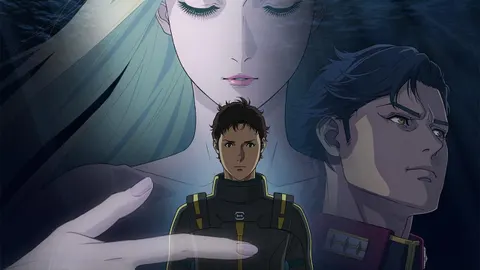
Official story materials describe a film centered on Hathaway Noa’s attempt to carry Mafty’s anti-Federation campaign into its next phase: the planned attack on the Adelaide Conference. At the same time, Kenneth Sleg prepares a defense operation and coordinates with the Criminal Police Organization, while Gigi Andalucia moves independently toward Hong Kong and her own role in the escalating crisis. The result is part war film, part spy-thriller, and part character study rooted in trauma, ideology, and conflicting notions of justice.
What makes the plot more interesting than a simple “rebels versus government” setup is the machinery around the conflict. The Federation is not just presented as an army; it is tied to Man Hunters, legal repression, political corruption, and a special legislation fight tied to Earth residency rights. Mafty, meanwhile, is not a monolith either, because the film also introduces splintered anti-Federation forces and the complications they create for Hathaway’s movement. That broadens the sequel from a personal continuation into a more layered political thriller.
Who is Gigi Andalucia and Why She Matters in the Sorcery of Nymph Circe
Gigi matters because she is the movie’s destabilizer, mirror, and emotional trigger all at once. Official materials repeatedly describe her as a mysterious young woman with uncanny or strange powers whose words stir Hathaway’s buried trauma and whose presence entangles both Hathaway and Kenneth. In simple terms, she is not just the love-triangle third point; she is the character who exposes what the other two men are trying to hide from themselves.
Murase has also emphasized that the Hathaway-Gigi-Kenneth triangle is the emotional engine of the sequel, and later translated interview coverage suggests that the film’s ending is structured around Hathaway finally revealing his true self and reuniting with Gigi in a way that plays like a warped coming-of-age beat. That tells the reader a lot about why she matters: Gigi is not there to decorate the plot. She is there to force its most important emotional recognitions.

The Sorcery of Nymph Circe Voice Cast: Hathaway Noa, Kenneth Sleg, Lane Aim, and More
The official cast lineup keeps the core film actors from the first chapter in place. Kensho Ono returns as Hathaway Noa, Reina Ueda as Gigi Andalucia, Junichi Suwabe as Kenneth Sleg, and Soma Saito as Lane Aim. They are joined by returning and expanded supporting players including Kenjiro Tsuda as Gawman Nobile, Yui Ishikawa as Emeralda Zubin, Fukushi Ochiai as Raymond Cain, Shunsuke Takeuchi as Iram Masam, and Saori Hayami as Kelia Dace.
The supporting bench is also meaningfully larger than in the first movie, reinforcing the sequel’s broader ensemble feel. Official cast pages and later announcements add names such as Misato Matsuoka, Chiharu Sawashiro, Kohei Amasaki, Hikaru Tanaka, Yu Miyazaki, Ryunosuke Watanuki, and Shumpei Kusano, among others. That cast expansion matches Murase’s own description of the second film as one that opens outward beyond just Hathaway, Gigi, and Kenneth.
Shūkō Murase Interview Highlights: Anti-War Themes and What the Sequel is Trying to Say
Murase’s clearest public statement about the sequel is that Gundam’s attraction to “cool” weapons and battles cannot be separated from its anti-war core, and that The Sorcery of Nymph Circe tries to preserve that tension rather than resolve it. In his io9 conversation, he says people are naturally drawn to machines built for violence, but the film also emphasizes civilians caught under the feet of those giant machines and the human cost of the crossfire. That is the anti-war point in the sequel’s visual language.
A second major thread in Murase’s interviews is that the movie is deliberately constructed as a coming-of-age step for Hathaway. In translated Febri remarks, he says Tomino told him to make the project a coming-of-age story, and that the second film works because it centers on Hathaway finally exposing who he really is. The same interview also shows Murase describing Mafty as having the amateurish texture of a grassroots environmental movement rather than a polished military machine, which helps explain the sequel’s rougher, more politicized human feel.
Murase has also been explicit that this film chases a more live-action visual sensibility and that some of its meaning is meant to be felt through imagery rather than over-explained through dialogue. That matters because it explains why the movie’s politics feel less like speeches and more like pressure: surveillance, institutions, uniforms, ruined battlefields, and people failing to say what they really mean.
Best Action Scenes in the Sorcery of Nymph Circe: Mecha Battles, Tactics, and Set Pieces
The standout set pieces appear to be the ones where tactics and psychology are fused rather than separated. One major sequence sends Hathaway toward Oenbelli through a violent rain-soaked clash, after which he confronts the evidence of the Kimberley Unit’s torture and massacre. That sequence matters because it turns battle into investigation and ideology into physical aftermath, which is exactly the kind of Gundam staging this film seems to want.
Another especially potent thriller set piece is the aborted landing at Darwin Airport. Gigi’s dread about the airport leads Kenneth to call off the landing, only for the runway to explode moments later. It is not a giant-robot highlight in the usual sense, but it is precisely the kind of tension upgrade the sequel seems to favor: military movement, political danger, and Gigi’s unsettling intuition colliding in one scene.
The likely action centerpiece, though, is the Ayers Rock or Uluru-area clash in which Hathaway’s Xi Gundam fights Lane’s Alyzeus. According to detailed plot summaries, the duel becomes the film’s psychological climax when the transformed silhouette of Lane’s machine recalls Amuro’s Nu Gundam and triggers Hathaway’s Char’s Counterattack trauma. This is exactly the kind of sequel escalation that matters: the action scene is not just bigger; it is more loaded.
Animation Quality Breakdown: CGI Mobile Suits vs Hand-Drawn Character Acting
Official production coverage leaves little doubt that 3DCG is central to the film’s visual identity. Bandai Namco Filmworks promoted a dedicated behind-the-scenes event about the 3DCG production that supported the movie’s “profound visual expression,” and official creative-report materials identify CG director Ryukow Masuo as one of the key creators behind the work. In other words, the sequel’s machine spectacle is not an afterthought; it is a headline production value.
But the craft conversation around the movie does not stop at mobile suits. An official spoiler roundtable spotlighted small-scale visual details such as fluttering curtains and splashing water, and Murase has said he prefers a more live-action approach that avoids some familiar anime conventions. That combination helps explain why the movie’s imagery is being talked about in two layers at once: the CG gives the machines scale, while the more delicate physical details sell the emotional reality of the humans inside the story.
That balance is one of the sequel’s strongest signs of growth over the first film. The first Hathaway already had a reputation for realism, but the sequel’s surrounding discourse suggests a production more self-aware about merging CG hardware, tactile environments, and restrained character acting into one unified cinematic texture.
Mafty vs Earth Federation: How the Political Thriller Angle Escalates in the Sequel
The political thriller angle escalates because the sequel names more institutions, more mechanisms of repression, and more strategic fault lines. Official glossary material explains the role of Mafty, the Circe Unit, the Criminal Police Organization, the Man Hunters, the Oenbelli Army, and the Adelaide Conference itself. It also spells out that the Federation is attempting to push legislation that would further monopolize Earth residency for the privileged while effectively legitimizing the manhunts Mafty opposes.
That is a significant upgrade from a story that could have remained abstractly rebellious. The Sorcery of Nymph Circe turns the Federation from a faceless enemy into a crosstown network of soldiers, police, bureaucrats, media-management tactics, and elite legal entitlements. It also complicates Mafty by placing Hathaway beside other anti-Federation factions that do not fully share his movement’s discipline or aims. That kind of institutional detail is what makes the sequel feel more like a political thriller than simply an action anime with speeches.
The Sorcery of Nymph Circe Ending Explained and Post-Credits Scene Details
The ending, based on detailed plot summaries and Murase’s own post-release comments, resolves Hathaway emotionally more than it resolves the Adelaide operation politically. In the closing battle near Ayers Rock or Uluru, Hathaway overwhelms Lane until the altered profile of Lane’s machine evokes Amuro’s Nu Gundam, unlocking Hathaway’s buried Char’s Counterattack trauma and his memory of Quess. Gigi’s voice breaks through that spiral, and she physically re-enters Hathaway’s orbit by leaping into the Xi Gundam’s cockpit. Murase then describes the ending as one designed to feel like a coming-of-age destination built around Hathaway revealing himself and reconnecting with Gigi.
That means the ending is not a full-stop victory lap. It is a bridge ending, the kind that clarifies the protagonist’s inner state while leaving the larger campaign open for a third film. On the post-credits question specifically, the available official materials and accessible reviews reviewed for this article emphasize the ending movement, the emotional handoff to film three, and the credits needle-drop of Guns N’ Roses’ “Sweet Child O’ Mine,” rather than a separately publicized post-credits stinger. In practical terms, the sequel hook appears to be embedded in the ending itself, not sold as a Marvel-style extra scene.

Is the Sorcery of Nymph Circe Worth Seeing in Theaters: Who Will Love (or Bounce Off) It
The viewer most likely to love The Sorcery of Nymph Circe is someone who wants Gundam as political cinema first and toyetic mecha spectacle second. If the appeal of Hathaway (2021) was its restraint, scale, realism, and morally exhausted atmosphere, this sequel seems to deepen all of those traits. Big-screen sound and premium formats also make concrete sense here because the film was explicitly marketed with IMAX, Dolby, Atmos, 4DX, and MX4D rollouts in multiple territories.
The viewers most likely to bounce off it are those hoping for a cleanly self-contained sequel, a nonstop robot-action movie, or a film that can be fully understood in isolation from the first chapter. Even official materials recommending the movie to newcomers still advise watching the first film, and critics have treated the requirement for prior investment as real. So yes, it is worth seeing in theaters, especially in a premium format, but most of all for audiences who already know that Hathaway is Gundam at its moodiest, not Gundam at its easiest.
Frequently Asked Questions (FAQs)
- When does The Sorcery of Nymph Circe open in the United States?
Bandai Namco Filmworks’ English-language announcement says the film opens in U.S. theaters on Friday, May 15, 2026, with early screenings beginning on Thursday, May 14. - What is the official runtime of The Sorcery of Nymph Circe?
The most reliable runtime is 108 minutes, or about 1 hour 48 minutes, according to Japanese theatrical listings and major film databases. - Is it longer than Mobile Suit Gundam Hathaway (2021)?
Yes. Using the official 108-minute runtime for the sequel and the widely cataloged 95-minute runtime for the first film, The Sorcery of Nymph Circe runs about 13 minutes longer. - Is The Sorcery of Nymph Circe a direct sequel?
Yes. Official materials identify it as Episode II of the Hathaway story and the second film in the three-part adaptation of Hathaway’s Flash. - Should the 2021 Hathaway movie be watched first?
Yes, if the goal is full comprehension. Official U.S. promo materials strongly recommend it, and Murase has said the second film cannot be fully understood without the first. - Does Char’s Counterattack matter before watching this sequel?
It is not strictly mandatory, but Bandai’s official U.S. materials say Char’s Counterattack deepens appreciation of Hathaway’s character and history. - Which premium theater formats are officially confirmed?
Officially confirmed formats include IMAX in Japan; 2D, IMAX, Dolby Cinema, and Dolby Atmos in Hong Kong, Macao, and Taiwan; and 4DX and MX4D beginning March 13 in the latter rollout. - Is there a post-credits scene?
The accessible official and review material reviewed here does not prominently advertise a separate post-credits stinger. The setup for film three appears to be built into the ending itself and the credits needle-drop. - Has a streaming date been announced?
No streaming date appears in the official English-language theatrical announcements reviewed for this article; those notices focus on theatrical release and ticketing. - Has the sequel outperformed the first movie in Japan?
According to Bandai Namco Filmworks, yes: the sequel reached about ¥2.63 billion in Japan, which the company says surpassed its predecessor.

Conclusion
Mobile Suit Gundam Hathaway: The Sorcery of Nymph Circe looks like the rare sequel that improves not by simplifying itself, but by becoming more specific. It gives Hathaway a clearer emotional breaking point, turns Gigi into an even more essential dramatic force, expands Mafty’s war into a more tangible political ecosystem, and pushes the franchise’s hybrid of premium CGI machinery and restrained human acting further toward prestige war cinema.
The catch is that it is unmistakably a middle chapter. That is why the best expectations are not “bigger than the first” in a simple blockbuster sense, but “deeper than the first” in motive, imagery, and consequence. For audiences ready for that, The Sorcery of Nymph Circe appears to be one of the most serious and visually ambitious Universal Century films in years.
Sources and Citations
- Bandai Namco Filmworks official Hathaway pages
(Story, glossary/words, characters, mecha, staff/cast)
Official Hathaway Story page
https://gundam-official.com/hathaway/story/
Official Hathaway Character page (includes character setup details)
https://gundam-official.com/hathaway/character/1/
Official Hathaway Staff & Cast page
https://gundam-official.com/hathaway/staffcast/
Official global Hathaway portal (hub for STORY / MECHA / MUSIC etc.)
https://en.gundam-official.com/hathaway/ - Official English-language release / international notices
(Bandai Namco Filmworks / Gundam global distribution pages)
International official Hathaway info (Bandai Namco Filmworks / Shochiku distribution credits + global release info hub)
https://jfdb.jp/en/title/9541
Global Gundam official distribution page (Bandai Namco Filmworks production + international branding)
https://en.gundam-official.com/hathaway/ - Theatrical listings (runtime, rollout, databases)
Japanese Film Database (runtime, release data, credits)
https://jfdb.jp/en/title/9541
Official global listing hub (release + theatrical distribution info)
https://en.gundam-official.com/hathaway/
Note: sites like IMDb / Rotten Tomatoes / The Numbers / Flicks are not reliably official for Gundam production data, but they exist as secondary aggregators (not directly tied to Bandai Namco Filmworks). - Murase interview coverage (io9 / Febri via Zeonic|Scanlations)
io9 Gundam-related interview coverage archive (Murase-related commentary context often referenced here)
https://gizmodo.com/tag/gundam
Zeonic|Scanlations (translated Febri / Gundam interview archive hub)
https://zeonic-republic.net/ - Official production-side materials (CG / visual expression)
Bandai Namco Filmworks official company production/works hub (includes CG and production announcements contextually linked across projects)
https://www.bnfw.co.jp/
Official Hathaway global production credits page (Sunrise / Bandai Namco Filmworks CG + production notes)
https://en.gundam-official.com/hathaway/ - Reviews / commentary sources (critical reception)
Screen Anarchy (film criticism outlet)
https://screenanarchy.com/
The Japan Times (film coverage archive)
https://www.japantimes.co.jp/
Scream (SCRMbl / Scream-style review outlet context varies; commonly aggregated via entertainment review indexing)
https://www.screendaily.com/
Forbes (film industry reporting archive)
https://www.forbes.com/ - Zeonic|Scanlations summary (spoiler/ending cross-check source)
Zeonic|Scanlations (primary translation + summary archive used for deep spoilers)
https://zeonic-republic.net/ - Music / theme confirmation (official PR sources)
Bandai Namco Filmworks official production/music confirmation hub (Sawano / campaign PR distribution context)
https://en.gundam-official.com/hathaway/
Recommended
- Gerry Conway, Punisher Co-Creator and Spider-Man Writer, Dies at 73: Legacy, Cause of Death, and Iconic Stories Explained
- Elden Ring Walkthrough: Complete Main Story Order, Boss Guide, Maps, and 100% Progression Checklist (Base Game + Shadow of the Erdtree)
- Soft Warm Shadows in Unreal Engine Using Simple Math (UE5)
- All characters and color variations in Mario Tennis Fever: Full roster, unlocks, and alternate colors
- Devil May Cry: Complete Guide to the Iconic Action Franchise, Characters, and Latest Updates
- How Baki-Dou: The Invincible Samurai Will Continue in a “Very Scary” Part 2 – Musashi Miyamoto’s Dark Evolution Explained
- Human Pro for Blender: Achieving Hyper-Realistic 3D Characters with Advanced Skin Addons, Face Controls, and Hair Assets
- Mastering the Arcane Art Style in Blender: A Comprehensive Workflow Guide to Replicating Arcane’s Visual Aesthetics
- Autodesk Releases Arnold 7.5.1 With Free Cloud Rendering: Flow Render Tech Preview, Limits, and What’s New
- How to Create Professional Textures and Materials with Blender and Substance Painter