







In This Article (9 sections)
Monogram’s $40 Million Seed Round Bets on AI as a Visual Interface
Monogram raises $40 million to build visual-first AI for faster creative workflows, marking the company’s emergence from stealth alongside the launch of its iPhone app. Led by DST Global and Lux Capital, the seed round supports Monogram’s plan to replace conventional text-heavy chatbot responses with visual, interactive interfaces generated for each user’s task.
The size of the raise is notable because it is unusually large for a seed round built around interface design rather than frontier model training. Monogram is not positioning itself as a foundation model lab. It is making a product-layer bet: that the next major leap in consumer and creative AI may come from a better interface, not only from a more powerful model. That thesis fits a market where investors are still pouring capital into AI applications, consumer AI, and generative interfaces even as competition tightens.
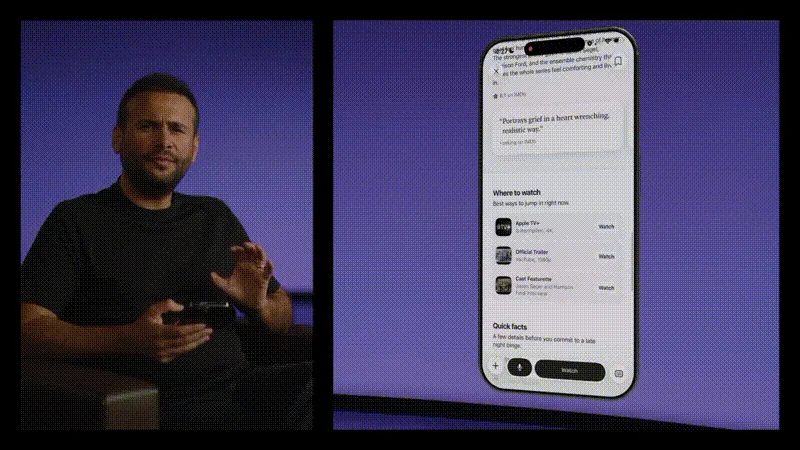
Monogram’s visual-first AI interface is an interaction model in which the answer appears as an interactive user interface generated on demand. Instead of replying with a paragraph, the app can display a recipe flow, a restaurant finder, a movie chooser, a party plan, or an EV comparison layout. On its website and App Store listing, Monogram says it is “not a chatbot” and that it responds with a visual and interactive answer instantly.
That positioning reflects a broader human-computer interaction argument in the company’s manifesto. Monogram says AI still feels too much like a command line, while visual interfaces reduce cognitive load, make comparison easier, and turn AI use into something more intuitive. The company is trying to make AI feel less like reading a transcript and more like using software purpose-built for the task in front of you.

How Monogram Works and Why Investors Backed Its Visual AI Thesis
Public launch materials describe Monogram as technology that generates an entire user interface on the fly in a few seconds. Its product examples show task-specific surfaces for recipes, movies, birthdays, restaurants, and EV comparisons. A related hiring description says Monogram is building a platform that lets large language models control the entire user experience by combining voice with UI generated on demand. That makes the app less like a static answer engine and more like a system that turns prompts into usable visual software.
The privacy policy also reveals part of the operating model. Monogram currently uses Google Sign-In as its authentication method and can access Google Calendar when users grant permission. That allows the app to read, schedule, and edit events and incorporate that data into user-facing responses. The same policy says Google user data is not used to train generalized AI models and that individually identifiable data would require separate explicit consent before being used for Monogram’s own model training.
Investors likely backed Monogram because the company combines a credible founder profile, a tangible product thesis, and a large market category. Eren Bali is publicly identified as the former founder of Udemy and Carbon Health, giving Monogram immediate founder-market credibility at the consumer product layer. Monogram is also not selling an abstract interface idea anymore. It launched a working iPhone app, which reduces the gap between vision and execution.
The second reason is timing. AI remains a major magnet for venture funding, while consumer AI and generative AI continue attracting capital even amid tougher scrutiny of valuation and user retention. Monogram’s bet also taps into visible market behavior: AI interfaces are becoming more multimodal, more visual, and more workflow-aware. A startup focused on how AI is presented, not only how it computes, can still look venture-scale if it becomes the default interaction layer.
The public feature set is still early, but several details are clear. Monogram is currently an iPhone-only app, listed in Apple’s Lifestyle category, available in English, and free to download. Its core feature is dynamic visual response generation, which turns a prompt into an interactive layout instead of a conventional chat thread. The company’s launch page highlights example prompts for food, entertainment, travel-style planning, dining, and product comparison.
Its privacy and personalization features are also meaningful product features, not only policy details. Monogram says calendar access can be used to personalize responses and help with scheduling-related tasks. It also provides account deletion, Google access revocation, and an opt-in structure for any identifiable data that might ever be used for AI training. For users and enterprises worried about data handling, those controls are part of the product story.
How Monogram Compares with ChatGPT, Perplexity, and Creative AI Tools
Monogram enters a crowded field, but it is different from the biggest AI products on the market. ChatGPT remains fundamentally chat-centered, even though OpenAI’s latest voice experience can now surface rich visual cards for things like weather, stocks, and sports. Perplexity positions itself as a real-time answer engine with citations. Those products can be multimodal, but their default mental model is still the conversation or answer stream. Monogram, by contrast, starts from the interface itself.
Compared with visual workflow tools, Monogram also takes a distinct route. Napkin turns existing text into business visuals. FLORA gives creative teams a canvas that connects more than 50 models in one workspace. Beautiful.ai automates slide production around templates and smart layouts. Those products are highly relevant comparables for creative work, but they are specialized around storytelling, media generation, or presentation building. Monogram is aiming at a broader AI operating surface that can become task-specific software on demand.
That broader surface gives Monogram obvious appeal for designers and creators because visual structure often speeds up decision-making. A designer comparing options, a content creator planning assets, or a strategist evaluating concepts can work faster when an answer arrives as organized modules rather than dense prose. Monogram’s central promise is a reduction in friction between the question and the usable interface.
At the same time, the public product is still closer to everyday task orchestration than to a full professional creative suite. Monogram’s official demos focus on common requests like recipes, entertainment, restaurants, birthdays, and EVs. For designers and creators today, Monogram looks more like an inspiration, planning, and decision-support layer than a replacement for Figma, Adobe, FLORA, or presentation software. That distinction matters for anyone evaluating its immediate commercial fit.
Monogram’s launch also lands at a moment when AI interfaces are broadening beyond text. OpenAI’s newly introduced GPT-Live experience shows rich visual cards during voice interactions. Perplexity continues to emphasize real-time answers with trusted sources. Creative platforms like FLORA are consolidating multiple generation models into a single collaborative canvas. This signals a clear direction for 2026: AI products are evolving from chat windows into fuller software experiences.
User behavior supports that trend. Sensor Tower’s 2026 AI market reporting describes intensifying competition among assistants and fast-changing user preferences, while PitchBook’s 2026 research shows consumer AI remains a meaningful venture category even as investors become more selective. In that environment, interface differentiation can be a growth wedge. The product that feels easiest, fastest, and most native to real tasks may win attention even without owning the underlying model stack.

Monogram’s Roadmap, Funding Breakdown, and Competitive Challenge
Monogram has not published a detailed public roadmap with dated milestones, so the clearest roadmap signals come from what it has already launched and how it describes its mission. The company’s materials point to a future centered on AI-native UI, privacy-first personalization, and collaboration. The hiring page also frames the mission as building “the new face of AI,” which suggests the product roadmap is broader than a single iPhone novelty.
The near-term roadmap appears to include continued app iteration, stronger personalization, deeper integrations, and broader task coverage. The App Store version history shows rapid updates immediately after launch, and Monogram’s privacy policy already anticipates settings for AI data usage and connected-account control. It would be reasonable to expect more polished memory, scheduling, and workflow features, but any feature beyond those public signals should still be treated as informed inference rather than confirmed announcement.
Monogram competes by changing the unit of value from “a good answer” to “a usable interface.” ChatGPT, Claude, Gemini, and Perplexity compete intensely on model quality, reasoning, breadth, speed, search, and assistant features. Monogram’s path is different. It is betting that many users do not want a better paragraph. They want software that assembles itself around the task automatically.
That creates both an opportunity and a challenge. The opportunity is genuine differentiation in a market saturated with chat windows. The challenge is that incumbents are already adding richer UI layers, voice, search, memory, and visual cards. Monogram therefore needs to move faster than larger platforms can absorb its core interaction idea into their own products. In startup terms, the company’s moat will depend on product craftsmanship, speed, habit formation, and eventually ecosystem depth.
The public round details are straightforward. Monogram raised $40 million in seed financing. DST Global and Lux Capital led the round. Participating firms included Conviction, SOMA Capital, Gradient Ventures, e2vc, and Maxitech. The company also named angel investors such as Arthur Mensch, Logan Green, Karim Atiyeh, Garry Tan, Pete Flint, Mario Schlosser, Othman Laraki, Lenny Rachitsky, and Charlie Songhurst, among others.
What has not been publicly detailed is equally important. Monogram’s public launch materials do not disclose valuation, revenue, retention, or user scale. That leaves the round looking primarily like a conviction round around founders, product direction, and market timing. For an interface startup, that is not unusual, but it means the narrative today is more about strategy and potential than about mature commercial traction.
Why Monogram’s Visual UI Could Improve Creative and Planning Workflows
The biggest workflow improvement Monogram promises is compression of steps. In many tools, a creator asks a question, reads a long answer, opens other apps, restructures the information, and only then starts acting on it. Monogram tries to collapse that sequence by delivering a workable surface immediately. For creative and planning-heavy tasks, that can reduce the distance between idea, evaluation, and action.
This is why Monogram is relevant even though its public examples skew consumer. Creative work is often a chain of choosing, comparing, arranging, and refining. Interfaces that present options visually can improve speed and clarity, especially when users are thinking spatially or comparatively. That does not automatically make Monogram a full creative suite, but it does make it part of the broader shift toward generative UI as a workflow accelerator.
The clearest confirmed future plan is expansion of the product and team around the company’s “new face of AI” vision. Monogram is hiring, iterating quickly on the iPhone app, and publicly framing this launch as the beginning of a new interaction paradigm rather than a finished product. Its manifesto emphasizes three pillars for the future: AI-native UI, privacy-first behavior, and collaboration.
Public-facing policy language also suggests Monogram expects broader use cases over time. Its privacy documentation references scheduling meetings, displaying calendars, and providing directions to the next meeting, which indicates a more assistant-like future than the current launch demos alone reveal. If Monogram executes well, future plans likely include becoming a more context-aware personal and collaborative AI layer, not merely a visually pleasing search app.
What makes Monogram different is not simply that it is visual. Many AI tools now generate images or show cards. Monogram’s stronger claim is that the interface itself is the answer. The company says it generates an entire user interface on the fly and designs the experience around that concept from the ground up. That is a deeper product stance than simply adding visuals to chat.
The second differentiator is philosophical. Monogram is explicitly framing AI as a user-interface problem. Its manifesto places AI in the lineage of earlier computing shifts such as graphical interfaces, browsers, and touchscreen smartphones. Whether that framing proves commercially correct remains to be seen, but it gives the company a sharper identity than many AI apps that mainly compete on prompt quality, model access, or add-on convenience.

Frequently Asked Questions (FAQs)
- What is Monogram AI?
Monogram AI is a new iPhone app that answers queries with a visual and interactive interface instead of a conventional chatbot thread. The company describes it as AI built around a visual interface from the ground up, meaning the response is designed to feel like task-specific software rather than a block of generated text. - How much funding did Monogram raise?
Monogram announced a $40 million seed round in July 2026. The round was led by DST Global and Lux Capital, with participation from several venture firms and angel investors. The size of the round is notable because Monogram is making a product-layer bet around interface design rather than presenting itself as a foundation model lab. - Who founded Monogram?
Public launch coverage and investor disclosures identify Eren Bali, Edouard Tabet, and Murat Akbal as Monogram’s co-founders. Eren Bali is also publicly identified as the former founder of Udemy and Carbon Health, which gives the company a founder profile tied to consumer products and digital platforms. - Is Monogram a chatbot?
No. Monogram explicitly says it is not a chatbot and that it delivers visual, interactive answers rather than walls of text. Its core idea is that the interface itself should be generated as the response, allowing users to compare, choose, plan, or act inside a visual layout. - What can Monogram do right now?
Official examples include generating interactive experiences for recipes, movie finding, birthday planning, restaurant discovery, and EV comparisons. These examples show Monogram’s current focus on everyday decisions and planning tasks where a structured visual interface may be more useful than a long written answer. - Is Monogram available on Android or web?
Public launch materials and the App Store listing show Monogram as an iPhone app. No public Android or web launch was announced in the materials reviewed for this article. The app is listed in Apple’s Lifestyle category, is available in English, and is free to download. - Does Monogram use personal data for AI training?
Monogram’s privacy policy says Google user data is not used to train generalized AI models. It also says individually identifiable data would require separate explicit consent before being used to train Monogram’s own models. The policy also includes controls such as account deletion, Google access revocation, and an opt-in structure for identifiable training data. - Why is Monogram called visual-first AI?
The label reflects Monogram’s core product idea that AI should generate an interface users can see and interact with, rather than returning only text. Instead of presenting a conventional chat thread, Monogram aims to create task-specific layouts such as planners, comparison views, and discovery experiences. - How is Monogram different from ChatGPT or Perplexity?
ChatGPT and Perplexity still default to conversation or answer flows, even as they add richer media and cards. Monogram’s main differentiator is that the interface itself is generated as the response. That means the app starts from the idea of usable visual software rather than treating visuals as an addition to a text answer. - Is Monogram already a full creative workflow platform?
Not yet, based on public information. Its current demos center on everyday tasks, though its visual UI model has clear implications for future creative and planning workflows. For now, Monogram looks more like an inspiration, planning, and decision-support layer than a replacement for professional creative tools.

Conclusion
Monogram’s $40 million seed round is a high-conviction bet that the next important layer in AI is not only the model but the interface people actually use. The startup has launched with a crisp thesis, a functioning iPhone product, meaningful privacy controls, and a strong investor syndicate. Its public product is still early and not yet a full professional creative suite, but the company’s visual-first AI approach speaks directly to a 2026 market that is moving beyond text-only interaction. If Monogram can turn generative UI into a repeatable habit rather than a novelty, it could become one of the more influential interface startups in the current AI cycle.
Sources and Citations
- Monogram Official Launch Post (Monogram)
https://www.monogram.ai/blog/introducing-monogram - Monogram Official Website (Monogram)
https://www.monogram.ai/ - Monogram Manifesto (Monogram)
https://www.monogram.ai/manifesto - Monogram AI App Store Listing (App Store)
https://apps.apple.com/us/app/monogram-ai/id6772350876 - Monogram Privacy Policy (Monogram)
https://www.monogram.ai/privacy_policy - Monogram Press Page and Press Kit (Monogram)
https://www.monogram.ai/press - Monogram Hiring Page and Open Roles (Monogram)
https://www.monogram.ai/hiring - Monogram Ashby Job Board and Hiring Materials (Ashby)
https://jobs.ashbyhq.com/monogram - Wilson Sonsini Advises Monogram on $40 Million Seed Round (Wilson Sonsini)
https://www.wsgr.com/en/insights/wilson-sonsini-advises-monogram-on-dollar40-million-seed-round-as-company-emerges-from-stealth.html - OpenAI ChatGPT Official Product Overview (ChatGPT)
https://chatgpt.com/overview/ - OpenAI Introducing Canvas (OpenAI)
https://openai.com/index/introducing-canvas/ - OpenAI Introducing ChatGPT Search (OpenAI)
https://openai.com/index/introducing-chatgpt-search/ - Perplexity Official Product Explanation (Perplexity AI)
https://www.perplexity.ai/help-center/en/articles/10352155-what-is-perplexity - Napkin AI Official Product Page (Napkin AI)
https://www.napkin.ai/ - Napkin AI Official Launch Post (Napkin AI)
https://www.napkin.ai/blog/introducing-napkin/ - FLORA Official Generative AI Canvas Page (flora.ai)
https://flora.ai/ - FLORA Canvas Documentation (docs.flora.ai)
https://docs.flora.ai/editor/canvas - Beautiful.ai Official AI Presentation Maker Page (Beautiful.ai)
https://www.beautiful.ai/presentation-maker - Beautiful.ai Create with AI Workflow Announcement (Beautiful.ai)
https://www.beautiful.ai/blog/introducing-the-create-with-ai-workflow - Sensor Tower State of AI 2026 (Sensor Tower)
https://sensortower.com/blog/state-of-ai-2026 - Sensor Tower State of Mobile 2026 (Sensor Tower)
https://sensortower.com/blog/state-of-mobile-2026 - PitchBook Profile of Eren Bali and Monogram AI (PitchBook)
https://pitchbook.com/news/articles/he-founded-udemy-and-carbon-health-nows-hes-tackling-ai - OECD Artificial Intelligence Markets Report (OECD)
https://www.oecd.org/en/publications/artificial-intelligence-markets_d531d73f-en/full-report.html - OECD Research on Generative AI Adoption by Individuals and Firms (OECD)
https://www.oecd.org/en/about/news/announcements/2026/01/ai-use-by-individuals-surges-across-the-oecd-as-adoption-by-firms-continues-to-expand.html
Recommendations
- Mortal Shell 2 Gameplay Debut Reveals New Ways To Survive The Nightmare
- Best Custom Meccha Chameleon Maps: 15 Must-Play Workshop Creations in 2026
- Someone Got The Legend Of Zelda: Wind Waker’s World Working In A Browser (Wind Waker Threes Explained)
- The Kingdom Come: Deliverance 2 Studio Somehow Has Time to Make a New Sequel and an Entire Lord of the Rings RPG, Warhorse Studios is Also Working on a “New Kingdom Come Adventure” Explained
- How To Pitch Your Game to Xbox (ID@Xbox Guide by Guy Richards)
- Only Xbox Understood Kojima’s Horror Game: Why Other Companies Rejected OD
- After a Messy Legal Battle, Subnautica 2 is Finally Coming to Steam Early Access: What Players Need to Know
- s&box Open-Source Game Creation Platform: How to Build, Mod, and Publish Games with Source 2 + C#
- How to See Set Bonuses in Nioh 3 (PS5 & PC): Set Bonus Screen, Buttons, and Activation Requirements
- The Legend of Vox Machina Season 4 Release Date Announced: June 3, 2026 Premiere on Prime Video



































































































