





In This Article (8 sections)
Nvidia’s Reported Outreach, Chang’s Role, and Taiwan’s Response
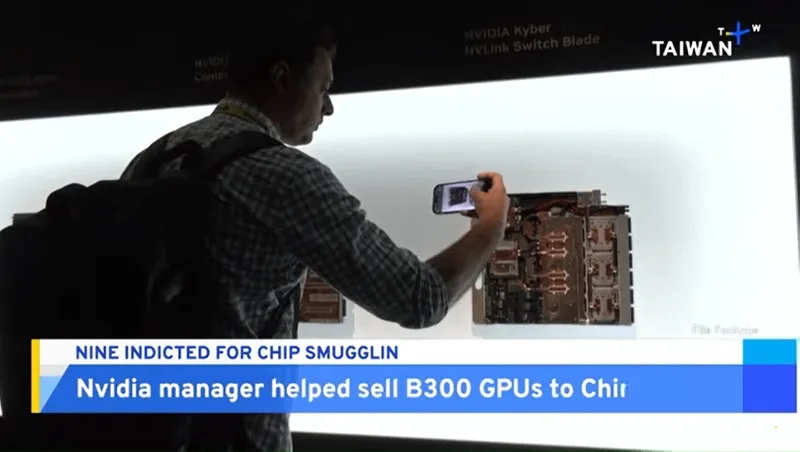
Bloomberg reported on November 15, 2026, that Nvidia challenged the prosecution of one of its Taiwan managers in discussions with Taiwanese political officials. People familiar with the matter told the publication that company representatives disagreed with the case against the manager, surnamed Chang, and believed he should not be under investigation. Nvidia confirmed engaging with authorities but described its purposes as providing requested information, protecting Chang’s well-being, and helping resolve the matter promptly. Chang faces Taiwanese charges of document forgery and breach of trust arising from an order for AI servers allegedly diverted to China. Public reporting through November 19 described the case as proceeding before a district court, with the allegations still awaiting adjudication.
Chang worked in Nvidia’s Taiwan distribution operation. Focus Taiwan described him as a distribution manager, while Taiwan’s Central News Agency identified his position more specifically as senior partner manager. His surname is written 張 and is also romanized as Zhang. World Journal’s November 17 report identified him as 張登隆, while Bloomberg said it had been unable to reach him for comment. Prosecutors place his alleged role at an internal approval stage, where information supplied by sales and distribution partners could determine whether an order advanced.
Nvidia said its internal investigation found no indication that Chang knew employees at other companies were allegedly diverting the servers. The company’s public account did not detail which records it examined or whom it interviewed. That November statement went beyond its August response to Reuters, which emphasized employees’ incentives to follow applicable laws and promised cooperation with Taiwanese authorities. Prosecutors allege that Chang helped obtain approval while concealing the buyer’s insufficient funds and a payment originating from a Chinese company. They also allege that the approval request represented the necessary verification as complete. The dispute therefore concerns what Chang knew, what he communicated, and how those representations affected the decision to release the hardware.
The proceedings also produced a documented decision about Chang’s custody. On September 10, 2026, Taiwan’s High Court rejected prosecutors’ challenge to an August 26 ruling granting bail to Chang and three other defendants. Each was required to provide NT$4 million, comply with an eight month restriction on leaving Taiwan, and report regularly to police. The court considered the relevant evidence secured, including recovered digital records, and concluded that those conditions could protect the proceedings despite concerns about flight and coordination between defendants. The ruling addressed whether continued detention was necessary. It left the underlying accusations for trial and provides no basis for attributing the bail decision to Nvidia’s reported political contacts.
Chang subsequently challenged the prosecution’s description of his authority at the first preparatory hearing on October 16. Liberty Times reported that he described his work as forecasting potential demand from business partners, with completed orders and shipments requiring additional compliance procedures and decisions at US headquarters. He argued that prosecutors had misunderstood his responsibilities and that he could not determine a transaction’s outcome alone.
His lawyer also disputed the suggestion that sales pressure explained his conduct, saying performance was assessed across a global team and through factors beyond the number of completed orders. This defense makes the internal division of responsibility significant: the court must examine both the information Chang supplied and how others used it. His courtroom account adds a personal response to the allegations alongside Nvidia’s public statement about its internal investigation.
Bloomberg reported that the political officials Nvidia approached said they had no role in the legal proceedings. The report did not identify those officials, and Taiwan’s Ministry of Economic Affairs did not respond to its questions. It also did not identify the particular information request cited by Nvidia or establish why representatives chose to approach political officials. After the story appeared, World Journal quoted Keelung prosecutors as saying that no Taiwanese official had approached investigators to express concern or convey an opinion during the investigation. That statement concerns communications received by prosecutors and can coexist with Nvidia having spoken to political figures elsewhere. The public accounts do not establish that the outreach changed the prosecution’s handling of the case.
The report also prompted an on the record response from Taiwan’s government. On November 16, Executive Yuan Secretary General Chang Tun-han declined to discuss the individual case because it was already within judicial proceedings. Economic Daily News reported that he emphasized the need for government, industry, and political parties to protect Taiwan’s technology. The report did not identify him as one of the officials Nvidia had approached. His public remarks therefore establish the administration’s stated position without resolving who received the company’s representations or what was said in those conversations.
Bloomberg also reported that Nvidia sought advice from Taiwan Semiconductor Manufacturing Company, its principal production partner. Sources familiar with the matter said TSMC declined to become involved. TSMC declined to comment, leaving its reasons undocumented in the public account. Its reported role was limited to being approached for advice, rather than participating in the disputed purchase or approval process. Nvidia’s manufacturing relationship with TSMC is therefore separate from the distribution, end-use verification, and criminal proceedings at the center of the case.
The significance of the outreach lies in the overlap between a company defending an employee and a government investigating transactions involving a major industrial partner. Nvidia’s production relationship gives it commercial reasons to maintain communication with Taiwanese institutions, while the employee’s prosecution creates a separate dispute over specific conduct. Assessing the reported lobbying consequently requires evidence about the requests made and the responses received. A conversation expressing disagreement with charges establishes advocacy; determining whether anyone attempted to interfere with investigators would require additional evidence. The reporting available here establishes the former without demonstrating the latter.

The 130-Server Order, Alleged Diversion, and Seizure Timeline
Keelung prosecutors describe an order by Flying Tiger Technology for 130 Supermicro servers equipped with Nvidia B300 GPUs. These figures refer to complete computing systems, not 130 individual chips, and each system could contain multiple GPUs. The proposed use was an installation in Taiwan at a facility associated with Chief Telecom. Authorities allege that the site lacked sufficient electrical capacity and network bandwidth for the full order. They say the required checks were nevertheless represented as complete when Nvidia was asked to approve the transaction, after which Supermicro agreed to the sale.
The approval procedures described by prosecutors were more specific than a general promise to obey export rules. Focus Taiwan reported that purchasers had to appear on Nvidia’s approved buyer list, submit information identifying the intended user and use, and accept restrictions prohibiting resale. Orders exceeding eight servers required visits by sales and technical personnel from both suppliers. A purchase of 130 systems therefore fell within the category requiring an inspection. These were the supplier verification arrangements described in the prosecution’s account, rather than a universal statutory threshold applying to every international server transaction.
UDN’s later court coverage identified a September 10, 2025 inspection and prosecutors’ allegation that a Chief Telecom quotation was presented as a lease. A quotation can describe an available service without establishing that a customer has contracted for the required capacity. Prosecutors further alleged that Chang sought approval before the review was complete. The allegation therefore concerns both the status of the review and what the supporting documents actually established.
Focus Taiwan described deliveries under the order in batches of two, 64, and 64 servers. Prosecutors say the first two batches, totaling 66 systems, and eight from the final batch reached Chinese customers. The remaining 56 were intercepted in Taiwan, accounting for the entire 130-server order. Focus Taiwan reported that prosecutors attributed more than US$21.2 million in alleged illicit proceeds to the completed resale of the 74 machines, rather than to the original purchase price of all 130 systems. Their ultimate deployment and any subsequent transfers remain unclear in the available reporting. The Associated Press described the completed deliveries through three routes:
- 50 servers went through Indonesia.
- 16 servers were delivered directly to China.
- Eight servers went through Japan and Hong Kong before reaching mainland China.
The alleged arrangements began before the shipment was stopped. Taiwan’s Central News Agency reported that people associated with Flying Tiger started planning in 2025 to obtain and resell high-end servers. Public Television Service reported that irregularities were detected in April 2026 when the remaining 56 systems were presented for export to a Japanese company.
Reuters attributed the initial stop to customs officials, while Bloomberg dated the Coast Guard seizure to May and The Wall Street Journal reported that the investigation began that month. These accounts describe different enforcement stages, with April focused on detection and May on seizure and investigation. Authorities arrested Chang in July, and the Keelung District Prosecutors’ Office announced the conclusion of its investigation and the filing of charges on August 24.
The final export attempt also involved a separate documentary checkpoint. Reporting on the case described customs requiring a strategic high technology goods export permit before allowing the 56 systems to leave Taiwan. The Associated Press reported allegations that participants created false websites and falsified information to evade restrictions. That allegation concerns documents used to support the movement of equipment after the original purchase approval. It illustrates how an order can pass a supplier’s review yet encounter further scrutiny when a later export is declared, bringing commercial records and customs submissions into the same investigation.
Customs identifying problems with an outgoing shipment and the Coast Guard taking custody of equipment are distinct actions. The Associated Press reported in August that the 56 intercepted machines remained in Taiwan. Prosecutors maintained that they belonged to the same order allegedly intended for resale to Chinese customers, despite the immediate proposed export destination being Japan. Investigators could compare that shipment with paperwork identifying a Taiwanese installation site. The difference between an approved installation location, an intermediate shipping destination, and the actual end user helps explain why the retained shipment became important evidence. It also explains why reporting describes both completed and alleged attempted diversion within one order.
The retained equipment could also help investigators connect physical goods with the disputed paperwork. Matching a system’s identity to an invoice, delivery record, and export declaration would allow investigators to test whether different documents describe the same transaction. Such comparisons are especially relevant where several companies handle a purchase and deliveries occur over time. The public accounts summarized here do not disclose a complete forensic inventory or identify every record examined. Nevertheless, the distinction between equipment actually retained in Taiwan and equipment allegedly delivered abroad matters: the former remains available for direct inspection, while reconstructing the latter requires evidence of its movement and recipients.
Supermicro, Albatron, and the Separate Proceedings
Super Micro Computer, commonly known as Supermicro, manufactured the server systems containing the Nvidia B300 GPUs. Prosecutors said the company agreed to sell the 130 systems after the order passed the approval process. Two sales managers associated with its Taiwan subsidiary were among the defendants. Supermicro told Reuters that they were former employees and that its cooperation with Taiwanese authorities helped lead to their arrests. The company also said the Taiwanese investigation did not target it and that authorities had brought no accusation against the company itself. That corporate statement must be distinguished from the allegations against the individuals involved in processing the transaction.
The defendants also represented businesses beyond the chip designer and server manufacturer. Focus Taiwan identified Chief Telecom project manager Tsai, Chance See International customs clearance executive Yu, and the head of trading company Long Wins, another defendant surnamed Wang. Flying Tiger’s president, surnamed Chen, was indicted, while another Chen identified as the person in charge of that company remained wanted when the August report appeared. These roles show why the investigation covered several stages of the transaction, from arranging a hosting location and finding buyers to preparing shipments, rather than examining a single sale in isolation.
At the second preparatory hearing on November 16, Tsai denied wrongdoing and compared Chief Telecom’s role to a landlord, according to UDN. He said customers moving servers was common and that Flying Tiger personnel had described a sale to Japan. He said he suspected mainland resale only after hearing discussion of Chinese prices. His account makes the timing of his knowledge relevant to assessing his participation in the hosting arrangements.
A separate US matter involved people formerly associated with Supermicro. The company commissioned an independent board-led investigation following a March US indictment. On August 20, it announced that this internal investigation had concluded. Keelung prosecutors’ August 24 filing concerned the Taiwanese B300 order and its own defendants. The similar supplier and products make it important to distinguish the venues, dates, and scope of each proceeding rather than applying a statement about one case to the other.
There is also a potential identity confusion between the two proceedings. Supermicro’s March 19 announcement identified a US defendant as Ruei-Tsang “Steven” Chang, a sales manager employed by Supermicro in Taiwan. He is a different person from the Nvidia manager identified in Taiwanese court records as 張登隆. The shared surname and overlapping industry connections do not link their alleged conduct. Maintaining that distinction prevents accusations, employment decisions, or statements from one prosecution being incorrectly attached to the employee at the center of Nvidia’s reported outreach to Taipei.
Supermicro’s August review also had a defined scope. Its announcement said independent directors Scott Angel and Tally Liu led the inquiry, with Munger, Tolles & Olson conducting the investigation and AlixPartners providing forensic accounting assistance. Reviewers examined transactions identified in the US indictment and selected other restricted product sales.
The company reported finding no evidence that current senior management knew about the alleged diversion or that Supermicro directly sold controlled products to known restricted parties or locations. It nevertheless announced personnel actions, including terminations, for policy or conduct violations and said its board adopted further compliance recommendations. Those findings concern the company’s commissioned review of the US allegations. They do not determine the credibility of testimony or documents in the Taiwanese case.
Albatron Technology was a distributor for Supermicro, and Focus Taiwan identified its chief executive, surnamed Lu, among the defendants. Prosecutors allege that Lu participated in arrangements concerning buyers for servers purchased by Flying Tiger. A distributor can see parts of a transaction that differ from the manufacturer’s purchase and delivery records, including replacement buyers, resale arrangements, and associated payments. The allegations concerning Albatron therefore involve both its position in the sales chain and the handling of its assets. Those functions are separate from Nvidia’s approval role, Supermicro’s manufacture of the systems, and Chief Telecom’s association with the proposed hosting location.
The related financial allegations concerned four allegedly false invoices and approximately NT$39.16 million in Albatron assets. Focus Taiwan reported that a separate defendant allegedly issued the invoices to conceal the movement of funds. Prosecutors said the arrangement diverted company assets and led to additional aggravated breach-of-trust charges against several individuals under Taiwan’s Securities and Exchange Act. This amount is distinct from the more than US$21.2 million in alleged proceeds attributed to the resale of the 74 servers. The figures concern different transactions, currencies, and parts of the prosecution’s account, rather than alternative estimates of one loss.
Asset recovery has already generated its own court decision. On October 13, the Keelung District Court rejected a Flying Tiger defendant’s request to recover a seized vehicle, keeping it available to secure a possible future recovery order. The ruling cited alleged proceeds of US$21,205,531 after the purchase payments were deducted, while stating that the defendant’s individual share still required investigation. This adds precision to the financial account without turning the total into an established personal gain for every defendant. Retaining property during proceedings preserves the possibility of enforcement; the amount ultimately recoverable from a particular person depends on the court’s findings.
The overall case also explains why August coverage referred to both eight and nine defendants. Reuters reported that eight people were charged in connection with the server-export allegations, while a ninth faced charges in the related distributor-money matter. The Keelung District Prosecutors’ Office listed nine defendants in its overall announcement. These totals do not mean that every defendant faced identical allegations or charges. The Associated Press reported that prosecutors sought the maximum five-year sentence for Chang and three other defendants. That was a prosecution request, not a sentence already imposed, and the district court will determine whether the charges are proved and what punishment, if any, follows.

US Export Controls and the Compliance Questions Raised by the Case
US export controls under the Export Administration Regulations cover certain advanced computing chips and systems containing them. In an SEC filing, server supplier Super X AI Technology said manufacturer classifications placed the B300 GPUs it sells under Export Control Classification Number 3A090.a. It identified servers containing those GPUs under 4A090.a. The distinction matters because a finished server can be subject to export requirements even when the controlled chips are already installed inside it. These controls explain the scrutiny surrounding the hardware, while the reported charges against Chang arise under Taiwanese criminal law.
Licensing requirements depend on the rules applicable at the time, whether an item is subject to US regulations, and its destination, end user, and intended use. The Bureau of Industry and Security’s foreign direct product rules can bring certain foreign-made items within that scope when the relevant conditions are met. Once an item is subject to those regulations, its applicable licensing requirements must be assessed for the transaction.
An intermediate shipping destination does not determine the outcome by itself. The Commerce Department’s January 2026 move toward case-by-case reviews for qualifying H200-class products was a separate licensing development. Nvidia’s reported licenses for limited H200 quantities for certain China-based customers do not establish authorization for the B300-equipped servers in the Keelung case.
The transaction illustrates why compliance reviews must examine the relationship between the purchaser, payer, installation site, and end user. These roles can legitimately belong to different businesses, but unexplained differences or contradictory records require scrutiny. In this case, prosecutors connected alleged approval problems to the proposed site’s power and network capacity and to the origin of the funds.
BIS guidance asks companies to consider whether an order fits the end user’s business and whether the intended data center can operate the equipment. General capacity checks can include power, cooling, physical space, and network requirements, although the reported deficiencies at this particular site concerned electrical capacity and bandwidth. A facility’s ability to host other customers does not establish that it has sufficient available capacity for a specific 130-server deployment.
BIS guidance issued on May 13, 2025, extends this assessment beyond the proposed building. It identifies incomplete ownership information, uncertainty about a customer’s ultimate parent, and a mismatch between the customer’s business and the equipment ordered as reasons for closer examination. It recommends evaluating incorporation dates and ownership structures, obtaining detailed certifications, and securing written confirmation that the user is authorized to operate at the installation site. The guidance also describes visits or independent audits as ways to corroborate facility assurances. Applied as a general framework, these checks explain why an approval file needs support from several sources. A signed statement has limited value if other records contradict the commercial story it presents.
Verification also needs to continue across the life of an order. Payment and delivery records can show whether the commercial arrangement remains consistent with the approved use. That comparison becomes particularly important when systems arrive in several batches or a buyer proposes a different recipient after approval. A change in shipping arrangements may require reviewing information that looked adequate when the original order was submitted. Comparing records across manufacturers, distributors, purchasers, and hosting providers can reveal inconsistencies that none of them sees in isolation.
Nvidia’s public discussion of monitoring technology provides another boundary around what can be inferred about oversight. In December 2025, it described an optional service that customers could install to monitor GPU fleets, including utilization, configuration, errors, power consumption, and thermal conditions. The company said the resulting telemetry would be managed by customers and would not modify GPU operations. That announcement describes a tool for participating operators; it does not establish that every system sold by a distributor continuously reports its location or activity to Nvidia. Neither the announcement nor the case reporting establishes that the disputed Taiwanese order used the service, so it cannot be assumed to have supplied evidence about these machines.
The company has also publicly opposed embedding mechanisms that could secretly disable its processors. In an August 2025 statement, Nvidia’s chief security officer David Reber Jr. said its GPUs did not contain backdoors or kill switches and argued that such mechanisms would introduce security weaknesses. This position helps explain why stopping unauthorized transfers cannot simply be discussed as a matter of remotely switching off the equipment. The practical questions raised by the Taiwan case concern the reliability of buyer information, the handling of warning signs, and cooperation with enforcement authorities. Monitoring software and commercial approval controls address different parts of that problem.
For the disputed approval, a particularly useful distinction is between the existence of a review and the information available to each reviewer. Several signatures can appear in an approval chain while leaving unanswered whether an important contradiction was communicated to the people making the decision. Conversely, participation in a chain does not itself establish knowledge of everything another participant allegedly arranged. Reconstructing the sequence would require comparing the timing and content of messages, the responsibilities assigned to each employee, and any changes to the supporting documents. That evidentiary task connects Chang’s defense about limited authority with prosecutors’ allegation that he concealed facts material to approval.
Weak approval controls and an individual employee’s criminal responsibility nevertheless require different evidence. A shipment can expose verification failures across several businesses without establishing that a particular person knowingly falsified information or breached a duty. The case against Chang turns on evidence about his actions, knowledge, and representations at the approval stage. Prosecutors allege deliberate concealment of financial information, while Nvidia says its review found no indication that he knew about the alleged diversion effort. Those competing accounts remain subject to the judicial proceeding, which will determine the legal outcome rather than the company’s internal assessment or the allegations alone.

Frequently Asked Questions (FAQs)
- When did Nvidia’s reported lobbying become public?
Bloomberg published its account on November 15, 2026. The report said Nvidia had raised concerns with Taiwanese political officials following Chang’s July arrest. November 15 therefore identifies when the outreach became public, not necessarily when the conversations occurred. Bloomberg did not provide a complete schedule of those contacts. By the time its report appeared, prosecutors had already filed charges and the case was proceeding before a district court. - When was Chang indicted in Taiwan?
The Keelung District Prosecutors’ Office announced the charges on August 24, 2026. That announcement followed the completion of its investigation. Chang was among eight people charged in connection with the server-export allegations. The overall announcement covered nine defendants because it also included a person charged in a related financial matter involving distributor assets. The eight-person and nine-person figures therefore describe different parts of the proceedings rather than conflicting totals. - Has Chang been convicted?
The November reporting did not describe a conviction. It said the case was proceeding before a district court. Prosecutors requested a five-year prison sentence for Chang. That request represents the prosecution’s position, not a sentence already imposed by the court. The court must determine whether the charges are proved and, if applicable, what punishment should follow. - Were the 130 units individual Nvidia chips?
No, the order involved 130 complete Supermicro servers equipped with Nvidia B300 GPUs. The counts of 74 allegedly delivered to Chinese customers and 56 intercepted in Taiwan also refer to servers. A server can contain multiple GPUs, so the number of systems is not automatically the number of individual chips. The delivered and intercepted quantities together account for the full 130-server order. Those figures alone do not establish the total number of GPUs involved. - Who was supposed to buy and host the servers in Taiwan?
Prosecutors identified Flying Tiger Technology as the purchaser. They associated the proposed Taiwanese installation site with Chief Telecom. According to the prosecution, that facility lacked sufficient electrical capacity and network bandwidth for the full order. Prosecutors nevertheless allege that the required verification was represented as complete when Nvidia’s approval was requested. The capacity issue was therefore part of their challenge to the transaction’s declared Taiwanese end use. - How much did prosecutors say the completed sales generated?
Focus Taiwan reported that prosecutors attributed more than US$21.2 million in alleged illicit proceeds to the completed resale of 74 servers. That figure concerns those transactions, not the original purchase price of all 130 systems. It should not automatically be interpreted as net profit. The separate figure of approximately NT$39.16 million concerns the alleged diversion of Albatron assets. The amounts describe different conduct in different currencies and should not be combined as one estimate of server-sale proceeds. - Did political officials contact Keelung prosecutors about Chang?
Keelung prosecutors said Taiwanese officials had not approached investigators or conveyed views about the case during the investigation. That statement concerns communications received by the prosecutors’ office. Bloomberg separately reported Nvidia’s discussions with political officials. Those officials reportedly said they had no role in the legal proceedings. The accounts can coexist and do not establish that Nvidia’s objections were passed to investigators or changed the prosecution’s handling of the case. - Did TSMC release a public explanation for its decision?
Bloomberg did not publish an explanation from TSMC for its reported decision. People familiar with the matter said Nvidia sought advice from its production partner. Those sources said TSMC declined to become involved. TSMC itself declined to comment when Bloomberg contacted it. The report therefore describes the alleged approach and response without establishing TSMC’s private reasoning or a particular legal, political, or commercial motive. - Was Supermicro itself charged in the Taiwan case?
Supermicro said it faced no accusation of wrongdoing and was not a target of the Taiwanese investigation. Keelung prosecutors charged two people associated with the company’s Taiwan operation. Supermicro identified both as former employees. It also said its cooperation with Taiwanese authorities helped lead to their arrests. The charges against those individuals should therefore be distinguished from the company’s statement about its own status, rather than reported as a criminal charge against Supermicro itself. - Do the U.S. licenses for some H200 shipments cover B300 servers?
Authorization for B300 servers cannot be inferred from the disclosed H200 licenses. The January 2026 policy provided conditional case-by-case reviews for qualifying products meeting specified performance and bandwidth thresholds. Nvidia reported licenses for limited quantities of H200 products for particular China-based customers. A B300 server shipment would require assessment under the applicable rules and any license covering its product, destination, end user, and intended use. The reported H200 authorizations are not evidence that the B300 shipments in the Keelung case were authorized.

Conclusion
The Nvidia Taiwan chip-smuggling case began with discrepancies between the stated purpose of a 130-server order and what prosecutors say happened after approval. Taiwanese authorities allege that 74 B300-equipped systems reached Chinese customers and that the remaining 56 were stopped in Taiwan. Their account puts Chang’s role in obtaining approval at the center of the case, including what he allegedly knew about the buyer’s funds and what Nvidia was told about the proposed installation.
The November report documented Nvidia’s decision to raise objections with political officials. Nvidia disputes the allegation that Chang knew of the diversion effort, and Keelung prosecutors said officials did not communicate views to investigators during the inquiry. The issue before the district court is whether the evidence about the order, its approval and the defendants’ actions proves the offenses charged under Taiwanese law.
Sources and Citations
- Bloomberg, November 15, 2026: Original reporting on Nvidia’s contacts with Taiwanese political officials, its approach to TSMC and its statement about Chang.
https://bloomberg.com/news/articles/2026-11-15/nvidia-sought-taipei-s-help-over-employee-s-chip-smuggling-case - Bloomberg via NDTV Profit, November 15, 2026: Full syndicated account of the November reporting, including responses from Nvidia and a Keelung prosecutors’ spokesperson.
https://www.ndtvprofit.com/business/nvidia-sought-taipeis-help-over-employees-chip-smuggling-case-12330733 - Bloomberg, August 24, 2026: Coverage of the indictment of Chang and the allegations involving B300-equipped servers.
https://bloomberg.com/news/articles/2026-08-24/taiwan-indicts-nvidia-manager-following-chip-smuggling-probe - Keelung District Prosecutors’ Office, press release index: Official index listing the August 24 announcement of indictments against nine defendants in the high-end server case.
https://www.klc.moj.gov.tw/293105/293191/293157/ - Focus Taiwan, August 24, 2026: Central News Agency coverage of the order, the delivery groups, the proposed data center and the Albatron allegations.
https://focustaiwan.tw/society/202608240023 - Taiwan Public Television Service, August 24, 2026: Local coverage of the prosecution and the April detection of irregularities involving the 56 servers.
https://news.pts.org.tw/article/823893 - Reuters, August 24, 2026: Reporting on the charges, the distinction between eight defendants and the related ninth defendant, and the companies’ responses.
https://www.reuters.com/world/asia-pacific/taiwan-indicts-9-over-alleged-illegal-export-ai-servers-china-2026-08-24/ - Associated Press, August 24, 2026: Reporting on the delivery totals, the servers that remained in Taiwan and prosecutors’ sentencing requests.
https://apnews.com/article/511e9ae69d517c49f19512d45b1a8b0c - World Journal, November 17, 2026: Local reporting on Keelung prosecutors’ response to the lobbying report and their allegations about the funding behind the server order.
https://www.worldjournal.com/wj/amp/story/121220/9883959 - Supermicro, August 20, 2026: Company statement identifying the scope of its independent investigation after the separate March 2026 U.S. indictment.
https://www.supermicro.com/en/pressreleases/supermicro-announces-completion-independent-investigation-and-continued-enhancement - Bureau of Industry and Security, Advanced Computing Diversion Guidance: Official guidance on end-user verification, data center capacity and other warning signs.
https://www.bis.gov/media/documents/si-counter-diversion-industry-guidance-may-13-2025.pdf - Bureau of Industry and Security, Export Administration Regulations Part 734: Official text explaining when certain foreign-produced items become subject to U.S. export rules.
https://media.bis.gov/regulations/ear/734 - Federal Register, January 15, 2026: Final rule establishing conditional case-by-case review for certain exports of advanced computing commodities to China and Macau.
https://www.govinfo.gov/content/pkg/FR-2026-01-15/pdf/2026-00789.pdf - Super X AI Technology, Annual Report on Form 20-F: SEC filing reporting manufacturer classifications for B300 GPUs and servers containing them.
https://www.sec.gov/Archives/edgar/data/1897087/000121390026113814/ea0308507-20f_superx.htm - Nvidia, Quarterly Report for the Period Ended July 26, 2026: SEC filing describing Nvidia’s limited H200 licenses and the impact of export controls on its China data center business.
https://www.sec.gov/Archives/edgar/data/1045810/000104581026000075/nvda-20260726.htm
Recommendations
- Subnautica 2 Early Access Roadmap: Co-Op Updates, Sprinting, and More
- Virtua Fighter 6 Leak Explained
- Best Gaming Headsets for 2026: Top Wireless, Wired, PC, PS5, and Xbox Picks
- Take-Two CEO Comments on Roblox and GTA Explained
- All characters and color variations in Mario Tennis Fever: Full roster, unlocks, and alternate colors
- Assassin’s Creed Black Flag Remake
- How to Make a 3D VTuber Avatar: The Complete Guide for Beginners and Content Creators
- Farm to Table Grow Your Own Food & Make Fine Dishes in Cozy Restaurant Simulator: Complete Gameplay Guide
- Don’t Fret Hits All the Right Notes for a Frightening Survival-Horror Experience
- Assassin’s Creed Black Flag Resynced Post-Game Support Teased Ahead of GTA 6



































































































