









In This Article (8 sections)
PlayStation’s January 2028 Disc Cutoff and the Shift to Digital-Only Releases
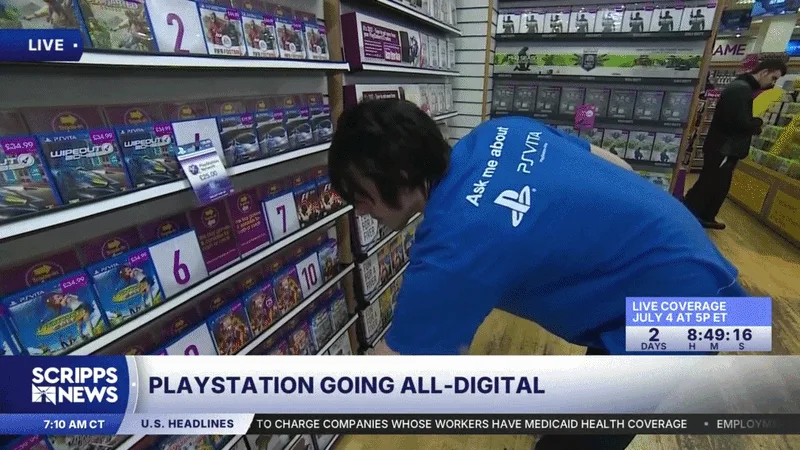
Sony Interactive Entertainment has confirmed that production of physical game discs for all new PlayStation releases will end starting in January 2028. From that point forward, newly released games will be distributed through PlayStation Store and through retailers in digital formats only. The policy does not affect games that were already released on disc or titles scheduled to receive physical editions before the cutoff.
The timing is important because Sony is not disabling disc drives, recalling physical games, or preventing existing discs from working. January 2028 is a forward-looking deadline for new releases. A PS5 game launched in December 2027 may still receive a conventional boxed edition, while a new game launching after the cutoff will be digital-only under the announced policy.
This is a major change for a brand whose console history has been closely connected to physical media since the original PlayStation. However, Sony had already been moving toward a model in which optical drives were optional rather than standard. The slimmer PS5 Digital Edition supports an attachable Ultra HD Blu-ray Disc Drive, while PS5 Pro was released without a built-in drive and requires the same separately sold accessory for physical media.
Sony says the decision reflects changing consumer preferences and the entertainment industry’s wider move toward digital distribution. Its financial data supports that explanation. Full-game digital downloads represented 70 percent of PS4 and PS5 software sales in FY2023, rising to 76 percent in FY2024 and 78 percent in FY2025.
Revenue figures show an even wider difference between the two formats. Sony reported ¥125.1 billion in physical software revenue for FY2025, compared with ¥1.056 trillion from digital software. Add-on content generated ¥1.360 trillion, while network services brought in ¥763.1 billion. The company’s FY2024 Game & Network Services sales breakdown also placed physical software at only 3 percent of the division’s total sales, compared with 20 percent for digital software, 29 percent for add-on content, and 14 percent for network services.
Digital distribution also reduces several expenses and risks associated with physical releases. Sony and publishers no longer need to press discs, manufacture cases, print covers, ship inventory, manage regional stock, or account for unsold copies occupying retail shelves. Digital products can be distributed globally, updated quickly, preloaded before release, and connected directly to subscriptions, add-ons, and account-based services.
The January 2028 policy is therefore not a sudden abandonment of a thriving physical-first business. It is the formal endpoint of a transition already visible in PlayStation hardware, consumer behavior, and Sony’s revenue mix. Physical games remain culturally important to many players, but they have become a comparatively small part of the company’s overall software business.

What Happens to Existing PS5 Discs and Games Released Before the Deadline
Physical PS5 games released before January 2028 will continue to work on compatible consoles. Sony has clearly stated that the new policy does not affect games already available on disc or those scheduled for disc releases before the cutoff. Its official disc-drive information also says games released before January 2028 can continue to be played after the transition.
Players will need hardware capable of reading those discs. Compatible options include a PS5 with a built-in drive, a supported PS5 slim Digital Edition fitted with the attachable disc drive, and a PS5 Pro using the same optional accessory. The drive can also play supported PS4 game discs and physical movies on 4K Ultra HD Blu-ray, Blu-ray, and DVD, so it will retain practical value even when new PlayStation games stop arriving on disc.
Physical copies already in stores will not automatically disappear in January 2028. Sony has not announced plans to recall or destroy existing inventory, and retailers can continue selling older boxed games while stock remains available. The physical PlayStation market will gradually shift toward legacy stock, used copies, collector-owned games, and any permitted reprints of titles originally released before the cutoff.
Players should still distinguish between a disc remaining readable and every connected feature remaining available forever. Many modern discs act as installation media and physical license checks, but games may still depend on downloadable patches, servers, account authentication, multiplayer infrastructure, or publisher-controlled services. A single-player campaign stored sufficiently on the disc may remain usable for years, while an online mode could close independently of the physical-format policy.
New physical PlayStation releases can continue until January 2028. For players who prefer boxed ownership, local lending, physical gifts, retail discounts, trade-ins, or collecting launch editions, the remaining period represents the final guaranteed window for standard new PlayStation disc releases. Publishers may choose different physical strategies before the deadline, but Sony’s policy does not prevent them from producing discs for qualifying games.
The digital-only transition will be relatively convenient for players who already use PlayStation Store for most purchases. Digital games can be bought from home, preloaded where supported, accessed without changing discs, and stored within one account library. There is no physical media to scratch, lose, or carry between locations.
Other players will lose important forms of flexibility. A physical copy can be lent to another person, resold, traded, displayed, or purchased from competing retailers. Used copies create lower-cost entry points, while trade-in credits help finance future purchases. Digital games can receive substantial discounts, but the platform holder controls the storefront, account rules, and availability of each listing.
Sony’s digital refund rules can also be more restrictive than some physical retail options. PlayStation Store generally permits cancellation within 14 days only when downloading or streaming has not begun, unless the content is faulty. Physical return policies differ between retailers, but discs at least participate in resale and used-market systems that digital licenses do not provide.
The policy therefore preserves existing physical libraries while changing how every future PlayStation release will be acquired. Players do not need to panic about their current collections, but those who value physical purchasing have a limited period in which new boxed releases remain part of the normal PlayStation market.

How Digital-Only PlayStation Games Affect Collectors, Ownership, and Retailers
For collectors, the January 2028 cutoff marks the end of an era that began with the original PlayStation’s gray jewel cases and continued through PS2 DVD packaging, PS3 and PS4 Blu-ray cases, and the white-spined PS5 format. Once new disc releases stop, the physical PS5 catalog effectively becomes a closed historical collection rather than a library that continues expanding with every major launch.
Physical-media collecting involves more than having access to a game. Cover artwork, regional editions, first prints, reversible inserts, steelbooks, collector’s packages, shelf displays, and the experience of opening a boxed release all contribute to the hobby. Sony has not banned collector’s editions after January 2028, but any future packages would contain digital access rather than a standard new game disc unless the policy is revised.
PlayStation Store and physical discs serve different priorities. Digital purchases are better suited to immediate access, preloading, remote purchasing, compact libraries, and players who do not want to manage physical media. Discs offer tangible ownership, display value, local lending, gifting, resale, trade-ins, and some protection against a game being removed from a digital storefront.
Neither format guarantees that every feature will remain functional permanently. Physical games can depend on patches and servers, while damaged or lost discs are difficult to replace after production ends. Digital libraries avoid physical deterioration but depend heavily on account access, platform infrastructure, licensing agreements, and the continued availability of download services.
Sony’s Software EULA says software is licensed rather than sold and describes the license as personal and non-transferable. This means digital purchases do not operate like physical objects that can be legally passed to another owner. Access is connected to the player’s PlayStation account and remains subject to platform terms, regional policies, and the continued operation of Sony’s services.
Account continuity therefore becomes increasingly important. Sony’s terms explain that account termination can affect access to services, purchases, subscriptions, wallet balances, virtual items, and other stored entitlements, subject to applicable laws. This does not mean ordinary users should expect their libraries to disappear without cause, but it shows that digital access relies on an ongoing relationship with the platform holder.
Sony’s planned closure of the PS3 and PS Vita storefronts makes those concerns easier to understand. New purchases on the legacy stores will end through a phased process, although previously purchased content is expected to remain downloadable for the foreseeable future. That policy protects existing customers for now, but it also demonstrates that digital storefronts have operational life cycles and can eventually stop accepting new transactions.
Retail stores will not necessarily stop selling PlayStation products after January 2028. Sony says new games will remain available through retailers in digital formats. Shops may continue selling download codes, gift cards, PlayStation Store credit, subscription cards, consoles, accessories, merchandise, collector’s packages, and older physical inventory.
Sony has not provided a complete explanation of what retailer-sold digital games will look like. They could be offered as codes, cards, boxed code products, hardware bundles, or other arrangements. What is confirmed is that retailers will no longer receive newly manufactured PlayStation game discs for post-cutoff releases.
This will weaken the role of businesses built around buying, selling, and trading physical games. Retailers such as GameStop and GAME can continue handling older stock and hardware, but they will lose the ability to compete on the price of brand-new boxed PlayStation releases. Players will similarly lose much of the pricing competition, trade-in value, and used-copy availability created by a healthy physical retail market.

Preservation, PS5 Hardware, and How PlayStation Compares with Xbox and Nintendo
The end of new PlayStation discs creates a significant preservation challenge because future access will depend more heavily on Sony, publishers, storefront infrastructure, account systems, and licensing continuity. Physical media is not a perfect preservation method, especially when games require patches or online services, but it gives players, libraries, and archives a consumer-held object that can remain available outside an active commercial listing.
The Video Game History Foundation reported in 2023 that 87 percent of classic games released in the United States were no longer commercially available. The Library of Congress has also described video games as particularly difficult to preserve because they depend on specialized hardware, software, servers, rights agreements, and interactive systems.
Sony’s simultaneous moves illustrate the concern. The company is preparing to close the PS3 and PS Vita stores to new purchases while also ending physical production for future PlayStation games. Previously purchased legacy content is expected to remain downloadable for the foreseeable future, but that wording does not promise permanent access. After January 2028, every newly released PlayStation game will depend entirely on a digital purchase and delivery system.
Legal preservation exemptions remain limited and contested. Libraries, museums, and archives do not have a simple universal right to reproduce and distribute every unavailable digital game. As a result, a title can disappear from public sale because of expired licenses, publisher decisions, company closures, music rights, server shutdowns, or technical incompatibility even when cultural institutions want to preserve it.
For current PS5 hardware, the change does not make disc drives useless. A standard disc-equipped PS5 can continue playing eligible pre-2028 PS5 discs and supported PS4 games. The attachable drive remains useful for the PS5 slim Digital Edition and PS5 Pro, while movie collectors can still use it for compatible optical video formats.
PS5 Pro now appears to have anticipated Sony’s longer-term direction. It was introduced as a disc-less premium console, with physical compatibility moved into an optional accessory. That model allows Sony to build hardware around digital distribution while continuing to support older discs for players who specifically need them.
Sony has not officially announced the specifications, release date, or disc-drive design of a future PlayStation console. It has referred to investment in a next-generation platform, but any claim about an integrated drive or completely disc-free machine would currently be speculation. The confirmed 2028 software policy nevertheless makes a digital-first hardware strategy increasingly likely.
Sony is also moving further than its primary console competitors. Microsoft currently sells Xbox Series X configurations with disc drives alongside digital-only systems such as Xbox Series S and all-digital Series X models. It has not announced a platform-wide date after which every new Xbox game must abandon physical media.
Nintendo continues to support physical game cards. Nintendo Switch 2 accepts standard game cards and game-key cards, which act as physical keys for games that must be downloaded. Nintendo is also developing virtual game-card systems to make digital games more flexible across consoles and family groups. Its approach combines physical, digital, and hybrid formats rather than eliminating physical distribution.
Digital game sales are growing across the entire industry, but Sony’s policy remains distinctive because it converts that market trend into a firm deadline affecting every new PlayStation release. Xbox still maintains parallel physical and digital hardware options, while Nintendo continues treating physical media as a central part of its platform.

Frequently Asked Questions (FAQs)
- Has PlayStation really confirmed the end of new physical game discs?
Yes. Sony Interactive Entertainment confirmed on July 1, 2026, that disc production for all new games released on PlayStation consoles will end starting in January 2028. New post-cutoff releases will be sold through PlayStation Store and retailers in digital formats rather than on newly manufactured game discs. - Does the 2028 policy affect games that are already on disc?
No. Games already released physically, along with titles receiving disc editions before January 2028, remain outside the new policy. Sony is not recalling those games, invalidating their licenses, or preventing retailers from continuing to sell remaining copies. - Will my current PS5 disc games still work after 2028?
Yes, provided you use compatible hardware. A disc-equipped PS5 or a supported console fitted with the attachable disc drive can continue reading eligible pre-2028 PS5 games. Online modes, patches, and publisher-operated services can still change independently of whether the disc remains readable. - Will PS5 Pro support disc games after 2028?
Yes. PS5 Pro can play eligible PS5 and supported PS4 discs when the optional Ultra HD Blu-ray Disc Drive is installed. The drive will remain useful for older game libraries and compatible movie discs, even though new post-cutoff PlayStation games will no longer be released physically. - Can I still buy physical PS5 games before January 2028?
Yes. Publishers and retailers can continue releasing and selling physical PlayStation games before the deadline. Players interested in standard boxed editions, lending, trade-ins, or building a physical collection still have the period before January 2028 to purchase new disc releases. - Why is PlayStation doing this?
Sony says the change responds to consumer preference shifting toward digital distribution. Full-game digital downloads reached 78 percent of PS4 and PS5 software sales in FY2025, while digital software, add-on content, and network services produced substantially more revenue than physical software. Digital delivery also removes manufacturing, shipping, and inventory costs. - Will shops stop selling PlayStation games altogether?
No. Sony says retailers can continue selling new PlayStation games in digital formats after January 2028. Stores may focus more heavily on download codes, gift cards, subscriptions, hardware, accessories, merchandise, collector’s packages, and older physical inventory, although Sony has not detailed the exact retailer format. - Does digital-only mean I truly own my games?
Digital purchases provide a license connected to the player’s PlayStation account rather than a transferable physical object. Sony’s terms describe software as licensed, not sold, and the license is personal and non-transferable. Players can normally retain access while their accounts and Sony’s services remain functional, but digital games cannot be resold or locally lent like discs. - Is PlayStation the only major console brand moving in this direction?
No, since Xbox and Nintendo also sell digital games and digital-focused hardware. However, Sony is moving further by setting a platform-wide deadline for ending new physical releases. Xbox still offers disc-equipped console configurations, while Nintendo Switch 2 supports standard game cards and game-key cards. - What is the biggest long-term concern with digital-only PlayStation games?
The largest concern is preservation and continued access. Digital games depend on storefronts, accounts, servers, licensing agreements, and platform support. With 87 percent of classic US games already considered out of release, eliminating new physical copies increases the responsibility placed on Sony and publishers to preserve future PlayStation libraries.
Conclusion
PlayStation is ending physical game discs for new releases starting January 2028, and that fact is now directly confirmed by Sony. Existing disc libraries remain intact, current physical releases can still be bought before the deadline, and disc-capable PS5 hardware will continue to matter for older games and movie playback. The real change is about the future: after January 2028, new PlayStation releases move to a fully digital purchase model, with all the convenience, control, risk, and preservation questions that come with it. For players, collectors, retailers, and the wider games industry, this is not a minor format update. It is a structural shift in how PlayStation games will be bought, accessed, and remembered.
Sources and Citations
- PlayStation Blog — PlayStation to End Physical Disc Production for New Games (July 1, 2026)
https://blog.playstation.com/ - PlayStation Direct — Disc Drive for PS5 Digital Edition & PS5 Pro
https://direct.playstation.com/en-us/buy-accessories/disc-drive-for-ps5-digital-edition-consoles - PlayStation 5 Official Hardware Page
https://www.playstation.com/ps5/ - PlayStation 5 Pro Official Hardware Page
https://www.playstation.com/ps5/ps5-pro/ - PlayStation Support — Install a Disc Drive on PS5 Pro / PS5 Digital Edition
https://www.playstation.com/support/hardware/ps5-disc-drive/ - PlayStation Blog — Update on the PlayStation Store for PS3 and PS Vita
https://blog.playstation.com/2021/04/19/update-on-the-playstation-store-for-ps3-and-ps-vita/ - Sony Group — Financial Reports & IR Library
https://www.sony.com/en/SonyInfo/IR/library/ - Sony Group — Annual Reports
https://www.sony.com/en/SonyInfo/IR/library/ar/ - Xbox Official — Xbox Series X
https://www.xbox.com/consoles/xbox-series-x - Xbox Official — Xbox Series S
https://www.xbox.com/consoles/xbox-series-s - Nintendo Support — Game Cards
https://www.nintendo.com/us/support/ - Nintendo — Virtual Game Card
https://www.nintendo.com/us/gaming-systems/switch-2/transfer-and-compatibility/virtual-game-card/ - Circana — Official Insights & Press Releases
https://www.circana.com/insights/ - Video Game History Foundation — Official Website
https://gamehistory.org/ - Video Game History Foundation — Survey of Classic Video Game Availability
https://gamehistory.org/87percent/ - Library of Congress — Digital Preservation
https://www.digitalpreservation.gov/ - U.S. Copyright Office — Section 1201 Rulemaking (DMCA Exemptions)
https://www.copyright.gov/1201/ - U.S. Copyright Office — Preservation of Video Games Resources
https://www.copyright.gov/policy/1201/
Recommendations
- Project Hail Mary Review: A Spoiler-Free Guide to the New Sci-Fi Event
- PS5 and Xbox Sales Plunge in the United States as Console Prices Surge and Demand Weakens in 2026
- Xbox Project Helix Strategy Overhaul: Internal Sony Tensions Erupt as Microsoft Rethinks Next-Gen Console Plans
- Coffee Stain Malmö Closed: What Happened to the Goat Simulator 3 Mobile Studio?
- DC Completely Reinvents Joker’s Personality and Mental State in Shocking New Batman Story (Batman #7): Patient 10 and the Crown of Storms Explained
- Resident Evil Requiem Mod Adds RE4’s Merchant to the Game: Download, Install, and Features
- Should You Pick Samurai or Ninja in Nioh 3? Best Choice, Differences, and When to Use Both
- Sony’s Summer State of Play 2026 Breakdown: God of War, Wolverine, and Release Dates Chosen to Avoid GTA
- Where to Find Redjade Ginseng in Arknights: Endfield (Exact Farming Spots in Wuling)
- Zelda: Ocarina of Time Teaser Sparks “Hire this Man” Meme Trend as Fans Roast Realistic Link and Star Fox Remake Style



































































































