









In This Article (10 sections)
How Project Hail Mary Turned Its Spacecraft into a Central Part of the Story
Project Hail Mary is one of the most technically ambitious science-fiction films of 2026. Based on Andy Weir’s bestselling novel and directed by Phil Lord and Christopher Miller, the film places audiences aboard an interstellar spacecraft traveling nearly twelve light-years from Earth. Much of the public conversation has focused on Ryan Gosling’s performance as Ryland Grace and the challenge of adapting the novel’s scientific concepts, but the filmmaking process behind the Hail Mary spacecraft has become just as fascinating.
The spacecraft was not treated as a simple backdrop. It became one of the film’s central storytelling elements alongside Grace himself, shaping the emotional tone, scientific credibility, and visual rhythm of the movie. The filmmakers had to create a believable vessel that could carry humanity’s last hope while also working as a visually dynamic environment for a story largely set inside a confined space. Every corridor, cockpit screen, camera movement, and zero-gravity sequence needed to support both the science-fiction premise and the character’s isolation.
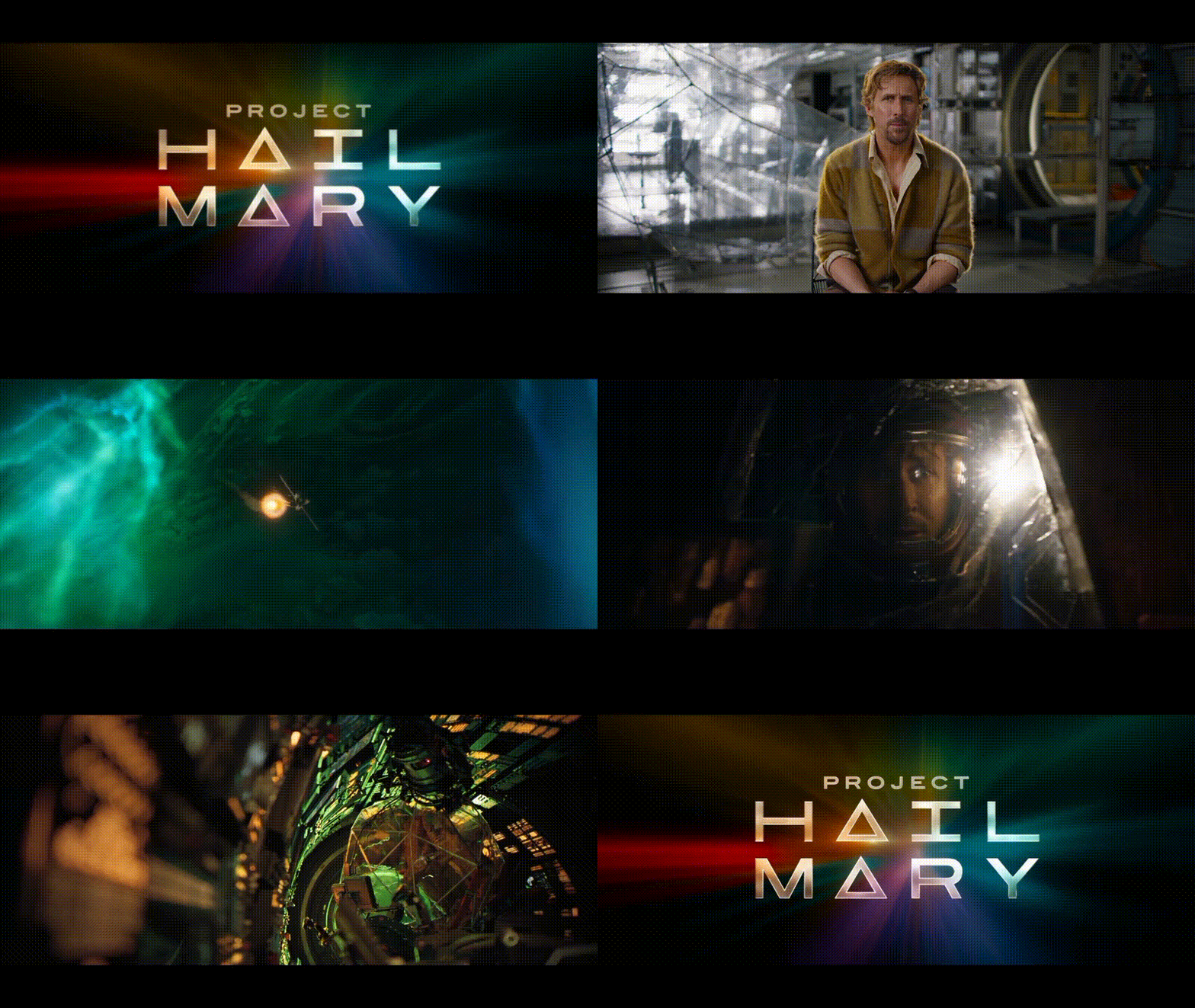
Behind-the-scenes footage, IMAX featurettes, promotional materials, and production interviews show that the film relied on a blend of practical filmmaking and modern visual effects workflows. Because so much of the story takes place far from Earth, the production needed a strategy that balanced realism with spectacle. Rather than depending entirely on green screens, the team built detailed spacecraft interiors that actors could physically interact with, helping camera crews capture more grounded performances inside environments that felt functional and believable.
Phil Lord and Christopher Miller have discussed the difficulty of adapting Andy Weir’s science-heavy novel while preserving emotional intimacy. That same challenge shaped the spacecraft design. The Hail Mary had to communicate scientific function, danger, confinement, and loneliness at the same time. Through practical environments, virtual production techniques, previs planning, and visual effects integration, the ship became a space where technical problem-solving and human vulnerability could exist together. (No Film School)

Practical Spaceship Design, Cockpit Construction, and Previs Planning
The Hail Mary spacecraft serves as the primary setting for much of the film, so its design had to feel convincing from both an engineering and cinematic perspective. Production designers approached the ship with a philosophy grounded in practical mission logic rather than decorative futuristic style. Unlike many science-fiction vessels filled with ornamental technology, the Hail Mary was designed as a mission-critical survival vehicle where every compartment needed a purpose.
Storage areas, laboratories, sleeping quarters, control stations, and maintenance sections were planned around how an actual interstellar mission might function. This gave the spacecraft a lived-in, operational quality. Surfaces show signs of use, equipment appears functional rather than decorative, and corridors are shaped around maintenance access and scientific work instead of simply creating impressive-looking passageways. This grounded design approach mirrors the style used in The Martian, where practical engineering helped make extraordinary science-fiction scenarios feel believable.
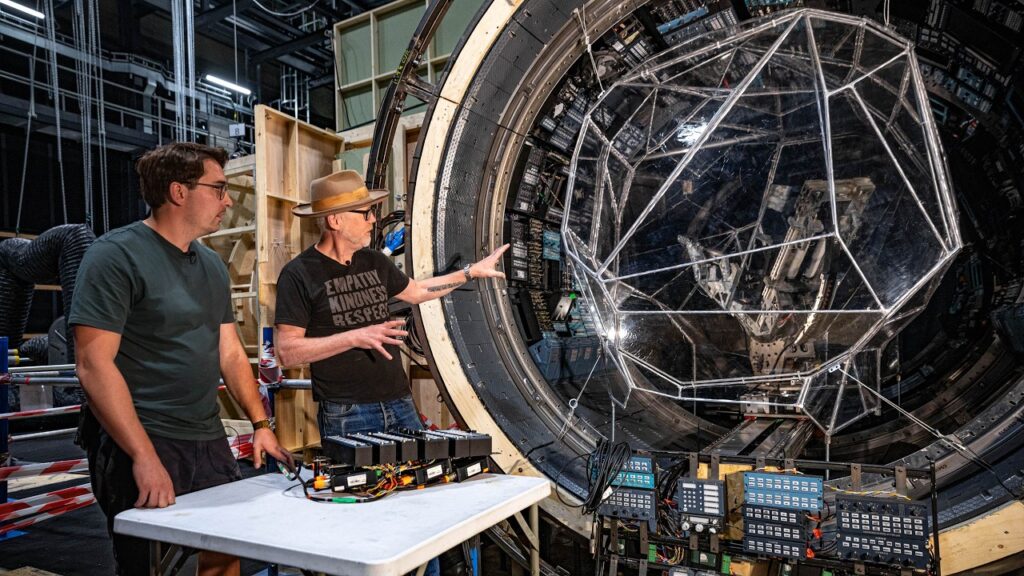
One of the most impressive practical builds was the spacecraft cockpit. It needed to support actor performances, complex camera movement, digital displays, and the visual language of an interstellar command center. Behind-the-scenes materials indicate that large portions of the cockpit were physically constructed rather than created entirely through digital effects. This allowed Ryan Gosling and the production crew to work inside a tangible space, which improved interaction, lighting, and performance.
Practical effects were important to making the cockpit feel alive. Buttons illuminated when pressed, screens displayed functioning interfaces, and mechanical components moved physically where possible. These details gave actors something real to respond to during filming and helped cinematographers capture natural reflections, shadows, and light interactions that can be difficult to reproduce convincingly in fully digital environments.
Previsualization, commonly known as previs, was also essential to the production pipeline. Many spacecraft sequences involved complex camera moves, visual effects integration, and zero-gravity action, so filmmakers used previs to design scenes long before physical production began. By creating digital versions of the ship, the directors, cinematographers, visual effects supervisors, and production designers could test camera placement, ship layouts, actor movement, and visual storytelling ideas before construction and filming.
The previs process likely developed in stages. Early versions focused on broad scene structure and the overall layout of the ship, while later versions incorporated more detailed camera paths, visual effects needs, and final production design elements. This workflow reduced uncertainty during filming and ensured that practical sets, digital assets, and final shots aligned with the same cinematic vision.
Zero-Gravity Planning, Interior Layout, and IMAX-Focused Production Design
Zero-gravity storytelling is one of the most difficult challenges in modern science-fiction filmmaking, and Project Hail Mary required careful planning to make long-duration space travel feel both realistic and emotionally engaging. In zero gravity, standard staging rules do not apply. Characters can move in any direction, objects can drift through the frame, and traditional ideas of floor and ceiling become less relevant. Every floating movement, object interaction, and camera angle had to be planned with precision.
Previs played a major role in shaping these sequences because it allowed filmmakers to map movement before filming began. Stunt teams, visual effects artists, production designers, and camera departments needed to coordinate how actors would move through the spacecraft and how the camera would follow them naturally. This planning helped create a visual language that emphasized the unique physical reality of life aboard an interstellar vessel without losing clarity for the audience.
The interior layout of the Hail Mary also reflects the practical needs of the mission. Scientific workspaces receive significant attention because Ryland Grace spends much of the story solving complex scientific problems. Laboratory areas are designed to support research activity while remaining visually distinct from living quarters and command spaces. This separation helps the audience understand the ship’s function while also giving each area its own mood and purpose.
The layout reinforces the story’s isolation as well. Long corridors, separated work areas, and compartmentalized sections create a sense of distance and loneliness even within the relatively compact environment of the ship. Production designers appear to have emphasized modular construction principles, making the vessel feel as if it could realistically be assembled from mission-specific components rather than imagined as a luxury space cruiser.
Filming for IMAX significantly influenced these design choices. IMAX cameras capture extraordinary detail, which means spacecraft sets must withstand close scrutiny on the largest screens. Every surface texture, display graphic, control panel, and lighting fixture becomes visible to audiences. As a result, the production team had to create environments that looked convincing at a very high level of detail.
IMAX also favors larger visual compositions, so the spacecraft interiors needed to support wide shots that conveyed scale while still working for intimate character scenes. The team balanced these demands by building sets rich in detail without overwhelming the viewer with unnecessary complexity. The ship had to feel dense, practical, and believable, but it also had to remain readable as a cinematic space.
Lighting, Screen Graphics, Previs Comparisons, and Alien Ship Design
Lighting aboard the Hail Mary serves several important purposes. On a practical level, it supports realism because spacecraft lighting would be designed around operational needs. On a dramatic level, it helps communicate mood, shifting the feel of the ship depending on the emotional state of a scene. Brightness, shadow, color, and screen illumination all contribute to whether the environment feels clinical, tense, lonely, or urgent.
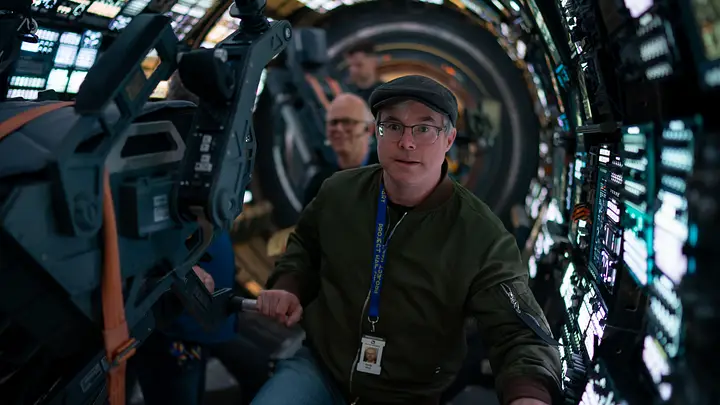
Interactive screen graphics further support the film’s storytelling. Instead of generic science-fiction displays, the interfaces appear to be designed around navigation, diagnostics, engineering systems, and scientific research. Many of these graphics were likely created before principal photography so they could be displayed on practical monitors during filming. This allowed actors to interact with functioning displays and gave the cinematography natural light sources that illuminated the surrounding set.
The relationship between previs and final photography is one of the most interesting parts of the production. Early previs versions likely focused on camera movement, scene blocking, and environmental navigation. Final shots then added practical sets, actor performances, refined lighting, and visual effects enhancements. The structure of a scene may remain similar from previs to final footage, but texture, performance, atmosphere, and compositing add layers of realism that complete the image.
For filmmakers studying the process, these comparisons show how ambitious science-fiction sequences evolve across multiple creative stages. Previs gives the production a working blueprint, but the final image depends on the collaboration of many departments, including cinematography, production design, performance, lighting, and visual effects.
The alien ship presented a different kind of design challenge. Unlike the human-built Hail Mary, alien technology needed its own visual identity. Previs likely helped the filmmakers explore forms, scale, movement systems, and interior spaces before final designs were approved. Because the alien civilization in Andy Weir’s story evolved under very different environmental conditions, designers had to imagine technology shaped by an entirely different perspective.
Early previs would have allowed the team to test shape language, spatial relationships, and interaction methods before committing to final visual effects assets. This process helped ensure that alien environments felt distinct from human technology while still remaining understandable to audiences. The goal was not simply to make the alien ship look unusual, but to make it feel like the product of a different way of living, moving, and thinking.

Visual Effects, Motion-Control Cinematography, and Interactive Spacecraft Props
The visual effects pipeline for Project Hail Mary extends far beyond exterior spaceship shots. Space travel sequences require star fields, propulsion effects, scientific visualizations, planetary environments, spacecraft interactions, and alien technology. Each of these elements must integrate smoothly with practical photography so the film feels cohesive rather than divided between physical and digital components.
This kind of pipeline likely involved concept artists, previs teams, asset modelers, animators, compositors, lighting artists, and simulation specialists working across multiple production stages. Because Andy Weir’s story places heavy emphasis on scientific problem-solving, many visual effects shots also needed to communicate technical information clearly while still being visually engaging. The challenge was not only to create spectacle, but to make complex science feel understandable within the drama of the story.
Motion-control technology likely played an important role in complex spacecraft scenes. Motion-control systems allow filmmakers to repeat precise camera movements multiple times, which is especially useful when shots require visual effects integration or multiple composited elements. In a confined spacecraft interior, where camera placement and movement are highly controlled, this approach can help preserve consistency between live-action photography and digital enhancements.
Previs data often informs these camera moves. Once the directors approve a digital camera path during previs, motion-control rigs can reproduce similar movements during principal photography. This creates a stronger connection between planning and execution while giving visual effects teams more flexibility in post-production.
Interactive props also contribute significantly to the film’s realism. Control panels, scientific instruments, monitoring systems, and navigation displays were designed as functional storytelling tools rather than static decorations. When actors interact with this technology, audiences subconsciously judge whether the environment feels believable. Practical electronics help sell the illusion because lights respond, interfaces change, and systems behave consistently during scenes.
These details may seem small on their own, but together they transform the set into a convincing spacecraft. The use of practical electronics also reduces the need for extensive screen replacement in post-production, preserving natural reflections, lighting interactions, and the sense that the ship is truly operating around the character.

Filmmaking Lessons and Behind-the-Scenes Materials for Project Hail Mary
Project Hail Mary offers several valuable lessons for filmmakers working on complex science-fiction productions. One of the clearest is that previs should be treated as a storytelling tool, not just a technical planning exercise. Effective previs can shape emotional pacing, visual clarity, narrative structure, and the relationship between character movement and environment before expensive filming begins.
The production also shows the continued value of practical environments, even in effects-heavy filmmaking. Physical sets give actors real spaces to inhabit, improve performance quality, and provide stronger visual foundations for digital enhancements. In a film centered on isolation, scientific problem-solving, and life inside a spacecraft, tangible environments help make the drama feel more immediate.
Another key lesson is the importance of early collaboration between departments. Production design, cinematography, visual effects, stunt coordination, and editorial planning all benefit when they are integrated from the beginning. The Hail Mary spacecraft required every department to work toward the same goal: a ship that felt scientifically credible, emotionally meaningful, and visually cinematic.
The film also demonstrates that scientific realism and spectacle do not have to work against each other. The strongest science-fiction productions often use technical authenticity as the foundation for compelling storytelling. In Project Hail Mary, the spacecraft’s logic, design, lighting, displays, and movement systems all support the emotional stakes of the mission.
Several official and promotional materials provide insight into this process. The IMAX Behind the Scenes Featurette offers one of the clearest overviews of the film’s production methods, including practical sets, large-format cinematography, and interviews with key creatives. Official IMAX trailers also reveal details about spacecraft interiors, camera strategies, lighting choices, and visual effects integration. Additional behind-the-scenes footage featuring Ryan Gosling, Phil Lord, Christopher Miller, and production crews provides glimpses of practical set construction and on-set workflows. For aspiring filmmakers, comparing these materials with the finished film can show how a large-scale science-fiction production develops from concept to screen.

Frequently Asked Questions (FAQs)
- What is Project Hail Mary about?
Project Hail Mary follows Ryland Grace, a former science teacher who wakes up aboard an interstellar spacecraft with no memory of who he is or why he is there. As his memories gradually return, he learns that he has been sent on a desperate mission to save Earth from an extinction-level threat affecting the Sun. The story combines survival, scientific problem-solving, and deep-space isolation. - Is the Hail Mary spaceship a practical set or a CGI creation?
The production used a combination of large-scale practical sets and visual effects. Major sections of the spacecraft, including interior environments and cockpit areas, were physically built so actors and camera crews could interact with real spaces during filming. Digital effects were then used to expand, enhance, and complete the spacecraft where needed. - What is previs and why was it important for Project Hail Mary?
Previsualization, or previs, is the process of creating digital versions of scenes before filming begins. For Project Hail Mary, it helped the filmmakers plan camera movement, spacecraft layouts, visual effects shots, actor blocking, and zero-gravity sequences in advance. This allowed the production team to solve technical and creative challenges before building sets or shooting complex scenes. - How were the zero-gravity scenes created?
The zero-gravity scenes were created through extensive planning, stunt coordination, visual effects techniques, and carefully designed camera work. Previs helped the team map how actors, props, and cameras would move through the spacecraft environment. This was especially important because weightless movement changes the way scenes are staged, framed, and edited. - Why was IMAX important to the spaceship design?
IMAX was important because the format captures a high level of detail, requiring every spacecraft set, control panel, texture, and lighting fixture to look convincing on very large screens. The ship’s interiors had to support wide, immersive compositions while also holding up during close, intimate character moments. This pushed the production design toward greater scale, texture, and visual precision. - How were the spaceship screens and control panels designed?
Many of the screens and control panels were built as interactive practical displays rather than being added entirely in post-production. This allowed actors to work with functioning interfaces during scenes and helped create realistic reflections, lighting effects, and continuity on set. The displays were designed to support navigation, diagnostics, engineering, and scientific research within the story. - Did the filmmakers build the alien spacecraft physically?
While the human spacecraft relied heavily on practical construction, the alien ship was explored extensively through concept design, previs, and visual effects development. The final design likely combines digital assets with practical reference elements created during production. This approach allowed the filmmakers to give the alien technology a distinct identity while keeping it understandable for audiences. - What role did motion-control cameras play in the production?
Motion-control systems allowed filmmakers to repeat precise camera movements multiple times. This is especially useful for complex visual effects shots, spacecraft cinematics, and scenes involving multiple composited elements. By matching planned camera paths from previs with practical photography, the production could maintain consistency between live-action footage and digital effects. - What can filmmakers learn from the Project Hail Mary previs workflow?
Filmmakers can learn that previs works best when it supports both creative and technical decision-making. In Project Hail Mary, previs helped connect production design, cinematography, visual effects, stunt coordination, and storytelling before filming began. It reduced uncertainty, improved planning, and gave the team a clearer path from early concept to final image. - Where can fans watch Project Hail Mary behind-the-scenes footage?
Fans can find official behind-the-scenes footage through IMAX promotional videos, Amazon MGM marketing materials, cast interviews, production featurettes, trailer breakdowns, and filmmaker discussions released during the film’s marketing campaign. These materials offer a closer look at the practical sets, previs process, spacecraft design, and visual effects work behind the movie.

Conclusion
The spaceship in Project Hail Mary represents far more than a science-fiction backdrop. It is the product of extensive previsualization, practical construction, IMAX-focused production design, visual effects planning, motion-control cinematography, and collaborative filmmaking. Every corridor, display panel, cockpit control, and camera movement appears carefully designed to support both scientific credibility and emotional storytelling.
What makes the production especially noteworthy is its balance between practical craftsmanship and digital innovation. Rather than relying exclusively on computer-generated environments, the filmmakers embraced a hybrid approach that combines physical sets, interactive technology, previs planning, and advanced visual effects. The result is a spacecraft that feels believable, functional, and emotionally significant.
For filmmakers, Project Hail Mary serves as a strong case study in how previs can guide every stage of production, from early concept development through final visual effects. For audiences, it offers a rare glimpse into the enormous creative effort required to bring an interstellar mission to life on screen.
Sources and Citations
- Project Hail Mary Official Trailer Amazon MGM Studios (YouTube)
https://www.youtube.com/watch?v=m08TxIsFTRI - Project Hail Mary Behind the Scenes Featurette Filmed for IMAX (YouTube)
https://www.youtube.com/watch?v=w0H_8QqZbqQ - Project Hail Mary IMAX 1.43 Scene Breakdown (YouTube)
https://www.youtube.com/watch?v=l3i8WgxeKi0 - Newsshooter Project Hail Mary Behind the Scenes Featurette (Newsshooter)
https://www.newsshooter.com/2026/03/03/project-hail-mary-behind-the-scenes-featurette/ - No Film School Behind the Scenes of Project Hail Mary (No Film School)
https://nofilmschool.com/bts-project-hail-mary - No Film School How Drew Goddard Adapted Project Hail Mary (No Film School)
https://nofilmschool.com/goddard-adapted-project-hail-mary - IMDb Project Hail Mary Full Cast and Crew (IMDb)
https://www.imdb.com/title/tt12042730/fullcredits/ - People Andy Weir on Scientific Consultation and the Adaptation (People.com)
https://people.com/andy-weir-on-what-he-learned-between-the-martian-and-project-hail-mary-movies-11930513 - People Andy Weir on Working With Ryan Gosling and the Production (People.com)
https://people.com/andy-weir-working-with-ryan-gosling-project-hail-mary-11929787
Recommendations
- GTA VI Physical Editions Won’t Include a Disc, Just a Code
- How to Make Mind-Blowing Anime FX in Blender and After Effects
- How Ace Combat 7 Inspired Sentenced to Be a Hero (and Why It Makes Perfect Sense)
- Mega Man: Dual Override Hit by SAG-AFTRA “Do Not Work” Order as Ben Diskin Exits
- Sam Altman Says He Is “Not Afraid of Apple” as OpenAI Faces Trade Secrets Lawsuit
- And My Sugar? Quest Walkthrough In Assassin’s Creed Black Flag Resynced
- 007 First Light Review Scores Call it Best Bond Since GoldenEye
- Mike Brown’s Clutch: from Forza Horizon 5 to Maverick Games
- Devil May Cry Netflix Series: Release Date, Plot, Cast, and Everything We Know So Far
- Maxon Releases Cinema 4D 2026.3 (New Tools, Workflow Upgrades, and Performance)



































































































