











In This Article (9 sections)
What is Project P.I.T.T. and How Its Sandbox Simulation Works
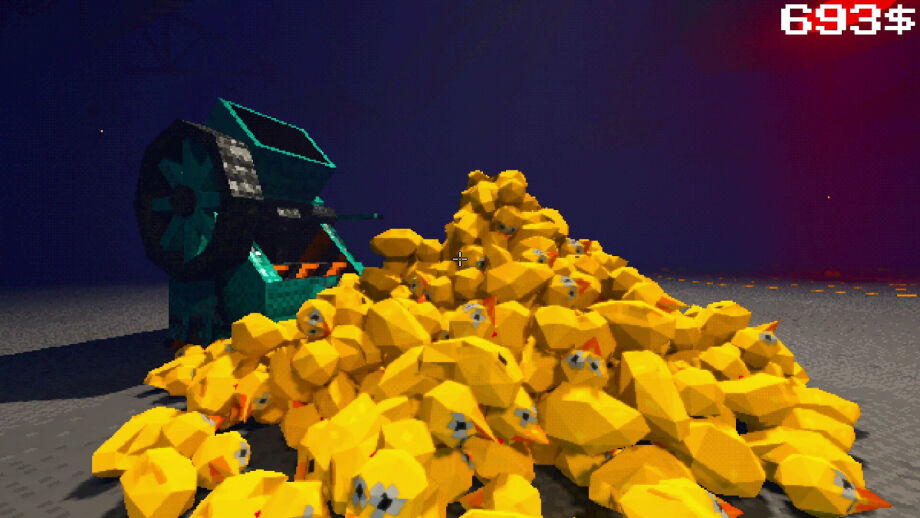
Independent simulation games continue to find creative ways to transform simple concepts into surprisingly addictive experiences, and Project P.I.T.T. is one of the latest examples. It takes an absurd premise involving rubber ducks, automated machinery, corporate productivity, and a mysterious bottomless pit and turns it into a physics-driven sandbox simulation. At first glance, the game appears simple: players create rubber ducks and throw them into a giant industrial pit known as the Maw. Beneath that humorous setup, however, is a deeper blend of physics simulation, automation systems, incremental progression, and sandbox experimentation, where every duck, machine, and object interacts with realistic physics to create unpredictable and often hilarious results.
Project P.I.T.T. centers on manufacturing and feeding rubber ducks into the Maw as efficiently as possible. Players are hired by a mysterious corporation whose main objective appears to be producing ducks and delivering them into this massive industrial pit. While the goal sounds ridiculous, the gameplay quickly develops into a complex system of automation, resource management, and engineering challenges. The game functions as a sandbox where players can freely experiment with tools and physics systems while also incorporating incremental progression mechanics that reward continued production and automation systems that allow players to build increasingly efficient duck-feeding operations.
Instead of following a strict narrative or mission structure, Project P.I.T.T. encourages players to solve problems using whatever tools are available. The sandbox environment supports experimentation with object placement, machine construction, conveyor systems, and physics interactions, making every session feel like a unique engineering challenge. Some players may focus on maximizing duck production efficiency, while others may build absurd contraptions purely for entertainment. The game supports both approaches by rewarding optimization while embracing unpredictability.
Project P.I.T.T. combines the satisfaction of building efficient production systems with the chaos of a physics playground. Players are not forced into a single correct solution, and multiple approaches can achieve success. Whether they manually launch ducks into the pit or construct elaborate automated factories, the game encourages creativity, experimentation, and optimization, resulting in an experience that feels relaxing, chaotic, and strangely satisfying.

Rubber Duck Production, the Corporation, and the Maw
Rubber duck production forms the foundation of Project P.I.T.T.’s gameplay loop. Players begin by creating ducks and finding ways to deliver them into the Maw, with early production methods requiring manual interaction and direct management. As progression systems unlock more tools and upgrades, duck manufacturing becomes increasingly sophisticated, and the challenge gradually shifts from simply creating ducks to managing complex production networks capable of handling large volumes of products. The crafting process is intentionally whimsical, replacing realistic industrial products with colorful rubber ducks and helping distinguish the game from more serious factory simulation titles.
The central premise revolves around a fictional corporation obsessed with feeding ducks into a giant pit. Employees are tasked with increasing productivity, improving delivery methods, and ensuring a steady stream of ducks reaches the Maw. The corporation’s motivations remain intentionally mysterious, adding humor and intrigue to the experience. By applying workplace productivity concepts to an obviously nonsensical objective, the game satirizes corporate culture, turning performance metrics, automation targets, and production goals into amusing parts of the rubber duck disposal process.
The Maw serves as the centerpiece of the entire game. This massive industrial pit acts as the primary destination for every duck player produces, generating progression, rewards, and opportunities to expand operations. While its exact purpose remains unclear, the Maw functions as both a gameplay objective and a source of mystery. From a mechanical perspective, it acts as a resource sink, consuming player-produced ducks and transforming them into advancement opportunities. Its imposing presence reinforces the strange atmosphere of the game while providing a constant objective that guides player activity. Together, the absurdity of treating rubber ducks as critical corporate assets, the mysterious corporate framework, and the giant industrial pit give Project P.I.T.T. a memorable identity.
Demo Gameplay, Physics Sandbox Mechanics, and Emergent Comedy
The publicly available Project P.I.T.T. demo gives players an opportunity to experience the core gameplay systems before the full release. It introduces duck production, physics interactions, automation tools, and basic progression mechanics, offering enough systems to show how the game functions while still leaving significant room for expansion in the final version. Early impressions from demo players highlight the satisfying combination of experimentation and progression, as even simple setups can produce unexpected outcomes due to the unpredictable nature of the physics engine. The demo also showcases the game’s distinctive visual style, humorous tone, and sandbox-oriented design philosophy.
Physics simulation drives nearly every interaction in Project P.I.T.T. Objects possess weight, momentum, collision properties, and movement behaviors that create emergent gameplay opportunities. Ducks can bounce, slide, roll, and interact with machinery in unexpected ways, and rather than relying only on predetermined animations, the game allows physics systems to influence outcomes dynamically. This means identical setups may produce slightly different results depending on object interactions, encouraging players to experiment because they never know exactly how a new machine arrangement might behave.
Much of the game’s comedy emerges naturally from these physics systems. Players may construct elaborate production lines only to watch ducks fly in unintended directions, become trapped in machinery, or trigger absurd chain reactions. These unscripted moments are often funnier than scripted jokes, especially because they combine serious engineering tools with inherently silly subject matter. Watching a carefully optimized industrial machine launch dozens of rubber ducks across a room is entertaining precisely because it contrasts efficiency with absurdity. The game embraces this chaos rather than punishing it, turning failed experiments into opportunities for discovery and amusement.

Incremental Progression, Automation, and Duck-Moving Tools
Beyond its sandbox elements, Project P.I.T.T. incorporates incremental progression systems that provide long-term goals. Every successful duck delivered to the Maw contributes toward unlocking new technologies, upgrades, and production opportunities. Players gradually improve efficiency, increase output, and gain access to more advanced equipment, creating a satisfying sense of growth as a small manual operation evolves into a large-scale automated facility. These incremental mechanics encourage continued experimentation because each advancement unlocks additional possibilities, ensuring players always have meaningful objectives while maintaining sandbox freedom.
Automation becomes increasingly important as production demands grow. Players can construct systems that move ducks automatically from production areas to the Maw without constant manual intervention, but successful automation requires careful planning and an understanding of the game’s physics systems. Efficiency improvements often come from reducing unnecessary movement, preventing bottlenecks, and ensuring a consistent duck flow throughout the facility. As more tools become available, automation networks can become surprisingly sophisticated, allowing players to create entire production chains that operate with minimal oversight. The challenge lies not only in building automated systems but also in adapting them when physics interactions introduce unexpected complications.
The game provides a variety of tools for manipulating duck movement and optimizing production systems. Brooms allow players to manually redirect ducks and clear obstructions, fans generate airflow that influences movement and positioning, and spring pads can launch ducks across large distances for creative transportation setups. Panels and other structural components help shape pathways and guide objects toward desired destinations. Each tool serves multiple purposes, encouraging experimentation; a spring pad used for transportation in one setup might become part of a launching mechanism in another. This versatility contributes significantly to the sandbox experience, giving players countless ways to combine tools and refine their duck-feeding operations.
Why Project P.I.T.T. is Gaining Attention, Release Expectations, and Similar Games
Project P.I.T.T. has attracted attention largely because of its unusual premise and highly shareable gameplay moments. The concept of feeding rubber ducks into a giant pit is immediately memorable, and when combined with physics-driven chaos and creative automation systems, it produces clips that are well suited for social media platforms and streaming content. Viewers often enjoy watching elaborate production systems succeed or fail spectacularly, while the unpredictable physics engine creates entertaining moments that encourage sharing and discussion. Many players have also praised the game’s combination of incremental progression and sandbox freedom, noting that it offers a refreshing alternative to traditional factory-building simulators.
The full release is expected to expand upon the systems introduced in the demo. Players anticipate additional tools, more advanced automation options, expanded progression paths, new environmental challenges, and further opportunities for experimentation. The full version may also introduce larger facilities, more complex objectives, and additional mysteries surrounding the corporation and the Maw. Based on demo feedback, many players expect the final release to deepen existing mechanics rather than fundamentally change the core gameplay loop. If the developers successfully build upon the demo’s foundation, Project P.I.T.T. could become a standout entry within the physics sandbox and automation genres.
Players who enjoy Project P.I.T.T. may also appreciate several other sandbox, automation, and simulation games. Factorio focuses on large-scale industrial automation and efficiency, while Satisfactory combines exploration with production line optimization. Shapez 2 emphasizes efficient manufacturing systems, and Totally Accurate Battle Simulator demonstrates how physics can create comedy through unpredictable outcomes. Hydroneer offers progression through automation and experimentation. While these games share certain similarities, Project P.I.T.T. distinguishes itself through its humorous corporate setting and rubber duck-focused gameplay.

Frequently Asked Questions (FAQs)
- Is Project P.I.T.T. worth playing?
Players who enjoy sandbox creativity, automation systems, and physics-based comedy will likely find Project P.I.T.T. highly entertaining. Its mix of experimentation, progression, and absurd humor makes it especially appealing to those who like building systems and watching unpredictable results unfold. - What is Project P.I.T.T.?
Project P.I.T.T. is a physics-based sandbox simulation game where players produce rubber ducks and feed them into a giant industrial pit called the Maw. Its gameplay combines duck crafting, automation, incremental progression, and physics-driven experimentation, creating a mix of factory-building satisfaction and chaotic sandbox humor. - What does P.I.T.T. stand for?
The game’s title references its corporate pit-based setting, though the full meaning is part of the game’s mystery and theme. This ambiguity fits the game’s strange atmosphere, where players work for a mysterious corporation focused on sending rubber ducks into the Maw. - What is the Maw?
The Maw is a massive industrial pit that serves as the primary destination for all duck production. Mechanically, it acts as the game’s central objective and resource sink, consuming ducks and helping drive progression, rewards, and facility expansion. - Is Project P.I.T.T. a factory-building game?
Partly. Project P.I.T.T. includes factory automation and production management, but it also blends those systems with sandbox experimentation, physics simulation, and incremental progression. The result is less rigid than a traditional factory-building game and more focused on creative problem-solving and unpredictable outcomes. - Does the game have automation systems?
Yes. Players can build increasingly sophisticated systems that automatically move ducks into the Maw. As production grows, automation becomes important for improving efficiency, reducing manual work, preventing bottlenecks, and maintaining a steady flow of ducks through the facility. - Why are rubber ducks important?
Rubber ducks are the central resource and production objective within the game’s fictional corporate environment. Players manufacture them, move them through machines and tools, and ultimately deliver them into the Maw to support progression and expand their operations. - Is there a Project P.I.T.T. demo?
Yes. A demo is available that introduces the game’s core mechanics and progression systems. It gives players a chance to try duck production, physics interactions, automation tools, and the sandbox structure before the full release. - What tools can players use?
Players can use tools such as brooms, fans, spring pads, panels, and other devices to manipulate duck movement. These tools can redirect ducks, influence their positioning, launch them across distances, clear obstructions, or shape pathways toward the Maw. - What makes Project P.I.T.T. funny?
Much of the humor comes from physics-driven chaos, unexpected machine behavior, and the absurd corporate obsession with rubber ducks. Carefully built systems can fail in ridiculous ways, sending ducks bouncing, flying, or getting trapped in machinery, which creates unscripted comedic moments.
Conclusion
Project P.I.T.T. transforms one of gaming’s most absurd concepts into a surprisingly deep and engaging simulation experience. By combining rubber duck production, physics-based experimentation, automation systems, incremental progression, and corporate satire, the game creates a unique gameplay loop that rewards both creativity and optimization. The mysterious Maw provides a constant objective, while the sandbox design encourages players to invent increasingly elaborate solutions to increasingly strange problems. With a successful demo already generating positive attention, Project P.I.T.T. is shaping up to be one of the more memorable indie simulation games on the horizon.
Sources and Citations
- Official Sources
Official Project P.I.T.T. Steam Page
Project P.I.T.T. Steam Store Page Official game description, features, screenshots, gameplay trailer, developer information, and Steam updates. - Official Steam Demo Announcement
Project P.I.T.T. Demo Goes Live on June 10 (Steam News) Official announcement covering the demo launch, Steam Next Fest participation, and playable demo features.
Official Demo Update
Project P.I.T.T. Demo Update V1.0.1 Developer notes, fixes, and community feedback after demo release. - Official Demo & Developer Materials
Itch.io Demo Page (Developer Build)
Project P.I.T.T. Demo on itch.io Early demo description, gameplay overview, automation tools, contraption building systems, and playtime estimates.
Steam Community Hub
Project P.I.T.T. Community Hub Official announcements, community discussions, screenshots, guides, and demo-related posts. - Developer Announcements, Trailers, Screenshots & Feature Overviews
Gameplay Reveal Trailer & Screenshots
Project P.I.T.T. Steam Media Page Contains the official Gameplay Reveal Trailer and screenshot gallery showcasing automation systems, physics contraptions, and the corporate-pit gameplay loop.
Pretty Soon Press Release
Project P.I.T.T. Demo Press Release Publisher announcement detailing wishlist milestones, demo features, automation tools, magnets, fans, panels, and physics systems. - Community Impressions & Gameplay Demonstrations
Silentesque Demo Gameplay Video
The Man Grows Hungry – Project P.I.T.T. Demo Gameplay Public gameplay demonstration showing progression, feeding mechanics, and player impressions of the demo.
Steam Community Discussions
Project P.I.T.T. Steam Discussions Community reactions, questions, and player feedback about gameplay systems and release plans. - Press Coverage & Analysis
Pretty Soon / Pirate PR Coverage
Project P.I.T.T. Demo Coverage and Feature Breakdown Discusses the game’s sandbox structure, automation mechanics, incremental progression, brutalist aesthetic, and physics-based gameplay systems.
SteamDB Listing
Project P.I.T.T. SteamDB Page Useful for platform metadata, tags, update history, and feature summaries.
Recommended
- Google Spends $1 Million On AI-Generated Kids Videos: What Google’s Animaj Investment Means for YouTube Kids
- How to Turn Any 3D Model into Minecraft 3D Models in Blender
- Nintendo Switch 2 Games 2026: Nintendo Hints at Major New Releases this Fall and Why the Original Switch Still Matters
- Forza Horizon 6 Leak Explained: Full Details of the Massive Steam Leak, Gameplay Builds, and What it Means for Launch
- Assassin’s Creed Black Flag Resynced Real-Life Treasure Hunt Details Explained
- Alysa Liu’s Olympic Skating Routine is Now in Fortnite as an Emote (Stateside): Price, Release Date, and How to Get It
- 10 Things to Know Before Playing LEGO Batman: Legacy of the Dark Knight
- King of Meat Is Shutting Down And Refunding Players: Shutdown Date, Refund Steps, and What Happens Next
- Unity 2026 Render Pipelines Strategy: Lord of the Rings Board Game Kickstarter Fully Funded in Under 10 Minutes: Foes of Middle-Earth Campaign Details
- How do I render from a specific camera in Blender?



































































































