










In This Article (9 sections)
Solarpunk Food and Water Systems for Sustainable Communities
Solarpunk is a design philosophy and cultural movement that imagines a future where human civilization thrives in harmony with nature rather than in opposition to it. Unlike dystopian futures that focus on collapse, Solarpunk focuses on resilience, regeneration, and distributed systems that make communities self sufficient in energy, food, and water.
In a Solarpunk society, food and water are not centralized commodities controlled by distant supply chains. Instead, they are locally produced, harvested, and distributed through regenerative ecosystems. The goal is to eliminate dependency on fragile global logistics networks and replace them with circular systems that mimic natural cycles. Food comes from integrated ecological systems such as permaculture farms, vertical gardens, and community greenhouses, while water is sourced from rainfall, atmospheric capture, and recycled greywater systems. These systems are designed to be redundant, meaning that if one fails, others can compensate. This shift fundamentally changes survival. Instead of asking, “Where do I buy food and water?” individuals ask, “How does my environment continuously generate food and water?”
Solarpunk food systems rely heavily on regenerative agriculture and closed loop ecosystems. The goal is to produce food while improving soil health, biodiversity, and water retention. Key systems include:
- Community supported agriculture zones
- Forest based farming systems
- Indoor vertical farms using renewable energy
- Decentralized food cooperatives
These systems reduce dependence on industrial farming, which often relies on monocultures and heavy chemical inputs. Instead, Solarpunk agriculture emphasizes diversity, resilience, and ecological balance. A central principle is localization: food is grown within walking or cycling distance of where it is consumed. This reduces transportation emissions and ensures fresher, more nutritious food. In many Solarpunk designs, food systems are embedded into architecture itself, with buildings featuring edible walls, rooftop gardens, and integrated irrigation systems that recycle water from within the structure.

Solarpunk Water Collection, Distribution, and Rainwater Harvesting Systems
Water in Solarpunk environments is primarily sourced from natural cycles, especially rainfall. Rainwater harvesting systems are widely used in both urban and rural designs. A basic system includes:
- Roof catchment surfaces
- Gutters and downpipes
- First flush diverters
- Storage tanks or underground cisterns
Rainwater is filtered and stored for drinking, cooking, and irrigation. The simplicity of this system makes it highly scalable, from individual homes to entire city districts. In wetter climates, rainwater alone can supply a significant portion of daily water needs, while drier regions supplement it with atmospheric water generators and recycled greywater systems. The philosophy is simple: every surface becomes a potential water collector.
Beyond rainwater harvesting, Solarpunk systems incorporate multiple off grid water collection methods to ensure resilience during droughts or seasonal changes. Common methods include:
- Dew harvesting nets
- Fog collection mesh systems
- Underground condensation traps
- Aquifer recharge wells
Fog harvesting is especially effective in coastal or mountainous environments where moisture laden air can be captured using fine mesh nets. Water droplets condense and drip into collection containers, while dew systems operate by cooling surfaces overnight so that moisture in the air condenses naturally. These methods help communities maintain a stable water supply in low rainfall environments without relying on large centralized infrastructure.
Solar powered water pumps are also a critical technology in decentralized water systems. These pumps use photovoltaic energy to move water from storage tanks, wells, or rivers into distribution systems. Key benefits include:
- No reliance on fossil fuels
- Low maintenance requirements
- Scalability for rural and urban use
- Compatibility with off grid systems
In Solarpunk design, water is often distributed through gravity fed systems whenever possible to minimize energy usage. Solar pumps are primarily used to lift water to elevated storage tanks, after which gravity handles distribution. This hybrid approach provides efficiency and reliability even during cloudy periods or seasonal changes in solar availability.
Rainwater harvesting is not only used for drinking water but is also deeply integrated into agriculture and ecosystem design. In agricultural zones, harvested rainwater can be used for:
- Irrigation of crops
- Hydroponic nutrient solutions
- Aquaponic fish systems
- Soil moisture recharge
By capturing rainfall at multiple points, Solarpunk systems prevent runoff and erosion while maximizing water retention in soil. In urban environments, rainwater is often routed through green infrastructure such as bioswales and living walls. These systems naturally filter water while also supporting plant growth, turning rainfall into a distributed resource that supports both human consumption and ecological regeneration.

Solarpunk Agriculture, Food Security, and Water Systems
Modern Solarpunk food production combines soil based and soil less systems to maximize efficiency. Hydroponics allows crops to grow in controlled environments using significantly less water than traditional farming. Aquaponics integrates fish farming with plant cultivation, where fish waste provides nutrients for plants, while plants filter water for fish. Permaculture focuses on designing agricultural landscapes that mimic natural ecosystems, creating self sustaining cycles. Together, these systems create layered food production networks, including:
- Fast growing leafy greens in hydroponic towers
- Protein sources from aquaponic tanks
- Perennial food forests using permaculture design
This diversity helps ensure year round food production regardless of external climate conditions. Food security in Solarpunk systems also depends on ecological stability rather than industrial scale. Core practices include:
- Crop rotation and intercropping
- Compost based soil regeneration
- Polyculture farming systems
- Seed sovereignty and local seed banks
Instead of monocultures, Solarpunk agriculture uses biodiversity to naturally resist pests and disease. Soil is treated as a living ecosystem rather than a depleted resource. Composting plays a major role in closing nutrient loops, with organic waste from homes and food production returned to soil systems, eliminating the concept of “waste” entirely. This approach creates long term resilience by ensuring that food systems regenerate themselves rather than degrade over time.
Urban environments are also transformed into productive agricultural landscapes through solutions such as:
- Rooftop vegetable gardens
- Vertical farming walls
- Shared community orchards
- Abandoned lot regeneration projects
Buildings are designed or retrofitted to support food production. Rooftops become farmland, balconies become herb gardens, and public spaces double as food forests. These systems reduce reliance on rural supply chains while increasing urban food resilience. In many cases, entire neighborhoods become partially self sufficient in fruits and vegetables.
Water systems are similarly designed around safety, redundancy, and purity. Common storage methods include underground cisterns to reduce evaporation, clay lined reservoirs for natural filtration, and modular tank systems for urban rooftops. Purification methods include:
- Slow sand filtration
- Activated carbon filters
- UV sterilization using solar energy
Water is often treated at multiple stages to ensure safety. Even if one filtration method fails, others provide backup protection. Community scale systems also include water quality monitoring using low energy sensors that detect contamination early.

Solarpunk Food and Water Systems for Resilience and Self Sufficiency
Water filtration in Solarpunk systems is multi layered to ensure reliability. Primary filtration stages include:
- Sediment removal using mesh or ceramic filters
- Biological filtration through sand and gravel beds
- Chemical free purification using activated carbon
- UV purification powered by solar energy
This multi barrier approach ensures that contaminants are removed at different stages, increasing overall safety. Natural filtration systems such as reed beds and constructed wetlands are also used to treat greywater before it re enters the ecosystem.
A food forest is another layered system designed to mimic natural forests while producing edible crops. Its structure typically includes:
- Canopy layer: fruit and nut trees
- Shrub layer: berries and smaller fruit plants
- Herb layer: medicinal and culinary herbs
- Ground cover: edible plants and nitrogen fixers
- Root layer: tubers and underground crops
The goal is to create a self sustaining ecosystem that requires minimal maintenance once established. Water retention is improved through mulching and soil coverage, reducing irrigation needs significantly. Over time, the system becomes more productive as biodiversity increases.
In Solarpunk cities, food distribution is localized and decentralized through models such as:
- Neighborhood food hubs
- Cooperative grocery systems
- Subscription based farm shares
- Digital food exchange networks
Rather than relying on large supermarkets, food is distributed through small community nodes. This reduces waste and ensures equitable access. Food systems are also transparent, with consumers often knowing exactly where their food is grown and how it is produced.
Even in resilient systems, emergencies such as droughts, storms, or infrastructure failures must be planned for. Emergency strategies include:
- Stored dehydrated food reserves
- Seed banks for rapid replanting
- Backup water cisterns
- Portable filtration systems
Communities often maintain rotating food reserves to ensure freshness while still maintaining emergency preparedness. Because systems are decentralized, failures are localized rather than systemic, preventing widespread shortages.
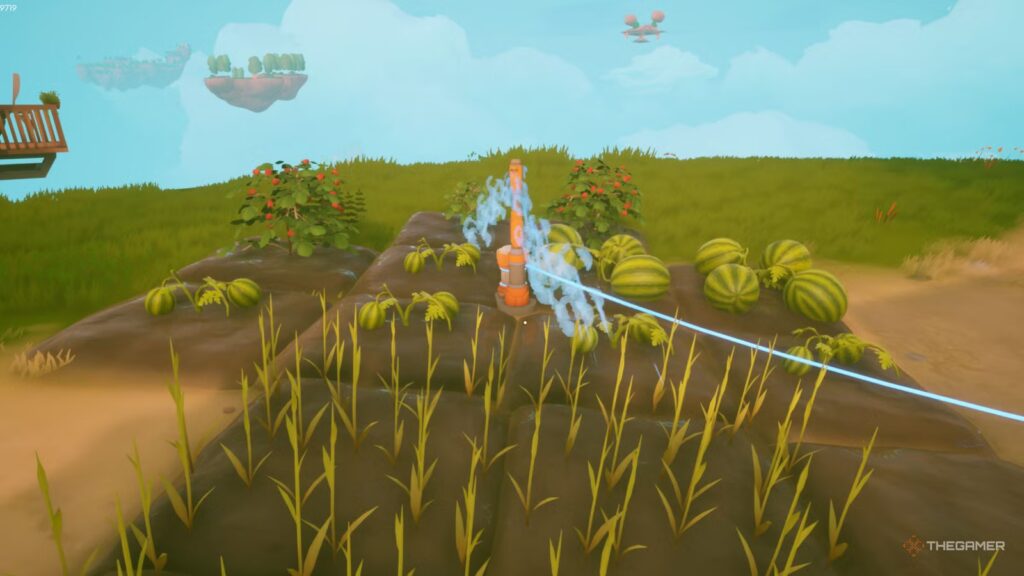
The Future of Solarpunk: Decentralized Food and Water Independence
The future vision of Solarpunk is a world where food and water systems are fully decentralized, regenerative, and deeply integrated into daily life.
Cities become ecosystems rather than concrete structures. Food forests replace lawns. Rooftop gardens replace empty roofs. Water cycles are fully closed-loop, minimizing waste and maximizing reuse.
Technologies like solar desalination, smart irrigation, and autonomous farming systems will continue to evolve, but the core principle remains unchanged: harmony between human systems and natural systems.
In this future, survival is no longer about scarcity management but abundance design creating systems that continuously regenerate food and water without depletion.
Frequently Asked Question (FAQs)
- What is Solarpunk food and water access based on?
Solarpunk food and water access is based on decentralized, regenerative systems that produce resources locally while working with natural cycles. Instead of relying entirely on large centralized infrastructure, these systems emphasize local food production, water collection, recycling, and sustainable resource management. - Can Solarpunk systems work in cities?
Yes, Solarpunk systems can be adapted to urban environments through rooftop farms, vertical gardens, community orchards, and community food hubs. These systems can be integrated into existing buildings and public spaces, allowing cities to produce more food locally and reduce reliance on distant supply chains. - How does Solarpunk collect drinking water?
Solarpunk systems primarily use rainwater harvesting to collect and store water for later treatment and use. Other methods, including fog capture and dew collection, can supplement rainfall in suitable environments, while solar powered purification can help make collected water safer for drinking. - Is hydroponics part of Solarpunk agriculture?
Yes, hydroponics is an important part of Solarpunk agriculture because it allows crops to be grown without traditional soil. It can use significantly less water than conventional farming and is particularly useful in controlled environments or urban spaces where available land is limited. - What is the role of aquaponics?
Aquaponics combines fish farming with plant cultivation in a closed loop system. Fish waste provides nutrients for plants, while the plants help filter the water before it returns to the fish, allowing nutrients and water to be reused rather than discarded. - How is water kept safe in Solarpunk systems?
Water is kept safe through multiple filtration and purification stages rather than relying on a single method. Sediment filters remove larger particles, activated carbon helps with impurities, and UV purification can provide additional treatment. Using several barriers also provides backup protection if one stage is less effective. - Can a home be Solarpunk self-sufficient?
Yes, a home can incorporate many Solarpunk systems to become more self sufficient, including food forests, rainwater harvesting, composting, and renewable energy. The goal is not necessarily complete independence, but reducing reliance on external systems by producing and recycling more resources locally. - What is permaculture’s role in Solarpunk?
Permaculture provides design principles for creating sustainable agricultural ecosystems that mimic natural systems. It emphasizes biodiversity, perennial crops, nutrient cycling, and efficient use of resources so that food production can become increasingly self sustaining while requiring less maintenance over time. - What happens during droughts in Solarpunk systems?
During droughts, communities can rely on stored food and water reserves while reducing their dependence on fresh water supplies. Water recycling and alternative collection methods, such as fog harvesting where conditions allow it, can provide additional resources and help maintain resilience when normal rainfall is limited. - Is Solarpunk realistic or theoretical?
Solarpunk is a combination of ideas rather than a single technology, and many of its individual components already exist today. Hydroponics, aquaponics, rainwater harvesting, renewable energy, food forests, composting, and water filtration are all established systems that can be combined according to Solarpunk principles.

Conclusion
Solarpunk food and water systems represent a shift from centralized dependency to decentralized resilience. By integrating ecological design principles, renewable energy, and regenerative agriculture, communities can build systems that continuously produce essential resources without degrading the environment.
Through methods like hydroponics, aquaponics, permaculture, rainwater harvesting, and urban farming, Solarpunk demonstrates that sustainable abundance is achievable. The future of food and water security lies not in extraction, but in regeneration.
Sources and Citation
- FAO – Food and Agriculture Organization of the United Nations
Agricultural Water Management – FAO - UNEP – United Nations Environment Programme
Ecosystems for Water and Food Security – UNEP - NASA Earth Observatory – Water Cycle and Climate Systems
NASA Earth Observatory - World Health Organization – Drinking Water Safety Guidelines
WHO Guidelines for Drinking-water Quality - IPCC Reports – Climate and Food System Impacts
IPCC Special Report on Climate Change and Land - Permaculture Research Institute – Sustainable Design Systems
Permaculture Research Institute – Permaculture News
Recommendations
- TANGLED Framework: Diffusion-Based 3D Hair Strand Generation with MultiHair and PixelHair Integration
- Widow’s Bay Season 1 Review: Is Apple TV’s Horror-Comedy Worth Watching?
- Faces of Death Review: Is the 2026 Horror Reboot Worth Watching?
- Why Call of Duty: Modern Warfare (2019) Is Blowing Up on Steam Again in 2026
- Solarpunk: Where To Get Iron And Copper, Best Mining Locations Guide
- Yakuza Creator’s Gang Of Dragon Game Reportedly In Danger As NetEase Cuts Funding To Nagoshi Studio
- Roblox Grow a Garden 2 Crops Guide: Best Seeds, Prices, Resale Value, and Tier List
- How to Make a Sci-Fi Movie with Metahuman in Unreal Engine 5: A Cinematic Workflow Guide
- Some Stores Are Warning There Might Not Be Enough Consoles for Everyone Who Wants to Play GTA 6 this Year
- Fallout Player Guide: How to Play Fallout: London, Fix Fallout 4 Crashes, Navigate Fallout 76 Mutations, and More



































































































