








In This Article (8 sections)
Stranger than Heaven TGS 2026 Showcase, Gameplay Demo and Event Highlights
Stranger Than Heaven’s appearance at Tokyo Game Show 2026 brought RGG Studio’s historical action-adventure into sharper focus through a combination of hands-on gameplay, theatrical presentations, cast appearances, music and production material. SEGA’s exhibition plans included a playable demo, theater presentations, special stage events and a walkthrough museum structured around the game’s five historical eras. The formats served different purposes: the demo gave players a chance to experience combat directly, the theater emphasized music and character relationships, and the museum placed the shifting locations and periods within the broader creative journey. None of these elements should be treated as a complete representation of the finished game.
SEGA also separated promotional rewards according to activity. Demo players and theater attendees could receive a lanyard, while analog stick covers were associated with showing proof of a preorder. These were event-specific promotions rather than evidence that the same physical items would accompany every retail purchase worldwide. The broader value of the showcase was therefore in communicating the game’s identity as more than a sequence of fights. Combat remains central, but music, entertainment production, evolving locations and relationships across several decades are equally important to understanding the project.
Tokyo Game Show itself was originally scheduled for September 17 through September 21, 2026 at Makuhari Messe, with business days on September 17 and 18 followed by public days on September 19, 20 and 21. On September 19, however, organizers announced that the entire September 21 in-person event would be canceled because of the approaching Typhoon No. 25 and concerns about weather and transportation. September 20 was still scheduled to proceed subject to safety conditions, while official online programming for September 21 continued. Consequently, the presence of September 21 broadcasts does not mean the exhibition halls remained open that day. For Stranger Than Heaven coverage, the shortened physical event and continuing digital programming need to be treated separately.
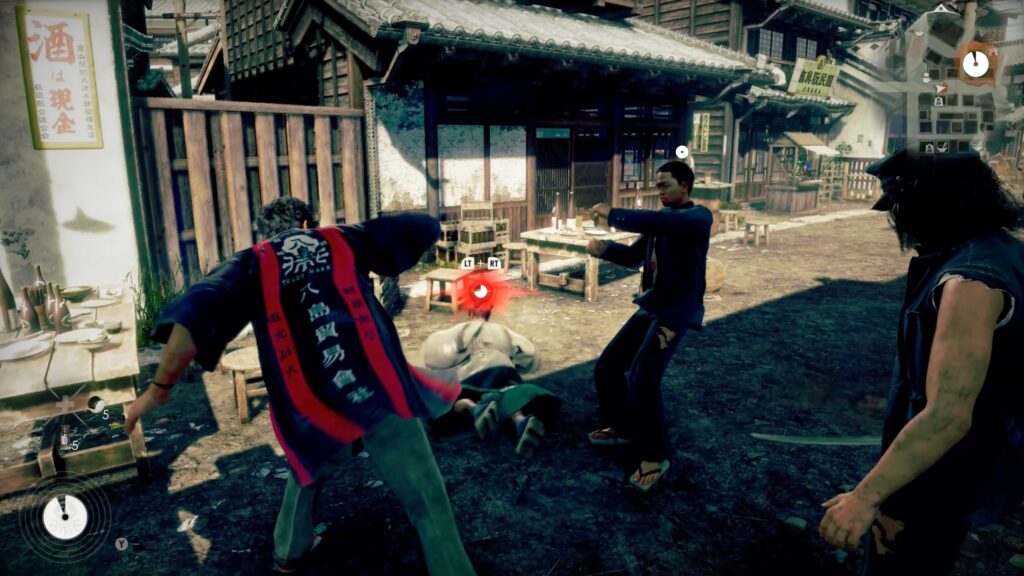
The TGS combat demonstration had also been adjusted from earlier presentations, making the date of any hands-on impression important. The defining combat system gives players independent control over Daito’s left and right sides, with lighter and heavier attacks, charged strikes, tackling, blocking and counterattacking integrated into real-time encounters. A Gamescom hands-on described shoulder inputs corresponding to Daito’s sides while clarifying that the system is not simply a permanent one-button-per-limb arrangement. Guarding and weapons introduce additional complexity, with knives, hammers and katanas among the available options. The central idea is that offense and defense can overlap, allowing Daito to protect himself with one side while responding with the other rather than treating blocking as a complete interruption to attacking.
Other gameplay shown around TGS broadened the picture beyond combat. Coverage of the September 16 opening-night livestream included exploration, shops and activities such as mahjong, arm wrestling, fishing and photography. That material came from the wider broadcast and should not automatically be treated as proof that every activity appeared in the exhibition-floor demo. Together, however, the different presentations raise two separate questions for the finished game: whether the unusual left-and-right combat system becomes intuitive with practice, and whether exploration and side activities create a satisfying rhythm between confrontations.

Stranger than Heaven Story, Five Historical Eras, Characters and Cast
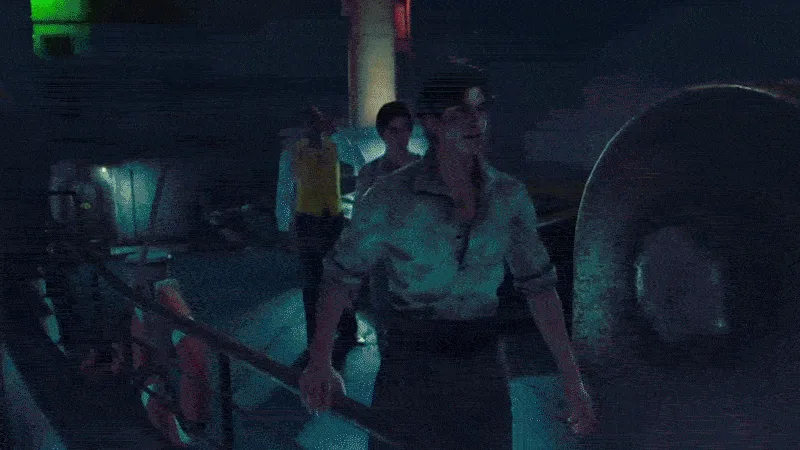
Stranger Than Heaven follows Makoto Daito across five decades, beginning in San Francisco in 1915 as he boards a mysterious ship for Japan. Born to an American father and a Japanese mother, Daito hopes to find somewhere he belongs, establishing themes of displacement and identity before the larger struggle for survival and success develops. The narrative then moves through five principal settings: Kokura, Fukuoka in 1915; Kure, Hiroshima in 1929; Minami, Osaka in 1943; Atami, Shizuoka in 1951; and Shinjuku, Tokyo in 1965. These are specific stages of the story rather than interchangeable destinations.
The long time span gives the game room to show relationships, ambitions and conflicts changing over decades. A friendship formed in one era can carry a different meaning later, while an ambition associated with survival may eventually create new problems. Those are possibilities created by the structure rather than confirmation of particular unrevealed plot developments. RGG Studio head Masayoshi Yokoyama has also explained that the team prioritised convincing fictional environments over exact historical reconstruction. Real-world materials informed development, but the locations were shaped around the story and gameplay, making Stranger Than Heaven better understood as historical fiction than as a documentary simulation of each period.
Developer interviews provide additional context for the scale of the narrative. The project was reportedly considered as a trilogy before the team decided to bring the long story together into a single game. That decision creates a substantial structural challenge because one release must make transitions across decades understandable while still giving its relationships and character arcs enough time to develop. The number of eras is therefore less important than how effectively the game connects them.
The confirmed central cast includes Yu Shirota as Makoto Daito and Dean Fujioka as Yu Shinjo. Snoop Dogg plays Orpheus, Moeka Hoshi portrays Tae Matsumoto, Tori Kelly plays Suzy Day, Ado portrays Keiko Shirai and Satoshi Fujihara plays Takashi. Supporting roles include Akio Otsuka as Heigo Yashima, Takaya Kuroda as Takeo Godai, Yasukaze Motomiya as Tetsuya Hama, Kouhei Tsuji as Suekichi and Daisuke Shiba as Kimura. Hidenari Ugaki was additionally confirmed during TGS as voicing multiple characters, but that announcement does not establish that he is reprising a familiar Like a Dragon character.
The casting is closely connected to the game’s musical ambitions. Yokoyama has described choosing performers according to the needs of the characters rather than celebrity recognition alone, with singing ability becoming particularly relevant because performance and acting overlap throughout the project. A familiar performer may therefore be portraying an entirely new character, and the appearance of someone in a new trailer does not necessarily mean their involvement was first revealed at that event.
SEGA also revealed a Toei collaboration involving film posters, cinema trailers and street billboards inside the game. The announcement video paid homage to Battles Without Honor and Humanity through its music and presentation. Separately, the character Genzo Iwaki uses the likeness of the late Bunta Sugawara with his family’s consent and archival material supplied by Toei, while Takashi Ukaji provides the voice. These are different kinds of collaboration: background film culture, stylistic homage and a licensed character likeness should not be collapsed into a single claim of exact historical reconstruction. Their significance lies in the game’s deliberate relationship with Japanese cinema and entertainment culture.
Showbiz, Music, Soundtrack and the Entertainment Production System
Showbiz expands Daito’s role far beyond street combat by placing him inside the business of creating entertainment. Players can gather information around town to scout performers, collect sounds from the environment and use those discoveries in music production. The collected audio can include ordinary environmental noises as well as sounds encountered during fights, giving exploration a practical purpose beyond conventional item collection.
The production system extends further into selecting musical programs, arranging a band, assigning performers and adjusting staging elements such as lighting. Showbiz is therefore better understood as an entertainment-production system than as another form of karaoke. Its importance comes from the relationship between exploration and creation: a street can contain information, people or sounds that later become useful in a performance. Fighting represents immediate survival, while Showbiz introduces organization, collaboration, performance and the need to appeal to an audience.
Tokyo Game Show also highlighted the musical side of the game directly. The September 21 replacement livestream introduced “Climb On,” a duet performed by Yu Shirota and Dean Fujioka as Daito and Shinjo. The MASH string ensemble performed game music live from September 18 through September 20, with participating singers also connected to Showbiz. “Climb On” should not be confused with the main theme, which had already been associated with Tori Kelly and Satoshi Fujihara before TGS. The show therefore added another character performance rather than revealing for the first time that Stranger Than Heaven would contain original vocal music.
The existence of a duet can reveal a relationship in a different way from spoken dialogue, but the song alone does not establish the full narrative circumstances surrounding the scene. Likewise, appearing in a promotional broadcast does not automatically confirm a separate commercial single, streaming release or complete soundtrack album. Those release details require their own announcements.
The Japanese Collector’s Edition includes a vinyl record containing representative music, including the main theme. That should not be expanded into a claim that the record contains the entire soundtrack. It is also distinct from the Deluxe Edition’s in-game record player, which is a digital game feature rather than the physical vinyl included with the Japanese Collector’s Edition.
These systems and performances help explain why Stranger Than Heaven cannot be evaluated solely as a combat game. Its central proposition combines violent street encounters with the process of finding talent and producing entertainment over multiple eras. The finished game will ultimately determine how much weight each side receives, but the material shown around TGS makes clear that music and Showbiz are structural parts of Daito’s development rather than occasional diversions.
Stranger than Heaven Release Date, Platforms, Game Pass, Editions and Post-TGS Demo Plans
Stranger Than Heaven is scheduled to release on January 15, 2027 for PlayStation 5, Xbox Series X|S and PC. The date had already appeared in SEGA’s August 6 TGS exhibition announcement, so it should not be described as a new reveal made during the September show. A storefront discrepancy remains because the Steam listing checked for the article showed January 14, while SEGA’s announced date is January 15. That difference does not by itself establish an early-access program. For general release coverage, January 15 remains the publisher’s stated date, while the exact unlock timing for a particular purchase should follow the relevant regional storefront.
The confirmed platforms include PS5, Xbox Series X|S and PC, with Steam and Xbox’s PC ecosystem represented. SEGA’s TGS material also lists Xbox Cloud and Game Pass, and the title is confirmed for day-one Xbox Game Pass availability. It is also an Xbox Play Anywhere game. Those are separate benefits: Game Pass concerns subscription access, while Play Anywhere applies to qualifying digital purchases across supported Xbox and Windows devices with shared progress, achievements and supported add-ons. It does not mean a Steam purchase automatically provides an Xbox licence.
PlayStation identifies Stranger Than Heaven as a single-player game and lists PS5 Pro enhancement, but that label should not be converted into specific claims about resolution, frame rate or ray tracing unless those technical details are separately announced. Xbox capability labels likewise establish support categories rather than guaranteeing identical image quality or performance across all supported hardware. Platform availability is confirmed, but definitive performance comparisons require technical disclosures or testing of finished versions.
The announced preorder bonus is the in-game weapon Dosu: Kagekiri, which is separate from the Deluxe Edition content. On the US PlayStation Store, the Standard Edition is priced at $69.99 and the Deluxe Edition at $89.99. Deluxe content includes an original Daito outfit, additional weapons and performers, stage-production items, a promotional poster, an in-game record player and an electronic camera. These extras span combat, customization and Showbiz rather than consisting only of cosmetic clothing.
The Japanese physical PS5 Collector’s Edition adds a vinyl record, SteelBook and illustrated presentation box along with the game and a Deluxe upgrade code. The physical record should not be confused with the in-game record player, and the premium packaging should not be interpreted as including extra story chapters unless such content is specifically listed. Likewise, TGS promotional items such as lanyards and analog stick covers were tied to event participation and preorder proof rather than automatically being part of every retail preorder.
Following TGS, SEGA scheduled a Japanese demo tour beginning October 11, 2026 at Yodobashi Camera Multimedia Kyoto and covering 10 cities and 12 venues. Early stops use the TGS build, while a new demo is planned beginning November 14 at Yodobashi Camera Multimedia Ikebukuro. Some locations will also host creator signing sessions. This distinction matters when comparing impressions because an October session may not contain the same material as a later November demonstration.
The tour concerns venue-based demonstrations and should not be interpreted as confirmation of a freely downloadable worldwide demo. For viewers unable to attend, SEGA’s September 25 recap includes dated stage recordings, while the original SEGA and ATLUS program identifies separate gameplay and cast-focused presentations. The September 16 opening-night footage is also distinct from a combat-only exhibition recording because it includes exploration and Showbiz material. Identifying the uploader, date, event and presentation type before comparing footage is therefore essential, particularly because the September 21 physical event was canceled while online programming continued.

Frequently Asked Questions (FAQs)
- What is the Stranger Than Heaven release date?
SEGA’s announced release date for Stranger Than Heaven is January 15, 2027. The Steam listing checked for the article displays January 14, creating a storefront discrepancy that does not by itself confirm early access or a separate launch. For individual purchases, the relevant regional storefront and its final unlock information should determine the practical release timing. - Was Tokyo Game Show 2026 canceled on September 21?
The September 21 in-person portion of Tokyo Game Show 2026 was canceled because of the approaching typhoon and concerns about weather and transportation. However, the cancellation did not eliminate all programming for that date. Organizers confirmed that official online broadcasts would continue, so September 21 streams can exist even though visitors were no longer attending the exhibition halls. - Who is developing Stranger Than Heaven?
Stranger Than Heaven is being developed by RGG Studio and published by SEGA. RGG Studio is responsible for the game itself, while SEGA handled its Tokyo Game Show presence, which included a playable demonstration, theater presentations, stage events and a walkthrough museum covering the game’s different historical eras. - Who is the main character in Stranger Than Heaven?
The protagonist is Makoto Daito, portrayed by Yu Shirota. His story begins in San Francisco in 1915, when he leaves America aboard a mysterious ship bound for Japan while searching for a place where he belongs. His relationships with figures such as Yu Shinjo and Orpheus become important parts of a story that follows him across several decades. - What are the five historical settings?
The five principal settings are Kokura, Fukuoka in 1915; Kure, Hiroshima in 1929; Minami, Osaka in 1943; Atami, Shizuoka in 1951; and Shinjuku, Tokyo in 1965. These locations represent different stages of Daito’s life and narrative rather than five interchangeable areas available at the same point in the story. - Is Stranger Than Heaven turn-based?
No. Stranger Than Heaven uses real-time action combat built around controlling Daito’s left and right sides. The system incorporates lighter and heavier attacks, guarding, counters, charged strikes, tackles and weapons such as knives, hammers and katanas. The left-and-right concept allows offense and defense to interact rather than relying on turn-based command selection. - Is Stranger Than Heaven exclusive to Xbox?
No. Stranger Than Heaven is confirmed for PlayStation 5, Xbox Series X|S and PC. Its presence in Xbox presentations, Xbox Game Pass support and Xbox Play Anywhere functionality do not make it an Xbox-exclusive game. PlayStation 5 is part of the confirmed launch lineup as well. - Will Stranger Than Heaven be on Xbox Game Pass at launch?
Yes. Xbox has confirmed day-one Game Pass availability for Stranger Than Heaven. The game is also an Xbox Play Anywhere title, but that is a separate benefit. Game Pass provides access through an eligible subscription, while Play Anywhere concerns qualifying digital purchases and allows supported Xbox and Windows devices to share progress, achievements and compatible content. - What is Showbiz in Stranger Than Heaven?
Showbiz is the game’s entertainment-production system, giving Daito responsibilities beyond fighting. Players can gather information to scout performers, collect sounds from the environment, create music, arrange bands, select performers and adjust elements of stage production such as lighting. It is therefore considerably broader than a simple karaoke or singing minigame. - What does preordering Stranger Than Heaven include?
The announced preorder reward is the in-game weapon Dosu: Kagekiri. It is separate from the additional digital content included with the Deluxe Edition and from the physical items offered with the Japanese Collector’s Edition. Promotional accessories distributed during Tokyo Game Show were also event-specific rewards and should not be assumed to come with every standard retail preorder.

Conclusion
Stranger Than Heaven’s Tokyo Game Show 2026 presence made its ambitions easier to understand: a long character-driven journey supported by unusual real-time combat and an entertainment-production system. The contrast between fighting for survival and constructing a public performance is the project’s most distinctive creative proposition. Its success will depend on how convincingly those activities support the same story.
The practical release position is clear: SEGA is targeting January 15, 2027, and the game is not confined to Xbox platforms. The publisher’s pre-show announcement already carried that date, so TGS should be understood as an expansion of the available picture rather than the beginning of the release campaign.
What remains to be judged is the finished experience: its pacing across decades, the depth of Showbiz, the accessibility of the combat and the quality of each platform version. The showcase offers substantial reasons for interest without replacing those final assessments.
Sources and Citations
- SEGA, Tokyo Game Show Report, September 25, 2026 : Official recap detailing the Toei collaboration, film posters and trailers appearing within the game, cast announcements and live musical performances. It also confirms that the cancelled September 21 stage events were replaced by expanded livestreams, introduces the duet “Climb On” and announces a Japanese demonstration tour beginning October 11 across ten cities and twelve venues. SEGA セガ | 製品情報
Citation: Stranger Than Heaven: Tokyo Game Show 2026 Announcements and Event Report. (SEGA) - Tokyo Game Show, Official Cancellation Notice, September 19, 2026 : Organizer’s announcement confirming that September 20 would proceed as scheduled but the September 21 physical event would be cancelled because of Typhoon No. 25 and concerns about transport and participant safety. It also announces ticket refunds and explains that arrangements for selected online broadcasts were still being considered at publication. Tokyo Game Show 2026
Citation: Important Notice Regarding September 20 and 21 Events and Typhoon No. 25. (Tokyo Game Show) - Tokyo Game Show, Online Programming Announcement, September 20, 2026 : Follow up notice confirming that official programming would continue online on September 21 despite the cancellation of physical attendance. It provides broadcast schedules, participating exhibitors’ information and links to streams and archives. This dedicated announcement replaces the general homepage and distinguishes continuing broadcasts from cancelled activities at the venue. Tokyo Game Show 2026
Citation: Notice Regarding the Online Event on September 21. (Tokyo Game Show) - SEGA, Stranger Than Heaven Official Website : Official game website displaying the announced January 15, 2027 release and the PlayStation 5, Xbox and Steam platform information. It brings together character introductions, promotional materials and edition details, including additional outfits, weapons, performers and stage equipment. The purchase sections also explain preorder bonuses and distinguish the base game from packages containing additional content. STRANGER THAN HEAVEN|SEGA
Citation: Stranger Than Heaven Official Website. (SEGA) - SEGA, Official Cast and Character Directory : Dedicated character reference linking performers to their roles and explaining the relationships surrounding Makoto Daito, Yu Shinjo and Orpheus. It includes supporting figures from the criminal and entertainment worlds, while distinguishing Bunta Sugawara’s portrayal of Genzo Iwaki from Takashi Ukaji’s voice performance. This provides direct attribution for character identities and casting details. STRANGER THAN HEAVEN|SEGA
Citation: Stranger Than Heaven: Official Cast and Characters. (Stranger Than Heaven) - Steam, Stranger Than Heaven Official Store Page : Dedicated PC listing identifying RGG Studio as developer and SEGA as publisher, with preorder options, supported languages and descriptions of combat and show production. It also discloses Denuvo protection and separates the Standard and Deluxe editions. The hardware requirements remain largely undetermined, so the listing does not yet provide complete final PC specifications. Steam Store
Citation: Stranger Than Heaven on Steam. (Steam) - PlayStation, Stranger Than Heaven Official Product Page : Official PS5 listing confirming the January 15, 2027 release, offline single player support and Remote Play compatibility. It also advertises PS5 Pro enhancements and DualSense vibration and trigger effects, alongside preorder information and the game’s story overview. These are published platform features rather than independent measurements of the finished game’s performance. PlayStation
Citation: Stranger Than Heaven for PlayStation 5. (PlayStation) - Xbox, Stranger Than Heaven Official Product Information : Microsoft’s game page confirms the January 15, 2027 release for Xbox Series X|S and Windows, alongside announced Game Pass availability. Its separate storefront lists Xbox Play Anywhere, achievements, cloud saves and single player support. Together, these pages provide platform and purchasing information without implying that ownership extends to unrelated PC or console storefronts. xbox.com
Citation: Stranger Than Heaven on Xbox and Official Xbox Store Listing. (Xbox) - Xbox Wire, Official Presentation Recap, May 6, 2026 : Danielle Partis’ recap of the dedicated presentation explains the fifty year storyline, five city settings, cast and musical performance management. It also details the combat system’s independent control of Makoto’s left and right sides, charged attacks and weapon options. The article combines footage descriptions with explanations from RGG Studio’s development team rather than offering a final review. XBOX Wire
Citation: Xbox Presents: A Special Look at Stranger Than Heaven, Everything We Learned. (Xbox Wire) - Xbox Wire, Official Character and Story Feature, September 23, 2026 : SEGA representative Keiko Yoshie’s feature introduces the central cast and explains how their ambitions and backgrounds intersect with Makoto’s journey. It describes his departure from San Francisco, his meeting with Orpheus and his partnership with Yu Shinjo, providing an English language publisher account of the characters alongside their performers and newly released images. XBOX Wire
Citation: Meet Key Players Shaping Makoto Daito’s Journey in Stranger Than Heaven. (Xbox Wire) - AUTOMATON, Development and Historical Setting Interview, June 23, 2026 : Amber V’s report draws on a joint media interview with Masayoshi Yokoyama about the game’s scale, explorable cities and historical liberties. It explains that the project was initially envisioned as a trilogy before becoming one game, and that historical references support an original fictional world rather than exact reconstructions of each period and location. AUTOMATON
Citation: Stranger Than Heaven Prioritizes Convincing Fiction Over Historical Accuracy, Says RGG Studio. (AUTOMATON) - GamesRadar+, Hands On Preview and Developer Interview : Josh West’s account of approximately one hour with a demonstration praises the changing environments and atmosphere but raises concerns about static combat and an obstructive camera. It also includes Yokoyama’s explanation that players should improve alongside Makoto as the story progresses. These observations concern an early playable build, not the completed retail release. GamesRadar+
Citation: Stranger Than Heaven Preview: Immaculate Vibes Collide with a Static Combat System. (GamesRadar+) - Creative Bloq, Gamescom Hands On Preview, September 5, 2026 : Alan Wen’s preview examines three combat scenarios featuring fists, a metal pipe and a knife, explaining how the unusual control scheme gradually became more intuitive. It praises the fighting’s brutality while expressing interest in exploring more of the historical settings. The working article below replaces the unavailable preview address supplied. Creative Bloq
Citation: Stranger Than Heaven Hands On: Unconventional Combat and Early Twentieth Century Japan. (Creative Bloq)
Recommendations
- Hell Let Loose Vietnam: 50v50 Combat, Tunnels, Helicopters and Roles
- NVIDIA RTX 50 SUPER Series Reportedly Back on Track After Cancellation Rumors: What to Expect in 2026
- Deep Rock Galactic: Rogue Core Best Team Composition Guide 2026
- Primer Animated Series Rumors: Co-Creator Teases a DC Studios Project Under James Gunn
- Witch Hat Atelier Premiere Review: Episode 1–2 Impressions, Animation Quality, and Crunchyroll Release Details
- 3D Satisfying Physics Simulation in Blender: How to Create Rigid Body, Cloth, and Soft Body Animations
- 1666: Amsterdam Developer Caught Using AI-Generated Assets, Panache Digital Games Promises Human Art Replacement Soon
- Storage Wars Star Darrell Sheets Dies Aged 67: Cause of Death, Career, and Latest Updates
- Sony Adds Destiny 2: the Final Shape and Legacy Collection to PlayStation Plus Extra and Premium on the Same Day the Game Receives Its Final Major Update
- Warframe Tau Trailer Breakdown: Fornax, Brysko, New Gameplay, and TennoCon 2026 Reveals



































































































