





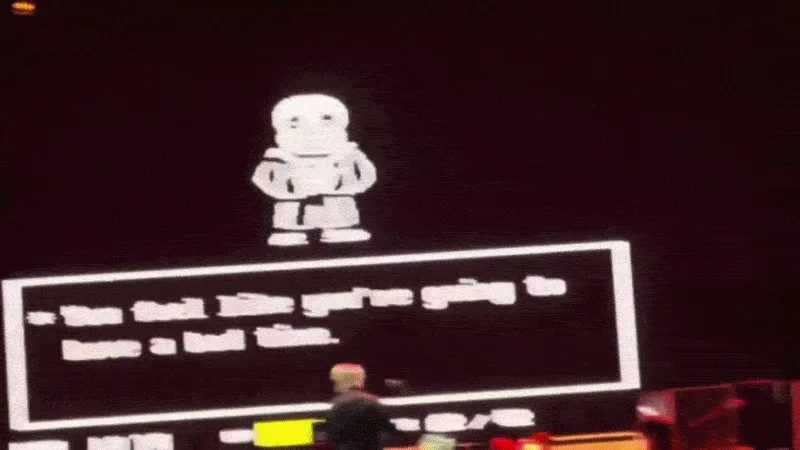
UNDERTALE: The Determination Symphony was created to transform Toby Fox’s celebrated video-game score into an orchestral narrative, with a 25-piece ensemble performing newly arranged music as gameplay footage plays above the musicians. The 2026 world tour was promoted as the first international Undertale concert tour, guiding audiences musically through locations including the Ruins, Snowdin, Waterfall, Hotland and New Home.Undertale Determination Symphony Kansas City Concert and Its Surprising Song Choices
The concept sounds almost tailor made for Undertale. Toby Fox’s soundtrack is deeply integrated into the game’s characters, locations, battles, and emotional reveals. Repeated musical ideas connect scenes that may initially seem separate, so hearing those themes expanded for an orchestra can make those relationships more noticeable than they are during normal gameplay. However, the Kansas City performance raised an unexpected question: with limited concert time available, which pieces deserved inclusion?
The concert took place at the Kauffman Center for the Performing Arts on September 2, 2026, as part of the North American leg of the Determination Symphony world tour. Kotaku critic Rebekah Valentine attended the performance and gave a broadly positive account of the event. She praised the enthusiastic and respectful crowd, the amount of cosplay, the arrangements, and the overall atmosphere. She did notice moments that suggested the performers might have benefited from additional rehearsal, a concern she had previously raised about game music concert productions, but her overall reaction to the performance itself remained favourable.
The main source of confusion was the programming. The opening section initially followed Undertale’s progression in a recognizable way, including “Once Upon a Time”, “Your Best Friend”, “Fallen Down”, “Ruins”, “Home”, “Heartache”, “sans.” and “Snowy”. After that, however, the programme began jumping more noticeably around the soundtrack. It bypassed the expected Papyrus focused sequence before moving through “Snowdin Town”, “Waterfall”, “Memory”, “Bird That Carries You Over a Disproportionately Small Gap”, “Dummy!”, “Temmie Village” and “Spooktune”.
“NGAHHH!!!” and “Spear of Justice” represented Undyne before the concert moved past much of Hotland to “Spider Dance” and “It’s Raining Somewhere Else”. Act One eventually reached “Undertale”, “Small Shock”, “Bergentrückung” and “ASGORE”, while “Megalovania” ultimately served as the closing number. The choices created a set that could still be enjoyable musically while feeling less coherent as a progression through the game’s story.
That became more noticeable because several recognizable pieces were left out. Valentine’s resulting list contained 11 omission entries, ranging from more understandable cuts such as “Stronger Monsters” to much more surprising absences including “Another Medium”, “Battle Against a True Hero” and, most notably, Undertale’s regular combat theme, “Enemy Approaching”. The issue was therefore not simply that the orchestra could not perform every track in the game. The more unusual question was why some comparatively minor pieces received full orchestral treatment while songs with much stronger roles in Undertale’s battles, locations, and narrative progression were excluded.

In This Article (8 sections)
Undertale Determination Symphony Setlist and 11 Missing Songs
The Determination Symphony should not be viewed as a straightforward live performance of the Undertale soundtrack from Track One through to the end. The world tour was conceived as an adaptation, with production materials describing fan favourite music newly arranged for a 25 piece orchestra and synchronised with gameplay footage. The arrangements originated with Adam Hoskins for Undertale’s tenth anniversary concert project and received additional scoring for the international tour. Lambert Jackson developed the production with Materia Music, while SOHO Live organised the world tour.
That format requires choices that an album does not. A concert needs musical arcs, climaxes, intermission placement, changes in texture, and a satisfying ending, while a game soundtrack can include brief cues, alternate versions, ambient pieces, and situational tracks without worrying about whether every transition works in a live performance. This partly explains the unusual order of the Kansas City programme. “ASGORE”, for example, provides a much stronger Act One finale than simply stopping at whichever soundtrack cue happens to fall near the narrative midpoint. Rebekah Valentine specifically acknowledged the logic of ending the first half with a composition large enough to create a proper concert climax.
The controversy therefore concerned curation more than chronology. Rearrangement was inevitable, but listeners were surprised that several structurally important tracks were absent while comparatively specialised pieces remained. Kotaku ranked 11 omission entries from the Kansas City performance in increasing order of bewilderment:
- “Can You Really Call This A Hotel, I Didn’t Receive A Mint On My Pillow Or Anything”
- “Stronger Monsters”
- “An Ending”
- “Reunited”
- “Quiet Water”
- “Here We Are”
- “Start Menu/Menu (Full)”
- “Bring It In, Guys!/Last Goodbye”
- “Another Medium”
- “Battle Against a True Hero”
- “Enemy Approaching”
Technically, the ranking contains 11 omission entries rather than exactly 11 individual track titles because “Bring It In, Guys!” and “Last Goodbye” were grouped together. The lower ranked omissions are comparatively easier to understand. “Can You Really Call This A Hotel, I Didn’t Receive A Mint On My Pillow Or Anything” is charming but reuses melodic material represented elsewhere. “Stronger Monsters” belongs to Undertale’s limited Hard Mode material rather than the main completed narrative, while “An Ending” functions more as reflective connective material than as an indispensable dramatic centrepiece.
The omissions become more consequential further up the ranking. “Reunited” provides emotional decompression after the climactic True Pacifist material, while “Quiet Water” could have strengthened Waterfall’s atmosphere despite its short length. “Here We Are” would have given the unsettling True Lab material clearer representation, and “Start Menu/Menu (Full)” could have allowed the orchestra to dramatise one of the game’s evolving musical devices. “Bring It In, Guys!” and “Last Goodbye” would also have given the credits and farewell material a stronger presence.
The final three omissions were the hardest to understand from a representation standpoint. “Another Medium” is closely associated with Hotland as an area rather than a single optional event. Promotional material explicitly promises a journey through Hotland, yet the Kansas City programme skipped much of that section before moving on to other material. “Battle Against a True Hero” accompanies one of Undyne’s defining confrontations during the Genocide Route and has an escalating melodic and rhythmic structure that appears naturally suited to a large orchestral arrangement. Although the concert represented Undyne with “NGAHHH!!!” and “Spear of Justice”, omitting her most dramatic battle theme left that side of the character less represented.
“Enemy Approaching” was arguably the most conceptually surprising omission. It is not an obscure bonus theme or optional character cue, but Undertale’s regular encounter music, making its melodic identity part of the repetitive gameplay rhythm players encounter throughout the adventure. Kotaku therefore placed it at the top of its bafflement ranking. Together, “Another Medium”, “Battle Against a True Hero”, and “Enemy Approaching” affect location, character, and combat representation, which explains why their absence drew particular attention.
No comprehensive official explanation has been published detailing why every omitted track was cut, so explanations for individual choices remain interpretation rather than confirmed production reasoning. Duration is the clearest practical constraint. Undertale contains far more music than a conventional concert can perform in full, while orchestral arrangements also need enough time to develop. The tour was marketed as a guided musical journey rather than a complete reproduction of the soundtrack.
Redundancy may also have influenced the programme because Toby Fox frequently uses recurring motifs to connect different pieces. From a concert programming perspective, multiple tracks built around closely related musical ideas may be less essential than compositions offering different orchestral textures. Gameplay footage adds another limitation because the performance functions partly like a film presentation, meaning songs also have to fit an edited visual narrative. Extremely short cues may need to be expanded, combined into medleys, or removed, while long narrative pieces can consume time that might otherwise be used to represent several characters or areas. None of these factors fully explains every omission, but they show why popularity alone cannot determine a symphony programme.

Undertale Songs Played at the Kansas City Determination Symphony
The contemporary Kansas City review documents a substantial portion of the programme even though the tour organisers have not published a definitive complete song by song archival setlist. The early sequence included “Once Upon a Time”, “Your Best Friend”, “Fallen Down”, “Ruins”, “Home”, “Heartache”, “sans.” and “Snowy”. The concert then moved through “Snowdin Town”, “Waterfall”, “Memory”, “Bird That Carries You Over a Disproportionately Small Gap”, “Dummy!”, “Temmie Village” and “Spooktune”.
Undyne was represented by “NGAHHH!!!” and “Spear of Justice”. Other documented pieces included “Spider Dance”, “It’s Raining Somewhere Else”, “Undertale”, “Small Shock”, “Bergentrückung” and “ASGORE”. The second half returned to material that had been skipped earlier before progressing toward the True Ending music, while “Megalovania” served as the final piece. “Song That Might Play When You Fight Sans”, despite famously not being used during a normal in game Sans battle, also appeared.
This is what made the missing songs especially noticeable. The programme was not excessively narrow and found room for humorous, eccentric, and comparatively minor compositions. The debate arose because those choices competed for concert time with tracks that represent some of Undertale’s most recognisable environments, gameplay systems, and dramatic branches. The ranking of the omissions remains subjective, but its underlying argument is that songs such as “Another Medium”, “Battle Against a True Hero”, and “Enemy Approaching” contribute more than simple popularity. They help define how Undertale sounds as a game.
Biggest Undertale Songs Fans Expected and How the Symphony Adapted the Soundtrack
Several missing songs created obvious expectation gaps because they represent major parts of Undertale’s gameplay, locations, and emotional structure. “Enemy Approaching” is the clearest example because ordinary battles recur throughout the game, making the theme one of the sounds players repeatedly associate with basic encounters. “Battle Against a True Hero” carries a different kind of expectation because it is route specific, but its dramatic importance, musical scale, and role in the Genocide Route make it an obvious candidate for orchestral expansion.
Its inclusion also could have balanced “Megalovania” by representing another major late game confrontation instead of allowing Sans related music to dominate that path. “Another Medium” stands out as the major environmental omission because tour advertising explicitly describes the concert journey as passing through Hotland, making a Hotland centered composition a natural expectation.
Other omissions matter because Undertale’s emotional identity extends beyond climactic battles. “Reunited” and the credits themes represent aftermath, friendship, and emotional resolution. A concert focused too heavily on confrontations risks reducing a game known for mercy and relationships to a sequence of battle themes. “Here We Are” could also have introduced a darker and more unsettling orchestral color through the True Lab material. The strongest omissions are therefore not simply the loudest fan favorites. They are tracks that would broaden the emotional, geographical, and narrative story told by the orchestra.
“Battle Against a True Hero” may be the strongest purely musical candidate among the missing pieces. Its scale, momentum, and emotional progression seem naturally suited to orchestral forces, allowing an arrangement to move between delicate tension and overwhelming ensemble power while giving Undyne another major dramatic peak. “Another Medium” would offer rhythmic energy and a distinct Hotland identity, while “Enemy Approaching” arguably deserved inclusion more for historical and structural reasons than sheer orchestral grandeur.
The regular battle theme could have been expanded into a medley with other encounter music rather than requiring a long standalone slot. “Reunited” and the credits material would restore more of the emotional balance that distinguishes Undertale, where reconciliation, friendship, and aftermath are as important as defeating powerful opponents.
The Determination Symphony treats the soundtrack more like the score of a staged narrative than a direct reproduction of the game’s music. Gameplay footage appears above the orchestra, giving each piece an immediate visual context, while the music is newly arranged for 25 musicians instead of being reproduced using the original game sounds. Promotional descriptions emphasize guiding audiences through the Underground and recreating characters, battles, locations, and emotional scenes as part of one continuous experience.
That approach changes how the music functions. Inside Undertale, a track may repeat during exploration, stop when a menu opens, or loop for different lengths depending on how quickly an encounter is completed. A live orchestra requires fixed timing, so the arranger must decide where motifs develop, how long sections continue, when a cadence occurs, and how one piece transitions into another. Orchestration also exposes detail hidden within Toby Fox’s deliberately economical sound palette. Melodic lines originally carried by synthesized sounds can be distributed across strings, brass, woodwinds, and percussion, allowing familiar motifs to grow in scale without losing their identity.
The world tour uses a 25 piece orchestra, large enough to create substantial acoustic force while remaining smaller than a full symphonic ensemble. Official venue descriptions consistently promote newly arranged Undertale music performed alongside projected gameplay. The arrangements are associated with Adam Hoskins, who created expanded versions for the tenth anniversary production and added further scoring for the world tour. Lambert Jackson developed the production with Materia Music, while SOHO Live announced the international tour.
This format suits Undertale particularly well because its original compositions often rely more on strong melodies, recurring motifs, and rhythmic identity than on huge instrumental resources. An arranger can therefore redistribute relatively simple musical ideas across several instrumental families and create greater scale without sacrificing recognizability.
The Kansas City review considered the music enjoyable and the arrangements effective overall, despite noting some performance details that suggested rehearsal limitations. That distinction matters because criticism of the song selection should not be confused with criticism of the musicians. The central debate concerned what the orchestra chose to represent, not whether the music itself worked in performance.

Kansas City Setlist Structure, Tour Changes, and Fan Reactions to Missing Songs
The Kansas City programme illustrates how the Determination Symphony reshapes Undertale’s structure rather than simply recreating it in sequence. The first section initially follows the game’s progression before major deviations begin. Papyrus related material is passed over at the expected point, Waterfall material arrives, Hotland is heavily compressed, and major endgame music is brought forward so “ASGORE” can serve as the Act One closer. The second half then reaches back for material skipped earlier before eventually advancing into the True Pacifist climax and ending with “Megalovania”.
Whether this represents a specific setlist change from another tour stop requires caution because complete official setlists for every performance have not been published in a way that allows reliable song by song comparison. What can be established is that the world tour itself expanded on the original tenth anniversary concert concept. RPG Site’s reproduction of the tour announcement states that Adam Hoskins’ arrangements, originally produced for the anniversary presentation, received additional scoring for the international tour. The production is therefore not completely fixed, even if evidence for specific differences between individual cities remains incomplete.
The strongest documented reaction from Kansas City came from Rebekah Valentine, whose response combined admiration for the concert with disbelief about some of its programming choices. Her criticism was comparative rather than based on the simple fact that songs had been omitted. Leaving music out is unavoidable, but excluding major tracks while preserving pieces such as “Temmie Village”, “Spooktune”, and “Song That Might Play When You Fight Sans” made the hierarchy of choices harder to understand.
That reaction reflects a broader difficulty faced by any Undertale concert because the soundtrack does not have one universally accepted hierarchy. A song that one listener considers an essential battle theme may be expendable to another, while brief joke tracks have passionate followings precisely because Undertale gives seemingly minor moments so much personality. The production also embraces fan culture instead of presenting itself as a formal classical event detached from the game. Tour marketing encourages cosplay, while the Kansas City account described significant audience participation through costumes and visible enthusiasm.
As a result, debate about missing songs is almost inevitable. Fans are not only judging musical technique or orchestral quality. They are also evaluating whether the concert recognizes the characters, routes, environments, and emotional moments that shaped their own experience of Undertale. That sense of personal ownership helps explain why omissions can attract so much attention even when the overall concert remains enjoyable.

Frequently Asked Questions[FAQs]
- What is UNDERTALE: The Determination Symphony?
UNDERTALE: The Determination Symphony is a live orchestral adaptation of Toby Fox’s Undertale soundtrack. The world tour uses a 25 piece orchestra performing newly arranged versions of music from the game while gameplay footage is projected above the stage. Rather than reproducing the soundtrack exactly as it appears in the game, the production reshapes the music into a concert experience with its own pacing, transitions, and dramatic structure. - When was the Kansas City Undertale Determination Symphony concert?
The Kansas City performance reviewed by Kotaku took place on September 2, 2026 at the Kauffman Center for the Performing Arts in Kansas City, Missouri. The appearance had been announced as part of the 2026 world tour, which brought the orchestral production to multiple locations. Kotaku critic Rebekah Valentine attended the performance and later discussed both the strengths of the concert and the unusual choices in its setlist.
- Which major Undertale songs were missing from the Kansas City concert?
Several notable tracks were absent, including “Another Medium”, “Battle Against a True Hero”, “Enemy Approaching”, “Reunited”, “Here We Are” and “Quiet Water”. Kotaku grouped the missing material into 11 ranked omission entries, moving from cuts that were relatively easy to understand to songs whose absence was much more surprising. The biggest concerns involved tracks representing important battles, locations, and emotional moments from the game.
- Was Megalovania played at the Undertale Determination Symphony?
Yes. At the Kansas City performance covered by Kotaku, “Megalovania” was included and served as the final number of the concert. Its placement gave the programme a recognisable and dramatic ending, although it also made the absence of other major Genocide Route music, particularly “Battle Against a True Hero”, more noticeable.
- Was Battle Against a True Hero played at the Kansas City concert?
No. “Battle Against a True Hero” was one of the most significant documented omissions from the Kansas City programme and ranked as the second most baffling absence in Kotaku’s list. The track is closely associated with one of Undyne’s most dramatic confrontations during the Genocide Route, making its omission especially surprising given its emotional intensity and suitability for a large orchestral arrangement.
- Was Enemy Approaching performed?
No. “Enemy Approaching” was not included in the documented Kansas City programme, despite being Undertale’s regular battle theme and one of the pieces players repeatedly hear during normal encounters. Kotaku placed it at the top of its omission ranking because its absence affects the concert’s representation of a basic and recurring part of the game’s musical identity.
- Why could the symphony not perform the complete Undertale soundtrack?
The tour is designed as a live narrative concert rather than a complete performance of every track in the soundtrack. Orchestral arrangements often expand the original music, while gameplay footage, transitions, an interval, and concert style dramatic pacing also require time. The production therefore has to select and reorganise material rather than simply play every piece in order. The organisers have not published a detailed explanation for why each individual song was included or omitted.
- Who arranged the music for the Undertale Determination Symphony?
The production announcement credits Adam Hoskins with creating the concert’s sweeping orchestral arrangements. These versions were initially developed for Undertale’s tenth anniversary production and were later expanded with additional scoring for the international world tour. His arrangements adapt Toby Fox’s original melodies for a live ensemble while preserving the recognisable themes and motifs associated with the game.
- How large is the Undertale Determination Symphony orchestra?
Official tour and venue descriptions specify a 25 piece orchestra. That makes the ensemble smaller than a full traditional symphony orchestra, but still large enough to divide Undertale’s melodies across strings, brass, woodwinds, percussion, and other instrumental groups. The format allows the original game music to gain greater scale while keeping its familiar melodic identity.
- Is Undertale Determination Symphony only for people who have played the game?
The concert is clearly designed with Undertale fans in mind because gameplay footage, characters, locations, battles, and story moments are central to the presentation. Familiarity with the game can therefore make the musical references and emotional connections more meaningful. However, the orchestral format can also work as an introduction to Toby Fox’s music for someone who has not played Undertale, since the production presents the soundtrack as an immersive musical journey rather than requiring prior gameplay as an entry condition.n.

Conclusion
The controversy surrounding UNDERTALE: The Determination Symphony in Kansas City is unusually revealing because it emerged from a concert that was otherwise largely enjoyed.
The performance offered new orchestral arrangements, enthusiastic fans, extensive cosplay, synchronised gameplay and many of Toby Fox’s most recognisable compositions. Yet its programming also demonstrated just how difficult it is to reduce Undertale to one evening.
Some omissions can be defended. An orchestra cannot perform every short cue, alternate variation and route-specific track without creating an unwieldy event. Narrative order also has to be sacrificed occasionally for concert pacing.
The deeper puzzle is why pieces with obvious structural importance disappeared. “Another Medium” represents a major location. “Battle Against a True Hero” represents one of the game’s most dramatic character confrontations. “Enemy Approaching” represents ordinary combat itself. Their absence is more noticeable because humorous or comparatively minor selections such as “Temmie Village”, “Spooktune” and “Song That Might Play When You Fight Sans” survived the curation process.
Ultimately, those baffling omissions do not erase the strengths of the Determination Symphony. They reveal something more flattering about its source material: more than a decade after Undertale first appeared, its soundtrack contains so many pieces listeners consider indispensable that almost any concert-length selection is likely to leave someone asking where their favourite song went.
Sources and Citations
- Kotaku, September 3, 2026 : Rebekah Valentine’s Kansas City concert review praises the performance but questions eleven omitted songs. Kotaku
Citation: Undertale Concert Review. (Kotaku) - RPG Site, International Tour Announcement, March 18, 2026 : Mikhail Madnani’s report reproduces announcements from SOHO Live and AEG Presents, detailing the international tour, its orchestra of 25 musicians and accompanying gameplay projections. It records the original August 23, 2026 opening in San Jose and credits Adam Hoskins’ arrangements, providing background on the production and the itinerary announced in March. RPG Site
Citation: Undertale: The Determination Symphony World Tour Announced, Begins August. (RPG Site) - BroadwayWorld, Kauffman Center Announcement, March 22, 2026 : Gillian Blum’s report confirms the announced September 2, 2026 performance at 7:30 p.m. in Muriel Kauffman Theatre, part of the Kauffman Center Presents series. It also describes the orchestral arrangements, projected gameplay, encouragement to attend in cosplay and planned merchandise, providing a dated announcement for the Kansas City engagement rather than a review of the performance. BroadwayWorld
Citation: Kauffman Center to Present UNDERTALE: The Determination Symphony World Tour. (BroadwayWorld) - AXS, Muriel Kauffman Theatre Ticketing and Event Information : Ticketing directory providing the theatre’s address and links to upcoming performances. It no longer displays the September Undertale concerts, so the current page cannot verify both dates supplied. Missouri’s official tourism listing separately records September 1, 2026, supplementing the September 2 announcement above and providing a more useful historical reference for the additional performance. AXS
Citation: Muriel Kauffman Theatre Events and Tickets and September 1 Undertale Event Record. (AXS) - B:Music, Official Symphony Hall Concert Listing : Official venue listing describing newly arranged Undertale music performed by an orchestra of 25 musicians, with gameplay footage projected above the stage. It provides a direct venue reference for the concert’s musical and visual presentation and now identifies the listing as a past event, rather than advertising an upcoming performance. B:Music
Citation: Undertale: The Determination Symphony at Symphony Hall. (B:Music) - Eventim Apollo and Lambert Jackson, London Performance Information : The supplied Eventim Apollo page could not be retrieved, but producer Lambert Jackson’s official listing confirms two London performances on September 26, 2026, at 3 p.m. and 7:30 p.m. It also describes the orchestral arrangements and projected gameplay, providing a working primary reference for the London schedule and concert format. Lambert Jackson Productions
Citation: Undertale at Eventim Apollo and Official Producer’s Tour Dates and Concert Information. (Lambert Jackson Productions)
Recommendations
- Next State of Play Could Take Place on September 3, 2026: Rumors and Expected Games
- Nacon Subsidiaries Enter Insolvency Proceedings: Spiders, Kylotonn, Cyanide, and Nacon Tech Explained
- PlayStation’s Iconic PS4 Game Sharing Video Is Being Torn Apart in the Comments
- Blender Camera Management for Creative Studios and Production Pipelines: Best Add-Ons and Workflows for Advertising, Interactive Media, and Virtual Production
- Epic Games Has Resolved Its Conflict with Hayden Cohen, Former Fortnite Collaboration Leaker
- Warhammer 40000 Boltgun 2 Preview Explained
- Crimson Desert Has Already Earned Over $20 Million on Steam Before Launch – Sales, Pre-Orders & What It Means for 2026
- Lies of P Sequel Enters Full Production: NEOWIZ Confirms “Vertical Slice” Milestone and Next Steps
- XBOX Now Claims that Exclusives Are Essential to the Brand’s Growth
- Scarlet Deer Inn Launches on Steam With Real-Life Embroidered Medieval Animation



































































































