






In This Article (19 sections)
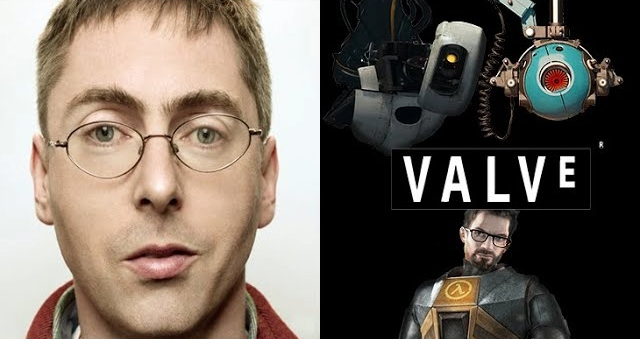
Erik Wolpaw and AI Experimentation at Valve
In March 2026, veteran Valve writer Erik Wolpaw revealed that a small, informal group at the company has been “poking around” with generative AI. Wolpaw, known for his work on the Portal and Half-Life series, clarified that these experiments are not a company-wide mandate or part of a “Valve-endorsed” project. The exploration is currently limited to testing how AI might generate text, audio, and real-time character responses to enhance player immersion rather than replacing human creativity.

Erik Wolpaw Valve writer background and credits
Erik Wolpaw is a senior writer with a distinguished career at Valve and beyond. His portfolio includes:
- Valve Classics: Half-Life 2: Episode One and Episode Two, Portal, Left 4 Dead, and Left 4 Dead 2.
- External Work: Co-writing the critically acclaimed Psychonauts 2 at Double Fine.
- Recent Activity: Returning to Valve as a contractor, contributing to projects like the card game Artifact.
Wolpaw is considered a primary creative force behind Valve’s narrative-driven identity, particularly the wit found in GLaDOS’s dialogue.
What Erik Wolpaw said about Valve experimenting with AI tools
Wolpaw described the current AI work at Valve as “poking around” by a few curious individuals. Key points from his March 2026 podcast include:
- Informal Status: It is a small group experiment, not a top-down initiative.
- No Major Projects: He explicitly joked that AI is not being used for unannounced blockbusters like Half-Life 3 or Portal 3.
- Player-Centric Goal: He is uninterested in using AI to cut costs or replace writers; he wants to see if it can improve the user experience through real-time reactivity.
Valve generative AI experiments for game development
While Valve has not officially integrated AI into its flagship pipeline, staff are testing its utility for drafting dialogue and audio cues. This aligns with industry peers:
- Ubisoft: Created “Ghostwriter” for NPC “barks” (short chatter).
- Epic Games: Released ChatGPT plugins for Unreal Engine. Valve’s approach is currently speculative, treating generative tools as potential prototyping assistants for drafting lines or NPC responses to see what quality emerges.

AI tools for NPC dialogue and real-time character responses
Wolpaw is particularly interested in AI’s ability to act as a “straight man” to player chaos. Unlike traditional fixed dialogue trees, generative AI allows:
- Dynamic Reactions: NPCs can improvise responses to unscripted player actions (e.g., a “GTA scenario”).
- Proven Interest: 95% of players in the Dead Meat experimental game enjoyed dynamic AI conversations.
- Immersion: AI can feed the game state into a language model to produce context-aware dialogue, such as NPCs describing destruction caused by the player.
AI in video game writing and narrative design workflows
Generative AI is shifting the role of the writer from “scribe” to “curator.” In AAA studios, AI handles repetitive tasks to free up humans:
- Automation: Writing hundreds of generic NPC one-liners.
- Brainstorming: Using ChatGPT to outline quest beats or generate user stories from feature descriptions.
- Supervision: Writers edit and polish AI “first drafts” to ensure emotional nuance and story consistency.
Using ChatGPT-like tools for game scripting and iteration
Models like GPT-4o are being used as high-speed assistants. Their multimodal nature (handling text, audio, and images) allows for:
- Rapid Prototyping: Generating organized narrative content from minimal prompts.
- Iterative Tasks: Rephrasing quest descriptions, summarizing lore, or suggesting greeting variations.
- Human Oversight: Humans remain responsible for fact-checking and maintaining the specific tone of the game.
Why Erik Wolpaw says AI is not good at being creative
Wolpaw maintains that AI is “pretty bad” at genuine creativity and humor because it relies on statistical pattern matching.
- Clichés: AI tends to produce obvious, unoriginal content based on existing data.
- Human Element: Suspenseful twists and specific wit (like in Portal) require human imagination.
- The “Follower” Strength: While AI cannot lead a story, it is excellent at “going along” with player inputs and adjusting to the flow of gameplay.
Procedural dialogue systems vs generative AI for interactive storytelling
The industry is moving from pre-authored templates to dynamic generation:
- Procedural Systems: Use pre-written snippets (e.g., Radiant AI). They are predictable and controlled but can become repetitive.
- Generative AI: Composes new lines on demand, allowing NPCs to remember past player actions.
- Hybrid Challenges: Generative AI carries risks of “hallucinations” (fabricating facts) or breaking character, requiring strict “fact-checking” layers to maintain consistency.
Valve AI policy and what Valve has publicly said about AI (so far)
Valve’s official stance is cautious but open:
- Disclosure Policy: Steam now requires developers to inform players if a game uses AI-generated content.
- Gabe Newell’s View: He has called AI a “cheat code” for productivity that will impact every business.
- Human Supervision: Internal comments emphasize that AI outputs require quality control and should not be used to replace human artists or cut costs.

How AI could change writer roles in AAA game studios
The rise of AI is augmenting, not replacing, writers. Changes include:
- Editorial Roles: Writers become “editorial directors” or “AI narrative designers.”
- Efficiency: Less time spent on mundane chatter and more on high-level plot and character development.
- Skill Evolution: Creative direction and editing become more valuable skills than raw text volume.
Concerns about AI training data, copyright, and voice performance
The use of AI introduces significant legal and ethical risks:
- Copyright: Models trained on copyrighted scripts raise questions about fair use and the ownership of AI-generated output.
- Voice Acting: The SAG-AFTRA union has secured protections against AI voice cloning without consent.
- Backlash: Games like Arc Raiders faced criticism for using AI-generated audio, leading many studios to prioritize hired actors for final performances.
Player-driven chaos and AI-powered game reactivity
AI can solve the problem of responding to unscripted “chaos.” By using long “context windows,” AI narrative engines can:
- Weave Actions into Story: NPCs can reference specific things the player did, even if they weren’t in the script.
- Increased Reactivity: A guard might spontaneously shout a warning about a player-freed monster, making the world feel alive.
AI-assisted localization and QA for narrative-heavy games
AI is a force multiplier for bringing games to global audiences:
- Localization QA: Algorithms flag mistranslations or inconsistent terminology across dozens of languages.
- Rough Drafts: AI provides initial translations for thousands of subtitle lines, which native speakers then polish.
- Temporary Voices: Studios like Bethesda use “temp” AI voices to test dialogue pacing before hiring actors to record final lines.
What AI experimentation could mean for Half-Life and Portal-style storytelling
While there is no AI-driven Half-Life 3 currently planned, the tech could enhance future Valve titles by:
Core Vision: Any AI use would remain subservient to human-authored story beats to ensure the high creative standard associated with Valve remains intact.
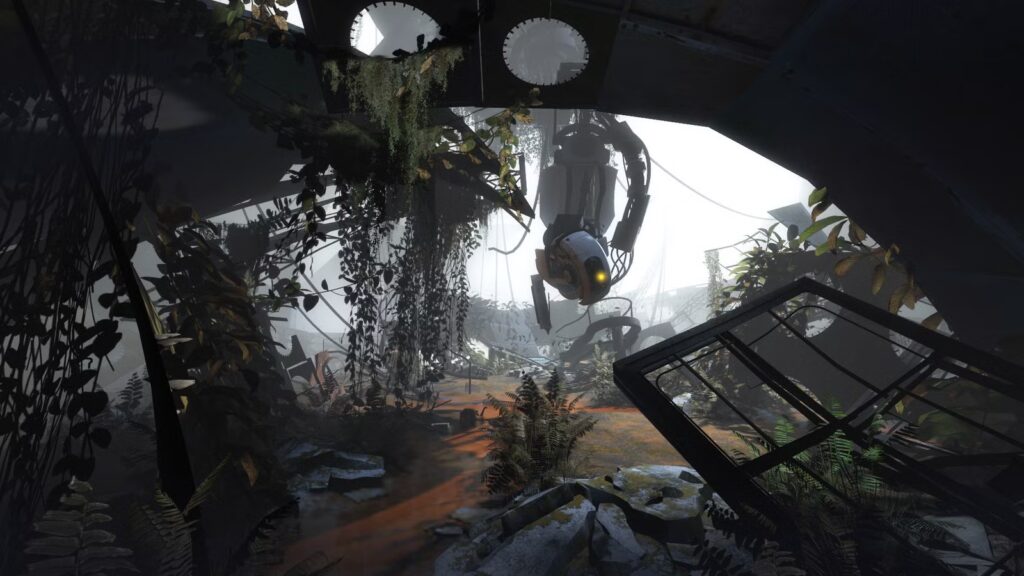
Real-time Remarks: GLaDOS making unique jokes about a player’s specific portal placement.
World-Building: Using AI for background radio chatter or minor NPC gossip to make environments more responsive.
Frequently Asked Questions (FAQs)
- Who is Erik Wolpaw and what are his notable writing credits?
Erik Wolpaw is a veteran writer at Valve. He co-wrote Half-Life 2: Episode One and Episode Two, as well as the original Portal, Left 4 Dead, and Left 4 Dead 2. After leaving Valve in 2017, he co-wrote Psychonauts 2 at Double Fine, and he later returned to Valve as a contractor. Wolpaw’s background makes him a key creative voice behind many of Valve’s story-driven games. - What did Erik Wolpaw reveal about AI use at Valve?
Wolpaw said that he and a few colleagues have been “poking around” with AI to generate text, audio, and other content in small, internal experiments. He emphasized that this is very informal – “just some people” exploring the tools, not an official company push. Crucially, he noted it’s not tied to any announced project; in fact, he joked it’s certainly not being used on anything like a secret Half-Life 3 or Portal 3. In summary, Wolpaw announced Valve developers are experimenting with AI assistive tools, but only on a trial basis and not to replace human creators. - Are Valve games currently using generative AI, like for Half-Life 3?
No. Wolpaw explicitly stated that Valve is not currently making Portal 3 or Half-Life 3 with generative AI. The studio has not announced any use of AI in those games. His comments suggest that the AI tinkering has not been integrated into actual production pipelines for these titles. So players should not expect a completed new Valve story game made by AI – at least not in the immediate future. - How could AI tools improve NPC dialogue and character reactions?
AI tools like language models can generate dialogue on-the-fly based on context. For NPCs, this means instead of choosing from fixed lines, the game could ask an AI model to create a response tailored to what’s happening. For example, if a player does something unexpected, an AI-powered NPC could spontaneously comment on it. Wolpaw highlighted that AI is good at reacting to “whatever chaos a player is causing”, essentially improvising reactions. Industry demos support this: startups have built systems where players can talk to NPCs generated by AI, and major games have trialed chatbots. While still early, AI tools show promise in making NPC conversations more dynamic and context-sensitive. - How could AI tools improve NPC dialogue and character reactions?
AI tools like language models can generate dialogue on-the-fly based on context. For NPCs, this means instead of choosing from fixed lines, the game could ask an AI model to create a response tailored to what’s happening. For example, if a player does something unexpected, an AI-powered NPC could spontaneously comment on it. Wolpaw highlighted that AI is good at reacting to “whatever chaos a player is causing”, essentially improvising reactions. Industry demos support this: startups have built systems where players can talk to NPCs generated by AI, and major games have trialed chatbots. While still early, AI tools show promise in making NPC conversations more dynamic and context-sensitive. - Can ChatGPT-like models be used directly for game scripting?
Yes, game developers are starting to integrate ChatGPT and similar models into their tools. For example, both Unity and Unreal Engine support ChatGPT plugins, allowing designers to send prompts and get instant text or even speech responses. Models like GPT-4 and the newer GPT-4o (released 2024) are very capable – GPT-4o can handle text, audio, images, and more in a single prompt. In practice, a team could use ChatGPT to draft dialogue lines, outline story arcs, or even debug narrative logic. One case showed ChatGPT turning a game feature description into well-crafted user stories with almost no tweaking. However, developers still refine or rewrite the results heavily. So while ChatGPT can boost productivity, it is used under close human supervision in game development. - Why does Wolpaw believe AI isn’t very creative?
Wolpaw bluntly said he’s “not worried about AI taking over creative writing because it is pretty bad at it”. AI models are trained by analyzing existing text and then predicting likely next words. This process tends to produce clichés rather than genuine innovation. A developer who tested ChatGPT for naming characters found its suggestions were unsurprising and unoriginal. Wolpaw pointed out that AI “was never created with originality in mind,” echoing this idea. In summary, he argues that AI today simply rehashes common patterns from its training data, so it falls short on novelty and humor. True creative vision – especially for narrative games like Half-Life or Portal – still requires human writers, because AI models fundamentally lack intentionality and genuine creativity. - What’s the difference between traditional dialogue systems and AI-generated narrative?
Traditional games use procedural or scripted dialogue systems, where writers create sets of text fragments and rules for how they combine. Every line is hand-authored. This ensures control but limits variety. Generative AI systems, by contrast, can compose new text on demand. Instead of selecting a line from a tree, the game asks an AI model to write something new. This can enable more natural and varied responses. The trade-off is that AI dialogue can be unpredictable and can “hallucinate” or break character if unchecked. In practice, many envision hybrids: use AI to draft numerous dialogue options, then filter or refine them. Ultimately, AI-generated narrative can offer far richer interactivity, but maintaining coherence and style still needs careful design. - What is Valve’s public stance or policy on AI in games?
Valve’s public stance is fairly cautious and pragmatic. On the development side, Valve has updated its Steam rules to ask developers to disclose when they use AI-generated assets in games or marketing. This shows Valve wants transparency but isn’t banning AI content outright. Valve co-founder Gabe Newell has publicly embraced AI, calling it a “cheat code” for productivity and urging people to learn to use AI. However, Valve employees also emphasize responsible use. Wolpaw himself stressed that AI should not replace people and only be used to improve players’ experience. Overall, Valve seems to say: use AI tools where helpful, but carefully, and let players know when content is AI-assisted. - What concerns are there about AI’s training data, copyright, and voice acting in games?
There are significant concerns regarding training data and copyright, as many AI models learn from copyrighted books, scripts, and art without permission. This raises legal questions, such as lawsuits claiming models infringe on copyrighted text. Game studios worry that using AI output might break copyright laws if the model was trained on another game’s script or a novel. The industry is watching ongoing lawsuits and discussions, though nothing is definitive yet regarding whether this training constitutes fair use.

Conclusion
Valve’s Erik Wolpaw has offered a candid glimpse into how a top game studio is starting to experiment with generative AI. He makes clear that AI is currently a tool being tested, not a creative decision-maker. Only a few developers at Valve are “messing around” with AI for things like dialogue or audio, and the core storytelling – especially in major franchises like Half-Life and Portal – remains in human hands. That said, Wolpaw and others see valuable uses for AI: letting characters respond on the fly to player actions, speeding up routine writing tasks, and freeing writers to focus on big ideas.
As we’ve outlined, the broader game industry is moving in that direction. AI-assisted pipelines (like Ubisoft’s Ghostwriter and automated QA tools) are already in use, and ChatGPT integration is becoming commonplace. Players can expect future games to leverage AI in subtler ways: smarter NPC banter, more reactive worlds, faster localization updates, etc. At the same time, all stakeholders emphasize oversight. Wolpaw reminds us that “we’re not using AI to replace real creative writing” – a view likely shared by many.
In the years ahead, AI will likely become a standard part of game development, making some jobs more efficient, but it will augment rather than replace the human creativity that defines games like Portal and Half-Life. Players should watch for incremental improvements (smarter side quests, chatty NPCs, fewer language bugs) while understanding that the soul of these stories will still be crafted by people, not by code.
Sources and Citations
- Kotaku: Erik Wolpaw discusses AI generated NPC experimentation
https://kotaku.com/portal-writer-erik-wolpaw-ai-npc-experiment-interview-1852245304 - Erik Wolpaw background and career information
https://en.wikipedia.org/wiki/Erik_Wolpaw - Ubisoft La Forge research and AI development initiatives
https://www.ubisoft.com/en-us/company/about-us/innovation/la-forge - Ubisoft R&D notes on generative AI and game development tools
https://www.ubisoft.com/en-us/company/careers/our-technology - Business Insider coverage of AI in video game development
https://www.businessinsider.com/artificial-intelligence-video-games - GameSpot reporting on AI technology in gaming
https://www.gamespot.com/articles/tag/artificial-intelligence/ - SEELE AI narrative systems and interactive storytelling research
https://seele.dev/ - Gridly developer blog on AI localization and narrative workflows
https://www.gridly.com/blog/ - Game Developer coverage of generative AI in games
https://www.gamedeveloper.com/business - GamesIndustry.biz analysis of AI adoption in game development
https://www.gamesindustry.biz/topics/artificial-intelligence - PC Gamer reporting on AI tools and narrative generation in games
https://www.pcgamer.com/tag/artificial-intelligence/ - IGN coverage of AI technology and future game development trends
https://www.ign.com/articles/tag/artificial-intelligence
Recommended
- Works Out Schedule So He Can Reprise His Role as Alfred for The Batman Part II and Make Lord of the Rings: The Hunt for Gollum
- The Eternal Life of Goldman Official Game Pass Trailer: Everything Revealed at Xbox Partner Preview Showcase 2026
- How to Unlock Every Witch in Crimson Desert
- Studio Mir Animation Success Explained
- Samsung’s 2026 Micro RGB TVs: Release Date, Sizes, Pricing, and How Micro RGB Compares to OLED
- Summer Game Fest Has Officially Replaced E3: Why June Became the Busiest Month in Video Game News
- Saving Render Settings for Multiple Cameras in Blender with The View Keeper
- Genshin Impact: “Lohen: a Masterpiece” Character Trailer Breakdown, Release Details, and Hidden Lore Explained
- Best New Anime to Watch Right Now (2026): Trending Series, Hidden Gems, and Must-Watch Releases
- How a Small Team Created Net.Attack(): Inside the Coding Roguelite Revolution



































































































