







In This Article (9 sections)
The Witcher 3 New DLC Timeline and Post-Story Setting Explained
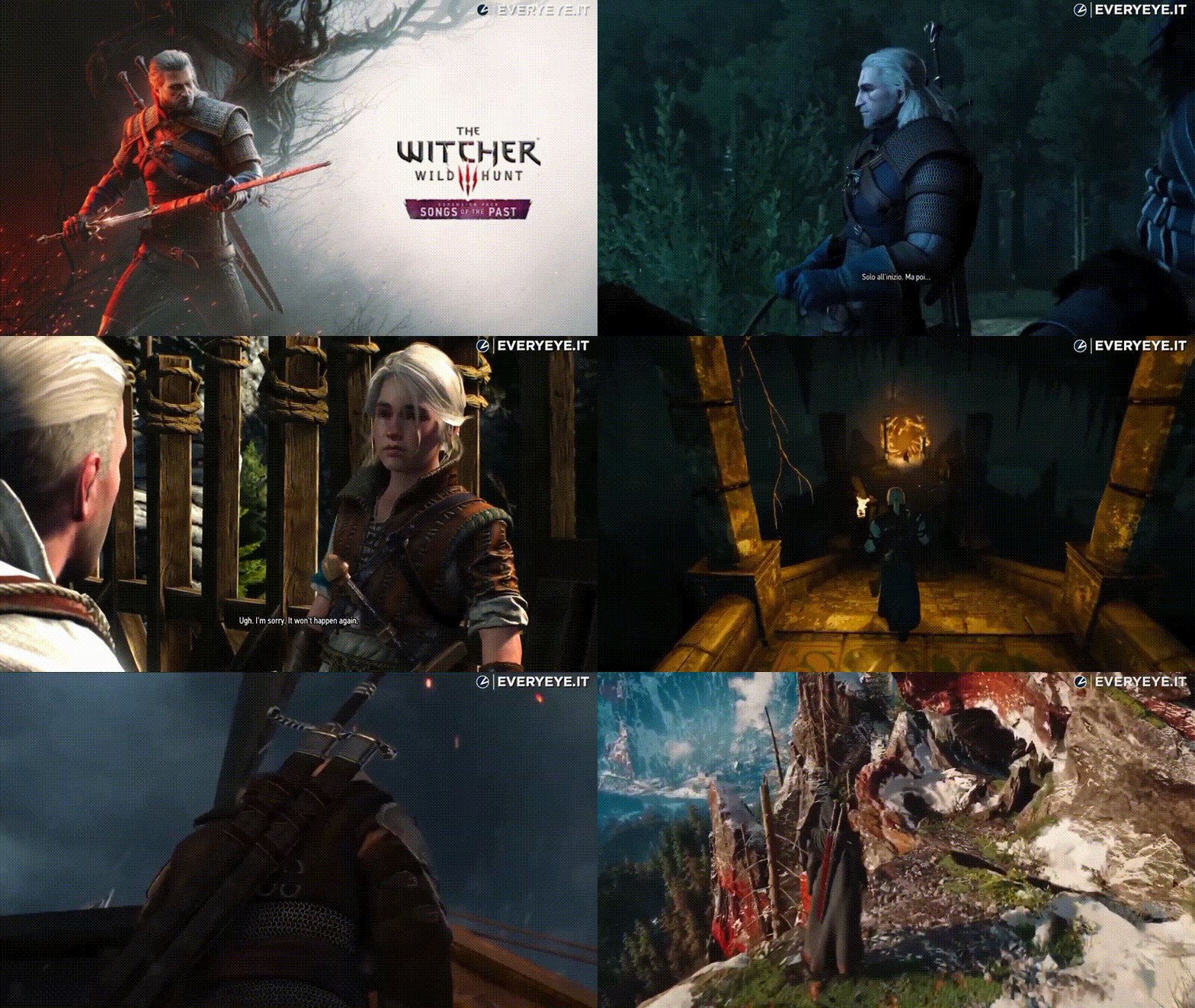
The question of when a new The Witcher 3 DLC would take place in the timeline has become one of the most discussed topics among fans, especially following renewed interest in The Witcher universe. However, based on currently available official information from CD Projekt Red, there is no confirmed standalone expansion titled Songs of the Past.
What is known is that The Witcher 3: Wild Hunt expansions, Hearts of Stone and Blood and Wine, were structured around very specific narrative placements within Geralt of Rivia’s journey. Historically, CD Projekt Red has preferred to anchor expansions in either a mid-story gap, as seen with Hearts of Stone, or a post-ending epilogue region, as seen with Blood and Wine.
If a new DLC were to follow this pattern, its timeline placement would likely fall into one of three categories:
- During the main Wild Hunt storyline as a parallel narrative
- Immediately after the bad or neutral endings
- After the Toussaint epilogue, functioning as a soft continuation
The rumored title Songs of the Past has been widely interpreted by fans as a potential narrative expansion set after the main storyline of The Witcher 3: Wild Hunt. If it were to exist within CD Projekt Red’s established narrative structure, a post-main-story setting would be the most logical choice. This would allow Geralt’s fate to remain flexible based on player ending choices, explore the consequences of the Wild Hunt’s defeat, and create a more reflective tone centered on past decisions. The title Songs of the Past also metaphorically suggests themes of memory, regret, or legacy.
A post-story DLC would also align with the approach taken by Blood and Wine, which effectively served as an epilogue chapter to Geralt’s journey. Still, the lack of official confirmation is what makes the timeline discussion complicated, especially when speculative content such as Songs of the Past is introduced into community discourse.

Why The Witcher 3 DLC Timeline Is Complicated and How It Could Connect to The Witcher 4
The Witcher 3 DLC timeline is complicated because of one core reason: branching endings. Unlike linear narrative games, The Witcher 3 features multiple possible outcomes, including Geralt retiring in Toussaint, Geralt continuing as a wandering witcher, Ciri becoming a witcher or empress, and multiple character fates across the Northern Kingdoms. Because of this, any DLC must either avoid referencing a fixed ending, take place before the ending divergence, or assume a “soft canon” conclusion.
This narrative flexibility creates a layered timeline structure where expansions must remain deliberately ambiguous to avoid contradicting player choices. With The Witcher 4 in development, timeline positioning becomes even more complex. Any new DLC connected to The Witcher 3 would need to carefully avoid disrupting the transition between the two games.
If a DLC existed in this transitional space, it would likely serve as a narrative bridge that explores the aftermath of the Wild Hunt, establishes political shifts across the Continent, and seeds thematic or character foundations for The Witcher 4. This would make the DLC less of a standalone story and more of a connective tissue between different eras of the franchise.
The question of whether Geralt or Ciri would be the main character is one of the most debated aspects of any potential Witcher 3 expansion. Historically, Geralt has been the default protagonist of The Witcher 3 expansions, while Ciri’s role has been significant but less frequently used in playable sections.
If a new DLC were released, Geralt would almost certainly remain the main playable character due to the established combat systems built around his abilities, voice acting continuity with Doug Cockle, and narrative consistency across the expansions. However, a Ciri-focused DLC is not impossible, especially if CD Projekt Red intended to expand her role ahead of future entries.

Songs of the Past Timeline Placement and The Witcher 3 Expansion Continuity
Based on current information, Songs of the Past is not an officially confirmed title. However, if analyzed as a conceptual expansion, it would most logically function as a sequel DLC if set after Wild Hunt, or as a reflective epilogue expansion exploring the consequences of past choices.
A prequel structure would be highly unlikely because The Witcher 3 already builds heavily on established lore, prequels are more likely to be handled in separate spin-off titles rather than DLC, and Geralt’s narrative arc is already well-established prior to Wild Hunt. Because of this, the most consistent interpretation is that Songs of the Past would be post-game content rather than prequel material.
The Witcher universe timeline spans multiple eras, but The Witcher 3 specifically takes place in the early 13th century within the franchise’s fictional chronology. Any new expansion would likely remain within the immediate aftermath of the Wild Hunt war, the political restructuring of the Northern Kingdoms, and the consequences of post-Conjunction magical instability. This time period would allow developers to expand the world-building without altering established historical canon.
CD Projekt Red uses a structured approach to DLC continuity. The expansions are generally self-contained narratives, avoid major changes to the base game ending, and introduce side regions or isolated story arcs. For example, Hearts of Stone is largely independent of the main ending, while Blood and Wine acts as a post-game epilogue without changing core outcomes. This design philosophy ensures timeline consistency while still allowing narrative freedom.
How a New Witcher 3 DLC Could Preserve the Main Ending and Bridge Into The Witcher 4
Traditionally, The Witcher 3 DLC does not alter the main game endings. Instead, expansions reference past events without rewriting them, respect all possible ending variations, and avoid canonizing a single outcome. Therefore, if a new DLC were released, it would be highly unlikely to retcon Ciri’s fate, change Geralt’s retirement or survival outcomes, or alter the result of the Wild Hunt storyline. The expansions are designed to complement the main narrative, not overwrite it.
Any modern Witcher 3 expansion would inevitably be analyzed in relation to The Witcher 4. Possible connections could include establishing political instability in the North, introducing factions relevant to the next game, and expanding on the magical consequences after the Conjunction events. This would create a “soft bridge” narrative structure, where DLC content subtly prepares players for future installments without explicitly referencing them.
The term “bridge expansion” is often used in gaming to describe content that connects two major narrative points. If CD Projekt Red were to use such terminology, it would imply a transition between The Witcher 3 and The Witcher 4, a focus on thematic continuity rather than direct sequel storytelling, and an expansion of lore rather than a conclusion of major character arcs. A bridge expansion typically avoids dramatic, world-altering events and instead focuses on emotional, political, or character-driven continuity.

The Witcher 3 Timeline, Possible DLC Locations, and Songs of the Past Canon Explained
The Witcher 3 timeline is structured around three main phases: the pre-Wild Hunt setup, which includes earlier events involving Ciri’s history; the main Wild Hunt storyline; and the post-Wild Hunt aftermath. DLC content generally fits into the second or third phase. A hypothetical new expansion would most likely occupy the third phase, expanding the post-war landscape and exploring unresolved narrative threads.
Returning locations in Witcher 3 DLC are a strong possibility based on the game’s design history. Potential revisited regions include White Orchard for nostalgic or tutorial-area callbacks, Velen for unresolved political and war consequences, and Toussaint for epilogue continuation or expanded aristocratic intrigue. However, CD Projekt Red also tends to introduce entirely new regions to keep expansions fresh, so a hybrid approach would be the most likely option.
Since Songs of the Past is not officially confirmed, its canonicity remains undefined. In general, Witcher DLC content is considered canon when it is developed or approved by CD Projekt Red, remains consistent with established lore, and does not contradict multiple ending paths. If Songs of the Past were ever officially released, it would almost certainly be treated as canon unless explicitly labeled otherwise.

Frequently Asked Questions (FAQs)
- Is The Witcher 3 getting a new DLC?
No official standalone DLC has been confirmed beyond existing expansions. - What is Songs of the Past in Witcher 3?
It is a rumored or speculative title, not officially confirmed. - Will the DLC take place after Blood and Wine?
If it exists, it would most likely be post-Blood and Wine. - Is Geralt still the main character in new Witcher content?
Yes, historically Geralt remains central to Witcher 3 expansions. - Does Witcher 3 DLC affect Witcher 4?
Not directly, but it may provide narrative bridges. - Is Ciri playable in expansions?
Not in official expansions so far, but it remains a possibility. - Are Witcher DLC stories canon?
Yes, CD Projekt Red expansions are generally canon. - Can DLC change Witcher 3 endings?
No, endings remain unaffected. - What is the timeline of Witcher 3?
It occurs after the Conjunction of the Spheres in the early 13th century. - Will new DLC revisit old regions?
It is possible, especially Velen and Toussaint.

Conclusion
The timeline of any potential new Witcher 3 DLC, including the widely speculated Songs of the Past, remains complex due to branching narrative endings, established expansion structure, and the transitional phase between Witcher 3 and Witcher 4. While no official confirmation exists, analysis of CD Projekt Red’s design philosophy suggests that any future expansion would likely function as a post-main story or bridge narrative, carefully preserving canon flexibility while expanding the world’s emotional and political depth.
Sources and Citations
- CD Projekt Red Official Website
https://www.cdprojektred.com - The Witcher Official Franchise Portal
https://thewitcher.com - The Witcher 3: Wild Hunt Game Information
https://thewitcher.com/en/witcher3
Recommended
- Pokémon XD: Gale of Darkness Now Available on Nintendo Switch 2 – How to Play, Features, and Everything You Need to Know
- Your Guide to Making 3D Models for 3D Printing
- Where to Find Redjade Ginseng in Arknights: Endfield (Exact Farming Spots in Wuling)
- Crimson Desert: Best Builds Guide (2026), Top Weapon Setups, Abyss Gear Combos, and Boss-Killer Loadouts
- Love, Death and Robots New Season: Release Date, Episode List, Studios, and Everything We Know So Far
- Discover the Allure of Chrome Heart Braids
- Blender Redistribute Curve Points Geometry Nodes Preset: A Comprehensive Guide
- How to Create Cinematic Motion Capture with Move One and Metahuman Animator on a Budget (No Mocap Suit Needed)
- Lucasfilm Baked Sam Witwer’s Screams Into Darth Maul’s Lightsaber in Shadow Lord TV Series – Explained
- How to Create Your Alter Ego with Metahuman for the Metaverse: A Guide to Building Digital Identity in Unreal Engine 5



































































































