








In This Article (13 sections)
Introduction
3D hair assets, pre-made models or grooms for digital characters, are vital in modern content creation, enhancing visual storytelling, games, virtual influencers, and digital fashion. Hair conveys identity and expression, but crafting it from scratch is complex. Tools like PixelHair, Unreal Engine, and Blender, paired with best practices, simplify workflows, ensuring high-quality hair across interactive media, customization, and hyper-realistic digital twins. This guide explores their applications, offering insights for beginners and professionals to elevate projects and engage audiences efficiently.
3D Hair Assets for Visual Storytellers
Visual storytellers, including animators and game designers, use 3D hair to convey character personality and narrative without dialogue. Hairstyles reflect traits like discipline or turmoil, enhancing storytelling through visual cues. Pre-made assets like PixelHair allow artists to focus on narrative, applying realistic grooms in Blender or Unreal for quick iteration. Best practices include maintaining style consistency, aligning hair with mood, and using changes to mark narrative shifts. Even 2D artists use 3D hair for accurate reference, improving consistency in comics or concept art, enriching character identity.
3D Hair Assets for Interactive Media
Interactive media, like games and VR/AR, require 3D hair to balance fidelity and performance, as players view hair dynamically. Hair cards, textured polygons, historically dominated for efficiency, but Unreal Engine 5’s strand-based hair now enables realistic physics in real-time. Best practices include:
- Performance Optimization: Implement LODs, swapping detailed hair for simpler versions at distance, and limit physics to essential strands or bone rigs.
- Technique Selection: Use hair cards for mobile/VR or stylized art, strand hair for high-end realism in close-ups.
- Physics Testing: Ensure hair avoids clipping, tuning collision and stiffness in-engine for natural movement.
- VR/Camera Consideration: Simplify hair for VR framerates, avoiding excessive physics or view obstruction in first-person perspectives.
These practices, supported by Unreal’s grooming tools or plugins like Nvidia HairWorks, ensure immersive, performance-friendly hair, enhancing player engagement.
3D Hair Assets for Multimedia Companies
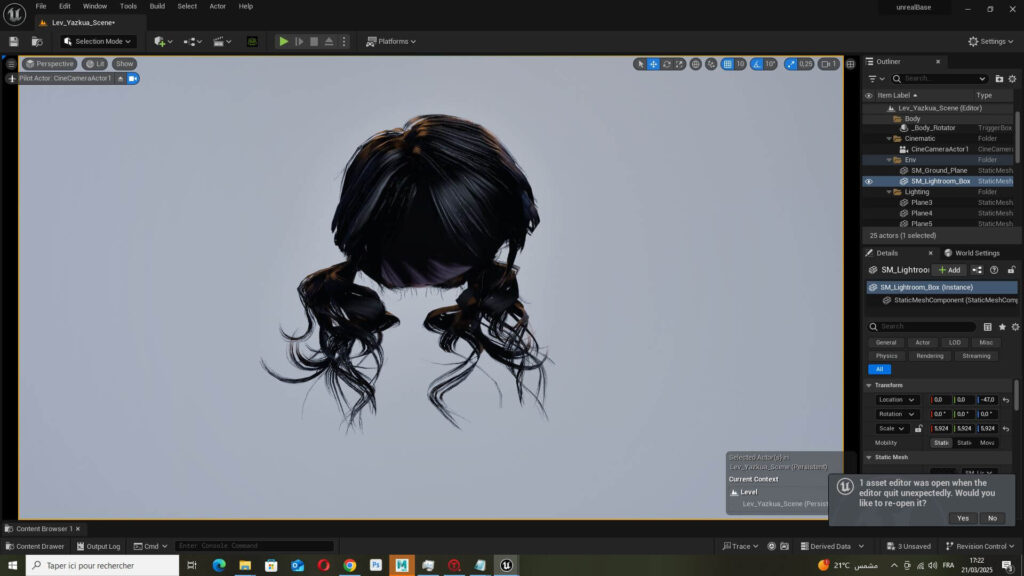
Multimedia companies producing games, films, and AR/VR rely on 3D hair assets for consistency and efficiency across platforms. Reusing assets like PixelHair for a mascot in commercials and web demos maintains brand recognition while saving time. Best practices include:
- Reusable Library: Curate a diverse hairstyle catalog (short, long, curly, braids) for flexible project use.
- License Compliance: Verify commercial licenses for assets from BlenderMarket or Unreal Marketplace, ensuring legal use.
- Cross-Platform Optimization: Create high-detail hair for offline renders and simplified versions for real-time, matching visual style.
- Quick Customization: Enable rapid hairstyle swaps in Blender or Maya to meet client feedback, enhancing creative flexibility.
These strategies streamline production, allowing focus on creative vision while delivering consistent, high-quality results across media.
3D Hair Assets for Character Customization
Character customization in RPGs and virtual worlds thrives on 3D hair assets, as players demand hairstyles reflecting personal identity. Diverse options increase engagement, while limited choices frustrate users. Best practices include:
- Style Variety: Offer diverse lengths, textures (straight, coily), and cultural styles, inspired by initiatives like “Code My Crown.”
- Color Customization: Provide color pickers and effects like highlights, with options for length adjustments.
- Technical Integration: Design modular hair for head rigs, ensuring fit across head shapes and proper scalp coverage.
- Performance Management: Use high-detail hair in customization previews, swapping to simpler versions in-game, with real-time physics previews.
Roblox’s 139 million hairstyle purchases in 2023 highlight hair’s appeal, fostering longer playtimes and community sharing, making inclusive customization a key feature.
3D Hair Assets for Virtual Influencers
Virtual influencers, like Lil Miquela, rely on 3D hair for recognizable, trend-setting identities in high-resolution social media content. Hair must look photoreal in stills and motion. Best practices include:
- Persona-Driven Design: Choose hairstyles matching the influencer’s personality, like Rae’s rose-purple waves for an adventurous vibe.
- High Fidelity: Use detailed strand assets with realistic textures and physically-based shading for lifelike light interaction.
- Adaptability: Maintain modular hair for restyling or recoloring, supporting narrative or campaign-driven look changes.
- Consistent Pipeline: Standardize tools like Unreal’s MetaHuman for uniform quality, ensuring hair aligns with the character’s identity.
High-quality hair assets ensure virtual influencers captivate audiences, blending digital and real-world fashion trends, as seen in Rae’s stylist collaboration.

3D Hair Assets for Digital Twins
Digital twins, hyper-accurate 3D representations of real people, are used in virtual events, training simulations, metaverse avatars, and telepresence. Hair is critical for recognizability, as inaccurate hair undermines the avatar’s authenticity. However, capturing hair via 3D scanning or photogrammetry is challenging due to its fine, translucent nature, often requiring manual grooming to achieve photorealism.
Best Practices for 3D Hair Assets in Digital Twins:
- Reference Photography: Collect high-resolution photos from multiple angles (front, sides, back, top) to capture hairline, parting, volume, and unique features like cowlicks. Video footage of hair movement informs physics settings for realistic dynamics.
- Hair Creation Method: Use strand-based grooms in Unreal, Blender, or Maya XGen for detailed replication, adjusting guide hairs to match references. For simpler styles (e.g., buzz cuts), hair cards or textured geometry suffice. Hybrid approaches blend strands for volume with cards for flyaways to optimize performance.
- Color and Shader Matching: Replicate natural hair variations (highlights, gray roots) using textures or mixed strand colors. Apply physically-based shaders with transmission and specular highlights, tuned for hair type (shiny for straight, diffuse for coily), as seen in Reallusion’s Digital Human Shader.
- Real-Time Optimization: For real-time use (e.g., VR conferences), simplify strand counts, implement LODs, or switch to hair cards at distance, maintaining visual fidelity. Reallusion’s Digital Kevin optimized hair for real-time engines with strategic strand simulation.
- Maintenance and Updates: Plan for hairstyle changes by modifying existing assets (e.g., shortening strands) or creating variants (updo vs. loose). Modular designs allow switching styles to reflect real-world updates, enhancing authenticity.
These practices ensure digital twins’ hair appears natural, supporting seamless integration into virtual environments without distracting from the experience.
3D Hair Assets for Digital Fashion
Digital fashion, encompassing virtual clothing for avatars, runway shows, and NFT collectibles, relies on 3D hair to complete stylized looks. Hair complements outfits, enhancing self-expression in platforms like Roblox or VRChat, where users experiment with bold styles. Roblox’s 2023 report noted 139 million hairstyle purchases, underscoring hair’s role in digital identity.
Best Practices for 3D Hair Assets in Digital Fashion:
- Trend-Driven Design: Create or select hair assets that push creative boundaries, like gravity-defying or liquid-like styles for virtual shows. Prototype bold looks impossible in real life to generate buzz, aligning with digital fashion’s experimental ethos.
- Outfit Coordination: Match hair to clothing aesthetics, sleek styles for minimalist designs, vibrant or shaped hair for fantastical outfits. Include accessories (hats, bands) to unify the look, collaborating with character artists for cohesive styling.
- Platform Optimization: Adhere to platform limits (e.g., Roblox’s tri-count for Layered Clothing). Use hair cards or normal-mapped meshes for efficiency, ensuring compatibility across mobile or metaverse environments like Decentraland.
- Consumer Interaction: Enable fast-loading hair assets in virtual fitting rooms, using compressed textures and LODs for quick swaps. Support auto-fitting for diverse avatar heads, enhancing user experience in AR or customization interfaces.
- Brand Collaboration: Ensure accuracy for branded hair assets (e.g., AR filters reflecting real haircare products). Moodboard and test hairstyles under virtual lighting to match show themes, adjusting shaders to avoid over-shine.
These practices make hair a pivotal element in digital fashion, driving user engagement and aligning with virtual style trends.
3D Hair Assets for Virtual Reality Fashion
VR fashion, including virtual shows and interactive boutiques, demands immersive, high-performance 3D hair assets. Users inspect hair closely in VR, requiring visual quality and stable framerates (90+ FPS) to prevent motion sickness.
Best Practices for 3D Hair Assets in VR Fashion:
- Rigorous Optimization: Use lightweight hair cards or impostor strands, transitioning to detailed meshes only for close-ups. Implement LODs to reduce polygon counts at distance, critical for standalone headsets like Meta Quest.
- Stable Physics: Pre-bake hair motion for stability or use minimal physics (e.g., bone-based rigs) to avoid stuttering. Test on target VR devices to ensure smooth performance under dual-eye rendering.
- Interactive Styling: Design hair with deformable rigs for VR apps allowing users to trim or style via controllers, supporting novel experiences like virtual hair salons.
- Context-Aware Design: Tailor hair to VR environments (e.g., floating hair in zero-gravity shows). Use static poses for thematic effects rather than complex physics to maintain performance.
- User Comfort: Avoid obstructive hairstyles for user avatars (e.g., bangs blocking views). Use thicker strands to reduce visual noise in stereo rendering, ensuring eye comfort.
These practices enhance VR fashion’s immersion, delivering realistic hair that elevates virtual runways and styling experiences.

Frequently Asked Questions (FAQs)
- What are 3D hair assets?
Pre-made digital hair models or grooms, including polygonal meshes, particle systems, or hybrid setups, attachable to 3D characters. They include shaders for realism, saving time over manual creation. - How do I create a 3D hair asset from scratch?
Sculpt a scalp mesh, use particle systems (Blender, Maya XGen) or hair cards, apply realistic shaders, and rig for animation. Tools like Ornatrix or tutorials simplify the process. - What tools are used for 3D hair assets?
Blender (particle hair, Hair Tool), Maya (XGen), Unreal (Groom system), Unity (HDRP, plugins), ZBrush (FiberMesh), and marketplaces like PixelHair or TurboSquid. - Hair cards vs. strand-based hair in games?
Hair cards use textured polygons for performance, ideal for mobile/stylized games. Strand-based hair offers realistic physics for high-end platforms, with hybrids balancing both. - How to optimize hair for games/VR?
Reduce polygons, use LODs, simplify shaders (alpha cutout), limit physics to bones, and test on target devices to avoid performance bottlenecks. - Should indie developers use premade hair assets?
Yes, premade assets like PixelHair save time. Customize for fit, reserving custom creation for unique styles to focus resources on core project elements. - How do hair assets handle different hair types?
Straight hair uses aligned strands, curly/coily hair needs dense clumps or cards, braids use textured cylinders. Shaders adjust for shine or diffuse looks per type. - Can I change a hair asset’s color or style?
Colors adjust via material tints or texture edits. Restyling involves editing curves or meshes, with minor tweaks easier than major reshaping. - How do hair assets enhance digital humans?
Realistic hair with natural irregularities and movement prevents uncanny valley effects, grounding avatars in metaverse or social VR settings for authentic identity. - Where to find quality hair assets?
Blender Market, TurboSquid, Unreal Marketplace, PixelHair, or Reallusion offer assets. Tutorials on ArtStation, YouTube, or Epic’s Unreal guides aid learning.

Conclusion
3D hair assets are integral to digital character creation, enhancing storytelling, branding, and self-expression across games, virtual influencers, digital twins, and fashion. Key takeaways include:
- Purpose-Driven Hair: Select hairstyles that reinforce narrative or identity, from heroic game characters to chic virtual models.
- Tool Efficiency: Use Blender, Unreal, or PixelHair to streamline workflows, customizing assets for project needs.
- Quality vs. Performance: Balance visual fidelity with optimization, using LODs and simplified physics for real-time applications.
- Inclusivity: Offer diverse hairstyles to reflect varied identities, boosting engagement and representation.
- Adaptability: Stay updated on evolving tech, like real-time strand rendering, to keep hair assets relevant.
3D hair assets blend artistry and technical precision, making digital characters relatable and immersive, from metaverse avatars to VR catwalks.
Sources and Citations
- Yelzkizi (2025). Understanding PixelHair: A comprehensive guide to realistic 3D hair assets. Explains what PixelHair is and how it provides ready-made 3D hair models for Blender, Unreal Engine, and MetaHuman, saving artists timeyelzkizi.orgyelzkizi.org.
- Epic Games (2021). A sneak peek at MetaHuman Creator: high-fidelity digital humans made easy. Announcement blog for MetaHuman, noting it includes around 30 hair styles with strand-based hair (and hair cards for lower-end)unrealengine.com.
- Electronic Arts, Frostbite Engine Team (2020). Frostbite Hair Rendering and Simulation Part 2. Discusses the use of hair cards vs. strand-based hair in games; hair cards are the standard but time-consuming for artists, while strand hair offers higher quality and easier authoring albeit with performance challengesea.comea.com.
- Epic Games (2021). Realistic hair and fur with Unreal Engine: get the white paper! Notes that producing realistic hair is a long-standing challenge because thousands of strands with unique properties must be replicated for it to look rightunrealengine.com.
- Tantz Aerine (2021). The Significance of Hairstyle The Duck Webcomics. An article on how hair in character design conveys personality and emotional state, e.g. hair as a form of self-expression and shorthand for who a character istheduckwebcomics.com.
- Roblox Corporation (2023). Digital Expression, Fashion & Beauty Trends Insights from Roblox’s report on avatar fashion. Reveals that in the first three quarters of 2023, Roblox users bought over 139 million avatar hairstyles (20% YOY increase), with 7.3 million users buying 5 or more different hairstylescorp.roblox.com.
- RTF Gender and Media Culture blog (2024). Beyond the screen: The reality behind game character customization and representation. Discusses lack of diversity in hair options historically; notes that hairstyle is a form of individuality and cultural identity, yet games often fail to provide diverse textured hair optionsrtfgenderandmediaculture.wordpress.com.
- Dove & Open Source Afro Hair Library (2023). Code My Crown initiative as reported by People of Color in Tech. A guide created to help developers include more diverse, true-to-life Black hairstyles in gamespeopleofcolorintech.com.
- Press Release (2021). Singapore’s top virtual influencer, Rae, is first virtual personality to be styled by hair maestro Kim Robinson. Describes virtual influencer Rae’s new hairstyle crafted by a celebrity stylist to match her persona, marking a milestone in virtual beauty collabshereisrae.comhereisrae.com.
- Reallusion (n.d.). 3D Scan Pipeline Character Creator (Digital Kevin). Showcases creating a digital double from scans; notes that using the Smart Hair system, they crafted a hairstyle closely resembling the actor, which is realistic, physics-ready, and high-performance for real-time usereallusion.com.
- Andra Ivănescu (2020). Flow It, Show It, Play It: Hair in Digital Games. (Conference paper, DiGRA.) Not directly cited above, but relevant for cultural representation of hair in games.
- TheFutureParty (2023). Digital fashion inspires Gen Z’s physical style. Reports that Gen Z users experiment with wild hair colors/styles on avatars and often value styling their avatar more than themselves, impacting confidence and trendsfutureparty.com.
- Jing Daily (2022). Digital avatars set to disrupt fashion. Is luxury ready? (Not explicitly cited above, but context for digital fashion and luxury avatars trends.)
Recommended
- Every Viltrumite In Invincible Explained: Complete Character Guide to the Viltrumite Empire
- Resident Evil Requiem Leads the US Monthly Charts for February 2026, With Launch Sales 60% Higher Than Resident Evil Village
- The Force Unleashed Star Sam Witwer Says He’d “Be Very Happy” to Shave His Head for Starkiller Return — Could Star Wars Finally Bring Him Back?
- Absolute Batman Drops Three of Its Biggest Twists Yet as the Dark Knight’s World Crumbles
- Emberville Pixel Fantasy Action RPG with Unique Combat Mechanics – Gameplay, Classes, and World Exploration Guide
- Sony May Be Drastically Shifting Its PC Strategy – Report: What It Means for PlayStation PC Ports
- 9 Months Away From GTA 6’s November Release, Retailer Cheekily Promises Free Copies to Anyone Who Gives Birth on Launch Day (Komplett, Norway)
- The Best Video Games of 2026 (So Far): 15 Top Games You Need to Play
- Call of Duty is Finally Ditching PS4 and Xbox One as Console Prices Keep Rising: What We Know About the Next COD Release and Platform Support
- Star Wars: Maul Shadow Lord Season 1, Episodes 1-8 Review: Disney+’s Darkest Animated Star Wars Story Yet



































































































