






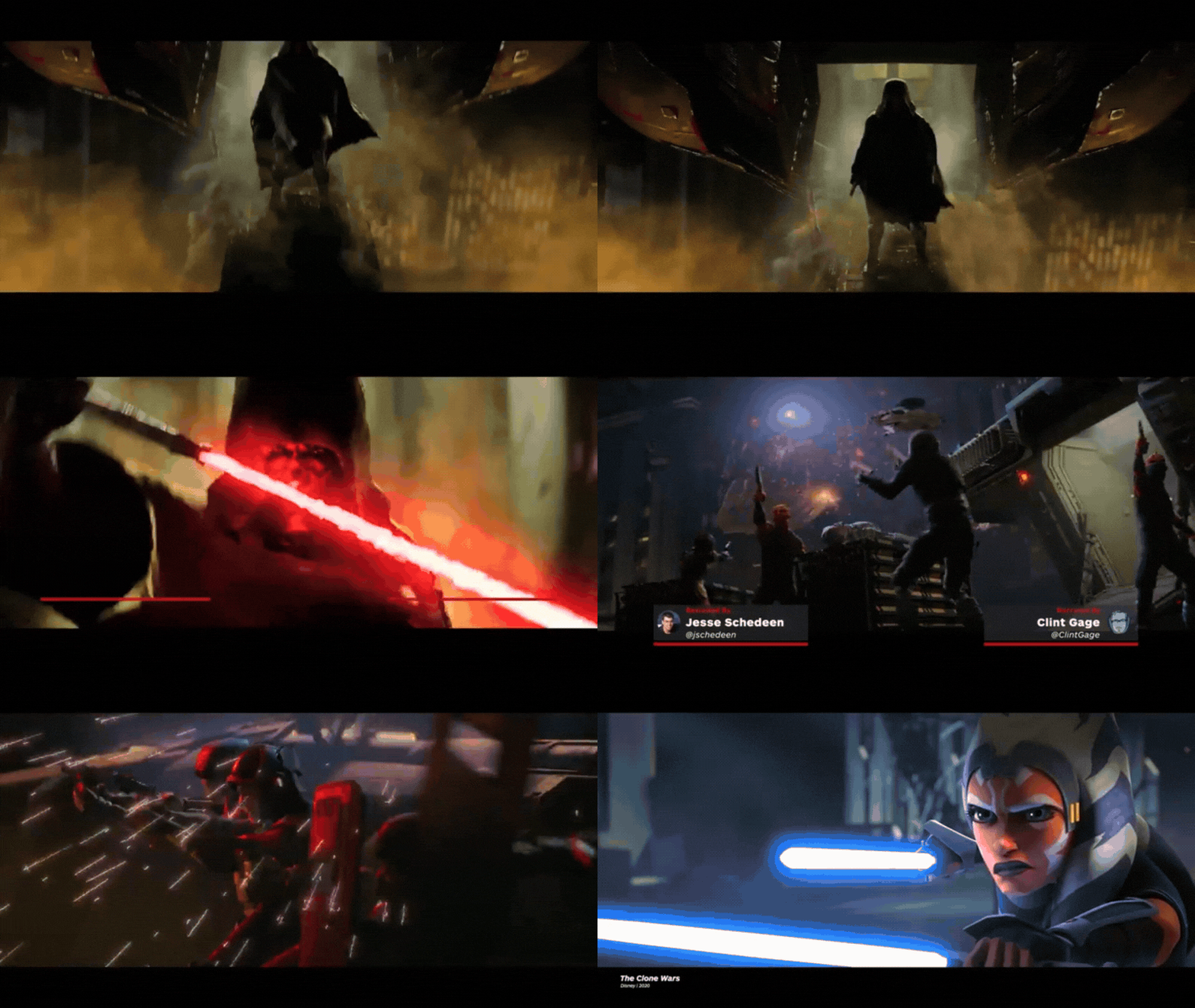
Star Wars: Maul – Shadow Lord is a new animated series now streaming on Disney+, produced by Lucasfilm Animation and created by Dave Filoni. The series launched with a two-episode premiere on April 6, 2026, with a 10-episode season rolling out in two-episode drops through May 4, 2026.
Because only the first two chapters are publicly available as of April 8, 2026, most “Episodes 1–8” discussion comes from press screeners. The Ringer reports that eight episodes were made available to press ahead of release, with the final two episodes scheduled for Star Wars Day (May 4).
Star Wars: Maul Shadow Lord Season 1 Episodes 1-8 Review
Across early reviews and official materials, Star Wars: Maul – Shadow Lord positions itself as a pulpy, noir-leaning underworld story set in the “Reign of the Empire” era, centred on Darth Maul rebuilding a criminal foothold on the new planet Janix while the Empire’s shadow creeps closer. The creative team has explicitly framed the series as a revenge narrative at its core head writer Matt Michnovetz reduces the entry-point premise to: a wronged man who wants payback designed to be accessible even without deep Star Wars homework.
The critical through-line is that the show looks and feels different from prior Lucasfilm Animation entries in both tone and presentation: reviewers repeatedly emphasise painterly textures, heavier shadows, and a more adult-leaning crime-thriller mood. That “dark side” positioning is not subtle in mainstream criticism; Space.com explicitly describes it as Lucasfilm’s “darkest and most focused” animated Star Wars show yet, while other reviewers call out its scarcity of kid-targeted humour.
Is Star Wars: Maul Shadow Lord Worth Watching on Disney+
The early case for Star Wars: Maul – Shadow Lord as must-watch Star Wars animation rests on three pillars: a striking stylistic leap, a grounded single-planet setting, and unusually sustained attention to moral compromise in the early Empire. It is also being marketed (and written) as a comparatively low-barrier entry point: StarWars.com’s behind-the-scenes coverage explicitly says prior knowledge is not required to understand the show’s basic setup and motive structure.
From a reception standpoint, review aggregation has been strong early. As of April 8, 2026, Rotten Tomatoes lists Season 1 at 100% Tomatometer (29 critic reviews) with a critics’ consensus praising its kinetic, vibrant, engaging animation and its character focus. Rotten Tomatoes’ own “first reviews” roundup highlights frequent critic praise for the animation leap and for giving Maul a spotlight that still keeps him recognisably villainous.
The most consistent reservations are less about craft than structure and pacing: some reviewers argue the series can be slow to fully ignite, with plot threads occasionally feeling siloed or the drama constrained by the audience’s knowledge of later canon endpoints.

Star Wars: Maul Shadow Lord Best Episodes So Far
In public release terms, “best so far” necessarily begins with the two-part premiere: “Chapter 1: The Dark Revenge” and “Chapter 2: Sinister Schemes,” released April 6, 2026. These episodes are widely treated as an extended opener that establishes Janix’s fragile social order, Maul’s operating style, and the show’s multi-thread structure (crime politics, local law enforcement, and Force-driven temptation).
Among critics who viewed episodes 1–8 via press screeners, the “standout” conversation clusters around where momentum visibly shifts. A review for The HoloFiles argues the narrative gains real momentum after Chapter 4, while also noting the series does not meaningfully get “inside Maul’s head” until around Chapter 7 a framing echoed elsewhere in the sense that the back half brings greater intensity and convergence. The official schedule places Chapters 7–8 (“Call to Oblivion” and “The Creeping Fear”) on April 27, 2026, which is also when multiple critics anticipate the season’s “Empire pressure” elements cresting before the finale pair.
Star Wars: Maul Shadow Lord Season 1 Strengths and Weaknesses
The season’s most consistently cited strength is its visual identity described as a “grungier,” painterly evolution of Lucasfilm Animation’s established look, with noir-inspired lighting and tactile textures that match a crime-thriller sensibility. StarWars.com’s own production coverage emphasises that Janix was designed specifically to support an “intimate” story and its psychological undertones, with deliberate craft choices used to distinguish it from established Star Wars cityscapes.
A second strength is the single-planet focus and what it enables: Janix is explicitly positioned as a semi-autonomous world beyond Imperial attention, with democracy and local law enforcement trying to sustain a tenuous peace among syndicates an environment that naturally supports detective work, gang politics, and slow-building dread when the Empire inevitably pushes in. This makes it easier for the show to lean into grounded, procedural tension without losing the larger Star Wars stakes entirely.
The most common weaknesses are pacing and balance of focus. Multiple critics note that, despite Maul being the title character, portions of the season foreground other story threads, and that the larger season structure can feel messy or redundant even as the ride remains propulsive. There is also a recurring “prequel gravity” complaint: with major endpoints in later Star Wars stories already known, some reviewers argue the show must work harder to keep tension high and to make intermediate manoeuvres feel essential rather than merely connective tissue.
Star Wars: Maul Shadow Lord Ending Setup and Season 2 Expectations
Officially, the season is structured as 10 chapters with a finale pair (“Chapter 9: Strange Allies” and “Chapter 10: Finale”) scheduled for May 4, 2026. As noted by multiple critics, not everyone reviewing the season received the final two chapters ahead of time, meaning much “ending setup” commentary is necessarily about the convergence pressure visible by the end of Chapter 8 rather than the ending itself.
Season 2 expectations are clearer on the business side than the story side: StarWars.com confirms that Filoni has announced a second season “in the works” from Lucasfilm Animation. Critics have also openly speculated that some storylines may not be neatly wrapped in the Season 1 finale pair, functioning partly as a runway for future seasons an idea reinforced by reviews that describe certain arcs as intentionally laid groundwork awaiting payoff.
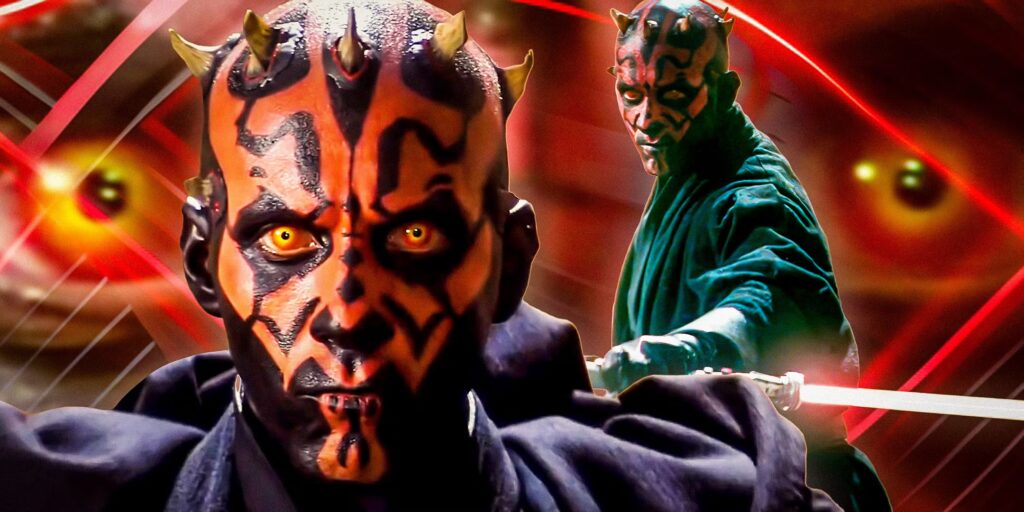
Star Wars: Maul Shadow Lord Timeline Explained
Star Wars: Maul Shadow Lord is explicitly placed after Star Wars: The Clone Wars and Star Wars: Episode III – Revenge of the Sith, and years before Star Wars Rebels. StarWars.com categorises it within the “Reign of the Empire” era, i.e., the immediate aftermath of the Republic’s collapse when Jedi survivors retreat into hiding and the Empire consolidates control.
Several reviewers describe the series as occurring about a year after Order 66, with “one year after the Clone Wars” phrasing appearing in critic coverage as shorthand for the “early days of the Empire” setting. This aligns with how Star Wars’ official Databank summarises the period: Order 66 is treated as the turning point where the Republic’s clone army turns on the Jedi, enabling the Empire’s rise and forcing Jedi survivors into the shadows.
Where Maul Shadow Lord Fits Between The Clone Wars and Rebels
The broad canon placement is straightforward even without pinning down a precise BBY year. StarWars.com describes Star Wars: The Clone Wars as set between Star Wars: Episode II Attack of the Clones and Star Wars: Episode III Revenge of the Sith, with Maul – Shadow Lord beginning after those events in the Empire’s rise.
Meanwhile, broader franchise references and criticism repeatedly frame Maul – Shadow Lord as a bridge story before Star Wars Rebels, which (per standard reference framing) begins 14 years after Revenge of the Sith and moves towards Star Wars: Episode IV A New Hope. The Disney+ “Explore” write-up is explicit that the show takes place shortly after the formation of the Galactic Empire but “years before” Rebels.

Star Wars: Maul – Shadow Lord Story Summary Without Major Spoilers
In its official logline form, Star Wars: Maul Shadow Lord follows Maul as he plots to rebuild his criminal syndicate on Janix, a world relatively untouched by Imperial oversight, where he encounters a disillusioned Jedi Padawan who could become a crucial instrument in his revenge-driven strategy.
The premise is designed to operate simultaneously as (1) an underworld consolidation story with syndicates and betrayals, (2) a police-and-politics thread focused on local law enforcement trying to keep the Empire at bay, and (3) a Force-driven psychological tug-of-war in which Maul reframes moral choices as “action vs hiding” rather than “light vs dark” in simplistic terms.
Devon Izara in Star Wars: Maul Shadow Lord Explained
Devon Izara is a Twi’lek Jedi Padawan living in hiding on Janix with her master, Eeko-Dio Daki, during the early years of the Empire. StarWars.com’s Databank emphasises the character’s core tension: her desire to take action conflicts with her master’s insistence on staying hidden, and the series forces her to adapt to a future unlike the one she expected.
Critics broadly treat Devon as the key new character because she provides the series with moral volatility: she is not an established legacy hero, yet she carries the ideological weight of the Jedi’s collapse and the practical desperation of survival under early Imperial rule. The most common observation is that Devon’s interactions with Maul are deliberately paced and meant to feel like incremental psychological pressure rather than instant corruption.

Janix in Star Wars: Maul Shadow Lord Explained
Janix is introduced as a planet “beyond the core” that has largely escaped the Empire’s attention self-governed by a democracy and local law enforcement, but held in a precarious equilibrium by crime syndicates and gangsters maintaining a tacit peace for business reasons.
StarWars.com’s production feature adds that the capital city was conceived as a multi-level environment with a pulpy noir vibe “from script to screen,” built to serve an intimate story rather than galaxy-spanning spectacle. Design choices were reportedly shaped by a desire to avoid visual overlap with Coruscant and to create a city that feels grounded and relatable (streets, bridges, trains) while still unmistakably Star Wars.
Marrok and the Inquisitors in Maul Shadow Lord
Marrok is described in the official Databank as a Jedi-hunting Inquisitor (also known as First Brother) who works under Darth Vader during the reign of the Empire and is explicitly tasked with tracking both Jedi and Maul. This neatly positions the Inquisitors as the story mechanism that turns Janix from “Imperial blind spot” to “Imperial problem,” escalating the show from local noir into the Empire’s broader machinery.
Pre-release reporting and critic commentary have highlighted that the series aims to make the Inquisitors feel more overtly horrific than in some prior animated portrayals, including a focus on eerie movement and a stronger “horror” texture to their presence. The net effect, according to multiple reviews, is that the show’s later-season pressure does not come from simple “bigger battles,” but from the sense that Imperial surveillance and Force-hunting experts are closing in on a world that previously survived through plausible deniability.
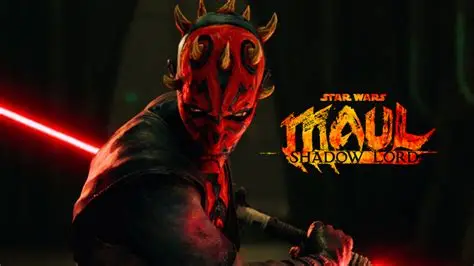
Sam Witwer Maul Performance in Shadow Lord Review
Sam Witwer reprises Maul, continuing the animated-era portrayal that has defined much of the character’s modern popularity. StarWars.com’s behind-the-scenes reporting describes Witwer as providing live-action reference for the animators (including physically marking his face to approximate Maul’s tattoos), with supervising director Brad Rau crediting Witwer’s on-screen nuance and fearlessness in performance.
Across critical reviews, Witwer’s vocal work is consistently positioned as a major differentiator: some outlets explicitly call it his strongest Maul performance, emphasising a version of Maul that can switch between menace, calculation, and flashes of vulnerability without turning into a redeemed antihero. Notably, even reviews with reservations about pacing or depth tend to treat the performance as a stable anchor for the show’s darker tone.
Maul and Devon Izara Dynamic in Shadow Lord Review
The centre-of-gravity relationship in Star Wars: Maul – Shadow Lord is Maul’s push–pull with Devon often framed by critics as an ideological tug-of-war in which Maul offers action, purpose, and a reframing of revenge as resistance, while Devon’s Jedi identity and trauma complicate every “choice” through fear, obligation, and survival.
Reviews describe some of the show’s strongest early stretches as dialogue-forward scenes between the two characters, where Devon’s gradual perspective shift is handled subtly rather than as a single conversion moment. At the same time, multiple critics argue this dynamic is intentionally slow to develop either as a tension-building strength or as a pacing weakness depending on taste and expectations.

Star Wars: Maul Shadow Lord Animation Style Review
Star Wars: Maul Shadow Lord’s most immediate “reviewable” element is visual: critics and official behind-the-scenes features describe a deliberate step away from clean, uniform CG surfaces towards rougher, more painterly texture work and lighting that supports noir atmosphere. The HoloFiles review specifically highlights the series’ willingness to embrace “imperfections” and more expressive distortion (including close-ups that read as hand-painted and action beats that prioritise visceral energy over photorealism).
This aesthetic appears simultaneously practical and thematic. On the practical side, StarWars.com’s Janix feature underscores that the city’s design and mapping were built around character movement and story logic across the series. On the thematic side, multiple reviews argue that the new look matches Maul’s inner turmoil and the “crime story” core dark alleys, neon signage, surveillance, and violence that feels closer to noir cinema than Saturday-morning adventure.
Why Maul Shadow Lord Feels Darker Than Other Star Wars Shows
The “darker” label is not just marketing language; it is a product of narrative perspective, humour scarcity, and a violence presentation that reviewers repeatedly call more vicious than prior animated entries. Putting Maul a villain as the protagonist changes the moral baseline: the series can treat manipulation and intimidation as default tools, while still making the Empire feel like an even larger, more systematic menace.
Multiple reviews also connect this darkness to a narrower scope. By keeping the story largely on Janix, the show can lean into claustrophobia and consequence (a “small place” being squeezed by large forces) rather than dissipating tension across a galaxy tour. Finally, critics repeatedly compare the tonal ambition to Andor not because the shows are identical, but because both prioritise grounded pressure, moral compromise, and institutional threat over quippy adventure.

Frequently Asked Questions (FAQs)
- What is Star Wars: Maul – Shadow Lord about?
It follows Maul rebuilding a criminal syndicate on Janix and encountering a disillusioned Jedi Padawan who could become an apprentice in his revenge-driven plans. - When did Star Wars: Maul – Shadow Lord premiere?
It premiered on April 6, 2026 with a two-episode premiere on Disney+. - How many episodes are in Season 1?
Season 1 has 10 episodes (10 “chapters”). - What is the release schedule for new episodes?
Two episodes release weekly after the April 6 premiere, with the finale pair scheduled for May 4, 2026. - Where can Star Wars: Maul – Shadow Lord be watched?
It streams exclusively on Disney+. - Do prior Star Wars animated series need to be watched first?
StarWars.com’s behind-the-scenes coverage explicitly states deep prior knowledge is not required to understand the show’s basic premise and motivation structure, though some reviewers note that Maul’s backstory layers can still make the series less newcomer-friendly than the marketing implies. - When does Star Wars: Maul – Shadow Lord take place in the Star Wars timeline?
It is set after The Clone Wars and Revenge of the Sith, in the early Empire (“Reign of the Empire”) era, and years before Rebels. - Who voices Maul?
Maul is voiced by Sam Witwer. - Who is Devon Izara?
Devon Izara is a Twi’lek Jedi Padawan in hiding on Janix with her master Eeko-Dio Daki during the early Empire years, struggling between action and staying hidden. - Is Season 2 confirmed?
Yes. StarWars.com confirms that Dave Filoni has announced Season 2 is in the works at Lucasfilm Animation.
Conclusion
Star Wars: Maul – Shadow Lord’s first eight episodes judging by press-screened reviews and early critical consensus represent a deliberate shift for Star Wars animation towards noir crime texture, single-location intensity, and a protagonist perspective that refuses to soften Maul into a conventional hero. Its strongest assets are the painterly visual overhaul, the world-building logic of Janix as an Empire-adjacent pressure cooker, and performance work especially Sam Witwer as the show balances Maul’s charisma with his cruelty. The recurring cautions pacing, thread cohesion, and “interquel” limitations remain real, but the official Season 2 renewal suggests Lucasfilm is treating Shadow Lord as a multi-season character study rather than a one-off bridge.
Sources and citation
Primary sources and review/analysis references used:
- Disney+ “Explore” overview (release date, episode count, schedule, creative leadership, basic premise)
https://www.disneyplus.com/explore/articles/star-wars-maul-shadow-lord - StarWars.com series hub (era placement, official chapter titles and dates)
https://www.starwars.com/series/star-wars-maul-shadow-lord - StarWars.com Databank entries for Devon Izara, Janix, and Marrok (official character/location descriptions)
https://www.starwars.com/databank/devon-izara | https://www.starwars.com/databank/janix | https://www.starwars.com/databank/marrok-inquisitor - StarWars.com “Inside the Making…” (tone intent, accessibility framing, noir inspirations, Witwer animation reference)
https://www.starwars.com/news/star-wars-maul-shadow-lord-trivia - StarWars.com “Welcome to Janix…” (world-building approach and noir framing)
https://www.starwars.com/news/star-wars-maul-shadow-lord-making-of-janix - StarWars.com Season 2 announcement (official confirmation of continuation)
https://www.starwars.com/news/star-wars-maul-shadow-lord-season-2 - Rotten Tomatoes Season 1 page and Rotten Tomatoes editorial “first reviews” roundup (early consensus and review sampling)
https://www.rottentomatoes.com/tv/star_wars_maul_shadow_lord/s01 | https://editorial.rottentomatoes.com/article/star-wars-maul-shadow-lord-first-reviews/ - Space.com review (darkness emphasis, animation assessment, structure notes, Season 2 mention)
https://www.space.com/entertainment/space-movies-shows/star-wars-maul-shadow-lord-is-lucasfilms-darkest-and-most-focused-animated-show-yet-review - GamesRadar+ review (performance and structure notes; darker tone and visual details; episodes reviewed)
https://www.gamesradar.com/entertainment/star-wars-tv-shows/star-wars-maul-shadow-lord-review-disney-plus/ - The Ringer review (press availability of eight episodes; interquel critique; noir/detective framing)
https://www.theringer.com/2026/04/06/star-wars/star-wars-darth-maul-shadow-lord-review-interquels-animation-dave-filoni - RogerEbert.com review (setting description and reservations about character depth execution)
https://www.rogerebert.com/streaming/star-wars-maul-shadow-lord-disney-tv-review-2026 - Creative Bloq analysis (painterly texture discussion; noir inspirations including Heat; stylistic comparisons)
https://www.creativebloq.com/art/animation/star-wars-maul-shadow-lords-moody-but-vibrant-animation-style-has-a-surprising-inspiration - Inverse review (noir expectations vs broader oppression framing; Janix “balance” premise)
https://www.inverse.com/entertainment/maul-shadow-lord-review-star-wars-disney-plus - The HoloFiles spoiler-free review (tone, humour scarcity, pacing observations, animation notes)
https://theholofiles.com/2026/04/06/review-maul-shadow-lord/
Recommended
- Marathon Open Beta Announced: Everything We Know About the Server Slam Dates, How to Join, Rewards, and Launch Details
- Resident Evil: Requiem Sold 5 Million Copies in Five Days — Capcom Confirms Record-Breaking Launch
- How to Use Physics-Based Hair in Blender
- Why Hair Grooming Takes So Long and How to Speed It Up
- Metahuman Animator: How to Animate Realistic Characters in Unreal Engine 5
- Assassin’s Creed Shadows Winter Roadmap Includes Major Update 1.1.8, A Parkour Challenge, And Switch 2 Claws of Awaji DLC
- Walton Goggins Shares Unexpected Inspiration Behind The Ghoul In Fallout 76 & Fallout Season 2: Behind the Voice, Character, and Gaming Legacy
- Devil May Cry Showrunner Says Season 2 Is Like The Dark Knight Leap From Batman Begins
- Bluey and “Bluey’s Best Day Ever!” Have Arrived at Disneyland – Everything You Need to Know About the New Interactive Experience
- Goro Abe, the Director Behind WarioWare, Has Parted Ways with Nintendo After 25+ Years