

The former Konrad Tomaszkiewicz best known publicly for directing The Witcher 3 argued in April 2026 that the most memorable big-budget RPGs are rarely those that “follow the template” of today’s blockbuster market. In an interview with The Game Business, he positioned Crimson Desert and Clair Obscur: Expedition 33 as examples of modern releases that feel “quite fresh” precisely because they are not built as copies of prevailing AAA design patterns.
A key part of that argument rests on what “AAA” actually means in industry practice. The UK Competition and Markets Authority notes that “AAA” is not a tightly defined label, but is widely associated with significant development time and budget, and correlated with “budget, complexity, popularity, or some combination of the three.”
The Witcher 3 director’s 2026 argument about originality and AAA incentives
In the April 14, 2026 interview, Tomaszkiewicz was discussing the “hegemony” of modern triple‑A development while promoting his new studio and project; he cited Crimson Desert and Clair Obscur: Expedition 33 as notable because “those games are different” and are “not a copy of other AAA games,” but instead “deliver something quite fresh.”
He framed this as a broader creative impulse: resisting the temptation to reproduce what worked before, and instead making games that feel like “some unknown” a feeling he associates with earlier eras of PC and console discovery.
Why Crimson Desert “doesn’t copy other AAA games” according to The Witcher 3 director
Tomaszkiewicz’s praise is not a claim that these games have no influences; it is a claim about strategic differentiation. In his telling, they stand out because the high-level “product shape” doesn’t feel like a checklist-driven, revenue-optimised clone of the current big-budget norm.
Importantly, he used Crimson Desert and Expedition 33 as signals that audiences still respond to distinct authorial choices even when a project sits near the AAA end of production scale or presentation quality.
The “industry filled with people focused on money” debate in game development
Tomaszkiewicz crystallised his critique in explicitly cultural terms: “The problem in this industry sometimes is that people opening companies are thinking [too much] about how to make money… You cannot create art like this.”
At the same time, the incentive structure he is criticising is widely linked to genuine economic pressure, not only executive cynicism. The Game Developers Conference’s 2025 industry survey reported continued layoffs (with roughly one in ten developers saying they had been laid off in the prior year), alongside funding and sustainability concerns that shape what kinds of projects get approved.
A grounded reading of the “money focus” debate, therefore, is that modern studios operate in a high-cost environment where survival logic can collide with creative ambition making distinctiveness harder to greenlight, even when it is artistically desirable.
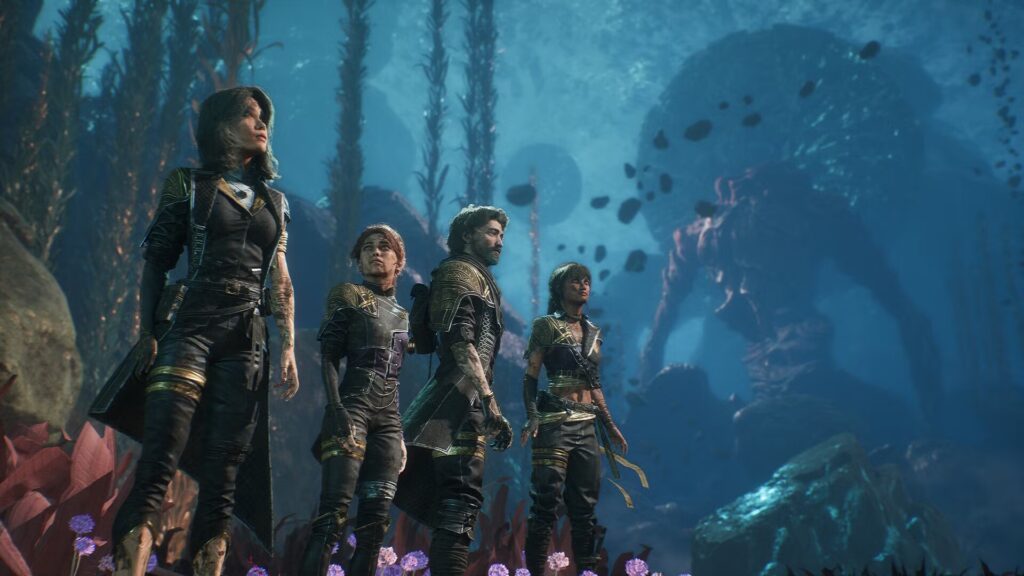
AAA game trends focused on “how to make money” and why players notice
Two measurable realities underpin the “money focus” conversation:
- First, AAA budgets can be enormous, and regulators have documented how costs scale. In its Microsoft–Activision final report, the UK CMA recorded publisher submissions indicating that for one AAA game, development budgets could range roughly $90–$180 million with marketing budgets around $50–$150 million and that in at least one major franchise case, development costs reached $660 million while marketing “peaked at almost $550 million.”
- Second, industry revenue composition increasingly rewards ongoing monetisation. Newzoo reported that in 2025, microtransactions accounted for 48% of PC gaming revenue ($20.6B), while premium game sales accounted for 29% ($12.5B).
These conditions create strong incentives for systems that push retention and repeat spending design moves that players can often feel at the experiential level (progression pacing, grind shaping, storefront prominence, and content designed for long tails rather than narrative closure).
Creative risk in AAA games: why it’s rarer and what it costs
Creative risk is rarer in AAA partly because “AAA” itself implies long timelines and significant investment, with higher organisational and financial exposure if a new approach fails.
The CMA also emphasises that large franchise success is hard to replicate, with internal documents and market evidence describing how demand can coalesce around major brands and the barriers faced by new entrants trying to build comparable “AAA franchises.”
When this is paired with a period of notable instability (including layoffs and funding caution reported in industry surveys), the default outcome is often “safer” iteration sequels, established formats, and proven monetisation models unless a studio has unusually strong conviction and stakeholder tolerance for experimentation.
Games that feel original in 2026: Crimson Desert vs typical open-world formulas
Crimson Desert launched March 19, 2026, and is positioned as an open-world action-adventure on the continent of Pywel.
A common criticism aimed at modern open-world blockbusters is that mission and activity structures converge into repeatable “formula” patterns. Recent academic work on open-world mission design explicitly notes that open-world missions “often rely on repeated formulas,” motivating frameworks to analyse pacing and variation across mission portfolios.
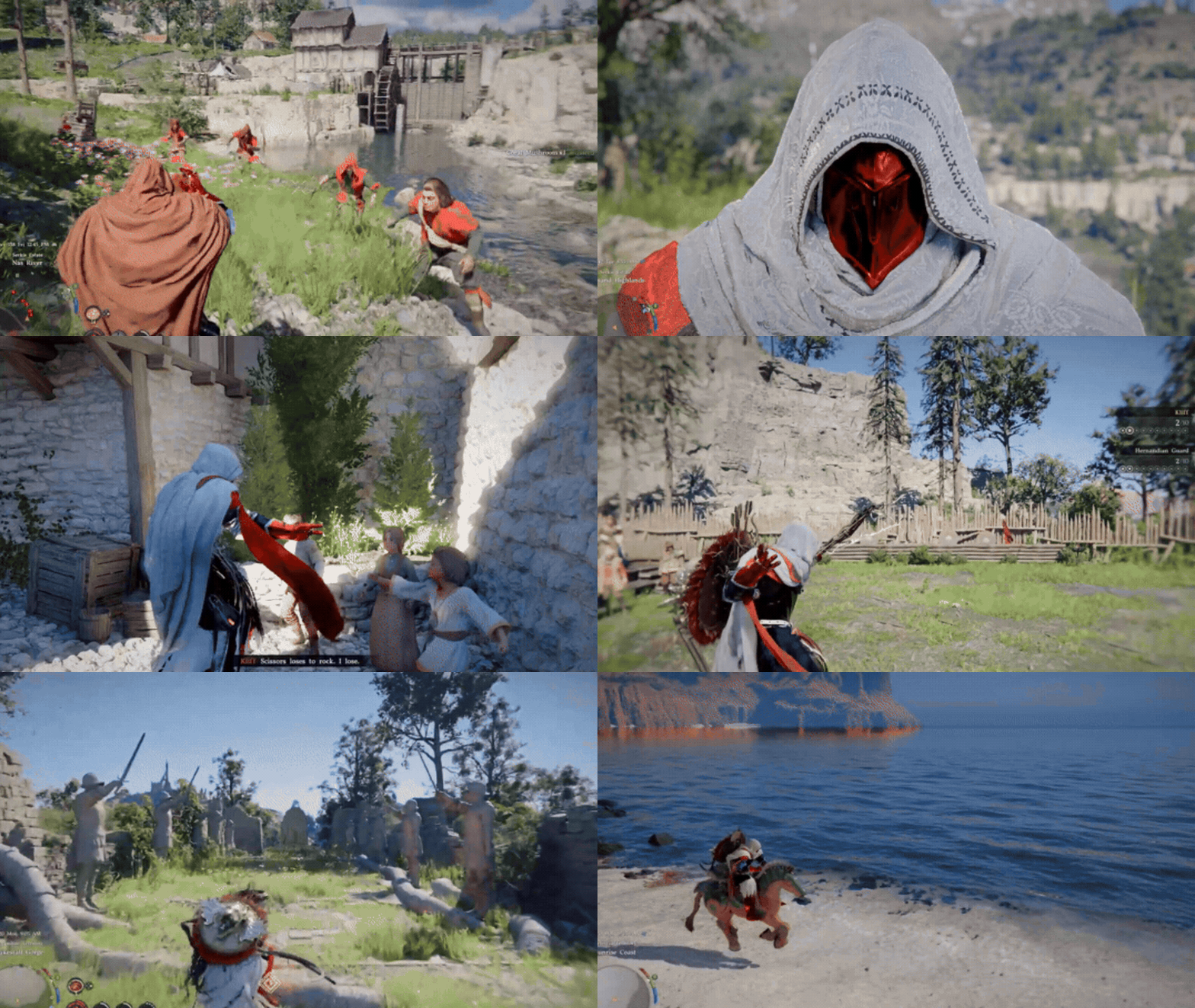
Against that backdrop, much of Crimson Desert’s distinctiveness (as discussed by players and press) centres on sandbox-like interactions and emergent problem-solving. For example, press coverage highlighted players defeating bosses via unconventional “bee” tactics capturing and releasing swarms as damage-over-time because the game’s systems allow odd but effective solutions.
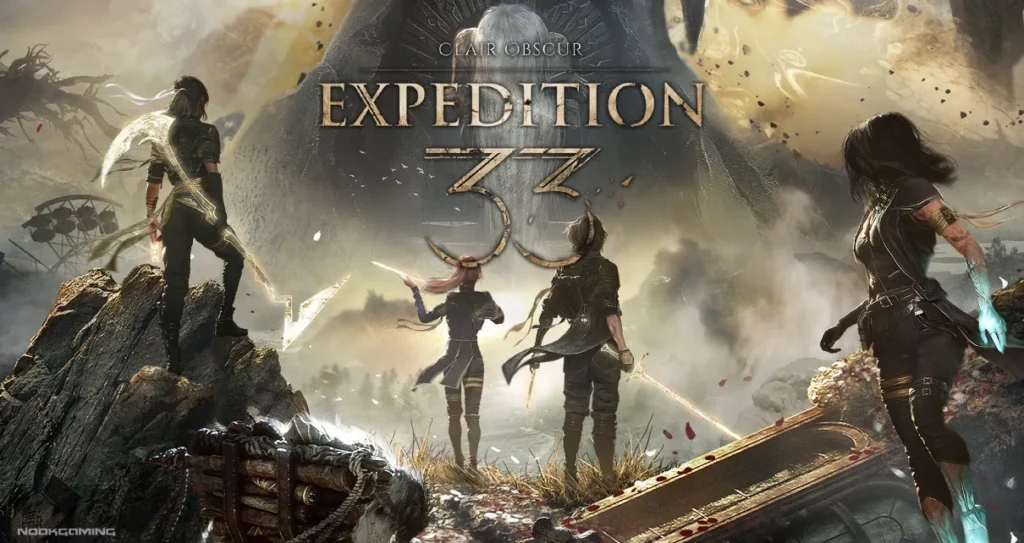
Crimson Desert gameplay identity: what makes it different from mainstream AAA
Official descriptions emphasise player-driven traversal, combat expression, and systemic breadth. The Epic Games Store summary frames it as a journey to rebuild the Greymane faction and “forge your path through battles and discovery,” spanning wilderness, cities, ruins, and the “mysterious Abyss.”
Mechanically, the same official materials foreground variety and “buildcraft” in an action framework: multiple weapon types, grapples, chaining attacks, mobility tools (slides, dodges, counters), and a broad enemy mix from duels to larger clashes language that signals a combat identity closer to expressive action systems than to purely stat-driven RPG combat.
This identity also extends beyond combat into “life” systems: upgrading a camp, gathering and crafting loops (cooking, fishing, hunting), minigames, and cosmetic customisation. Those elements can be read as part of Crimson Desert’s attempt to make the world feel “inhabited” rather than purely mission-node driven.
How unique worldbuilding helps Crimson Desert stand out
The game’s worldbuilding pitch is not solely geographic scale; it is also narrative geography a continent structured by conflict, factions, and a looming mystery. Pearl Abyss’s own feature overview frames the setup as “the conflict sweeping over Pywel,” spanning “vast wilderness and cities,” “ancient ruins,” and “the looming mystery of the Abyss.”
Retail descriptions reinforce the same pillars: rival factions, a destabilising ambush, and a protagonist-driven effort to reunite survivors and rebuild, with escalating discovery of “mysterious factions” and threats to the continent’s order.
In practical design terms, worldbuilding stands out when it is operationalised when lore is not only backstory, but produces distinct spaces, encounters, traversal affordances, and reasons for players to improvise. The kinds of emergent stories that arise from unusual systemic interactions (such as the bee strategy coverage) are one way open-world worldbuilding becomes “felt” rather than merely “told.”
Clair Obscur: Expedition 33 as a modern RPG that avoids AAA sameness
Clair Obscur: Expedition 33 released on April 24, 2025 for major platforms, including PS5.
Its differentiation begins with its premise and aesthetic positioning: official materials describe a world inspired by Belle Époque France and a mission to stop the Paintress from continuing a deadly cycle.
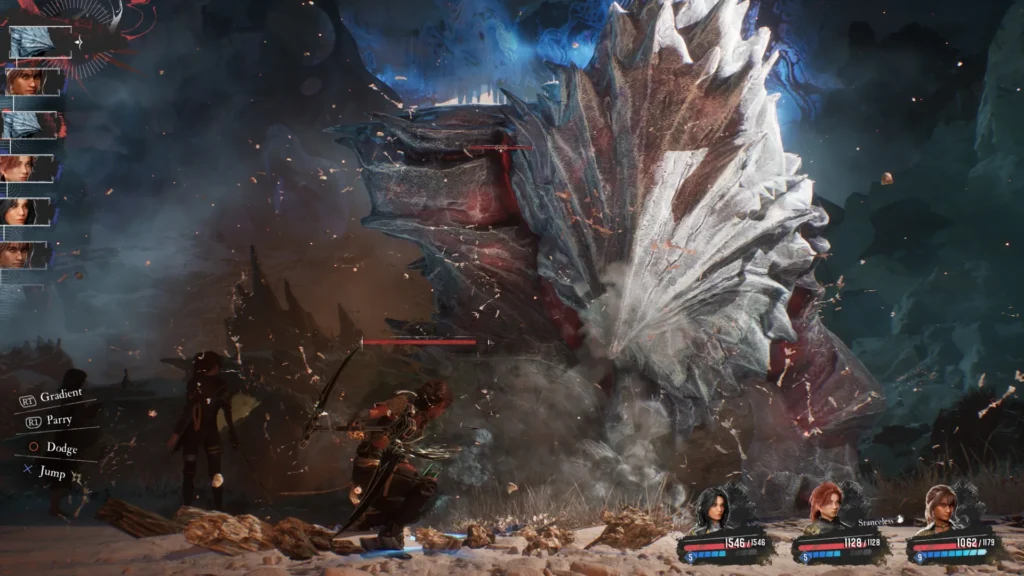
From a genre standpoint, the game is repeatedly characterised by its hybridisation: a turn-based RPG in which defence (and some offence cadence) demands real-time timing mastery dodge, parry, counter creating what Unreal Engine’s interview calls a “reactive turn-based RPG.”
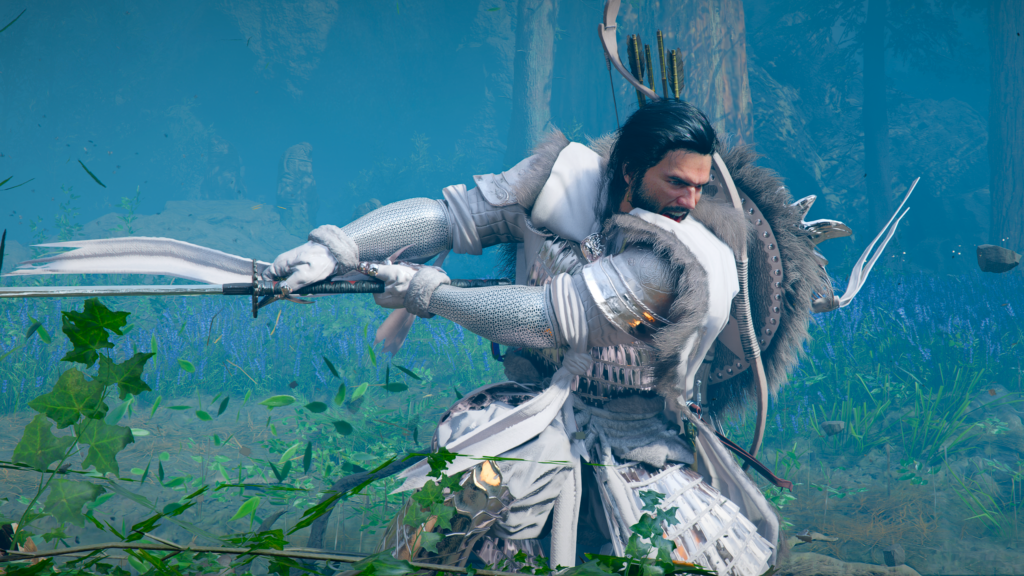
Clair Obscur: Expedition 33 combat and art direction that break from AAA sameness
On combat, developer interviews are unusually explicit about goals that cut against “menu-only” turn-based expectations. The PlayStation developer interview describes “reactive turn-based” combat where players can plan on their turn, but must respond in real time during enemy turns dodging, jumping, and parrying to enable counterattacks and also includes an “attack rhythm” layer intended to keep turn-based actions kinetic.
Both the PlayStation and Unreal Engine interviews describe the design ambition as an “evolution” of turn-based combat: turn structure combined with timing-based defence and counters, producing encounters that are meant to feel dynamic rather than static.
On art direction, the same Unreal Engine interview emphasises Belle Époque inspiration and Art Deco influence, arguing this period and blend is underused in turn-based RPGs and is part of what makes the game feel “unique and original.”
Why smaller teams can outshine bigger studios: Clair Obscur: Expedition 33 case
The Unreal Engine interview provides unusually concrete team-scale detail: a “core team of less than 30 people,” split primarily between Montpellier (around 25) and Paris (around five). It also argues that using Unreal Engine 5’s toolset enabled this small team to “punch above their weight.”
Distribution strategy is another lever smaller teams can use to compete with larger studios. Official Xbox communications stated that Clair Obscur: Expedition 33 was the “biggest new third-party game launch on Xbox Game Pass of 2025,” measured by unique users in the first 30 days, with commentary that Game Pass broadened the audience reach.
Market performance reporting from mainstream outlets also supports the “outshining” claim in commercial terms: in October 2025, Engadget reported the game had sold five million copies and was receiving a celebratory update.
Why copying The Witcher 3 isn’t the best strategy for new RPGs
Tomaszkiewicz’s core warning is internal to creative practice: “Opening a new company to do exactly the same things we did in the past is a problem,” because it blocks artistic evolution; he argues instead for “push[ing] the boundaries of AAA RPGs” with “risky stuff” that changes immersion and feel.
This principle aligns with a broader studio-level concern: even CD Projekt Red has publicly discussed avoiding repetition, with reporting noting the studio’s stated desire not to “copy our own tricks” again and again after The Witcher 3.
In strategic terms, “copying” can win short-term familiarity, but it can also dilute identity especially in a market where production values increasingly converge. The competitive advantage then shifts from fidelity alone to distinct systems, tone, and authored intent.
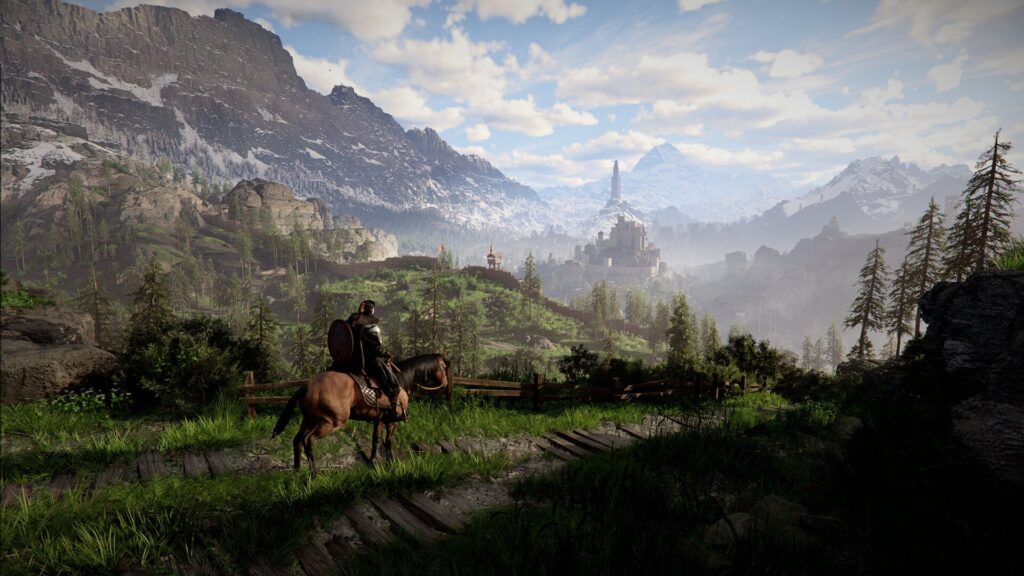
Player fatigue with AAA open-world checklists and formulaic design
The “open-world checklist” critique is rooted in perceived repetition: map icon clearing, template side activities, and missions that feel structurally similar across dozens of hours. Academic work on open-world mission design has directly observed that missions “often rely on repeated formulas,” raising the challenge of maintaining experiential variation at scale.
High-profile commentary around Crimson Desert specifically contrasts it with that “checklist” approach, praising its ability to sustain discovery through sandbox freedom rather than purely task-list structuring.
From the perspective of Tomaszkiewicz’s argument, fatigue is not only about open worlds as a format; it is about predictability when players sense that design decisions are guided more by retention metrics and production templates than by the “unknown” feeling of distinct worlds and mechanics.
What original games can teach studios about long-term brand value
Regulatory analysis underscores how durable brands gain power through market dynamics: the CMA’s report discusses how demand can “coalesce around major franchises” and highlights barriers involved in creating and sustaining a successful AAA franchise an environment where only a subset of projects achieve lasting dominance.
A practical inference is that “originality” is not merely an artistic virtue; it can be a brand strategy. When a game’s identity is legible mechanically, aesthetically, and emotionally it becomes easier for audiences to recognise why a franchise exists, rather than treating it as interchangeable content. This is consistent with how the CMA describes AAA as correlated with complexity and popularity, and how franchise economics shape competition.
Macro trends also support this: BCG’s 2026 gaming outlook argues that alternative monetisation (in‑game transactions, downloadable content, subscriptions) will expand, reinforcing the idea that long-term engagement and brand loyalty are central to revenue strategy making differentiation a key input into sustainable lifetime value.
Will more studios stop copying AAA games after Crimson Desert and Expedition 33?
Tomaszkiewicz explicitly suggested a directional shift: he believes the “idea is growing these days,” pointing to Clair Obscur: Expedition 33 and Crimson Desert as evidence that audiences and creators are rewarding projects that do not simply copy prevailing AAA templates.
Industry survey data provides supporting context for why this shift is plausible. The GDC State of the Game Industry reporting highlights both economic pressure and “indie resilience,” suggesting that a wide range of teams are pursuing models outside traditional mega-studio expansion.
The strongest near-term signal is not that copying will vanish, but that “AAA” presentation quality no longer guarantees dominance. A core team “less than 30” people shipping a high-impact RPG, amplified through subscription distribution, provides a concrete example of how smaller studios can reach mass audiences without replicating the full AAA organisational template.
Frequently Asked Questions (FAQs)
- What did The Witcher 3 director actually mean by “doesn’t copy other AAA games”?
The quoted argument was about creative differentiation, not about having zero influences: Tomaszkiewicz said the games are “not a copy of other AAA games” and feel “quite fresh,” in the context of criticising AAA “hegemony” and advocating boundary-pushing design decisions. - Is “AAA” an official category with a strict definition?
No. The UK CMA notes that “AAA status is not a well-defined term,” and that usage in industry discussions tends to correlate with budget, complexity, popularity, or combinations of these. - Why do AAA studios lean into “money-first” design decisions?
Large budgets and long development cycles increase financial risk; the CMA records examples of very large development and marketing spending, while market data shows how ongoing monetisation (especially microtransactions) makes up a large share of revenue creating structural incentives for retention-focused design. - How does Clair Obscur: Expedition 33’s combat differ from typical turn-based RPGs?
Developer interviews describe “reactive turn-based” combat where strategy happens in turns, but defence requires real-time reactions dodging, parrying, and countering plus rhythm-based attack execution. - What makes Clair Obscur: Expedition 33’s art direction stand out?
Official and developer materials emphasise a fantasy world inspired by Belle Époque France and Art Deco influences an era the developers describe as underexplored in turn-based RPGs used as a foundation for a distinctive visual identity. - How small was the Clair Obscur: Expedition 33 development team?
The Unreal Engine interview states the studio had a “core team of less than 30 people,” split primarily between Montpellier and Paris. - Why does Crimson Desert’s “sandbox” reputation matter for originality claims?
Press coverage highlights that the game’s systems allow unusual, player-discovered solutions (e.g., using captured bees to defeat bosses), which is a common marker of sandbox-style emergence rather than strict scripted-path design. - Does Crimson Desert have an official release date and platform timing?
Yes. Pearl Abyss announced that the game begins March 19, 2026, with published global times and platform availability for pre-orders. - What evidence supports the idea that players are tired of open-world “checklists”?
Research on open-world mission design notes repeated formula structures as a recurring issue, while contemporary commentary around Crimson Desert explicitly contrasts it with the “checklist” formula common in certain open-world designs. - Will the industry actually change because of these two games?
No single title forces systemic change, but Tomaszkiewicz argues the preference for “different” projects is “growing,” and industry surveys show both economic pressure and alternative development models gaining visibility conditions that can increase demand for differentiated projects.
Conclusion
Tomaszkiewicz’s argument is less a celebration of novelty for novelty’s sake than a diagnosis of why certain games cut through: they convert creative intent into distinct mechanics, aesthetics, and structure, rather than reproducing the most bankable template of the moment.
Crimson Desert exemplifies this through breadth of systemic play and a world pitched as something to live in and improvise within, while Clair Obscur: Expedition 33 exemplifies it through focused hybrid combat design and a culturally specific art direction executed by a comparatively small team.
The broader industry context rising costs, revenue models tilted toward ongoing monetisation, and continued economic instability helps explain why “fresh” AAA-style design is difficult, and also why audiences and creators increasingly value games that feel authored rather than optimised.
Sources and Citations
- The Game Business, “The Blood of the Dawnwalker studio: Everyone we spoke to wanted to invest.”
https://www.thegamebusiness.com/p/rebel-wolves-all-the-companies-we - UK CMA, “Provisional findings report” + Game Developer, “The cost of games.”
https://assets.publishing.service.gov.uk/media/63e3e9aee90e0762692b970a/Microsoft_Activision_-_Provisional_Findings_Report_3.pdf | https://www.gamedeveloper.com/business/the-cost-of-games - Crimson Desert official site, “Crimson Desert Arrives March 19, 2026. Pre-order Now!”
https://crimsondesert.pearlabyss.com/en-us/News/Notice/Detail?_boardNo=50 - Steam store page, “Crimson Desert.”
https://store.steampowered.com/app/3321460/Crimson_Desert/ - Crimson Desert official site, “Features Overview #1: Kliff and the Open World of Pywel.”
https://crimsondesert.pearlabyss.com/en-us/News/Notice/Detail?_boardNo=57 - PlayStation.Blog, “Clair Obscur: Expedition 33 devs discuss classic turn-based RPG inspiration and real-time mechanics.”
https://blog.playstation.com/2024/07/29/clair-obscur-expedition-33-devs-discuss-classic-turn-based-rpg-inspiration-and-real-time-mechanics/ - Unreal Engine, “Inside the development journey of Clair Obscur: Expedition 33.”
https://www.unrealengine.com/developer-interviews/inside-the-development-journey-of-clair-obscur-expedition-33 - Newzoo, “PC & Console Gaming Market Returns to Growth Driven by Premium Pricing.”
https://newzoo.com/resources/blog/post-pandemic-growth-returns-for-pc-and-console-driven-by-premium-spending-and-changing-price-dynamics - GDC, “2025 State of the Game Industry Report” + “GDC 2025 State of the Game Industry: Devs Weigh in on Layoffs, AI, and More.”
https://reg.gdconf.com/state-of-game-industry-2025 | https://gdconf.com/article/gdc-2025-state-of-the-game-industry-devs-weigh-in-on-layoffs-ai-and-more/ - “Deconstructing Open-World Game Mission Design Formula: A Thematic Analysis Using an Action-Block Framework.”
https://doi.org/10.48550/arXiv.2603.18398 - PC Gamer, “Crimson Desert players have a new way to slay its powerful bosses—slowly unleashing a swarm of individually-caged bees at them.”
https://www.pcgamer.com/games/action/crimson-desert-players-have-a-new-way-to-slay-its-powerful-bosses-slowly-unleashing-a-swarm-of-individually-caged-bees-at-them/ - Xbox Wire, “Clair Obscur: Expedition 33 Is the Biggest New Third-Party Game Launch on Xbox Game Pass of 2025.”
https://news.xbox.com/en-us/2025/12/03/clair-obscur-expedition-33-game-pass-biggest-launch/
Recommended
- How to Animate a Camera in Blender
- Cyberpunk 2077 Mods: Essential Enhancements, Installation Guides, and Top Community Picks
- How to Turn a 2D Concept into a 3D Character: Start-to-Finish Workflow Using Blender and ZBrush
- Pokémon Champions Fans Criticize Free-to-Play Launch Over Missing Features, Switch 2 Performance Issues, and Limited Roster
- Star Wars: Maul – Shadow Lord Guide: Release Date, Episodes, Cast, Story, and Disney+ Details
- How to Create a Cinematic Short Film with Metahuman, Motion Design, Text Actors, UDraper, and Cloth Simulation in Unreal Engine 5
- The Director Of The Next Resident Evil Movie Has Already Beaten Requiem Twice – What It Means for the Film
- How To Recruit All Terran Armada Crewmates In Starfield (Delta, Roxanne Bourreau, Muria Siarkiewicz)
- Meta Reportedly Cuts About 700 Jobs as Reality Labs Is Hit in Wider Restructuring
- Love Death and Robots Season 4: Release Date, Episodes, Animation Studios, and Everything We Know So Far