










Samsung’s 2026 Micro RGB TV range is the company’s first real push to turn Micro RGB from an ultra-premium showcase into a mainstream premium category. The official story is now clear: Samsung globally previewed an expanded 55-inch to 115-inch family in December 2025, unveiled a 130-inch flagship demonstration model at CES 2026 in January, and began rolling the US retail line out on 14 April 2026 with the R95H and R85H series. Early hands-on testing suggests the new technology is genuinely strong on colour and bright-room punch, but it is not a clean knockout over OLED in every area, especially black level and off-axis consistency.
Launch overview
Samsung’s 2026 Micro RGB TVs explained: what “Micro RGB” means
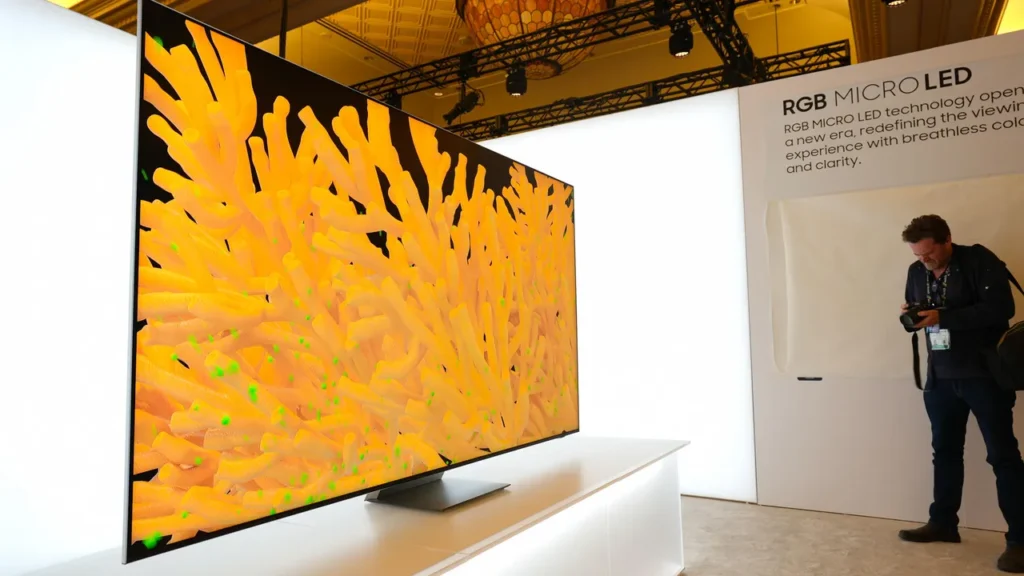
Samsung defines Micro RGB as a TV architecture that uses thousands of micro-sized red, green and blue LEDs, each emitting light independently, instead of relying on the usual white or blue backlight path seen in conventional LED, QLED and Mini LED televisions. Samsung also says those RGB backlights are sub-100 micrometres in size, which is central to the company’s argument that Micro RGB is not just a branding tweak but a more precise form of RGB-backlit LCD. In plain English, the backlight itself is doing far more of the colour work, rather than shining through extra colour-making layers later in the optical stack.
That matters because Samsung’s pitch for Micro RGB is not merely “more brightness”. The company is explicitly tying the technology to reduced colour bleed, better backlight precision, and more accurate colour expression, while its own Micro RGB highlights page positions the TVs as a more advanced subset of the broader RGB LED category. Samsung’s official explanation is that micro-sized RGB backlights combined with local dimming let the display control both brightness and colour more precisely than a conventional LCD backlight can.
Samsung Micro RGB TV R95H specs and key features (2026 models)
The R95H is the flagship of Samsung’s 2026 retail Micro RGB line. Official spec pages and regional product listings consistently describe it as a 4K TV with the Micro RGB AI Engine Pro, Micro RGB HDR Pro, Micro RGB Precision Color 100, Motion Xcelerator 165Hz, Glare Free, 4K AI Upscaling Pro, AI Motion Enhancer Pro, and Wide Viewing Angle support. The US launch line puts the R95H in 65-inch, 75-inch and 85-inch sizes.
On the connectivity and platform side, Samsung’s published R95H specifications list four HDMI inputs, 4K 165Hz high-frame-rate support on all four HDMI ports, eARC, Wi‑Fi 6E, Bluetooth 5.3, VRR, ALLM, FreeSync Premium Pro, Game Bar, Super Ultra Wide Game View, Gaming Hub, One UI Tizen, Samsung TV Plus, and seven years of Tizen OS upgrades. Regional spec pages also list Dolby Atmos, Object Tracking Sound+, Q‑Symphony, a 70W 4.2.2-channel speaker array, and AI sound features such as Active Voice Amplifier Pro and Adaptive Sound Pro.
The step-down R85H uses the same core Micro RGB backlight idea, but Samsung officially positions it below the R95H with a less advanced processor tier, Micro RGB HDR+ instead of Micro RGB HDR Pro, Motion Xcelerator 144Hz instead of 165Hz, and no Glare Free feature in Samsung’s own side-by-side comparison. In other words, the R95H is the premium execution of the platform, while the R85H is the more affordable on-ramp.
Samsung Micro RGB TVs release date and CES 2026 announcement timeline
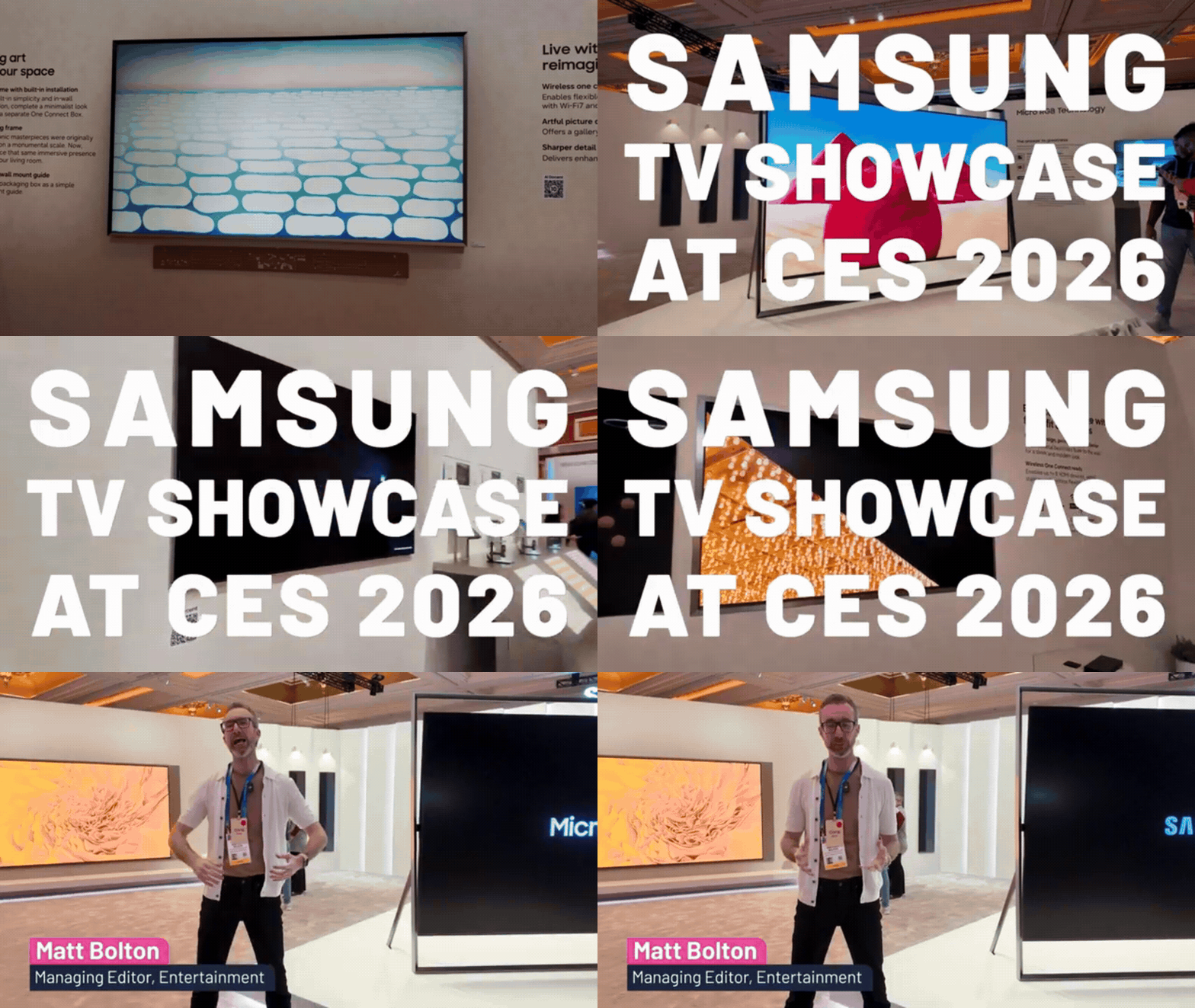
The launch sequence unfolded in three clear stages. First, Samsung globally announced an expanded 2026 Micro RGB range on 17 December 2025 and said it would span 55, 65, 75, 85, 100 and 115 inches. Second, on 5 January 2026, Samsung used CES 2026 and its First Look event to unveil the world’s first 130-inch Micro RGB TV, framed as the brand’s boldest expression of the technology. Third, on 14 April 2026, Samsung Electronics America announced US launch pricing and said the Micro RGB lineup was rolling out at Samsung.com and select retailers.
Samsung also added supporting narrative during the quarter rather than changing the core timeline. In March 2026, the company announced VDE certifications for eye safety and circadian rhythm support on the R95H, but that certification update did not change the product’s launch cadence; it simply added another marketing and comfort layer around the already announced premium platform.
Samsung Micro RGB TV sizes available (65-inch, 75-inch, 85-inch and more)
If the question is what Samsung announced for Micro RGB in 2026, the answer is 55-inch, 65-inch, 75-inch, 85-inch, 100-inch and 115-inch. That size grid was stated in Samsung’s December 2025 global announcement and repeated in the US launch framing, which described the line as covering 55 inches up to 115 inches.
If the question is what buyers can actually identify in the US launch window, the on-sale retail mapping is narrower. The R95H is sold in 65-inch, 75-inch and 85-inch sizes, while the R85H adds the 55-inch tier. Samsung’s US launch table also lists the 115-inch MR95F as a carry-over model, and explicitly says the 100-inch Micro RGB size will debut later in 2026. The separate 130-inch R95H shown at CES 2026 is a showcase flagship and should not be confused with the standard US retail range.
Price and availability
Samsung Micro RGB TV price in the US and where to buy
Samsung’s official US pricing is straightforward. The R95H starts at $3,199.99 for 65 inches, rises to $4,499.99 for 75 inches, and tops out at $6,499.99 for 85 inches. The more affordable R85H begins at $1,599.99 for 55 inches, then $2,099.99 for 65 inches, $2,799.99 for 75 inches, and $3,999.99 for 85 inches. Samsung also keeps the 115-inch MR95F in the line at $29,999.99, while the 100-inch size is still marked for later release.
As for where to buy, Samsung states that the line is rolling out at Samsung.com and select retailers including Best Buy. Around launch, Best Buy’s product listings were already live for multiple R95H and R85H sizes, though at least some listings still showed “Coming Soon”, which suggests the practical retail rollout is staggered even if Samsung’s official launch date is fixed.
Picture quality and colour
Micro RGB vs OLED vs QD-OLED: picture quality differences in 2026
The cleanest way to understand the 2026 comparison is this: OLED uses self-lighting pixels; QD‑OLED uses a blue self-emitting OLED layer plus a quantum-dot colour-conversion layer; Micro RGB remains an LCD-class television with a radically improved RGB backlight and local dimming rather than pixel-level self-emission. Samsung’s OLED guide says OLED pixels can switch on and off independently for true blacks and precise contrast, while Samsung Display explains QD‑OLED as a self-luminous structure that uses blue light and a quantum-dot layer for wide colour, strong brightness and wide viewing angles. RGB LED, by contrast, still sits inside LCD’s basic display family, which means it is solving the backlight problem, not eliminating the LCD layer entirely.
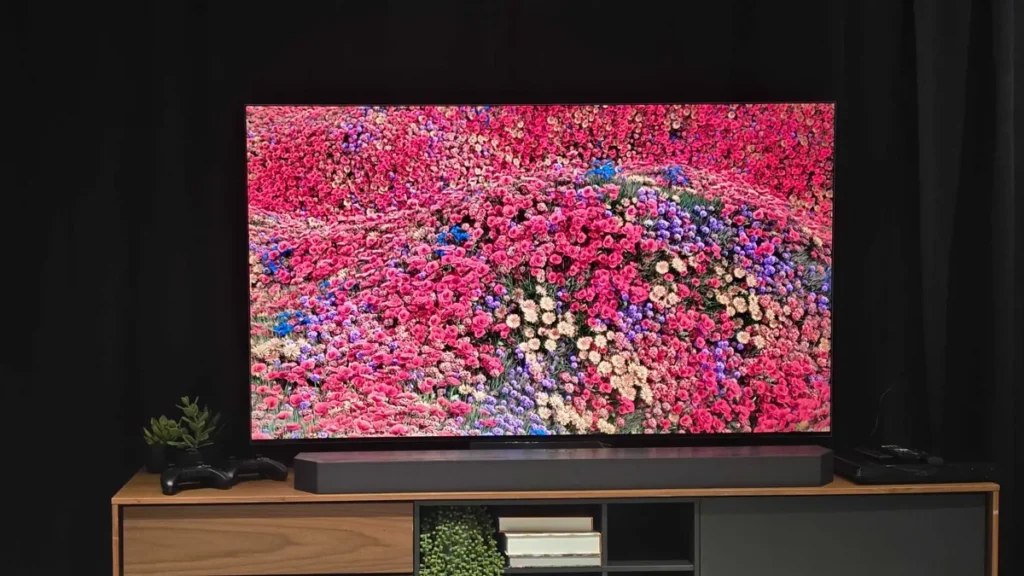
That structural difference explains the picture trade-offs. Early first looks of the R95H are very bullish on colour. Business Insider said the set delivered the widest colour gamut the reviewer had measured on a TV, and Tom’s Guide called it brighter and technically more colourful than Samsung’s new flagship OLED in a CES side-by-side. But both of those early takes still leaned toward OLED overall, largely because OLED kept the edge in contrast and off-axis consistency. That lines up with years of underlying display logic: Micro RGB can push LCD much closer to OLED in important ways, but OLED and QD‑OLED still own true pixel-level black control.
If you want the shortest buyer’s version, Micro RGB aims to combine more of Mini LED’s punch with some of OLED’s colour sophistication. OLED still wins the purist dark-room argument, while QD‑OLED remains the most complete premium mix of high contrast, wide colour and wide viewing angles among Samsung-adjacent technologies. Micro RGB is new enough, however, that it has moved the conversation from “interesting prototype” to “real premium alternative”.
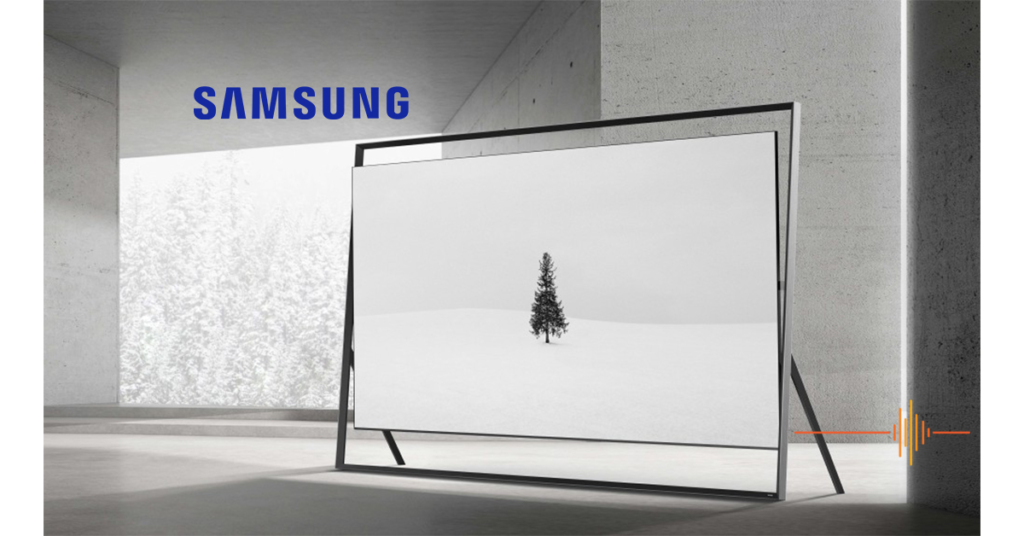
Micro RGB vs Mini LED (Neo QLED): brightness, contrast, and blooming
Against Samsung’s own Neo QLED logic, the architectural difference is simple. Neo QLED 4K still uses Quantum Mini LEDs and quantum dots to improve brightness, contrast and colour volume, while Micro RGB swaps the usual white or blue backlight path for micro-sized red, green and blue backlights. That means Micro RGB is changing the source of colour creation itself, not just refining how the light is filtered or enhanced later in the stack.
In practical early testing, Micro RGB already looks like a step up from conventional Mini LED rather than a lateral move. Expert Reviews measured roughly 2,200 nits on a 10% HDR window in Standard mode and praised the R95H’s backlight control, while eCoustics measured 2,223 nits in Standard mode and said the R95H outperformed Samsung’s 2025 flagship mini-LED on BT.2020 coverage. Tom’s Guide also described the R95H as “as bright as any Mini-LED TV” seen at CES, but with a little more colour volume.
Blooming is where the story gets more nuanced. Reviewers are not saying blooming disappears; they are saying it becomes better hidden and less annoying than expected. Expert Reviews reported that the 75-inch R95H’s little blooming took on the colour of the bright object that caused it, which made it less distracting than the usual grey LCD halo, while Tom’s Guide said the set showed noticeably less blooming than expected in person. So Micro RGB appears meaningfully better than ordinary Mini LED on blooming control, but it still does not rewrite the rule that OLED remains the cleaner contrast technology.
How Micro RGB improves color accuracy and reduces color bleed
Samsung’s own explanation is consistent across its US newsroom, product highlights and global launch materials: many small RGB light sources, each independently emitting, cut down colour bleed and let the television place colour more precisely. The company directly frames this as the reason Micro RGB can achieve “pinpoint accuracy” and “expanded colour” rather than the broader, less exact colour behaviour common to older LCD backlights.
The independent version of the same argument usually appears under the term “crosstalk”. Business Insider notes that one risk with RGB-backlit systems is coloured light spilling into neighbouring areas, such as a bright red object tinting nearby whites. Samsung told the publication that the R95H does not fall back to a white or blue backlight in difficult scenes, and the reviewer said no obvious crosstalk appeared in limited early testing. That does not yet amount to a final lab verdict, but it does support Samsung’s claim that Micro RGB is solving a real engineering problem rather than inventing new jargon for a familiar one.
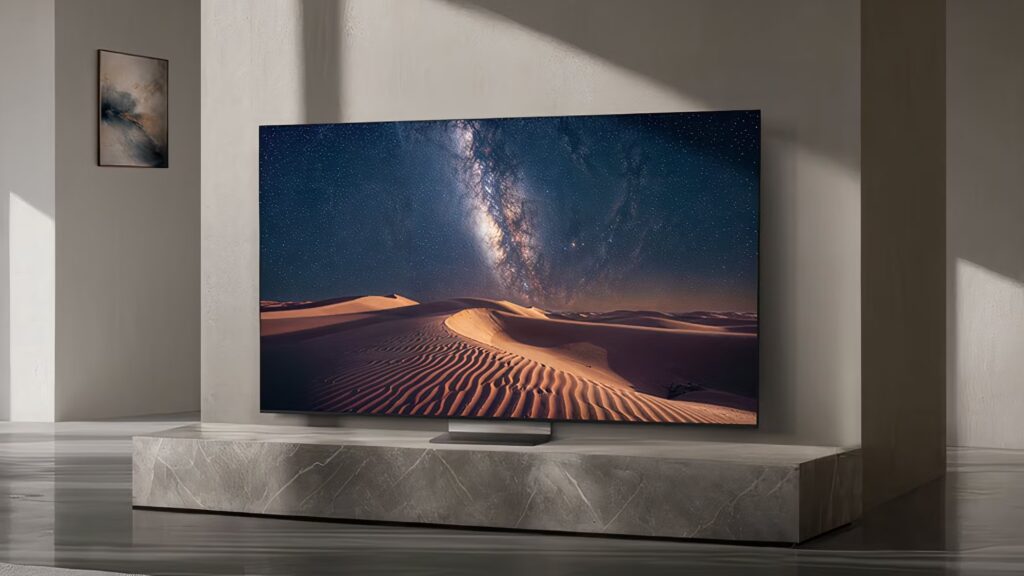
Micro RGB color gamut claims: BT.2020 coverage and real-world expectations
Samsung’s headline claim is strong and very specific: its Micro RGB Precision Color 100 certification is tied to 100% BT.2020 wide colour gamut coverage, verified by VDE. Samsung repeats that point in global launch materials, US launch materials and regional product pages, so it is not a one-off CES boast.
The real-world expectation needs a little more care. eCoustics measured 92% BT.2020 on the R95H in Filmmaker Mode and explicitly reported that Samsung’s higher marketing figure appeared to be based on Dynamic mode rather than the more accurate Filmmaker preset. That does not invalidate Samsung’s certification claim, but it does mean buyers should read “100% BT.2020” as a best-case operating achievement rather than assume every accurate home-viewing mode will reproduce the same figure.
Content also matters. RTINGS notes that DCI‑P3 is still the most common colour space for HDR content, and The Verge’s review of an RGB LED rival said the wider-than-P3 benefit is most obvious on content that genuinely stretches into wider gamut territory, citing Planet Earth II as an example. So, for buyers, BT.2020 coverage is meaningful as capability and future headroom, but not every film, live sport or streaming drama will suddenly look radically different just because the panel can reach that ceiling.
Bright-room and gaming performance
Samsung “Glare Free” Micro RGB TVs: reflections and bright-room performance
The R95H is the only mainstream Samsung Micro RGB series at launch to get Glare Free. Samsung says this anti-reflection treatment is UL-verified and designed to reduce reflection glare, discomfort glare and disability glare under indoor lighting conditions. On Samsung’s own Micro RGB pages, the company links Glare Free directly to clearer blacks and preserved contrast in bright rooms, which makes sense because glare reduction is only useful if the screen can keep its shadows from washing out at the same time.
Early hands-on impressions support the idea that Glare Free is one of the R95H’s most immediate strengths. eCoustics described the R95H as having high brightness for daytime viewing, and the same outlet said Samsung’s CES 2026 Micro RGB demonstration looked notably strong under the harsh exhibit lighting. That does not mean Micro RGB automatically dominates every other premium TV in a sunlit room, because 2026 OLEDs have improved anti-reflection as well, but it does mean the R95H is firmly aimed at the bright living-room buyer rather than only the dark cinema-room enthusiast.
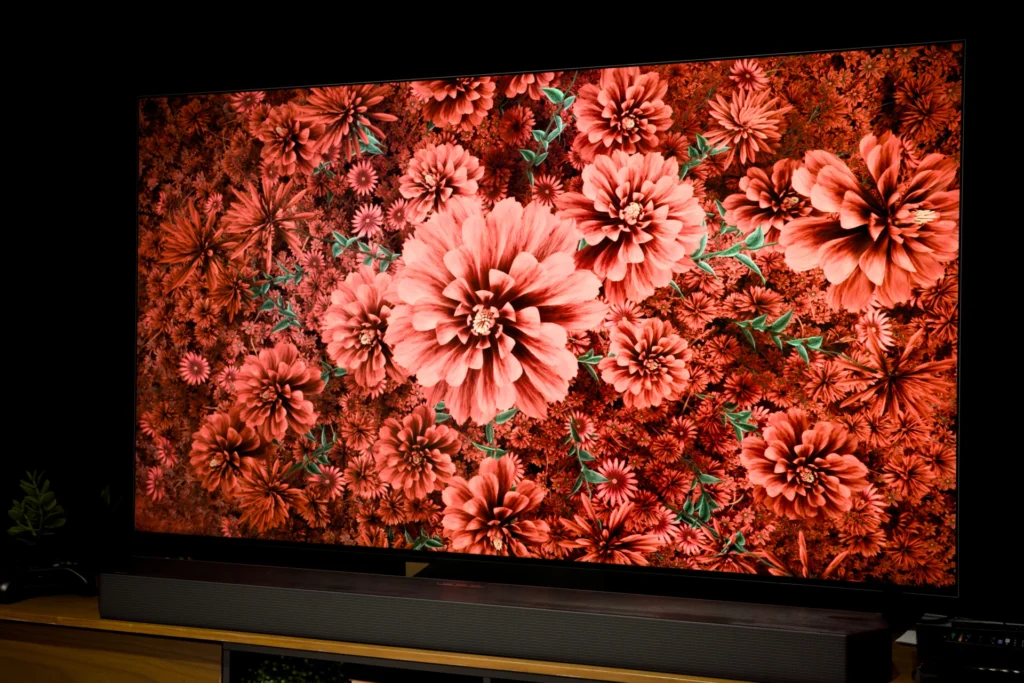
Samsung Micro RGB gaming features: 165Hz refresh rate and motion performance
Samsung has not held back on gaming features. Official R95H specifications include 165Hz refresh with VRR support, Motion Xcelerator 165Hz, ALLM, Game Motion Plus, Dynamic Black EQ, Super Ultra Wide Game View, Game Bar, FreeSync Premium Pro, HGiG and Gaming Hub. Samsung also markets AI Gaming Optimizer as an auto-detection system that adjusts settings by genre, which is the sort of feature casual players may appreciate more than enthusiasts but still adds convenience.
The key footnote is important, though: Samsung says 4K 165Hz support applies to PC-connected games that support those specifications. In other words, the spec is real, but buyers should not assume every console workflow will fully exploit it. What is safer to expect across the board is a very loaded gaming stack with HDMI 2.1 inputs, VRR, ALLM, FreeSync Premium Pro and a mature game overlay.
Motion handling also looks promising in subjective tests. Samsung’s marketing naturally emphasises AI Motion Enhancer Pro, but the more useful outside check is that eCoustics and other early reviewers saw only limited judder in demanding content and found the set impressive on motion overall. That is especially encouraging because new display categories often take a generation or two to settle their motion behaviour.
HDR formats and streaming support on Samsung Micro RGB TVs (what to check)
At platform level, Samsung Micro RGB looks like a modern Samsung premium TV rather than a stripped-down experiment. Regional spec pages list One UI Tizen, Samsung TV Plus, Gaming Hub, AirPlay, SmartThings integration and long-term OS upgrades, while Samsung’s 2026 Micro RGB launch materials say the line supports HDR10+ ADVANCED. Samsung’s own R95H specifications also list HDR10+ on the set itself, including Adaptive, Gaming and Advanced variants in regional documentation. HDR10+ Technologies separately says HDR10+ is available on major streaming services, so Samsung is not building this around a dead-end HDR format.
The important caution is what Samsung is not prominently listing. Official R95H pages and multiple independent spec roundups point to HDR10+, HDR10 and HLG rather than Dolby Vision. If Dolby Vision is central to your setup, that is the first thing to verify before buying. The second thing to check is audio hand-off: Samsung lists eARC on the R95H, so pairing the TV with a capable soundbar or AVR for higher-grade audio formats should be straightforward, but it is still worth confirming exactly how your preferred streaming box, console or disc player behaves through the chain.
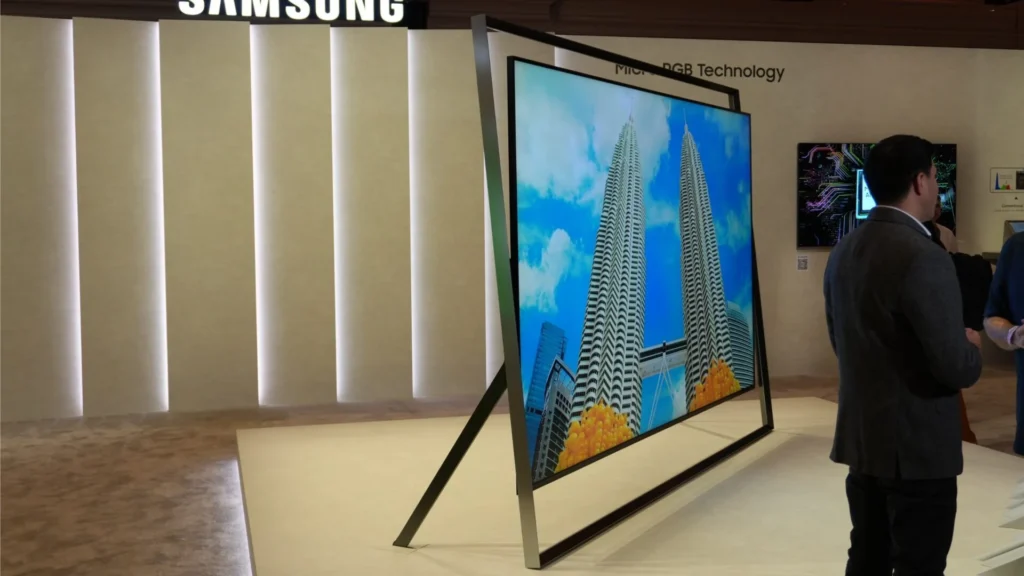
Setup and buyer guidance
Best settings for Samsung Micro RGB TVs (picture modes, color, and motion)
For films and prestige TV, the smartest starting point is Filmmaker Mode or Movie Mode. Samsung’s own support material says Movie is intended for dark-room viewing and Filmmaker Mode preserves the picture without additional changes, while Samsung’s TV picture-quality guide says Movie reflects the quality elements intended by publishers and that Filmmaker Mode is the most creator-faithful preset. Expert Reviews also found the R95H’s Filmmaker Mode unusually close to SDR reference targets, which is exactly what you want if accuracy matters more than showroom punch.
For brighter living rooms, Standard is the safer recommendation than Dynamic. Samsung describes Standard as the balanced default for typical indoor environments, and early R95H testing showed Standard can unlock a major luminance jump over Filmmaker Mode. Tom’s Guide, however, advises against relying on Dynamic for serious viewing because it tends to push colour and processing too hard. Put simply: use Standard for daytime TV and sports, then move back to Filmmaker or Movie for films at night.
For colour, Samsung’s own support menus show Warm1 and Warm2 as the warmer tone options, so if the image looks too blue in a default preset, those are the first two colour-temperature adjustments worth trying. For motion, the simplest advice is to keep Auto Motion Plus or other Picture Clarity processing low or off for films, since Filmmaker Mode already disables much of the unwanted smoothing. Tom’s Guide calls motion smoothing one of the most common causes of the “soap opera effect”, while Samsung’s support documentation shows exactly where those controls live in the menu.
For gaming, switch Game Mode to Auto or On and then use Game Bar for fine tuning. And because this is still an LCD-family display with local dimming, it is worth testing Local Dimming on Standard versus High in your room. Tom’s Guide recommends High for maximum punch but notes that haloing can increase, which means Standard may end up the better everyday balance on Micro RGB depending on your seating, content and tolerance for blooming.
Viewing angles and uniformity on RGB LED TVs: what buyers should know
Samsung’s official specification sheet does list Wide Viewing Angle on the R95H, and early hands-on tests suggest the set is better behaved off-centre than a lot of older LCDs. eCoustics reported that benchmark patterns retained solid contrast and colour saturation from far off-centre seats, which is a promising sign for multi-seat family rooms.
But buyers should still go in with the right expectation. Business Insider said that when viewing the R95H from the side, red tones shifted toward orange, and concluded that although viewing angles were better than on many QLEDs, colour and contrast still shifted more than on OLED. That is completely consistent with the broader industry picture: RGB LED improves the LCD backlight problem; it does not abolish LCD’s off-axis compromises.
Uniformity looks more encouraging than viewing angles. eCoustics specifically highlighted halo-free scrolling text and strong pattern behaviour, while Business Insider described only minor backlight issues in difficult HDR material. So the strongest buyer takeaway is this: Micro RGB appears to deliver a cleaner, more uniform LCD image than most people expect, but OLED and QD‑OLED still remain the safer choice if everyone in the room watches from wide side seats.
Is Samsung Micro RGB worth it in 2026? who should buy vs who should choose OLED
Samsung Micro RGB absolutely looks worth considering in 2026, but only if you buy it for the right reasons. The case for Micro RGB is strongest if you value very high colour volume, large-screen brightness, good anti-reflection performance, powerful gaming features, and a picture that behaves more like a top-flight premium LCD than an ordinary Mini LED. In that role, the R95H already looks like a serious step forward.
The case for OLED is still stronger if your priority is absolute black level, dark-room contrast, and consistent image quality from wider seating positions. Two of the most useful early outside voices on the R95H, Tom’s Guide and Business Insider, both came away impressed by Micro RGB’s colour but still preferred OLED overall. That is especially relevant because the 65-inch R95H launches at $3,199.99, while Samsung’s 65-inch S95H OLED is $3,399.99 and the 65-inch LG Electronics G6 OLED also lands at $3,399. The price gap is real, but not large enough to make the decision automatic.
There is, however, a stronger value case lower down the ladder. If the R95H feels too expensive, the R85H brings Micro RGB into the market at $1,599.99 for 55 inches and $2,099.99 for 65 inches. That makes Samsung’s 2026 Micro RGB story less about replacing OLED outright and more about creating a new premium lane between classic Mini LED and flagship OLED. On the evidence available today, that lane is real.
Frequently Asked Questions (FAQs)
- Is Samsung Micro RGB the same thing as MicroLED?
No. Samsung positions Micro RGB inside the RGB LED TV category, and independent reviews describe it as an LCD-based television with a new RGB backlight system rather than a self-emissive MicroLED-style panel. The gain is in backlight precision and colour reproduction, not in replacing LCD’s underlying structure altogether. - Which Samsung Micro RGB sizes are actually on sale right now in the US?
For the 2026 launch window, the R95H is sold in 65-inch, 75-inch and 85-inch sizes, while the R85H adds a 55-inch size. Samsung also lists the 115-inch MR95F as a carry-over model, and says the 100-inch Micro RGB TV will arrive later in 2026. - How much is the 65-inch Samsung R95H in the US?
Samsung’s official US price for the 65-inch R95H is $3,199.99. For context, the 65-inch R85H is $2,099.99. - Does Samsung Micro RGB support Dolby Vision?
Samsung’s R95H specification listings point to HDR10+, HDR10 and HLG rather than Dolby Vision. If Dolby Vision playback is a must-have in your system, that is something to check before purchase rather than assume. - Which Samsung Micro RGB series gets Glare Free?
Samsung’s own comparison pages show Glare Free on the R95H, while the R85H is positioned below it without that feature called out in the headline spec set. - Is the 165Hz refresh rate available for every gaming device?
Samsung’s own footnote says 4K 165Hz applies to PC-connected games that support those specifications. The TV still supports VRR, ALLM and FreeSync Premium Pro more broadly, but the headline 165Hz claim should be read with Samsung’s PC caveat in mind. - Does Micro RGB completely eliminate blooming?
No. Early reviewers consistently describe blooming as much better controlled and less distracting than expected, not as fully gone. That is a meaningful improvement, but OLED still keeps the cleanest pixel-level contrast. - Is Samsung’s 100% BT.2020 claim real in accurate picture modes?
Samsung’s VDE-backed claim refers to 100% BT.2020 coverage, but one early eCoustics measurement found 92% BT.2020 in Filmmaker Mode and reported that Samsung’s peak claim appeared tied to Dynamic mode. The practical reading is that the headline is real as a certification claim, but your chosen viewing mode affects the result. - Is Samsung Micro RGB better than OLED for movies?
Not categorically. Early reviewers praise Micro RGB for colour and brightness, but several still prefer OLED for overall film picture quality because of its darker blacks, stronger contrast and better viewing angles. - Where can you buy Samsung Micro RGB TVs in the US?
Samsung says the TVs are rolling out at Samsung.com and select retailers, including Best Buy. Retail listings were live around launch, though some individual pages still showed “Coming Soon” immediately after announcement.
Conclusion
Samsung’s 2026 Micro RGB TVs are not vapourware, not a concept teaser, and not just a rebadged Neo QLED. They are a genuine new premium LCD-class category with a clear retail structure, real pricing, distinct flagship and step-down models, meaningful bright-room advantages, and unusually ambitious colour performance claims backed by formal certification and early third-party enthusiasm.
At the same time, the fairest conclusion is not that Micro RGB has beaten OLED. It has not — at least not yet. The evidence so far says Samsung has made LCD materially better in the areas that matter most, especially colour, bright-room usability and blooming control, while OLED still retains the more complete all-round image in dark-room contrast and off-axis viewing. In 2026, Samsung Micro RGB looks less like an OLED killer than a new high-end option for buyers who want LCD strengths without accepting old LCD weaknesses so readily.
Sources and citation
- Samsung Newsroom (US & Global) — official announcements, release timelines, pricing, and rollout details
https://news.samsung.com/global - Samsung TV product pages & regional spec sheets — R95H / R85H specifications (refresh rate, ports, audio, OS, gaming, connectivity)
https://www.samsung.com/tvs/ - Samsung Support — TV picture quality guides (picture modes, colour tone, motion, Game Mode)
https://www.samsung.com/support/tvs/ - Samsung Display — QD-OLED technology explanation
https://www.samsungdisplay.com/eng/oled/qd-oled.jsp - Samsung OLED — official OLED technology overview
https://www.samsung.com/global/tvs/oled/ - LG Electronics — OLED technology background (self-emissive contrast explanation)
https://www.lg.com/global/oled - Business Insider — early hands-on and launch context
https://www.businessinsider.com - Tom’s Guide — TV reviews and performance analysis
https://www.tomsguide.com - eCoustics — AV-focused hands-on impressions and analysis
https://www.ecoustics.com - Expert Reviews — TV testing and evaluation
https://www.expertreviews.co.uk - The Verge — launch coverage and early impressions
https://www.theverge.com - TechRadar — LG G6 OLED coverage (competitive context)
https://www.techradar.com - HDR10+ Technologies — HDR10+ platform and HDR10+ ADVANCED
https://hdr10plus.org
Recommended
- The Legend of Vox Machina Season 4 Release Date Announced: June 3, 2026 Premiere on Prime Video
- How to Create Hair Cards in Blender for Game-Ready Characters: Complete Workflow Guide
- Why Blender Artists Love The View Keeper for Camera Management
- Xbox Project Helix Could Be A Make-Or-Break Moment For Microsoft: Release Date Rumors, Specs, Price, And Everything We Know
- Virtual Influencers: Exploring the Rise of Digital Personas in Modern Marketing
- Fortnite’s Original Save the World Mode Finally Going Free-to-Play, Launching on Switch 2 April 16
- The Christophers Review (2026): Cast, Plot, Ending Explained & Why Steven Soderbergh’s Art Drama Is a Must-Watch
- Cyberpunk Orion: Everything We Know About CD Projekt Red’s Next Cyberpunk Adventure
- How do I make the camera follow a character in Blender?
- Daz 3D: Building a 3D Character from Start to Finish – Step-by-Step Guide for Artists and Creators