








How Albion Online Devs Built a Sandbox MMORPG Across an Entire Decade becomes much easier to understand when you look at the project as a long chain of deliberate decisions rather than a single successful launch. The game that became Albion Online began with a 2012 studio founding and prototype phase, moved through years of alpha and beta iteration, launched in 2017, pivoted to free-to-play in 2019, reached official mobile release in 2021, expanded to regional server worlds in 2023 and 2024, and by April 2026 was still adding foundational upgrades through Radiant Wilds and an Xbox launch roadmap.
The deeper reason the game endured is that its creators kept the same high-risk identity at the center of development: a player-driven economy, classless combat, full-loot PvP, territory warfare, and a world shaped by player conflict rather than theme-park quest rails. That consistency made Albion harder to build, but it also made it distinctive enough to survive for more than a decade in a crowded MMORPG market.
Development foundations
Albion Online Development Timeline: From 2012 Prototype to Global MMO
The verified development arc starts in 2012, when the Berlin studio behind the game was founded and began prototyping the idea. Official and studio-linked sources then show a sequence of major milestones: early alpha activity in 2014, closed beta beginning in November 2015, final-beta feedback work in 2016, official launch on July 17, 2017, Steam launch on May 16, 2018, free-to-play conversion on April 10, 2019, official iOS and Android launch on June 9, 2021, Albion Asia in March 2023, Albion Europe in April 2024, and the 2026 cycle of Radiant Wilds plus the game’s first Xbox release on April 21, 2026.
What matters about that timeline is not just its length, but its structure. Albion did not simply ship and stabilize. It changed business model, moved onto mobile, altered server geography, kept overhauling PvP and open-world systems, and continued adding onboarding and controller improvements years after launch. That is why “development” and “live evolution” are inseparable in Albion Online’s history.
Who Created Albion Online? The Story of Sandbox Interactive
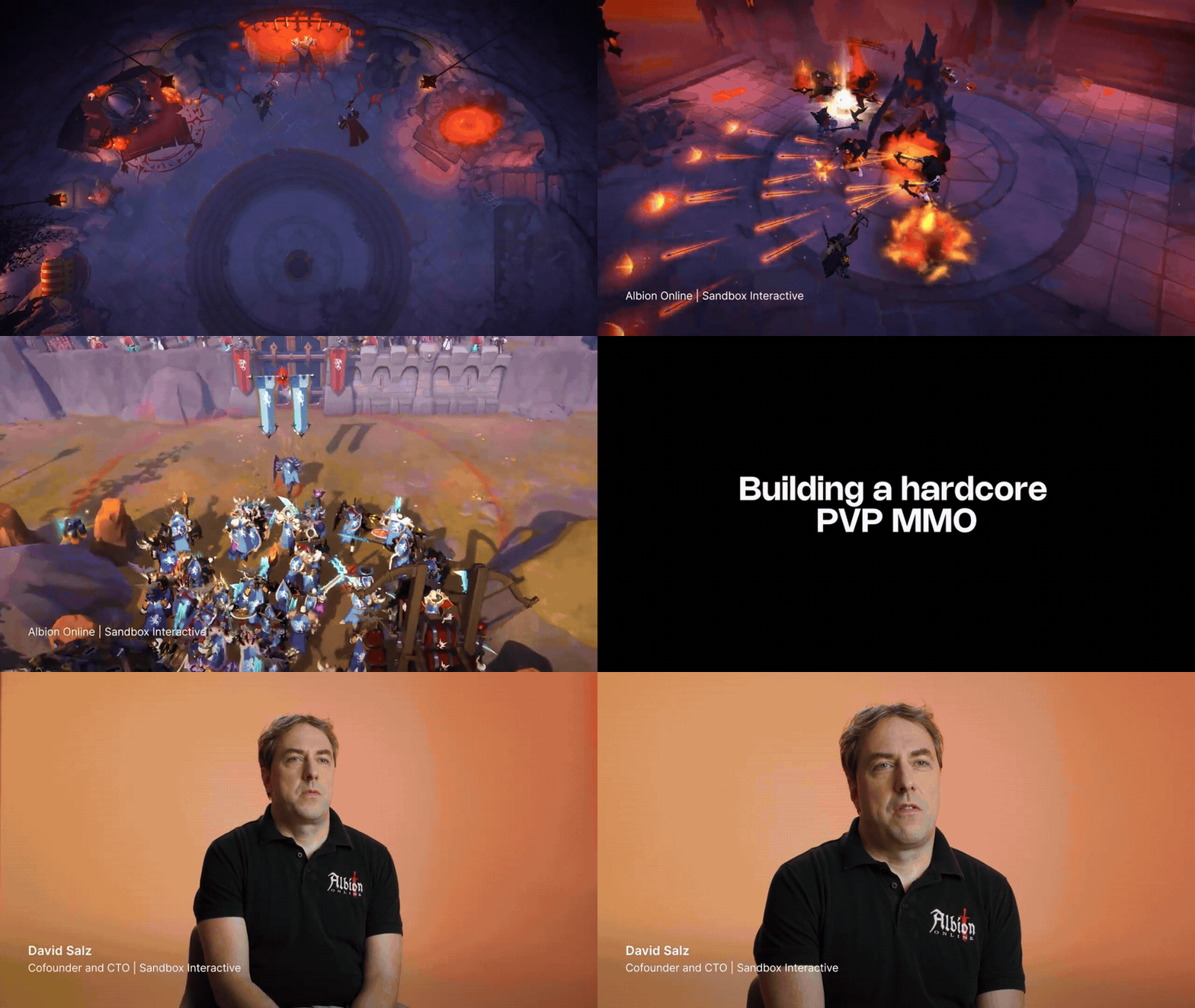
Albion Online was created by the Berlin-based studio Sandbox Interactive, which public-facing company materials describe as founded in 2012 by MMO enthusiasts and experienced game-development veterans. Co-founder and CTO David Salz publicly identifies himself as a co-founder of the studio, while Stillfront’s 2020 acquisition disclosures confirmed that the company had four co-founders.
The studio’s internal leadership history also helps explain why Albion feels like a designer-led MMO rather than a purely commercial live-service product. In the 2018 devcom presentation, Robin Henkys appeared as CEO and Game Director, while David Salz represented the technical and architectural side; later official announcements show longtime director Robin Henkys stepping back from day-to-day leadership in 2025 while remaining connected to the project.
How Albion Online Was Built as a Sandbox MMORPG from Day One
The strongest evidence that Albion was conceived as a sandbox MMORPG from the start comes from the studio’s own development presentation. Salz and Henkys described several “immoveable pillars” that the team deliberately refused to dilute: all items player-crafted, full-loot PvP, “you are what you wear” classlessness, and no item teleportation. Those are not late-stage marketing labels. They are early design constraints that shaped production, systems, and monetization choices.
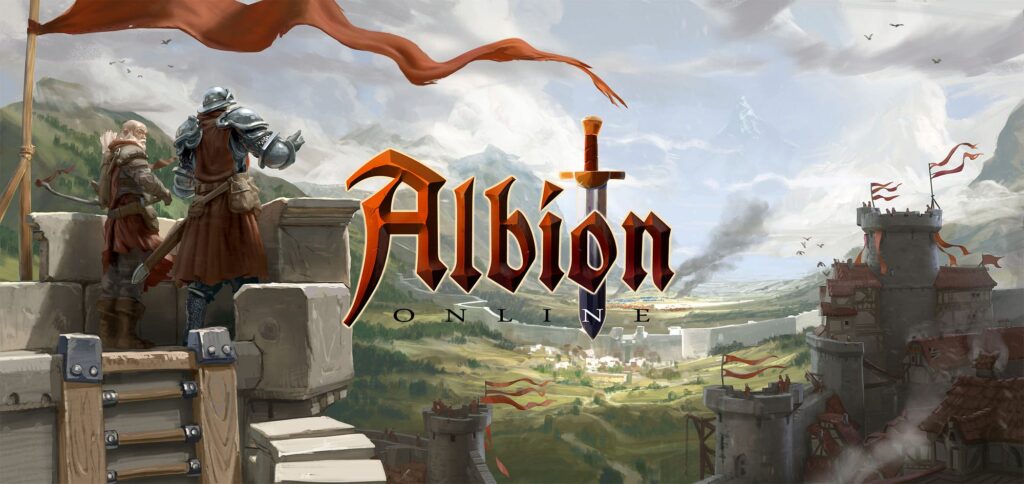
That original philosophy still maps cleanly onto the game’s official store description. Steam describes Albion as a fantasy sandbox MMORPG built around a player-driven economy, classless combat, intense PvP, territorial conflict, and cross-platform play. In other words, the live game in 2026 still reads like a polished extension of the design pillars the studio laid down years earlier.
Why Albion Online Took Over 10 Years to Fully Evolve
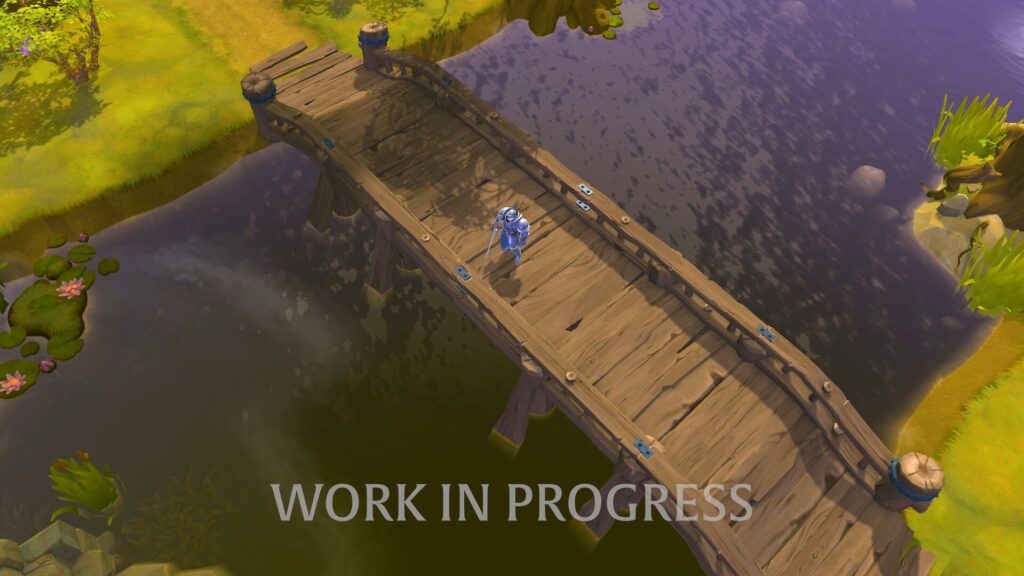
Albion took more than a decade to fully evolve because the team was building three difficult products at once: a sandbox ruleset that depends on player behavior, a live global MMO infrastructure, and a cross-platform client strategy that had to work across very different devices. Christoph Hombergs said in 2026 that the game spent years in repeated “not quite there yet” phases before and after launch, and that several turning points — especially the 2019 free-to-play release and the 2023 regional-server split — fundamentally changed Albion’s trajectory.
The long evolution also reflects how sandbox MMOs mature. They need social density, functioning markets, balanced item sinks, territory incentives, and onboarding strong enough to replenish churn. Albion therefore “finished” in layers: release in 2017, accessibility expansion in 2019, mobile parity in 2021, regional accessibility in 2023–2024, and major systems and presentation refreshes again in 2025–2026.
Iteration and systems
Albion Online Early Development Challenges and Playtesting Phases
Early on, the team faced a classic indie-MMO contradiction: the concept was ambitious, but the budget was “way too small for the suggested scope.” The devcom presentation says the core team had never built an online game before, so the studio reduced production risk through a simple art style, selected middleware, loading screens instead of a fully streamed world, and external coaching from people with relevant online-game experience.
Testing, meanwhile, was not a late QA step. It was part of discovery. The studio says it involved large guilds early, ran closed-user-group alpha sessions lasting two to four weeks, then layered on broader beta cycles. Official search results point to a Summer Alpha in 2014, a Winter Alpha in late 2014, the official Closed Beta starting on November 23, 2015, and a formal Final Beta Survey in 2016.
Launch and post-launch created a different class of problems. The same presentation documents a catastrophic Cassandra issue that could make the game unresponsive under full load, a migration from Windows to Linux to solve an I/O bottleneck, and serious DDoS attacks that the team later described as a lesson in never underinvesting in MMO infrastructure protection.
How Player Feedback Shaped Albion Online’s Core Gameplay Systems
Albion’s community influence was visible long before release. The Winter Alpha announcement explicitly said new features were based on feedback from earlier alpha testers, and the studio’s Final Beta Survey in 2016 was designed to gather feedback on both the current game and upcoming features. In the 2018 devcom talk, the team called early guild feedback “invaluable,” and in 2026 Hombergs still described early listening and adaptation as central to defining what Albion should become.
That does not mean every player suggestion was adopted literally. Instead, Albion’s history shows a recurring pattern: collect feedback, translate it into structural changes, and keep the sandbox pillars intact. That is why the game repeatedly adds quality-of-life and onboarding improvements while preserving full-loot risk, market decentralization, and territorial competition.
The Role of a Player-Driven Economy in Albion Online’s Success
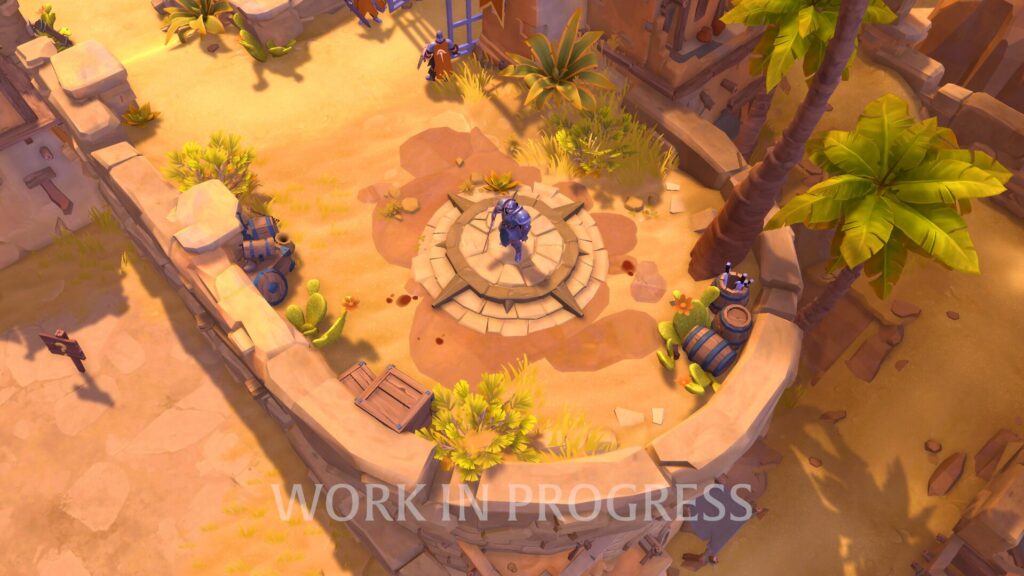
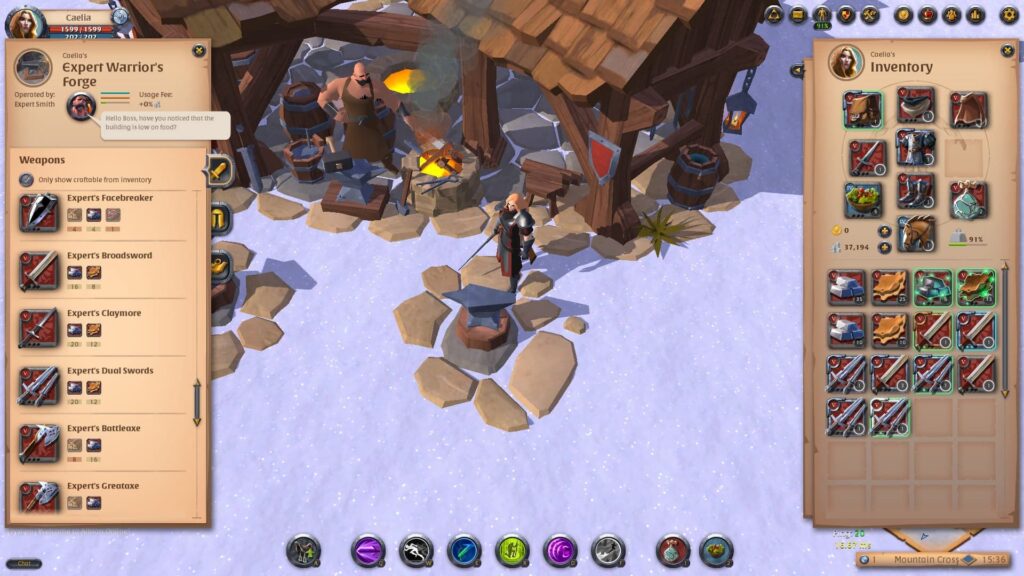
The economy is not a side feature in Albion Online. It is the game’s spine. The official Steam page says nearly every item is player-crafted, using resources gathered by players and processed in player-constructed buildings, then traded at local marketplaces. Earlier studio materials described the same principle even more bluntly: “all items player crafted” was one of the project’s immovable pillars.
That economy works because Albion links production to destruction. Full-loot PvP removes gear from circulation, territorial warfare shifts access to resources and logistics, and regional trade creates arbitrage and specialization. The result is that gathering, crafting, transporting, and fighting all feed the same economic system instead of existing as separate mini-games. That integration is a major reason Albion retained relevance where many sandbox MMOs struggled to maintain meaningful interdependence.
How Albion Online Achieved True Cross-Platform MMO Gameplay
Albion’s cross-platform strategy was not an afterthought added for growth. It was part of the project DNA. An official 2014 dev blog called the game the “first true cross-platform MMO,” and David Salz later wrote that while the original plan was PC-only, the team quickly realized tablets and mobile devices would become crucial, which is why Albion became “a true cross-platform project.”
Technically, the most important choice was using Unity for broad platform deployment while keeping game logic outside the client. Hombergs said Unity’s out-of-the-box platform support was a big part of maintaining parity, and Salz wrote that the team used Unity for the client while relying on shared C# code and server-side systems powered through Photon. Official store materials now describe one account spanning Windows, Mac, Linux, Android, and iOS, while 2026 Xbox reporting says the first console release is also being built around the same cross-platform, cross-progression principle.
Turning points in business and scale
Why Albion Online Switched from Buy-to-Play to Free-to-Play
Albion switched from buy-to-play to free-to-play for a pragmatic reason: the studio concluded that sustaining a niche sandbox MMORPG behind an upfront price was much harder than sustaining one with a soft-subscription economy and a bigger funnel. Hombergs said the 2019 free-to-play shift was possibly the single most important turning point in the game’s history, adding that Albion had originally been conceived as a free-to-play game but the studio was not ready to launch that way in 2017.
Official announcements set the free-to-play date at April 10, 2019. Later anniversary and retrospective material describes the transition as opening the floodgates to a large influx of new players, while preserving Premium as a monetization layer rather than gating access to the game itself. In practical terms, the move widened the top of the funnel without discarding the player-driven economy or the real-money-to-gold-to-silver ecosystem Albion had already built.
Key Updates and Expansions That Transformed Albion Online Over Time
Albion’s long-term success is partly the story of several unusually consequential updates. Official update pages show that Queen rebuilt the Outlands, Rise of Avalon opened a new Avalonian wilderness and the Roads, Call to Arms reworked Faction Warfare, Lands Awakened overhauled the open world, Beyond the Veil introduced new magical zones, Wild Blood added Awakened Items, Foundations strengthened guild warfare in 2024, Horizons made the open world more dynamic and accessible later that year, Realm Divided restructured Faction Warfare again in late 2025, and Radiant Wilds in April 2026 delivered a sweeping visual overhaul plus performance work and new training tools such as a 1v1 Arena and the Armory.
The important pattern is that Sandbox Interactive rarely treated updates as mere content drops. The biggest patches tended to rewire core player loops: where people fight, how they move, how factions matter, how new players enter the game, how builds are discovered, and how readable the world feels in motion. That systems-first approach is a major reason the game still feels actively developed rather than merely maintained.
How Albion Online Scaled Globally with a Single Shared World
For much of its life, Albion defined itself around a “one world” idea. The 2018 devcom talk described the game as “One World,” and later technical coverage explains the underlying concept as a single-shard regional world rather than many disconnected instances. This gave Albion unusually strong social and economic cohesion because everyone in a region fed the same markets, rivalries, and territorial politics.
But the same architecture created latency and capacity tradeoffs as the audience globalized. Hombergs said the 2023 server split was the second-biggest event in Albion’s history because physics and ping limitations ultimately beat the studio’s original desire for a single worldwide server. By March 2026, external studio reporting described the live structure as Albion Americas, Albion Asia, and Albion Europe & MENA — effectively preserving the shared-world philosophy within regions rather than across the whole globe.
Technology and design identity
The Technology Behind Albion Online: Unity and Cross-Platform Design
Albion Online’s technology stack reflects a deliberate separation between presentation and simulation. Salz wrote that the team used Unity for its client-side strengths and broad publishing support, but the devcom architecture talk stresses that the studio kept Unity out of the server, used shared C# code where useful, and built key components itself. The same presentation lists Photon for networking, Cassandra for horizontally scalable data storage, and Postgres for SQL workloads.
That architecture choice explains why Albion could expand across platforms without turning into multiple different games. Unity handled graphics, UI, animation, and input, while the actual world simulation stayed authoritative on the server side. In practice, that meant the team could pursue platform parity without compromising the MMO’s economic and combat consistency.
Albion Online’s PvP, Territory Control, and Sandbox Philosophy Explained
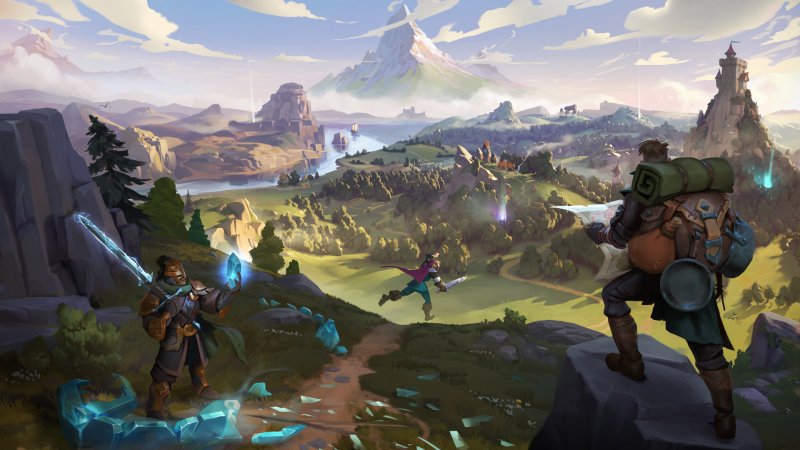
Albion’s sandbox philosophy is easiest to grasp when you look at how combat connects to ownership. The official store page describes a loop in which guilds claim territories, build hideouts, seek resource advantages, and compete on seasonal leaderboards. That territorial framework is paired with high-risk full-loot PvP, where gear loss creates stakes and turns every logistics chain into a strategic concern.
Hombergs’ 2026 interview makes clear that this identity was always meant to be somewhat polarizing. Full-loot PvP is not designed to please every MMO player; it is designed to create a game with friction, consequence, and strong group identity. Because Sandbox kept those traits instead of sanding them away, Albion remained recognizable as a sandbox MMO rather than drifting into a generic live-service RPG.
How Albion Online Stayed Relevant in the MMORPG Market for a Decade
Albion stayed relevant by doing several things at once without abandoning its core audience. First, it kept shipping large systems updates rather than relying on cosmetic seasonal cadence alone. Second, it improved access through free-to-play, official mobile support, better onboarding, controller work, and regional server expansion. Third, it kept listening closely to its existing players instead of rebuilding the game around every external trend.
There is also evidence that the market still responds to that approach. As of April 2026, Steam showed Albion with more than 90,000 total user reviews and a “Mostly Positive” overall rating, while the studio was simultaneously shipping Radiant Wilds and preparing the Xbox version. Longevity in MMOs rarely comes from novelty alone; Albion’s case suggests it comes from consistency plus periodic structural renewal.
What’s Next for Albion Online After a Decade of Development and Growth
As of April 17, 2026, the next phase of Albion looks like a combination of technical modernization and audience expansion rather than a genre pivot. Official roadmap material says 2026 includes ongoing performance improvements, the Armory, a new 1v1 Arena, continued controller and UI work, the first Xbox launch on April 21, and dragons later in the year.
Leadership has also evolved. Official 2025 announcements say Robin Henkys stepped back from day-to-day direction and creative leadership passed to Moritz Bokelmann, Michael Schwahn, and Jon Craft. That matters because it suggests Albion is no longer a founder-era project merely being prolonged; it is becoming a multi-generation live MMO with enough institutional continuity to keep growing after its original decade.
Frequently Asked Questions (FAQs)
- What year did Albion Online begin development?
Development began in 2012, the same year Sandbox Interactive was founded in Berlin. - When did Albion Online officially launch?
The official launch date was July 17, 2017. - Who developed Albion Online?
Albion Online was developed and published by Sandbox Interactive. - Was Albion Online always intended to be a sandbox MMORPG?
Yes. Early studio materials list player-crafted items, full-loot PvP, classless “you are what you wear” design, and no item teleportation as core pillars from the outset. - Why did Albion Online switch to free-to-play?
The studio concluded that sustaining a buy-to-play sandbox MMO was extremely difficult, and leadership later described the 2019 free-to-play move as one of the game’s most important turning points. - Why is Albion Online called a player-driven economy MMO?
Because nearly every item is crafted by players from player-gathered resources and traded through player-facing markets, while PvP destruction helps keep demand real. - Is Albion Online truly cross-platform?
Yes. Official descriptions say one account works across PC and mobile platforms, and the 2026 Xbox launch is also being built around cross-platform and cross-progression support. - Does Albion Online still use a single shared world?
Partly. It no longer runs as one global server, but it still uses single-shard regional worlds such as Albion Americas, Albion Asia, and Albion Europe. - What engine powers Albion Online?
The client uses Unity, while the broader stack has also included Photon, Cassandra, and Postgres according to studio technical presentations. - What is the most important thing happening next for Albion Online?
In the near term, the biggest officially announced items are the April 2026 Xbox launch, ongoing performance and UI improvements, and the roadmap’s planned dragon content for summer 2026.
conclusion
How Albion Online Devs Built a Sandbox MMORPG Across an Entire Decade is ultimately a story about disciplined stubbornness. The studio started with a risky niche vision, learned painful technical and operational lessons, used years of alphas and betas to refine the concept, fixed a flawed business-model fit through free-to-play, extended the game onto mobile and then console, and reworked core systems repeatedly without abandoning the core sandbox promise.
That is the real lesson of Albion Online’s decade-plus journey. Its success did not come from chasing every market fashion. It came from identifying a coherent sandbox MMORPG identity, protecting it, and then evolving everything around it — onboarding, monetization, networking, regional infrastructure, platform support, and live content cadence — until the game could sustain that identity at global scale.
sources and citation
- Albion Online Official Website
https://albiononline.com/ - Albion Online Download Page (official client)
https://albiononline.com/download - Albion Online Steam Store Page
https://store.steampowered.com/app/761890/Albion_Online/ - Albion Online Steam Launch Announcement (official Steam news)
https://store.steampowered.com/news/app/761890/view/4040248138384160927 - Albion Online – General Game Overview / Systems (reference summary)
https://en.wikipedia.org/wiki/Albion_Online
Recommended
- Suikoden Anime Trailer Breakdown: Suikoden: The Anime PV1 Reveals Cast, Story Clues, and October 2026 Release
- Warner Bros. Discovery Is Rebuilding Its Video Game Pipeline After a Significant 2025
- The Steam Deck Is Out of Stock – What Does It Mean? (US, Canada & Asia Shortage Explained)
- Star Wars: Maul Shadow Lord Season 1, Episodes 1-8 Review: Disney+’s Darkest Animated Star Wars Story Yet
- Wuthering Waves – Xbox Release Date Trailer | Xbox Partner Preview Showcase 2026: July 2026 Release, Game Pass, and Xbox Play Anywhere
- According to UKIE, the UK’s Video Game Market Will Hit £8.7 Billion by 2025: Trends, Breakdown, and What’s Next
- How to Retarget Mixamo Animations to Metahuman in Unreal Engine Using the IK Retargeter
- What is the clipping range in Blender cameras?