






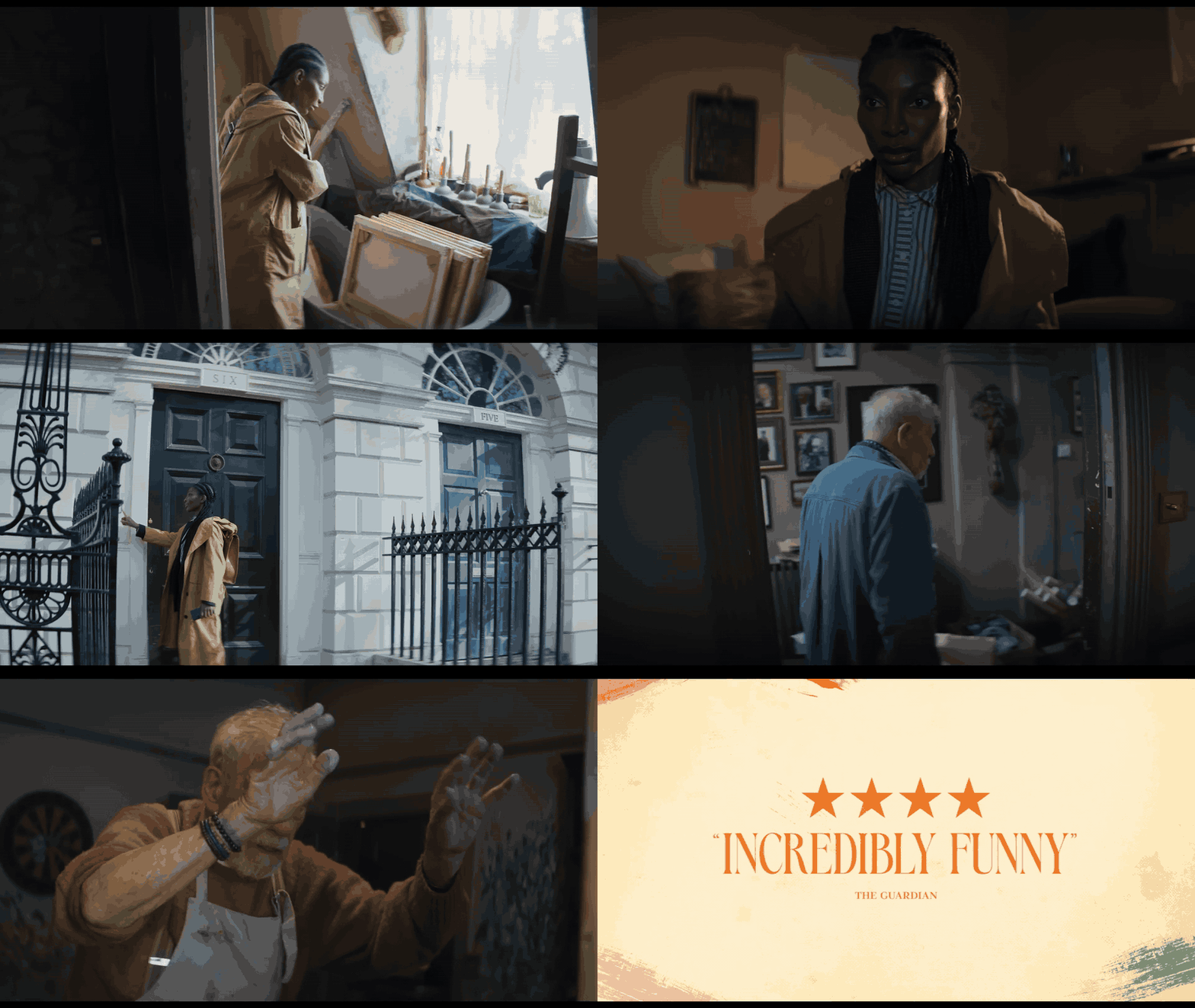
If you are searching for The Christophers review (2026), cast, plot, ending explained, and whether Steven Soderbergh’s art drama is worth watching, the first thing to know is that the film premiered at the Toronto International Film Festival on September 7, 2025, but began its theatrical release in 2026, which is why some sites file it under 2025 while most audience-facing release coverage treats it as a 2026 movie. The second thing to know is that the film has opened to unusually strong critical support, anchored by the pairing of Ian McKellen and Michaela Coel.
Overview
The Christophers Review (2026): Is the Movie Worth Watching?
Yes. On the evidence currently available, The Christophers is worth watching, especially if you like grown-up films built on performance, dialogue, and moral ambiguity rather than spectacle. As of April 23, 2026, Rotten Tomatoes lists the film at 97% from 108 reviews with an 83% audience score, while Metacritic lists it at 80/100 from 33 critic reviews. Time went even further and called it “one of the best movies of the year so far,” which is the kind of line that only comes when a film is connecting beyond festival hype.
What makes it work is that the movie starts like a sly inheritance caper and then keeps deepening into something sadder, stranger, and richer. Multiple critics note that it only looks like a heist movie at first; what it really becomes is a chamber piece about creativity, resentment, authorship, and the right to judge art. That blend of wit and emotional aftertaste is why the film has landed so strongly with reviewers.
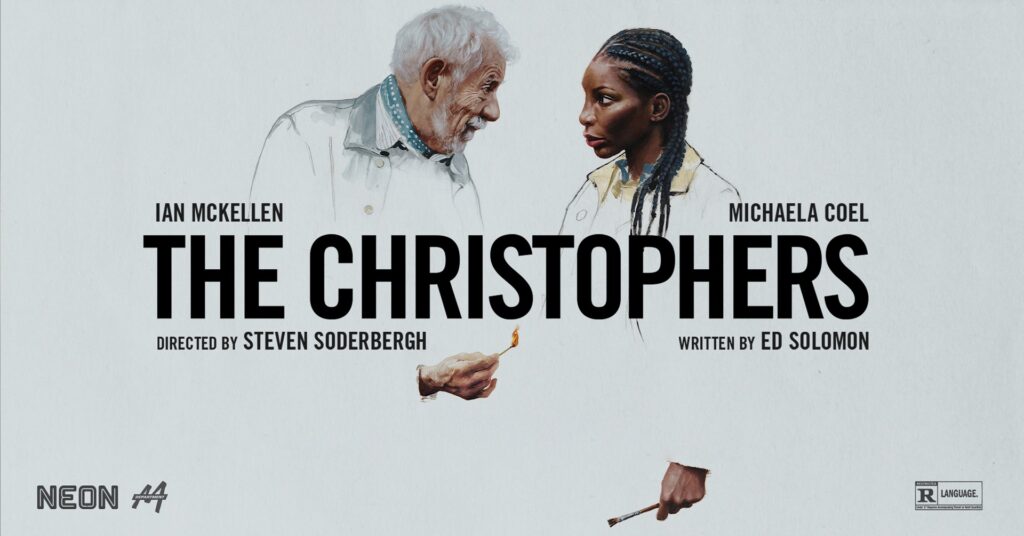
Story and meaning
What Is The Christophers About? Full Plot Summary Explained
At the center of the story is Julian Sklar, a once-celebrated London painter who has not produced important new work in decades, and Lori Butler, a younger painter, art restorer, and sometime forger who is recruited under false pretenses to enter his house. Julian’s estranged children want Lori to locate and secretly finish a cache of uncompleted paintings known as “The Christophers,” so those works can later be “discovered” and sold for a fortune after Julian’s death. Official and near-official synopses consistently describe the same setup: a family inheritance scheme, a hidden body of unfinished art, and a con that depends on Lori imitating Julian’s style closely enough to fool the market.
From there, the plot becomes less about whether the con will succeed and more about what happens once Julian senses the deception. Reviews and interviews agree that the middle stretch is built around long, sharp verbal duels between Lori and Julian, with each character slowly recognizing the other as an artist rather than just an obstacle. The Art Newspaper notes that the script keeps recontextualizing their relationship through dialogue rather than action, while NPR emphasizes that the characters’ battle of wits “turns inside out” as they discover they are intellectual equals.
Steven Soderbergh’s The Christophers: Story, Themes, and Style
Steven Soderbergh and Ed Solomon shape the movie as a deliberately intimate two-hander rather than a big ensemble caper. In interviews, Soderbergh has described the challenge as keeping a talk-heavy movie visually alive without over-directing it, and he built a subtle visual rule into the film: once Lori crosses Julian’s threshold, the camera goes handheld; when scenes move outside that emotional arena, it shifts back into a more controlled mode. That choice ties the style to Lori’s instability and to the practical difficulty of moving through Julian’s cluttered house.
That formal simplicity is not accidental. Letterboxd’s interview with Soderbergh and Solomon calls the film a witty art-world caper that unfolds into something more emotionally complex, while Filmmaker describes it as “heady” and “personal,” and emphasizes how Solomon softened Soderbergh’s earlier, darker conception into something warmer and more humane. The result is a movie that looks modest on the surface but feels carefully engineered underneath.
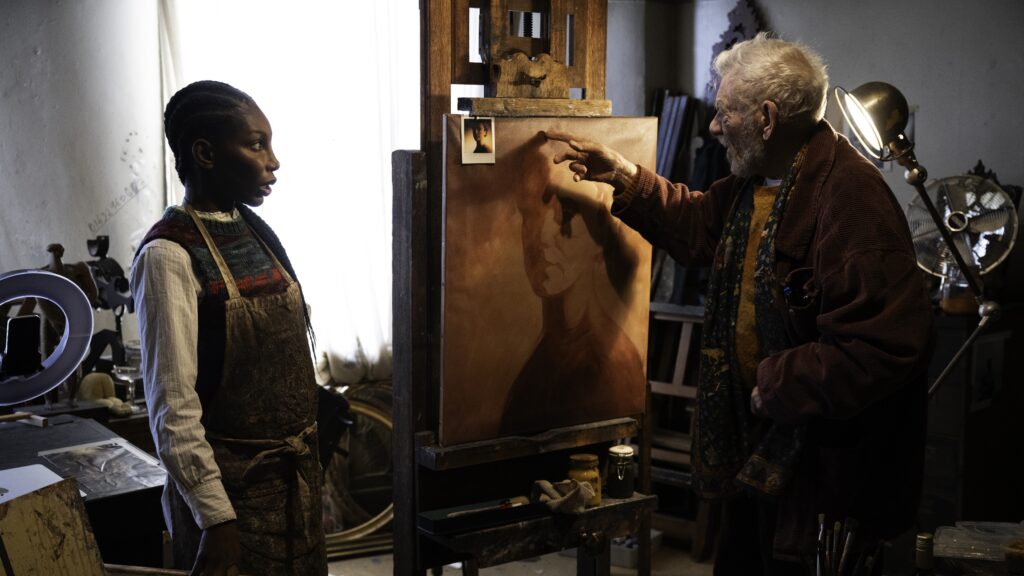
The Christophers Ending Explained: What Happens to Julian and Lori?
The ending works best if you stop expecting a last-minute gotcha twist. Several reviews stress that the film is not ultimately interested in a conventional con payoff. Instead, the final stretch turns on Julian’s refusal to let his unfinished work become a pure inheritance product and on Lori’s evolution from hired imitator into something much closer to a steward of legacy. AP explicitly describes Julian as someone determined to “burn, bury and shred” the unfinished Christophers rather than let them be exploited, while Screen Anarchy says the film’s last movement transforms completion of the paintings from a mercenary act into one of remembrance and love.
So what happens to Julian and Lori, in emotional terms? They begin as adversaries inside a fraud, become uneasy collaborators, and end as two artists who have restored something in each other. Reuters quotes Coel describing the movie’s deeper idea as “the art of restoration” in both artistic and personal senses, and PrimeTimer’s ending piece frames Lori’s final position as making peace with Julian’s legacy rather than simply profiting from it. The film also leaves late-stage authorship deliberately ambiguous: The Art Newspaper notes that when the paintings are finally completed, the movie barely shows them, underscoring that market value and visual certainty matter less than the unresolved question of who, exactly, owns or finishes another artist’s unfinished life.
What Are “The Christophers” Paintings in the Movie? Meaning Explained
“The Christophers” are not just valuable canvases; they are Julian’s most emotionally loaded body of work. The film presents them as portraits of a former lover named Christopher, and critics repeatedly describe them as the hinge between Julian’s artistic peak, his romantic history, and his present-day paralysis. The Art Newspaper argues that the paintings matter less as objects than as repositories of feeling, while NPR describes Lori’s key speech about them as a rigorous reading of Julian’s materials, technique, and emotional state across time.
The movie is also unusually careful about making the paintings feel like works from a believable art-historical tradition. The Art Newspaper reports that the film drew on advisers including Jann Haworth, and that the most visible influence on Julian’s paintings is David Hockney. That matters because the film is not asking whether the art is “pretty”; it is asking whether art’s value lies in biography, technique, scarcity, authorship, interpretation, or market mythology. By the end, the paintings become symbols of all five.
The Christophers Movie Genre: Is It a Comedy, Drama, or Heist Film?
The cleanest answer is: it is a comedy-drama with heist DNA. Rotten Tomatoes and the BBFC classify it as comedy/drama, and AP, NPR, RogerEbert.com, and Filmmaker all describe it as something that begins in art-heist territory before shifting into a more intimate two-character study.
That distinction is important for expectation management. If you go in wanting a clockwork caper in the mold of Soderbergh’s coolest popcorn entertainments, you may find this quieter and more literary. If you go in wanting a witty, adult chamber piece with tension, reversals, and dark humor, you are much more likely to click with it.
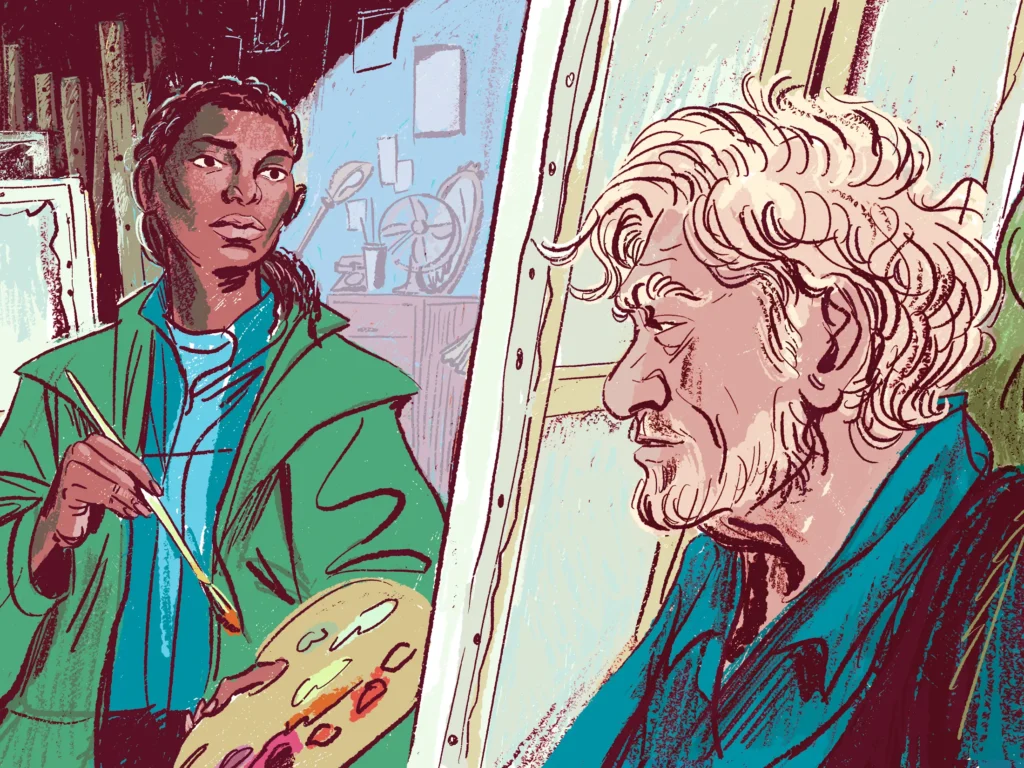
The Christophers Themes Explained: Art, Forgery, and Legacy
The film’s biggest themes are right there in the setup: authorship, commodification, inheritance, criticism, and unfinished work. AP calls the movie a meditation on art, legacy, creativity, and who has the right to critique. NPR adds that it is equally interested in how hard it has become for artists simply to survive, noting that both Julian and Lori rely on side hustles to stay afloat. Reuters, meanwhile, foregrounds Coel’s reading of the story as one of restoration, not just of canvases but of selves.
The film also treats forgery in a more nuanced way than most prestige dramas do. It is not merely a crime device. It becomes a way of testing whether imitation can ever carry truth, whether criticism can be an act of creation, and whether legacy belongs to blood relatives, to the market, to the artist, or to the person who understands the work best. That is why the movie keeps returning to the paintings as both MacGuffins and emotional evidence.
Is The Christophers Based on a True Story or Original Script?
There is no evidence that The Christophers is based on a true story, a nonfiction case, or a prior book or play. Major credit listings consistently identify it simply as a screenplay by Ed Solomon, and interviews describe it as a spec project developed directly between Solomon and Soderbergh rather than an adaptation.
That said, it is not “purely invented” in the sense of having no real-world roots. The New Yorker reports that Solomon drew heavily on his mother’s life as a painter and on mentor dynamics from his own experience, while The Art Newspaper notes that the film consulted art restorers, curators, and artists to make the art-world procedures feel convincing. So the best description is this: an original screenplay with autobiographical and art-historical texture, not a true-story adaptation.
Cast and performances
Who Stars in The Christophers? Cast and Characters Breakdown
The four principal roles are clear across the official and review coverage. James Corden plays Barnaby Sklar, one of Julian’s opportunistic children; Jessica Gunning plays Sallie Milton Sklar, Barnaby’s equally grasping sibling; Ian McKellen plays Julian; and Michaela Coel plays Lori. Rotten Tomatoes and Metacritic both list those four as the top-billed cast, while NEON’s official page uses them as the film’s central ensemble.
Supporting credits surfaced by Metacritic include Daniel Fearn as the Locksmith, Tilly Botsford as Esme, Lucy McCormick and Le Fil as Lori’s flatmates, Dallas Campbell as the moderator of “Art Fight,” and Ferdy Roberts as Owen Appleton. Those roles are smaller, but they help define the larger ecosystem around Julian’s faded celebrity and Lori’s precarious working life.

The Christophers Review: Ian McKellen and Michaela Coel Performance Analysis
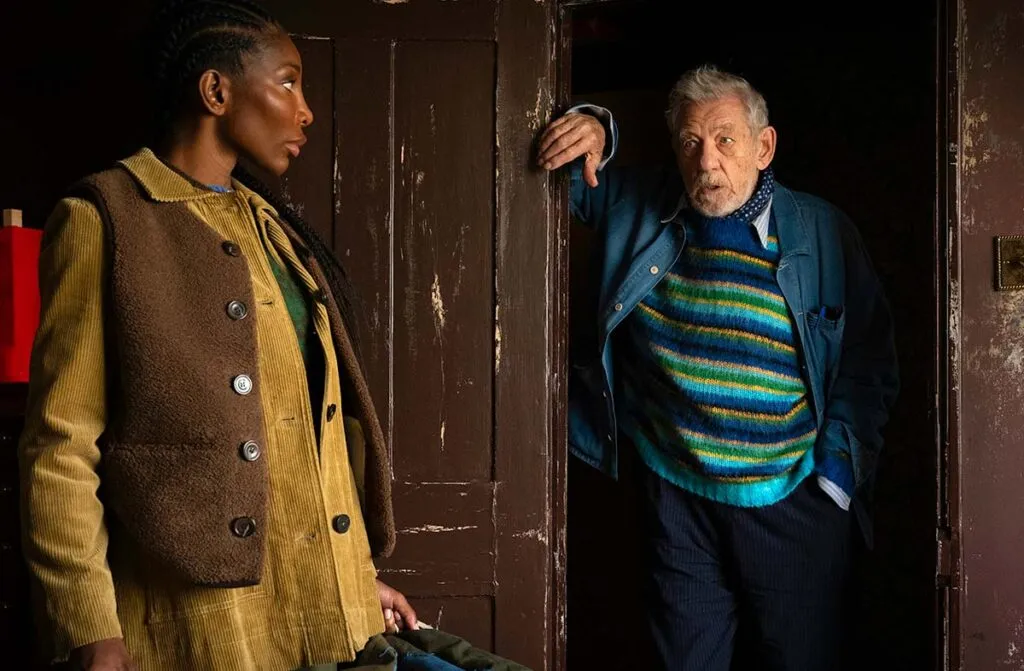
McKellen and Coel are the reason the movie is more than a clever premise. Rotten Tomatoes’ consensus calls the film a “superb two-hander,” and many of the strongest reviews focus almost entirely on the tension between McKellen’s flamboyant verbosity and Coel’s quietly devastating stillness. The New York Times, Time, the Boston Globe, and other critics highlighted how unusually satisfying it is to watch the two actors test one another scene by scene.
McKellen’s work is widely seen as one of his best screen performances in years, perhaps because Julian requires him to be funny, vain, cruel, lonely, and unexpectedly open all at once. Coel, by contrast, is praised for refusing to let Lori become passive or merely reactive. In her own interview with People, Coel said working with McKellen taught her to stay curious and scrutinize every page; Soderbergh told the same outlet that he cast them precisely because he knew McKellen’s force would not overwhelm her. Reuters also captures the public chemistry between them, with McKellen calling Coel a “wonderful sparring partner.”
Reception and context
Why The Christophers Is One of the Best Movies of 2026 So Far
The case starts with the numbers but does not end there. A 97% Rotten Tomatoes score, an 80 Metacritic score, and a Time review calling it one of the year’s best would already make the film notable. Add in the Sonoma International Film Festival’s audience award and the sense that this is not just critic-proof festival admiration but a movie that can work with attentive general audiences too.
Just as importantly, the movie is filling a lane that many viewers say they miss: a smart, adult, mid-budget film that trusts actors, language, and ideas. That is why the praise feels durable. Reviewers are not only commending the craft; they are responding to the fact that the film exists as an unapologetically verbal, morally knotty story in a marketplace that too often sidelines that sort of work.
Critical Reception of The Christophers: Rotten Tomatoes and Reviews Breakdown
As of April 23, 2026, Rotten Tomatoes lists 97% from 108 critic reviews and 83% from 100+ audience ratings, with the critics consensus calling the film a sly caper and praising the McKellen-Coel pairing. Metacritic lists a Metascore of 80 from 33 critic reviews, with 91% positive, 9% mixed, and no negative critic reviews in the sample shown.
The review spread is notable because it is strong across outlets with different tastes. Metacritic excerpts show high marks from The New York Times, Time, The New Yorker, the Boston Globe, and Austin Chronicle, while Variety and The Guardian were positive as well. Even more reserved notices still tend to agree on the same strengths: the script is sharp, the performances are excellent, and the film keeps complicating its initial premise in interesting ways.

The Christophers vs Other Steven Soderbergh Movies: How It Compares
The most useful comparison is that The Christophers borrows the idea of a scheme from Soderbergh’s capers without actually becoming one. AP says flatly that it is not an Ocean’s Eleven or a Logan Lucky film, even though it teases those pleasures. NPR similarly says Soderbergh’s feel for heist and home-invasion mechanics is present, but the movie’s true engine is the evolving relationship between its two leads.
Within Soderbergh’s recent run, the film looks like another example of late-style compression: smaller scale, tighter spaces, fewer characters, but no loss of formal interest. AP notes that he has stayed “on a roll” after Presence and Black Bag, while Filmmaker and RogerEbert.com both emphasize how much of The Christophers is built from camera placement, actor blocking, and conversation rather than plot machinery. In that sense, it feels less like a glossy Soderbergh entertainment and more like a distilled statement of what he still thinks cinema can do with a room, a lens, and two performers.
Practical guide
The Christophers Parents Guide: Age Rating and Content Warning
In the United States, the film is rated R for language. In the United Kingdom, the British Board of Film Classification rates it 15 and specifically flags very strong language. That tells you most of what parents need to know: the movie’s maturity comes more from profanity, bitterness, and adult conversation than from graphic violence or explicit sex.
Common Sense Media currently recommends it for 15+, describing it as a witty, sharp art-world drama with strong language throughout. Reviews also indicate abrasive verbal cruelty, talk of legacy and death, and emotionally cutting scenes tied to humiliation, criticism, and family greed. So this is best treated as an adults-first drama, not a teen-friendly art caper.
Where to Watch The Christophers (2026) and Release Date Details
In the United States, the film opened in limited release on April 10, 2026, and AP reports that it went nationwide on April 17, 2026. NEON’s official film page says it is in theaters, and Reuters reported on April 21 that it was currently playing in U.S. theaters. NEON is the U.S. distributor.
In the U.K. and Ireland, the release date is May 15, 2026, with Picturehouse Entertainment handling the release and Picturehouse listings already active. As of April 23, 2026, JustWatch says there is no broadly listed streaming option yet in the U.S. or U.K., even though Rotten Tomatoes also surfaces a Fandango at Home buy link. The safest current guidance is that theatrical viewing is the clearly confirmed option, while home-viewing availability remains either limited or not fully rolled out.

Frequently Asked Questions (FAQs)
- Is The Christophers a 2025 or 2026 movie?
Both labels appear online because it premiered at TIFF in September 2025 but began theatrical release in April 2026, which is why the SEO title and current audience search behavior skew toward 2026. - Is The Christophers actually a heist movie?
Not really. It starts with a con, but critics repeatedly say it becomes a comedy-drama and chamber piece about art, criticism, and legacy more than a traditional heist. - Who is Christopher in the film?
Christopher is Julian’s former lover and muse, and the unfinished portrait cycle named after him carries both the financial and emotional stakes of the story. - Is the movie spoiler-heavy?
It is more twisty in the sense of shifting relationships and motives than in the sense of one huge reveal; several reviews emphasize that its real pleasure lies in the evolving Julian-Lori dynamic. - How long is The Christophers?
The runtime is 100 minutes or 1 hour 40 minutes in major listings. - Is The Christophers streaming yet?
As of April 23, 2026, JustWatch does not list a regular streaming option in the U.S. or U.K.; theatrical availability is the clearly confirmed way to watch it right now. - Why are the paintings so important in the movie?
They are simultaneously love letters, evidence of Julian’s artistic peak, a possible inheritance jackpot, and the movie’s main test case for whether art is defined by authorship, feeling, or market demand. - Is The Christophers based on a true story?
No confirmed source describes it as a true story; it is best understood as an original Ed Solomon screenplay informed by real artistic influences and consultation. - Is this one of Steven Soderbergh’s best recent movies?
The early critical case is strong. Reviewers have linked it to his current hot streak, and the scores and festival audience award suggest it belongs in the top tier of his late-period work so far. - Can teenagers watch The Christophers?
Only older teens, and even then with caution. U.S. and U.K. classifications point to strong language and mature themes rather than graphic content, but it is still clearly designed for adult viewers.
Conclusion
The strongest case for The Christophers is that it delivers something increasingly rare: an adult, actor-led film that uses a clever premise to smuggle in big questions about authorship, criticism, inheritance, and whether unfinished work can ever truly belong to anyone else. It is not Soderbergh’s flashiest movie, and it is not trying to be. What makes it memorable is the precision of its construction, the tension between McKellen and Coel, and the way the ending turns an art-forgery premise into a meditation on what it means to preserve, distort, or complete a life’s work. On current evidence, it is one of 2026’s most rewarding theatrical releases.
Sources and citation
- Reuters reporting used for release context, distribution details, and industry coverage.
https://www.reuters.com/ - Associated Press official review used for critical assessment and summary.
https://apnews.com/ - NPR criticism used for thematic analysis and review perspective.
https://www.npr.org/ - Filmmaker Magazine coverage used for industry insight and artistic context.
https://filmmakermagazine.com/ - RogerEbert.com review used for critical evaluation and interpretation.
https://www.rogerebert.com/ - The Art Newspaper coverage used for cultural and artistic framing.
https://www.theartnewspaper.com/ - People coverage used for cast, release, and general audience-facing reporting.
https://people.com/ - NEON official distribution page used for release and distributor details.
https://neonrated.com/ - Picturehouse official distribution page used for release context and screenings.
https://www.picturehouses.com/ - Rotten Tomatoes listing used for critic and audience scores (accurate as of April 23, 2026).
https://www.rottentomatoes.com/ - Metacritic listing used for aggregated critic scores (accurate as of April 23, 2026).
https://www.metacritic.com/ - BBFC classification page used for age rating and content details.
https://www.bbfc.co.uk/ - Sonoma International Film Festival page used for audience award and festival recognition details.
https://sonomafilmfest.org/
Recommended
- Rockstar Hackers Leak Data Ahead of Deadline: What Was Exposed, ShinyHunters’ Demands, and GTA 6 Impact
- After Killing Off Microtransactions, RuneScape Raises Subscription Prices: What the New Membership Changes Mean
- Conversational AI in Unreal Engine: Integrate (MetaHuman, ReadyPl AayerMe, Convai etc) for Real-Time Interactive Characters
- “Why Would I Stop Doing It?” — 86-Year-Old Ian McKellen Refuses to Retire from Acting After Decades of Iconic Roles
- Borderlands 4 First DLC Explained: Mad Ellie, C4SH, Release Date, and Why Gearbox Wants Players Back
- SOL Shogunate: Official “The World of SOL Shogunate” Developer Diary Everything We Know About the Space-Samurai Action RPG
- A Rare Early Version Of The NES Classic Punch-Out!! Has Been Unearthed — Prototype Reveals Lost Fighters, Debug Features, and Pre-Mike Tyson Era
- Pokopia Metacritic Score Explained: Why It’s 2026’s Highest-Rated Pokémon Game and the Best Pokémon Title of All Time
- Love Death and Robots Season 4: Release Date, Episodes, Animation Studios, and Everything We Know So Far
- Dosa Divas: The Kotaku Review – A Flavorful RPG With Heart, Humor, and Flawed Cooking Mechanics