



AAA Game Development Costs in 2026
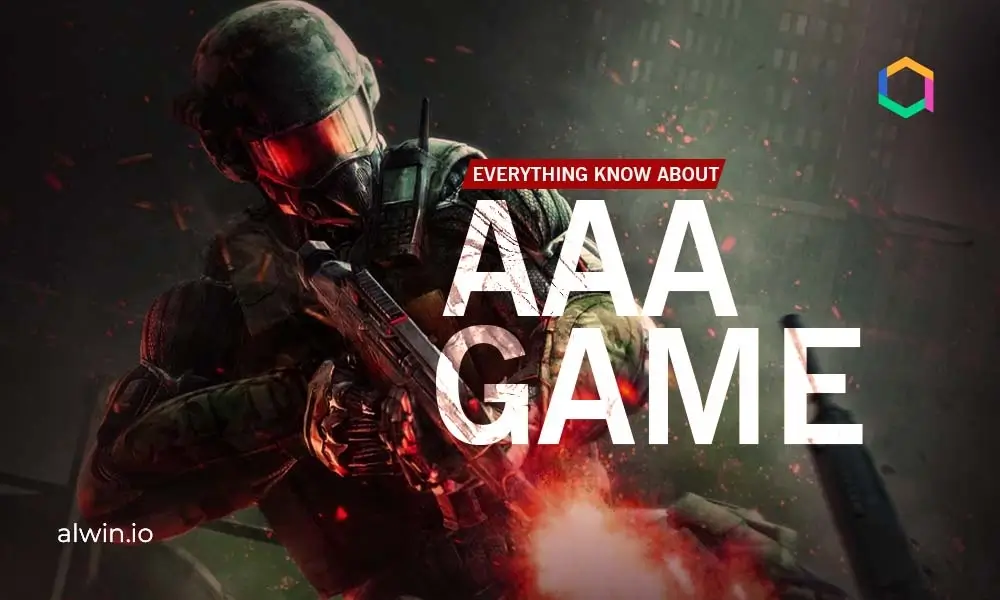
Developing a AAA video game in 2026 is an immense financial undertaking, with production budgets for major titles frequently exceeding $200 million to $300 million. This represents a significant increase from a decade ago, when $100 million was considered the high end. When marketing and post-launch support are included, total expenditures for flagship franchises like Call of Duty can reach $700 million.
Why Budgets in the US and Canada Exceed $300 Million
North American studios face particularly high costs due to several regional factors:
- High Labor Costs: The average game developer salary in the U.S. reached approximately $142,000 in 2025. Large teams of hundreds of workers are required for 4–6 years, making payroll the largest budget item.
- Overhead in Tech Hubs: Studios are often located in expensive cities like San Francisco, Seattle, and Vancouver, requiring competitive benefits and high facility costs.
- Player Expectations: An “arms race” for cutting-edge graphics and massive content volumes forces studios to spend more to remain competitive.
- Economic Factors: Inflation and currency fluctuations have decreased the purchasing power of development dollars.
Key Drivers of Rising Costs
Several industry trends are pushing budgets to unprecedented heights:
- Technical “Arms Race”: Chasing photorealism requires exponentially more effort for diminishing returns, a phenomenon known as “Moore’s Wall.”
- Content Bloat: Players expect 50+ hours of gameplay, necessitating a massive volume of unique art assets, missions, and dialogue.
- Longer Development Cycles: Modern AAA games now take 5+ years to create, doubling the labor costs compared to 3-year cycles of previous generations.
- System Complexity: Integrating features like realistic physics, advanced AI, and cross-platform multiplayer adds significant engineering and testing layers.

Breakdown of Development Spending
A typical $300 million budget is distributed across several categories:
- Core Salaries (40–50%): The primary expense, covering hundreds of specialized roles.
- Art Production (25–30%): Creating thousands of 3D models and textures. Studios often use asset libraries like PixelHair to streamline specific tasks like character grooming.
- Technology & Engineering: Licensing or building game engines (e.g., Unreal Engine 5 or proprietary tech) and extensive Quality Assurance (QA).
- Marketing (Additional 75–100% of dev cost): Not included in the “production budget,” but often doubling the total cost to bring a game to market.
- Other (5–10%): Includes licensing fees, professional audio/orchestras, and localization.
The 5-Year Development Timeline
The wait between major sequels has stretched to half a decade or more due to:
- Sheer Scale: Building massive open worlds requires years of asset production.
- Higher Quality Bar: Studios spend 1–2 years solely on “polish” and bug-fixing to avoid the reputational damage of a glitchy launch.
- Technical Transitions: Adapting to new hardware features like ray tracing or switching game engines creates steep learning curves that extend timelines.

Frequently Asked Questions (FAQs)
- What is a “AAA” game and its budget?
AAA games are high-profile “blockbusters” produced by major studios with teams of hundreds. In 2026, development budgets typically range from $150–300+ million, aiming for top-tier graphics and vast content. - Is it true that every AAA game now costs over $300 million?
Not all, but it is becoming the benchmark for flagship titles. While some games are made for under $100M, recent major hits like Cyberpunk 2077 and Red Dead Redemption 2 exceeded $300M in total costs. - How do game companies afford these costs?
Publishers bank on massive returns from millions of unit sales and long-term revenue via DLC and microtransactions. They mitigate risk through:- Pre-orders and digital sales (higher margins).
- Cross-media deals and post-launch monetization.
- Platform holder investments to drive hardware sales.
- Have game prices increased because of larger budgets?
Yes. The standard MSRP moved from $59.99 to $69.99 around 2020 to offset rising costs and inflation. Companies also use Deluxe Editions and season passes to increase revenue per player. - Does spending more guarantee a better game?
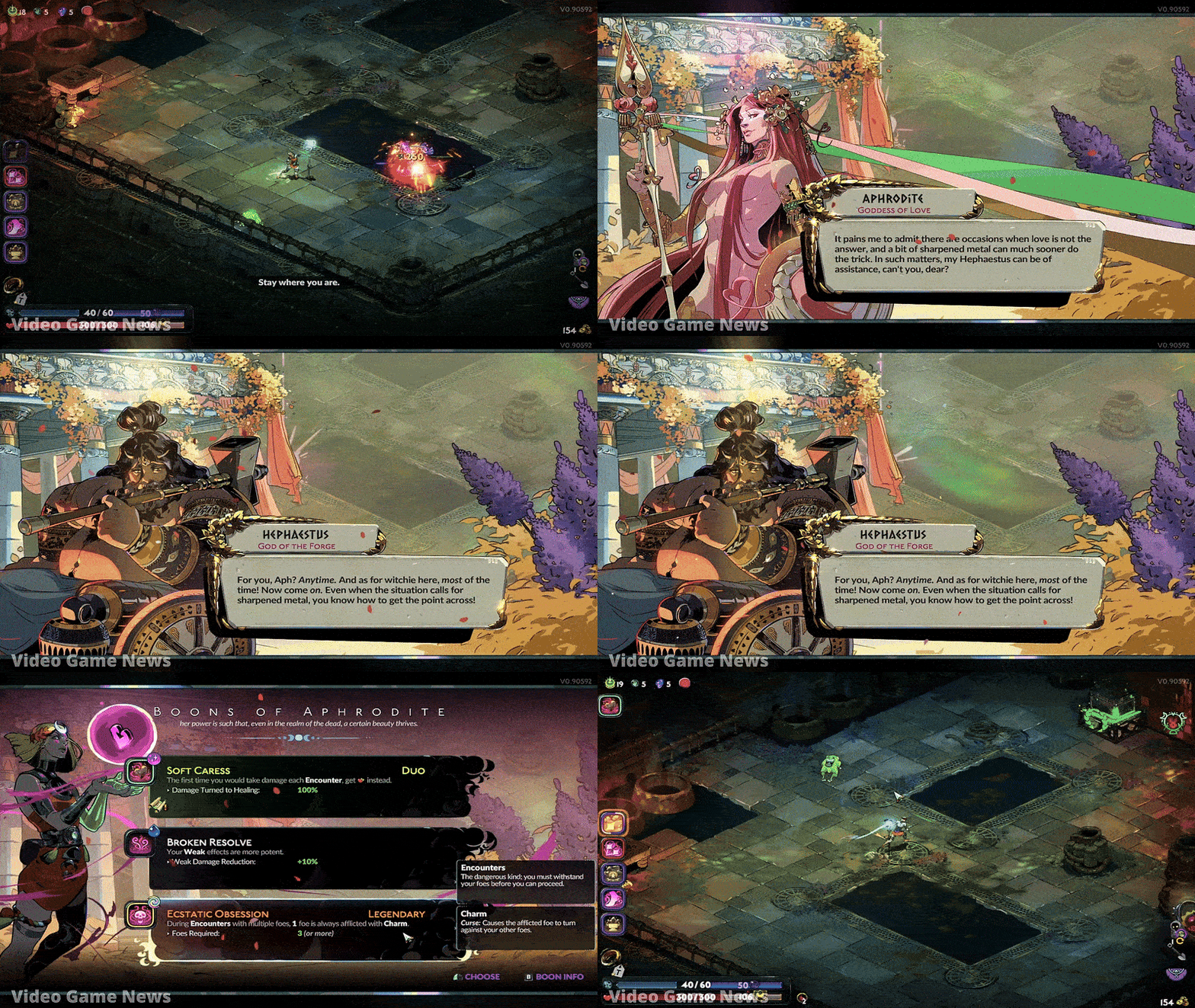
No. While money enables polish and scale, it does not guarantee good design. Mismanaged high-budget projects can fail, while moderate-budget games like Hades can achieve critical acclaim. - How are AAA games different from indie games?
- Team & Budget: AAA uses hundreds of staff and millions of dollars; indies use small teams and minimal funding.
- Scope: AAA offers dozens of hours of content and high fidelity; indies focus on narrow, innovative mechanics.
- Risk: AAA is often risk-averse; indies take creative chances.
- Can studios reduce costs without sacrificing quality?
Methods include managing scope (shorter games), using middleware like Unreal Engine, outsourcing to lower-cost regions, and reusing technical assets. - What’s the most expensive game ever made?
Red Dead Redemption 2 is a top contender at ~$540M. Grand Theft Auto VI is rumored to reach $1–2 billion, potentially setting a new record. - Could AI make development cheaper?
AI can automate repetitive tasks like QA testing and asset generation. However, savings are often reinvested into making games even larger rather than shrinking overall budgets. - What happens if a $300 million game fails?
Disastrous consequences include studio closures, massive layoffs, financial instability for publishers, and the cancellation of franchises or post-launch support.

Conclusion
AAA game development in 2026 stands at a crossroad of unprecedented ambition and unsustainable economics. On one hand, we are enjoying games of astonishing scope and quality – open-world epics, lifelike graphics, and content-rich experiences that truly push the boundaries of the medium. Budgets now regularly eclipse $200–300 million for top titles, enabling teams to create virtual worlds that rival big-budget movies in spectacle. Players are getting more content and higher fidelity than ever before, whether it’s exploring the frontier in Red Dead Redemption 2 or the futuristic cityscapes of Cyberpunk 2077. The fact that a single game like GTA V can generate billions in revenue attests to the cultural and economic power blockbuster games have attained.
Yet, this progress comes with serious concerns. The cost of making these AAA games has skyrocketed to over $300 million and climbing, raising tough questions about sustainability. Studios and publishers face immense pressure to deliver megahits to recoup these investments – typically needing millions in sales just to break even.
This has driven an industry-wide shift towards fewer, safer bets. We see publishers concentrating on established franchises and formulas at the expense of riskier, original projects. The creativity and diversity of mainstream gaming could suffer as mid-tier studios struggle or get absorbed, and as big companies stick to what works to justify huge budgets. In many ways, the AAA space now mirrors Hollywood’s blockbuster dynamics, for better and worse: massive spectacle and polish, but also sequel-itis and aversion to experimentation.
The ripple effects on gamers are mixed. We’re paying a bit more for games (the standard price now $70) and are increasingly nudged towards deluxe editions and microtransactions to support these budgets. On the other hand, we’re getting enormous value in content – some games can entertain for hundreds of hours, and the production quality is through the roof. Gamers have also become more discerning; with so many high-quality titles out there, anything less polished (often lower-budget titles) may get overlooked. This in turn reinforces the cycle of high production values being “required,” perpetuating high costs.
AAA game budgets now exceeding $300M are a double-edged sword – enabling incredible games while putting strain on the industry’s structure. By learning to work more efficiently and making strategic creative choices, developers and publishers can hopefully navigate this era in a way that delivers value to players and keeps businesses healthy.
The spectacle and innovation of AAA games should continue, but perhaps with a newfound wisdom about how to balance art, entertainment, and economics in this rapidly evolving medium. The goal for the future will be to keep raising the bar in what games can do, while also ensuring the whole system doesn’t topple under its own weight. The eyes of everyone in gaming – studios, publishers, and fans – are open to this, and together we’ll watch (and play) how the next chapter unfolds.
Sources
- Avinash Jaisrani, “AAA Games Now Cost Over $300 Million To Make, Insider Says.” Tech4Gamers, March 26, 2026.
https://tech4gamers.com/aaa-games-now-cost-300-million/ - Liam Deane, “Why is Game Development so Expensive?” Omdia Blog, July 4, 2025.
https://omdia.tech.informa.com/blogs/2025/july/why-is-game-development-so-expensive - SuperJoost (Joost van Dreunen), “Gaming’s billion-dollar gamble.” Substack, April 29, 2025.
https://superjoost.substack.com/p/gamings-billion-dollar-gamble - Shawn Layden / GamesIndustry.biz interview, quoted by VGChartz: “Former PlayStation Boss Shawn Layden: Make Games Shorter to Cut Costs and Development Time.”
https://www.vgchartz.com/article/461497/former-playstation-boss-shawn-layden-make-games-shorter-to-cut-costs-and-development-time/ - VSQUAD Studio Blog, “What Is a AAA Game? The Reality of the AAA Game Budget.” I found this page live, but it is currently dated January 13, 2026 rather than 2025.
https://vsquad.art/blog/what-is-a-aaa-game-the-reality-of-the-aaa-game-budget - Jason Schreier on Bluesky, post on AAA budgets reaching “$300 million or more.” March 25, 2026.
https://bsky.app/profile/jasonschreier.bsky.social/post/3mhvx2lohzs2j - Beth Elderkin, “US Game Development Salaries in 2025: What Our Latest Industry Report Reveals.” GDC. This is the official GDC salary-report article matching your salary-survey citation.
https://gdconf.com/article/us-game-development-salaries-in-2025-what-our-latest-industry-report-reveals/ - Chris Heatherly, “A $70 game in 2025 is really $49 game in 2019 money.” LinkedIn post.
https://www.linkedin.com/posts/chrisheatherly_a-70-game-in-2025-is-really-49-game-in-activity-7287597730011496448-imR5 - Wikipedia, “List of most expensive video games to develop.”
https://en.wikipedia.org/wiki/List_of_most_expensive_video_games_to_develop - Tech4Gamers, Avinash Jaisrani, citing Jason Schreier on Bluesky — same article as item 1, including the 4M–6M sales / break-even discussion.
https://tech4gamers.com/aaa-games-now-cost-300-million/
Recommended
- All Free Mystery Gifts in Pokémon Legends: Complete List of Codes, Rewards & How to Redeem in 2026
- Star Trek: Starfleet Academy Season 1 Review (2026) — Cast, Story, Ending, and Where It Fits in the Star Trek Timeline
- Blender Multi-Camera Rendering: A Step-by-Step Guide with The View Keeper
- What Is a Foley Artist? A Complete Guide to the Art of Sound Design
- 3D Grease Pencil Tutorial for Blender: How to Create 2D Art in 3D Space Step by Step
- Hair Texturing in Substance Painter: How to Create Realistic and Stylized Hair Textures
- What a Jak and Daxter Remake Might’ve Looked Like Back in 2019: The Lost Pitch, Footage, and What It Means for Fans
- Conversational AI in Unreal Engine: Integrate (MetaHuman, ReadyPl AayerMe, Convai etc) for Real-Time Interactive Characters
- Is Blender CPU or GPU Intensive? A Complete Guide to Performance in Blender
- Intergalactic: The Heretic Prophet Controversy – Exploring the Backlash and Public Discourse