








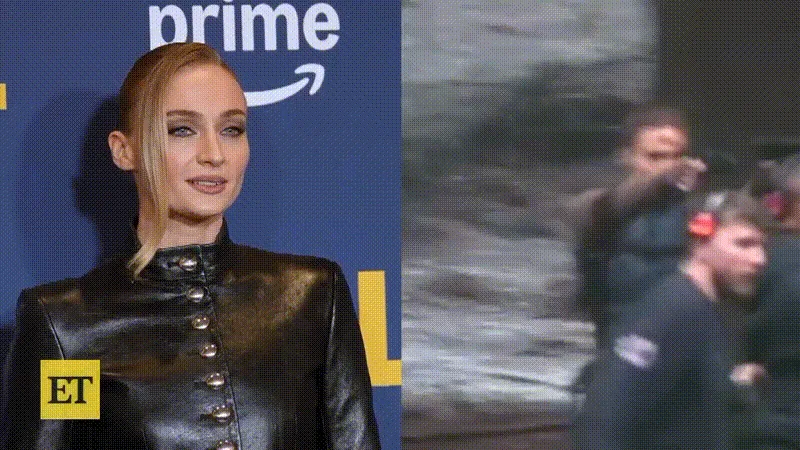
New Lara Croft actor Alix Wilton Regan injured her arm and dislocated her jaw in two separate incidents while working on Tomb Raider: Legacy of Atlantis. The arm injury came during performance capture for a scene in which Lara tries to batter down a door. Regan repeatedly threw herself against it and recalled that her arm was hanging limply by her side by the end of the day. In a separate interview, she said she accidentally punched herself in the face and dislocated her jaw during a recording session. GameSpot reported both accounts on June 11, 2026, drawing on interviews with WhatCulture Gaming and GamesRadar+.
Regan plays Lara Croft in both Tomb Raider: Legacy of Atlantis and Tomb Raider: Catalyst. The two games mark different points in the franchise’s return. Legacy of Atlantis reimagines the 1996 adventure that introduced Lara and is scheduled for February 12, 2027, according to the official Tomb Raider website. Catalyst is a new adventure that Amazon Games executive Jeff Gattis said would follow in 2028. The public reporting on Regan’s injuries offers no evidence that either incident changed the release schedule.
The door scene gives an unusually specific account of what happens before Lara’s movements reach the screen. Regan made a choice about how much physical effort she wanted to feel during the take. She repeated that choice while capturing the same scene, and a co-star noticed something was wrong. The jaw injury arose in a different session, under circumstances described in much less detail. Together, the incidents show how much movement can be involved in a role commonly described as voice acting, even when the performer and the character ultimately appear in very different settings.
In This Article (7 sections)
Alix Wilton Regan’s Lara Croft Injuries and Physically Demanding Acting Style
Regan described the door impact as something she chose to do. As Lara tried to batter down the door, Regan wanted to feel the effort of the action herself. Other people on set told her she could ease off, according to her account to WhatCulture Gaming. She continued to put considerable force into the movement and recalled doing five, six or seven takes in a row. By the end of the day, she had hurt her arm. GameSpot’s transcript quotes her describing it as “hanging limply by my side.” A co-star noticed and drew her attention to it.
Her recollection establishes the sequence of events and how her arm felt afterward. The public account leaves the medical details open. It gives no diagnosis, specifies no treatment and establishes no recovery period. Regan associated the injury with repeated takes, and her description provides no way to identify the precise moment at which the injury occurred. The most accurate account is that she hurt her arm while repeatedly performing the door action and noticed a problem after the sequence.
The reported jaw dislocation came from a separate conversation. Speaking to GamesRadar+, Regan recalled accidentally punching herself in the face during a recording session. GameSpot included that account in its coverage of the arm injury. The published details establish a separate setting and a different cause. They leave open what she was recording, whether the movement was part of a scripted action and how the injury was treated. The wording matters because describing the two injuries as a single stunt would change what happened. The door sequence concerns repeated impact against an obstacle. The jaw incident concerns a self-inflicted accidental impact during recording.
Regan’s approach to the door scene reflects how she thinks about the relationship between physical effort and acting. A person trying to force open a door has to decide how to approach it, where to put their weight and what to do when the first attempt fails. Those choices can shape the rhythm of a performance. A character might hesitate before committing, draw a breath between attempts or change their footing when resistance catches them by surprise. In a game, those details can make a short sequence reveal something about the character. Lara’s persistence can come through in how quickly she tries again or how she reacts when the obstacle refuses to give way.
Regan also prepared for the role physically. Tomb Raider Chronicles, reporting on a June 2026 interview, said she took up weight training, running and boxing in preparation for the demands of performance capture. The same coverage says that Lara’s physicality informed Regan’s vocal performance. That connection can be heard in the kinds of choices an actor makes about breath, timing and emphasis. A line delivered while a character braces against a barrier may sound different from the same line delivered once she has made it through. Breathing and posture can help the voice and body convey a shared moment, whether they are recorded together or assembled from separate sessions.
An actor’s preparation also carries over into quieter scenes. A person who moves with Lara’s confidence may enter a room with a clear sense of purpose, stop when something catches her attention and approach a discovery at a different pace from the way she approaches a threat. Regan’s description of Lara as unapologetic suggests a performer thinking about these ordinary choices as well as the obvious action beats. Physical acting can show curiosity and certainty through where Lara looks, when she waits and how readily she occupies space around other people.
Regan had experience in major game roles before joining Tomb Raider. GameSpot’s casting coverage identifies her as Samantha Traynor in Mass Effect 3, a voice of the Inquisitor in Dragon Age: Inquisition and Aya in Assassin’s Creed Origins. Those credits span characters with different relationships to authority, danger and the player. Lara adds a particular challenge. Her movement has been central to her identity since 1996, and audiences bring decades of expectations to how she climbs, investigates and confronts danger.
The available interviews describe Regan’s contribution to individual scenes and her broader approach to the role. They establish that she performed the door sequence herself. How the production assigned other action, stunt or gameplay capture work remains unspecified in those accounts. The finished Lara will reflect Regan’s performance alongside the decisions of the directors, animators and developers responsible for turning that work into a character players can control.
Tomb Raider Legacy of Atlantis Performance Capture, Actor Safety, and Production Process
Performance capture records aspects of an actor’s performance for use in a digital character. Body capture can record the timing of steps and turns, changes in posture and the coordination of limbs. Facial performance and dialogue can contribute expression, breath and vocal timing, with the setup varying by scene and production. Artists can then use recorded movement and reference footage to guide the animation. A performance can also be assembled from several sources, including material captured at different times and work animated by hand.
The interviews about Regan’s injuries provide examples of two kinds of work. The door incident occurred during performance capture, while the jaw incident was described as happening during a recording session. They provide limited information about the equipment, the set and the handling of specific takes. The official game materials identify Unreal Engine 5 as the technology powering the finished game. That tells players about the game engine. It leaves open which tools the capture crew used and how the animators assembled a particular scene.
A door sequence illustrates the decisions that can separate a recorded take from the finished animation. An actor needs a consistent place to make contact so the movement reads as an attempt to open or break through something. The virtual door may have a particular size, weight or way of giving way that the animation has to accommodate. The character’s hands and feet need to make convincing contact with the environment, and the finished sequence may need to fit a camera angle or lead into another animation. A director can use several takes to explore different rhythms, while animators can adjust timing, contact and the reaction of the door to make the final interaction coherent.
Physical effort is one contributor to what audiences perceive as force. The way an actor plants their feet, shifts their weight and recoils gives animators useful material. Sound, animation timing and the obstacle’s response also shape how heavy the impact feels. A door that shifts only slightly after the first blow communicates resistance. A brief pause before the next attempt can communicate that Lara has registered the setback. These decisions can make the final movement look strenuous even when the physical contact in the capture space is carefully controlled.
Regan’s account also highlights what can happen when a performer repeats a demanding motion. A movement that feels manageable on the first attempt can become more tiring with repetition. The actor may change how they brace or land without noticing. Different members of a production team can also be focused on different parts of the take. One may be listening for a line, another watching the movement and another checking that the action fits the scene. In Regan’s telling, people encouraged her to reduce the force and a co-star later noticed her arm. The interviews leave the studio’s formal safety procedures and any production response undocumented.
A production can preserve the acting purpose of a scene while changing how the movement is captured. In a door sequence, the part that conveys determination might be the decision to try again after a failed attempt. The part that conveys impact might be the position of the shoulder and the timing of the recoil. Those elements can be rehearsed, performed against a suitable stand-in or captured with an adjusted range of movement, depending on the scene and the people supervising it. Animation can supply additional force or breakage. In some productions, an actor and a stunt performer may contribute different parts of the same sequence.
Game production also involves a distinction between actions players watch and actions they control. A scripted scene can use a specific rhythm because its sequence is known in advance. Gameplay animation may have to respond immediately when players change direction, move from a run to a jump or start an action at different distances from a surface. That requires blends and transitions as well as individual performances. A distinctive version of Lara needs to feel consistent across both contexts, even though the work involved in an interactive traversal sequence differs from the work involved in a scripted door scene.
The official game overview presents a Lara who climbs, leaps and uses a grappling hook to navigate dangerous terrain. It also describes combat with wildlife, mercenaries and mythological creatures, as well as puzzles involving water, light and pressure plates. Those mechanics call for different kinds of movement. Combat has to communicate the timing of an attack. Traversal needs to make the start and end of a leap readable. Puzzle interactions can show Lara thinking through a mechanism or testing her surroundings. The door story offers a glimpse of a single performance within that broader range of movement.
The public record also gives a way to answer whether the injury delayed the game. Legacy of Atlantis was initially announced for 2026. The official website subsequently listed February 12, 2027, and Gattis repeated that date in a July 2026 interview with The Game Business. The fact that the game moved out of 2026 establishes a schedule change. The coverage of that change and Regan’s injury accounts provide no documented connection between the two events. They also leave any effect on individual recording or capture sessions undisclosed.
New Lara Croft Casting, Legacy of Atlantis, and the Future of Tomb Raider
Alix Wilton Regan follows Camilla Luddington as the lead game performer associated with Lara Croft. Luddington voiced and performed motion capture for the character across the Survivor Trilogy, which began with Tomb Raider in 2013 and continued with Rise of the Tomb Raider and Shadow of the Tomb Raider. Those games followed Lara through experiences that tested her judgment, endurance and willingness to take responsibility for other people. For many players, that trilogy established the voice and physical mannerisms they associate with the character.
Regan’s casting brings the franchise back to Lara’s first published adventure with the benefit of everything the series has established since then. In the official Meet Lara Croft feature, Regan said she had studied previous versions of the character, including the original portrayal, the Crystal era and the Survivor Trilogy. Her “No Laras Left Behind” approach gives her a way to draw on those performances while deciding how her own Lara behaves in a scene. The official feature describes her interpretation as confident, direct and capable of questioning herself. A character can be sure she belongs in a room and still reconsider a decision once she sees what it costs.
That approach extends to the character’s design. The official feature identifies Kam Yu as the sculptor and describes a hairstyle that combines the classic braid and bangs with details associated with the reboot-era look. These visual decisions have a parallel in the performance. Longtime players may recognize the assurance of classic Lara in the way she moves through an unfamiliar place. Players who came to the series through the Survivor Trilogy may pay closer attention to how she responds when an encounter frightens her or when curiosity puts someone at risk. Both qualities can be present within the same adventure.
Legacy of Atlantis is being co-developed by Crystal Dynamics and Flying Wild Hog. The official site calls it a reimagining of the original 1996 Tomb Raider, with modern gameplay and an expanded story. Game director Raul Siqueira told GamesRadar+ that the team’s remit went beyond rebuilding existing content with modern tools. Combat, gameplay and puzzles were among the areas being reconsidered. For players familiar with the original, a recognizable location can retain its importance while the route through it, the mechanics used to explore it or the events that occur there change.
The official game overview names the jungles of Peru, the ruins of Greece, the deserts of Egypt and a mysterious island among the destinations. It also highlights Lara’s dual pistols and a grappling hook that can be used to navigate terrain. These features connect the adaptation to the original adventure’s emphasis on travel, exploration and physical problem-solving. Modernizing those elements means revisiting the relationship between character and level design. A climb has to communicate where Lara can reach. A jump has to feel responsive while conveying distance. An environmental puzzle needs to show enough of its mechanism for the player to form a theory and see what happens when they test it.
Legacy of Atlantis is scheduled for February 12, 2027. The official website lists PlayStation 5, Xbox Series X|S, Nintendo Switch 2 and PC via Steam. Some early announcement coverage lists a 2026 window and omits Switch 2. Those details reflect what was known at the announcement. The official game page gives the later date and the broader platform list.
Tomb Raider: Catalyst is a separate new adventure, also starring Regan. Initial coverage from The Guardian described a story set in northern India, with Lara racing rival treasure hunters to locate potentially dangerous artifacts. That December 2025 coverage gave Catalyst a 2027 release window. In July 2026, Gattis told The Game Business that Amazon expected the game to follow Legacy of Atlantis in 2028. The two projects therefore give Regan an opportunity to interpret Lara in a story with roots in the original game and then carry her into a new adventure.
The two releases will also give players more than one setting in which to judge the performance. Legacy of Atlantis places Regan in an adventure some players already know and can compare with the 1996 original. Catalyst gives her a story in which the new performance will establish its own reference points. Across both games, the lasting impression of this Lara will depend on how consistently her movement, voice and reactions express the character from one scene to the next.
Frequently Asked Questions (FAQs)
- Who is the new Lara Croft actor?
Alix Wilton Regan plays Lara Croft in Tomb Raider: Legacy of Atlantis and Tomb Raider: Catalyst. Legacy of Atlantis marks her debut in the role. Her previous game performances include Samantha Traynor in Mass Effect 3, a voice of the Inquisitor in Dragon Age: Inquisition and Aya in Assassin’s Creed Origins. - How did Alix Wilton Regan injure her arm?
Regan said she hurt her arm while repeatedly throwing herself into a door during performance capture for Legacy of Atlantis. Lara was trying to batter down the door in the scene. Regan recalled doing five, six or seven consecutive takes and said that a co-star noticed how her arm was hanging afterward. Her public account gives no medical diagnosis. - Did the new Lara Croft actor really say her arm was hanging limp?
Yes. GameSpot’s transcription of her WhatCulture Gaming interview gives the exact wording as “My arm was hanging limply by my side.” Regan was describing how her arm looked and felt after the repeated takes. That account explains where the shorter wording in the headline comes from. - Did the actor also dislocate her jaw?
Regan told GamesRadar+ that she accidentally punched herself in the face and dislocated her jaw during a recording session. GameSpot reported that account alongside her description of the arm injury. They were separate incidents. The reporting gives more detail about the door sequence than the recording session. - What is Tomb Raider: Legacy of Atlantis?
Tomb Raider: Legacy of Atlantis is Crystal Dynamics and Flying Wild Hog’s reimagining of the original 1996 Tomb Raider. The game revisits Lara’s debut adventure with an expanded story, updated gameplay and reworked puzzles and combat. The official overview names Peru, Greece, Egypt and a mysterious island among the locations. - Why did Regan perform the door action herself?
Regan said she wanted to feel what Lara was doing. For that scene, she chose to put physical effort into battering the door because it helped her inhabit the action. Her account concerns that particular sequence. The interviews leave the full division of stunt and capture work across the game unspecified. - Who played Lara Croft before Alix Wilton Regan?
Camilla Luddington voiced and performed motion capture for Lara Croft in the Survivor Trilogy. The trilogy consists of Tomb Raider from 2013, Rise of the Tomb Raider and Shadow of the Tomb Raider. Regan said she studied Luddington’s era along with other portrayals when developing her own Lara. - What is performance capture in video games?
Performance capture records aspects of an actor’s performance for use in a digital character. It can include body movement, facial expressions and vocal delivery, with the process varying by production. Animators can then refine or combine the captured material to suit the character, virtual environment and needs of the game. - Did Alix Wilton Regan’s injuries delay Tomb Raider: Legacy of Atlantis?
The game moved from an announced 2026 window to February 12, 2027. The available reporting provides no evidence that Regan’s arm injury or reported jaw dislocation caused that change. Any effect on individual capture or recording sessions remains undisclosed. - When do Tomb Raider: Legacy of Atlantis and Tomb Raider: Catalyst come out?
The official Tomb Raider site schedules Legacy of Atlantis for February 12, 2027, and lists PlayStation 5, Xbox Series X|S, Nintendo Switch 2 and PC via Steam. In July 2026, Amazon Games executive Jeff Gattis said Catalyst would follow in 2028. He gave no exact date for Catalyst in that interview.
Conclusion
Alix Wilton Regan’s account of injuring her arm while playing Lara Croft describes a specific choice made during a demanding scene. She wanted to feel the effort of battering down a door and repeated the movement across several takes. By the end of the day, her arm hung limply by her side. The reported jaw dislocation came from a different recording session. The interviews establish those circumstances and leave the medical details and any effect on recording schedules private.
Regan’s work on Lara also extends to how the character walks into a room, reacts to danger and decides what to do when an obstacle stands in her way. Those decisions connect her performance to the Lara who first appeared in 1996 and to the more closely observed character of the Survivor Trilogy. Tomb Raider: Legacy of Atlantis, scheduled for February 12, 2027, is the first opportunity to see how Regan, Crystal Dynamics and Flying Wild Hog bring those influences together in play. Tomb Raider: Catalyst, which Amazon has placed in 2028, will carry her portrayal into a new adventure.
Sources and Citation
<ul>
  <li><strong>GameSpot, June 11, 2026:</strong> Reports Regan’s account of the repeated door takes and her separate account of a jaw dislocation during recording.<br>
  <a href="https://www.gamespot.com/articles/new-lara-croft-actor-reveals-how-she-busted-up-her-arm-making-the-new-game/">https://www.gamespot.com/articles/new-lara-croft-actor-reveals-how-she-busted-up-her-arm-making-the-new-game/</a></li>
  <li><strong>Tomb Raider Official News, Meet Lara Croft:</strong> Presents Regan’s interpretation of Lara, her study of earlier portrayals, the character design and the February 12, 2027 release date.<br>
  <a href="https://www.playtombraider.com/en-gb/news/articles/meet-lara-croft">https://www.playtombraider.com/en-gb/news/articles/meet-lara-croft</a></li>
  <li><strong>Tomb Raider Official Website, Legacy of Atlantis:</strong> Lists the release date, platforms, developers, game engine, settings and gameplay features.<br>
  <a href="https://www.playtombraider.com/en-us">https://www.playtombraider.com/en-us</a></li>
  <li><strong>GamesRadar+, June 6, 2026:</strong> Reports game director Raul Siqueira’s explanation of how the team is reimagining the original adventure.<br>
  <a href="https://www.gamesradar.com/games/adventure/this-isnt-a-remake-a-remake-rebuilds-what-already-exists-tomb-raider-legacy-of-atlantis-game-director-shows-off-what-classic-lara-croft-is-capable-of-in-the-modern-era/">https://www.gamesradar.com/games/adventure/this-isnt-a-remake-a-remake-rebuilds-what-already-exists-tomb-raider-legacy-of-atlantis-game-director-shows-off-what-classic-lara-croft-is-capable-of-in-the-modern-era/</a></li>
  <li><strong>Tomb Raider Chronicles, June 7, 2026:</strong> Covers Regan’s weight training, running and boxing preparation and her description of Lara’s personality.<br>
  <a href="https://www.tombraiderchronicles.com/headlines5603.html">https://www.tombraiderchronicles.com/headlines5603.html</a></li>
  <li><strong>Tomb Raider Chronicles, June 5, 2026:</strong> Covers Regan’s approach to bringing Lara’s different eras together and the relationship between the two games.<br>
  <a href="https://www.tombraiderchronicles.com/headlines5598.html">https://www.tombraiderchronicles.com/headlines5598.html</a></li>
  <li><strong>GameSpot, December 12, 2025:</strong> Reports Regan’s casting in both games, her previous credits and Camilla Luddington’s work on the Survivor Trilogy.<br>
  <a href="https://www.gamespot.com/articles/new-tomb-raider-games-recast-lara-croft-with-a-gaming-veteran/1100-6536948/">https://www.gamespot.com/articles/new-tomb-raider-games-recast-lara-croft-with-a-gaming-veteran/1100-6536948/</a></li>
  <li><strong>The Guardian, December 12, 2025:</strong> Covers the announcement of both games and describes the northern India setting and premise of Catalyst.<br>
  <a href="https://www.theguardian.com/games/2025/dec/12/charismatic-self-assured-formidable-lara-croft-returns-with-two-new-tomb-raider-games">https://www.theguardian.com/games/2025/dec/12/charismatic-self-assured-formidable-lara-croft-returns-with-two-new-tomb-raider-games</a></li>
  <li><strong>The Game Business, July 23, 2026:</strong> Interviews Amazon Games executive Jeff Gattis, who gives February 12, 2027 for Legacy of Atlantis and places Catalyst in 2028.<br>
  <a href="https://www.thegamebusiness.com/p/amazon-luna-were-not-trying-to-replace">https://www.thegamebusiness.com/p/amazon-luna-were-not-trying-to-replace</a></li>
</ul>
Recommendations
Nier: Automata Has Now Sold 10 Million Copies — What Square Enix’s “To Be Continued…” Tease Could Mean
Marvel’s Wolverine Preorders May Start Soon After State of Play
Baidu launches Apollo World driving simulator for robotaxi training
FlippedNormals Is Closing Its Online Marketplace on 31 March 2026: What It Means for 3D Artists and Sellers
The second-best year in CD PROJEKT’s history — key takeaways from the 2025 annual report
Fire Emblem: Fortune’s Weave Collector’s Edition Confirmed, Dagdan Collection Details, Price, Release Date & Preorder Guide
Sony Says PS6 Development Is on Schedule and Secures Fiscal 2027 Hardware Memory Supply
China blocks SoftBank’s $5.4B acquisition of ABB’s robotics business
Xbox PC App Launches Up to 60% Faster in Microsoft’s Insider Update
Jensen Huang Acknowledges Affair in Nvidia Staff Memo Amid Spy Allegations
Select modelGPT-6.1 SolLightNoneMinimalLightMediumHighExtra HighMaxUltraPersistentOutputs
Create an outputSources
Pasted text(20261111-202946).txt
To pick up a draggable item, press the space bar. While dragging, use the arrow keys to move the item. Press space again to drop the item in its new position, or press escape to cancel.
Drag to reorder pinned navigation items
To pick up a draggable item, press the space bar. While dragging, use the arrow keys to move the item. Press space again to drop the item in its new position, or press escape to cancel.



































































































