








In This Article (19 sections)
Marathon Game New Blueprint Explained: How Bungie Plans to Expand the Player Base
Marathon Game New Blueprint frames the upcoming direction for Bungie’s extraction shooter Marathon around a clear strategic shift: expanding beyond a hardcore niche audience and into a broader, more sustainable player base. The Marathon Game New Blueprint focuses on accessibility, experimentation with PvE systems, and a softer introduction to competitive PvP elements.
Historically, extraction shooters have been difficult for new players due to high stakes, steep learning curves, and punishing loss mechanics. Bungie’s approach suggests a deliberate effort to reduce these barriers while maintaining the tension and identity of the genre.
This redesign philosophy centers on three pillars: PvE expansion, PvP-lite experimentation, and long-term live service sustainability. Together, they represent a shift toward inclusivity without fully abandoning competitive depth.
Marathon Pve-Only Modes: What They Are and Why They Matter for New Players
PvE-only modes in Marathon represent one of the most important onboarding tools in the new design blueprint. These modes would allow players to engage with core mechanics, movement, looting, combat systems, and map awareness, without the pressure of hostile player encounters.
For new or casual players, PvE environments act as training grounds. Instead of being eliminated by experienced opponents, players can learn extraction loops, weapon behavior, and survival strategies in controlled conditions.
From a design standpoint, this reduces churn. Many extraction shooters lose players in the first hour due to frustration. PvE-only spaces help smooth that entry curve, making the game more approachable without diluting the core PvP experience in the main modes.

Pvp-Lite in Marathon: a More Casual Approach to Competitive Gameplay
PvP-lite systems introduce a softened competitive layer into Marathon, giving players a way to experience tension and rivalry without being pushed immediately into the most punishing version of extraction shooter combat. Instead of every match being defined by constant high-risk player encounters, PvP-lite can reduce pressure through lower player density, optional engagement areas, AI-focused objectives, or mixed PvE/PvP encounters.
This structure allows players to opt into competition gradually. Rather than forcing beginners into full-skill PvP from the start, Marathon can give them space to learn movement, extraction routes, weapons, loot systems, and objective flow before they are expected to survive against experienced squads.
The PvP-lite approach is especially useful for onboarding console and casual audiences. Extraction shooters often have a reputation for being harsh, time-consuming, and unforgiving, especially when players can lose gear after a failed run. By lowering the early pressure, Marathon can appeal to players who are curious about the genre but hesitant to commit to its hardest systems immediately.
It also creates a bridge between PvE learning modes and full competitive extraction gameplay. Players can begin with AI-heavy encounters, then move into scenarios where enemy players are present but not always the main threat. Over time, this helps build confidence and prepares players for higher-risk modes without making the learning curve feel like a wall.
Bungie’s Vision for Marathon as a More Accessible Extraction Shooter
The long-term vision from Bungie appears to be a more accessible version of the extraction shooter formula. Rather than designing Marathon only for hardcore players, Bungie seems to be building a layered experience that can support different skill levels and playstyles.
Instead of a single high-pressure PvP environment, the game may be structured around multiple levels of intensity:
- Entry-level PvE for learning core systems and building confidence.
- Mid-tier PvP-lite for players who want some competition without constant punishment.
- High-stakes extraction PvP for experienced players seeking the full competitive challenge.
This tiered ecosystem allows players to self-select their preferred level of risk. The goal is not to remove challenge from Marathon, but to make that challenge more scalable. Players who want a brutal extraction experience can still pursue it, while newer or more casual players have a clearer path into the game.
This approach could help Marathon stand apart from other extraction shooters. Many games in the genre rely heavily on tension, loss, and player-versus-player danger. Bungie’s challenge is to preserve that identity while making the experience less intimidating for players who are unfamiliar with the genre.
How Marathon Gameplay Changes Aim to Reduce Entry Barriers for Beginners
Entry barriers in extraction shooters typically include fear of losing inventory, high mechanical skill demands, complicated maps, and knowledge-heavy systems. New players often struggle not only because enemies are dangerous, but because they do not yet understand what items matter, where to extract, when to fight, or when to avoid conflict.
The redesign of Marathon aims to reduce these barriers through more structured onboarding. Instead of forcing players to learn everything through repeated failure, the game can introduce mechanics gradually through missions, objectives, and guided early-game scenarios.
Tutorialization is expected to be more integrated into live gameplay rather than separated into static menus. This means players may learn extraction rules, loot priorities, enemy behavior, equipment management, and team coordination while playing missions that resemble real runs.
PvE missions can also mirror real extraction scenarios without the full pressure of enemy players. This gives beginners a safer environment to understand the game’s pacing, objective structure, and survival priorities before entering more dangerous modes.
Gradual exposure to PvP is another important part of reducing early frustration. If beginners are not immediately overwhelmed by highly skilled opponents, they are more likely to stay engaged long enough to improve. A smoother difficulty curve can support better retention, longer play sessions, and a more welcoming path into Marathon’s competitive endgame.

Marathon Player Retention Strategy: What the New Design Plans Reveal
Retention is a central concern in live-service games, and Bungie appears to be building systems in Marathon that prioritize long-term engagement over short-term difficulty spikes. Instead of relying only on intense extraction wins, the new design seems focused on giving players reasons to return even when they do not dominate every match.
The blueprint suggests a progression model that rewards consistent play rather than high-risk victories alone. This could include persistent account progression, cosmetic unlocks, faction reputation, seasonal challenges, and branching mission structures that make each session feel productive.
This kind of structure is important for an extraction shooter because failure is part of the genre. If players lose gear, fail to extract, or get eliminated early, they still need to feel that their time was not completely wasted. Marathon’s retention strategy appears to address this by making progress feel steadier and less dependent on perfect runs.
By reducing early frustration and increasing perceived reward frequency, the game increases the likelihood that players remain engaged beyond the initial learning phase. New players are more likely to continue if they feel they are unlocking items, learning systems, and improving gradually, even when they are not yet winning consistently.
Solo and Casual Play Options in Marathon’s Evolving Game Structure
One of the most significant shifts in Marathon is the apparent support for solo and casual playstyles. This is a major change for a genre that often rewards coordinated squads, deep map knowledge, and high communication.
Traditional extraction shooters often favor organized teams, which can alienate solo players. A solo player may struggle against full squads, especially in games where positioning, callouts, and shared resources create a major advantage. By introducing solo-friendly matchmaking, adjusted difficulty scaling, or modes with lighter PvP pressure, Bungie is widening the game’s accessibility.
Casual play modes also help players engage without the pressure of coordinated team performance. Not every player wants to use voice chat, join a regular squad, or commit to long high-stakes sessions. More flexible options allow players to drop in, experiment with builds, complete objectives, and learn the game at their own pace.
This flexibility encourages experimentation and reduces social dependency for progression. Players can test weapons, routes, abilities, and mission strategies without feeling that every mistake hurts a team. Over time, this could make Marathon more welcoming to players who enjoy multiplayer games but do not always want a highly competitive environment.
Marathon Live Service Direction: What the Latest Blueprint Suggests
The live service model for Marathon is expected to follow a seasonal structure similar to other modern multiplayer titles, but with a stronger emphasis on systemic evolution. This means the game may not simply add new cosmetics, maps, or missions; it may also change how the core experience works over time.
Instead of only adding content, Bungie may adjust core systems like loot distribution, PvE encounters, PvP rulesets, matchmaking, progression pacing, and extraction objectives. These changes could help the game respond to player behavior after launch, especially if certain strategies, weapons, or modes become too dominant.
This evolving structure is important for keeping an extraction shooter fresh. If the same routes, loot priorities, and combat patterns remain unchanged for too long, players may eventually solve the game and lose interest. Regular systemic updates can keep the experience unpredictable while giving players new reasons to return each season.
This approach also allows Bungie to support different skill groups at the same time. Casual players may benefit from better onboarding, safer mission types, or clearer rewards, while advanced players may receive harder objectives, more dangerous PvP zones, or higher-risk extraction opportunities.
Overall, the latest blueprint suggests that Marathon is being designed as a flexible live-service platform rather than a static competitive shooter. Its long-term success will likely depend on how well Bungie balances accessibility, challenge, reward pacing, and meaningful seasonal evolution.
How Marathon Will Balance PvE and PvP Experiences Going Forward
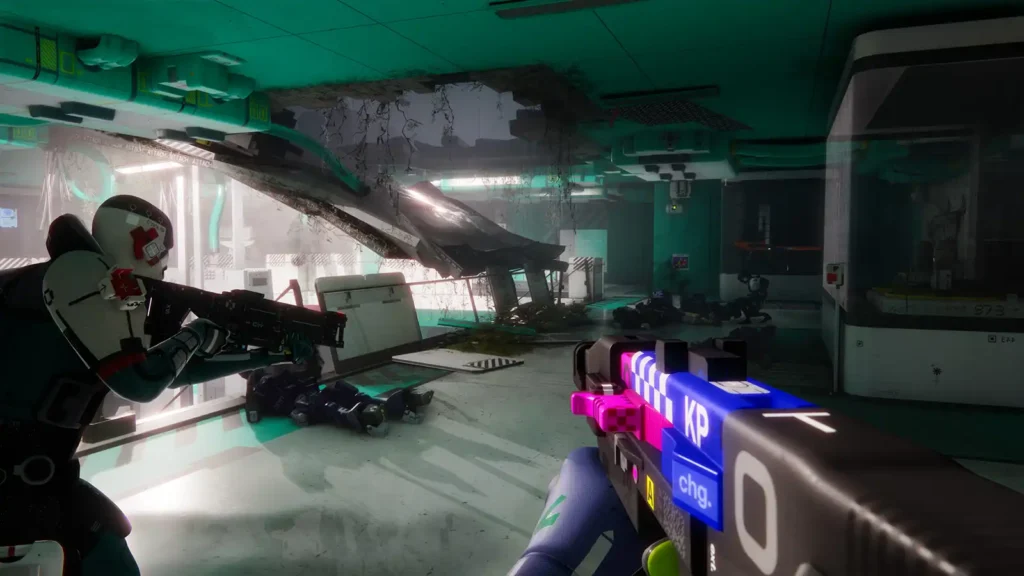
Balancing PvE and PvP in Marathon is one of the most critical design challenges, especially because extraction shooters rely on tension, risk, and uncertainty. If PvP is too punishing, new players may leave early. If PvE is too dominant, the game may lose the competitive edge that defines the genre.
The likely approach is separation with integration: PvE serves as onboarding and progression support, while PvP remains the core high-stakes experience. This allows Bungie to give players safer ways to learn the game without removing the danger and intensity that veteran players expect.
Instead of merging both systems into one chaotic environment, Bungie appears to be designing distinct but interconnected layers. PvE activities can teach map knowledge, extraction timing, enemy behavior, loot value, and objective flow. Once players understand those basics, they can move into PvP-focused modes with more confidence.
Progress in PvE may also feed into PvP readiness, ensuring both modes feel meaningful. For example, players could earn resources, unlock gear options, complete faction objectives, or build account progression through PvE before testing those tools in more dangerous PvP runs.
Marathon Progression System Overhaul: Making Growth More Rewarding
Progression in Marathon is expected to move away from purely punishing extraction mechanics and toward a more balanced reward structure. This is important because extraction games can become frustrating when a failed run feels like a complete waste of time.
The overhaul may include partial loss protection systems, account-wide progression milestones, and alternative reward pathways for PvE success. These systems would help players feel that they are still moving forward, even when they fail to extract or lose valuable gear.
Partial loss protection could reduce the sting of early failures by preserving certain items, experience, or account progress. Account-wide milestones can give players long-term goals that are not erased by a single bad match. PvE reward paths can also give less competitive players a way to build confidence and unlock useful options.
The goal is to ensure that even unsuccessful runs contribute meaningfully to player growth. This reduces frustration, improves motivation, and helps players stay engaged long enough to understand Marathon’s deeper systems.
Matchmaking Improvements in Marathon to Support Broader Player Skill Levels
Matchmaking systems in Marathon are likely being redesigned to better support skill diversity. This is especially important if Bungie wants the game to attract both hardcore extraction shooter fans and more casual players.
Rather than pairing all players in a uniform pool, Bungie may introduce segmented matchmaking based on experience, performance history, account progression, squad size, or chosen game mode. This would help create fairer matches and reduce the chance of beginners being overwhelmed immediately.
Mode-based matchmaking could also play a major role. Players choosing PvE or PvP-lite experiences may be placed in lower-pressure environments, while those selecting full extraction PvP would enter more competitive pools. This lets players choose the level of risk that matches their skill and confidence.
This ensures beginners are not immediately matched against highly experienced players, improving fairness and retention. A smoother early experience can help new players learn the game’s systems, while still giving advanced players more intense matches where their skill and strategy matter.
Marathon Economy and Loot Systems: What Changes Could Be Coming
Loot and economy systems in extraction shooters define the risk-reward loop. In Marathon, adjustments may aim to reduce the severity of loss while preserving the excitement that makes extraction gameplay tense.
Possible changes include insurance mechanics, crafting fallback systems, or safer loot tiers in PvE zones.
- Insurance mechanics could allow players to recover some lost gear after a failed run, reducing the frustration of losing everything at once.
- Crafting fallback systems could give players a way to rebuild basic loadouts without depending entirely on successful extractions.
- Safer loot tiers in PvE zones could help newer players gather resources and learn progression systems before entering higher-risk PvP spaces.
These systems help stabilize player progression and reduce the emotional impact of losing high-value gear. The goal is not to remove risk completely, but to make failure feel less punishing and more recoverable.
If handled well, Marathon’s economy could still reward bold plays and successful extractions while giving casual or struggling players enough support to keep participating.
Bungie’s Long-Term Roadmap for Marathon and Player Engagement
The long-term roadmap from Bungie likely positions Marathon as a continuously evolving platform rather than a static release. This means the game is expected to change over time through updates, seasonal structures, and player-driven adjustments.
This includes seasonal content drops, evolving narratives, and gameplay system reworks based on player feedback.
- Seasonal content drops could introduce new maps, missions, factions, weapons, cosmetics, and limited-time events.
- Evolving narratives could give players a reason to follow the world of Marathon beyond individual matches.
- System reworks could adjust loot, matchmaking, PvE balance, PvP rules, and progression pacing as Bungie learns how players actually engage with the game.
The focus is on sustainability, ensuring the game remains relevant for years through iterative improvement rather than a one-time launch. For a live-service title, this kind of long-term support is essential.
Bungie’s challenge will be maintaining momentum without overwhelming players. Updates need to feel meaningful, but the core game also needs to remain understandable and stable enough for new and returning players.
Why Marathon is Being Redesigned to Compete in the Modern Extraction Shooter Market
The extraction shooter market has grown increasingly competitive, with high expectations for both depth and accessibility. Marathon is being positioned to compete by lowering barriers while maintaining tactical intensity.
By introducing PvE and PvP-lite systems, Bungie is attempting to capture audiences who might otherwise avoid the genre entirely. Many players are interested in extraction shooters but are discouraged by harsh gear loss, steep learning curves, and highly skilled opponents.
This hybridization strategy reflects broader industry trends toward accessibility-driven competitive design. Instead of assuming every player wants the hardest possible experience immediately, Marathon appears to be offering multiple entry points.
The redesigned structure could help the game appeal to:
- Hardcore extraction fans who want high-stakes PvP.
- Casual players who want lower-pressure sessions.
- Solo players who need more flexible matchmaking.
- PvE-focused players who enjoy progression and world-building.
- Console audiences who may be newer to the extraction shooter genre.
If Bungie balances these groups successfully, Marathon could stand out by offering the intensity of an extraction shooter without making the genre feel inaccessible from the start.

How Bungie’s Design Philosophy is Shaping the Future of Bungie Titles
The design philosophy behind Bungie has long emphasized fluid gunplay, player expression, and systemic depth. With Marathon, these principles are being extended into a more accessible framework, suggesting that Bungie wants to preserve its signature combat feel while making its games easier to enter and sustain over time.
The shift suggests a broader evolution in Bungie’s approach: designing not just for mastery, but for onboarding, retention, and scalability across diverse player demographics. Instead of only rewarding the most dedicated or competitive players, future Bungie titles may offer clearer learning paths, more flexible difficulty layers, and progression systems that respect different playstyles.
This does not mean Bungie is moving away from challenge. Rather, the studio appears to be rethinking how challenge is introduced. Players may start in lower-pressure environments, learn core mechanics gradually, and then choose when to engage with more demanding content.
This philosophy may influence future projects beyond Marathon, shaping how the studio balances challenge and accessibility. Future Bungie games could place more emphasis on:
- Strong core gameplay that feels satisfying at every skill level.
- Layered modes that support casual, solo, cooperative, and competitive players.
- Progression systems that reward consistency as well as high-skill performance.
- Live-service updates that adjust systems based on player behavior and feedback.
- Onboarding tools that teach through gameplay instead of relying only on menus or tutorials.
If Marathon succeeds with this approach, it could become a template for Bungie’s next era. The studio’s future titles may continue to focus on deep systems and high skill ceilings, but with smoother entry points that help more players stay engaged long enough to reach them.
Frequently Asked Questions (FAQs)
- What is the New Blueprint for Marathon?
It is a design strategy focused on making Marathon more accessible through PvE modes, PvP-lite systems, and improved onboarding. - Will Marathon Have Pve-Only Modes?
Yes, PvE-only modes are expected to help new players learn mechanics without PvP pressure. - What Does Pvp-Lite Mean in Marathon?
It refers to reduced-intensity competitive gameplay with lower pressure and more gradual exposure to PvP. - is Marathon Still an Extraction Shooter?
Yes, but with redesigned systems to make the genre more approachable. - How is Bungie Changing Progression Systems?
Progression is being designed to reward more consistent play, even in PvE scenarios. - Will Solo Players Be Supported?
Yes, solo and casual play options are expected to be a key feature. - How Will Matchmaking Work?
It will likely be skill-segmented to protect new players from highly experienced opponents. - Will Players Lose All Loot on Death?
The new design may introduce softer loss systems or partial protection mechanics. - is Marathon a Live-Service Game?
Yes, it is expected to follow a seasonal live-service model with ongoing updates. - Why is Bungie Changing Marathon’s Design?
To expand the player base and compete more effectively in the modern extraction shooter market.

Conclusion
The evolving design of Marathon reflects a major shift in how extraction shooters are being reimagined for broader audiences. Through PvE onboarding systems, PvP-lite experimentation, and structured accessibility layers, Bungie is positioning the game as both approachable and strategically deep.
If successful, this blueprint could influence not only the future of Marathon but also the wider direction of competitive multiplayer game design.
Sources and Citations
- Bungie Official Website
https://www.bungie.net/ - GameSpot News and Reviews
https://www.gamespot.com/ - PC Gamer Articles and Analysis
https://www.pcgamer.com/
Recommended
- Grooming Workflow for Curls, Afros, & Braids in Houdini: Guide Groom, Clumping, and MetaHuman Braid Tools
- DigDigDrill Guide: Best Drills, Enchantments, Blueprint Crafting, and Fast Progression to Floor 999
- Lego Batman: Legacy of the Dark Knight PC Requirements Demand Lots of RAM (Minimum & Recommended Specs Guide)
- Ryan Cohen Says He “Isn’t Passionate” About GameStop While Pushing a $55.5B EBay Bid: What’s Happening, Why it Matters, and What Comes Next
- Kena: Bridge of Spirits Launches for Switch 2 on March 26 – Release Date, Features, DLC, and Gameplay Details
- Baldur’s Gate 3 Astarion and Lae’zel actors join Wizards of the Coast’s official D&D campaign (Dungeon Masters)
- John Rambo: David Harbour Cast as Major Trautman in Prequel
- Assassin’s Creed Black Flag Remaster/Remake Confirmed Ubisoft Teases “Black Flag Resynced”
- Romestead Preview – A Dark Fantasy-Cozy RPG Set in Ancient Rome



































































































