








In This Article (19 sections)
Romestead release date and Early Access details
Romestead is positioned as an upcoming indie survival RPG blending cozy life simulation mechanics with darker fantasy elements set in a reimagined Ancient Rome. At the time of writing, the project is primarily being discussed through preview builds, early showcases, and developer communication rather than a fully finalized commercial release.
The release date has not been firmly locked into a global launch window, which is common for indie titles of this scope that rely heavily on iterative development and community feedback. Instead, Romestead is expected to follow a staged rollout approach, with an Early Access phase planned first. This Early Access period is designed to allow players to experience core systems such as farming, survival, crafting, and combat while contributing feedback that shapes balancing and content expansion.
Early Access typically means the game will launch with a foundational feature set rather than a fully complete world. Players can expect regular updates introducing new biomes, expanded story elements, additional gods or mythological systems, and more complex settlement mechanics. The developers are likely to prioritize stability, replayability, and systems depth over narrative completion during this phase.
The Early Access model also suggests that Romestead will evolve significantly over time, with mechanics and content potentially changing based on player behavior and feedback loops.
Romestead gameplay preview and first impressions
Early gameplay impressions of Romestead highlight a hybrid experience that sits between cozy farming simulators and survival-driven RPGs. The player is placed in a harsh but visually charming world where day-to-day life is about balancing resource gathering, base development, exploration, and survival against mythological threats.
The core loop revolves around building a settlement, cultivating land, gathering resources from surrounding wilderness areas, and venturing into dangerous ruins or dungeons. Unlike traditional cozy games that emphasize safety and routine, Romestead introduces a persistent sense of risk. Even basic exploration can lead to combat encounters or environmental hazards.
First impressions often emphasize how the game contrasts its peaceful visual tone with underlying tension. Bright pixel art fields, calm farming animations, and settlement-building systems are contrasted with sudden monster encounters, cursed ruins, and divine interference from ancient Roman gods.
The gameplay pacing is deliberately flexible. Players can choose to focus on peaceful farming and crafting or lean heavily into exploration and combat progression. This duality is one of the defining features of the experience.

How Romestead mixes cozy farming with dark fantasy survival
Romestead stands out because it merges two genres that rarely coexist in a balanced way: cozy farming simulation and dark fantasy survival RPG systems.
On the cozy side, players engage in traditional farming mechanics such as planting crops, managing soil types, harvesting seasonal yields, and building relationships with settlement inhabitants. The farming system is designed to feel relaxing and rewarding, offering steady progression and resource stability.
On the survival side, the game introduces hunger systems, environmental dangers, enemy raids, and dungeon-based resource scarcity. Players must constantly prepare for nighttime threats, unpredictable weather conditions, and mythological creatures that can disrupt their settlement.
The dark fantasy layer introduces curses, divine punishments, and corrupted lands. These mechanics ensure that even peaceful activities are influenced by the world’s instability. A well-maintained farm might still suffer from divine wrath or monster invasions, forcing players to adapt.
This blend creates a unique tension where calm and chaos coexist, encouraging strategic planning rather than pure relaxation or constant combat focus.
Ancient Rome setting and Roman mythology in Romestead
Romestead is set in a stylized version of Ancient Rome, but it is not strictly historical. Instead, it reimagines Roman civilization through a dark fantasy lens, incorporating mythological and supernatural elements into everyday life.
The setting includes Roman-inspired architecture such as stone villas, aqueduct systems, temples, and rural settlements. However, these familiar structures are often intertwined with magical corruption, forgotten ruins, and cursed territories.
Roman mythology plays a central role in shaping the world. Gods are not distant figures but active forces influencing gameplay. Players may encounter blessings, curses, and divine trials depending on their actions and alignment with different deities.
The world-building draws heavily on mythological themes such as fate, sacrifice, divine favor, and imperial ambition. This creates a narrative tone where human civilization is constantly negotiating with higher powers that may be benevolent, indifferent, or hostile.

Romestead combat system, bosses, and dungeon exploration
Combat in Romestead is designed to be accessible but strategically meaningful. It blends real-time action with RPG-style progression systems. Players can equip weapons, armor, and magical enhancements tied to Roman-inspired mythological powers.
Enemy encounters vary from wild creatures and corrupted beasts to mythological entities influenced by Roman gods. Combat requires timing, resource management, and positioning rather than simple button-mashing.
Dungeon exploration is a major pillar of progression. Dungeons are often procedurally structured, filled with traps, puzzles, and multi-stage boss encounters. These areas reward players with rare crafting materials, divine artifacts, and progression items tied to settlement upgrades.
Boss fights are typically designed around mythological themes, representing corrupted gods, legendary beasts, or ancient guardians of forgotten Roman ruins. These encounters often require preparation, including consumables, gear upgrades, and knowledge of enemy patterns.
Romestead town building and settlement management features
Settlement building is one of the most important systems in Romestead. Players are tasked with developing a Roman-inspired colony that evolves from a small encampment into a thriving settlement.
Building systems include housing, farms, workshops, temples, storage facilities, and defensive structures. Each building contributes to the overall functionality and survival of the settlement.
Resource management is essential. Players must balance food production, crafting materials, labor allocation, and defensive readiness. NPC settlers may have specific roles such as farmers, blacksmiths, or guards, each contributing to the settlement’s efficiency.
As the settlement grows, new systems unlock, including advanced production chains, automation features, and divine interaction structures that allow players to interact more directly with Roman gods.
Romestead co-op multiplayer and solo gameplay explained
Romestead supports both solo and cooperative multiplayer experiences. In solo play, the experience is focused on self-reliance, strategic planning, and personal progression through survival challenges.
In co-op mode, players can divide responsibilities across farming, combat, exploration, and building. This significantly changes gameplay pacing, as coordinated groups can expand settlements faster and tackle more dangerous content earlier.
Co-op gameplay also introduces shared resource management and synchronized progression systems. However, the game maintains difficulty scaling to ensure that challenges remain relevant regardless of group size.
Solo players experience a more intimate and strategic survival loop, while co-op players experience a more dynamic and emergent gameplay style driven by collaboration.

Roman gods, blessings, and progression systems in Romestead
A defining feature of Romestead is its divine progression system based on Roman gods. Players can align themselves with different deities, each offering unique blessings, abilities, and gameplay modifiers.
For example, a farming-focused deity may enhance crop yields and seasonal resilience, while a war-focused god may improve combat abilities and weapon effectiveness. These divine relationships are not static and may change based on player actions.
Blessings can manifest as passive buffs, active abilities, or settlement-wide enhancements. However, divine favor often comes with trade-offs, such as increased enemy aggression or resource penalties in other areas.
Progression is not strictly linear. Instead, it is influenced by player choices, exploration patterns, and alignment with divine forces, making each playthrough potentially unique.
Why Romestead is being compared to Stardew Valley and Valheim
Romestead is frequently compared to games like Stardew Valley and Valheim due to its hybrid structure.
From Stardew Valley, it borrows farming mechanics, settlement building, and life simulation elements. The cozy visual tone and routine-based gameplay also contribute to this comparison.
From Valheim, it draws inspiration in survival mechanics, exploration-driven progression, boss encounters, and procedurally influenced world design. The darker tone and cooperative gameplay systems also align closely with survival sandbox design.
However, Romestead differentiates itself by merging these two philosophies with a Roman mythological framework and darker fantasy elements. This creates a more volatile balance between relaxation and danger than either of its inspirations typically offers.
Romestead crafting system, resources, and automation mechanics
Crafting in Romestead is deeply interconnected with both survival and settlement progression. Players gather raw materials such as wood, stone, metals, herbs, and mystical components from exploration and farming.
Crafting stations include forges, alchemy tables, carpentry workshops, and divine altars. Each station unlocks more advanced recipes and systems.
As settlements grow, automation becomes increasingly important. Players can assign NPC workers or build systems that automatically harvest crops, refine materials, or craft basic goods.
Resource tiers are structured to encourage exploration. Basic materials are found near settlements, while rare and mythological components require dungeon exploration or divine interaction.
Romestead pixel art style and world design breakdown
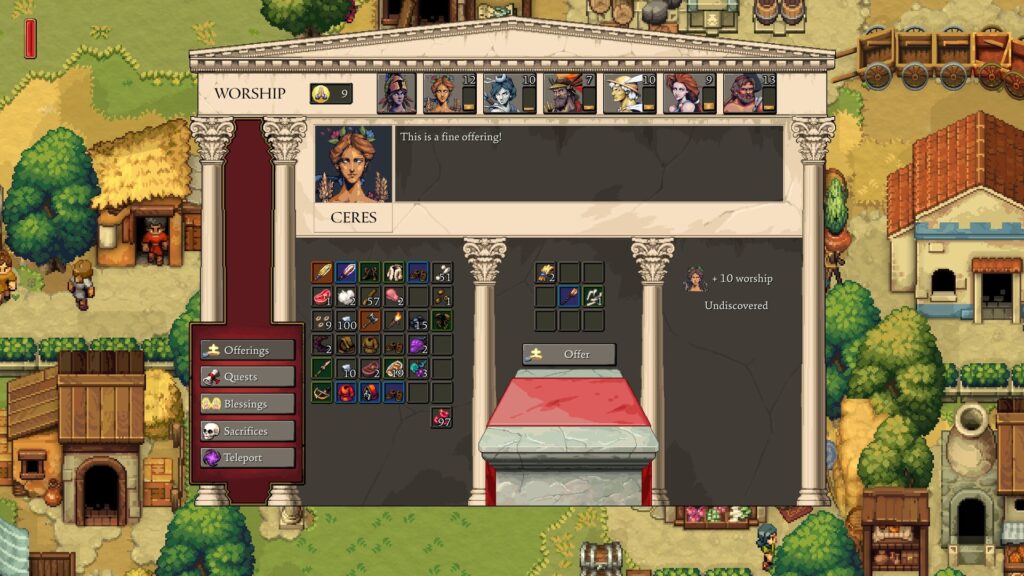
Romestead uses a pixel art aesthetic that balances charm with atmospheric depth. The visual design emphasizes warm, inviting settlement spaces contrasted with darker, more oppressive environments in corrupted regions.
Character animations are expressive despite the pixel style, with clear attention to farming, combat, and environmental interaction details.
Lighting plays a significant role in world design, especially in dungeons and cursed areas where shadows and color shifts reinforce the fantasy-horror undertones.
The world is designed to feel both nostalgic and fresh, combining classic RPG visuals with modern shading techniques and environmental storytelling.
Romestead biomes, enemies, and procedurally generated worlds
The world of Romestead is divided into multiple biomes, each with unique resources, enemies, and environmental hazards.
Common biome types include fertile plains, dense forests, mountainous regions, cursed wastelands, and ancient ruin zones. Each biome contributes different materials necessary for progression.
Enemies are biome-specific and escalate in difficulty as players venture further from their settlement. Early enemies may include wild animals and minor creatures, while later zones introduce mythological beasts and corrupted entities.
Procedural generation ensures that exploration remains fresh, with varied dungeon layouts, resource placements, and encounter patterns. This supports replayability and long-term engagement.
Romestead demo reactions and Steam player impressions
Early demo reactions suggest strong interest in Romestead’s hybrid design. Players often highlight the unique combination of cozy farming with survival tension as a standout feature.
Steam impressions tend to focus on the game’s atmosphere, praising its visual identity and world-building direction. Many players also comment on the unpredictability of mixing peaceful gameplay with sudden mythological threats.
Some feedback emphasizes the learning curve, particularly around balancing farming efficiency with survival readiness. However, this is often viewed positively as part of the game’s strategic depth.

Romestead developer Beartwigs and Three Friends background
Romestead is developed by an indie studio often associated with collaborative creative teams such as Beartwigs and Three Friends. These developers are known for experimenting with genre blending and atmospheric world-building.
Their design philosophy appears to focus on combining emotional gameplay experiences with systemic depth. Rather than relying on linear storytelling, they emphasize emergent gameplay driven by systems interaction.
This background explains Romestead’s hybrid structure, which merges multiple gameplay genres into a single cohesive experience.
Is Romestead one of the best upcoming cozy survival RPGs on Steam?
Romestead has strong potential to become a standout title in the cozy survival RPG space on Steam due to its unique genre fusion. The combination of farming, survival, mythology, and settlement management gives it a broader appeal than typical genre entries.
Its success will depend heavily on execution, especially balancing difficulty, progression pacing, and system complexity. If properly refined during Early Access, it could establish itself as a leading example of hybrid indie design.
The game’s most promising aspect is its flexibility, allowing players to choose between peaceful development or high-risk exploration. This dual identity is what sets it apart from competitors.
Frequently Asked Questions (FAQs)
- What type of game is Romestead?
Romestead is a cozy survival RPG with farming, settlement building, combat, and mythological fantasy elements. - Is Romestead multiplayer?
Yes, it supports both solo and cooperative multiplayer gameplay. - Does Romestead have farming mechanics?
Yes, farming is a core system tied to survival and progression. - Is Romestead set in real Ancient Rome?
It is inspired by Ancient Rome but includes fantasy and mythological reinterpretations. - What makes Romestead different from other survival games?
It blends cozy farming with dark fantasy survival and Roman mythology systems. - Does Romestead include dungeon exploration?
Yes, dungeons are a major source of progression and loot. - Are there gods in Romestead?
Yes, Roman gods influence gameplay through blessings and progression systems. - Can you build settlements in Romestead?
Yes, settlement building and management are central gameplay features. - Is Romestead procedurally generated?
Yes, exploration areas and dungeons include procedural generation elements. - Is Romestead similar to Stardew Valley or Valheim?
Yes, it draws inspiration from both but combines them with a darker mythological setting.

Conclusion
Romestead represents an ambitious fusion of cozy simulation and dark survival RPG systems set within a mythologically inspired Ancient Rome. Its blend of farming, combat, settlement building, and divine progression creates a layered gameplay structure that appeals to multiple player types. While still in development and evolving through Early Access, its design direction suggests a strong emphasis on emergent gameplay and atmospheric world-building. If executed successfully, it has the potential to stand out as a distinctive entry in the indie survival RPG genre.
Sources and citation
- Steam Store Page Early Access listing and update information.
https://store.steampowered.com/ - Beartwigs and Three Friends Announcements Official developer updates and community posts.
https://x.com/beartwigs - Indie Gameplay Preview Coverage Early access showcases and gameplay impressions.
https://www.rockpapershotgun.com/ - Steam Community Discussions Player feedback and forum discussions.
https://steamcommunity.com/ - Indie RPG Community Threads Community reactions and gameplay discussions.
https://www.reddit.com/r/IndieGaming/
Recommended
- Oscars 2026: Everything You Should Know (98th Academy Awards Date, Host, Nominees, and How to Watch)
- Diablo 4’s Cow Level Found at Last: How to Unlock the Secret Portal and Earn the Cow King’s Crown Mythic Unique
- Fallout Gameplay: Caravan, Power Armor Repair, Settlers, Mods, and Fallout: London Installation Guide
- How to Create a Sci-Fi Metahuman in Unreal Engine 5: A Step-by-Step Guide
- Clarkson’s Farm Season 5 Release Date Confirmed: Full Schedule, Episodes, and What to Expect in 2026
- BLOODMOORED by Stormdrill: Unsettling Psychological Horror Game Full of Ghosts, Industrial Puzzles, and Terrifying Spirits
- How to Create Your Own Metahuman in Unreal Engine 5: Complete Step-by-Step Guide
- Top 10 Best-Selling Star Wars Games in the US: Full Ranking (1995–March 2026) and Why These Titles Dominated
- Nintendo Share Price Jumps 15% After Pokémon Pokopia Success Boosts Switch 2 Momentum
- Top 10 Cyberpunk 2077 Mods to Transform Your Night City Experience



































































































