


All Pokemon Starters by Generation Full List
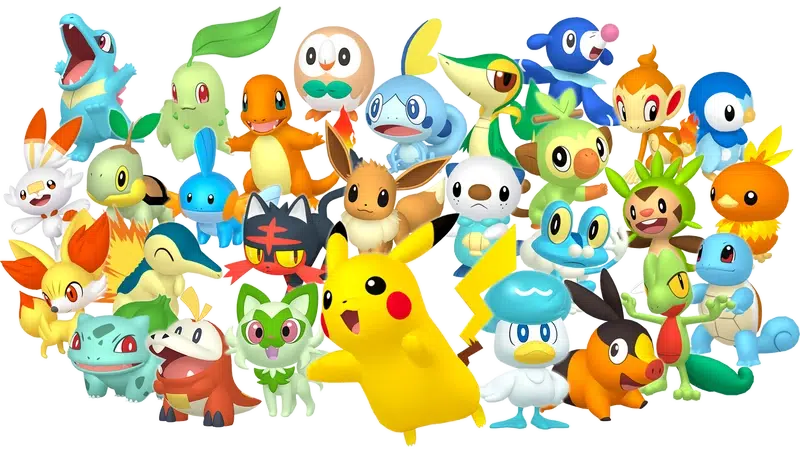
In official modern usage, the franchise often calls these creatures “first partner Pokémon,” although “starter Pokémon” remains the more common fan term. Across Generation 1 through Generation 9, there are 27 standard main-series starters: nine classic Grass/Fire/Water trios, one trio for each numbered generation. Pikachu in Pokémon Yellow and Pikachu or Eevee in Pokémon: Let’s Go, Pikachu! and Let’s Go, Eevee! are related partner exceptions, but they sit outside the standard nine trios covered in this Gen 1–Gen 9 list.
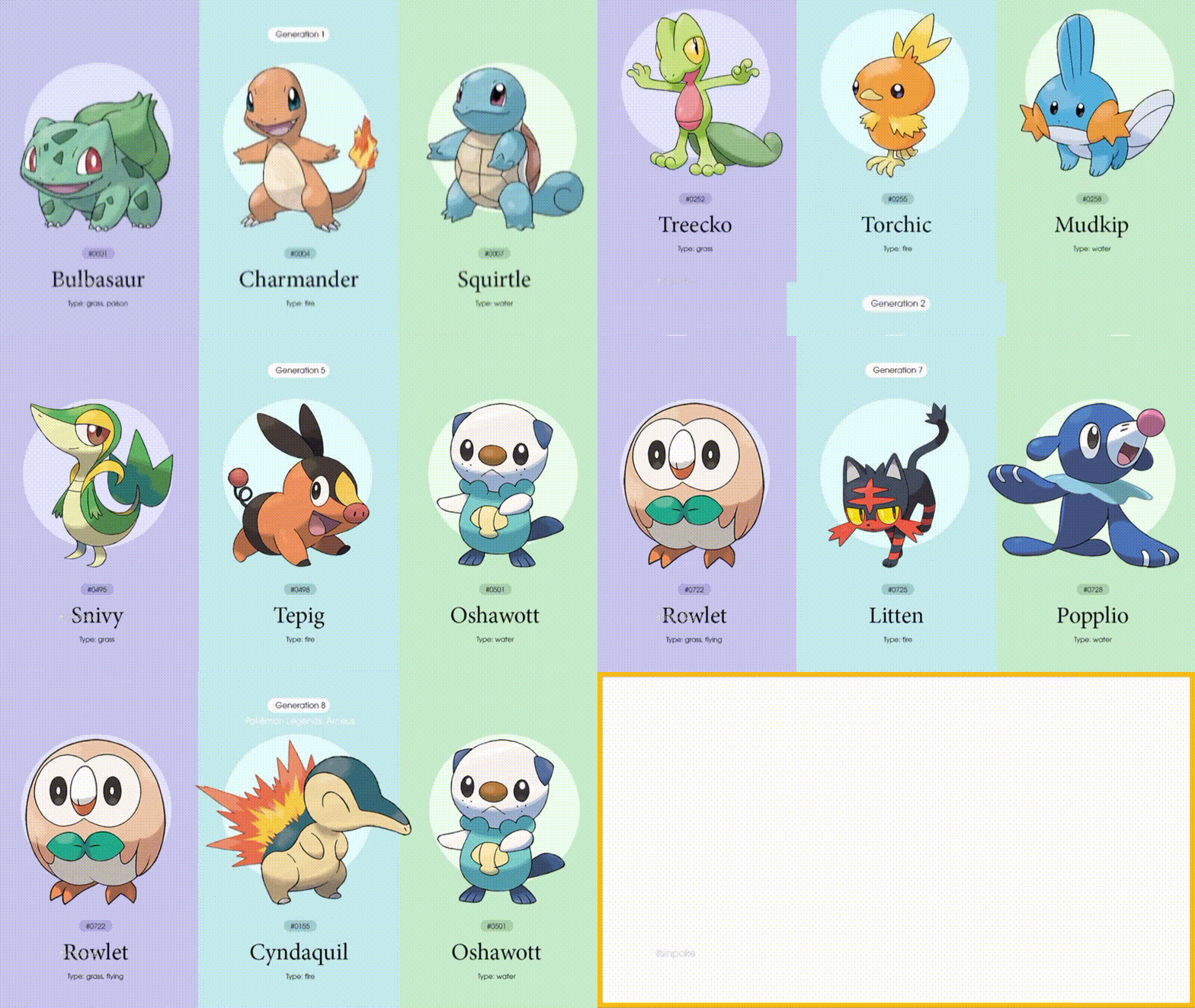
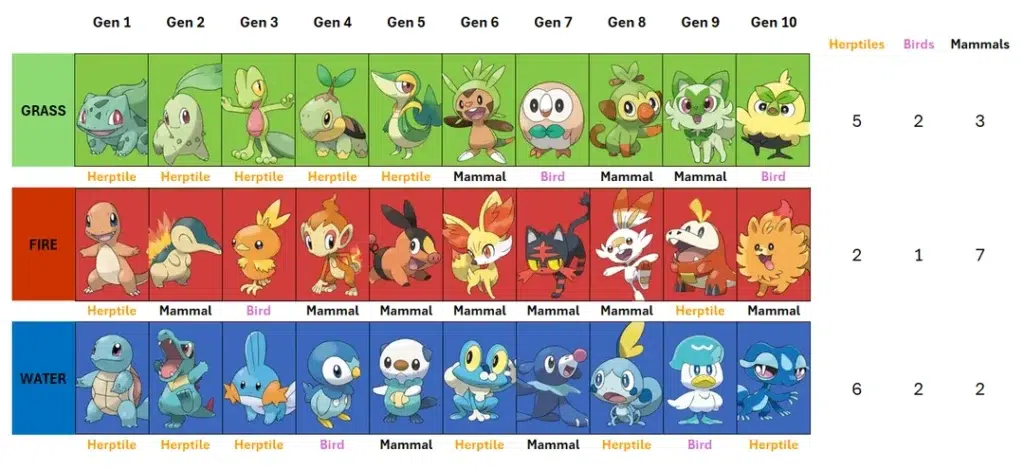
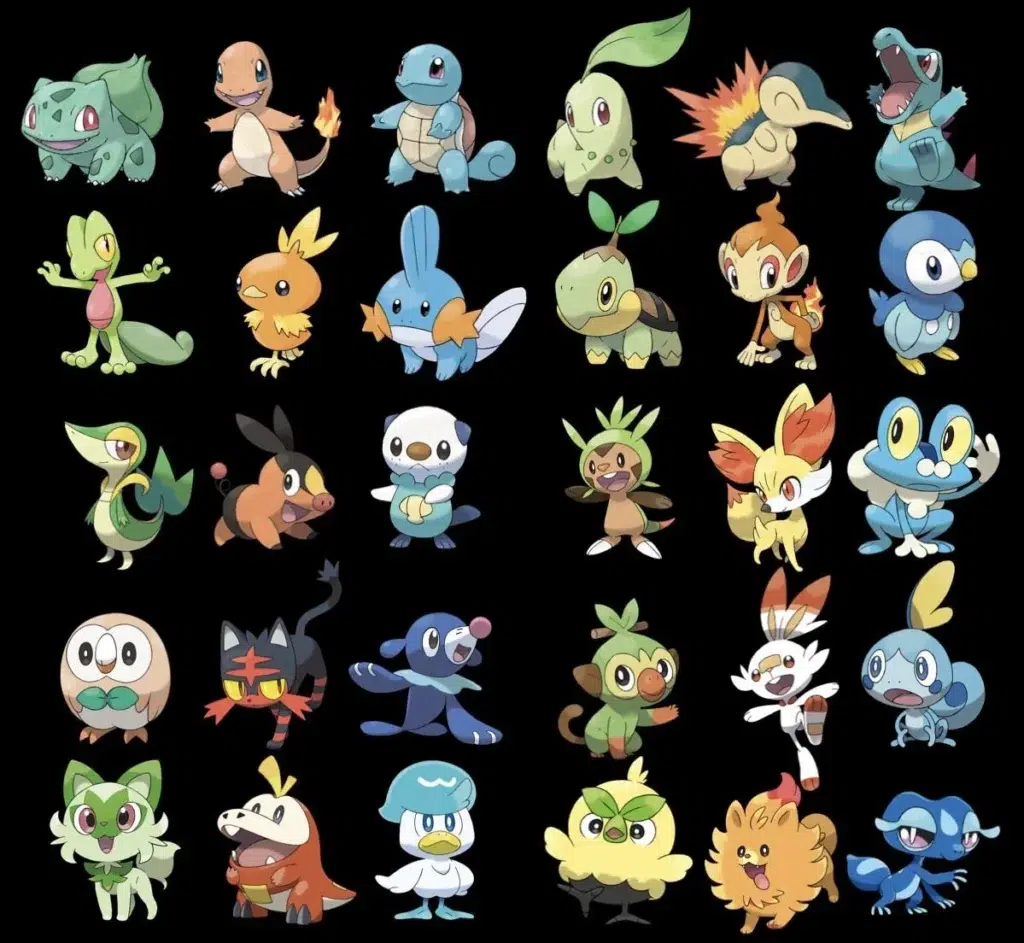
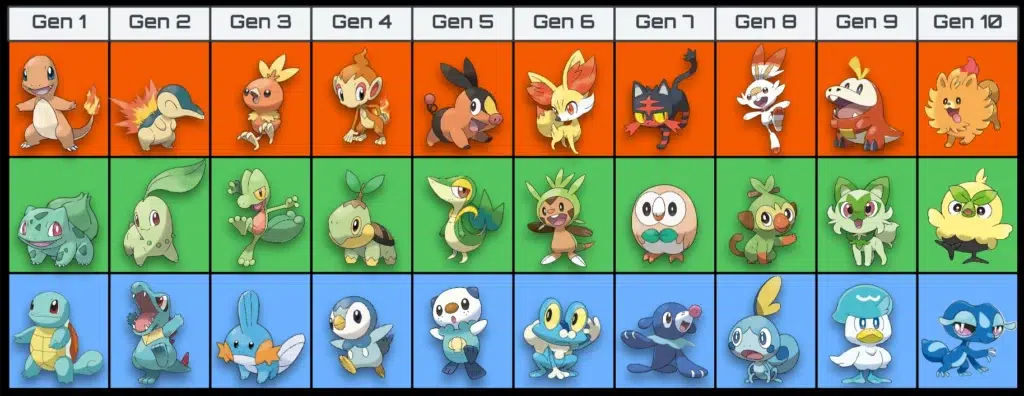
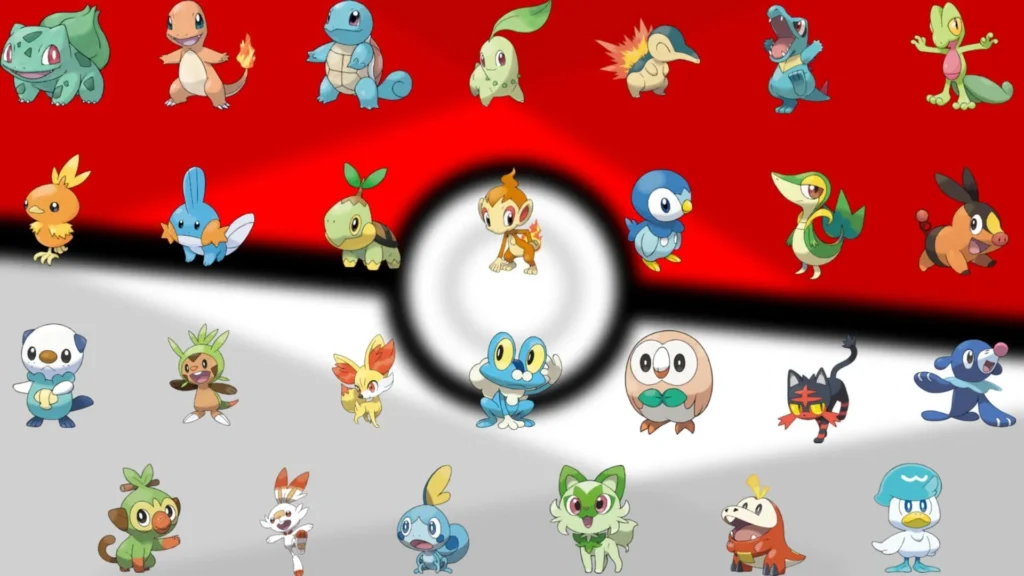
The full starter list by generation is Bulbasaur, Charmander, Squirtle; Chikorita, Cyndaquil, Totodile; Treecko, Torchic, Mudkip; Turtwig, Chimchar, Piplup; Snivy, Tepig, Oshawott; Chespin, Fennekin, Froakie; Rowlet, Litten, Popplio; Grookey, Scorbunny, Sobble; and Sprigatito, Fuecoco, Quaxly. Official game pages separately confirm the Galar trio and the Paldea trio as the first partners for those adventures.
Generation 1 Starters (bulbasaur Charmander Squirtle)
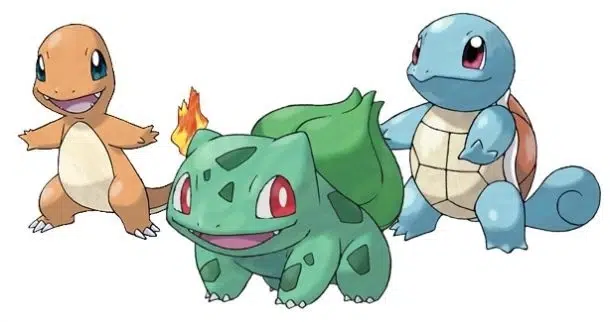
Generation 1 established the template that every later starter trio would follow. The original Kanto trio is Bulbasaur, Charmander, and Squirtle, with Bulbasaur beginning as a dual-type Grass/Poison Pokémon, Charmander as pure Fire, and Squirtle as pure Water. That original trio remains the foundation for nearly every later discussion about starter design, type balance, and starter popularity.
Generation 2 Starters (chikorita Cyndaquil Totodile)
Generation 2 moved the formula to Johto with Chikorita, Cyndaquil, and Totodile. In their original Johto lines, all three remain monotype through their original final evolutions: Meganium stays Grass, Typhlosion stays Fire, and Feraligatr stays Water. That makes the Johto trio one of the cleanest examples of the classic starter triangle without extra type complications.
Generation 3 Starters (treecko Torchic Mudkip)
Generation 3 introduced the Hoenn trio of Treecko, Torchic, and Mudkip. Hoenn is where the final-evolution formula began to branch out more aggressively: Sceptile stays Grass in its original form, while Blaziken becomes Fire/Fighting and Swampert becomes Water/Ground. That mix helped make the Hoenn starters especially influential in later conversations about battle strength and dual-typing.
Generation 4 Starters (turtwig Chimchar Piplup)
Generation 4 gave Sinnoh its starter trio: Turtwig, Chimchar, and Piplup. Their final forms broaden the classic triangle in three different directions Torterra becomes Grass/Ground, Infernape becomes Fire/Fighting, and Empoleon becomes Water/Steel which is one reason the Sinnoh starters are often remembered as one of the franchise’s most strategically distinct sets. Official Sinnoh materials also explicitly frame them as the three first partner choices at the start of the adventure.— ×2
Generation 5 Starters (snivy Tepig Oshawott)
Generation 5 brought the Unova trio of Snivy, Tepig, and Oshawott. Serperior remains pure Grass, Emboar finishes as Fire/Fighting, and Samurott stays Water in its original Unova form. That made Unova another generation where one line kept the long Fire/Fighting tradition alive while the other two final forms stayed closer to the original single-type model.
Generation 6 Starters (chespin Fennekin Froakie)
Generation 6 introduced the Kalos trio: Chespin, Fennekin, and Froakie. Their final forms are Chesnaught, Delphox, and Greninja, with final typings of Grass/Fighting, Fire/Psychic, and Water/Dark. Kalos therefore gave each branch a more specialized late-game identity, and it also produced Greninja, which later became one of the most successful starter-related species in official popularity voting.
Generation 7 Starters (rowlet Litten Popplio)
Generation 7 shifted the starter trio to Alola with Rowlet, Litten, and Popplio. Rowlet is notable because it begins as a dual-type Grass/Flying starter, while Litten begins as pure Fire and Popplio as pure Water; their final forms then become Decidueye (Grass/Ghost), Incineroar (Fire/Dark), and Primarina (Water/Fairy). That combination gives Alola one of the most thematically distinct and type-diverse starter lineups in the series.
Generation 8 Starters (grookey Scorbunny Sobble)
Generation 8 introduced the Galar trio of Grookey, Scorbunny, and Sobble. Official game pages identify Grookey as Grass, Scorbunny as Fire, and Sobble as Water, and the same official material later confirms their full evolution lines as Rillaboom, Cinderace, and Inteleon. Unlike several earlier generations, the original Galar final trio remains monotype all the way through.
Generation 9 Starters (sprigatito Fuecoco Quaxly)
Generation 9 moved the formula to Paldea with Sprigatito, Fuecoco, and Quaxly. Official Paldea materials confirm these three as the starter choices and the regional roster pages list their full families through Meowscarada, Skeledirge, and Quaquaval. Their final typings Grass/Dark, Fire/Ghost, and Water/Fighting give Paldea one of the boldest late-stage starter type spreads in the franchise.— ×2
Pokemon Starter Evolutions by Generation (complete Lines)
The Generation 1 through Generation 3 complete starter lines are Bulbasaur → Ivysaur → Venusaur; Charmander → Charmeleon → Charizard; Squirtle → Wartortle → Blastoise; Chikorita → Bayleef → Meganium; Cyndaquil → Quilava → Typhlosion; Totodile → Croconaw → Feraligatr; Treecko → Grovyle → Sceptile; Torchic → Combusken → Blaziken; and Mudkip → Marshtomp → Swampert. In the standard evolution charts, those lines mostly evolve at Level 16 and then the low-to-mid 30s, with some exceptions such as Totodile’s Level 18 and Level 30 breakpoints and Cyndaquil’s earlier first evolution.
The Generation 4 through Generation 6 complete lines are Turtwig → Grotle → Torterra; Chimchar → Monferno → Infernape; Piplup → Prinplup → Empoleon; Snivy → Servine → Serperior; Tepig → Pignite → Emboar; Oshawott → Dewott → Samurott; Chespin → Quilladin → Chesnaught; Fennekin → Braixen → Delphox; and Froakie → Frogadier → Greninja. These generations continue the three-stage structure across every standard starter line, while increasingly leaning on secondary typings for final forms such as Empoleon’s Water/Steel and Greninja’s Water/Dark.
The Generation 7 through Generation 9 complete lines are Rowlet → Dartrix → Decidueye; Litten → Torracat → Incineroar; Popplio → Brionne → Primarina; Grookey → Thwackey → Rillaboom; Scorbunny → Raboot → Cinderace; Sobble → Drizzile → Inteleon; Sprigatito → Floragato → Meowscarada; Fuecoco → Crocalor → Skeledirge; and Quaxly → Quaxwell → Quaquaval. Official Galar and Paldea pages verify the modern families, while the evolution charts confirm their stage order, typing, and level progression.
Fire Water Grass Starter Pokemon Explained (type Triangle)
The Fire/Water/Grass starter model works because it teaches Pokémon’s core type-effectiveness rules in a simple loop: Fire is super effective against Grass, Water is super effective against Fire, and Grass is super effective against Water. Official battle guides describe these relationships directly, and reference sources on first partner Pokémon note that this “rock, paper, scissors” structure is exactly why the classic starter trios work so well for first-time players.
What changes from generation to generation is not the opening triangle, but the complexity layered on top of it. Later final evolutions frequently add secondary types such as Charizard’s Fire/Flying, Torterra’s Grass/Ground, Greninja’s Water/Dark, Primarina’s Water/Fairy, Skeledirge’s Fire/Ghost, and Quaquaval’s Water/Fighting while Johto’s original final trio and Galar’s original final trio stay monotype throughout. That balance between simple beginnings and more specialized end states is one of the defining design ideas behind starter Pokémon.— ×2
Which Pokemon Starter is Best in each Generation
There is no single official canon answer to which starter is “best” in each generation, so the most reliable answer is to separate objective data from fan preference. As one informal but useful fan snapshot from an official Pokémon Forums poll series, the regional winners were Bulbasaur for Kanto, Totodile for Johto, Mudkip for Hoenn, Turtwig for Sinnoh, Oshawott for Unova, Fennekin for Kalos, Rowlet for Alola, Scorbunny for Galar, and Fuecoco for Paldea. That is not a balance ruling, but it is a clean record of what one cross-region forum series favored.
If the question is really about beginner-friendliness rather than popularity, the answer becomes more situational. Official Kanto material confirms that Brock specializes in Rock-type Pokémon and Misty specializes in Water-type Pokémon, which helps explain why Bulbasaur has long had a reputation for easing the early Kanto run, while forum discussion around Hoenn repeatedly singles out Mudkip or Swampert as the easiest practical route through that region.
Most Popular Pokemon Starters Ranked by Fans
The closest large official popularity dataset is the Pokémon of the Year 2020 vote. Because that voting event predates Paldea and counts evolutions as separate species, it works best as a snapshot of starter-line popularity rather than a definitive Gen 1–Gen 9 base-form ranking. In the published official results, the highest-ranked starter-related species were Greninja, Charizard, Bulbasaur, Rowlet, Decidueye, Sceptile, Blaziken, Typhlosion, Piplup, and Infernape, in that order by vote total.
Among base-form first partners specifically, the strongest performers visible in the official published results were Bulbasaur, Rowlet, Mudkip, Piplup, and Cyndaquil. That is useful context for anyone trying to measure pure fan affection for unevolved starters rather than whole evolutionary lines.
All Pokemon Starters by Region (kanto Johto Hoenn Sinnoh Unova Kalos Alola Galar Paldea)
By region, the starter breakdown is straightforward: Kanto has Bulbasaur, Charmander, and Squirtle; Johto has Chikorita, Cyndaquil, and Totodile; Hoenn has Treecko, Torchic, and Mudkip; Sinnoh has Turtwig, Chimchar, and Piplup; Unova has Snivy, Tepig, and Oshawott; Kalos has Chespin, Fennekin, and Froakie; Alola has Rowlet, Litten, and Popplio; Galar has Grookey, Scorbunny, and Sobble; and Paldea has Sprigatito, Fuecoco, and Quaxly. That regional order is the cleanest way to understand all Pokémon starters by generation and by setting at the same time.
Frequently Asked Questions (FAQs)
- How many standard starter Pokémon are there from Gen 1 to Gen 9?
There are 27 standard starter Pokémon, because each of the nine numbered generations has one Grass-type, one Fire-type, and one Water-type first partner. - What is the official term for starter Pokémon?
In modern official language, “first partner Pokémon” is the preferred term, although “starter Pokémon” still remains the familiar fan phrase. - Are Pikachu and Eevee starter Pokémon too?
They are partner exceptions tied to Pokémon Yellow and the Let’s Go games, but they are usually handled separately from the standard Grass/Fire/Water starter trios listed in Gen 1 through Gen 9 overviews. - Do all Gen 1–Gen 9 starters evolve twice?
Yes. Every standard starter from Bulbasaur through Quaxly belongs to a three-stage line, meaning each evolves twice before reaching its final form. - Why are starters usually Grass, Fire, and Water?
Because the type triangle teaches the most basic battle logic immediately: Fire beats Grass, Water beats Fire, and Grass beats Water. Official battle materials and starter references both describe that learning function directly. - Which starter Pokémon begin as dual types?
In the Gen 1–Gen 9 standard list, Bulbasaur begins as Grass/Poison and Rowlet begins as Grass/Flying. Most other starters begin as single-type Pokémon and add a second type later, if they gain one at all. - Which starter final evolutions stay monotype in their original forms?
The Johto final trio Meganium, Typhlosion, and Feraligatr and the Galar final trio Rillaboom, Cinderace, and Inteleon remain monotype in their original forms. - Which starter-related species ranked highest in the official Pokémon of the Year vote?
Greninja ranked highest among starter-related species in the official Pokémon of the Year 2020 results, followed by Charizard and then Bulbasaur among the highest visible starter-line species in the published leaderboard. - Why is Hisui not a separate numbered starter generation in this list?
Because Pokémon Legends: Arceus uses Rowlet, Cyndaquil, and Oshawott starters first introduced in earlier generations rather than debuting a brand-new numbered-generation trio. - Which region has Sprigatito, Fuecoco, and Quaxly?
That trio belongs to Paldea, the Gen 9 region introduced in Pokémon Scarlet and Pokémon Violet.
Conclusion
All Pokémon starters by generation follow one of the franchise’s most durable design ideas: a three-way opening choice that teaches type matchups, defines a region’s identity, and usually gives each player an immediate favorite. From Bulbasaur, Charmander, and Squirtle in Kanto to Sprigatito, Fuecoco, and Quaxly in Paldea, the nine classic trios form a clean 27-Pokémon backbone for the numbered generations, while their evolution lines show how Game Freak and the franchise gradually pushed starter design toward bolder secondary typings, stronger themes, and more distinct final forms.
Sources and Citations
- The Pokémon Company Official Pokémon of the Year 2020 Results, https://pokemon2020.pokemon.com/en-us/
- Nintendo Official Pokémon Scarlet and Violet Starter Pokémon Page, https://scarletviolet.pokemon.com/en-us/pokemon/first-partner-pokemon/
- Nintendo Official Pokémon Sword and Shield Starter Pokémon Page, https://swordshield.pokemon.com/en-us/gameplay/grookey-scorbunny-sobble/
- Nintendo Official Pokémon Brilliant Diamond and Shining Pearl Page, https://diamondpearl.pokemon.com/en-us/
- Nintendo Official Pokémon Let’s Go Pikachu and Eevee Page, https://pokemonletsgo.pokemon.com/en-us/
- Bulbapedia First Partner Pokémon Overview, https://bulbapedia.bulbagarden.net/wiki/First_partner_Pok%C3%A9mon
- Bulbapedia Pokémon Yellow Version Details, https://bulbapedia.bulbagarden.net/wiki/Pok%C3%A9mon_Yellow_Version
- Bulbapedia Pokémon Let’s Go Pikachu and Let’s Go Eevee Details, https://bulbapedia.bulbagarden.net/wiki/Pok%C3%A9mon:_Let%27s_Go,_Pikachu!_and_Let%27s_Go,_Eevee!
- Pokémon Database Starter Pokémon Evolution Chains, https://pokemondb.net/pokedex/game/starters
- Pokémon Database Paldea Starter Evolutions, https://pokemondb.net/pokedex/game/scarlet-violet
- Pokémon Database Galar Starter Evolutions, https://pokemondb.net/pokedex/game/sword-shield
- Official Pokémon Kanto Region Information, https://www.pokemon.com/us/pokemon-video-games/pokemon-lets-go-pikachu-and-pokemon-lets-go-eevee/explore-kanto-region/
- Official Pokémon Sinnoh Region Information, https://www.pokemon.com/us/pokemon-video-games/pokemon-brilliant-diamond-and-pokemon-shining-pearl/
- Official Pokémon Galar Region Information, https://swordshield.pokemon.com/en-us/
- Official Pokémon Paldea Region Information, https://scarletviolet.pokemon.com/en-us/
Recommended
- Creating Smooth Camera Transitions in Blender Using The View Keeper
- Tech and Artistic Inspirations Behind No Rest for the Wicked: Moon Studios’ Handcrafted Vision Explained
- A Surprise Teaser for Alien: Isolation 2 Rekindles Hope: What “False Sense of Security” Reveals 12 Years After the Original
- Blight: Survival Blends Co-Op Medieval Combat with a Grounded Zombie Plague
- Witcher 3 Director Says His Vampire Game “Couldn’t” Be Made at CD Projekt Red, Highlighting Why Big Studios Avoid Risky Original Games
- Marvel Moved Away From Kang and Toward Robert Downey Jr.’s Doctor Doom: Kevin Feige’s Quantumania Timeline
- 007 First Light DualSense Controller Doesn’t Match the Iconic Gun Barrel Design (And Wasn’t Meant To)
- Reviews Praise New Steam Controller Performance but Debate Its $99 Price Tag in 2026
- The Publisher ARK Is Facing Delisting From the Exchange Due to Financial Difficulties: What It Means for Snail Games and the ARK Franchise
- Disney CEO Says Gaming Could Be the Company’s Next Big Growth Driver as Fortnite Strategy Expands