




In This Article (8 sections)
Avatar: Seven Havens Episodes 4 to 6 Recap, Release Schedule, and Story Progression
Avatar: Seven Havens episodes 4 to 6 premiered together on Paramount+ on October 16, 2026, forming the second release batch of Book 1 after the opening three episodes arrived on October 9. The chapters are “The Faceless,” “The One Left Behind,” and “Night of the Afflicted.” Paramount’s schedule places episodes 7 to 9 on October 23 and episodes 10 to 13 on October 30, meaning episode 6 ends the latest batch rather than the season. Paramount+ is the confirmed streaming home, although regional availability may differ.
The first three episodes established Pavi as a young earthbender growing up in a world where the Avatar is associated with catastrophe. Her reunion with Nisha revealed the unusual central premise that the sisters are twin Avatars. Their incomplete family history quickly became intertwined with their abilities, while Jae and Karthik emerged as important mentors and protectors. By the beginning of episode 4, the central problem was already one of trust: the girls needed to determine who could help them understand their past and whether the adults protecting them were also withholding information.
Episode 4, “The Faceless,” sends Team Avatar searching for a missing bender. The investigation leads to a dangerous encounter with bandits and expands the story beyond training by forcing the group to address an external problem. The official synopsis establishes the confrontation without confirming that the entire missing person mystery is resolved. The episode also gives the developing Team Avatar a practical responsibility, allowing relationships to form through shared action rather than exposition alone. FandomWire’s October 16 recap supplies the investigation’s crucial details.
Uki is the missing Brigade member, and the twins have a personal reason to find her because she is linked to the lullaby they remember from childhood. Maps associated with Uki point the group toward another Faceless raid. Pavi and Nisha realize that the bandits are using camodillos to carry stolen supplies out of Ellora, but their intervention fails to stop the escape, and Uki is seen bound in the escaping cart. A Brigade witness also sees the twins use multiple elements, connecting this rescue mission directly to the rumors that dominate episode 5.
The missing bender investigation highlights the difference between possessing power and knowing how to use it responsibly. Finding someone in danger requires observation, cooperation, and judgment, not simply overwhelming an opponent. The appearance of the Faceless adds another destabilizing force to a world already dealing with supernatural threats and public suspicion toward the Avatar. The Geekiary also notes that episode 4 reveals Daemin as another White Lotus member within the Brigade, giving Jae an ally who shares responsibility for protecting the twins.
Episode 5, “The One Left Behind,” shifts toward secrecy and investigation. Jae and Karthik investigate rumors that could place the twins in danger, while Pavi and Nisha search Karthik’s office for information about their parents. The parallel structure makes information itself the source of tension.
The adults are trying to discover what others know about the girls, while the girls are trying to discover what their mentors know about them. The sisters’ decision to search the office is about agency as much as curiosity. Their reunion does not erase questions about why they were separated, what happened to their family, or why so much of their own history remains inaccessible to them. Searching for answers places them in direct conflict with the protective secrecy surrounding their lives.
The Geekiary’s October 18 recap identifies Molin as the witness whose account draws Datu into the spreading rumors, complicating Jae’s relationship with his boyfriend. The situation escalates when Molin threatens Kayoko during a public appearance and Karthik intervenes. What begins as a dispute over information becomes an immediate danger to the haven’s leadership. Episode 5 also ends with Karthik warning White Lotus members elsewhere that news of the Avatar’s return is circulating, establishing a separate communication with the wider world before Kayoko’s later appeal for assistance.
Episode 6, “Night of the Afflicted,” turns those personal tensions into a larger crisis. Karthik, Nisha, and Pavi respond to mass panic among the Afflicted inside a hospital, while Jae faces unrest within the Bending Brigade. The two situations place vulnerable patients and public institutions under pressure simultaneously, showing how fragile Ellora becomes when both care systems and authority begin to destabilize. The hospital setting also changes the demands placed on the protagonists. The people at the center of the emergency are patients rather than conventional enemies, so restoring order requires more than defeating an opponent. The crisis tests whether powerful young Avatars can protect people while understanding how fear, confusion, and vulnerability shape the situation around them.
Pavi and Nisha’s Parents, Twin Avatar Mystery, and Growing Relationship
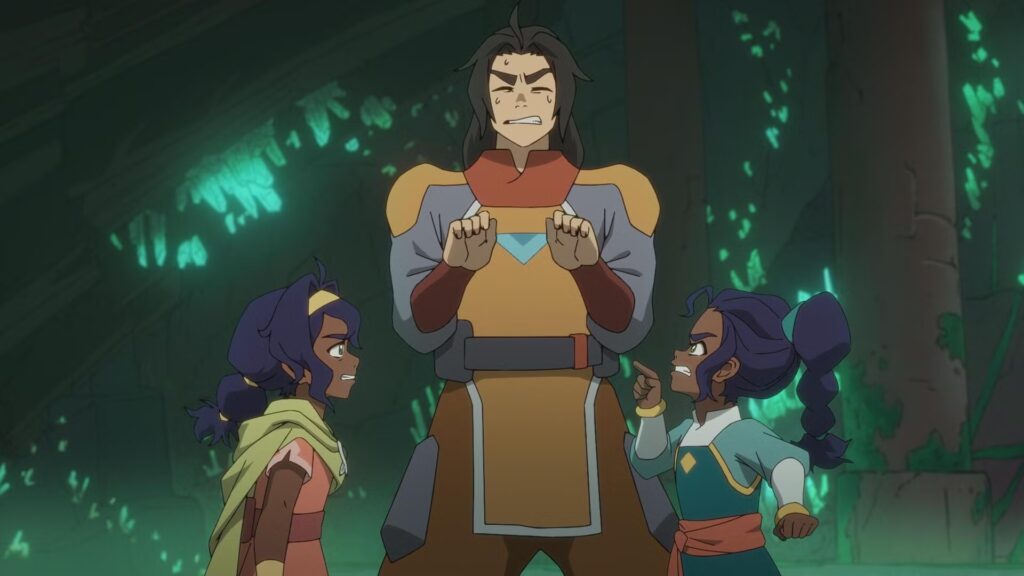
The mystery surrounding Pavi and Nisha’s parents remains the emotional core of episodes 4 to 6. The sisters are not only trying to understand why they possess extraordinary abilities. They are trying to reconstruct the family history that existed before their separation and determine how much the adults around them already know. That gives the fantasy mystery a direct emotional foundation even for viewers unfamiliar with the wider Avatar mythology.
Episode 5 makes that search active rather than passive. Pavi and Nisha do not wait for their mentors to decide what they are ready to hear. By entering Karthik’s office and looking for information themselves, they begin taking control of the story being told about their own lives. A recovered memory, an adult explanation, and a written record can each provide different forms of evidence, making the reliability of information as important as the answers themselves.
The Geekiary’s recap also describes a concealed relic room within Karthik’s office and a bracelet resembling Pavi’s brooch. That object prompts a memory connected to Karthik finding Nisha, giving the sisters a specific reason to question the account they have received. The discovery sharpens the family mystery without proving that Karthik knows every answer. A connection between an object, a memory, and their mentor still leaves the circumstances of the separation unresolved, including what happened before he became involved.
Jae and Karthik’s investigation runs in parallel because rumors about the twins have become a security concern. In a society already suspicious of the Avatar, information can cause harm before it is verified. Their responsibility therefore extends beyond training. They need to assess public threats, understand who knows about the sisters, and decide what information should be shared with them.
That creates a tension between protection and control. A mentor may believe withholding information is necessary for safety, while the person being protected may experience that secrecy as exclusion. Episodes 4 to 6 do not require either side to be treated as completely right or wrong. Instead, they establish a conflict in which trust depends increasingly on whether the adults can explain their decisions honestly.
Pavi’s personal development becomes especially significant in episode 6. Published review coverage describes her discovering that her missing lower left leg resulted from an injury rather than the congenital difference she believed it to be. The revelation is connected to her phantom limb pain and incomplete knowledge of her own past. Its importance lies in how fundamentally it changes her understanding of herself, turning another apparently settled part of her identity into a question requiring explanation.
FandomWire’s recap also describes a doctor removing Pavi’s prosthetic to prepare a replacement and giving her a crutch. That detail makes the hospital crisis immediately practical for her: she must navigate danger while adapting to a change in how she moves. It gives the episode a way to connect its emergency with an ordinary need for care, without requiring Pavi’s value as an Avatar to depend on managing every difficulty alone.
That discovery should not reduce Pavi’s disability to a plot device. Her daily experience, comfort, independence, and need for care remain meaningful regardless of what eventually explains the injury. The larger character development concerns how she responds when established beliefs about her own history are disrupted. Seeking reliable answers does not make her less capable. It gives her greater reason to decide for herself whom to trust.
But Why Tho?’s October 16 review describes the strain this places on the sisters: Pavi insists on managing by herself, while Nisha’s efforts to help are complicated by assumptions about what Pavi needs. Their difficulty makes the relationship more specific than a simple picture of unwavering support. Nisha has to learn how to offer useful assistance, and Pavi has to navigate the vulnerability that accepting it can involve. The emotional significance comes from allowing them to misunderstand each other while still caring deeply, giving their reconciliation and cooperation something concrete to work through.
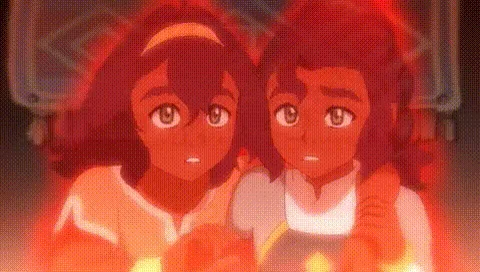
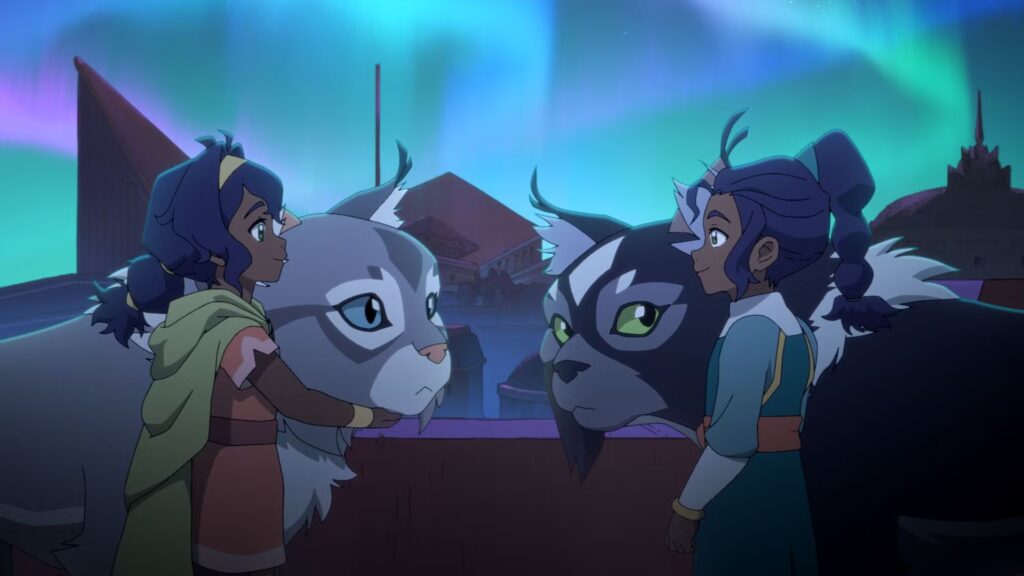
Pavi and Nisha’s relationship is equally important because their twinhood gives the series both an emotional partnership and a way to explore disagreement. Their reunion creates immediate closeness, but sharing a history does not mean they will interpret every discovery identically. One twin may find reassurance in information that unsettles the other, allowing their bond to deepen through negotiation rather than constant agreement. Their shared investigation demonstrates that they are united by the need to understand their family even when their individual reactions may differ.
That dynamic becomes particularly important as the story asks why the Avatar exists as twins at all. The strongest future revelations will need to explain not only the mythology but also how those answers change the way Pavi and Nisha understand one another. That review also identifies a contrast between Nisha’s readiness to push forward and Pavi’s more peaceful approach. This is a useful distinction for twin protagonists because it gives them different ways of contributing to the same objective. Their partnership can include caution, initiative, persuasion, and resolve without making one sister the complete model the other must imitate. Sharing the Avatar role becomes more interesting when the sisters retain individual judgments and strengths.
Episode 6 Ending, Energybending, the Anomaly, Ellora, and Connections to the Legend of Korra
The climax of “Night of the Afflicted” reveals that Pavi and Nisha can energybend. Reporting on the episode confirms that their encounter with the Anomaly unlocks another memory involving their parents before the twins dispel it. Michael Dante DiMartino has also identified energybending as an important part of their continuing story. The revelation strengthens the connection between the twins’ abilities and their missing history without providing a complete explanation of either. Their encounter with the Anomaly creates danger but also gives them access to information, making it reasonable to interpret their past as increasingly relevant to understanding their powers.
Energybending establishes a new capability, but it does not yet explain why two Avatars exist or how their shared role functions. In GamesRadar+’s interview about the revelation, DiMartino clarifies that both sisters can use all four elements while still developing their abilities. Energybending likewise forms part of what they must learn to understand. This distinction matters because the ending demonstrates a capability without establishing complete mastery. It does not explain whether each twin can reproduce the same result alone, how cooperation affects the technique, or what its limits might be. Those practical questions give the series room to develop their powers through experience rather than treating one successful intervention as the end of their training.
The ability also connects Seven Havens directly with earlier franchise history. Aang used energybending during his confrontation with Ozai, while Korra later received the ability from Aang. Pavi and Nisha using the same form of power places their story alongside an ability associated with major turning points in earlier Avatar narratives. The Anomaly itself remains unresolved. Visual similarities should not be used to identify it automatically as Vaatu. Producer comments reported by Inverse state that the creative team refers to the entity as the Anomaly and cautions that it is not necessarily what viewers initially assume. Its nature, intentions, and relationship with the twins therefore remain open questions rather than settled lore.
Another important connection to The Legend of Korra comes through the damaged reputation of the Avatar. Seven Havens is set after Korra’s era in a society that associates the Avatar with catastrophe. That public belief should not automatically be treated as a complete historical account. The series can explore inherited blame, distorted memory, and political narratives without requiring the audience to accept every accusation against Korra or the Avatar as objective truth.
That inherited suspicion places an unusual burden on the sisters. They are being asked to act responsibly in the present while carrying a reputation formed before their own choices could influence it. Their response to danger can establish what kind of Avatars they want to become, even while the historical account remains disputed. This gives the connection to Korra a purpose beyond continuity: the past affects how the protagonists are treated, while their actions create the possibility of a different relationship between the Avatar and the public.
Episode 6 also expands the political scope of the series. Chancellor Kayoko sends a request for help to the other havens after Ellora’s escalating crises. The appeal establishes that Ellora can no longer treat its problems as entirely internal, while opening the possibility of a broader story involving other communities. It does not guarantee that aid will arrive or confirm which haven might respond first. The combination of a hospital emergency and unrest within the Bending Brigade reinforces Ellora’s vulnerability. The crisis affects both care for ordinary people and the institution expected to preserve order. This makes the haven’s instability more significant than a single monster attack because it exposes weaknesses inside the systems people depend upon.
Dispelling the Anomaly also leaves a distinction between ending the immediate confrontation and recovering from the crisis. The encounter alone does not establish the eventual condition of every patient or resolve the pressures affecting the Bending Brigade. Care, reassurance, and an explanation of what happened could become important measures of Ellora’s recovery. This is where the ending’s political and personal threads meet: an extraordinary intervention may stop a dangerous moment, but the people who lived through it still need institutions they can rely on afterward.
The ending therefore changes the central questions rather than resolving them. Pavi and Nisha now possess another unexplained ability and another fragment of their family history, while Ellora has reached outward for assistance. The next stage of the story can explore how the sisters interpret what they have learned and whether the wider world is willing or able to help a haven already struggling with distrust and supernatural danger.

Episodes 4 to 6 Review, Unanswered Questions, and What Comes Next in Episode 7
Episodes 4 to 6 create a clear escalation from an external investigation to a private search for information and then to a crisis affecting vulnerable people and public institutions. “The Faceless” gives Team Avatar a practical mission, “The One Left Behind” turns secrecy into the central source of tension, and “Night of the Afflicted” combines the personal and political pressures into the batch’s largest emergency. That structure helps the story manage a growing number of mysteries.
The twins’ parents, their unusual Avatar status, the Faceless, circulating rumors, the Anomaly, and the source of Pavi’s injury all compete for attention. The immediate objectives keep those larger questions manageable: someone is missing, Pavi and Nisha want information about their family, and hospital patients need protection. Those concrete goals give each episode a clear purpose even when the wider mythology remains unresolved.
The batch also offers different opportunities for action and animation. Seven Havens uses 2D animation, with the creative team describing an intention to draw from older anime influences. A bandit confrontation, covert office search, and hospital emergency each require different visual priorities. The hospital sequence particularly depends on spatial clarity because the audience needs to understand who requires protection, where danger is moving, and what the protagonists are trying to prevent. Character animation is equally important during the quieter material.
Pavi and Nisha’s investigation relies on reactions, hesitation, and uncertainty rather than constant combat. A definitive judgment about individual cuts or movement consistency would require direct scene inspection, but the confirmed story structure provides a wide range of visual demands across the three episodes. The strongest case for this batch lies in how closely its major revelations affect the protagonists’ personal lives.
Pavi’s changed understanding of her injury has emotional weight before its place in the larger mystery is known. The main structural risk is that a succession of unanswered questions could crowd out those immediate consequences. The series needs room for the sisters to react, disagree, and reconsider their relationships. Without that space, even a significant discovery could become merely another clue awaiting a later explanation.
Several major questions remain after episode 6. The central mystery is why the Avatar has appeared as twins and what their newly revealed energybending means for that arrangement. Their parents remain another unresolved issue because understanding their decisions and the sisters’ separation could change how Pavi and Nisha judge their mentors. The Anomaly’s identity and purpose are still unknown, while producer comments make simple identification with an established antagonist unreliable.
Ellora’s appeal to the other havens raises a more immediate political question. Sending a distress call establishes a request for assistance, not a guaranteed alliance or arrival. Other havens may have their own problems, priorities, or attitudes toward Ellora and the Avatar. The wider historical question also remains unresolved: how accurate is society’s prevailing belief about the Avatar’s responsibility for the catastrophe?
These mysteries will be most effective if their eventual answers change the protagonists’ behavior rather than simply adding lore. A revelation about their parents should affect whom the sisters trust. New knowledge about the Avatar should influence what Pavi and Nisha believe their responsibilities are. Political responses from other havens should alter Ellora’s choices rather than serving only as background information. A further question concerns who understands the hospital events.
The audience learning about energybending does not establish that everyone in Ellora knows what the twins did or interprets it accurately. That gap matters in a story already concerned with rumors. An act intended to protect people can acquire a different meaning when retold by frightened witnesses or explained incompletely. How the crisis is described afterward could therefore become as consequential for the sisters’ public position as the intervention itself.
Avatar: Seven Havens episode 7 is scheduled for October 23, 2026, alongside episodes 8 and 9, with the remaining four Book 1 chapters scheduled for October 30. The next batch has several immediate consequences to address: the twins have discovered another dimension of their abilities, their family investigation remains unresolved, and Ellora has asked the wider world for help.
The distress call does not confirm a particular destination, alliance, or arrival in episode 7. The stronger expectation is continuity of consequence. The discoveries made in episodes 4 to 6 should affect Pavi and Nisha’s trust, while the hospital crisis and Bending Brigade unrest should influence how Ellora responds to further danger. Book 1 has now established enough tensions to move beyond introducing its premise and show how personal revelations and public decisions reshape one another while keeping the sisters at the center of the story.

Frequently Asked Questions (FAQs)
- When were Avatar: Seven Havens episodes 4–6 released?
They were released together on Paramount+ on October 16, 2026, as the second batch of Book 1. The first three episodes premiered one week earlier on October 9, establishing the series’ main characters, the twin Avatar mystery, and the early conflict surrounding Ellora. Releasing episodes 4 to 6 as a group allows this section of the story to move from an external investigation into a more personal family mystery and then into the hospital crisis that closes the batch. - What is Avatar: Seven Havens episode 4 called?
Episode 4 is titled “The Faceless.” Its official premise follows Team Avatar as they search for a missing bender and encounter dangerous bandits during the investigation. The episode expands the story beyond training by giving Pavi, Nisha, and their allies a practical mission in which observation, cooperation, and judgment matter alongside bending ability. The Faceless also introduce another source of instability into a world already dealing with supernatural threats and distrust of the Avatar. - What happens in “The One Left Behind”?
“The One Left Behind” divides its story between two investigations. Pavi and Nisha search Karthik’s office for information about their parents, while Jae and Karthik investigate rumors that could put the sisters in danger. This parallel structure makes secrecy and trust central to the episode because the adults are trying to discover what other people know about the twins while the twins are trying to discover what their mentors may be withholding from them. Their search for family information also gives them more control over understanding their own history. - What is the main emergency in episode 6?
Episode 6, “Night of the Afflicted,” centers on mass panic among the Afflicted inside a hospital. Karthik, Pavi, and Nisha must respond to the crisis while Jae simultaneously deals with unrest inside the Bending Brigade. The two situations place both vulnerable patients and Ellora’s public institutions under pressure. Because the people at the center of the hospital emergency are patients rather than conventional enemies, resolving the situation requires protection and judgment rather than simply overpowering an opponent. - Can Pavi and Nisha energybend?
Yes. Episode 6 confirms that Pavi and Nisha can use energybending, and Michael Dante DiMartino has indicated that the ability is important to their continuing story. Their encounter with the Anomaly also connects the ability with another memory involving their parents. Energybending is therefore more than an isolated new power, but the series has not yet explained why the twins possess it, how it relates to their unusual shared Avatar status, or what its full limitations are. - Is the Anomaly confirmed to be Vaatu?
No. Producer comments reported by Inverse specifically caution viewers against assuming that the Anomaly is Vaatu based on visual similarities or familiarity with earlier Avatar mythology. The creative team refers to the entity as the Anomaly, and its true nature and purpose remain unresolved. Until the series provides a direct identification, describing it as Vaatu would turn a theory into a confirmed fact that the released material does not support. - Does episode 6 completely explain the twins’ parents?
No. Episode 6 provides additional information and another memory connected to Pavi and Nisha’s parents, but it does not resolve the complete family mystery. Important questions remain about why the sisters were separated, what their parents knew about their abilities, and how those events relate to Pavi’s incomplete understanding of her own past. The new information advances the mystery while leaving enough unanswered for later episodes to change how the twins understand their family and mentors. - Are Pavi and Nisha both Avatars?
Yes. The released story presents Pavi and Nisha as twin Avatars, making their shared role one of Seven Havens’ central mysteries. The series has established the unusual condition without yet providing a complete explanation for why the Avatar exists as two sisters rather than one person. Their energybending and recovered memories add further importance to the question, but those developments do not yet reveal the full mechanics or history behind their shared identity. - Does Seven Havens take place after The Legend of Korra?
Yes. Seven Havens continues the Avatar franchise after Korra’s era and takes place in a world that has changed substantially in the time since her story. The connection extends beyond chronology because the series examines how later generations understand the Avatar’s legacy and the catastrophe associated with that role. Energybending also provides a direct link to earlier franchise history, having previously been used by Aang and later passed to Korra. - When does Avatar: Seven Havens episode 7 release?
Episode 7 is scheduled for October 23, 2026, alongside episodes 8 and 9 as the third batch of Book 1. The final four episodes, episodes 10 to 13, are scheduled for October 30. The next batch follows several unresolved developments from episode 6, including the twins’ newly revealed energybending, their continuing investigation into their parents, and Ellora’s request for assistance from the other havens.
Conclusion
Avatar: Seven Havens episodes 4 to 6 deepen the series by making its larger mysteries increasingly personal while placing greater pressure on Ellora. The search for a missing bender gives Team Avatar a practical challenge beyond training, the investigation inside Karthik’s office brings family history and trust to the forefront, and the hospital crisis forces Pavi and Nisha to respond to fear and vulnerability at close range.
The most significant development is the twins’ discovery of energybending. That ability connects their story directly to established Avatar history while raising new questions about why they share the Avatar role and how their powers relate to their parents and the Anomaly. Ellora’s appeal to the other havens also expands the stakes beyond one city, creating room for the series to explore how different communities respond to the growing crisis.
The strongest aspect of this three-episode batch is the way its larger mysteries remain tied to immediate human concerns. Questions about the Avatar, the twins’ past, and the supernatural threat matter because they affect relationships, safety, and the decisions Pavi and Nisha must make. The next episodes will be most effective if those answers continue to shape both sisters individually rather than simply adding more mythology around them.
Sources and Citations
- Paramount Press Express, September 10, 2026 : Announces the official trailer and confirms the October 9 premiere with three episodes, followed by episodes four through six on October 16, seven through nine on October 23, and Book One’s final four on October 30. Also provides the series premise, voice cast and production credits. paramountpressexpress.com
Citation: Avatar: Seven Havens Official Trailer and Release Announcement. (Paramount Press Express). - Paramount+, Episode 4: “The Faceless” : Provides the official listing for season one, episode four. Paramount+’s published synopsis follows Team Avatar’s search for a missing bender and the dangerous confrontation with bandits that results, establishing the episode’s title, place in the season and central story premise. paramountplus.com
Citation: Avatar: Seven Havens, Episode 4: The Faceless. (Paramount+). - Paramount+, Episode 5: “The One Left Behind” : Identifies season one, episode five, and summarizes Jae and Karthik’s investigation into rumors that threaten the twins. The official synopsis also follows Pavi and Nisha searching Karthik’s office for information about their parents, establishing the episode’s two main story threads. paramountplus.com
Citation: Avatar: Seven Havens, Episode 5: The One Left Behind. (Paramount+). - Paramount+, Episode 6: “Night of the Afflicted” : Confirms the title and sequence of season one, episode six. Its official synopsis describes Karthik, Nisha and Pavi responding to panic among hospital patients known as the Afflicted, while Jae confronts unrest within the Bending Brigade, providing context for the episode’s parallel conflicts. paramountplus.com
Citation: Avatar: Seven Havens, Episode 6: Night of the Afflicted. (Paramount+). - But Why Tho?, Swara Salih, October 16, 2026 : Reviews episodes four through six, focusing on Pavi and Nisha’s growing bond, Avatar training, Daemin’s introduction and the developing spiritual mystery. Praises the performances, animation, music and cultural detail, while discussing Pavi’s disability, Nisha’s fear of abandonment and the pressures facing their mentors and Ellora’s leadership. But Why Tho?
Citation: Review: Avatar: Seven Havens Episodes 4 to 6 Are Superbly Stressful. (But Why Tho?). - GamesRadar+, Jordan Farley, October 16, 2026 : Reports on Pavi and Nisha’s use of energybending in episode six and explains its significance within Avatar lore. Includes comments from Michael Dante DiMartino and Sehaj Sethi about the technique’s connection to spirit energy and its continuing importance to the twins’ development. GamesRadar+
Citation: Avatar: Seven Havens’ Creators Discuss Pavi and Nisha’s Energybending. (GamesRadar+). - Inverse, Lyvie Scott, October 15, 2026 : Examines theories connecting the Anomaly to Vaatu, drawing on New York Comic Con interviews with Ethan Spaulding and Sehaj Sethi. Reports the producers’ comments about the entity’s unexpected nature and discusses possible connections to Korra and the Cataclysm, with those connections presented as speculation. inverse.com
Citation: Avatar: Seven Havens’ Mysterious Spirit Isn’t Who You Think It Is, According to the Producers. (Inverse).
Recommendations
- Nioh 3, Team Ninja’s souls-like Nioh games have established themselves as fast-paced and punishing adventures
- Fortnite Season 2 Launch Trailer Shows Off Wacky New Mobility Items and Gameplay Features
- Superman: Man of Tomorrow First Photo Reveals Return of a Classic Superman Suit
- The Analogue Pocket Is Finally Back In Stock: Restock Date, Time, Price Increase, and Where to Buy (March 2026)
- Duskfade: Release Date, Gameplay, Zirian’s Story, and Everything You Need to Know
- Nexon Revenue Rises 6.5% to $3.1bn in 2025, Driven by Ongoing Success of Arc Raiders
- Roblox Brand Integration Fees: New 2027 Creator Costs
- How to Set Up Camera Angles in Blender (View Keeper Workflow for Saved Shots + Batch Renders)
- The Future of 3D Modeling: Insights on AI Advancements
- How do I smooth camera motion in Blender animations?



































































































