










In This Article (8 sections)
BAFTA’s 2026 Career Funding: Award Amounts and Programme Structure
BAFTA career funding is providing more than £270,000 to 112 emerging creatives across games, film and television in the UK and North America. Announced on October 12, 2026, the package combines practical bursaries and educational scholarships to help recipients cover career costs, access specialist training and develop professional opportunities.
- Prince William BAFTA Bursary:
Individual grants provide up to £2,000 towards a specific career-development cost. Eligible expenses can include training, equipment, software, relocation and driving lessons where these would help a junior creative access work or progress professionally. The bursary is therefore targeted assistance rather than an unrestricted general payment. - UK Scholarship Programme:
Postgraduate scholars can receive up to £12,000 towards annual course fees, subject to a maximum of £20,000 across two years. Undergraduate scholars receive a contribution towards living expenses, with eligibility depending on the programme’s course-year requirements. These awards support eligible film, games and television courses rather than following the bursary’s expense-based model. - North American scholarships:
Award amounts and eligibility vary between programmes, with BAFTA’s 2026 announcement describing funding packages worth up to $60,000. The Pigott/BAFTA Scholarship, for example, provides $10,000 towards annual tuition and expenses for qualifying students, together with year-round career support. Its terms should not be assumed to apply to every North American award.
The headline total should not be divided evenly among 112 recipients because bursaries and scholarships have different purposes, limits and financial structures. BAFTA’s support also extends beyond money, reflecting its role as a charity as well as an awards organisation. Scholarship recipients can receive mentoring, career guidance and access to industry events, while BAFTA’s wider activities include masterclasses and learning programmes.
These opportunities address obstacles that a payment alone cannot resolve, including limited industry knowledge, professional contacts and access to feedback. Mentoring can help scholars connect formal education with practical career decisions, while events introduce emerging creatives to experienced practitioners. The combined approach recognises that someone may need both the resources to accept an opportunity and the confidence or guidance to make effective use of it.
Who BAFTA is Supporting Across Games, Film and Television
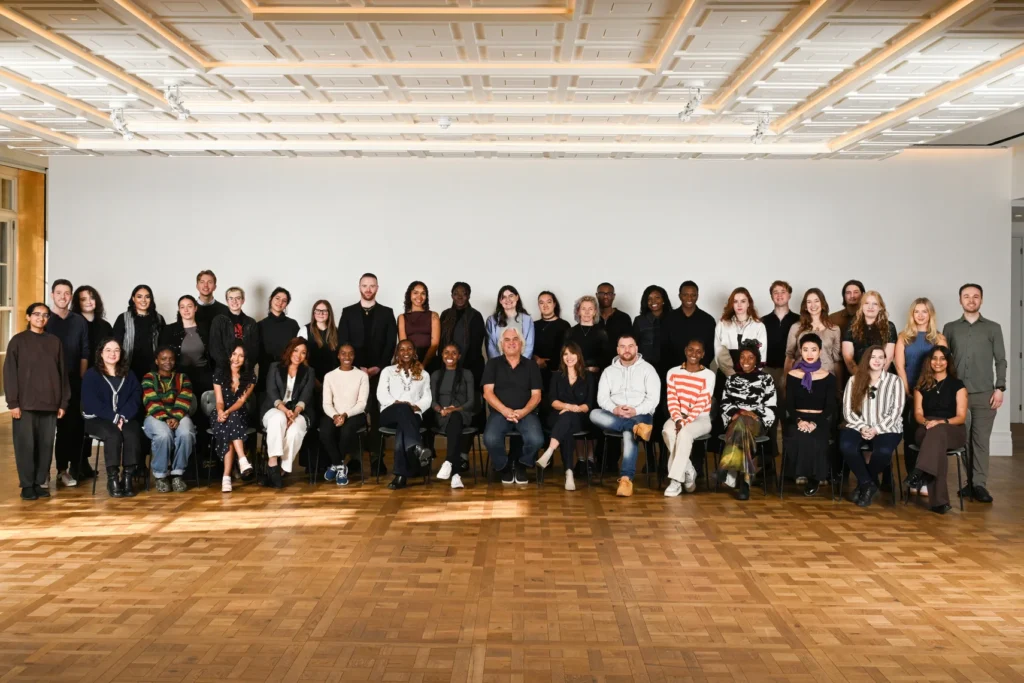
The 100-person bursary cohort covers a wide range of creative, technical and production occupations rather than a single entry route into the industry. Film and television recipients include researchers, filmmakers, cinematographers, screenwriters, actors, camera and costume trainees, editors, casting researchers and production assistants. Other supported roles span animation, sound design, production coordination, illustration, producing, art departments, hair and makeup, documentary work and assistant directing.
Games-focused recipients include Bellayna Lopez, a 2D game artist and animator; Erin Curtis, a freelance 2D game artist; and Jessica Murray, a game designer and writer. Leviathan Vi Amare works in technical art, Serina Lopez combines 2D art with game production, and Symoné is a game designer. Gabrielle Häfner’s sound-design work and Sean Simmons’s concept-art work also represent skills relevant across interactive and screen production. The five UK scholars extend that range through specialist study in games art, filmmaking, sound and performance:
- Christopher Loat:
MA Sound Design for Film and TV at the National Film and Television School. - Chloe Lamb:
MA Film and Television at Falmouth University. - Hamzah Ali:
MA Games Art at Staffordshire University. - Sophie Hogan:
Professional acting at Drama Studio London. - Ava Rogerson:
Games Art and Design at Norwich University of the Arts.
The seven North American scholars are studying at institutions offering different routes into screen production and storytelling. Abdullah Khan and Sebastian Wright attend Columbia University, while Alex Darby studies at Stanford University. İlayda McIntosh and Sarvin Shakib attend New York University Tisch School of the Arts. Róise Nic an Bheatha studies at the School of Visual Arts, and Elena Moreno attends Loyola Marymount University. Across the North American programme, supported disciplines include film, documentary filmmaking, dramatic writing, directing, and broader film, television and media studies. These educational awards complement the bursary’s practical focus, helping recipients access specialist training as well as develop professional experience.
The needs behind these awards vary considerably across the three sectors. A junior game artist may require computer hardware, drawing equipment or specialist software to build a portfolio or complete professional work. A designer, technical artist or aspiring producer may instead need training that helps bridge the gap between existing skills and a particular role.
Film and television work can be project-based, making transport, equipment and location flexibility important when accepting individual opportunities. Camera trainees, production staff and filmmakers may consequently benefit from support for driving lessons, relocation or other practical costs rather than tuition alone. BAFTA’s structure accommodates those differences instead of prescribing one route into employment. The inclusion of multiple games disciplines alongside film and television roles also recognises that screen production depends on teams with varied specialisms, not only the most visible creative positions.
BAFTA Funding Applications, Eligibility and Accessibility
As of October 12, 2026, the current Prince William BAFTA Bursary round and the UK and US scholarship application pages state that applications are closed. Prospective applicants therefore need to monitor the relevant programme information for a future cycle rather than assume the announced 2026 funding remains available. When bursary applications are open, applicants must identify a specific expense and explain how it would help them progress in film, games or television. They must be over 18 when applications close, have some experience in one of those industries and demonstrate financial need.
BAFTA also requires previous involvement with one of its specified partner organisations, making this a targeted early-career scheme rather than an unrestricted fund for anyone interested in creative work. Listed partners include BAFTA Young Game Designers, the BFI Film Academy, Creative Access, Limit Break, MAMA Youth Project and selected ScreenSkills programmes, among others. That prior-connection requirement is an important distinction for applicants considering whether the bursary is the appropriate route.
UK scholarship applicants face a different set of requirements because their applications relate to eligible educational courses. The programme supports British creatives studying in the UK, with assessment based on financial need, demonstrated technical ability and personal-statement responses. BAFTA states that there is no general age limit, although acting applicants must meet additional institutional and nomination requirements.
Applicants pursuing more than one eligible course may submit separate applications, with each assessed independently. Non-acting course eligibility is linked to recognised external accreditation frameworks used by BAFTA. North American criteria vary by scholarship and should be checked separately rather than inferred from UK rules. The Pigott/BAFTA Scholarship, for example, supports British graduate students enrolled in qualifying full-time US master’s programmes leading to filmmaking production roles, and acting is excluded from that particular award.
Financial and geographic accessibility are prominent features of the programme’s design. BAFTA says 76.5% of Prince William BAFTA Bursary funding was awarded outside London, while 77% of recipients live outside the capital. Those are separate measures, but both indicate substantial support beyond a major production centre. Creatives in Belfast, Wales, Scotland, northern England and other regions may face different travel, relocation and networking costs when pursuing opportunities.
The UK Scholarship Programme also offers application assistance for people who find written submissions difficult because of access requirements, including the option to provide personal-statement responses by video. Financial need forms part of bursary eligibility and scholarship assessment, connecting accessibility with the allocation of support itself. These measures demonstrate attention to financial, geographic and application barriers, although BAFTA’s announcement does not provide enough demographic information to assess every dimension of diversity or establish that wider industry inequalities have been resolved.

Career Outcomes and the Long-Term Value of BAFTA’s Support
BAFTA’s follow-up research suggests that targeted assistance can make a meaningful difference at the beginning of a creative career. Among 51 surveyed Prince William BAFTA Bursary recipients from the 2024 and 2025 cohorts, 98% said the grant enabled them to access an opportunity they otherwise could not have taken. Some 88.2% reported significantly greater confidence navigating the industry, while 94.1% felt better equipped to secure their next professional role.
These findings indicate that the perceived benefits extend beyond the immediate purchase or expense covered by an award. However, the sample size matters, and the results represent recipient feedback rather than a controlled evaluation of employment outcomes. They should not be presented as proof that the bursary alone caused subsequent career progress or as measured results for the newly announced 2026 cohort. Individual examples provide a more concrete view of how recipients have used that support:
- Aiden, a 2025 games recipient:
After studying game design, Aiden became an Assistant Producer at Electronic Arts by the time of the 2026 announcement. BAFTA highlighted the role its support played in building his confidence while applying for jobs. His experience illustrates progression into a major games company, although one recipient’s outcome cannot establish an industry-wide effect. - Daniella, a 2024 Belfast recipient:
Daniella subsequently gained production credits connected with A24 and Netflix and reported progressing towards becoming a second assistant director faster than she had expected. Her experience demonstrates how practical early-career support can accompany advancement in project-based film and television work. - Sam Hume, a 2024 recipient:
Hume used his bursary to purchase production software and later attended BAFTA events where he met fellow recipients and industry practitioners. At a BAFTA patron event, he also had the opportunity to discuss entering the industry with actor Jason Isaacs. His experience brings together the programme’s financial and professional-networking benefits.
BAFTA says former recipients have gone on to work for organisations or productions connected with A24, the BBC, Disney+, Electronic Arts and Netflix. Its 2025 announcement also highlighted previous bursary and scholarship recipients’ involvement in Doctor Who, Netflix Originals, BAFTA awards programming and BAFTA’s cinema campaign celebrating storytelling in games. These examples demonstrate professional progression across the supported sectors without establishing that BAFTA was solely responsible for every achievement. For games specifically, the available evidence does not quantify how many additional jobs or completed projects the programme has produced.
What it does show is support across art, animation, technical art, design, writing and production, alongside specialist games education. A grant of up to £2,000 will not finance an entire studio, but it may provide equipment, software or training that helps one creative complete a portfolio, undertake professional work or accept a role. Across an industry dependent on multidisciplinary teams, the cumulative value of such interventions could exceed what individual award amounts initially suggest.
The significance of the 2026 package also lies in the point at which it reaches recipients: the difficult transition between qualifications or initial experience and sustained paid work. Emerging creatives may already have the ability to contribute professionally while lacking transport, tuition funding, equipment or access to useful networks. BAFTA’s combination of targeted bursaries, educational support and professional development addresses several of those barriers at once. Its 2025 announcement covered more than £277,000 for 86 emerging creatives, compared with more than £270,000 for 112 recipients in 2026, showing a wider cohort without establishing an exact year-to-year spending change.
Because both totals use “more than” wording, they should not be treated as precise figures for calculating a budget increase or reduction. The substantial allocation outside London also creates the possibility of supporting regional careers rather than treating relocation to the capital as the only route forward. Ultimately, the strongest measure of the programme’s success will be whether the 2026 recipients remain in their industries, progress into more senior roles, produce work and build sustainable careers over the coming years.

Frequently Asked Questions (FAQs)
- How much career funding did BAFTA announce in 2026?
BAFTA announced more than £270,000 in grants on October 12, 2026, supporting emerging creatives across games, film and television. The funding reaches recipients in the UK and North America through several programmes. It combines the Prince William BAFTA Bursary with UK and North American scholarships. These awards address different needs, from specific career-development expenses to educational costs. The total should not be divided evenly among recipients because individual award amounts and funding structures differ. - How many people received BAFTA career funding in 2026?
The announced cohort consists of 112 recipients: 100 Prince William BAFTA Bursary recipients, five UK scholars and seven North American scholars. BAFTA describes the 100 bursary awards as a 40% increase on the previous year. That group includes people working across creative, technical and production roles, rather than a single profession. The scholars receive support connected to eligible educational courses. Together, the programmes reach people developing practical industry experience and those pursuing specialist training. - How much is the Prince William BAFTA Bursary worth?
Successful applicants can receive up to £2,000 towards a defined career-development expense. That figure is the maximum available, not a guaranteed payment of £2,000 to every recipient. Applicants must explain what they need funding for and how it would help them progress professionally. The bursary is intended to remove a practical financial obstacle rather than provide unrestricted general support. It operates separately from BAFTA’s scholarships, which have different award limits and educational requirements. - What can the BAFTA bursary pay for?
BAFTA says eligible expenses can include training courses, equipment, software, relocation and driving lessons. The important requirement is that the cost relates to a specific career-development need. Equipment or software, for example, could help a recipient build a portfolio or complete professional work. Relocation or driving lessons could address practical barriers to accessing opportunities. Applicants therefore need to connect the requested expense with a clear professional benefit rather than simply identify something they would like to purchase. - Does BAFTA provide funding for video game careers?
Yes, games are explicitly included alongside film and television in BAFTA’s bursary and scholarship programmes. The 2026 bursary cohort includes game artists, designers, a technical artist and a game producer. Scholarship recipients also include students pursuing Games Art and Games Art and Design. Eligible bursary expenses such as specialist equipment, software and training can be particularly relevant to developing games skills and completing portfolio work. Support therefore extends across several disciplines rather than being limited to programming or one definition of a game developer. - Who is eligible for the Prince William BAFTA Bursary?
Applicants must be over 18 when applications close, have some experience in film, games or television and demonstrate financial need. They must also have worked with one of BAFTA’s specified partner organisations. Examples include BAFTA Young Game Designers, the BFI Film Academy, Creative Access and Limit Break, among others. This partner requirement means an interest in entering the industry is not sufficient on its own. Applicants must also identify a specific cost and explain how funding it would help their career progress. - How much can a BAFTA UK scholar receive?
Eligible postgraduate scholars can receive up to £12,000 towards annual course fees. However, support is capped at £20,000 across two years, so the annual maximum does not imply a £24,000 two-year award. These figures are funding limits rather than identical payments for every scholar. Undergraduate scholarships follow a different structure, contributing towards living expenses instead of using the postgraduate tuition-fee arrangement. The relevant course and programme requirements therefore determine which type of support applies. - How much funding is available through BAFTA’s US scholarships?
Funding amounts vary between scholarships rather than following one standard US award. The Pigott/BAFTA Scholarship provides $10,000 towards annual tuition and expenses for qualifying British graduate students pursuing specified filmmaking-related master’s programmes. BAFTA’s announcement also says packages among its 2026 North American scholars can reach up to $60,000. That larger figure should not be interpreted as a guaranteed annual payment available through every scholarship. Applicants need to distinguish each award’s eligibility rules, funding period and covered expenses. - Are BAFTA career funding applications currently open?
As of October 12, 2026, the Prince William BAFTA Bursary, UK Scholarship Programme and US Scholarship application pages all state that applications are closed. The funding announcement identifies selected recipients rather than opening a new application round. It does not establish a reopening date for the next cycle. Future dates and requirements may differ between programmes. Prospective applicants therefore need to check the relevant programme’s next application window rather than assume the announced 2026 funding remains available. - Does BAFTA provide mentoring as well as money?
Yes, BAFTA’s scholarship programmes combine financial assistance with professional development and career support. Mentoring can help scholars connect their training with practical decisions about entering or progressing within the industry. Access to BAFTA events also creates opportunities to meet experienced practitioners and develop professional contacts. Previous bursary recipients have benefited from networking opportunities, including Sam Hume, who attended events after receiving funding for production software. However, scholarship support and bursary opportunities should not be treated as identical packages guaranteed to every recipient.

Conclusion
BAFTA’s 2026 funding programme awards more than £270,000 to 112 emerging creatives across games, film and television, combining 100 Prince William BAFTA Bursaries with five UK and seven North American scholarships. Bursaries of up to £2,000 help cover practical career costs such as equipment, software, training, relocation and driving lessons.
UK postgraduate scholarships provide up to £12,000 towards annual course fees, capped at £20,000 over two years, while North American awards follow different funding structures. Recipients span artistic, technical and production roles, reflecting the range of skills needed across these industries. In a survey of 51 previous bursary recipients, 98% said funding enabled otherwise inaccessible opportunities, 88.2% reported substantially improved confidence and 94.1% felt better prepared to secure work, although these self-reported findings are not an independent assessment of long-term impact.
More than three-quarters of bursary funding goes outside London, while mentoring, professional events and networking opportunities complement BAFTA’s financial assistance. By addressing expenses that can prevent emerging talent from completing training or accepting opportunities, the programme aims to widen access to sustainable creative employment. Its lasting value will depend on whether recipients turn that support into durable careers, new creative work and future industry leadership.
Sources and Citations
- BAFTA: Official bursary and scholarship announcement, October 12, 2026. Confirms more than £270,000 in funding for 112 emerging creatives, including 100 Prince William BAFTA Bursary recipients, five UK scholars and seven North American scholars. It provides the scholars’ names, reports that 76.5% of bursary funding was awarded outside London and that 77% of recipients live outside the capital, and includes previous recipients’ career stories. The announcement also identifies the survey sample behind its reported outcomes as 51 bursary recipients from the 2024 and 2025 cohorts. Bafta
Citation: BAFTA announces over £270,000 in grants to support 112 emerging creatives - BAFTA: Prince William BAFTA Bursary programme page. Confirms the maximum award of £2,000 and examples of supported expenses, including training, driving lessons, equipment and software. It sets out the requirements to be over 18 when applications close, have some experience in film, games or television, demonstrate financial need and have previously worked with a listed partner organisation. The page states that applications are closed and includes Sam Hume’s account of using his bursary for production software and accessing professional networking opportunities. Bafta
Citation: Prince William BAFTA Bursary - BAFTA: UK Scholarship Programme. Provides the eligibility and funding rules for undergraduate and postgraduate study. Postgraduate support reaches up to £12,000 towards annual course fees, capped at £20,000 across two years, while undergraduate support contributes towards living expenses. The page explains eligible course requirements, assessment of financial need and technical ability, mentoring and access to BAFTA events. It also confirms application assistance for people with access requirements and the option to submit personal-statement answers by video. Bafta
Citation: BAFTA UK Scholarship Programme - BAFTA: US Scholarships programme page. Explains the different US scholarship structures and their individual eligibility requirements. It confirms that the Pigott/BAFTA Scholarship provides $10,000 towards annual tuition and expenses, alongside year-round career support, for eligible British graduate students pursuing full-time US master’s degrees leading to filmmaking production roles. Acting students are excluded from that particular scholarship. The page also covers the Fulbright-BAFTA, Ben Jorgensen and Bridge scholarships, rather than treating all US awards as one funding package. Bafta
Citation: BAFTA US Scholarships - BAFTA: Previous bursary and scholarship announcement, September 18, 2025. Confirms more than £277,000 in grants for 86 emerging creatives in the UK and North America, providing the historical comparison with the 2026 cohort. It also describes previous recipients’ involvement in Doctor Who, Netflix Originals, BAFTA awards productions and BAFTA’s cinema trailer celebrating storytelling in games. Bafta
Citation: BAFTA announces over £277,000 in grants to support 86 creatives launch careers
Recommendations
- Vivian Kubrick Debunks Eyes Wide Shut Deleted Scenes Theory
- Battlefield 6 2026 Roadmap: More Maps, “Legendary” Battlefield 4 & Battlefield 3 Remakes, and Wake Island’s Return
- Apple TV’s Widow’s Bay is the First Breakout TV Hit of 2026: Why Everyone is Talking About the Horror Comedy
- Pitchify Launches New Service to Connect Developers and Publishers: How Pitch Direct Works
- Pokémon Pokopia Bubbly Basin DLC Release: Date, New Pokémon, and Everything You Need to Know
- Nordic Game 2026 (NG26 Spring): Dates, Venue, Passes, Speakers, Expo & Awards in Malmö
- Subnautica 2 Early Access Roadmap: Co-Op Updates, Sprinting, and More
- Virtua Fighter 6 Leak Explained
- The Future of 3D Modeling: Insights on AI Advancements
- GTA 6 is Already Outselling Everything Else: Why Pre-Orders Are Dominating Gaming



































































































