






In This Article (7 sections)
BlueBolt VFX Breakdown-The Dog Stars : How 92 Shots Transformed Italy Into Abandoned Denver
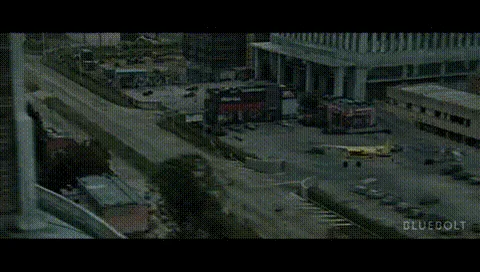
BlueBolt’s London visual effects team delivered an extensive breakdown of its work on Ridley Scott’s The Dog Stars, revealing how the studio transformed footage captured in Italy into an eerie, abandoned version of Denver, Colorado. According to BlueBolt and industry reports, the studio produced 92 visual effects shots for the film, combining extensive 3D environment construction, digital set extensions, compositing, and atmospheric effects to create a convincing world devastated by a global flu pandemic.
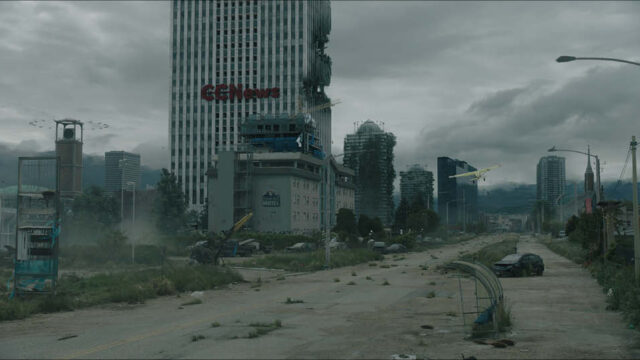
CG Channel reported that much of the distant Denver cityscape was constructed entirely in 3D rather than relying on traditional flat matte paintings. This approach allowed the team to support multiple camera angles, complex aerial sequences, and realistic views of a city that had been abandoned for years.
The production used several Italian locations to represent Colorado, including Abruzzo, Lazio, Veneto, and Friuli. Rural and mountainous areas of Abruzzo, particularly Secinaro and Ovindoli, provided natural landscapes resembling the wilderness of Colorado. However, transforming Italian urban environments into recognizable locations in Denver required extensive digital reconstruction. BlueBolt replaced or extended existing architecture, modified environmental features, and introduced signs of deterioration to make the locations appear consistent with the film’s American setting.
The studio developed more than 180 digital assets, including buildings, abandoned vehicles, damaged street furniture, and environmental props. These assets were integrated into the original footage to transform ordinary streets and structures into neglected urban environments. For example, an Italian gas station could be digitally extended with additional walls, damaged windows, faded signage, rubble, and other details to resemble an abandoned establishment in Denver. Similar techniques were applied to streets and surrounding buildings, allowing the production to create extensive environments without constructing every location physically.
BlueBolt also developed approximately 1,600 building variations for the wider city views, providing architectural diversity across the skyline and surrounding neighborhoods. The buildings were modeled in three dimensions so they could be viewed from different perspectives without losing their visual consistency. This was especially important during aerial sequences, where changing camera positions required buildings and other environmental elements to maintain realistic proportions, depth, and spatial relationships.
The construction of Denver required careful attention to recognizable architecture and geographical identity. Although the city was presented in a severely deteriorated condition, BlueBolt incorporated architectural references and signage associated with Denver to prevent the environment from appearing like a generic abandoned metropolis. The studio followed Ridley Scott’s visual direction and storyboards, ensuring the reconstructed city remained identifiable while communicating the consequences of the pandemic.
The work was led by BlueBolt VFX Supervisor Henry Badgett, whose team handled all 92 shots in collaboration with Production VFX Supervisor Charley Henley. Badgett supervised the creation and integration of the studio’s digital environments, while Henley coordinated the film’s broader visual effects requirements. Their collaboration helped ensure that the reconstructed Denver scenes matched the director’s vision and maintained a consistent appearance throughout the film.
BlueBolt’s contribution extended beyond replacing Italian scenery with American architecture. The studio developed an environment that visually communicated the disappearance of much of humanity and the gradual deterioration of infrastructure. Empty streets, damaged buildings, neglected vehicles, and vegetation spreading across urban spaces established the scale of the catastrophe while supporting the atmosphere of isolation experienced by the surviving characters.

Creating Photorealistic Denver Through 3D Environments, Urban Decay, and Natural Movement
One of the most important aspects of BlueBolt’s work on The Dog Stars was making Denver appear as though it had been deteriorating naturally for years. The studio did not simply introduce digital buildings and abandoned vehicles into the original footage. Its artists developed extensive environmental details that suggested prolonged exposure to weather, a lack of maintenance, and the gradual return of vegetation to previously populated areas. These additions helped establish the film’s post pandemic atmosphere without requiring direct explanations of what had happened to the city.
The digital buildings were carefully weathered to communicate years of abandonment. Walls featured stains, accumulated dust, and damaged surfaces, while windows appeared broken or obscured by dirt. Roads and sidewalks contained cracks, debris, and signs of deterioration. Vegetation was introduced across rooftops, parking lots, and building exteriors, suggesting that natural processes had continued uninterrupted after the disappearance of most human activity.
BlueBolt also incorporated subtle environmental animation to prevent the abandoned city from appearing completely static. Although Denver was largely deserted, natural forces continued to affect its surroundings. Moving vegetation, loose shutters, flickering lights, and debris caught on wires introduced realistic movement that helped the environment feel believable.
The studio’s environmental work included several important details:
- Swaying trees and moving vegetation: Animated plants and trees responded to simulated wind, helping the deserted streets and surrounding landscapes feel naturally active.
- Fluttering shutters: Loose shutters moved against deteriorating buildings, suggesting prolonged exposure to changing weather conditions.
- Blinking traffic lights: Intermittent lighting introduced small traces of activity into otherwise abandoned urban spaces.
- Plastic caught on telephone wires: Lightweight debris moved in the wind, adding another layer of environmental realism.
- Broken windows and damaged walls: Cracked glass, stained surfaces, and accumulated dirt communicated the effects of long abandonment.
- Overgrown rooftops and parking lots: Ivy, weeds, and other vegetation demonstrated how nature was gradually reclaiming developed spaces.
- Wrecked vehicles and damaged street furniture: Abandoned cars, deteriorating benches, broken signs, and scattered roadside objects reinforced the consequences of the pandemic.
These elements contributed to the overall impression that the city had continued changing long after its population disappeared. Rather than portraying Denver as a location destroyed in a single catastrophic event, BlueBolt presented it as an environment experiencing gradual deterioration. Buildings remained standing, but their surfaces showed damage, infrastructure had been neglected, and vegetation had begun occupying areas previously maintained by human activity.
Achieving photorealism required the digital elements to match the original photography closely. BlueBolt paid particular attention to lighting, atmospheric haze, dust, camera characteristics, and motion blur. Preserving natural lens imperfections helped prevent computer generated buildings from appearing unnaturally clean or disconnected from their surroundings. The artists also blended atmospheric effects with the original footage to maintain consistent depth and lighting across the reconstructed environments.
The team’s approach was particularly important when working with large cityscapes. Because much of Denver was digitally modeled, the artists needed to ensure that distant buildings reacted convincingly to environmental lighting and atmospheric conditions. The addition of haze, weathering, and realistic shadows helped establish depth across the skyline, while smaller foreground details connected the digital environments to the physical locations used during filming.
The film’s opening flight sequence involving Hig, portrayed by Jacob Elordi, provides a prominent example of this environmental work. As Hig pilots his Cessna over downtown Denver, the audience encounters empty streets, deteriorating buildings, neglected landmarks, and rooftops increasingly covered by vegetation. The abandoned city establishes the consequences of the global pandemic while emphasizing the isolation of those who survived.
The imagery also reinforces the film’s broader theme of a world where nature is gradually reclaiming spaces once dominated by human activity. Wheat fields spreading across parking areas, plants growing through cracks, and ivy covering abandoned structures contribute to a setting that feels both recognizable and profoundly changed.
By combining architectural reconstruction with environmental storytelling, BlueBolt created a city that communicated the passage of time through visual details. Every damaged surface, moving object, and overgrown structure contributed to the impression that Denver had undergone years of neglect. This approach allowed the visual effects to serve the film’s narrative rather than functioning solely as elaborate digital scenery.
BlueBolt’s Cessna Flight Sequences, VFX Supervision, and Official Breakdown Video
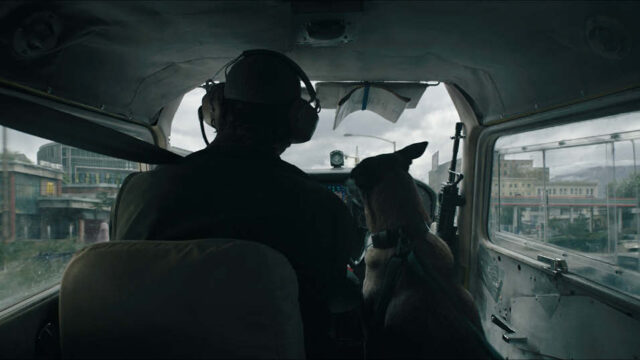
Beyond its extensive reconstruction of Denver, BlueBolt was also responsible for visual effects involving the film’s vintage Cessna aircraft. These sequences required the studio to integrate practical aerial footage with computer generated aircraft components, digital environments, and detailed compositing work. Because Hig’s flights provide an important perspective on the abandoned landscape, the effects needed to maintain the realism of both the aircraft and its surroundings while supporting complex camera movements.
BlueBolt constructed the aerial scenes using helicopter footage, combining practical plates and extending the environments digitally to create the required views of Denver. This process allowed the production to establish the appearance of a Cessna flying over a deserted American city without relying entirely on footage captured from the aircraft itself. The studio introduced digital wings and tail sections to match the aircraft’s appearance from different cockpit perspectives, ensuring the visible components remained consistent throughout the sequences.
In certain shots, BlueBolt also constructed a complete computer generated cockpit to provide greater flexibility during compositing. These digital elements were integrated with practical footage, including scenes captured against blue screens. The artists carefully matched lighting conditions, reflections, and perspective to make the finished sequences appear as though the aircraft and surrounding environments had been photographed together.
The cockpit sequences required additional attention because subtle inconsistencies in reflections or lighting could make the digital components appear artificial. BlueBolt incorporated sunlight flares, window reflections, atmospheric effects, and small vibrations to recreate the visual characteristics of an aircraft in flight. Dust and motion blur were also blended into the compositions to maintain the appearance of natural camera footage.
The principal techniques used in the aircraft sequences included:
- Helicopter footage integration: Practical aerial footage provided the foundation for the flying scenes, with digital extensions used to establish the required geography.
- Digital wings and tail sections: Computer generated aircraft components were added to match the views visible from the cockpit.
- Complete CG cockpit construction: Fully digital cockpit elements were created when the required camera angles or compositions could not be achieved through practical footage alone.
- Lighting and reflection matching: Window reflections, sunlight, atmospheric haze, and cockpit illumination were adjusted to maintain consistency between practical and digital elements.
- Flight movement simulation: Small vibrations and environmental movement helped preserve the impression of an aircraft traveling through real airspace.
- Detailed compositing: Motion blur, dust, perspective adjustments, and other photographic characteristics were incorporated to blend the different visual elements.
The integration of these effects was supervised by Henry Badgett, who led BlueBolt’s work on the film. Badgett collaborated closely with Production VFX Supervisor Charley Henley, who coordinated the overall visual effects production and helped ensure that contributions from the participating teams followed Ridley Scott’s intended visual direction. Their collaboration supported consistency between the reconstructed environments, aircraft sequences, and practical footage.
BlueBolt subsequently published an official VFX breakdown video demonstrating how several of the film’s completed sequences were constructed. The reel presents comparisons between original filming footage and the finished visual effects, revealing the extent of the studio’s digital alterations. Industry publication CG Channel also featured the breakdown, highlighting BlueBolt’s work on the reconstructed Denver environments and aerial sequences.
In some examples, the breakdown shows ordinary Italian landscapes and urban locations transformed into abandoned American settings through the addition of computer generated buildings, atmospheric haze, damaged infrastructure, and environmental details. Original helicopter footage is combined with Denver’s digital skyline, allowing viewers to see how the studio constructed convincing aerial views from practical material captured elsewhere.
Other examples demonstrate how individual streets, buildings, and surrounding structures were modified through digital extensions. Existing architectural elements could be removed or replaced with reconstructed American buildings, while damaged roads, abandoned vehicles, broken signs, and scattered debris were introduced to establish the post pandemic setting. Small additions, including objects caught on wires and malfunctioning lights, contributed to the final appearance of the environments.
The breakdown also illustrates how BlueBolt combined practical cockpit footage with computer generated aircraft components. By showing the original plates alongside completed shots, the reel reveals how reflections, lighting effects, aircraft geometry, and surrounding scenery were carefully integrated to create convincing flight sequences.
These comparisons demonstrate the importance of combining large scale digital construction with precise compositing. Although the reconstructed Denver skyline and aircraft environments represent substantial technical achievements, much of their realism comes from smaller details that help the effects match the original photography.
BlueBolt’s work on The Dog Stars ultimately demonstrates how extensive 3D environment modeling, practical location photography, atmospheric effects, and detailed compositing can transform existing filming locations into an entirely different geographical setting. Through its 92 visual effects shots, the studio created a convincing representation of abandoned Denver, supported the film’s important aerial sequences, and contributed to the visual storytelling of Ridley Scott’s post pandemic world.
Frequently Asked Questions (FAQs)
- What did BlueBolt do for The Dog Stars?
BlueBolt delivered 92 visual effects shots for Ridley Scott’s The Dog Stars, focusing on digital environment reconstruction, set extensions, and aircraft sequences. The studio transformed Italian filming locations into an abandoned version of Denver by introducing computer generated buildings, damaged infrastructure, wrecked vehicles, and vegetation. Its artists also handled compositing for the Cessna flying scenes, integrating digital aircraft components and cockpit elements with practical footage. These effects helped establish the film’s post pandemic setting while maintaining the appearance of realistic photography. - How did BlueBolt create the city of Denver?
BlueBolt reconstructed Denver by combining live action footage captured in Italy with extensive 3D environment modeling. Rather than relying on static matte paintings, the studio developed digital buildings and architectural details that could be viewed from multiple camera angles. Artists introduced wrecked vehicles, damaged street signs, broken windows, rust, dust, and vegetation to establish years of abandonment. They also animated environmental elements such as trees, shutters, and loose debris to make the city feel naturally affected by weather. The completed environments were carefully matched to the original footage and Ridley Scott’s creative direction. - What is The Dog Stars about and who stars in it?The Dog Stars is a post apocalyptic thriller directed by Ridley Scott and set in Colorado following a devastating global flu pandemic that has killed much of humanity. The story follows Hig, a surviving pilot portrayed by Jacob Elordi, as he navigates a dangerous and isolated world alongside other survivors. The cast also includes Margaret Qualley, Josh Brolin, Guy Pearce, and Allison Janney. BlueBolt’s visual effects help establish the consequences of the pandemic, particularly during Hig’s flight over abandoned Denver, where deserted streets and deteriorating buildings reveal the scale of the catastrophe.
- Who are Henry Badgett and Charley Henley?
Henry Badgett is the BlueBolt VFX Supervisor who led the studio’s visual effects contributions to The Dog Stars. He supervised the team responsible for producing the 92 shots, including digital city environments, architectural extensions, and aircraft compositing. Charley Henley served as the film’s Production VFX Supervisor, overseeing the broader visual effects production and coordinating work across participating studios. BlueBolt collaborated closely with Henley to ensure its environments and digital elements matched Ridley Scott’s visual direction. Their work helped maintain consistency between practical photography and computer generated effects. - What was involved in the Cessna flying shots?
The Cessna sequences required BlueBolt to combine practical helicopter footage with digital aircraft components and reconstructed environments. The studio extended the aerial backgrounds to create views of abandoned Denver and introduced computer generated wings, tail sections, and cockpit elements where necessary. Some cockpit footage was captured against blue screens and later combined with the digital surroundings. Artists also adjusted lighting, window reflections, atmospheric haze, and subtle aircraft vibrations to make the finished shots appear realistic. These techniques allowed the production to create convincing aerial sequences while maintaining consistency between the practical and digital footage. - How many buildings and assets did BlueBolt create?
BlueBolt developed more than 180 digital assets for the Denver environments, including buildings, abandoned vehicles, damaged street furniture, and additional environmental objects. The studio also used approximately 1,600 building variations in the wider city views, ranging from distant skyscrapers to smaller structures closer to the camera. These models were supplemented with weathered surfaces, damaged windows, recognizable architecture, and vegetation. The combination of varied building geometry and reusable environmental assets allowed BlueBolt to construct a detailed city that remained visually consistent across multiple camera angles and aerial sequences. - Where was The Dog Stars filmed?
Principal photography for The Dog Stars took place in Italy, with filming locations including Rome, Abruzzo, Veneto, and Friuli. The production also used Cinecittà Studios and the EUR district of Rome, while mountainous areas of Abruzzo provided landscapes resembling Colorado’s wilderness. Locations such as Secinaro and Ovindoli helped represent the film’s rural American setting. Cinecittà also accommodated the fictional Grand Junction Airport set. BlueBolt subsequently transformed selected Italian locations into abandoned Colorado environments through digital buildings, architectural modifications, atmospheric effects, and additional environmental details. - When is The Dog Stars being released?
The Dog Stars premiered in London on August 20, 2026, before receiving its United States theatrical release on August 28, 2026. The film had originally been scheduled for March 2026, but its release was later moved to late summer. Directed by Ridley Scott and starring Jacob Elordi, the production attracted attention for its post apocalyptic storyline, recognizable cast, and extensive visual effects work. BlueBolt’s reconstruction of abandoned Denver was among the technical contributions highlighted through the film’s behind the scenes material. - Is there a VFX breakdown video available?
Yes. BlueBolt officially released a visual effects breakdown video demonstrating how several sequences from The Dog Stars were constructed. The reel includes comparisons between original filming footage and completed shots, showing the addition of digital buildings, reconstructed cityscapes, atmospheric effects, and environmental details. It also reveals how practical aerial footage was combined with computer generated aircraft components and the Denver skyline. Industry publications such as CG Channel featured the breakdown, providing additional insight into the studio’s techniques for transforming Italian filming locations into the abandoned American setting. - What did reviewers say about BlueBolt’s work?
Commentary surrounding BlueBolt’s visual effects breakdown has highlighted the realism and technical complexity of its reconstructed Denver environments. Particular attention has been given to the integration of practical footage with computer generated buildings, atmospheric effects, and aircraft components. One analysis emphasized how the studio preserved natural lighting characteristics, lens imperfections, and environmental movement to prevent the completed shots from appearing artificial. Although comprehensive critical assessments focusing exclusively on BlueBolt’s visual effects remain limited, the breakdown demonstrates the detailed environment construction and compositing involved in creating the film’s abandoned city and aerial sequences.
Conclusion
BlueBolt’s work on The Dog Stars represents a major environment VFX achievement. The team took Italian landscapes and sound stages and convincingly re-imagined them as a forsaken Denver a generation after society collapsed. By building vast 3D city models, adding thousands of realistic details (debris, weathering, vegetation) and carefully compositing practical footage, they achieved a haunting, photoreal look.
Supervisors Henry Badgett and Charley Henley ensured this vision aligned with Ridley Scott’s storyboards, preserving Denver’s identity even as nature claimed it. The result is a seamless blend of live action and digital elements that brings the post pandemic world to the screen. Fans and experts alike note that BlueBolt has likely done some of its finest work here, setting a new bar for photo real desert cityscapes in film.
Sources and Citations
- BlueBolt Ltd. – “The Dog Stars”
BlueBolt’s official project archive lists The Dog Stars as a 20th Century Studios production and dates the project entry to April 21, 2026, with Jenny Burbage credited on the page. BlueBolt later confirmed that VFX Supervisor Henry Badgett led its work on the film. The studio delivered 92 VFX shots, including extensive 3D environment work and Cessna flying sequences. BlueBolt
Citation: BlueBolt – The Dog Stars project archive - Jim Thacker – CG Channel, “Watch BlueBolt’s VFX breakdown for The Dog Stars”
Jim Thacker’s October 8, 2026 CG Channel article details BlueBolt’s effects work. It reports that the studio created 92 VFX shots, transformed Italian locations into a post-pandemic Denver, constructed more than 180 environment assets, and used around 1,600 building variations in wide shots. It also describes digital environment extensions and CG work used for the Cessna sequences. CG Channel
Citation: CG Channel – Watch BlueBolt’s VFX breakdown for The Dog Stars - VFX Breakdown – “BlueBolt VFX Breakdown – The Dog Stars”
The Turkish-English VFX Breakdown site published its entry on October 6, 2026. It identifies Henry Badgett as BlueBolt’s VFX Supervisor and summarizes the studio’s 92-shot contribution, including the post-pandemic Denver environments and Cessna flight work. VFX Breakdown
Citation: VFX Breakdown – BlueBolt VFX Breakdown: The Dog Stars - Animation World Network – BlueBolt VFX breakdown coverage
Animation World Network independently reported on BlueBolt’s breakdown on October 7, 2026, again confirming the 92 shots, Henry Badgett’s supervision, the construction of an abandoned Denver from more than 180 assets, and the Cessna sequences. This is a useful corroborating VFX-industry source. Animation World Network
Citation: Animation World Network – BlueBolt Shares The Dog Stars VFX Breakdown Reel - Televisual – BlueBolt VFX breakdown
Televisual’s technical coverage further documents how the Italian photography was transformed into Denver, including 3D city construction, environmental weathering, vegetation, practical-set augmentation and the digital aircraft work. It also notes that Ridley Scott’s storyboards and real-world architectural references informed the city build. Televisual
Citation: Televisual – VFX Breakdown: BlueBolt for Ridley Scott’s The Dog Stars - Cristiano Bolla – BestMovie.it, filming locations
Cristiano Bolla’s August 26, 2026 report explains that much of the film’s Colorado setting was actually shot in Italy. Locations included areas in Friuli Venezia Giulia, Veneto, Abruzzo and Lazio. The article specifically identifies Bordano near the Tagliamento as the location used for Hig and Bangley’s airport base and describes Cansiglio as another major filming area. Best Movie
Citation: BestMovie.it – The Dog Stars, le montagne del Colorado sono italiane - BlueBolt – official confirmation of Italian-location transformation
BlueBolt’s own public materials state that its artists transformed the film’s Italian filming locations into a recognisable but abandoned Denver, adding dereliction and vegetation to suggest years without human activity. That makes the studio’s material a particularly strong source when explaining the relationship between the Italian shoot and the finished Colorado environment. LinkedIn
Citation: BlueBolt Official LinkedIn – The Dog Stars VFX work - The Dog Stars cast and release information
The Wikipedia entry identifies Ridley Scott as director, Mark L. Smith as screenwriter, and lists Jacob Elordi, Josh Brolin, Margaret Qualley, Allison Janney and Guy Pearce among the principal cast. However, the cached version I found still described the film as upcoming and listed an August 28, 2026 U.S. release, so it is best used only as a secondary cast/production reference rather than the strongest source for current release information. Wikipedia
Citation: Wikipedia – The Dog Stars (film) - IMDb – full cast and VFX credits
IMDb’s full credits page corroborates BlueBolt’s involvement and lists Henry Badgett as visual effects supervisor for BlueBolt, alongside artists from BlueBolt, RISE, Untold Studios and other VFX vendors. It is useful for individual crew-credit verification. IMDb
Citation: IMDb – The Dog Stars Full Cast & Crew
Recommendations
- Vivian Kubrick Debunks Eyes Wide Shut Deleted Scenes Theory
- Battlefield 6 2026 Roadmap: More Maps, “Legendary” Battlefield 4 & Battlefield 3 Remakes, and Wake Island’s Return
- Apple TV’s Widow’s Bay is the First Breakout TV Hit of 2026: Why Everyone is Talking About the Horror Comedy
- Pitchify Launches New Service to Connect Developers and Publishers: How Pitch Direct Works
- Pokémon Pokopia Bubbly Basin DLC Release: Date, New Pokémon, and Everything You Need to Know
- Nordic Game 2026 (NG26 Spring): Dates, Venue, Passes, Speakers, Expo & Awards in Malmö
- Subnautica 2 Early Access Roadmap: Co-Op Updates, Sprinting, and More
- Virtua Fighter 6 Leak Explained
- The Future of 3D Modeling: Insights on AI Advancements
- GTA 6 is Already Outselling Everything Else: Why Pre-Orders Are Dominating Gaming



































































































