







In This Article (8 sections)
How Framestore Rebuilt and Destroyed 2010 Manhattan for Dead City Season 3
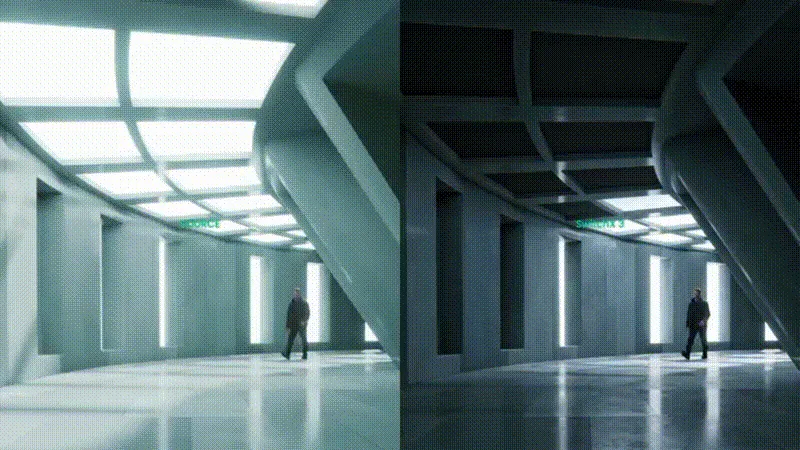
Framestore’s VFX work on The Walking Dead: Dead City Season 3 began with rebuilding New York as it appeared around 2010 before applying the show’s post-apocalyptic destruction. The team relied heavily on Google Street View imagery and OpenStreetMap data to reconstruct building facades, road layouts, landmarks, and other architectural details from the correct period. Structures or features added after 2010 were removed so the digital environment remained consistent with the show’s timeline, while practical sets, including the riverboat environment, were extended digitally where necessary. Once that foundation was established, Framestore could layer destruction, environmental effects, vegetation, and atmosphere over an authentic version of the city rather than building a generic ruined Manhattan.
SideFX Houdini became the primary simulation tool for destroying that reconstructed city. Artists fractured digital skyscrapers and other structures into smaller pieces, then used rigid-body physics and particle systems to simulate collapses, falling debris, smoke, dust, and other consequences of structural failure. The timing and extent of the destruction could then be adjusted until each collapse looked convincing rather than purely procedural. Timelapse footage in Framestore’s breakdown demonstrates this process, showing buildings progressing from complete models into heavily damaged structures through repeated simulation and refinement.
The final destruction relied on more than simulations alone. Practical elements such as fire, smoke, and rain captured during filming were combined with CG debris, collapsing structures, environmental extensions, and atmospheric effects during compositing. Custom Houdini tools also helped create elements such as a uniform digital ocean surface, layered fog banks, and vegetation growing over the abandoned city. By combining practical footage with digital destruction instead of treating them as separate visual layers, Framestore could make Manhattan feel like a single decaying environment.
For wide aerial views, the artists approached Manhattan much like a traditional painter would approach a large landscape. Areas near the camera or important to the composition were rendered with high-fidelity geometry and textures, while distant buildings became progressively simpler and more impressionistic. Broken streets, abandoned vehicles, ruined structures, and overgrown vegetation were added selectively rather than modeling every block with equal complexity. This allowed shots containing huge portions of Manhattan to feel detailed and expansive without requiring every distant rooftop or facade to be fully built and rendered.

Statue of Liberty and Empire State Building Hero Assets Defined the Ruined Skyline
The Statue of Liberty and Empire State Building were Framestore’s two primary hero assets for Season 3, meaning they received substantially more modeling, texturing, and destruction detail than ordinary background structures. Both landmarks had to remain immediately recognizable while also looking as though they had endured years of catastrophic damage and neglect. Because the camera could move close to these structures or use them as major visual focal points, simpler instancing and background treatments were not sufficient. Their detailed creation and destruction became central parts of Framestore’s published VFX breakdown.
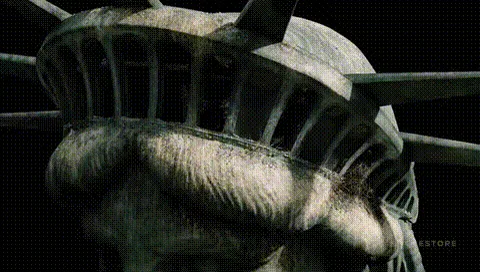
The Statue of Liberty was built as a detailed CG model and then transformed from a clean structure into a severely damaged version of itself. The breakdown shows the model being fragmented and eroded, with portions of the crown, torch, and other surfaces damaged or missing. Texture artists layered grime, rust, moss, chipped surfaces, and other signs of weathering across the geometry so that it appeared abandoned and exposed to the elements rather than merely broken. Vines and additional environmental growth further connected the statue with the wider theme of Manhattan being gradually overtaken by nature.
The exact technical process used for every stage of the statue’s destruction is not fully detailed in the supplied breakdown. Framestore likely began with a pristine digital model and may have used Houdini-based procedural fragmentation for parts of the damaged geometry before artists manually adjusted major break points. Once the structure was physically altered, detailed shading and textures were used to add grime, corrosion, rust, and vegetation. The resulting combination of broken geometry and carefully painted decay created the battered, moss-covered version of Liberty seen in the finished shots.
The Empire State Building received an equally detailed treatment because it plays a major role in one of the season’s most ambitious camera moves. Framestore created a complete CG version of the skyscraper before removing and collapsing sections of its facade, floors, and outer structure. Large portions of the building appear to have been destroyed by catastrophic structural failure, with sections breaking away or collapsing inward. Because the camera moves close to the tower, the underlying geometry needed enough detail to remain convincing as the viewer travels alongside the damaged structure.
Its collapse was created digitally rather than through practical footage. Framestore fractured the CG building and used controlled physics simulations to determine how different sections crumbled, fell, or sheared away, while smoke, dust, and debris were added during compositing. Portions of the destruction appear to occur in timed stages, allowing the artists to control the visual rhythm instead of allowing the building to collapse unpredictably. That control made it possible to design the dramatic shot in which the camera flies across Manhattan and then plunges down beside the ruined Empire State Building.
Aerial Shots, Matte-Painting Principles, and Environmental Effects Created the Scale of Ruined New York
One of Framestore’s key challenges was showing enormous portions of Manhattan without making every distant block as technically complex as the hero assets. The solution was to apply the principles of traditional painting to the digital environment, concentrating detail where the audience was expected to look and simplifying areas farther from the camera. In the major aerial flyover, the route followed by the camera and nearby buildings received high-resolution geometry and textures, while the skyline toward the horizon used reduced geometry, projected textures, and more impressionistic treatment. This preserved a sense of immense scale without wasting processing resources on details that would barely be visible.
The same strategy helped maintain consistency as the camera moved through very different distances. Manhattan could appear fully convincing as a complete island from above, yet the image still contained enough detail to support the closer approach toward the Empire State Building. Instead of treating the city as thousands of equally important buildings, Framestore allowed visual complexity to decrease naturally with distance. This gave the wide shots the appearance of a fully modeled environment while keeping the strongest detail around the action.
Environmental effects further unified the digital city. Fog banks, water surfaces, damaged roads, abandoned vehicles, smoke, fire, vegetation, and general decay were layered across the rebuilt 2010 Manhattan to make it feel like one continuous post-apocalyptic landscape. These elements were not simply decorative because they also helped blend practical footage, digital extensions, and fully CG environments together. Consistent lighting, color, weathering, and atmosphere prevented the individual visual-effects layers from appearing disconnected.
Digital matte paintings and projected textures were especially useful for distant elements that did not need full three-dimensional construction. Those techniques allowed Framestore to fill out large sections of the skyline while preserving the impression of depth and scale. Closer areas could transition into full CG geometry without drawing attention to the change in technique. By combining 3D modeling, 2D matte methods, procedural simulations, and compositing, Framestore could depict almost all of Manhattan in some shots without sacrificing quality in the parts closest to the viewer.

Zombie Effects, CG Eye Replacements, and Framestore’s Complete VFX Pipeline
Framestore’s Season 3 work also extended beyond environments into character effects, zombie enhancements, gore, and digital alterations to live performances. Practical prosthetics and makeup formed the basis of many infected characters, while CG was used to increase the severity of wounds, add blood and dismemberment effects, alter skin details, and intensify other horror elements. Digital blood, guts, and additional damage could be composited onto actors without requiring every effect to be captured physically on set. This hybrid approach allowed the production to preserve real performances while extending the violence and decay in post-production.
CG eye replacement was one of the more specific character techniques highlighted in the breakdown. Framestore could track an actor’s facial movement and replace the visible eyes with rendered eyeballs that followed the performance naturally. Those digital eyes could then be made clouded, pale, dull, tinted, or otherwise unnatural to create a stronger infected appearance. Because the alteration was performed digitally, the eyes could remain consistently eerie through facial movement without depending entirely on practical contact lenses or other on-set methods.
The wider VFX pipeline combined all of these character and environment techniques into a single production process. Buildings and landmarks were first modeled in 3D, Houdini handled much of the destruction and physics simulation, and texture and lighting artists added grime, weathering, color, and age to the resulting assets. Matte paintings and projected textures extended distant sections of the city, while compositing integrated practical effects, CG environments, character work, atmosphere, and live-action photography. Each technique addressed a different part of the image, but the final shots depended on those techniques being visually consistent with one another.
That combination is what allowed Framestore to create a Manhattan that feels recognizable even after extensive destruction. Google Street View and mapping data established the period-accurate city, Houdini simulations provided the large-scale collapse, painterly detail management made aerial environments feasible, and hero assets gave the ruined skyline recognizable focal points. Character effects and CG eye replacements carried the same digital craftsmanship into the zombie performances and gore. Together, these methods formed the complete visual-effects approach used to bring the devastated Manhattan of The Walking Dead: Dead City Season 3 to life.

Frequently Asked Questions (FAQs)
- Who handled the visual effects for Dead City Season 3?
The visual effects for Dead City Season 3 were handled by Framestore, whose team also released a detailed breakdown of the work. Framestore’s New York team, led by VFX Supervisor Steve Drew, created major environments, destruction simulations, and character effects for the series. Their work covered everything from rebuilding Manhattan and damaging major landmarks to enhancing zombies and gore. The result depended on combining large-scale environment work with smaller character-focused effects so the ruined city and its inhabitants felt visually consistent. - How was Manhattan rebuilt for Dead City Season 3?
Framestore recreated Manhattan using references from around 2010 so the city would match the story’s timeline. The team used Google Street View and mapping data to study building facades, road layouts, landmarks, and other details from that period. Structures added after 2010 were removed, while practical sets such as the boat and river environment were extended digitally. This gave the artists a period-accurate foundation that could then be damaged, overgrown, and transformed into the post-apocalyptic version seen in the series. - How did Framestore simulate the destruction of New York City?
After building the 2010 version of Manhattan, Framestore used Houdini to create much of the destruction. Building models were fractured into smaller pieces, and physics simulations were used to control how walls, floors, and debris collapsed or fell. Artists could repeatedly adjust the timing and scale of these simulations until the damage looked believable rather than random. Dust, smoke, fire, and additional debris were then added during compositing to make the destruction feel heavier and more realistic. - How was the Statue of Liberty created and destroyed in Dead City?
The Statue of Liberty was built as a detailed CG hero asset before being systematically damaged to fit the ruined setting. Framestore fractured the digital geometry, removed or broke major sections, and then added weathering across the surface. Textures introduced grime, corrosion, moss, rust, and other signs of long-term exposure and neglect. Timelapse material in the breakdown shows the statue progressing from a cleaner model into the shattered, overgrown version used in the finished shots. - How was the Empire State Building destroyed in Dead City?
Framestore created a full CG version of the Empire State Building and then applied large-scale destruction to it. Procedural simulations were used to break away sections of the tower, collapse floors, and damage the exterior structure while keeping the building recognizable. This level of detail was especially important because a major camera move travels down the side of the ruined skyscraper. Smoke, dust, and falling debris were added afterward so the destruction blended naturally with the surrounding city. - What software did Framestore use for these VFX?
One of the main tools was SideFX Houdini, which was used extensively for destruction, fracturing, debris, and physics-driven simulations. Houdini allowed the team to break digital buildings apart and control how the resulting pieces behaved during collapses. The broader VFX pipeline also involved standard modeling and compositing tools, including software such as Maya and Nuke, to build assets and combine CG with live-action footage. These tools worked together rather than independently, with each handling a different stage of the final image. - How did Framestore manage detail in the aerial Manhattan shots?
Framestore used what it described as a traditional painter approach for the largest aerial views of Manhattan. Areas closest to the camera or most important to the composition were rendered with much higher detail, while distant parts of the skyline became simpler and more impressionistic. This made it possible to show huge portions of the city without fully modeling every rooftop and facade at the same resolution. The technique preserved the illusion of a complete Manhattan while concentrating visual detail where viewers were most likely to notice it. - How were zombies and gore effects handled in Dead City?
Framestore also created detailed character effects to enhance the practical makeup and prosthetics used on set. CG could be added to extend wounds, increase blood, alter skin, create dismemberment effects, or make existing practical gore more extreme. The breakdown specifically mentions blood, guts, and CG eye replacements among the character-focused effects. This hybrid approach kept the actors and practical performances intact while allowing the final horror imagery to be pushed further in post-production. - What is a CG eye replacement and why was it used?
A CG eye replacement involves digitally replacing an actor’s real eyes with computer-generated ones after filming. Framestore could track the actor’s face and place rendered eyes over the original performance so they continued to move naturally with the head and expression. Those eyes could then be made pale, clouded, glossy, or otherwise unnatural to create a stronger infected appearance. This gave the production more control over the final look without relying entirely on special contact lenses or practical eye effects during filming. - Why was Google Street View used in the production of Dead City?
Google Street View gave Framestore a detailed visual reference for how New York City looked around 2010. Artists could study specific streets, building facades, architectural details, and road layouts from the correct period before constructing the digital environment. This also helped the team identify newer structures that needed to be removed so the skyline stayed consistent with the story’s timeline. In effect, Street View served as a real-world visual blueprint for rebuilding Manhattan before Framestore applied the show’s destruction and decay.

Conclusion
Framestore’s visual effects for The Walking Dead: Dead City Season 3 demonstrate the power of modern VFX in television. By rebuilding New York City circa 2010 and then destroying it with detailed simulations, the team created an entirely believable post-apocalyptic setting. Iconic landmarks (a toppled Statue of Liberty and a crushed Empire State Building) were meticulously crafted as CGI hero assets, anchoring the visual story.
At the same time, character effects like zombie make‑up and CG eye replacements added the necessary horror elements. Framestore’s breakdown emphasizes their use of references and tools (like Google Street View and Houdini) to achieve these effects. The result is a stunning blend of practical footage and computer graphics that makes Dead City Season 3’s ruined Manhattan feel real.
Sources and Citations
- CG Channel Framestore Dead City Season 3 VFX Breakdown (Oct 2026)
https://staging.cgchannel.com/2026/10/see-framestores-detailed-vfx-breakdown-for-dead-city-season-3/ - Framestore The Walking Dead Dead City Season 3 VFX Breakdown
https://www.framestore.com/ - Framestore The Walking Dead Dead City Season 2 VFX Case Study
https://www.framestore.com/work - Framestore Framing 20 Years in NY With Steve Drew
https://www.framestore.com/news/framing-20-years-ny-steve-drew - Alinea Analytics The Alinea Insight Newsletter by Rhys Elliott (Oct 2026)
https://alineaanalytics.substack.com/ - Alinea Analytics Research Reports and Newsletter Archive
https://alineaanalytics.substack.com/archive - OtakuKart Entertainment News and Television Coverage by Philip Moore (Oct 2026)
https://otakukart.com/
Recommendations
- How to Download MetaHuman: The Ultimate Step-by-Step Guide to Accessing Digital Humans
- Muscle Rig in Maya with Custom Rigging: Maya Muscle System Setup for Realistic Deformation
- Low-Budget Repairs: Fun Game Where You Renovate 1990s Flats
- Every Pokémon TCG 30th Celebration Pikachu Card Ranked
- Gerry Conway, Punisher Co-Creator and Spider-Man Writer, Dies at 73: Legacy, Cause of Death, and Iconic Stories Explained
- Vampire Crawlers release date and platforms (Steam, Switch, Xbox, PlayStation)
- The Drifter on Switch and Switch 2: Release Date, Features, and Everything You Need to Know
- The Unity Engine Has Officially Started Supporting Steam: What It Means for Developers and Game Distribution
- Digger Trailer Reveals Tom Cruise in His Least Recognizable Role Ever
- Marvel Rivals Thebes Map Reveal: Release Date, Convoy Gameplay, and Season 9 Details



































































































