








In This Article (8 sections)
Bowie Knife99 and the Rise of Forza Horizon 6’s Most Infamous Drivatar
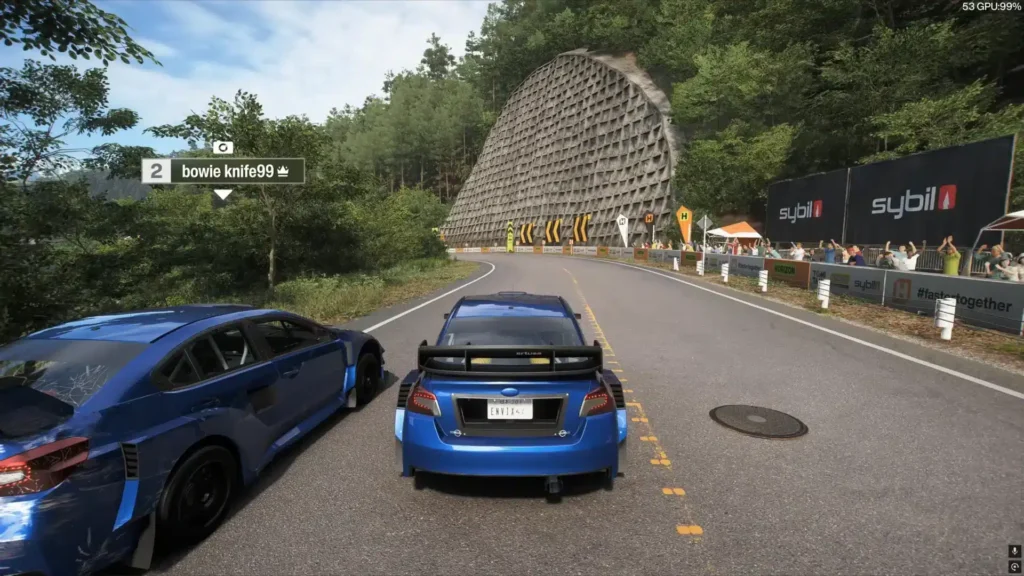
Forza Horizon 6’s Bowie Knife99 has become a recognizable community villain because players keep attaching the same name to spectacular crashes, aggressive overtakes, and victories that seem to arrive from nowhere. Xbox joined the joke after those encounters became a shared talking point. The official Xbox UK account mocked the racer on May 25, 2026, and the Official Xbox Podcast later discussed its reputation. Those reactions establish that Xbox noticed the meme, without establishing that this opponent has special powers or a deliberately hostile personality.
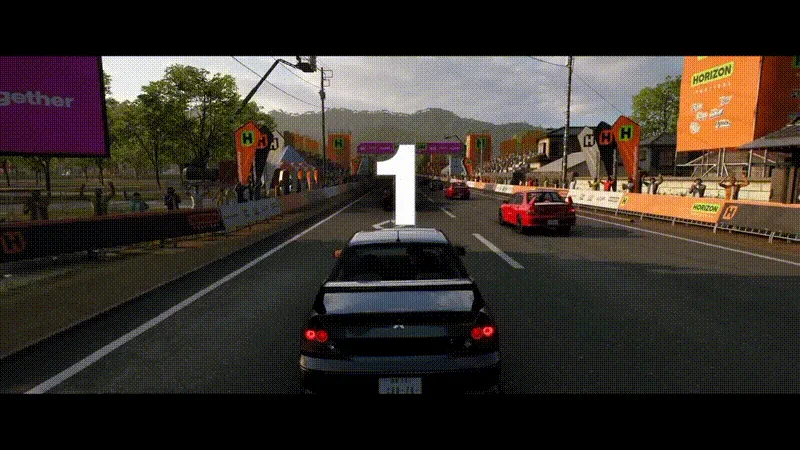
In the evolving landscape of open world racing games, few AI profiles have captured as much attention as Bowie Knife99 in Forza Horizon 6. Players often describe races involving the infamous Drivatar as “combat racing,” where the challenge feels less like simply finishing first and more like surviving the race environment. The timing helped the story spread. Forza Horizon 6 launched on Xbox Series X|S and PC on May 19, following early access from May 15, giving players a shared period of discovery in which unusual encounters quickly became conversation starters. Commonly reported race experiences include:
- Constant position swapping in the final laps
- Aggressive blocking in tight corners
- Sudden acceleration bursts on straightaways
- Chain reaction collisions involving multiple AI cars
Because of this reputation, some players claim they actively try to avoid races or events where the AI appears. Reasons include high collision frequency during overtakes, unpredictable racing lines, sudden difficulty spikes, and perceived targeting behavior in close races. These experiences vary by player, but the perception is strong enough that the profile has become recognized as an opponent to avoid when possible. Recognition also changes how an incident is remembered. An ordinary collision with an unfamiliar opponent can disappear into the background, while the same collision under a notorious name becomes another chapter in a running story.
A recurring claim in community discussions is that even high performance vehicles struggle against this aggressive racer. Players connect that perception with several possible systems and race conditions, although the technical explanations remain unconfirmed for this particular profile:
- Suspected AI rubber banding mechanics in competitive races
- Perceived course familiarity advantages for Drivatars
- Aggressive collision based disruptions
- Possible adaptive difficulty scaling
Supercars may dominate in raw speed, but Forza Horizon races are shaped by more than horsepower. Positioning, cornering, traffic, collisions, and AI behavior can all affect outcomes. This helps explain why the notorious opponent has developed a reputation as a “level equalizer” that can challenge even the fastest cars under the right conditions. The appearance of a vehicle also tells viewers little about the complete circumstances of a race. A brief clip may omit its upgrades, the event settings, earlier contact, or the mistake that allowed an opponent to close the gap.
Some players also interpret this unusual Drivatar as evidence of broader balancing concerns within the AI system. Possible explanations discussed by the community include AI difficulty scaling inconsistencies, data bias from aggressive player inputs, event specific tuning anomalies, and performance variance in AI simulation layers. However, there is no confirmed evidence that this profile was intentionally designed as a difficulty spike. One community interpretation is that it is more likely a byproduct of dynamic AI systems occasionally producing extreme outliers, although the exact cause has not been established. What emerged was a mythical opponent. The more people talked about it, the more it seemed to appear in races, reinforcing the legend.
There was a documented balance issue behind the wider discussion. In its May 22, 2026 community update, Playground Games acknowledged reports that AI opponents could be excessively fast, particularly at higher difficulty settings, and said it was examining feedback and game data. That statement concerned Drivatar balance generally. It did not identify Bowie Knife99 as a special enemy, attribute the behavior to one account’s driving history, or confirm every explanation circulating among players.
The useful distinction for a frustrated player is between an exciting rival and a result that feels impossible to influence. A hard opponent can encourage a better braking point or cleaner exit because the player can identify what went wrong. Repeated contact that offers little room to respond can instead make improvement feel irrelevant. Bowie Knife99 became an effective symbol for that tension: the same encounter can be funny to watch and exhausting to replay when a race result matters.
The distinction gives the story two separate dimensions. Individual clips show why people find Bowie Knife99 memorable, while consistent comparisons would be needed to establish whether the name predicts unusually difficult races. A collection selected for dramatic collisions cannot reveal how many ordinary encounters occurred between them. That does not make the frustrating moments imaginary. It means the strength of the meme is easier to demonstrate than a unique mechanical advantage belonging to this one opponent.
How Drivatars Work and Why Bowie Knife99 Feels Different
The community often explains the system this way: Drivatars in Forza Horizon 6 are built on behavioral modeling systems that simulate real player driving styles. These AI profiles analyze braking patterns, cornering tendencies, aggression levels, and mistake frequency. Each Drivatar evolves based on aggregated player data, meaning no two AI drivers behave exactly the same. The system is designed to create dynamic races where AI opponents feel more humanlike than traditional scripted racers. That familiar explanation reflects the franchise’s historical concept; it does not establish every detail of Horizon 6’s current implementation.
Xbox Wire’s September 30, 2014 explanation of Forza Horizon 2 described the historical technology as learning from human driving and producing computer controlled opponents with different approaches to braking, cornering, aggression, and shortcuts. It also distinguished a Drivatar from a live multiplayer opponent or a fixed recording of a lap. That history explains why players interpret a recognizable gamertag as a personality. It does not establish exactly how Horizon 6 assigns behavior to that name, how frequently any underlying information changes, or whether a particular collision reflects an identifiable person’s habits.
Bowie Knife99 is believed by the community to be an extreme outlier within this system. Players describe it as a Drivatar with highly aggressive tendencies, late braking patterns, risky overtakes, and a willingness to cause collisions to gain position. While it appears within the same Drivatar framework as other AI racers, Bowie Knife99 is often portrayed as the “high chaos variance” version of the system. That phrase describes the community’s experience rather than an official setting, and “outlier” has not been established through a published comparison of its results against other named opponents.
Despite its humanlike reputation, Bowie Knife99 is widely considered a Drivatar AI profile rather than a real individual player. In the historical explanation, Drivatars can resemble real driving styles because they are generated from player behavior data, but they are not controlled live by a human during races. The confusion comes from the fact that Bowie Knife99 behaves unpredictably, mimics aggressive real player tactics, and appears consistently enough to feel personally present in races. The name, the computer controlled car, and any real account behind the name should therefore be treated as separate things.
Its driving style is commonly described as inconsistent and aggressive. Reported behaviors include:
- Late braking into corners
- Risk heavy overtaking maneuvers
- Sudden lane shifts at high speeds
- Recovery from spins without major speed loss
These behaviors may exist within normal AI variance, but they feel exaggerated when they appear together in one profile. This creates the impression of a uniquely hostile AI driver, even though Bowie Knife99 still appears within the same system as other Drivatars. A late braking move can also become a chain reaction when another car occupies the intended space. From the player’s viewpoint, the resulting impact may look calculated, but visible movement alone cannot reveal the decision process that produced it.
Some players believe Bowie Knife99 feels different because it may aggregate highly aggressive driving data, reflect unusual player behavior patterns, or amplify risk taking tendencies in AI decision making. The result is an opponent that feels less like a balanced AI racer and more like a digital rival with a personal grudge. These explanations remain theories. Neither the Xbox jokes nor the official balance updates identify an aggressive training dataset, a hidden revenge mechanism, or a unique instruction telling this named opponent to pursue the player.
Several terms in the discussion also describe different things. Rubber banding usually means altering competitors’ pace in relation to the gap between racers. A chosen difficulty setting establishes a challenge level, while collision avoidance concerns how cars respond when their paths overlap. An opponent appearing unusually fast does not, by itself, identify which system is responsible. Likewise, a driver can be quick without frequently making contact, or disruptive without consistently winning. Separating pace from aggression makes the complaints easier to understand and helps explain why one adjustment would not necessarily resolve every frustrating encounter.
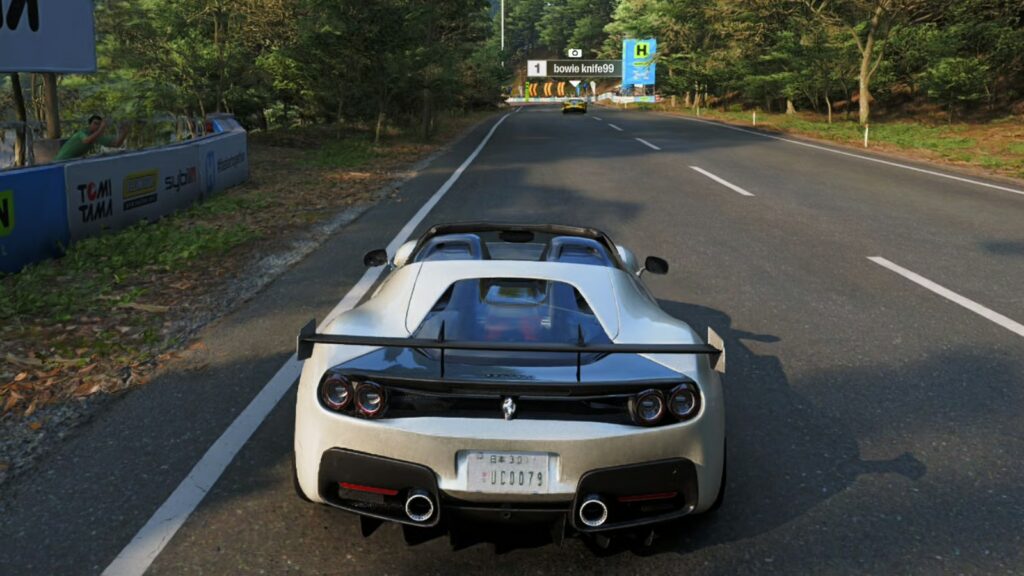
Racing Against Bowie Knife99: Chaos, Difficulty, and Player Avoidance
One of the defining traits attributed to Bowie Knife99 is its ability to transform normal races into chaotic multi car battles. Players often describe races involving Bowie Knife99 as “combat racing,” where the challenge feels less like simply finishing first and more like surviving the race environment. Commonly reported race experiences include:
- Constant position swapping in the final laps
- Aggressive blocking in tight corners
- Sudden acceleration bursts on straightaways
- Chain reaction collisions involving multiple AI cars
Because of this reputation, some players claim they actively try to avoid races or events where Bowie Knife99 appears. Reasons include high collision frequency during overtakes, unpredictable AI line changes, sudden difficulty spikes, and perceived targeting behavior in close races. These experiences vary by player, but the perception is strong enough that Bowie Knife99 has become recognized as an opponent to avoid when possible. Avoidance is a player preference, however, and should not be confused with a verified setting that excludes this exact name from every race.
A recurring claim in community discussions is that even high performance vehicles struggle against Bowie Knife99. Players often connect this perception with several possible systems and race conditions:
- Suspected AI rubber banding mechanics in competitive races
- Perceived course familiarity advantages for Drivatars
- Aggressive collision based disruptions
- Possible adaptive difficulty scaling
Supercars may dominate in raw speed, but Forza Horizon races are shaped by more than horsepower. Positioning, cornering, traffic, collisions, and AI behavior can all affect outcomes. This helps explain why Bowie Knife99 has developed a reputation as a “level equalizer” that can challenge even the fastest cars under the right conditions. For a player trying to finish cleanly, a car that is predictable under braking can be more useful than one with a higher maximum speed. Extra power offers limited help if every crowded corner forces an overshoot, a slide, or contact with another vehicle.
Some players also interpret Bowie Knife99 as evidence of broader balancing concerns within the Drivatar system. Possible explanations discussed by the community include AI difficulty scaling inconsistencies, data bias from aggressive player inputs, event specific tuning anomalies, and performance variance in AI simulation layers. However, there is no confirmed evidence that Bowie Knife99 was intentionally designed as a difficulty spike. Some players suggest it is more likely a byproduct of dynamic AI systems occasionally producing extreme outliers. That remains a possible explanation, rather than a confirmed diagnosis of this profile.
A practical response starts with leaving enough room to react. When an opponent is already alongside, turning immediately across its path can make a collision harder to avoid. Approaching a crowded corner with a small margin, watching where the other car is moving, and prioritizing a clean exit can provide a better opportunity to pass on the following straight. These are general racing tactics, not a guaranteed counter to Bowie Knife99. Their purpose is to reduce the number of situations in which one unexpected movement decides the race.
The game also offers tools that can make surrounding cars easier to track. Forza Support’s accessibility guide documents Car Proximity Radar under Settings, Gameplay & HUD, including adjustable placement and audio cues. It is especially relevant when cockpit or bumper views hide nearby vehicles. The same guide describes adjustable difficulty, driving assists, and the Tourist Drivatar option. For a player repeatedly losing control in traffic, using those settings can create room to learn the route before increasing the challenge again.
Event rules matter when judging whether difficulty changes have taken effect. The official November 2, 2026 update states that Solo Seasonal Championships now use the player’s selected difficulty, while cooperative Seasonal Championship difficulty was increased. Those changes illustrate why experiences from different modes or different months should not automatically be compared as though the conditions were identical. A frustrating result may involve the event configuration as well as the opponent that happened to be most visible during the race.
For practice, the official Forza Horizon 6 FAQ confirms that completing a Festival Event for the first time unlocks its Race Customizer. Players can then adjust the number of Drivatars, up to 11, alongside options such as laps, weather, time of day, traffic, and Rewind availability. Choosing fewer opponents can help isolate a difficult corner before returning to a crowded field. The documented options do not promise a filter for removing Bowie Knife99 specifically, so changing the race setup should be understood as controlling practice conditions.
For anyone trying to assess the behavior more closely, repeat the same event with the same car, tune, and difficulty, then note where the trouble occurs. If several opponents collide at one corner, that points toward a broader pattern worth investigating. If a replay shows an earlier loss of momentum, a sudden overtake may have a simpler explanation. Keeping the moments before an incident in a recording makes it more useful than a clip beginning at impact. Retaliatory contact may be entertaining, but it also makes the original behavior harder to evaluate.

Community Memes, Xbox Reactions, and the Future of Bowie Knife99
The community response has been the biggest reason this Drivatar became a viral phenomenon. Across platforms, players share near loss comeback clips, “unfair AI moment” compilations, joke tier lists ranking the notorious racer as an S tier menace, and edited highlight reels with exaggerated commentary. These memes often portray the AI as an unstoppable force of digital chaos, further separating it from its original role as a standard Drivatar profile. The recurring name gives otherwise unrelated incidents a common character, allowing players to recognize the joke before they know the road, car, or event involved.
Within online gaming culture, brand accounts sometimes engage with trending community jokes. In this case, humorous reactions and playful banter did extend to official Xbox channels. Alongside the community’s amplification, those interactions showed that Xbox was aware of the AI’s reputation. The clearest social media example came on May 25, 2026, when Xbox UK posted: “Happy Bank Holiday Monday to everyone except bowie knife99.” The joke worked because it treated a computer controlled racing opponent like someone who had personally annoyed the entire community.
The acknowledgment also reached the Official Xbox Podcast. During an episode featuring Matt Booty, Jeff Rubenstein jokingly asked whether Booty knew BowieKnife99’s identity or was the racer himself. Booty denied it while referring to the appeal of the small vehicle with three wheels associated with the joke. Tina Amini described the opponent as a menace in Forza, and Rubenstein joked that being pushed off the road by it had become almost an honor. The exchange confirms official participation in the humor without supplying an explanation for the AI’s behavior.
The reactions and surrounding memes typically frame the infamous racer as:
- A chaotic challenge
- A “glitched personality” AI
- An unintended difficulty spike in the Drivatar system
This acknowledgment added visibility to the meme and helped expand its reach beyond core racing fans. It should nevertheless be understood as a response to a recognizable community story. A joke from a social account does not establish that developers intentionally created a villain, verified a special aggression setting, or approved every collision shown in a compilation. The humor depends on treating the racer as a character, while the engineering questions concern how the game produces particular outcomes.
There is currently no confirmed indication in the official updates that the AI profile was targeted for an individual nerf or removal. If players continue to describe it as overly dominant or chaotic, further adjustments could still address broader Drivatar behavior. Possible changes could include refining AI aggression thresholds, improving collision avoidance, tuning Drivatar difficulty scaling, or normalizing unusual performance patterns. However, the broader response has already progressed beyond hypothetical changes, and the dates matter when interpreting clips from the launch period.
The June 15, 2026 Series 2 release notes documented difficulty balancing improvements and a correction to Drivatar behavior at race starts. The July 13 update then introduced improvements intended to reduce excessive AI collisions when entering corners. These changes address two complaints central to the discussion: opponents’ pace and contact during racing. Neither set of notes identifies Bowie Knife99 for a separate punishment or establishes that the named opponent was removed. They confirm work on the shared racing systems, while leaving the precise effect on any individual encounter unspecified.
That also means an old viral clip and a recent race can both be authentic while reflecting different versions of the game. The legend may continue circulating after the behavior that helped create it has been adjusted. For now, the unusual racer remains associated with the variability that makes Drivatar races feel dynamic and unpredictable. Whether viewed as a frustrating AI opponent, a meme villain, or a symbol of Forza Horizon 6’s chaotic racing ecosystem, Bowie Knife99 has become one of its most memorable community created stories. Xbox’s roasting helped give that story a wider audience, while the documented updates show that improving the racing experience has involved changes beyond a single notorious name.

Frequently Asked Questions (FAQs)
- Is Bowie Knife99 a real player?
No, Bowie Knife99 is generally considered an AI Drivatar profile rather than a live human player. Drivatars are designed to mimic player-like behavior, which can make them feel unusually personal or unpredictable during races. That is why Bowie Knife99 may seem like a real rival, even though it is understood to be part of the game’s AI system. - Why is Bowie Knife99 so famous?
Bowie Knife99 became famous because players began sharing viral clips of chaotic races, sudden overtakes, aggressive collisions, and unlikely comebacks involving the Drivatar. Over time, the community turned these moments into memes, giving Bowie Knife99 a reputation as one of the most unpredictable and frustrating AI opponents in Forza Horizon 6. - Can you avoid Bowie Knife99 in races?
Not reliably. Drivatars are usually assigned dynamically, so players cannot consistently choose which AI opponents appear in every race. You may be able to restart events or change race settings, but there is no guaranteed way to permanently block Bowie Knife99 from appearing unless the game adds specific opponent filtering. - Is Bowie Knife99 the hardest AI in the game?
Some players perceive Bowie Knife99 as one of the hardest AI opponents because of its aggressive driving style and unpredictable behavior. However, difficulty varies depending on race type, car class, AI settings, track layout, and player skill. It may feel unbeatable in certain events but less threatening in others. - Does Xbox control Bowie Knife99?
No evidence suggests that Xbox or the developers directly control Bowie Knife99 during races. It is understood to be a system-generated Drivatar profile shaped by AI behavior patterns. Any jokes about Xbox “knowing” or “controlling” Bowie Knife99 are part of the community meme rather than confirmed game functionality. - Why does Bowie Knife99 feel unfair?
Bowie Knife99 feels unfair to many players because it is associated with aggressive lane changes, late braking, collision-heavy overtakes, and sudden recoveries. These moments can feel like the AI is targeting the player, especially when they happen near the end of a race. In reality, the feeling likely comes from a mix of aggressive Drivatar behavior, difficulty scaling, rubber-banding, and race variability. - Can Drivatars learn from players?
Yes, Drivatars are built from aggregated player behavior data. They are designed to simulate how real players brake, accelerate, corner, overtake, and make mistakes. This does not mean a Drivatar is controlled live by a specific person, but it can reflect patterns gathered from player driving styles, including aggressive or risky behavior. - Is Bowie Knife99 intentional by developers?
There is no official confirmation that Bowie Knife99 was intentionally designed as a special rival or “boss” AI. It is more likely that the profile became famous because normal Drivatar behavior produced unusually memorable race moments. The community then amplified those moments until Bowie Knife99 became a recognizable in-game legend. - Why do memes exaggerate Bowie Knife99?
Memes exaggerate Bowie Knife99 because extreme gameplay moments are funny, frustrating, and easy to share. A single chaotic overtake or impossible comeback can make the AI seem far more powerful than it actually is. As more players joke about it, the legend grows, even if many races involving Bowie Knife99 are less dramatic. - Will Bowie Knife99 stay in future updates?
Bowie Knife99 will likely remain unless the developers significantly rebalance Drivatar behavior or change how AI profiles are assigned. If future updates adjust aggression, collision avoidance, rubber-banding, or difficulty scaling, the Drivatar may feel less chaotic. However, unless removed or altered directly, the profile could continue appearing in races.

Conclusion
The phenomenon of Bowie Knife99 illustrates how modern gaming culture transforms AI behavior into narrative-driven legends. Whether viewed as an outlier Drivatar, a community meme, or a symbol of chaotic racing design, its impact lies in how players interpret and share their experiences. In Forza Horizon 6, Bowie Knife99 has become more than just an AI opponent; it represents the unpredictable edge of competitive digital racing where systems, perception, and storytelling collide.
Sources and Citations
- Forza Drivatar System Overview
- Source: How Forza’s Drivatar Actually Works
- Explanation: Detailed explanation of how Forza’s Drivatar system uses player-driving data and machine learning to create AI opponents that imitate human driving styles.
- Citation: Tommy Thompson, “How Forza’s Drivatar Actually Works,” Game Developer, June 1, 2021. Game Developer
- Source: Changes to Drivatar AI Coming in Forza Motorsport Update 20
- Explanation: Official Turn 10 explanation of improvements to Drivatar AI, including multi-line racing, overtaking, collision avoidance, and better behavior in traffic.
- Citation: Turn 10 Studios, “Changes to Drivatar AI Coming in Forza Motorsport Update 20,” April 30, 2025. Forza
- AI Behavior Systems in Racing Games – General Reference
- Source: The Pure Advantage: Advanced Racing Game AI
- Explanation: Explores how racing-game developers balance AI difficulty, competitive behavior, and fairness through dynamic competition systems and race scripting.
- Citation: Eduardo Jimenez, “The Pure Advantage: Advanced Racing Game AI,” Game Developer, February 3, 2009. Game Developer
- Source: An Architecture Overview for AI in Racing Games
- Explanation: Technical chapter covering racing AI architecture, vehicle physics, driver personalities, racing behaviors, and balancing AI opponents.
- Citation: Simon Tomlinson and Nic Melder, “An Architecture Overview for AI in Racing Games,” Game AI Pro, Chapter 38. gameaipro.com
- Source: AI Madness: Using AI to Bring Open-City Racing to Life
- Explanation: Examines AI behavior in open-city racing games, including opponent drivers, police, traffic, and pedestrians responding to changing environments.
- Citation: Joe Adzima, “AI Madness: Using AI to Bring Open-City Racing to Life,” Game Developer, January 24, 2001. Game Developer
- Community-Driven Gaming Meme Culture Analysis
- Source: Memefication of Game Fandom on TikTok: Playful Engagements with Sounds, Bodies, and Algorithmic Affordances
- Explanation: Academic research into how gaming communities create, share, and adapt memes, and how platform features influence online fandom and participation.
- Citation: Kristine Ask and Tanja Sihvonen, “Memefication of Game Fandom on TikTok: Playful Engagements with Sounds, Bodies, and Algorithmic Affordances,” Transformative Works and Cultures, Vol. 47, March 14, 2026. journal.transformativeworks.org
- Source: When Players Make the Rules: On Memes and the Meta-Game
- Explanation: Discusses how players create their own behaviors, meanings, and community-driven trends around games, making it useful for understanding gaming memes and player culture.
- Citation: Nils Pihl, “When Players Make the Rules: On Memes and the Meta-Game,” Game Developer, November 15, 2012. Game Developer
- Source: Polygon – Gaming Coverage
- Explanation: Gaming news, features, reviews, and commentary that can provide examples of gaming trends, community reactions, and meme-driven discussions.
- Citation: Polygon, Gaming section.
- Open-World Racing Mechanics Discussion
- Source: Forza Horizon 6: Collectibles, Seamless Races and Open World Design Make for the Most Explorable Adventure Yet
- Explanation: Official Xbox coverage of open-world exploration, seamless race activities, map discovery, and player freedom in Forza Horizon 6.
- Citation: Danielle Partis, “Forza Horizon 6: Collectibles, Seamless Races and Open World Design Make for the Most Explorable Adventure Yet,” Xbox Wire, April 8, 2026. XBOX Wire
- Source: IGN – Forza Horizon 6 Review
- Explanation: IGN’s review discusses the open-world map, exploration, driving experience, and how the game turns its setting into a believable racing environment.
- Citation: Luke Reilly, “Forza Horizon 6 Review,” IGN, May 14, 2026. Yahoo Tech
- Source: IGN – Forza Horizon 6 Scenic Driving Gameplay
- Explanation: Gameplay footage showcasing the open-world environment, scenic driving, and exploration across different parts of the game’s map.
- Citation: IGN, “Forza Horizon 6: 9 Minutes of Exclusive Scenic Driving Gameplay | IGN First,” March 5, 2026. IGN First – YouTube
- Source: IGN – Forza Horizon Games
- Explanation: A useful starting point for IGN’s Forza Horizon coverage, including reviews, previews, gameplay videos, and franchise-related reporting.
- Citation: IGN, Forza Horizon game coverage.
Recommendations
- Manor Lords Hits 4 Million Sales: New Map, Cider, Mead and Cows
- Xbox to Simplify ID@ Xbox: Scott Van Vliet Promises Easier Concept Approval and Publishing
- Withering Realms Early Access on PC: Release Date, Gameplay, Story, and Withering Rooms Connection
- Ray Gunn: Sam Rockwell, Scarlett Johansson and Tom Waits Join Brad Bird’s Animated Sci-Fi Noir Film – Cast, Plot, Release Date & Everything We Know
- ‘Claiming What’s Due’ Quest Walkthrough In Assassin’s Creed Black Flag Resynced
- Coffee Stain Malmö Closed: What Happened to the Goat Simulator 3 Mobile Studio?
- 99 Nights in the Forest Film Confirmed: Everything We Know About the 20th Century Studios Movie
- Big Walk Release Date and Launch Details
- Crimson Desert DLC Coming in 2026 as Switch 2 Port Targets 2027
- Mario Tennis Fever Review: Is It Mario’s Best Sports Adventure Yet?



































































































