










In This Article (18 sections)
How Building Destruction Changes Routes, Cover, Visibility, and Stealth
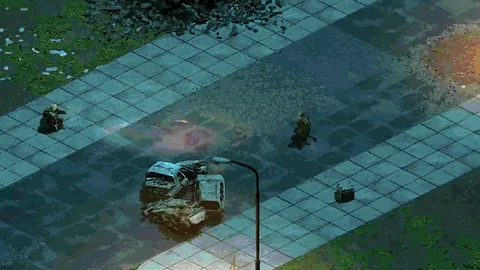
Brigador Killers treats building destruction as a tactical decision about movement, exposure, resources, and what the battlefield will look like after the debris settles. Developed by Stellar Jockeys and Gausswerks, the game entered Steam Early Access on August 20, 2026, combining infantry combat, vehicles, destructible environments, and a recoverable arsenal. In an October 15, 2026 developer interview, Stellar Jockeys described refined projectile penetration, explosions with more sophisticated damage falloff, and building sections capable of collapsing in response to damage affecting nearby pieces. The developers also highlighted mouseholing, or creating passages through buildings, as a tactic players need to learn. Destruction therefore functions as part of navigation and combat planning rather than simply as a visual effect.
The essential confirmed mechanic is the interaction between damaged structures and penetrating weapons. Stellar Jockeys explains that damage or collapse around one section can cause adjacent building tiles to begin collapsing, while powerful projectiles can penetrate structures, including the example of a railgun shot passing through a city block. A visible wall should therefore not automatically be treated as permanent protection against every threat. When considering demolition, first identify the obstacle that is actually preventing movement, then consider what its removal will expose before firing. After the shot, reassess the area rather than assuming the resulting opening will behave exactly as expected.
This makes preserving structures just as important as destroying them. A building can obstruct an advance while simultaneously separating enemy groups, limiting their firing angles, or protecting a retreat. In a hypothetical encounter with threats on two sides, leaving a structure intact could allow you to address one direction at a time, while destroying it might expose you to both opponents simultaneously. Conversely, an obstacle blocking your escape from an unfavorable engagement may be worth sacrificing even if it currently provides protection. The more useful question is therefore not simply whether a building can be destroyed, but whether removing that particular section improves your position.
Mouseholing and Route Creation
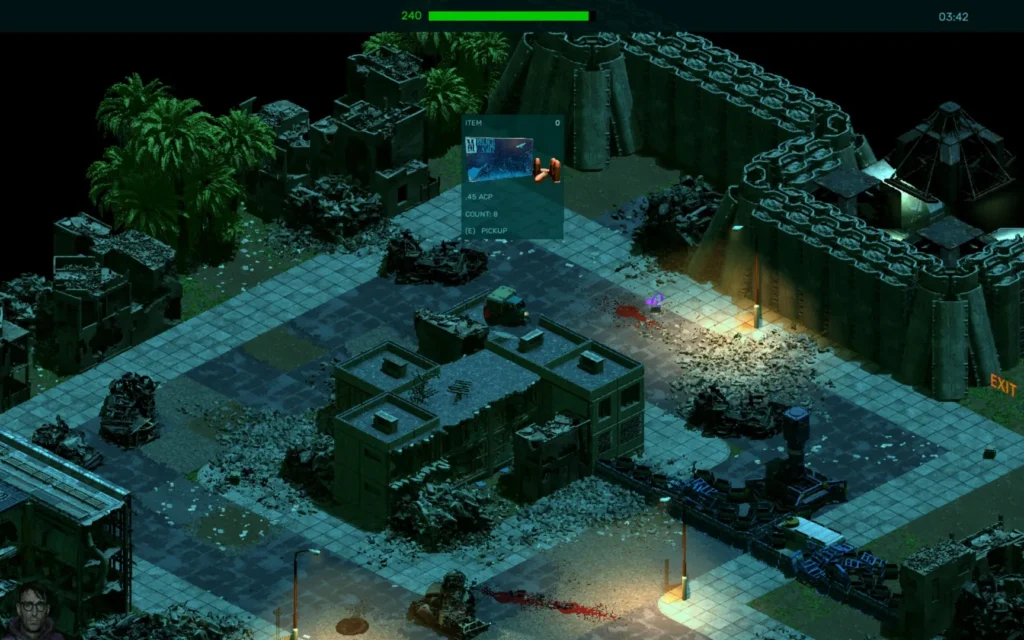
Mouseholing extends that principle into route creation. Stellar Jockeys specifically discusses opening passages through urban structures to approach opponents from directions that conventional level layouts would not normally allow. Before making such an opening, decide where you want the new route to lead and whether the destination offers enough protection or visibility to justify the ammunition spent. A longer existing street may cost nothing but expose you to predictable fire, while a shorter passage may reduce exposure at the cost of an explosive round or other specialized ammunition. Neither option is automatically superior because the useful choice depends on the immediate threat, available reserves, and the condition of the surrounding environment.
Creating an opening and using it should also be treated as two separate decisions. Once a gap exists, inspect it before moving through because the opposite side may contain poor cover, limited visibility, or enemies you had not previously accounted for. An opening can improve your firing angle while simultaneously improving an opponent’s opportunity to shoot back. Visibility and protection are therefore related but distinct concerns, particularly when penetrating weapons can reduce the value of seemingly solid cover. The advantage comes from positioning intelligently around a newly created sightline, not merely from creating it.
Destruction can also complicate attempts to control escalation. Earlier Garage Build documentation described an intention to let players remain under the radar before combat becomes fully active, while distinguishing that approach from a formal stealth-tracking system like Metal Gear Solid. This older explanation is useful as design context rather than a complete description of every current detection rule. Destroying a wall or obstacle may be worthwhile when it enables a decisive approach, but doing so simply because ammunition is available can begin a fight before you have chosen a useful position. Before the first loud action, decide where you will move next, which weapon you will use, and where you can withdraw if the encounter becomes unfavorable.
Dust, Smoke, and Damaged Cover Reassessment
Do not assume that dust, smoke, or debris produced by demolition provides a verified stealth or concealment mechanic. Something that visually obstructs the screen does not necessarily alter the game’s underlying detection calculations. Instead, treat the aftermath of destruction as a reason to pause, identify active threats, and reconsider the next movement. The same principle applies when previously useful cover has already taken damage because a plan based on an obstacle remaining intact becomes less reliable as fighting continues around it. Destruction should constantly update your understanding of the battlefield.
Narrow streets and blocked routes make this planning especially important. Before entering a confined area, identify where you expect to stop, how you will leave, and what conditions would force a retreat. Vehicle users should consider clearance and turning space, while infantry should evaluate whether the next position offers enough protection to pause and reassess. A destructible shortcut can provide an alternative route, but it may bypass one threat while exposing another approach that was previously sealed. Treat every obstruction as an opportunity to compare waiting, repositioning, taking another route, or spending ammunition rather than assuming that every blocked path should be destroyed.
Replay knowledge should also remain flexible because Stellar Jockeys has described authored variations involving barricades, crate placement, and encounter arrangements. A familiar area may therefore present a different immediate tactical problem on another visit. Memorizing useful principles is safer than memorizing one rigid sequence of movements. Learn where terrain tends to restrict movement, but verify the actual arrangement before committing. The environment is valuable precisely because it can change, which means successful navigation depends on reading its current condition rather than relying entirely on previous runs.

On-Foot Combat, Vehicles, Weapons, and Ammunition Management
Brigador Killers supports both on-foot combat and different combat rigs, making infantry action a substantial part of Brigador gameplay rather than merely a transitional state between vehicles. When fighting on foot in Brigador Killers, one useful priority is limiting the number of directions that demand immediate attention. Approaching an opening from somewhere you can retreat is generally safer than entering the middle of an unfamiliar space in Brigador. Observation, movement, looting, and equipment management should also be separated whenever possible because each activity consumes attention. A defeated enemy may leave valuable equipment, but the existence of a reward does not mean the surrounding area has become safe in Brigador Killers.
Earlier Brigador Fabricator Build documentation warns that opening the inventory does not pause the game. This makes the location and timing of equipment management tactically important in Brigador because extended comparisons between recovered items can leave you exposed. A practical approach is to secure a useful position, inspect the nearby area, and make only the changes needed for the next Brigador encounter while immediate pressure remains. Longer loadout decisions can wait until the situation is more stable. Environmental destruction should support this Brigador Killers process by connecting positions you can evaluate rather than encouraging blind movement through a newly created opening.
Vehicle Selection and Platform-Specific Tactics
Vehicles change the same calculations in Brigador Killers because the official vehicle selection includes ordinary cars, tanks, and bipedal mechs, alongside the ability to mount weapons on acquired equipment. A small breach that is useful to an infantry character may be useless to a larger Brigador vehicle that requires greater clearance and turning space. Before relying on a vehicle in a difficult Brigador encounter, test how it turns, accelerates, and recovers in a lower-pressure area. Powerful weapons cannot compensate for entering a route that leaves the Brigador platform unable to reposition effectively. Planning should therefore account for the entire vehicle rather than focusing only on its damage output.
Transportation and combat value should also be evaluated separately in Brigador Killers. A vehicle may be valuable because it carries equipment, crosses the map efficiently, or provides access to a useful route without necessarily being the best choice for confronting every enemy. A hypothetical heavy Brigador vehicle approaching a cramped junction may benefit from destroying part of a structure to create a firing position instead of forcing an awkward turn. At the same time, demolishing too much nearby cover could expose the vehicle while it attempts to reposition. The useful question is what the Brigador platform allows you to accomplish and what you risk by bringing it into that particular space.
Weapon Stats and Environmental Ammo Costs
Weapon selection in Brigador Killers became easier to evaluate with the October 1 Impound Update, which added clearer equipment information. Brigador weapon descriptions display Pierce Class and Carry Class, while vehicle descriptions show Pierce Armor and Handling Class. These values can help players judge armor effectiveness, carrying requirements, durability, and maneuverability before deploying in Brigador. A loadout should provide credible answers to the expected problems in a Brigador mission rather than filling every slot with powerful equipment that performs the same role. Specialized resources become more valuable when they solve threats that the rest of the Brigador arsenal cannot handle efficiently.
Buildings add another layer to the Brigador weapon economy because ammunition can be spent on the environment as well as enemies. A round used to create access is a round no longer available for an armored opponent, although the expenditure can still be worthwhile if the new Brigador route substantially reduces danger. Pierce Class should not automatically be treated as a complete ranking of Brigador demolition effectiveness because the update describes it in relation to armor rather than every type of structure.
Weapon value should therefore be judged through observed performance, compatibility with the current Brigador platform, and the actual needs of the mission. A powerful Brigador weapon becomes strategically useful when you can carry it, supply it, and reserve it for the problem it handles best.
Ammunition Purpose and Inventory Unloading
A useful Brigador Killers mental model is to divide ammunition by purpose. Reserve enough for the mission’s expected primary threat, consider how much Brigador demolition is actually necessary, and leave a margin for unforeseen encounters. This is not a fixed numerical rule because Brigador ammunition consumption depends on equipment, accuracy, and the mission itself. The purpose is simply to make optional Brigador destruction feel like a real expenditure rather than free environmental manipulation. A shortcut requiring several specialized rounds may be less attractive than a longer Brigador route that preserves those rounds for something your other weapons cannot handle.
The September 2 Brigador Killers update also changed ammunition management by allowing players to unload ammunition from weapons in the inventory through the Interact command while pointing at a loaded weapon. Older Brigador advice claiming ammunition can only be removed at the Armory no longer reflects this update. Recovered Brigador weapons can therefore become potential sources of useful ammunition when the situation permits safe inventory management. However, collecting or reorganizing supplies should not interrupt immediate survival in Brigador. A useful resource is only valuable if reaching and handling it does not expose you to a greater threat.
When Brigador ammunition becomes uncertain, optional combat should become less attractive. Leaving a Brigador mission with useful recovered equipment can be more valuable than continuing until every remaining round has been spent. The same restraint applies to unopened containers, surviving enemies, and areas that are not necessary for the current Brigador objective. A successful Brigador run does not require turning every encounter into total destruction. Preserving ammunition, equipment, and escape routes can be a better Brigador tactical result than maximizing the number of explosions.
Beginner Tips for Deliberate Loadout Testing
For beginners, the simplest way to improve at Brigador Killers is to change one variable at a time. Learn how a Brigador weapon behaves before combining it with an unfamiliar platform and a more difficult route, because changing every element simultaneously makes it harder to understand what caused success or failure. Read current Brigador mission conditions before selecting equipment and use early attempts to gather information about exposure, ammunition shortages, mobility problems, and unreliable retreat routes. When a Brigador encounter goes badly, identify the specific failure point before changing the loadout. Deliberate Brigador decisions are easier to learn from because the outcome can be compared against a clear purpose.

Vehicle Salvage, the Fabricator, and Building a Flexible Arsenal
Brigador Killers connects individual encounters to longer-term preparation through vehicle salvage and arsenal building. The official Fabricator Build describes recovering vehicles, stripping them with the Scrapper, and using their components to build or modify other equipment. Scrapping does not necessarily reduce a vehicle instantly to its simplest resources because the system can remove a vehicle layer as part of the process. That creates a choice between keeping a recovered platform usable now and converting it into materials that may provide greater value later. The best decision depends on what your current arsenal lacks.
A recovered vehicle can serve several different purposes. It may be useful transportation, a weapon platform for later missions, or a source of components needed for another build. Before stripping one, identify what the resulting materials will actually help you obtain because dismantling equipment without a specific goal can exchange an immediately useful platform for components that do not solve your next problem. The same reasoning applies to weapons and supplies acquired during a mission. Successful recovery becomes most valuable when each addition increases the number of meaningful tactical choices available for future runs.
Recovery rules also changed during development. The October 1 update introduced the Impound Lot for deployed vehicles that are lost or left behind during a mission. According to the developer, an impounded vehicle remains available for ten mission deployments before disappearing permanently, and players must pay a fee to enter the lot. This means a vehicle can retain value after a failed or incomplete recovery, but that opportunity is limited. Mission planning should therefore include not only what a vehicle can accomplish during combat but also how likely you are to bring it back or recover it afterward.
Fabricator-Driven Problem Solving and Flexibility
The Fabricator provides the other half of this progression system by converting accumulated resources into usable equipment. The March developer guide describes choosing recipes and supplying appropriate components or vehicle inputs, while the October update expanded the recipe list. Preparation is most effective when it begins with the reason a previous mission became difficult. If the problem was insufficient effectiveness against a particular armored threat, then a more suitable weapon may address the issue. If the problem was being trapped in confined streets or lacking a safe withdrawal route, additional firepower alone may leave the underlying weakness unchanged.
This makes fabrication a problem-solving system rather than merely an equipment ladder. A player who consistently reaches an objective but fails during the retreat should examine mobility, ammunition reserves, route planning, and handling before investing every valuable component in a heavier weapon. The best improvement is the one that addresses the actual failure point. New equipment should also be evaluated as part of a complete loadout because a powerful chassis still needs appropriate weapons, ammunition, handling characteristics, and a route that suits its size. Owning a stronger platform does not automatically make the overall plan stronger.
Maintaining a workable fallback can also make progression more resilient. Spending every useful component on a single ambitious setup may leave fewer options if that build is lost or performs poorly in the next mission. Several vehicles and weapons with different strengths can provide more tactical flexibility than repeatedly depending on one prized platform. This is especially important in a game where equipment can function differently depending on terrain, available ammunition, and encounter composition. Arsenal strength should therefore be measured partly by how many problems it can answer rather than simply by the maximum power of its most expensive item.
Salvage Changes Combat Evaluation and Planning
Salvage also changes how enemies and the environment are evaluated during combat. A vehicle that appears as an opponent in one encounter might become useful transportation, a future combat platform, or valuable fabrication material once recovered. Destroying everything can therefore reduce the resources available after the fight. The best tactical result may involve disabling or bypassing something you intend to bring home rather than eliminating it as aggressively as possible. Environmental destruction and recovery are connected because opening a route may help secure valuable equipment, while excessive demolition may make extraction or reuse more difficult.
The strongest preparation cycle is therefore specific and repeatable: identify what failed, acquire or fabricate an answer, test that equipment, and adjust the mission plan around the result. Recovered components have greater strategic value when they support a defined need. Fabrication then becomes part of a broader process connecting battlefield observations with future preparation. Each mission can improve the arsenal not merely by increasing its size but by making it more adaptable. That flexibility becomes particularly important as players encounter different combinations of confined environments, armored targets, infantry threats, and extraction problems.
How Brigador Killers Expands the Original Brigador’s Tactical Destruction
The original Brigador already established environmental destruction as a central part of the series. Its official description emphasizes piloting combat vehicles, destroying enemy armor, and leveling buildings, so destructive firepower is not a new identity introduced only by Brigador Killers. The sequel changes the context around that destruction by adding on-foot combat, combat rigs, recoverable vehicles, fabrication, and a broader equipment economy. Players therefore have more reasons to consider what should survive an encounter as well as what should be destroyed. Destruction becomes part of a larger loop involving preparation, navigation, combat, salvage, and future deployment.
That change affects how an encounter can be evaluated. A vehicle may begin as an enemy, become transportation after being captured, serve as a platform for mounted equipment, or eventually be stripped for components. A building may block an approach, shield an enemy, protect the player, or provide the separation needed to recover something safely. Ammunition can eliminate threats or reshape the map, but using it for one purpose reduces what remains for another. The player is therefore making choices across several connected systems rather than judging every object by how quickly it can be destroyed.
This does not mean every mission supports every possible tactic. Equipment restrictions, objectives, terrain, and encounter arrangements still determine which approaches are practical. The more useful adjustment for returning Brigador players is to examine what the environment and enemy equipment might provide before committing to maximum destruction. Something that could be flattened may also be useful as cover, an escape barrier, a salvage target, or part of a route that remains safer while intact. The strongest tactical decisions preserve options until there is a clear reason to spend them.
Using Destruction for Tactical Navigation
The October 15 developer discussion reinforces this approach by describing destruction as something players must learn to use for navigation. Refined projectile penetration, improved explosive falloff, interacting structural collapses, and mouseholing all make the battlefield less static. The important skill is not simply knowing which weapon causes the biggest explosion but understanding what the altered environment allows afterward. Successful demolition can create access, improve a firing position, separate an encounter into manageable parts, or provide an escape. Poorly planned demolition can remove protection, expose additional enemies, waste specialized ammunition, or make a route harder to recover from.
For new players, this means every destructive action should have a reason. If the purpose is to create access, judge success by whether the new route is genuinely safer or more useful. If the purpose is to improve a firing angle, check what additional sightlines have opened against you. If the purpose is to escape, make sure the resulting path supports the movement of the character or vehicle using it. Explosions are most valuable when they solve a defined tactical problem rather than becoming an automatic response to every obstacle.
Early attempts should therefore be treated as opportunities to learn the interaction between equipment and terrain. Notice which walls survive particular weapons, how damaged structures change nearby routes, where vehicles become difficult to maneuver, and how quickly optional demolition consumes ammunition. When the environment changes, update the plan instead of continuing along a route chosen before the fighting began. A successful breach can become dangerous if the surrounding structure collapses differently than expected or exposes another enemy position. Reassessment is part of the destruction mechanic rather than something that happens only after a mistake.
Deliberate Strategy Over Maximum Destruction
The broader difference between Brigador and Brigador Killers is consequently not that one game has destruction and the other does not. The sequel places that destruction inside a wider tactical system where the player can operate at different scales, acquire vehicles, recover equipment, manage ammunition, and prepare an arsenal for future missions. A building, weapon, vehicle, or route can have different value depending on the immediate objective and what the player hopes to preserve afterward. The most reliable strategy is therefore deliberate rather than maximal. Destroy what improves the next decision, preserve what still provides an advantage, and judge success by the position and resources that remain when the explosion is over.
Frequently Asked Questions (FAQs)
- What is Brigador Killers?
Brigador Killers is an isometric action game developed by Stellar Jockeys and Gausswerks in the Brigador setting. It combines on-foot combat, combat rigs, vehicles, recoverable equipment, and environmental destruction within a broader mission and arsenal-building structure. The game entered Steam Early Access on August 20, 2026. Unlike a vehicle-only combat game, it gives players reasons to think about equipment, positioning, salvage, and movement at several different scales. That wider structure is important because destruction is only one part of how players prepare for and survive encounters. - Is building destruction only a visual effect?
No. The developers describe destructible environments as an important part of navigation, positioning, and encounter planning. Players can create openings through buildings, alter routes, and change the amount of cover separating different parts of a fight. Destruction can therefore make an approach safer, create a firing angle, or provide an escape route, but it can also expose the player to additional threats. The useful way to judge an explosion is by what the altered environment allows afterward. A visually impressive collapse is not necessarily a tactical success if it removes useful cover or wastes ammunition. - Can every weapon destroy every building equally well?
The reviewed official information does not establish that all weapons are equally effective against every type of structure. Projectile penetration, explosive behavior, armor-related weapon statistics, and the condition of the target can all matter, but the available material does not provide a universal demolition chart. A weapon that performs well against armored enemies should not automatically be assumed to be the most efficient way to create a passage through a building. Likewise, one structure’s response to damage should not be treated as proof that every other building has identical durability. Players should evaluate demolition through observed results and the needs of the current mission. - Should beginners destroy buildings whenever possible?
No. Beginners are better served by destroying an obstacle only when doing so solves a specific tactical problem. An intact building may block movement, but it may also provide cover, separate enemy groups, or preserve a safer retreat route. Once it is destroyed, those advantages may disappear permanently for the rest of the encounter. Demolition should therefore create a clear benefit, such as safer access, a useful firing position, or an escape route worth the ammunition spent. Preserving the environment until there is a reason to change it also keeps more tactical options available. - Can players fight outside vehicles?
Yes. On-foot combat and combat rigs are confirmed parts of Brigador Killers rather than minor transitions between vehicles. This means infantry positioning, personal equipment, movement, and inventory decisions matter alongside vehicle selection. A route that works for a person on foot may not suit a tank or larger platform, so the same environment can require different planning depending on what the player is using. On-foot combat also makes newly created openings particularly important because smaller passages can provide routes unavailable to vehicles. Players should therefore think about both personal mobility and vehicle capability when preparing for a mission. - Does the game have a conventional stealth scoring system?
The earlier Garage Build FAQ specifically distinguished the intended approach from a formal stealth-tracking system like Metal Gear Solid. The available information instead suggests that players can remain under the radar before combat escalates, making restraint and timing important even without a conventional stealth score. That means avoiding unnecessary attention can still have tactical value. However, players should not assume undocumented systems for detection, scoring, or concealment that the developers have not confirmed. A safer strategy is to plan around when to remain quiet, when to commit to destructive force, and what to do once an encounter becomes active. - What is the difference between the Scrapper and the Fabricator?
The Scrapper is used to break down recovered vehicle equipment into useful components or other inputs, while the Fabricator uses suitable resources to create or modify equipment through available recipes. They therefore serve opposite sides of the same preparation loop: one converts existing equipment into materials, while the other turns materials into something useful for future missions. Scrapping should not be automatic because a recovered vehicle or component may still have practical value in its current form. Before dismantling something, decide what capability the resulting materials are intended to help create. The most effective use of both systems comes from solving a specific weakness in the current arsenal rather than converting equipment without a plan. - Can ammunition be removed from recovered weapons?
Yes. The September 2 update introduced the ability to unload ammunition directly through the inventory. Players can use the Interact command while pointing at a weapon that contains ammunition, allowing useful rounds to be recovered without relying only on the Armory. This makes recovered weapons potentially valuable even when the weapon itself is not needed for the current loadout. However, inventory management does not remove the need to remain aware of surrounding threats. If controls have been remapped, players should check their current bindings rather than assuming the default Interact input is unchanged. - Are lost vehicles always immediately gone forever?
No. The October 1 update introduced an Impound Lot that can hold vehicles left behind or lost during a deployment. According to the developer information, impounded vehicles remain available for a limited period of ten mission deployments before disappearing permanently. Recovering them also requires paying a fee to enter the impound system. This means losing a vehicle during a mission does not necessarily mean losing it forever at once. However, the recovery window is limited, so players should check the Impound Lot promptly rather than assuming the vehicle will remain stored indefinitely. - What is the most useful beginner strategy?
The most useful beginner strategy is to make each encounter manageable rather than trying to maximize destruction. Bring equipment that addresses the threats expected in the mission, preserve at least one workable escape option, and spend ammunition on demolition only when it creates a clear advantage. Use early runs to learn where exposure becomes dangerous, which resources run out first, and how different vehicles and weapons behave in confined areas. Recover useful equipment when doing so does not create unnecessary risk, then use the Fabricator and Scrapper to strengthen specific weaknesses in the arsenal. Consistent preparation, deliberate destruction, and reliable recovery provide a stronger foundation than treating every obstacle or enemy as something that must immediately be destroyed.

Conclusion
Brigador Killers makes destruction meaningful because every demolished obstacle changes the choices available afterward. A new opening can improve access while increasing exposure, and an unnecessary fight can consume the ammunition or equipment needed to complete the mission successfully. The most effective approach is to identify what actually blocks progress, decide whether removing it creates a clear advantage, and consider how the altered space will affect movement, cover, and withdrawal. Success therefore depends less on maximum destructive power than on using that power deliberately and reassessing the battlefield after each major change. A purposeful breach, a suitable loadout, and enough resources to escape can achieve far more than destroying everything within reach.
Sources and Citations
- Source: 80 Level, October 15, 2026, “How Brigador Killers Makes Blowing Up Buildings Part of the Strategy.” Developer interview discussing destruction systems, environmental design, collapsing buildings, and how destruction affects tactical play.
Citation: How Brigador Killers Makes Blowing Up Buildings Part of the Strategy - Source: Stellar Jockeys and Gausswerks, Brigador Killers Steam listing. Official game information covering Early Access, infantry combat, vehicles, weapons, and the arsenal-building framework.
Citation: Brigador Killers on Steam - Source: Stellar Jockeys, March 17, 2026, “Brigador Killers: The Fabricator Build.” Developer update explaining salvage and fabrication, including how players gather parts and build up their equipment.
Citation: Brigador Killers: The Fabricator Build - Source: Stellar Jockeys, October 1, 2026, “The Impound Update.” Official update detailing the vehicle impound system, expanded Fabricator recipes, weapon and vehicle changes, and other gameplay revisions.
Citation: The Impound Update - Source: Stellar Jockeys, September 2, 2026, “02/09/2026 Brigador Killers Update.” Official update confirming weapon-ammo unloading through the inventory and describing other gameplay adjustments.
Citation: 02/09/2026 Brigador Killers Update - Source: Stellar Jockeys, “Randomness in Brigador Killers.” Developer explanation of authored variation in map layouts, object placement, loot tables, and environmental storytelling.
Citation: “Randomness” in Brigador Killers - Source: Stellar Jockeys, “Garage Build Impressions & FAQ.” Developer Q&A clarifying the sequel’s design goals, planned vehicles, melee combat, and stealth approach.
Citation: Garage Build Impressions & FAQ - Source: Stellar Jockeys and Gausswerks, Brigador: Up-Armored Edition Steam listing. Official description of the original game, supporting comparisons with its vehicles, weapons, destructive environments, and tactical combat.
Citation: Brigador: Up-Armored Edition on Steam
Recommendations
- Butterfly Soup Developer’s New Queer Chinese Fantasy Murder Mystery With Giant Crane Traversal Explained
- Avengers: Doomsday Trailer Remade Frame-by-Frame in Official LEGO Version
- Overseeker Trailer Reveals New ARPG From Ex-FromSoftware Developer
- Ghost Recon Wildlands 4K 60 FPS Update and New Last Rites Mission: Everything We Know
- Ascenders: Beyond the Peak Is a Roguelite Game Where You’ll Have to Lead a Group of Alpinists Who Have to Recover Ancient Artifacts in a Cursed Mountain
- Fireborn Is an Image Comics Series Perfect for ’90s Superhero and Gaming Fans
- MindsEye Update Adds 5v5 Grenade Football Mode With Crossplay and Multiplayer Features
- Switch 2 Just Got One Of The Most Nostalgic Pokemon Spin-Offs – Pokémon Pokopia Explained, Gameplay, Release Date, and Why Fans Love It
- Street Fighter Movie’s New Trailer Embraces Its Ridiculousness And Delivers Pure Nostalgic Chaos
- Ghost of Yōtei Complete Edition Releases October 1, 2026: Everything Included



































































































