







In This Article (7 sections)
BrokenLore: DON’T LIE Story, Junko and Psychological Horror Setting
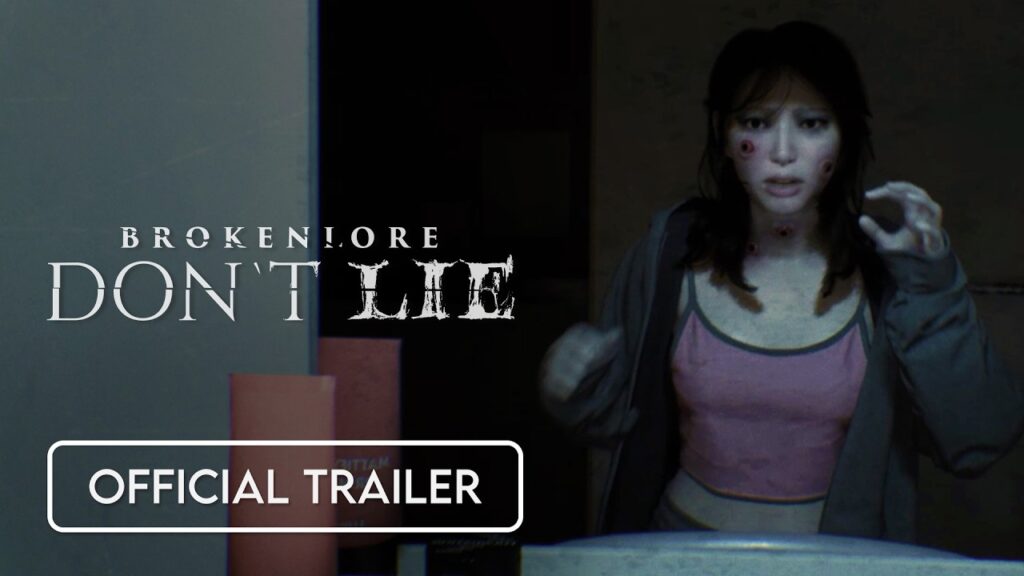
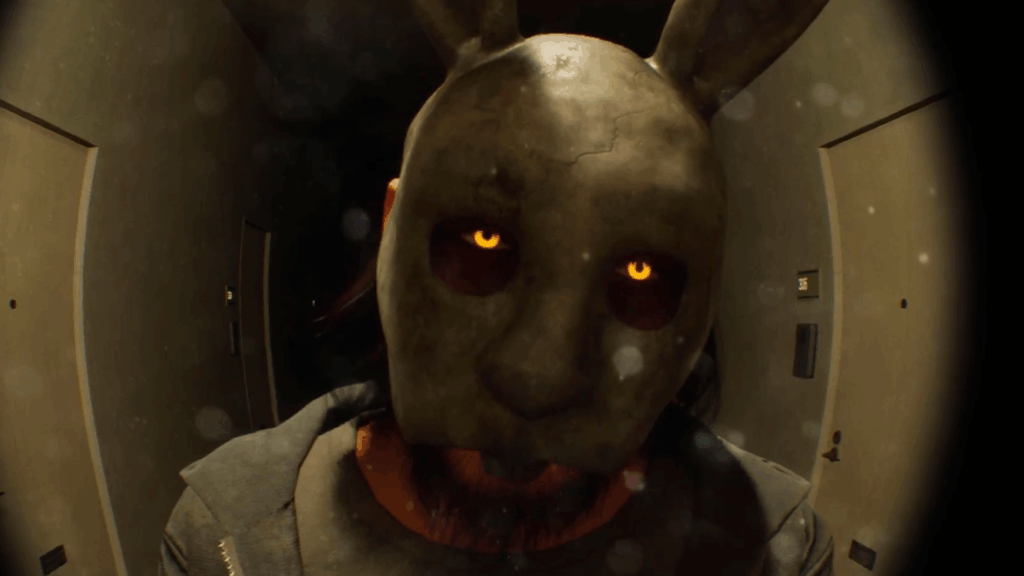
BrokenLore: DON’T LIE establishes a deeply unsettling psychological horror experience centered on realism, distortion, emotional instability, and unreliable perception. The Official Demo Launch Trailer presents fragmented images of a cramped apartment, distorted lighting, and unsettling audio cues that suggest protagonist Junko is experiencing a gradual collapse of perception rather than simply confronting a conventional external threat.
From its opening moments, the trailer creates unease through environmental storytelling. Objects appear slightly out of position, shadows behave unnaturally, and audio glitches reinforce the feeling of mental fragmentation. Rather than depending primarily on jump scares, the game builds tension through silence, repetition, subtle environmental changes, and uncertainty about whether something actually happened. Hallways appear to loop, rooms can feel unnaturally proportioned, and the persistent feeling of being watched contributes to the game’s liminal space horror.
BrokenLore: DON’T LIE centers on emotional trauma, perception distortion, and unreliable narration. Junko’s reality deteriorates within a relatively small living environment that gradually becomes more hostile and surreal. Instead of constantly introducing new locations, the game turns its apartment setting into an increasingly complicated psychological maze. The location functions as both a physical space and a representation of Junko’s unstable mental state.
Junko serves as the emotional center of the story, with her past revealed through fragmented memories, environmental details, and distorted dialogue rather than a straightforward narrative. Recurring imagery and events can include medication references, broken mirrors, repeating hallways, and unexplained changes in time. The game deliberately leaves uncertainty surrounding what is actually happening, encouraging players to interpret events themselves.
Major themes include isolation, guilt, suppressed memories, identity fragmentation, medication, self deception, and uncertainty surrounding reality. The concept of lies appears particularly important because it could refer to hidden memories, Junko deceiving herself, or manipulation from an outside source. Medication adds another layer of ambiguity because the player may be left questioning whether changes in perception are symptoms of Junko’s condition, effects of treatment, or evidence of something else occurring around her.
The apartment reinforces these themes through environmental transformation. Familiar locations can become disturbing when hallways stretch, rooms change proportions, lighting behaves inconsistently, or objects disappear and return in different places. The environment can appear to remember events incorrectly, creating the impression that the physical world is changing alongside Junko’s perception.
Several recurring visual symbols reinforce the psychological narrative:
- Repeating hallways suggest cyclical memories or experiences.
- Broken mirrors represent fractured identity.
- Medication bottles suggest psychological treatment and uncertainty surrounding perception.
- Flickering lights reinforce instability and changing awareness.
- Shifting rooms make familiar spaces increasingly unreliable.
- Repeated or distorted sounds contribute to confusion and paranoia.
DON’T LIE also fits within the broader BrokenLore series through its emphasis on fragmented psychological horror, memory, and unreliable reality. Direct narrative connections between individual entries are not necessarily established, but thematic continuity connects them. DON’T LIE appears to function as a more intimate psychological story centered on one character rather than requiring extensive knowledge of previous games.

BrokenLore: DON’T LIE Gameplay, Hallucinations and Survival Mechanics
Gameplay in BrokenLore: DON’T LIE emphasizes exploration, environmental interaction, puzzles, observation, and survival decisions rather than action heavy combat. Players move through the apartment, inspect ordinary objects, discover narrative clues, and trigger memory fragments that gradually provide additional context for Junko’s experiences.
Combat appears minimal or potentially absent from the demo, strengthening the player’s vulnerability. Instead of providing powerful tools for confronting threats, the game places greater importance on interpreting the environment, recognizing changes, and deciding how to respond when something appears dangerous.
Stealth follows the same psychological approach. Unknown presences may need to be avoided, but the game creates uncertainty about whether those threats are physically present or products of Junko’s deteriorating perception. Players must therefore pay attention to sounds, movement, visibility, and changes in their surroundings without always knowing whether a perceived danger is real.
Potential survival mechanics include:
- Listening for indications of nearby danger
- Navigating areas with restricted visibility
- Using environmental hiding locations
- Avoiding psychological threats
- Carefully observing environmental changes
- Interpreting repeated or distorted audio cues
Hallucinations form an important part of this structure. Objects can disappear, reappear, or change position, while rooms can alter their layouts between visits. Sounds may repeat or become distorted, and familiar spaces can change without warning. These alterations appear connected to narrative events, environmental interactions, emotional stress, or scripted sequences rather than functioning solely as random visual effects.
The result is a mental descent system designed to make sensory information unreliable. Players cannot automatically assume that what they previously saw will remain unchanged when they return to the same room. This turns observation into a gameplay mechanic because recognizing small differences can become as important as solving conventional puzzles.
The apartment is particularly effective for this structure because its limited size allows players to become familiar with individual rooms and hallways. Once the player understands how a location normally appears, even a minor alteration can become unsettling. The game can consequently create tension without constantly introducing new monsters or environments.
The demo is intended to provide an introduction to the larger experience rather than resolve Junko’s complete story. Players can expect it to emphasize:
- Junko’s psychological condition
- Apartment exploration
- Early hallucination mechanics
- Light puzzle solving
- Environmental storytelling
- Unanswered narrative questions
- The game’s approach to stealth and vulnerability
The experience uses these systems to place the player directly inside Junko’s uncertain perspective. Rather than observing her psychological deterioration from a distance, players encounter environments through the same unreliable sensory information she experiences. This makes uncertainty itself one of the primary sources of horror.

BrokenLore: DON’T LIE Demo, PC Release and What Players Can Expect
The BrokenLore: DON’T LIE demo serves as an early look at the game’s mechanics, narrative structure, atmosphere, and psychological horror design. A definitive full release date is not established in the supplied information, with the demo instead providing players with an opportunity to experience the core concept before the complete game becomes available.
The demo is primarily positioned as a PC experience. Console availability is not confirmed, leaving any expansion to additional platforms dependent on future developer decisions and announcements. The demo can also provide an opportunity for feedback surrounding pacing, narrative clarity, technical performance, and the effectiveness of its psychological horror mechanics.
Players should expect a relatively focused preview rather than the complete narrative. Psychological horror demos commonly emphasize atmosphere and core mechanics while deliberately leaving major story questions unanswered. In DON’T LIE, this approach fits naturally with a narrative already built around uncertainty and interpretation.
The supplied information suggests players can find the demo through supported PC distribution platforms or official developer channels by locating the game, selecting the available demo, and checking that their system can run it before installation. Early access availability, if offered, can vary according to release plans and region.
Official PC requirements are not fully established in the supplied information, although estimated specifications include:
Estimated minimum requirements
- Windows 10 64 bit
- Intel i5 or equivalent processor
- 8 GB RAM
- GTX 1050 or equivalent graphics hardware
- Approximately 5 to 10 GB of storage
Estimated recommended requirements
- Windows 11
- Intel i7 or Ryzen 5 processor
- 16 GB RAM
- GTX 1660, RTX 2060, or stronger graphics hardware
- SSD storage recommended
These specifications remain estimates rather than confirmed requirements and could change as development and optimization continue.
The demo trailer ultimately establishes BrokenLore: DON’T LIE as a psychological horror experience that relies heavily on atmosphere, environmental manipulation, and uncertainty rather than conventional combat. Its confined apartment becomes increasingly threatening as Junko’s perception deteriorates, while hallucinations, repeating spaces, distorted audio, symbolic objects, and fragmented memories gradually reveal more about her situation.
Within the wider BrokenLore universe, DON’T LIE appears capable of functioning independently while preserving the series’ recurring interest in psychological instability and unreliable reality. Its narrower focus on Junko allows the game to explore those ideas through a highly personal environment where familiar objects and rooms become progressively more difficult to trust.
Frequently Asked Questions (FAQs)
- What is BrokenLore: DON’T LIE about?
BrokenLore: DON’T LIE is a psychological horror game centered on perception, trauma, hallucinations, and unreliable reality. The story follows Junko as her familiar apartment gradually becomes distorted, forcing players to question whether the disturbing events they experience are real, imagined, or connected to suppressed memories. - Is BrokenLore: DON’T LIE a combat game?
No, the game focuses more heavily on exploration, environmental interaction, observation, and psychological survival than direct combat. Players are encouraged to investigate their surroundings, recognize subtle changes, solve light puzzles, and avoid potential threats rather than confronting danger with conventional weapons. - Who is the main character?
The protagonist is Junko, whose deteriorating perception forms the emotional and narrative foundation of the game. Players experience the apartment and its increasingly disturbing changes through her perspective while gradually discovering fragmented information about her memories, emotional state, and past experiences. - Is the game connected to other BrokenLore titles?
Yes, BrokenLore: DON’T LIE shares thematic connections with other games in the BrokenLore series, particularly through its exploration of psychological instability, memory, perception, and unreliable reality. However, it appears capable of functioning as a standalone story without requiring players to understand the narratives of previous entries. - What platform is it on?
The demo is primarily presented as a PC experience. Additional platform availability has not been established in the supplied information, so possible console versions would depend on future development plans and announcements. - How long is the demo?
The demo is designed as a relatively short introduction to the game’s atmosphere, mechanics, and psychological storytelling rather than a complete version of Junko’s story. Its purpose is to introduce apartment exploration, hallucinations, environmental changes, puzzles, and the overall horror concept while deliberately leaving major questions unanswered. - Does the game include monsters?
The game does not primarily depend on traditional monsters for its horror. Instead, threats are largely psychological and connected to Junko’s unreliable perception, creating situations where players may be uncertain whether a presence is genuinely dangerous, a hallucination, or another manifestation of her deteriorating reality. - What is the main horror style?
BrokenLore: DON’T LIE combines psychological horror with liminal space horror. Repeating hallways, changing rooms, distorted sounds, unusual lighting, shifting objects, and familiar environments becoming subtly incorrect create tension without requiring constant jump scares or conventional enemies. - Is the story linear?
No, the story is presented in a fragmented and interpretive way. Players uncover information through memories, environmental details, symbolic objects, distorted dialogue, and changes within the apartment, requiring them to piece together Junko’s experiences instead of receiving every explanation through a straightforward narrative. - When is full release?
The full release date was not officially confirmed at the time of the demo information provided. The demo instead serves as an introduction to the game’s mechanics, narrative themes, and atmosphere while the complete release remains dependent on further development and future announcements.
Conclusion
BrokenLore: DON’T LIE positions itself as a deeply atmospheric psychological horror experience that prioritizes perception, emotional instability, and environmental storytelling over traditional gameplay mechanics. Through its confined apartment setting, fragmented narrative, and hallucination based systems, it creates a space where reality itself becomes unreliable. The demo serves as a foundational glimpse into a broader psychological journey centered on Junko’s deteriorating mental state and the theme of truth distortion.
Sources and Citation
- BrokenLore DON’T LIE Official Steam Store Page
https://store.steampowered.com/ - BrokenLore Official Website
https://brokenlore.com/ - Serafini Productions Official Website and BrokenLore Developer Information
https://www.serafiniproductions.com/ - Serafini Productions BrokenLore Official YouTube Trailers and Gameplay Showcases
https://www.youtube.com/@SerafiniProductions - IGN BrokenLore DON’T LIE Official Trailer and Gameplay Coverage
https://www.ign.com/ - Gematsu BrokenLore Series News and Gameplay Coverage
https://www.gematsu.com/ - itch.io Psychological Horror Games and Indie Horror Community
https://itch.io/games/tag-psychological-horror - Reddit Indie Horror Community Discussions and Player Impressions
https://www.reddit.com/r/IndieGaming/ - Reddit Horror Gaming Community and Demo Discussions
https://www.reddit.com/r/HorrorGaming/ - Game Developer Horror Game Design and Development Analysis
https://www.gamedeveloper.com/
Recommendations
- Capcom Gamescom 2026 Lineup Revealed: Mega Man, Dragon’s Dogma 2 and More Games to Watch
- The Best Laptops for Gaming and Schoolwork in 2026 (student-Friendly Buying Guide)
- Until Dawn 2 Trailer Breakdown: Neil Newbon, New Cast, and Lots of Blood
- Forza Horizon 6 Teams up with Crunchyroll to Give Subscribers a Free Car Voucher: How to Claim the Ani-May Reward
- Athanasia Dinosaur Horror Hits Steam Early Access on October 19, 2026
- Cash Cleaner Simulator & Desynced Publisher Surpasses $10M Revenue on Steam: Indie Success Story Explained
- Google Unveils New AI Cloud Tools to Support Game Development at GDC 2026
- Dragon’s Dogma 2: Dark Arisen Coming to Switch 2 on October 9, Full Release Details, New Region, and Expansion Breakdown
- Ocean Shader Unity: How to Create Realistic Water, Waves, Foam, and Shorelines
- If I Only Do Game Adaptations, I’m the ‘Games Guy’” After Iron Lung’s Huge Success



































































































