







Chris Wilson a veteran lead cinematic animator (Nov 2020–Apr 2026) on Build A Rocket Boy’s MindsEye has broken his silence in a Kotaku interview. He described the studio’s environment in scathing terms. Wilson said the discovery of covert monitoring “was like finding that nail in the coffin for me,” and that the company’s “toxic culture of secrecy and micromanaging” was among the worst he’d seen in 20 years. In essence, Wilson laid out the key allegations staff have been whispering about Build A Rocket Boy. He explained that an atmosphere of secrecy and distrust prevailed: employees were treated as suspect, decisions were made without explaining motives, and basic professional respect was lacking.— ×3
- Key points from Wilson’s statements: He called the culture “toxic” and highly secretive. He was angered to learn surveillance software (Teramind) was secretly installed on staff computers. He said this monitoring reflected the leadership’s “mistrust” of employees and created “an atmosphere of unease” that hurt production. He also highlighted how staff had been led to believe management cared about them only to be “embarrassed” and betrayed by these revelations.
- Why he spoke out: After years of frustration, Wilson chose to go public to expose these issues. He stressed that fellow developers were afraid to even admit they’d worked on MindsEye, saying: “people…they’re embarrassed about it… They don’t want to say that they were part of the project”. By explaining his experiences, Wilson hopes to shed light on what has become a highly publicized controversy.
What Chris Wilson Said About Build a Rocket Boy Workplace Culture
Wilson painted Build A Rocket Boy’s workplace as deeply dysfunctional. He repeatedly emphasized that leadership kept employees in the dark. In his interview he charged the company with running a “toxic culture of secrecy and micromanaging”. He detailed how management would spring mandates on staff with little warning, and then seem shocked when projects fell apart. Wilson noted that the secret use of monitoring software (Teramind) was symptomatic: “It can only be assumed this software was added as part of their effort to micromanage us, a product of their mistrust of their employees”.
Wilson’s comments echoed those of many disaffected staff. In an October 2025 open letter (backed by the IWGB union), nearly 100 developers accused co-CEOs Mark Gerhard and Leslie Benzies of “calamitous mismanagement” and of refusing to listen to employees. That letter complained of excessive overtime, arbitrary changes, and burnout. Wilson specifically confirmed that teams worked grueling hours, especially in cinematics, with employees regularly putting in dozens of unpaid extra hours each week. In short, both Wilson and his former colleagues said the studio was mismanaged from the top, with toxic secrecy, demanding crunch, and a lack of transparency as core issues.
Build a Rocket Boy Surveillance Software Allegations (Teramind)
A central allegation is that management covertly installed Teramind an invasive employee monitoring tool on artists’ and developers’ machines. Teramind can log keystrokes, capture screenshots, and even record audio from microphones. According to the union’s statement and leaked internal communications, co-CEOs Gerhard and Benzies confirmed to staff that Teramind had been running on employee devices without their knowledge. The software was later deinstalled, but employees say the damage was done and management never fully explained why or what data was collected.
The IWGB union claims this use of Teramind violates UK law and employee dignity. They note that the program “violates both data protection laws and the workforce’s basic dignity,” since it was effectively recording people in their homes without consent. Workers reported discovering the monitoring only after noticing their PCs were unusually slow (a symptom of Teramind running in the background). After a collective grievance by 40 employees in March 2026, Teramind was removed, but staff are still demanding a full accounting of what data was gathered and why it was ever installed. In summary, the claim is that the company spied on its own staff in a covert and heavy-handed way.

Build a Rocket Boy Legal Action Details: What the Union Claim Alleges
The staff grievances have escalated into formal legal claims. In late April 2026, the IWGB Game Workers Union announced that Build A Rocket Boy employees had filed multiple complaints. One claim centers on the data monitoring: employees allege that secretly installing Teramind without consent breached data protection law and was “invasive” surveillance. In parallel, the union filed a separate claim on 12 April alleging that last summer’s round of layoffs was mishandled in breach of employment law.
The redundancy-related claim includes allegations of unlawful blacklisting, failing to properly consult the workforce, and other failures in the dismissal process. The union notes that around 250–300 staff were made redundant after MindsEye’s launch, and claims Build A Rocket Boy gave many employees misleading notices (wrong time periods or teams), potentially causing wrongful dismissals. If the tribunal finds the union’s complaints valid, it could spell millions in liability for the company. In short, the union is pursuing action on two fronts: privacy violations (Teramind) and unfair redundancy practice, each backed by signed grievances and formal filings.
Who Are Build a Rocket Boy Co-Ceos and What Are They Accused Of
Build A Rocket Boy is run by co-CEOs Leslie Benzies and Mark Gerhard. Benzies is a Rockstar North co-founder (Grand Theft Auto fame), and Gerhard is a veteran games executive (ex-IO Interactive CEO). Both have come under fire from employees. Staff have accused both leaders of poor management and secrecy. The October 2025 open letter explicitly named Benzies and Gerhard as the source of the studio’s problems, blaming them for “calamitous mismanagement” and the resulting layoffs and crunch.
Specifically, employees say Gerhard and Benzies made critical errors: imposing mandatory overtime, refusing to listen to expert advice, and handling layoffs haphazardly.
One developer remarked that the crisis was “not heralded by saboteurs, but by Mark and Leslie themselves”. Gerhard, in particular, has drawn criticism for publicly scapegoating outside parties from accusing a small PR agency (Ritual Network) of “sabotaging” MindsEye to threatening critics online.
Benzies has faced a separate controversy: his name was mentioned in a newly released Epstein survivor’s allegations (which he denies), and he recently took a “well-earned temporary leave” from the company. Employees also note that while Gerhard spoke as “CEO” after Benzies stepped back, the pair seemed to operate in silos, leaving workers unsure of who really had final say.— ×1
In summary, the co-CEOs are accused of creating an unforgiving culture: excessive crunch, secrecy, and erratic decision-making. Gerhard is criticized for dramatic sabotage claims and legal threats, while Benzies is criticized (by staff) for prioritizing grand ideas over stability. These criticisms converge on the claim that both men failed to run the studio responsibly, and instead fostered the chaos now exposed by the union and press.
MindsEye Development Problems: What Former Employees and Reports Claim
MindsEye’s development was troubled from early on. Preview coverage was poor, management leaked secrets, and two key executives (chief financial officer and general counsel) left before launch. When it finally shipped in mid-2025, the game was widely panned: it was “arguably the worst game to come out in 2025,” earning some of the lowest Metacritic scores of the year (around 37/100). Players reported crippling bugs, missing features, and game balance issues. Within weeks of launch, the studio admitted it would release fewer updates (to focus on fixes), and many players began demanding refunds.
Former employees and reporters say the root causes were mismanagement and over-ambition. Staff interviews reveal that Build A Rocket Boy repeatedly added new features late in development, often at the behest of Benzies, leaving no time for testing or polish. For example, one developer noted that even one month before launch, executives were forcing in new content, ensuring the game never reached a stable state. The October 2025 employee letter echoed this: it detailed that teams were given “radical changes” with no input, and insisted on mandatory 8-hour overtime weeks for months to meet shifting goals. In short, insiders say constant scope-creep and crunch destroyed the game’s quality.
Those issues fueled the backlash. Critics and players focused on the errors, low-level bugs and missing polish which many believe reflect the troubled development process. In hindsight, employees argue the game might have succeeded if the leadership had allowed more testing time instead of chasing new features at the last minute. Rather than addressing these core problems, managers were instead blamed on external conspiracies or targeted companies, which outraged staff and rubbed salt in the wound. The consensus in reports is that MindsEye’s failure was largely self-inflicted through poor studio decisions.

Build a Rocket Boy Crunch Culture Allegations and Employee Burnout Claims
Intense crunch and burnout are central to the controversy. Multiple sources describe Build A Rocket Boy as enforcing extreme overtime. The October 2025 open letter (by over 90 devs) bluntly states that “staff had suffered months of crunch, resulting in some horrific mental and even physical illnesses” due to the studio’s demands. Similarly, the union’s disclosures note that studios bosses mandated an extra 8+ hours of work per week for at least four months leading up to launch, with official overtime rewards still owed to staff. One lead animator (Wilson) confirmed that the cinematics team worked in “constant crunch” for 6–9 months before release, often sleeping in the office and foregoing weekends, yet mysteriously receiving no overtime pay.
These crunch allegations also tie into the redundancy complaints. Employees say many who burned out during production were then abruptly fired or blacklisted with little notice. Some workers claim they were given misleading assessment periods and poor notice, and thus had no time to recuperate or contest decisions. In sum, former staff say the studio ignored basic work-life balance. The union and press reports indicate this heavy crunch contributed to a toxic work climate: exhausted developers felt driven beyond reasonable limits to save a game already doomed by management’s shifting priorities.
Build a Rocket Boy “sabotage” Claims: What Co-CEO Mark Gerhard Reportedly Said
CEO Mark Gerhard has repeatedly blamed MindsEye’s problems on sabotage by others, a claim employees widely reject. Publicly, Gerhard has asserted there was “overwhelming evidence of organized espionage and corporate sabotage” targeting MindsEye. In a LinkedIn post about layoffs, Gerhard spoke of “criminal activities” and said police were now involved in investigating these supposed attacks on the game. Gerhard has hinted that he can’t share details due to the ongoing investigation, but has mentioned an upcoming game update (called “Blacklisted”) that would “share some of the evidence of the sabotage with the community”.
The specifics he’s cited involve a few claims: Gerhard accused a small Texas-based media company (Ritual Network) and a YouTuber known as “Cyber Boi” of running a smear campaign against MindsEye. For instance, he reportedly called Ritual Network’s staff “a bunch of gangsters” who engineered a smear. He also issued a public cease-and-desist against Cyber Boi after that YouTuber published a video about Leslie Benzies’ Epstein-file mention.
Employees told journalists they found these sabotage claims absurd. In leaked all-hands meetings, Gerhard and Benzies read internal “hate mail” blaming build a Rocket Boy’s troubles on an external conspiracy. Wilson described this as a far-fetched fantasy, noting the alleged “evidence” was just angry emails, not a sophisticated attack plan. Essentially, Gerhard’s allegations of sabotage are seen by staff and observers as a deflection from internal faults. In media coverage, he has asserted them strongly e.g. calling the unionized criticism an “organized espionage” but many developers believe he is choosing conspiracy theories over acknowledging the studio’s management failures.
Build a Rocket Boy Internal Meeting Leak: What Was Reported and Why it Matters
In early 2026 an internal company meeting was secretly recorded and leaked. In that meeting, co-CEO Mark Gerhard told staff that the failures of MindsEye were caused by a “targeted campaign” from outside. He specifically blamed Ritual Network (a fringe TikTok/YouTube agency) for “sabotaging” the game and said the team had evidence of it. Crucially, he also publicly acknowledged that the company had installed Teramind monitoring software on everyone’s work PCs without telling them.
The leak mattered because it contradicted what employees had been told. Staff had long suspected something hidden was happening with Teramind, and the meeting confirmed their fears: leadership admitted to secretly surveilling them. It also exposed Gerhard’s rhetoric about sabotage. Because it was shared outside the company, it triggered swift backlash. Forty employees used this as the basis for a formal grievance in March 2026. In other words, the leaked meeting was a turning point: it directly linked Gerhard’s public accusations with the private claims (and denials) of staff, adding legitimacy to employees’ complaints and fueling the union’s legal case.
How UK Data Protection Rules Apply to Employee Monitoring Software
Under UK law, employees still have privacy rights at work. The UK GDPR (and updated ICO guidance) say that any monitoring of staff must be necessary, proportionate, and transparent. Employers cannot covertly spy on workers without a very good justification. For example, the Information Commissioner’s Office (ICO) explicitly advises that companies must inform staff in advance about any monitoring, explaining the nature, scope and reasons in clear language. Monitoring must also have a legitimate purpose (such as genuine security concerns) and be limited to what is strictly needed. Covert monitoring is only rarely allowed.
Moreover, employees working from home have an even higher expectation of privacy. The ICO’s draft guidance warns that “workers’ expectations of privacy will be significantly higher at home… and this needs to be factored into employers’ DPIAs” (Data Protection Impact Assessments). Secretly installing software that can record in-home activity (keystrokes, screen content, microphone) would generally be seen as highly intrusive under these rules. In short, UK data protection law demands that Build A Rocket Boy would have needed a very strong legal reason and clear staff consent (or at least notification) to run Teramind.
By all accounts, workers were not informed, which is likely a violation. UK regulators have penalized companies in the past for overly broad workplace monitoring, for example, large fines were issued when surveillance was found to be “beyond what was necessary” and conducted without notice. The union’s allegation hinges on this framework: if the monitoring breached these principles, the studio could face sanctions from the ICO or employment tribunals.

IWGB Union vs Build a Rocket Boy: Timeline of Grievance and Legal Escalation
The timeline of events is key to understanding how this dispute unfolded.
- June 2025: Build A Rocket Boy announced mass layoffs (about 250–300 people) after MindsEye’s failed launch. Many employees were surprised by the cuts.
- Oct 2025: In response, nearly 100 staff (with IWGB support) published an open letter accusing co-CEOs Gerhard and Benzies of “calamitous mismanagement” that led to excessive overtime and wrongful firings. The letter demanded better treatment, an apology, and fair compensation.
- Jan 2026: Rumors circulated of internal strife. (Notably, Leslie Benzies took a temporary leave after denying an allegation in the Epstein files.) There were also media hints of a leaked meeting and developer unrest.
- Mar 2026: A secretly recorded internal meeting was leaked, revealing Gerhard’s claims of sabotage and admitting Teramind had been installed on staff computers. In reaction, 40 employees (all IWGB members) submitted a collective grievance that month over the undisclosed monitoring and other workplace practices.
- Apr 12, 2026: The IWGB filed a formal legal claim (via ACAS) over the redundancy process from June 2025. The claim alleges “unlawful blacklisting, detriment, and failure to engage in collective consultation” in that redundancy round.
- Apr 21, 2026: IWGB announced new legal action for the data privacy issue. Their statement says Build A Rocket Boy has begun legal proceedings against the company for installing Teramind without consent. The union is also preparing to escalate both issues with the UK regulator (the ICO) and employment arbitration (ACAS).
This chronology shows a rapid escalation from private complaints to public legal filings, all backed by detailed statements and grievances from dozens of employees.
Build a Rocket Boy Layoffs and Redundancy Process Controversy Explained
The studio’s layoffs have been a major flashpoint. Build A Rocket Boy acknowledged in mid-2025 that MindsEye’s disastrous launch would lead to layoffs, but many staffers say the process was badly mishandled. Developers reported receiving vague or incorrect information: some were given dismissal notices with the wrong notice period or assigned to the wrong department (meaning their performance would be judged improperly). There was no transparent company-wide meeting announcing the cuts, in fact, many staff only learned of new layoffs when Gerhard publicly posted about them on LinkedIn.
IWGB’s claim alleges these errors were not accidental. Employees complain they were never properly consulted (a requirement under UK redundancy law) and that some may have been unfairly singled out (blacklisted) for voicing concerns. For instance, some who had helped form the union say they were let go shortly after work stoppages, which feels retaliatory. According to union filings, the redundancy process violated basic legal protections: workers weren’t given adequate notice, weren’t allowed input on selection criteria, and were misinformed about their rights. If upheld, these allegations could result in liability for wrongful dismissal or failure to collectively consult which is why the union warns the company could owe “millions” to affected workers.
In essence, the layoffs controversy stems from the overlap of a huge downsizing and a secretive management style. The combination sudden cuts without proper procedure or notice is at the heart of the union’s legal grievances.
MindsEye Reception and Fallout: How the Game’s Performance Shaped the Dispute
MindsEye’s poor performance critically fueled the unrest. Upon release, the game was ravaged by critics and players. One outlet called it one of 2025’s “worst game[s]… by Metacritic’s standards” (averaging around 37/100). Reviews highlighted rampant bugs, unbalanced gameplay, and unfinished features. Within days, players were asking for refunds. The brand suffered a public relations disaster: even Build A Rocket Boy’s own CEO called the launch “the worst in history” (later claiming it’s “being very well-reviewed” now, a claim most players and media dispute).
This flop set off a chain reaction. First, the studio scrambled to patch the game even promising to slow down new content updates to focus on fixes. Second, the company swiftly initiated layoffs to curb losses. Third, trust between developers and management soured completely. Many staff privately blamed the bosses for launching too soon and ignoring needed polish. Instead of addressing these criticisms, some in leadership clung to the sabotage theory, which only angered developers more.
In short, MindsEye’s failure directly precipitated the crisis. Its flop created financial pressure (triggering redundancies) and left players and press attacking the product. That, in turn, magnified every internal dysfunction from crunch to secrecy and forced the issues into the open. The game’s dismal reception essentially shaped the dispute: without the flop, this much turmoil might have stayed hidden. But as things stand, MindsEye’s fate and the studio’s culture have become inextricably linked.
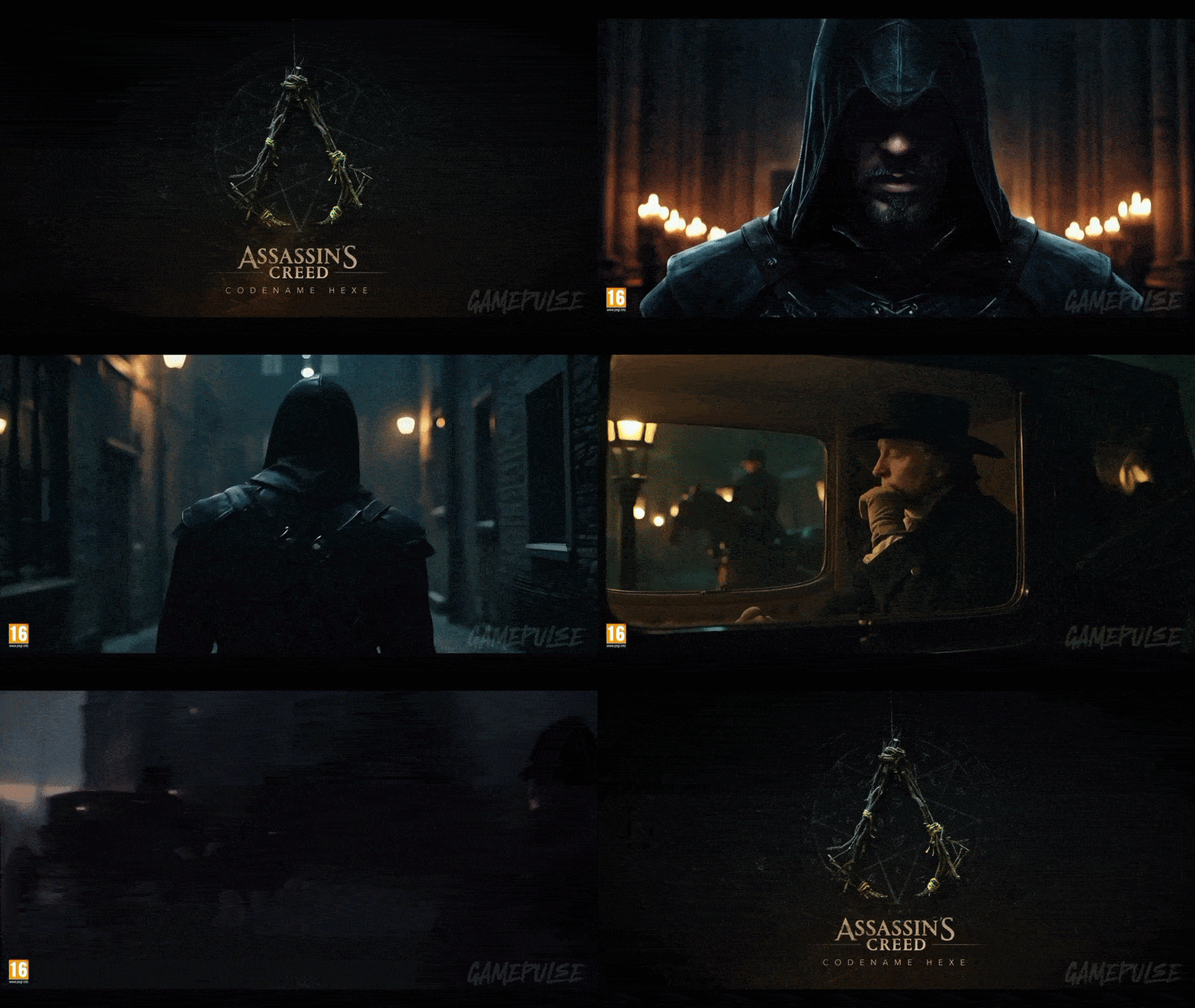
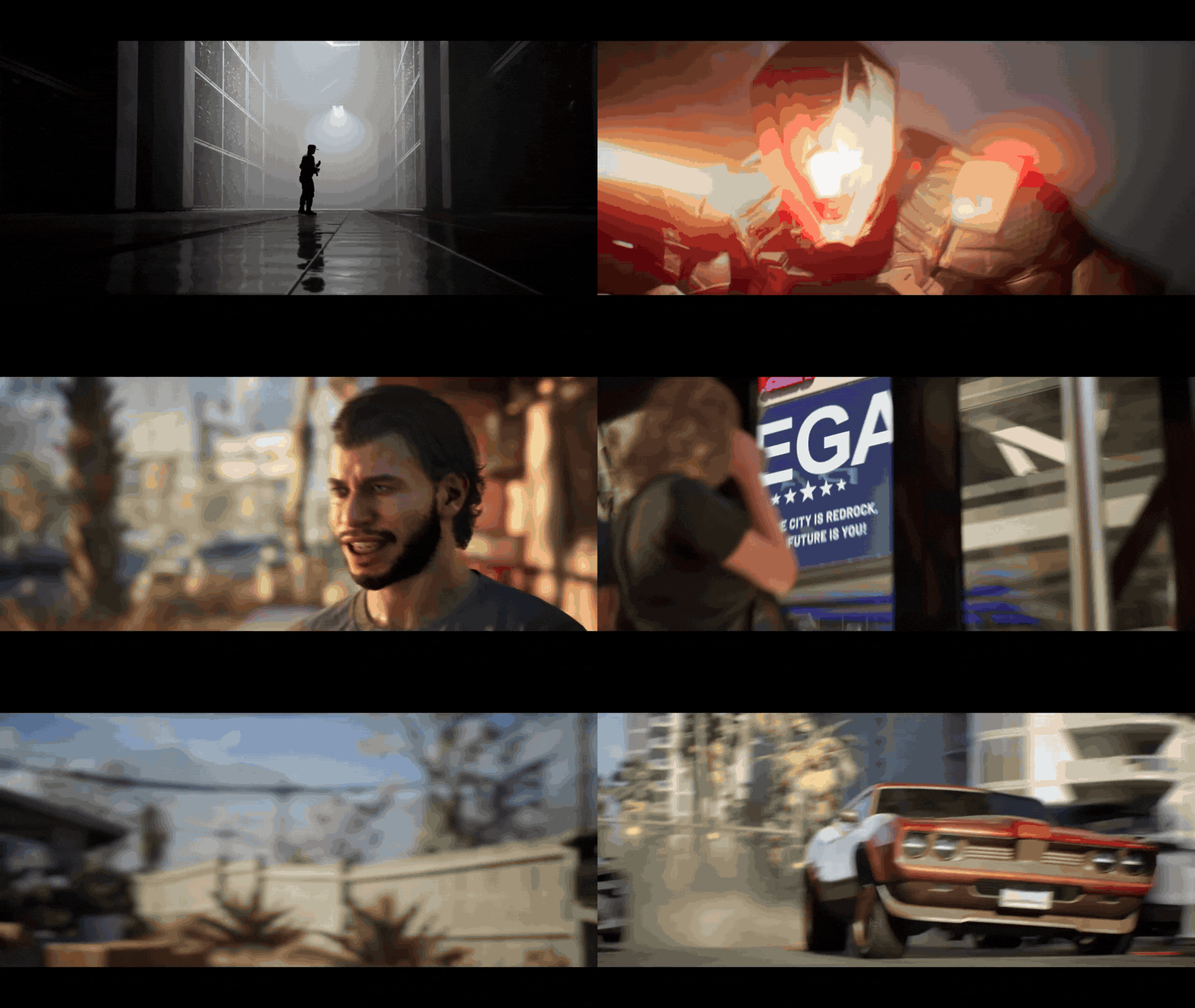
MindsEye’s troubled launch (shown above) was met with extremely poor reviews: scores in the 30s and 40s out of 100, making it one of the year’s worst games.

What Build a Rocket Boy Employees Want: Key Demands and Outcomes so Far
Employees, through the IWGB, have laid out clear demands to resolve the dispute. Their top demand was met immediately after the grievance: Build A Rocket Boy removed Teramind from all devices. Beyond that, workers are pressing for transparency and accountability. They insist the company fully explain what data (if any) was collected and ensure it is not used against them. Staff also demand that any evidence of misconduct be shared with the union, and that management acknowledges its mistakes rather than hiding behind rumors of sabotage.
Crucially, many employees want apology and restitution for what they’ve been through. The October 2025 letter stated the group’s desire for a public apology from leadership for the mistreatment and deceptive practices they experienced. It also called for fair compensation or severance for those laid off, as well as the honoring of unpaid overtime or benefits. The union has similarly pressed for proper consultation in the future for example, jointly agreeing on any further changes to workloads or project scope, so that employees have a voice.
As of now, the only concrete win has been Teramind’s removal. The studio has not publicly apologized or detailed the monitoring incident. IWGB officials say talks are ongoing, but they are prepared to take legal action (through ACAS or courts) to secure the rest of their demands. In summary, employees want a transparent reckoning: restore trust via apology, data-handling assurances, fair treatment of laid-off staff, and protection from any blacklisting.
What Happens Next for Build a Rocket Boy: Investigations, Lawsuits, and Studio Future
At this stage, the dispute is moving into formal channels. The IWGB reports that it has escalated the monitoring complaint to the UK’s Advisory, Conciliation and Arbitration Service (ACAS) and the Information Commissioner’s Office (ICO). In practice, that means ACAS will likely try to mediate a resolution (perhaps leading to an employment tribunal if needed), and the ICO could investigate the data privacy allegation. If regulators find serious breaches, Build A Rocket Boy could face fines or orders to change its policies. Meanwhile, the redundancy claim could end up in a tribunal, potentially awarding damages to unjustly fired staff.
In the corporate arena, attention is on leadership. Co-CEO Leslie Benzies has returned from leave, but communication remains an issue: Gerhard even signed a company email as sole “CEO,” underscoring that he is steering the company forward for now. Some insiders worry the studio’s future is grim. One source bluntly told Insider Gaming, “I don’t think BARB survives this crisis…I believe the end is coming for BARB, and it’s not heralded by saboteurs, but by Mark and Leslie themselves.”. Public confidence in the studio’s brand is at a low after MindsEye’s botched launch, and the negative press only adds to its challenges.
On the product side, Build A Rocket Boy is continuing MindsEye support (for example, releasing the promised “Blacklisted” content update on April 28). They hope updating the game can restore some goodwill. Whatever the outcome, the company will likely be under close watch. Possible next developments include: settlement of legal claims (perhaps through negotiated compensation), an ICO inquiry with new data monitoring policies, leadership shake-ups, or even sale of the studio if financial pressure mounts. Ultimately, the company’s survival may hinge on whether it can credibly address these allegations, rebuild trust with its remaining staff, and learn from the MindsEye failures.

Frequently Asked Questions (FAQs)
- Who is Chris Wilson and what did he reveal about Build A Rocket Boy?
Chris Wilson was MindsEye’s lead cinematic animator (working at Build A Rocket Boy from 2020–2026). In a Kotaku interview, he detailed the studio’s problems: calling its culture “toxic” and “secretive,” and revealing that management installed Teramind monitoring software without staff knowledge. He said the hidden surveillance and lack of respect for employees were the last straws that prompted him to speak out. - What is Teramind and why are employees concerned?
Teramind is an “employee monitoring” software that can log keystrokes, capture screenshots, and even record audio from a computer’s microphone. Employees allege that Build A Rocket Boy installed this software on their work computers without consent. Because it can collect sensitive data, the union argues its secret use violated privacy laws and employee rights. The discovery of Teramind is central to the privacy complaints, as workers say it was installed covertly and then only removed after they filed a grievance. - What legal claims have Build A Rocket Boy employees filed?
The workforce, represented by the IWGB union, has filed multiple claims. One set of claims (filed around 21 April 2026) challenges the covert surveillance: alleging data protection and privacy breaches from the Teramind installation. Another set (filed on 12 April 2026) challenges the redundancy process: accusing the studio of mishandling the June 2025 layoffs, including unlawful blacklisting, failure to consult staff, and other unfair practices. In short, the complaints cover both privacy violations and employment law violations, and could potentially cost the company heavily if upheld. - Who are Build A Rocket Boy’s co-CEOs and what is the controversy around them?
The co-CEOs are Leslie Benzies (former Rockstar North president) and Mark Gerhard (former IO Interactive CEO). Employees accuse both of mismanagement. An open letter by devs blamed Benzies and Gerhard for “calamitous mismanagement” and for refusing to listen to staff. In addition, Gerhard has drawn fire for publicly accusing outsiders of “sabotaging” the game and even threatening a YouTuber with legal action. Benzies, who briefly took a leave after denying a sexual-assault allegation, is accused of fixating on new features and contributing to the crunch culture. In summary, both leaders are seen by workers as having created a toxic environment, and they are directly named in employees’ grievances and letters. - What was revealed in the leaked internal meeting, and why does it matter?
In the leaked meeting (early 2026), Build A Rocket Boy’s management admitted to staff that Teramind had been installed on their computers without telling them. Gerhard also told the meeting that MindsEye had been “sabotaged” by a third-party PR firm (Ritual Network). This leak mattered because it confirmed employees’ suspicions. It showed management acknowledging secret surveillance and blaming staff problems on outside forces. The recording led to immediate fallout: 40 employees signed a formal grievance citing the undisclosed monitoring and hostile communication in that meeting. The leak effectively propelled the employees’ concerns into the open. - How do UK data protection laws apply to this situation?
UK data protection rules (UK GDPR) apply fully to employee monitoring. Companies must have a valid legal basis and must adhere to principles of transparency and proportionality. The ICO’s guidance states that “workers must be informed in advance about any monitoring,” and that such monitoring must be necessary and not overly intrusive. Covert home monitoring (like using software inside an employee’s house) is especially sensitive: the draft guidance notes that employees have a “significantly higher” expectation of privacy at home. In practice, this means Build A Rocket Boy should have clearly told workers what was being monitored and why. By secretly running Teramind, they likely breached these principles. UK regulators have fined companies for similar practices in the past, emphasizing that surveillance beyond what is strictly needed (or done without notice) violates the law. - What is the IWGB and what role has it played in this dispute?
The IWGB (Independent Workers’ Union of Great Britain) is the trade union representing the affected employees. Many Build A Rocket Boy developers joined the IWGB after the crunch and management issues emerged. The union organized the October 2025 open letter by staff and has led the legal challenge against the company. In April 2026, the IWGB publicly announced the legal claims and collective grievances on behalf of the workers. They are the driving force behind seeking accountability, negotiating with the company, and bringing in authorities like ACAS and the ICO to resolve the issues. - How did MindsEye’s poor launch impact the internal conflict?
MindsEye’s disastrous launch was the trigger for much of the conflict. The game’s failure caused financial strain (leading to massive layoffs) and created a tense blame game. When MindsEye earned some of 2025’s lowest review scores, management and players looked for explanations. Instead of accepting internal responsibility, leadership began insisting on a sabotage narrative. Meanwhile, staff faced months of unsustainable crunch to try to fix the game. Employees feel that if the game had been more successful, the studio might not have faced such upheaval. Conversely, the flop meant leadership scrambled for answers, the workforce was cut, and grievances that had been brewing finally exploded into public view. In short, MindsEye’s failure set the stage without it, the layoffs and blame culture might never have come to a head. - What are Build A Rocket Boy employees’ key demands?
The employees, through their union, have several core demands. First and already achieved: removal of the Teramind software. They also demand that any data collected by that software be deleted and not used in any way. Staff want a public apology from leadership for the deception and stressful working conditions, along with compensation for those harmed (for example, unpaid overtime or fair redundancy packages). They are asking for transparent internal policies going forward – including consulting workers on any future changes to workflow or monitoring. Essentially, employees want the company to acknowledge its mistakes, restore trust, and ensure fair treatment (with guarantees against retaliation or blacklisting) before moving forward. - What could happen next as a result of these allegations?
The situation is likely to unfold on multiple fronts. Legally, the union’s complaints could go to mediation or a tribunal via ACAS; this might result in settlements or court orders if the claims hold up. The ICO may decide to formally investigate the privacy issue; if they find a data breach, Build A Rocket Boy could face fines under UK GDPR. Financially, the company could be liable for significant compensation if the redundancy claims succeed.
Conclusion
Build A Rocket Boy finds itself at a crossroads. After years of secrecy, crunch, and now a major PR backlash, its employees and union have forcefully challenged the studio’s practices. Key figures like ex-animator Chris Wilson have publicly criticized the company’s culture, and official complaints have been filed alleging serious labor and privacy violations. The co-CEOs Leslie Benzies and Mark Gerhard – have become focal points of criticism, blamed for mismanagement and controversial claims of sabotage. The union’s legal action casts doubt on the company’s handling of surveillance software (Teramind) and redundancy procedures, and UK data protection authorities may now weigh in on the monitoring. MindsEye’s failure clearly catalysed these conflicts, turning internal frustrations into open grievances.
In the coming weeks and months, the fate of Build A Rocket Boy will hinge on the investigations and legal outcomes. The union is seeking restitution, transparency, and accountability; the company may face fines or rulings if found in breach of law.
The studio has indicated it will continue supporting MindsEye and push new content, but rebuilding trust among developers and players is an uphill battle. The situation remains fluid: ongoing talks with ACAS and ICO will determine whether settlement is possible or whether adversarial proceedings will ensue. Ultimately, this episode is a stark example of how severe crunch, poor management, and secrecy can fracture a development team and how grievances can escalate into serious legal and reputational challenges for a studio.
Sources and Citations
- Parker, L. Kotaku — MindsEye’s Dev Breaks Silence On Chaos And Mismanagement
https://kotaku.com/mindseye-build-a-rocket-boy-leslie-benzies-mark-gerhard-cyber-boi-layoffs-teramind-2000691386 - IWGB — Workers at Build A Rocket Boy take action over data privacy violations
https://iwgb.org.uk/en/post/workers-at-build-a-rocket-boy-take-action-over-data-privacy-violations-from-management-2 - Parker, L. Kotaku — MindsEye Developer Under Fire From Employees For Surveillance Software
https://kotaku.com/mindseye-build-a-rocket-boy-union-teramind-surveillance-software-iwgb-2000689327 - Scullion, C. Video Games Chronicle — MindsEye studio staff takes legal action
https://www.videogameschronicle.com/news/mindseye-studio-staff-takes-legal-action-saying-management-installed-invasive-surveillance-software/ - Gach/Parker, Kotaku — MindsEye CEO’s Latest Unhinged Rant Blames ‘Criminal Activities’
https://kotaku.com/mindseye-layoffs-build-a-rocket-boy-ritual-network-cyber-boi-2000675974 - Kerr, C. GameDeveloper.com — CEOs need to take a backseat
https://www.gamedeveloper.com/business/mindseye-devs-accuse-studio-leaders-of-mishandling-layoffs-and-mandating-crunch - Taylor-Hill, G. Insider Gaming — Leslie Benzies ‘On Leave’ from Build a Rocket Boy
https://insider-gaming.com/leslie-benzies-leave-ceo-build-a-rocket-boy-mindseye/ - Carcasole, D. Wccftech — They Don’t Know How to Run a Game Studio
https://wccftech.com/mindseye-build-a-rocket-boy-leslie-benzies-mark-gerhard-dont-know-how-to-run-a-game-studio/ - ICO — Employee monitoring: is it right for your business?
https://ico.org.uk/for-organisations/advice-for-small-organisations/news-blogs-and-events/blogs/employee-monitoring-is-it-right-for-your-business/ - BCLP — Watching employers watching their workers
https://www.bclplaw.com/en-US/events-insights-news/watching-employers-watching-their-workers-uk-data-protection-authority-issues-updated-workplace-monitoring-guidance-for-consultation.html
Recommended
- Daz 3D: Building a 3D Character from Start to Finish – Step-by-Step Guide for Artists and Creators
- How to Unlock the Blacksmith in Nioh 3: The Hamamatsu Incident, Eternal Rift Location, and Crafting Basics
- Palworld Horror-Themed Dating Sim Spinoff Is Real: What We Know About More Than Just Pals
- Metahuman Facial Motion with Faceware: Complete Workflow for Realistic Face Animation in Unreal Engine 5
- How to Create a Sci-Fi Metahuman in Unreal Engine 5: A Step-by-Step Guide
- Godot 4.7’s Final Development Snapshot (Dev 5): Asset Store Overhaul, Rectangular Area Lights, and Inline Shader Previews
- Dosa Divas: The Kotaku Review – A Flavorful RPG With Heart, Humor, and Flawed Cooking Mechanics
- Samsung’s 2026 Micro RGB TVs: Release Date, Sizes, Pricing, and How Micro RGB Compares to OLED
- Managing Blender Scenes with Multiple Cameras Using The View Keeper
- BAFTA Film Awards 2026 Predictions: Marty Supreme, Timothée Chalamet, Leonardo DiCaprio, Sinners, Frankenstein and Hamnet