










In This Article (9 sections)
Cape Fear (1962): Plot, Ending, and Psychological Themes
Cape Fear (1962) is a landmark psychological thriller directed by J. Lee Thompson, introducing audiences to one of cinema’s most unsettling revenge narratives. The film follows lawyer Sam Bowden, whose past decision to testify against violent criminal Max Cady leads to a terrifying campaign of psychological harassment years later. After serving time in prison because of Bowden’s testimony, Cady is released and begins stalking Bowden and his family, escalating from intimidation to outright threats.
At its core, the 1962 version is a tightly structured suspense film rooted in moral consequence. The story unfolds in a restrained but deeply tense manner, relying heavily on implication rather than graphic violence. Its black-and-white cinematography enhances the sense of moral duality, light versus darkness, innocence versus corruption, while placing the viewer in the same emotional position as the Bowden family, experiencing their growing paranoia as Cady closes in.
Unlike many thrillers of its time, the film leans heavily into psychological fear rather than physical confrontation. The ending takes place on the Cape Fear River, where Bowden confronts Cady in a final struggle. The resolution is less graphic than later remakes but still emotionally intense, with Cady’s downfall ultimately tied to his own arrogance and obsession.
Psychologically, the film explores guilt and repression. Bowden is not presented as purely innocent; his moral compromise in the past fuels Cady’s revenge. This moral ambiguity is a defining feature of the film, challenging viewers to question whether justice and revenge can ever truly be separated. This method of storytelling helped establish Cape Fear as a precursor to modern psychological thrillers.

Cape Fear 1991: Scorsese’s Darker Remake and De Niro’s Max Cady
Cape Fear (1991 film) reimagines the original story under the direction of Martin Scorsese, transforming it into a more violent, psychological, and sexually charged thriller. This version significantly amplifies the horror elements, presenting Max Cady as a near-supernatural force of vengeance. The tone is more aggressive than the 1962 film, and the remake explores themes of punishment and moral decay in a far more explicit way.
Scorsese’s direction introduces stylized visuals, heightened tension, and religious symbolism. The storm sequences, distorted camera angles, and aggressive musical score by Bernard Herrmann, adapted posthumously, all contribute to a sense of impending doom. As a result, the 1991 remake is widely regarded as a more visceral experience, pushing the boundaries of mainstream thriller filmmaking in the early 1990s.
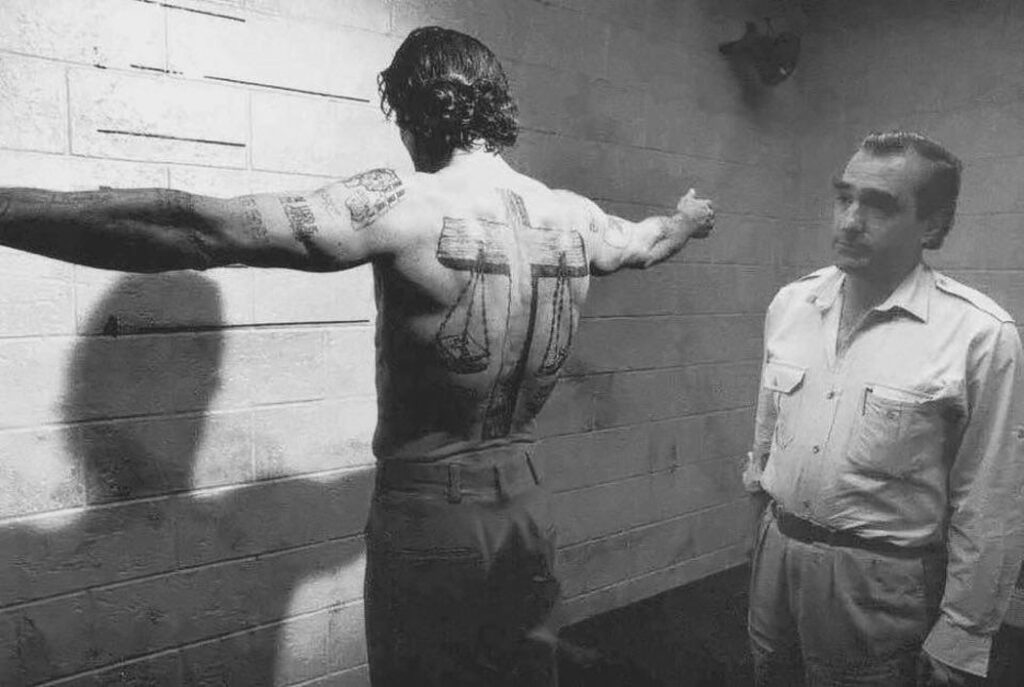
Robert De Niro delivers one of his most disturbing performances as Max Cady, redefining the character from a vengeful ex-convict into a calculating, almost theatrical predator. His physical transformation is central to the role, with a heavily tattooed and scarred appearance that symbolizes both punishment and obsession. His body language shifts between calm intelligence and explosive violence, making Cady unpredictable at every moment.
What makes De Niro’s performance especially effective is the psychological depth he brings to the character. Cady is not just seeking revenge; he is performing justice according to his own distorted moral framework. This ambiguity makes him more terrifying than a conventional villain. De Niro’s portrayal has since influenced countless thriller antagonists, setting a new standard for psychological realism in villain roles.
Cape Fear 1962 vs. 1991: Performances, Themes, and Key Differences
The narrative of both Cape Fear films centers on a simple but powerful premise: a convicted man seeks revenge on the lawyer he believes betrayed him. However, the story evolves into a deeper examination of morality. Sam Bowden’s actions, while legally justified, carry ethical consequences, and Max Cady’s revenge exposes the fragility of moral certainty. The story raises key philosophical questions: Can legal justice ever be truly moral justice? Does punishment create more harm than it resolves? Where is the boundary between victim and perpetrator? These themes elevate the story beyond a simple revenge thriller into a study of human psychology and ethical conflict.
In the 1962 version, Robert Mitchum plays Max Cady with a calm, restrained menace that contrasts sharply with De Niro’s explosive interpretation. Mitchum’s performance is subtle but deeply unsettling, relying on stillness, quiet speech, and controlled expressions to communicate threat. Rather than overt violence, his Cady embodies psychological dominance, and his presence alone is enough to destabilize the Bowden family. This restraint is a hallmark of classic thriller acting styles and contributes to the film’s enduring tension. Mitchum’s portrayal remains iconic because it represents fear through implication rather than spectacle.
The central themes of Cape Fear and its remake revolve around fear, family vulnerability, and psychological invasion. Fear in the films is not just physical; it is emotional and psychological. The Bowden family home becomes a symbolic space of violated safety, while Cady’s intrusion into their lives represents the collapse of domestic security. Family protection is another major theme, as Sam Bowden is forced to confront his failure as a protector, both morally and physically. The tension between responsibility and helplessness drives much of the emotional weight.
The differences between the two versions are significant in tone, style, and thematic emphasis. The 1962 film is restrained, focusing on psychological tension and moral ambiguity. Violence is implied rather than shown, and the pacing is deliberate. The 1991 remake, by contrast, is intense and explicit, incorporating graphic violence, sexual threat, and heightened emotional conflict. It also expands character backstories and intensifies the emotional stakes.
Stylistically, the original uses black-and-white cinematography and classical framing, while the remake uses saturated color, dynamic camera movement, and symbolic imagery. Both versions, however, maintain the central narrative structure and thematic foundation, using revenge, fear, and moral corruption to explore psychological terror.

Cape Fear: Fictional Origins, Ending, and Sam Bowden’s Moral Struggle
Cape Fear is not based on a true story. The 1962 film is adapted from John D. MacDonald’s novel The Executioners, and while the characters and events are fictional, the psychological themes are grounded in real human fears: revenge, legal guilt, and family vulnerability. The realism of the story comes from its emotional authenticity rather than historical fact. The idea of a released criminal seeking revenge on a legal adversary is a recurring fictional trope rather than a documented real-life case.
In both versions, the ending culminates in a confrontation between Sam Bowden and Max Cady. In the 1991 version, the final battle occurs during a storm on a houseboat, symbolizing chaos and moral collapse. Cady ultimately meets his demise after a prolonged struggle, but not before nearly destroying Bowden’s family psychologically. The ending reinforces the idea that revenge is self-destructive: Cady’s obsession consumes him, while Bowden is left morally shaken despite surviving. The conclusion is intentionally ambiguous in emotional tone, as justice is achieved, but at a psychological cost.
Sam Bowden represents the moral center of the story, but he is not without flaws. His decision to send Max Cady to prison is legally justified but ethically complicated. Throughout the narrative, Bowden experiences guilt, fear, and helplessness as his past returns to haunt him. His struggle is not only external but internal, as he questions his own moral authority. The character serves as a representation of the consequences of moral compromise within the legal system.
Cape Fear’s Visual Style, Critical Reception, and Thriller Legacy
The visual storytelling in both Cape Fear films plays a crucial role in building suspense. In the original film, the cinematography uses shadows, tight framing, and minimal movement to create claustrophobia, while the black-and-white palette reinforces moral duality. In the remake, Martin Scorsese uses dynamic camera angles, extreme close-ups, and saturated lighting to heighten emotional intensity. Weather elements, especially storms, are used symbolically to reflect internal chaos. Both versions use visual storytelling to externalize psychological tension, making cinematography a core narrative tool.
The 1962 version was widely praised for its suspenseful storytelling and strong performances, with critics highlighting its restraint and psychological depth. The 1991 remake received mixed but generally positive reviews. Many praised its performances, especially those of Robert De Niro and Nick Nolte, while others criticized its excessive violence. Over time, however, the remake has gained appreciation as a bold reinterpretation of the original, and both films are now considered significant entries in the thriller genre.
The legacy of Cape Fear is especially evident in modern psychological thrillers that explore home invasion, obsession, and revenge. Its influence can be seen in films that emphasize psychological manipulation over physical confrontation, while the character of Max Cady has become a template for intelligent, obsessive antagonists. The film also helped establish a visual language for modern thrillers, particularly through its use of weather, lighting, and music to build tension.
Frequently Asked Questions (FAQs)
- Is Cape Fear a horror movie?
No, Cape Fear is primarily a psychological thriller, though it contains several horror-like elements. Its fear comes less from monsters or supernatural events and more from stalking, intimidation, moral tension, and the feeling that the Bowden family’s safety is slowly being destroyed. - Who directed Cape Fear (1991)?
The 1991 remake of Cape Fear was directed by Martin Scorsese. His version is darker, more stylized, and more violent than the 1962 original, using intense visuals, religious imagery, and psychological pressure to heighten the story’s sense of danger. - Who plays Max Cady in the remake?
Robert De Niro plays Max Cady in the 1991 remake. His performance is one of the film’s defining elements, presenting Cady as a physically intimidating, intelligent, and deeply obsessive figure driven by his own distorted idea of justice. - Is Cape Fear based on a true story?
No, Cape Fear is not based on a true story. The 1962 film was adapted from John D. MacDonald’s novel The Executioners, and the 1991 version is a remake of that film. While the story is fictional, its themes of revenge, fear, and family vulnerability feel realistic. - Which version of Cape Fear is scarier?
Most viewers consider the 1991 remake scarier because it is more intense, violent, and psychologically disturbing. The 1962 original is more restrained and suspenseful, relying on implication and atmosphere, while the remake presents Max Cady as a more aggressive and terrifying presence. - What is Cape Fear about?
Cape Fear is about a lawyer, Sam Bowden, who becomes the target of Max Cady, a former criminal seeking revenge. After being released from prison, Cady begins stalking Bowden and his family, turning their lives into a psychological nightmare. - Where does Cape Fear take place?
The story is set in the southern United States, with the climax connected to the Cape Fear River area. This setting adds to the film’s atmosphere, especially through its use of isolated spaces, heat, water, and storms to create tension. - What is the main theme of Cape Fear?
The main themes of Cape Fear are revenge, guilt, and moral consequence. The story explores how past actions can return with destructive force and how the line between legal justice and personal revenge can become morally complicated. - Did Max Cady die in Cape Fear?
Yes, both versions end with Max Cady’s death. His downfall comes after a final confrontation with Sam Bowden, reinforcing the idea that his obsession with revenge ultimately destroys him. - Why is Cape Fear important in film history?
Cape Fear is important because it helped shape the modern psychological thriller and elevated the revenge story into something more morally complex. Both the 1962 original and the 1991 remake are remembered for their performances, suspense, and influence on later films about obsession, fear, and psychological manipulation. Frequently Asked Questions (FAQs)

Conclusion
The enduring strength of Cape Fear lies in its exploration of moral complexity and psychological terror. Both the 1962 original and the 1991 remake offer distinct interpretations of the same narrative, one restrained and symbolic, the other intense and visceral. Together, they form a comprehensive study of fear, justice, and human fragility.
Sources and Citations
- Wikipedia: Cape Fear (1962 film)
https://en.wikipedia.org/wiki/Cape_Fear_(1962_film) - Wikipedia: Cape Fear (1991 film)
https://en.wikipedia.org/wiki/Cape_Fear_(1991_film) - Wikipedia: Martin Scorsese
https://en.wikipedia.org/wiki/Martin_Scorsese - Wikipedia: Robert De Niro
https://en.wikipedia.org/wiki/Robert_De_Niro - Wikipedia: Robert Mitchum
https://en.wikipedia.org/wiki/Robert_Mitchum
Recommended
- How to Create Professional Textures and Materials with Blender and Substance Painter
- How to Get a Growbed in Subnautica 2: Location, Unlock Method & Farming Guide
- A Saudi Arabian Company Purchased 5% of Capcom: EGDC Stake Explained
- Coffee Stain Malmö Closed: What Happened to the Goat Simulator 3 Mobile Studio?
- 007 First Light Will Run at 60FPS on PS5 Pro: Performance Mode, Quality Mode Explained, PS5 vs PS5 Pro Comparison and Gameplay Details
- 007 First Light Had the Best Launch Among IO Interactive Games: Sales, Revenue Breakdown, Budget Analysis, and Performance Metrics Explained
- Final Fantasy 7: Rebirth is Coming to Nintendo Switch 2 this Year, Release Date, Preorders, File Size, and Bonuses— ×1
- Nipsey Hussle’s Braids: A Symbol of His Legacy
- Who is GameStop CEO Ryan Cohen and Why He is Trying to Buy EBay
- Classic Arcade Shoot ’Em Up Series Truxton Gets First New Entry in 34 Years With Truxton Extreme



































































































