








In This Article (7 sections)
Cisco’s AI Code Rewrite Plan, 98% Legacy Modernization Target and Jeetu Patel’s Engineering Experiment
Cisco’s AI code rewrite has attracted attention because of its ambitious target: modernizing 98% of the company’s legacy code within 24 months, supported by extensive access to AI tools. The reported initiative centers on Padmanabhan Krishnamurthy, a 27 year old engineer backed by Cisco president and chief product officer Jeetu Patel. An initial four week demonstration is intended to establish whether the approach can work. The distinction between ambition and achievement matters.
As of November 2, 2026, the available reporting does not establish that Cisco has completed the proposed transformation or published results demonstrating its feasibility across the company. The initiative raises broader questions about software engineering, including how much modernization AI can accelerate, what happens when generating changes becomes easier than reviewing them, and how a company should measure progress when customers depend on existing software continuing to behave reliably.
The reported plan is an experiment in using AI to accelerate the modernization of existing software. Its significance comes from combining a very small initiating team with an unusually broad target and strong executive sponsorship. Legacy modernization can involve several activities, including simplifying complicated functions, replacing outdated dependencies, improving interfaces between components and migrating selected software into another programming language. Those activities have different costs and definitions of completion. Consequently, the word “rewrite” needs careful interpretation. It does not establish that Cisco intends to discard every existing implementation or rebuild its entire product portfolio simultaneously.
A modernization programme could contain thousands of smaller transformations while preserving the surrounding products. The central business question is whether AI can make previously expensive maintenance work economical. If engineers can reduce the time required to understand and modify older software, they could address problems that have repeatedly lost priority to new features. However, the public target does not provide a detailed engineering specification. Assessing the plan requires information about the software included, the intended changes and the evidence required before those changes reach customers.
Padmanabhan Krishnamurthy, also known as Paddy, is an EzDubs cofounder who joined Cisco following its acquisition of the AI translation company. His background includes startup leadership, making the description of him as simply an inexperienced junior employee incomplete. Cisco’s acquisition announcement confirms that the EzDubs transaction closed on November 25, 2025. The company described EzDubs as a privately held AI software business developing real time speech translation and said the acquisition would strengthen its collaboration engineering and product capabilities.
That background provides useful context for the assignment. Building an AI product can require engineers to combine model capabilities, software infrastructure, user requirements and operating costs. Those experiences could inform a modernization experiment, although they do not independently prove the ability to transform a large enterprise codebase. A person can be early in their career while already having substantial experience making technical and commercial decisions. Krishnamurthy’s eventual contribution should therefore be judged through the method developed, the quality of its results and its usefulness to other engineering teams. His age explains some of the attention surrounding the story, but it is not a technical performance measure.
According to the reporting, Patel encountered Krishnamurthy several organizational levels below him and heard his proposal during a conversation in Cisco’s San Francisco office. The idea of tackling modernization with a two person team challenged assumptions about the resources such work would require. One interpretation is that Patel was backing a different approach to organizing the work.
An engineer who starts by asking what AI can automate may propose a different process from a team estimating how long established manual practices would take. Executive sponsorship can make that kind of experiment easier to conduct by providing access to tools, resolving competing priorities and giving an engineer permission to investigate an approach whose value has not yet been demonstrated.
However, sponsorship does not remove the need for scrutiny. An ambitious proposal still requires representative examples, credible evaluation and cooperation from the people responsible for the affected software. The useful organizational lesson is that ideas should be evaluated on their merits across levels of seniority. A company can give a younger engineer meaningful responsibility while involving experienced maintainers in decisions about compatibility, architecture and release readiness.
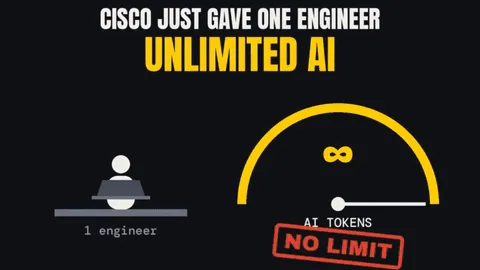
The reported commitment to unlimited AI tokens is another important part of the experiment. AI tokens are units used to represent the material models process and generate. In a coding workflow, token consumption can come from instructions, source files, documentation, compiler output, test results and proposed changes.
The reported commitment signals substantial support for experimentation, suggesting that the initiating team should have room to explore approaches without constantly minimizing model usage. Nevertheless, the phrase does not establish a literally infinite computing allocation. It reveals no precise spending policy, contractual arrangement, throughput guarantee or technical capacity. A generous usage budget also does not mean a model can examine an unlimited amount of information in a single interaction.
For this project, the practical value of abundant model access would be the ability to investigate code, attempt transformations, examine failures and revise approaches repeatedly. The important economic measure would be the cost of accepted, useful work. An inexpensive generated patch can become costly if it requires prolonged review, while a more expensive model interaction could be worthwhile if it produces a reliable change that saves substantial engineering effort. Unlimited tokens should therefore be understood as a resource commitment whose value depends on the resulting workflow rather than the amount consumed.
Cisco’s reported goal of refactoring 98% of its legacy code is memorable, but its meaning depends on the denominator. The public reporting does not explain whether the company would measure progress through lines of code, repositories, components, applications or another unit. Those measures can produce very different impressions.
Updating a large collection of straightforward files could account for a substantial share of source code while leaving a small, complicated subsystem untouched. Consider a hypothetical portfolio containing 100 components. Modernizing 98 components would produce a 98% completion figure by component count. If the remaining two components carried most of the operational risk or maintenance burden, the percentage would say little about business impact.
A credible assessment would also need to explain what qualifies as refactored. A formatting change, a dependency update and a replacement architecture should not automatically receive equivalent credit. The target becomes more informative when paired with outcome measures. Reduced maintenance effort, improved security properties and easier feature development would help establish whether the work improved the software. Until the measurement method is disclosed, the percentage is best treated as a statement of ambition rather than evidence of how much technical debt would disappear or how much engineering capacity would become available.
The reported 24 month period describes the broader modernization ambition. It does not provide a publicly documented schedule for individual products, customer upgrades or intermediate delivery milestones. A plausible implementation would proceed through several stages, beginning with identifying suitable systems and determining what successful modernization means for each.
Engineers could then develop repeatable transformation methods, validate those methods and expand their use where the evidence supports doing so. That sequence is an analytical example rather than a disclosed Cisco roadmap. The distinction between changing source code and delivering a supported product is particularly important. A transformation might be technically complete before its integration testing, documentation, operational preparation and customer deployment are finished.
Some systems may also need extended compatibility periods, with older and newer versions operating together while customers upgrade at different speeds. The reporting does not establish an exact start date from which an independently verifiable completion deadline can be calculated. Treating the publication date as the formal beginning of the programme would introduce an assumption. The meaningful question is what condition Cisco expects its software to reach within the proposed period, including how much will have passed validation and entered supported use.
The four week element is a proposed demonstration window rather than proof that the wider target has already been validated. A useful demonstration would need to establish more than whether an AI system can produce plausible replacement code. It should show that a repeatable process can generate changes that survive independent evaluation.
For example, a pilot could select a bounded component, document its existing behavior, apply a transformation and compare the result against agreed requirements. Reviewers could examine the amount of manual correction needed and whether the revised implementation is easier to maintain. The sample would matter as much as the demonstration. A clean, well documented utility would provide limited evidence about a tangled subsystem with poorly understood dependencies.
A meaningful trial could also include deliberately difficult cases that expose where the approach needs better context, more specialized tooling or direct intervention from experienced engineers. Failure can still produce valuable information within a short experiment because discovering that a method works only for a narrow class of changes helps define a realistic scope. The strongest outcome would be evidence explaining where the method works, where it fails and what would be required to expand it.

Assisted Code Refactoring, Software Testing, Security Risks and Preserving Legacy System Behavior
Jeetu Patel subsequently provided an important clarification about how the modernization experiment could operate. In an October 30 post, he described a team of two or three people helping initiate a broader change, with Cisco’s core engineering team owning the final product. He also connected the experiment with opportunities for migration to memory safe languages. That description changes how the small team claim should be interpreted. A compact group could develop methods and tools that many other engineers subsequently apply, rather than personally rewriting and maintaining every affected product.
For example, the initiating team might build a process that identifies a recurring outdated pattern, proposes an approved replacement, runs relevant checks and packages the evidence for review. Product teams could then assess changes within their areas of responsibility. The small team’s contribution would be the repeatable process, whose reach could grow through reuse without requiring its members to personally understand and approve every affected product.
This arrangement would still create coordination work because component owners would need to explain requirements, reviewers would need time to assess results and infrastructure teams might need to support additional builds and tests. Any productivity assessment should include that supporting effort. Counting only the people who built the automation would understate the resources required to put its output into production. The model becomes credible when it makes existing teams more effective and leaves clear responsibility for the resulting software.
Refactoring has a specific meaning in software engineering. Martin Fowler describes it as improving a program’s internal structure while preserving its observable behavior. A simple example would be separating a long function into smaller functions while keeping the same inputs, outputs and error handling. The implementation becomes easier to understand, but its users should experience the same intended behavior.
Rewriting software from scratch creates a new implementation. That may introduce greater freedom to change the architecture, but it also requires engineers to identify requirements that the old system already satisfies. Language migration sits between these descriptions. It can aim to preserve behavior while replacing large parts of the implementation, requiring careful attention to differences between languages and their supporting libraries.
AI could assist with each activity, but the verification problem changes with the scope. A local restructuring and a replacement subsystem should not be treated as equivalent tasks. Incremental modernization offers one established approach to controlling this complexity. Fowler’s discussion of the Strangler Fig pattern describes moving behavior gradually into newer implementations rather than replacing a major system in a single transition. Cisco’s public target does not disclose which combination of these techniques the experiment will use, so the terminology alone is insufficient to determine its technical design.
The distinction between refactoring, rewriting and migration is particularly important because each requires different levels of testing, review and operational preparation. A localized improvement may preserve existing interfaces while simplifying internal logic. A complete replacement could affect dependencies, error handling, performance and communication between components. Language migration may introduce additional challenges involving differences in memory management, concurrency, libraries and supported environments. These changes can be valuable, but they must be evaluated according to their actual scope rather than classified under a single modernization percentage.
Testing would need to establish that each change generated by AI satisfies the intended requirements and remains compatible with the surrounding system. GitHub’s guidance on reviewing code generated by AI recommends compilation checks, automated tests, static analysis and human examination of complex or sensitive changes. It also warns reviewers to watch for invented interfaces and tests that have been removed or skipped instead of properly addressed.
For a modernization project, an initial step could be establishing a trustworthy baseline. If the existing implementation already has failing tests, reviewers need to distinguish those failures from problems introduced by the transformation. Different checks would address different questions. A unit test could examine a function’s output, an integration test could examine interactions between components, and a performance evaluation could investigate whether the new implementation behaves acceptably under realistic load.
A useful illustrative case is a parser that accepts a configuration file. Passing ordinary examples would be insufficient if the revised parser mishandled an older supported format or produced an incompatible error response. Cisco’s October 13, 2026, discussion of its Secure Development Lifecycle describes security requirements and validation throughout development. It also distinguishes capabilities already operating from those still being built. That provides relevant corporate context, although it does not establish the specific testing architecture of Krishnamurthy’s experiment.
AI assisted modernization creates risks in both the generated software and the process used to produce it. The software could contain an incorrect permission check, mishandle untrusted input or introduce an unsuitable dependency. A change that looks cleaner could also remove defensive behavior whose purpose is unclear from the immediate code.
The development process introduces another set of concerns. Coding agents may encounter sensitive source material, credentials or malicious instructions embedded in content they inspect. GitHub’s documentation explicitly discusses unvalidated code, access to sensitive information and prompt injection as risks associated with coding agents. For a hypothetical modernization workflow, limiting an agent’s access to the resources needed for its assignment would reduce the consequences of an error. Proposed changes could remain isolated until review, with records showing what was modified and why.
Memory safe language migration offers a potential security benefit, but its scope must be understood correctly. CISA’s guidance supports planned transitions toward memory safe languages to address memory related vulnerabilities. Such migrations do not eliminate every category of software defect. An application can avoid certain memory errors while still implementing an incorrect authorization rule. Security evaluation must therefore consider the behavior and architecture of the resulting system, as well as the properties of its programming language.
Preserving software behavior begins with identifying which behaviors matter. That includes documented requirements, supported interfaces, operational expectations and compatibility commitments. Imagine a configuration service that accepts several historical input formats. A replacement generated by AI might preserve the most common format while rejecting an older format that remains supported. A superficial review could miss the incompatibility because the new implementation appears simpler.
Timing can create similar problems. A component might return the correct result but take too long during peak demand, while another might preserve normal operation but change recovery behavior after an interrupted connection. One possible evaluation method would run the original and modified implementations against the same controlled inputs, then investigate differences. That comparison would need careful design where outputs depend on time, randomness or external state.
The old implementation should not automatically define correctness in every case. If it contains a known vulnerability, reproducing that vulnerability would conflict with the purpose of modernization. Engineers would need to document intentional differences and test them against revised requirements. For Cisco’s experiment, preserving behavior should therefore mean protecting the commitments that remain valid while explicitly approving intended changes. A successful transformation would make those decisions visible rather than relying on the assumption that code which compiles must behave equivalently.
A comprehensive validation process for AI assisted modernization could involve several complementary activities:
- Baseline testing: Establishing how existing software behaves before modifications begin, including any known failures.
- Automated code analysis: Identifying potential defects, unsafe patterns and problems introduced by generated changes.
- Unit testing: Checking whether individual functions and components produce the expected results.
- Integration testing: Verifying that modified components continue communicating correctly with the surrounding system.
- Compatibility testing: Confirming that supported interfaces, configurations and older software versions remain functional.
- Security review: Examining permissions, input handling, dependencies, memory safety and other potential vulnerabilities.
- Performance evaluation: Comparing resource consumption, responsiveness and behavior under realistic workloads.
- Human code review: Allowing experienced engineers to inspect changes and challenge unsupported assumptions.
- Deployment validation: Confirming that accepted changes can be released and supported without unacceptable disruption.
- Documentation and traceability: Preserving records of modifications, test results, intended behavior changes and engineering decisions.
These activities serve different purposes and should be considered together. Passing automated tests can establish that particular scenarios work, but it does not guarantee that every supported behavior has been preserved. Similarly, a successful security scan cannot establish the absence of all vulnerabilities. The strongest process would combine automated assistance with independent review, realistic testing and clear ownership of the final implementation. For Cisco, this distinction is especially important because the proposed modernization target spans software whose reliability and compatibility may be essential to customers.
The potential advantage of AI is not simply generating code faster. It is helping engineers examine existing implementations, identify suitable changes and produce evidence that makes those changes easier to review. If the process repeatedly delivers reliable improvements with less total engineering effort, it could make previously expensive modernization work more practical. However, a workflow that generates large volumes of changes without sufficient validation could shift the burden from implementation to review and correction, reducing or eliminating the expected productivity benefit.

Measuring Cisco’s AI Modernization Success, Engineering Productivity and Long Term Implementation Challenges
The proportion of code changed would be only one part of a useful evaluation. Cisco could also examine how the work affects delivery, reliability, security and maintenance. DORA’s software delivery metrics provide relevant examples, including change lead time, deployment frequency, change failure rate, failed deployment recovery time and deployment rework rate. These measures examine what happens as software moves into use.
For this experiment, an additional measure could be the proportion of proposed changes accepted after review. That result would become more informative when paired with the time reviewers spend correcting or investigating those changes. Maintenance outcomes would matter too. After modernization, can an engineer diagnose a defect more quickly? Can a team make a routine feature change with fewer dependencies? Does a new maintainer understand the component with less assistance?
Costs should include more than model usage because build infrastructure, test environments, security review, integration work and subsequent defect correction all contribute to the total. A credible comparison would establish a baseline before work begins. Otherwise, apparent improvements might reflect easier assignments or unrelated process changes. The strongest evidence would show sustained benefits after release. Faster generation is useful only when it contributes to software that can be delivered, supported and modified effectively over time.
For a modernization programme with a target as broad as Cisco’s reported 98%, measurement also needs to distinguish activity from improvement. A large number of modified files may demonstrate that automated transformations can operate at scale, but it does not reveal whether the resulting software is easier to maintain. Similarly, the number of patches generated by AI and accepted into a repository may be useful for tracking workflow activity without establishing the quality of those changes.
A more complete assessment would consider how the accepted work affects future development, customer reliability and the effort required to support existing products. This is particularly important when changes involve systems with different technical complexity, operational importance and maintenance requirements. Measuring each category consistently would make it easier to identify where AI provides meaningful value and where traditional engineering methods remain necessary.
The experiment also offers an example of an engineer early in their career receiving responsibility for a consequential technical proposal. It does not establish that age predicts success or that experienced engineers have become less valuable. One possible implication is that AI fluency can help engineers propose work whose scale would previously have seemed unrealistic.
However, using a coding model is only part of the required skill. An engineer must still identify the problem, choose a suitable scope, explain the intended outcome and evaluate evidence. When a generated change fails, someone must determine whether the failure comes from the requirements, the transformation, the environment or the evaluation itself.
Experienced maintainers contribute knowledge that may not appear in current documentation. They may understand why a compatibility branch exists, which customer scenarios are unusually demanding or why a previous redesign was rejected. The productive relationship is collaborative. An engineer experimenting with new tools can challenge established assumptions while a maintainer helps expose constraints that the experiment must respect. For employers, the case suggests a way to evaluate potential through bounded, meaningful assignments. For engineers, it highlights the importance of combining AI use with debugging, testing, clear explanation and responsibility for outcomes.
The largest uncertainty is whether a successful method can generalize across the diversity of software included in Cisco’s modernization target. A transformation that works well on one component may depend on characteristics absent elsewhere. Some code may have strong tests and clear boundaries, while other areas may rely on undocumented behavior, older toolchains or tightly connected dependencies.
The software will also continue changing during the modernization effort. Product teams may add features, fix vulnerabilities and support customers while automated transformations are underway. Keeping those streams of work compatible could become a substantial part of the project. Review capacity is another potential constraint. If AI produces proposed changes faster than maintainers can assess them, the backlog moves from implementation to evaluation. Additional model usage would not automatically solve that problem.
Customer deployment adds further complexity because a validated update may still require planning, compatibility checks and a supported transition process before it reaches every environment. Finally, the programme needs a durable knowledge transfer mechanism. If a small initiating team develops valuable methods, other engineers must be able to understand, maintain and adapt those methods. The target will become easier to assess when Cisco provides a defined scope, representative results, resource accounting and evidence of reliable adoption across different teams.
Several measures would help determine whether Cisco’s AI modernization experiment delivers sustainable engineering benefits:
- Modernization coverage: The proportion of eligible software successfully updated under a clearly defined measurement method.
- Accepted code changes: The number and proportion of proposed modifications that pass review and validation.
- Engineering effort: The total time required for implementation, testing, correction and integration.
- Software reliability: Whether modernized components continue meeting operational and compatibility requirements.
- Security improvements: Evidence that changes reduce identified risks without introducing new vulnerabilities.
- Maintenance efficiency: Whether engineers can diagnose defects and implement future changes more easily.
- Software delivery performance: Changes in development lead time, deployment reliability and recovery from failures.
- AI operating costs: The computing resources, model usage and supporting infrastructure required to produce accepted work.
- Team adoption: Whether engineering groups beyond the initiating team can use and maintain the developed methods.
- Customer impact: Whether modernized products deliver dependable performance and improvements without unnecessary disruption.
These measures would provide a stronger assessment than the headline modernization percentage alone. A successful pilot should demonstrate that the method produces changes of acceptable quality, while broader implementation would need to establish that those results can be repeated across different systems. The total engineering resources involved should also remain visible, particularly when a small initiating group develops tools used by larger product teams. Without that distinction, apparent productivity improvements could overlook substantial review, integration and maintenance effort elsewhere in the organization.
Cisco’s reported initiative illustrates how AI may change the economics of maintaining complex enterprise software. By combining extensive model access, executive support and a small initiating team, the company is exploring whether repeatable automation can address modernization work that would otherwise require substantial manual effort. However, the ambition to modernize 98% of legacy code within 24 months remains separate from demonstrated results. The four week proof of concept represents an opportunity to establish the method’s practical limits, not evidence that the wider transformation has already succeeded.
The eventual value of the experiment will depend on the quality of the resulting software and the effectiveness of the engineering process used to produce it. Reliable transformations, preserved functionality, measurable maintenance improvements and successful adoption across product teams would provide stronger evidence than the volume of generated code. The most important question is whether AI can help Cisco make existing systems easier to understand, secure, maintain and extend while preserving the reliability customers expect. Demonstrating those outcomes consistently would establish the significance of the initiative beyond its ambitious headline target.

Frequently Asked Questions (FAQs)
- What is Cisco’s AI code rewrite project?
Cisco’s AI code rewrite project is a reported experiment focused on using artificial intelligence to accelerate the modernization of legacy software. The initiative is associated with engineer Padmanabhan Krishnamurthy and executive sponsor Jeetu Patel. Its ambitious target involves modernizing 98% of Cisco’s legacy code within 24 months. However, the complete technical scope, measurement criteria and implementation details have not been publicly established, so the initiative should be understood as a proposed modernization effort rather than a completed transformation. - Has Cisco already rewritten 98% of its legacy code?
No. The available reporting does not establish that Cisco has already modernized 98% of its legacy code. That figure represents the reported target rather than an achieved result. The company has not publicly provided sufficient evidence demonstrating completed modernization across the relevant software portfolio. A verified result would require a clear definition of which systems were included, what qualified as modernization and how the resulting changes were tested and accepted. - Who is Padmanabhan Krishnamurthy?
Padmanabhan Krishnamurthy, also known as Paddy, is a 27 year old engineer associated with Cisco’s reported AI modernization experiment. He previously cofounded EzDubs, an AI translation company acquired by Cisco in November 2025. His background includes experience developing AI software and participating in startup leadership. That experience provides context for his involvement in the project, although his eventual contribution should be evaluated through the technical methods developed and the results they produce. - What does the 24 month timeline mean?
The 24 month timeline represents the reported period for Cisco’s broader legacy code modernization ambition. It does not establish a detailed public schedule for individual software products, customer upgrades or intermediate development milestones. The available reporting also does not provide a confirmed starting date from which an exact completion deadline can be calculated. Actual implementation would need to account for code changes, testing, integration, documentation and supported deployment. - What is the purpose of the four week proof of concept?
The proposed four week proof of concept is intended to test whether the AI assisted modernization approach can produce reliable and repeatable results. A meaningful demonstration would involve selecting suitable software, applying transformations and evaluating whether the resulting code meets its requirements. Reviewers would also need to examine the amount of manual correction required and whether the method could apply to more complicated systems. Success in one example would provide useful evidence, but it would not automatically validate the entire 98% modernization target. - Does unlimited AI access remove engineering constraints?
No. Extensive AI token access may allow engineers to investigate code, generate more candidate solutions and repeat experiments without constantly limiting model usage. However, it does not remove the need for requirements analysis, testing, security review, compatibility checks or release preparation. Models also have technical limitations, including restrictions on how much information they can process within a single interaction. The practical value depends on whether the additional AI usage produces accepted changes with less total engineering effort. - Is a two person team replacing Cisco’s engineering organization?
No. Jeetu Patel clarified that a small group of two or three people could initiate the modernization approach while Cisco’s broader engineering organization remains responsible for the final products. The initiating team could develop repeatable tools and processes that other engineers use across different software systems. Experienced maintainers would still play an important role in reviewing changes, preserving compatibility and managing product releases. The experiment therefore concerns a potentially different way of organizing engineering work rather than replacing Cisco’s entire development workforce. - Is refactoring the same as rebuilding software?
No. Refactoring involves improving the internal structure of existing software while preserving its intended observable behavior. Rebuilding software generally involves creating a replacement implementation, which may introduce larger architectural changes. Legacy modernization can include both approaches, as well as dependency updates and programming language migrations. Each activity requires different levels of testing and validation. A simple code restructuring should therefore not be treated as equivalent to replacing an entire software subsystem. - Does AI generated code become secure when it passes tests?
No. Passing tests demonstrates that code behaves as expected under the conditions covered by those tests, but it does not guarantee the absence of security vulnerabilities. AI generated code can still contain problems involving permissions, input handling, dependencies or unexpected interactions with other components. Security also depends on architecture, development practices and access controls. Reliable modernization requires automated testing, appropriate security analysis and human review rather than relying on test completion alone. - What would demonstrate that Cisco’s experiment succeeded?
Convincing evidence would include a clearly defined modernization scope, reliable AI generated changes that pass independent review and measurable improvements in software maintenance or development efficiency. Cisco would also need to demonstrate that modernized systems preserve required functionality, maintain acceptable security and perform reliably after deployment. The costs of AI usage, testing, review and integration should be included when evaluating productivity. Sustained adoption across engineering teams and dependable customer outcomes would provide stronger evidence of success than the percentage of code modified alone.

Conclusion
Cisco’s AI code rewrite represents an ambitious experiment in determining whether a small engineering team can develop methods capable of accelerating software modernization across a large organization. The proposed goal of modernizing 98% of legacy code within 24 months highlights the potential scale of AI assisted development, but its eventual value will depend on the software included, the reliability of the transformation process and the quality of the results. Strong executive support and extensive access to AI tools may help accelerate experimentation, but meaningful progress will require thorough testing, experienced engineering oversight and successful integration into existing products.
AI could make substantial maintenance work easier to attempt by reducing the effort needed to analyze older systems, identify improvements and generate candidate changes. However, the greater challenge is turning those changes into reliable, secure and maintainable software that other engineers can understand and support. Cisco’s experiment will become more informative when its results demonstrate not only how quickly AI can modify code, but also how effectively those modifications survive review, preserve essential functionality and improve long term software maintenance. Ultimately, its significance will depend on whether the methods developed can be applied consistently across engineering teams while maintaining the reliability and compatibility customers expect.
Sources and Citations
- Fortune, Orianna Rosa Royle, October 30, 2026: Original reporting on Cisco president Jeetu Patel’s decision to give 27-year-old engineer Padmanabhan Krishnamurthy unlimited AI tokens to modernize 98% of Cisco’s legacy code within 24 months, beginning with a four-week proof of concept.
https://fortune.com/2026/10/30/cisco-president-jeetu-patel-gen-z-27-year-old-unlimited-ai-tokens-rewrite-legacy-code-entry-level-jobs/ - Tom’s Hardware, Ben Stockton, October 30, 2026: Covers Cisco’s AI-assisted software modernization initiative, the proposed two-person engineering team, its 24-month target and the role of younger engineers in transforming established development practices.
https://www.tomshardware.com/tech-industry/big-tech/cisco-gives-27-year-old-engineer-unlimited-ai-tokens-to-rewrite-98-percent-of-the-companys-legacy-code-in-24-months-president-plucks-former-startup-founder-telling-him-to-go-nuts - Cisco, November 25, 2025: Official confirmation of Cisco’s completed acquisition of EzDubs, the AI-powered real-time translation startup co-founded by Krishnamurthy, explaining its technology and integration into Cisco’s collaboration business.
https://www.cisco.com/site/us/en/about/corporate-development/acquisitions/ezdubs/index.html - Jeetu Patel, October 30, 2026: Public commentary explaining that the small AI modernization team is intended to accelerate broader engineering teams rather than replace them, with potential benefits for software development and migration to memory-safe programming languages.
https://x.com/jpatel41 - Cisco Blogs, Larry Lidz, October 13, 2026: Always-On Assurance: How Cisco Is Reimagining the Secure Development Lifecycle, explaining AI-assisted security reviews, continuous assurance, engineering accountability and secure development requirements for agentic workflows.
https://blogs.cisco.com/security/always-on-assurance - Martin Fowler, Refactoring: Explains established software refactoring principles, incremental code improvements, automated testing and techniques for improving maintainability without intentionally changing externally observable behavior.
https://refactoring.com/ - Martin Fowler, Strangler Fig Application: Describes the incremental modernization pattern for replacing legacy systems, reducing migration risks and gradually transferring functionality to newer implementations.
https://martinfowler.com/bliki/StranglerFigApplication.html - GitHub Docs, GitHub Copilot Documentation: Provides official guidance on AI-assisted coding, generated-code review, coding agents, developer oversight, testing and security considerations when integrating AI-generated changes into software projects.
https://docs.github.com/en/copilot - CISA, Secure by Design: Official cybersecurity guidance encouraging software manufacturers to incorporate security into product architecture, development practices, vulnerability management and organizational accountability.
https://www.cisa.gov/securebydesign - CISA, Memory Safety Guidance: Official cybersecurity resources explaining how memory-safe programming languages and secure software development practices can reduce memory-related vulnerabilities during software modernization.
https://www.cisa.gov/resources-tools/resources/case-memory-safe-roadmaps - DORA, Software Delivery Performance Metrics: Research-based framework for evaluating software delivery performance through deployment frequency, change lead time, change failure rate and recovery time, providing benchmarks for assessing AI-assisted modernization outcomes.
https://dora.dev/guides/dora-metrics-four-keys/
Recommendations
- How do I reset the camera position in Blender?
- No Law – Tech Demo | State of Unreal 2026: Gameplay, Unreal Engine Features, and Release Details
- Happy’s Humble BURGATORY Turns Minimum-Wage Cooking Into Co-Op Horror
- Avengers: Doomsday Cast Update: Confirmed Stars, Returns, and New Additions
- AION 2 Gamescom 2026 Gameplay Revealed: October 5 PC Launch on Steam and PURPLE
- The Witcher 4 Will Be Made Predominantly by People, Not AI
- Exporting Custom MetaHuman Grooms from Maya XGen to Unreal Engine: A Comprehensive Guide
- GTA 6 Boss Says High Review Scores Reflect Rockstar’s “Commitment To Quality” Ahead of Launch
- DoorDash Q3 2026: Why AI Agents Have Generated So Few Orders
- Pope Leo XIV tells Vatican summit AI is a tool, not a person, and decisions affecting human life must never be delegated to it



































































































