




In This Article (7 sections)
Runware Sonic Pods, $1 Billion in Committed Interest and 48 Hour AI Data Center Deployment
Runware Sonic Pods aim to make AI data center deployment more predictable by moving equipment integration into a factory. Instead of assembling an entire computing environment at its final location, the company proposes delivering tested modules that connect to infrastructure prepared in advance. The two headline claims require different interpretations. Customer interest measures potential commercial demand, while a deployment target measures how quickly a delivered system might become operational under specified conditions.
Neither independently demonstrates completed sales, sustained factory output or a fully functioning network of customer installations. As of November 2, 2026, the central question is whether Runware can turn its manufacturing plans into repeatable deliveries. Understanding the proposal means separating customer commitments, factory production, transportation, site preparation, commissioning and ongoing service.
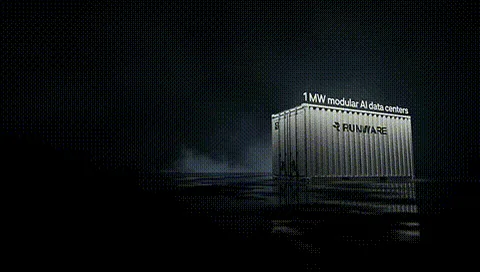
Sonic Pods are Runware’s containerized computing facilities, originally introduced around AI inference. Inference is the process of running trained models to produce outputs such as images, text or other predictions. Runware’s August introduction described an integrated system containing GPU servers, networking, storage, power equipment and liquid cooling. The container is the physical enclosure for a coordinated computing system, and its usefulness depends on how the equipment inside works together. Installing powerful processors without sufficient networking, cooling, storage performance or electrical capacity would leave expensive hardware underused. For customers, the potential attraction is a shorter and more predictable path from securing infrastructure to running workloads.
A repeatable product can also make expansion easier to plan because later installations can reuse engineering decisions and operating procedures established by earlier units. However, a modular design does not make every deployment identical. An image generation service, a large language model platform and a tightly connected training cluster can have substantially different requirements. Customers still need configurations that match their models, traffic patterns, reliability expectations and data location requirements. The practical product is therefore the complete operating environment rather than the shipping container alone.
Runware reported $1 billion in committed interest covering over 20MW to TechCrunch. The phrase “committed interest” requires careful interpretation because its commercial meaning depends on the underlying arrangements. It could describe opportunities at different stages, but the phrase alone does not establish which stages apply. A reader cannot infer whether every prospective customer has signed an enforceable agreement, paid a deposit, obtained financing, selected a deployment location or accepted a delivery schedule. Those details determine how much of a demand pipeline is likely to become delivered business.
The relationship between the dollar figure and the capacity figure also requires explanation. Infrastructure arrangements can cover different durations and combinations of facilities, hardware, operations and services. Dividing the headline value by megawatts would not reliably produce a construction cost or annual revenue estimate without knowing what the quoted value includes. Useful additional disclosure would identify the contract period, cancellation conditions, customer acceptance requirements and proportion supported by binding orders. The appropriate interpretation is a company reported indicator of prospective demand that becomes more informative when accompanied by evidence showing how that demand progresses toward installation, customer acceptance and payment.
Even a signed agreement is not automatically revenue already earned. Contract value, cash received and recognized revenue answer different questions. For general accounting context, IFRS 15 links revenue recognition to satisfying contractual performance obligations through the transfer of promised goods or services. That framework illustrates why an order announcement and earned revenue are separate milestones, although it does not establish which accounting policies Runware applies. Consider a hypothetical customer that agrees to several years of infrastructure services. The total contract might be commercially significant, while the service is delivered gradually. An advance payment could help fund deployment without making the entire contract value revenue for the payment period.
An equipment sale could have a different structure, with delivery, installation, acceptance and continuing support treated according to the agreement and applicable accounting requirements. For evaluating Sonic Pods, the useful commercial progression is from qualified demand to signed orders, delivered capacity, accepted service and recurring payments. Each stage reduces a different uncertainty. Customer concentration also matters because a large pipeline spread across several unrelated organizations has a different risk profile from one dominated by a single project.
Runware’s factory page describes a 48 hour interval from delivery to initial model output at a location where power is already available. This is a conditional installation claim rather than a complete project development schedule. The underlying logic is to complete repeatable integration before shipment. NVIDIA’s technical explanation of factory built infrastructure describes moving internal assembly and validation upstream while site teams prepare the destination.
Arrival still requires placement, external connections, transport checks and commissioning. A meaningful deployment measurement needs a defined start and finish. The clock could begin when the truck arrives, when unloading finishes or when the equipment is positioned, while success could mean one model produces an output or that the entire agreed workload passes acceptance testing. These distinctions can change the interpretation substantially.
A first successful inference request demonstrates that part of the system works, but production acceptance should establish that the promised capacity, networking, monitoring and operational controls work together under the customer’s requirements. The strongest evidence would be repeated customer deployments with documented starting conditions, timestamps, acceptance criteria and explanations of any work completed before delivery.
A fast installation depends on infrastructure that cannot be assumed to exist merely because suitable land is available. The International Energy Agency identifies grid connections and power equipment availability as constraints on data center expansion. Its analysis estimates that grid limitations could delay around one fifth of planned global capacity through 2030. This is an industry wide finding rather than a forecast specifically about Runware. For an individual deployment, electrical readiness should mean usable capacity with the required connection and operating arrangements. A nearby transmission line or renewable energy project does not independently demonstrate that a customer can draw the required power immediately. Connectivity requires similar scrutiny.
An installation needs sufficient bandwidth and an appropriate network design for the intended workload. NVIDIA’s technical documentation treats external connectivity, management networks, storage and communication between containers as coordinated engineering requirements. The practical implication is that customers should assess equipment readiness and site readiness together. If either finishes late, the other can sit idle. A complete project plan should identify who supplies each connection, when it becomes available and how its performance will be verified before the deployment clock begins.
Runware’s Sonic Pods product page describes an average build time of three weeks. That manufacturing statement concerns a different stage from the advertised onsite commissioning interval. Manufacturing includes assembling the equipment and preparing it for shipment, while transportation introduces another interval before installation begins at a prepared destination. There is also a distinction between factory throughput and the time an individual unit spends in production. A factory can complete multiple units each day even when every unit takes several days to pass through its stations because several products can move through different stages simultaneously.
Consequently, an output target should not be interpreted as the elapsed production time for a single order. For customers, the most useful metric is the total period between an accepted order and usable contracted capacity, including component availability, configuration approval, manufacturing, testing, transport, site readiness and acceptance. Breaking the schedule into these stages makes delays easier to understand and prevents a short final installation interval from obscuring a lengthy wait earlier in the project.
The major stages of a Sonic Pod deployment can be distinguished as follows:
- Customer commitment: Establishing the commercial agreement, computing requirements, responsibilities and delivery conditions.
- Configuration approval: Selecting the processors, networking, storage, power equipment and cooling arrangements required for the intended workload.
- Factory manufacturing: Assembling and integrating the equipment before shipment.
- Factory testing: Checking that the completed module meets the relevant technical and operational requirements.
- Transportation: Moving the integrated system to the customer’s prepared location.
- Site preparation: Ensuring electricity, connectivity, access and other necessary infrastructure are available.
- Installation and commissioning: Connecting the delivered module and verifying that its systems function together.
- Customer acceptance: Confirming that the contracted workloads and services meet the agreed performance requirements.
- Ongoing operation: Maintaining availability, monitoring performance and providing support throughout the service period.
These stages illustrate why fast onsite deployment and fast project delivery are not interchangeable. Factory integration can reduce work performed at the destination, but it does not eliminate the need for prepared infrastructure, reliable components and customer acceptance. The commercial value of Sonic Pods will depend on whether Runware can coordinate these activities consistently and convert prospective demand into dependable computing capacity.

Runware Sonic Pods Hardware, NVIDIA GPU Configurations, Liquid Cooling and Modular Data Center Performance
Runware’s factory announcement specifies a 1MW format in a 20 foot container and a 2MW format in a 40 foot container. Megawatts describe power capacity rather than a standardized quantity of AI performance. Two installations with the same electrical allowance can produce different results because their processors, memory, networks, software and workloads differ. Runware’s original introduction described approximately 1,200 GPUs in its initial configuration. That figure should remain associated with the design discussed in the announcement rather than becoming a universal GPU count for every future Sonic Pod.
For capacity planning, customers need the actual equipment configuration. GPU memory can determine whether a model fits efficiently, network performance can affect how well several accelerators work together, and storage performance can influence loading and data movement. Container dimensions also do not define the entire site footprint because a usable installation must accommodate external interfaces and the access needed to operate and maintain the equipment. The relevant comparison is therefore workload capacity within a complete deployment arrangement, including power requirements and service responsibilities.
Runware describes direct liquid cooling for processors, with heat transferred through a closed loop and rejected through dry cooling. Its product page says the system recirculates approximately 1.5 cubic meters of water. A closed loop repeatedly circulates coolant through the system, but heat must still leave that loop. In a dry cooling arrangement, the final heat transfer uses surrounding air rather than relying on routine evaporative water consumption. ASHRAE’s AI data center guidance explains that warmer liquid cooling temperatures can increase opportunities to reject heat through dry coolers. The available benefit depends on the relationship between coolant temperatures and ambient conditions.
That distinction matters when evaluating water claims because a system can contain water while consuming little or none during normal cooling operation. Initial filling, maintenance, leaks and the wider electricity supply are separate considerations. Buyers should also seek evidence across the temperatures expected at their chosen location because performance during mild weather does not establish performance during the hottest operating conditions. Useful acceptance evidence would cover sustained load, coolant temperatures, auxiliary power use, leak detection and behavior when a cooling component requires maintenance.
Runware’s announcement names NVIDIA Vera Rubin configurations, including DSX POD, NCP, DGX POD and DGX SuperPOD, alongside Blackwell hardware. Its compute page distinguishes currently offered HGX B300, GB300 NVL72 and RTX PRO 6000 capacity from Vera Rubin allocations scheduled for 2027. Future compatibility should therefore be separated from hardware available for immediate deployment. NVIDIA describes DSX POD as a reference design for factory integrated Vera Rubin infrastructure. Its announcement gives a prepared site deployment interval of as little as 14 days for that broader system.
That figure and Runware’s individual pod claim cover different scopes and should not be treated as a direct performance comparison. Reference architectures help define coordinated infrastructure requirements, but customers still need implementation specific evidence. A proposed configuration must be assessed for equipment availability, integration status, operating limits and support responsibilities. Support for an architecture does not establish that every advertised configuration has completed the same validation process. The useful procurement document is a precise bill of materials with acceptance criteria and delivery commitments for the system being ordered.
Runware also says customers can provide their own GPUs or have the company supply compute hardware. These options create different responsibilities. A customer supplying processors may retain more control over hardware procurement and asset management while depending on the infrastructure provider for integration and operation. The agreement should clarify equipment acceptance, warranty handling, replacements and responsibility when a component fails. Customers renting compute instead need to understand the service they are purchasing. Runware distinguishes bare metal capacity, where customers operate their software stack, from serverless capacity with platform management included. Its advertised reserved rates depend on contract duration and upfront commitment.
The factory offering also advertises a pod only annual price of $1 million per usable megawatt, excluding compute hardware and electricity. That annual service price cannot be compared directly with a one time construction cost without a common time horizon and equivalent scope. A useful comparison should include hardware, facilities, energy, networking, storage, support, financing and expected utilization. For an AI application, cost per successful workload output can be more informative than a headline price per GPU hour.
Factory built AI infrastructure is a broader industry approach. Schneider Electric’s October 2026 RapidScale reference design describes modular facilities in the 10 to 20MW range, combining power, cooling, IT space and operational systems. The appeal of modular construction is the opportunity to repeat engineering and integration work in a controlled environment. It can also support phased expansion, allowing an operator to add capacity in increments as demand becomes clearer. Conventional facilities remain relevant where deployment requires a different scale, layout, operating model or integration with existing infrastructure. NVIDIA explicitly presents factory built containers as one implementation option within a wider range of AI facility designs.
A fair comparison should use the same reliability requirements and workload assumptions because faster delivery is only one part of the decision. For example, a customer running independent inference requests may evaluate resilience differently from one running a tightly connected training job. The cost of interruption, ability to move workloads and required communication between processors can change the preferred design. Modularity should therefore be evaluated as an engineering and procurement choice with measurable benefits and tradeoffs for a specific application.
Several factors determine whether a Sonic Pod configuration can meet the needs of a particular customer:
- GPU architecture and availability: The processor generation, memory capacity and hardware configurations supported by the deployment.
- Computing workload: Whether the system is intended for inference, training or another application with specific performance requirements.
- Networking: The bandwidth, latency and communication arrangements needed between processors and modules.
- Storage performance: The capacity and speed required to load models, manage data and support computing operations.
- Electrical capacity: The amount of usable power available and how efficiently it can be delivered to the equipment.
- Cooling performance: The ability to remove heat during sustained operation under the site’s environmental conditions.
- Operational reliability: The expected availability, maintenance requirements and recovery procedures.
- Service responsibilities: Whether Runware or the customer supplies hardware, manages software and handles equipment failures.
- Total cost: The combined expenses associated with facilities, computing hardware, electricity, support and utilization.
These considerations demonstrate why container dimensions, GPU counts and megawatt ratings should not be treated as complete measures of computing value. The same modular design can support different workloads, but its performance and economics depend on the configuration installed and the operating conditions. For customers, the strongest evidence would be measured workload performance, documented reliability and a clear understanding of the responsibilities included in the commercial agreement.

Runware’s European AI Data Center Factory, 10GW Production Target and Commercial Scaling Challenges
Runware’s October 30 announcement describes a 22,000 square meter manufacturing facility on a 50,000 square meter European campus. It targets production beginning in the first quarter of 2027 and reaching the planned annual production rate by the end of that year. However, the timeline is not fully consistent across public accounts, as TechCrunch references 2028 for full output. That discrepancy should be clarified through a dated manufacturing roadmap. Factory opening, initial deliveries, stable production and maximum output are different milestones, so a single launch date cannot describe the entire expansion. The industrial challenge is to make output repeatable.
A successful prototype can demonstrate engineering feasibility, while sustained production requires dependable material deliveries, trained workers, adequate test capacity and effective quality control. An informative update would show how many units have passed factory acceptance, how many have shipped and how many customers have accepted them. These measures would also reveal whether the production bottleneck sits in assembly, component availability, testing, transportation or customer site readiness. A large facility creates room for production, while operating evidence establishes how effectively that space is being used.
Runware advertises eventual output of up to 30MW per day and 10GW annually. These figures describe the capacity represented by manufactured facilities. They do not demonstrate that an equivalent amount of customer infrastructure is already operating. The arithmetic helps show the scale. Ten gigawatts equals 10,000 megawatts. At 30MW per production day, reaching that total would require approximately 333 days at the stated output rate. A separate calculation illustrates the difference between capacity and energy. A hypothetical 10GW fleet drawing its full rated power continuously for a year would use 87.6 terawatt hours.
That is not a forecast for Runware because utilization and deployment timing would change actual consumption. Manufacturing output must therefore be tracked separately from shipped, installed, energized and customer accepted capacity. A factory could complete equipment faster than customers secure sites, while prepared locations could also wait for processors or networking components. Either situation would create a gap between nominal manufacturing capacity and productive computing. The strongest reporting would show those stages separately, making it possible to assess how quickly factory output becomes useful customer service.
Increasing factory output requires more than sufficient assembly space. Every finished system depends on the timely arrival of compatible components and the ability to test them together. The International Energy Agency identifies pressure on electrical equipment supply chains, including transformers and other grid components. These constraints can affect the infrastructure supporting AI installations even when the computing enclosure is ready. Transportation also becomes an engineering concern when valuable equipment is shipped already integrated. NVIDIA’s technical guidance highlights equipment restraints, weight distribution, handling arrangements and checks after arrival. The commercial risks follow from this coordination problem.
Inventory purchased too early can tie up cash, components arriving late can leave partly completed systems waiting, and customer changes can require rework after a configuration has entered production. A distributed deployment model also needs a credible service network. Remote monitoring can identify a fault, but some repairs still require physical access, spare equipment and trained personnel. These are execution challenges rather than evidence that the model cannot work. They indicate what Runware must manage consistently as installations increase across customers and locations.
Runware says its existing operation is assembling 41 pods by the end of 2026 and reports 100% uptime for its longest running current version since the first quarter. These remain company reported operating claims. Future evidence should establish the scale and boundaries of those results. Availability reporting becomes more useful when it specifies the measured service, observation period, number of installations and treatment of planned maintenance. Manufacturing evidence should show sustained output and quality rather than only the fastest completed unit.
Deployment evidence should explain the condition of each site before delivery and what counted as successful commissioning. Commercial evidence should show how demand converts into customer acceptance and continuing payments, while performance evidence should demonstrate results on representative workloads, including periods of sustained demand and adverse operating conditions. Independent customer accounts would strengthen all four areas because they can establish whether the promised deployment experience and economics hold outside the supplier’s own environment.
The most important milestones for Runware’s manufacturing expansion include:
- Factory opening: Establishing when the European facility begins operational production.
- Initial production: Demonstrating that completed Sonic Pods can pass factory testing and become ready for shipment.
- Manufacturing throughput: Measuring how consistently the facility produces usable computing capacity.
- Component availability: Ensuring GPUs, networking equipment, cooling systems and electrical components arrive in time for assembly.
- Quality assurance: Confirming that completed units meet their intended technical specifications and acceptance requirements.
- Customer deliveries: Tracking how much factory output reaches prepared installation sites.
- Commissioned computing capacity: Measuring the infrastructure that has been connected, tested and accepted for operational use.
- Service reliability: Documenting uptime, incidents, maintenance requirements and recovery performance.
- Commercial conversion: Establishing how much prospective demand becomes signed contracts, delivered services and recognized revenue.
- Production expansion: Demonstrating progress toward the advertised 30MW daily and 10GW annual manufacturing targets.
These milestones would provide a clearer picture of Runware’s progress than factory size or headline production capacity alone. They would also help distinguish manufacturing capability from the amount of AI computing infrastructure actually serving customers. A company can produce modular systems efficiently while still encountering deployment delays if customers lack electricity, network connections or operational readiness. Conversely, strong demand and prepared sites cannot produce usable capacity if manufacturing falls behind. Successful scaling therefore depends on coordinating both sides of the process.
Runware’s approach offers a potential alternative to completing every aspect of AI data center construction at the final installation site. By assembling and testing repeatable modules in a factory, the company aims to make delivery schedules more predictable and reduce the amount of integration work required after arrival. However, the broader project still depends on component supply, transportation, site preparation, commissioning and ongoing service. The advertised 48 hour deployment target describes one part of that process rather than the complete time needed to establish a new computing facility.
The reported $1 billion in committed interest suggests prospective demand, while the European factory plans and 10GW annual production ambition describe how Runware intends to expand its ability to serve that demand. Neither figure alone establishes completed customer deployments or sustained commercial revenue. The decisive test will be consistency: producing, delivering, operating and supporting useful computing capacity repeatedly while maintaining the promised service quality. Verified customer installations, sustained manufacturing output, transparent acceptance results and reliable ongoing operations will provide the strongest evidence that Sonic Pods can become a repeatable commercial infrastructure product.

Frequently Asked Questions (FAQs)
- What are Runware Sonic Pods used for?
Runware Sonic Pods are containerized computing facilities designed to support AI workloads. Their original focus was AI inference, which involves running trained models to generate outputs such as images, text and predictions. Each pod integrates computing hardware, networking, storage, power equipment and liquid cooling into a factory assembled system. Depending on the hardware and software configuration, the infrastructure may also support other AI applications, although suitability for tightly connected training workloads requires separate evaluation. - Does committed interest mean guaranteed revenue?
No. Runware’s reported $1 billion in committed interest indicates prospective customer demand, but the phrase does not automatically establish binding contracts, completed sales or earned revenue. Some commercial opportunities may still depend on financing, deployment locations, technical approval or customer acceptance. Revenue recognition also depends on the applicable contracts and accounting requirements. The figure would become more informative if Runware disclosed how much of the interest had progressed into signed orders, delivered capacity and completed customer payments. - Can a complete greenfield project be delivered in two days?
No. Runware’s advertised 48 hour deployment target assumes that the destination already has the necessary infrastructure, particularly available electrical power. A complete greenfield project would also require land preparation, electrical connections, network connectivity, equipment procurement, manufacturing and transportation. The two day claim concerns the final installation stage under specified conditions rather than the entire development process. Customers should therefore assess the complete schedule from initial planning through final acceptance. - Is factory production capacity the same as live computing capacity?
No. Factory production capacity measures how much computing infrastructure a manufacturing operation can assemble over a specified period. Live computing capacity refers to equipment that has been delivered, connected, tested and made operational. A completed Sonic Pod may still require transportation, electrical connection, commissioning and customer acceptance before it can serve workloads. Runware’s proposed 10GW annual factory output should therefore not be confused with an equivalent amount of computing infrastructure already operating for customers. - Does a megawatt rating reveal AI performance?
No. A megawatt rating describes the electrical power capacity associated with a system, not the amount of AI work it can complete. Actual performance depends on the GPU models, memory capacity, networking, storage, software efficiency and characteristics of the workload. Two Sonic Pods with identical electrical ratings could produce different results if their hardware configurations differ. Customers should therefore evaluate performance using representative workloads rather than relying on electrical capacity alone. - Does closed loop cooling mean the equipment contains no water?
No. A closed loop cooling system can contain water or another coolant that circulates repeatedly to remove heat from computing equipment. Runware describes a system that recirculates approximately 1.5 cubic meters of water and rejects heat through dry cooling. The distinction is between the fluid contained within the cooling system and the amount consumed during normal operation. Initial filling, maintenance, leaks and operating conditions can still affect water requirements. - What should customers verify about deployment speed?
Customers should confirm exactly when the advertised deployment period begins, what infrastructure must already be available and which activities count toward the stated timeframe. They should also determine what qualifies as successful completion. Producing an initial AI model output is different from passing full workload testing or receiving final customer acceptance. A reliable comparison should include documented timestamps, prepared site requirements, equipment configuration and evidence that the installed system meets its agreed operational targets. - Are advertised GPU prices directly comparable?
Not necessarily. GPU pricing can vary depending on the hardware model, contract duration, upfront payment, included services and level of infrastructure management. A lower advertised hourly price does not automatically mean a lower total application cost. Some workloads may require more processors, longer execution time or additional networking and storage resources. Customers should compare equivalent hardware configurations and measure the total cost of completing their intended workloads rather than relying exclusively on headline GPU rates. - How should customers assess reliability claims?
Customers should examine the period over which availability was measured, the number of installations included and the specific service covered by the claim. They should also ask how planned maintenance, equipment failures and service interruptions were treated. Runware’s reported 100% uptime for its longest running current version provides an operating claim, but additional details are needed to assess how representative it is of future deployments. Sustained performance across multiple customer installations would provide stronger reliability evidence. - What is the most important evidence to watch next?
The strongest evidence would include repeated customer deployments, sustained manufacturing output, completed acceptance testing and dependable ongoing service. Runware would also need to demonstrate that its reported customer interest converts into signed contracts, delivered infrastructure and recognized revenue. Information about production quality, deployment times, operational reliability and customer experiences would help establish whether Sonic Pods can scale successfully. Together, these results would provide a more complete assessment than the company’s demand and manufacturing targets alone.

Conclusion
Runware Sonic Pods present a promising engineering approach to AI data center development by completing more equipment integration and testing before delivery to customers. Using repeatable, factory assembled modules could reduce installation complexity, improve deployment consistency and make future expansion easier to manage. The potential benefit is a more predictable transition from infrastructure planning to productive AI computing, particularly for customers seeking to expand capacity without completing every stage of equipment integration at their final installation sites.
However, the company’s headline claims require careful interpretation. The reported $1 billion in committed interest must be evaluated through the commercial agreements supporting it, while the advertised 48 hour deployment target depends on prepared infrastructure and clearly defined acceptance criteria. Similarly, the planned 10GW annual manufacturing capacity should remain separate from equipment that has been produced, delivered, commissioned and placed into operation. Runware’s progress will become easier to assess through consistent manufacturing milestones, verified customer deployments and transparent operating results. Ultimately, the strongest evidence of commercial success will be a growing record of Sonic Pods that arrive as promised, perform according to their specifications and remain reliable and economical throughout their operating lives.
Sources and Citations
- Runware announcements and product documentation
- Source: Introducing Sonic Pods: Modular Data Centers Built for Inference: Runware’s August 4, 2026 announcement introducing Sonic Pods. Explains the 1MW containerised inference data centre, approximately 1,200 GPUs, custom servers, closed-loop liquid cooling, infrastructure design, deployment strategy, and claimed cost savings of 30–80% per GPU-hour.
Citation: Hreninciuc, Ioana. (August 4, 2026). “Introducing Sonic Pods: Modular Data Centers Built for Inference.” Runware. Read the official announcement. - Source: Runware Unveils AI Factory to Build Modular AI Data Centers Just Like Cars: Runware’s October 30, 2026 factory announcement. Covers its European manufacturing facility, production plans beginning in Q1 2027, 1MW and 2MW pod formats, production capacity of up to 30MW daily, and its target of 10GW annual manufacturing capacity by the end of 2027.
Citation: Runware. (October 30, 2026). “Runware Unveils AI Factory to Build Modular AI Data Centers Just Like Cars.” Read the official announcement. - Source: The Modular AI Data Center Factory: Runware’s dedicated factory information page. Provides manufacturing specifications, factory size, production targets, full-load testing procedures, cooling and power-system integration, deployment timelines, and supported NVIDIA GPU configurations.
Citation: Runware. (2026). “The Modular AI Data Center Factory.” Official factory documentation. - Source: Sonic Pods: AI Data Center Alternative: Official product page explaining the Sonic Pods deployment model, hardware reservation options, geographic rollout, GPU configurations, and the distinction between dedicated compute, serverless workloads, and managed inference.
Citation: Runware. (2026). “Sonic Pods.” Official product page. - Source: Sonic Inference Pods: Dramatically Cheaper AI Inference: More detailed technical product information covering the container dimensions, GPU density, direct-to-chip liquid cooling, deployment requirements, infrastructure design, and claimed water-consumption benefits.
Citation: Runware. (2026). “Sonic Inference Pods: Dramatically Cheaper AI Inference.” Official product documentation. - Source: GPU Compute at Half the Cost: B300, GB300, RTX PRO 6000: Official GPU compute page showing hardware availability, reserved GPU-hour pricing, bare-metal and serverless options, minimum commitment periods, and the relationship between upfront commitments and pricing.
Citation: Runware. (2026). “GPU Compute at Half the Cost: B300, GB300, RTX PRO 6000.” Official GPU compute and pricing page. - Source: Runware Pricing: AI Models API, Serverless and GPU Compute: Provides additional pricing information for serverless and reserved GPU compute. Useful for checking per-second billing, GPU-hour rates, hardware classes, and differences between pay-as-you-go and committed capacity.
Citation: Runware. (2026). “Pricing.” Official pricing page.
- Source: Introducing Sonic Pods: Modular Data Centers Built for Inference: Runware’s August 4, 2026 announcement introducing Sonic Pods. Explains the 1MW containerised inference data centre, approximately 1,200 GPUs, custom servers, closed-loop liquid cooling, infrastructure design, deployment strategy, and claimed cost savings of 30–80% per GPU-hour.
- TechCrunch reporting on Runware’s factory expansion
- Source: Can AI Data Centers Be Mass-Produced Like Cars? This Startup Aims to Find Out: TechCrunch’s October 30, 2026 coverage of Runware’s European factory plans. Reports the proposed 30MW daily manufacturing capacity, the Romania-based facility, the company’s intended 48-hour deployment process, and its claim of approximately $1 billion in customer interest representing more than 20MW of potential deployments.
Citation: Davis, Dominic-Madori. (October 30, 2026). “Can AI Data Centers Be Mass-Produced Like Cars? This Startup Aims to Find Out.” TechCrunch. Read the report. - Source: Is the Future of Data Centers Portable? Runware Builds a Pod to Find Out: TechCrunch’s August 4, 2026 coverage of the original Sonic Inference Pod launch. Includes comments from Runware’s CEO on distributed compute, customer demand, portable infrastructure, and the potential advantages of placing inference capacity closer to users.
Citation: Davis, Dominic-Madori. (August 4, 2026). “Is the Future of Data Centers Portable? Runware Builds a Pod to Find Out.” TechCrunch. Read the report.
- Source: Can AI Data Centers Be Mass-Produced Like Cars? This Startup Aims to Find Out: TechCrunch’s October 30, 2026 coverage of Runware’s European factory plans. Reports the proposed 30MW daily manufacturing capacity, the Romania-based facility, the company’s intended 48-hour deployment process, and its claim of approximately $1 billion in customer interest representing more than 20MW of potential deployments.
- NVIDIA DSX POD and integrated AI factory infrastructure
- Source: NVIDIA Introduces DSX POD AI Factories to Accelerate Europe’s Infrastructure Deployment: NVIDIA’s October 21, 2026 announcement introducing DSX POD, a reference design for complete Vera Rubin AI factories built in modular containers. Explains how computing hardware, networking, rack-level power, cabling, and liquid cooling can be integrated and validated before delivery, potentially reducing deployment at prepared sites from six months to as little as 14 days.
Citation: NVIDIA. (October 21, 2026). “NVIDIA Introduces DSX POD AI Factories to Accelerate Europe’s Infrastructure Deployment.” Official NVIDIA Newsroom announcement.
- Source: NVIDIA Introduces DSX POD AI Factories to Accelerate Europe’s Infrastructure Deployment: NVIDIA’s October 21, 2026 announcement introducing DSX POD, a reference design for complete Vera Rubin AI factories built in modular containers. Explains how computing hardware, networking, rack-level power, cabling, and liquid cooling can be integrated and validated before delivery, potentially reducing deployment at prepared sites from six months to as little as 14 days.
- Schneider Electric RapidScale modular data centres
- Source: Schneider Electric Unveils New Prefabricated Reference Design Engineered for Modular AI Factories: Schneider Electric’s October 21, 2026 announcement of its RapidScale Modular Data Center Reference Design 115. Explains how prefabricated infrastructure supports NVIDIA Vera Rubin AI systems, simplifies onsite installation, and improves deployment predictability. Also reports a study finding that prefabricated white-space modules reduced onsite installation time by 80%.
Citation: Schneider Electric. (October 21, 2026). “Schneider Electric Unveils New Prefabricated Reference Design Engineered for Modular AI Factories.” Official Schneider Electric press release.
- Source: Schneider Electric Unveils New Prefabricated Reference Design Engineered for Modular AI Factories: Schneider Electric’s October 21, 2026 announcement of its RapidScale Modular Data Center Reference Design 115. Explains how prefabricated infrastructure supports NVIDIA Vera Rubin AI systems, simplifies onsite installation, and improves deployment predictability. Also reports a study finding that prefabricated white-space modules reduced onsite installation time by 80%.
- International Energy Agency: Energy and AI infrastructure challenges
- Source: Energy and AI – Executive Summary: The International Energy Agency’s analysis of the relationship between AI development and electricity demand. Explains data-centre energy consumption, grid constraints, infrastructure investment, power availability, cooling requirements, and the challenges of accommodating rapidly growing AI workloads.
Citation: International Energy Agency. (2025). “Energy and AI – Executive Summary.” Official IEA report. - Source: Energy and AI – Full Report: Provides the broader research and data behind the IEA’s assessment, including projections for data-centre electricity demand, regional differences, energy-system implications, and possible approaches to improving efficiency and grid flexibility.
Citation: International Energy Agency. (2025). “Energy and AI.” Full IEA report.
- Source: Energy and AI – Executive Summary: The International Energy Agency’s analysis of the relationship between AI development and electricity demand. Explains data-centre energy consumption, grid constraints, infrastructure investment, power availability, cooling requirements, and the challenges of accommodating rapidly growing AI workloads.
- IFRS Foundation: IFRS 15 revenue recognition principles
- Source: IFRS 15 – Revenue from Contracts with Customers: Official IFRS Foundation explanation of the accounting standard governing revenue recognition from customer contracts. Relevant when analysing Runware’s different commercial models, including reserved GPU capacity, recurring infrastructure services, serverless compute, and managed inference.
Citation: IFRS Foundation. (n.d.). “IFRS 15 – Revenue from Contracts with Customers.” Official IFRS standard overview. - Source: IFRS 15 – Project and Supporting Materials: Provides background on the development of IFRS 15 and supporting material for understanding the principles behind identifying contracts, determining performance obligations, allocating transaction prices, and recognising revenue.
Citation: IFRS Foundation. (2014). “Revenue from Contracts with Customers.” IFRS 15 project information.
- Source: IFRS 15 – Revenue from Contracts with Customers: Official IFRS Foundation explanation of the accounting standard governing revenue recognition from customer contracts. Relevant when analysing Runware’s different commercial models, including reserved GPU capacity, recurring infrastructure services, serverless compute, and managed inference.
- ASHRAE: AI data-centre cooling and energy performance
- Source: PNNL/ASHRAE/NEMA AI Data Center Energy Performance Framework: Provides guidance for planning, designing, constructing, operating, and retrofitting energy-efficient AI data centres. Covers thermal efficiency, energy and water consumption, grid-interactive design, resilience, commissioning, and performance validation.
Citation: ASHRAE, Pacific Northwest National Laboratory, and National Electrical Manufacturers Association. (2026). “AI Data Center Energy Performance Framework.” Official ASHRAE technical resource. - Source: ASHRAE Technical Committee 9.9 – Mission Critical Facilities, Data Centers, Technology Spaces and Electronic Equipment: Technical committee resources covering data-centre thermal environments, equipment cooling, environmental classes, and recommended operating conditions. Useful when assessing the thermal design and cooling requirements of high-density GPU infrastructure.
Citation: ASHRAE Technical Committee 9.9. (n.d.). “Mission Critical Facilities, Data Centers, Technology Spaces and Electronic Equipment.” Official technical committee website.
- Source: PNNL/ASHRAE/NEMA AI Data Center Energy Performance Framework: Provides guidance for planning, designing, constructing, operating, and retrofitting energy-efficient AI data centres. Covers thermal efficiency, energy and water consumption, grid-interactive design, resilience, commissioning, and performance validation.
Recommendations
- Krafton Shuts Down PUBG: Blindspot Two Months After Launch as Early Access Strategy Faces Scrutiny
- EA FY26 Record Performance Explained: How Battlefield 6 and Apex Legends Drove EA’s Strongest Financial Year Yet
- How to Use MetaHuman Animator: A Step-by-Step Guide for Realistic Facial Animation
- Was Senua Used to Attract Buyers? the Ninja Theory Acquisition Debate Explained
- Moonlight Peaks Complete Fishing Guide: How to Get the Fishing Rod and Catch Every Fish
- Truck-kun Is Supporting Me From Another World Turns Isekai’s Favorite Meme Into a Game
- Battlefield 6 x Top Gun Collaboration Cinematic Revealed
- The Full Grand Theft Auto Timeline: Every GTA Game in Chronological and Release Order
- Palworld Sunreach Island Altar Location: How to Reach the Azure Covenant Tower
- Echoes Of Aincrad: Complete Side Quest Guide and All Rewards



































































































