






In This Article (9 sections)
The Full Grand Theft Auto Timeline, Universes, and Chronological Order
The full Grand Theft Auto timeline spans more than six decades of fictional history, multiple versions of Liberty City, Vice City, San Andreas, and London, and three separate continuities known as the 2D, 3D, and HD Universes. It combines the history of every major GTA game, expansion, and story-driven spin-off, including the original top-down games, the PlayStation 2-era titles that established the 3D Universe, and the high-definition games beginning with Grand Theft Auto IV. This structure makes the series more complicated than a conventional franchise in which every sequel follows the same characters and world.
A complete GTA timeline must distinguish between two different ways of ordering the games. Chronological order arranges each story according to the year in which its events occur, while release order follows the dates on which Rockstar Games and its publishing partners originally launched each title. Neither approach turns every GTA game into one uninterrupted story because Grand Theft Auto, Grand Theft Auto III, and Grand Theft Auto IV each established or represented a different continuity, even when they reused familiar city names, brands, criminal organizations, or character archetypes.
The Liberty City seen in the original Grand Theft Auto is not literally the same city as the Liberty City in Grand Theft Auto III, and neither is identical to the HD version introduced in Grand Theft Auto IV. The same rule applies to Vice City and San Andreas. Shared names are part of the franchise’s identity, but each universe has its own geography, history, characters, and continuity.
The 2D Universe contains Grand Theft Auto, GTA London 1969, GTA London 1961, and GTA 2. The 3D Universe begins with Grand Theft Auto III and also includes Vice City, San Andreas, Advance, Liberty City Stories, and Vice City Stories. The HD Universe starts with Grand Theft Auto IV and includes The Lost and Damned, The Ballad of Gay Tony, Chinatown Wars, Grand Theft Auto V, Grand Theft Auto Online, and Grand Theft Auto VI. The earliest confirmed setting in the series is London in 1961.
The timeline then passes through London in 1969, Vice City during the 1980s, San Andreas in the early 1990s, several versions of Liberty City, and the modern HD Universe. Grand Theft Auto VI will extend the HD continuity into the state of Leonida and a new version of Vice City, although Rockstar has not officially announced the exact in-universe year in which its main story takes place. As of July 15, 2026, GTA VI is scheduled for release on November 19, 2026, for PlayStation 5 and Xbox Series X|S.
Chronological order is useful for understanding the rise and fall of criminal organizations, recurring characters, changing city landscapes, and references to earlier events. Release order is better for following the development of Rockstar’s game design, storytelling, technology, and world-building. A first-time player may prefer release order because later prequels can assume familiarity with characters or locations introduced in earlier releases, while someone studying the franchise’s fictional history may find chronological order more informative.
Some placements are exact because the games state their years directly. Vice City Stories takes place in 1984, Vice City in 1986, San Andreas in 1992, and the three Grand Theft Auto IV stories in 2008. Other placements require qualifications. GTA 2 is especially difficult to position because its dialogue, marketing, visual design, and archived fictional records point toward different possible dates. GTA Online is also unusual because its opening missions take place before GTA V, while later updates clearly occur several years afterward.

Complete GTA Timeline: Chronological Order, Release Order, and Universes
The Grand Theft Auto timeline can be arranged by each game’s principal story setting or its original release date. However, because the franchise is divided into the separate 2D, 3D, and HD Universes, chronological order serves as a franchise-wide reference rather than one continuous chain of canon. The following table places the main games, expansions, and major story periods in chronological order.
| In-universe year or period | Game | Universe | Timeline position |
|---|---|---|---|
| 1961 | Grand Theft Auto: London 1961 | 2D Universe | Earliest confirmed setting in the franchise |
| 1969 | Grand Theft Auto: London 1969 | 2D Universe | Eight years after London 1961 |
| 1984 | Grand Theft Auto: Vice City Stories | 3D Universe | Prequel to Vice City |
| 1986 | Grand Theft Auto: Vice City | 3D Universe | Two years after Vice City Stories |
| 1992 | Grand Theft Auto: San Andreas | 3D Universe | Nine years before GTA III |
| 1997 | Grand Theft Auto | 2D Universe | Set across the original Liberty City, San Andreas, and Vice City |
| 1998 | Grand Theft Auto: Liberty City Stories | 3D Universe | Prequel explaining the political and criminal landscape of GTA III |
| 2000 | Grand Theft Auto Advance | 3D Universe | Direct prequel-era story set one year before GTA III |
| 2001 | Grand Theft Auto III | 3D Universe | Final main chronological chapter of the 3D Universe |
| 2004 | Grand Theft Auto V prologue | HD Universe | North Yankton robbery occurring nine years before the main story |
| 2008 | Grand Theft Auto IV | HD Universe | Niko Bellic’s Liberty City story |
| 2008 | Grand Theft Auto IV: The Lost and Damned | HD Universe | Overlaps with GTA IV |
| 2008 | Grand Theft Auto: The Ballad of Gay Tony | HD Universe | Overlaps with GTA IV and The Lost and Damned |
| 2009 | Grand Theft Auto: Chinatown Wars | HD Universe | One year after the GTA IV stories |
| 2013 | Early Grand Theft Auto Online missions | HD Universe | Initially set several months before GTA V |
| 2013 | Grand Theft Auto V main story | HD Universe | Michael, Franklin, and Trevor’s Los Santos story |
| 2017 onward | Later Grand Theft Auto Online updates | HD Universe | A rolling timeline that progresses beyond GTA V |
| Undetermined future or retrofuturistic period | Grand Theft Auto 2 | 2D Universe | Exact year is deliberately or inconsistently presented |
| Exact year unconfirmed | Grand Theft Auto VI | HD Universe | Modern-day Leonida and Vice City story |
Several entries require additional explanation. Grand Theft Auto V conceptually appears in two places because its North Yankton prologue occurs in 2004, while most of the game takes place in 2013. GTA Online also occupies more than one position. Rockstar originally described its story as beginning a few months before GTA V, but later expansions moved its characters and events into subsequent years.
GTA 2 cannot be confidently assigned to one precise year because its introductory material presents the setting as being only a short distance into the future, while its retrofuturistic design and archived in-universe police records have encouraged interpretations ranging from 1999 to 2013. The safest and most accurate approach is to leave it undated rather than present one disputed theory as confirmed fact.
Grand Theft Auto VI also lacks a confirmed in-universe year. Its technology, vehicles, media culture, and social-media-inspired presentation indicate a contemporary setting, but Rockstar has not published a definitive calendar date for its campaign. The game belongs to the HD Universe and follows the franchise’s modern era, although its exact position relative to the newest GTA Online updates remains unconfirmed.
The release order presents the series differently, showing how it developed from overhead action games into large-scale, cinematic open worlds. The following table focuses on original story-bearing releases and major expansions. It does not separately count ports, remasters, mobile conversions, compilations, or bundled editions that retell previously released stories.
| Release date | Game | Original release significance |
|---|---|---|
| November 1997 | Grand Theft Auto | First entry in the series |
| April 30, 1999 | Grand Theft Auto: London 1969 | First major mission expansion |
| Mid-1999 | Grand Theft Auto: London 1961 | Free PC prequel mission pack |
| October 22, 1999 | Grand Theft Auto 2 | Second full 2D-era game |
| October 22, 2001 | Grand Theft Auto III | Beginning of the 3D Universe |
| October 29, 2002 | Grand Theft Auto: Vice City | 1980s Vice City prequel |
| October 26, 2004 | Grand Theft Auto: San Andreas | Expanded 3D-era state and three-city setting |
| October 26, 2004 | Grand Theft Auto Advance | Handheld prequel to GTA III |
| October 24, 2005 | Grand Theft Auto: Liberty City Stories | Portable 3D Universe prequel |
| October 31, 2006 | Grand Theft Auto: Vice City Stories | Earliest chronological 3D Universe game |
| April 29, 2008 | Grand Theft Auto IV | Beginning of the HD Universe |
| February 17, 2009 | Grand Theft Auto IV: The Lost and Damned | First GTA IV episodic expansion |
| March 17, 2009 | Grand Theft Auto: Chinatown Wars | HD Universe handheld story |
| October 29, 2009 | Grand Theft Auto: The Ballad of Gay Tony | Second GTA IV episodic expansion |
| September 17, 2013 | Grand Theft Auto V | Three-protagonist Los Santos story |
| October 1, 2013 | Grand Theft Auto Online | Persistent online component and evolving narrative |
| November 19, 2026, scheduled | Grand Theft Auto VI | Upcoming Leonida and Vice City entry |
The exact release date assigned to London 1961 varies across historical catalogs, with June 1 and July 1, 1999, both appearing in reference databases. What is certain is that it was released after London 1969 as a free PC mission pack, even though its story takes place eight years earlier. The broader release sequence is not disputed. Several well-known GTA products are omitted because they are compilations or updated editions rather than new timeline chapters. These include Grand Theft Auto: The Trilogy, Episodes from Liberty City, Grand Theft Auto IV: The Complete Edition, the various Grand Theft Auto V rereleases, and Grand Theft Auto: The Trilogy – The Definitive Edition.
These products may change the graphics, controls, platforms, or included content, but they do not introduce additional story years. The scheduled GTA VI date is included to keep the release order current, although the game had not launched as of July 15, 2026. Rockstar’s official materials list November 19, 2026, as its release date and identify PlayStation 5 and Xbox Series X|S as the announced platforms.
The universe system is the foundation of the Grand Theft Auto timeline. Without it, repeated locations and contradictory histories can appear to be continuity errors. In reality, the franchise periodically reboots its fictional world while preserving recognizable city names, themes, corporations, vehicle brands, radio styles, and cultural satire. The 2D Universe refers to the continuity associated with the first two numbered games and the London expansions. Its cities are presented primarily from an overhead perspective.
The original Grand Theft Auto features early versions of Liberty City, San Andreas, and Vice City, while London 1969 and London 1961 move the setting to a stylized British capital. GTA 2 introduces Anywhere City. Although the “2D” label describes the production era and presentation, it also identifies a separate canon.
The 3D Universe begins with Grand Theft Auto III and also contains Vice City, San Andreas, Grand Theft Auto Advance, Liberty City Stories, and Vice City Stories. Characters can cross between these games because they share the same continuity. Claude and Catalina appear in San Andreas before becoming central to GTA III, while Phil Cassidy appears in Vice City Stories, Vice City, and Liberty City Stories. Donald Love, Toni Cipriani, Salvatore Leone, and several other figures also help connect the different 3D-era narratives.
The universe is not named simply because its games use three-dimensional graphics; it is the formal continuity associated with the GTA III generation. Chinatown Wars, for example, uses a stylized overhead camera but remains part of the HD Universe because it shares GTA IV’s version of Liberty City and its criminal history.
The HD Universe starts with Grand Theft Auto IV. It contains a redesigned Liberty City, the new versions of Los Santos and San Andreas introduced in GTA V, and the new Vice City and state of Leonida featured in GTA VI. The GTA IV expansions, Chinatown Wars, and GTA Online also share this continuity. Grand Theft Auto IV was conceived as a fresh beginning rather than a literal continuation of the world established in GTA III. Some elements can cross universe boundaries as references rather than confirmed continuity.
Radio personalities, brand names, jokes, street names, and character-like figures may reappear, but resemblance alone does not prove that their histories are shared. A 3D Universe character cannot automatically be treated as alive in the HD Universe unless Rockstar explicitly establishes an HD counterpart. This distinction is especially important for Vice City: Tommy Vercetti’s criminal empire belongs to the 3D Universe, while GTA VI’s Vice City belongs to the HD Universe. The newer game may refer to the franchise’s wider history, but it is not automatically a direct sequel to Tommy’s story.

GTA Timeline: From London 1961 to San Andreas in 1992
Grand Theft Auto: London 1961 is the earliest confirmed chapter in the entire franchise. Set in 1961, it serves as a prequel to London 1969 and was designed as an additional mission pack for the PC version of the original game, requiring the appropriate earlier content to run. Although it was released after London 1969, its events occur eight years earlier.
The game uses the same broad criminal framework as the other early GTA titles, with the player completing jobs involving theft, violence, gang rivalries, and underworld power struggles. It expands the British setting through period-specific vehicles, dialogue, and cultural references. Its status as a smaller downloadable mission pack means its narrative is less elaborate than the character-driven stories of later games, but its 1961 setting gives it a unique place in the series.
Grand Theft Auto: London 1969 takes place within the late-1960s image of London popularized by music, fashion, organized crime, and British gangster fiction. The player completes assignments for criminal organizations while navigating a stylized map filled with British vehicles, local slang, and period-inspired satire. It was the first major expansion to the original Grand Theft Auto. The correct story order is therefore London 1961 followed by London 1969, while the correct release order is the reverse because London 1969 arrived first and was followed by its prequel.
Neither game belongs to the later 3D or HD versions of the GTA world. The London titles also remain unusual because they use the name of a recognizable real-world city, whereas later games generally rely on fictional equivalents such as Liberty City, Vice City, and Los Santos. Their settings and humor established the franchise’s early interest in using specific historical periods as more than visual decoration, an approach later expanded in Vice City Stories, Vice City, and San Andreas.
The original Grand Theft Auto is generally placed in 1997, matching its contemporary setting and release era. Its campaign takes the player through the 2D Universe versions of Liberty City, San Andreas, and Vice City. Rather than following one heavily characterized protagonist, the game allows the player to select from several largely silent criminal avatars and build a reputation by completing jobs for different syndicates.
The original Liberty City is inspired by New York, San Andreas functions as an early version of San Francisco rather than the state later depicted in San Andreas and GTA V, and Vice City draws from Miami. These maps introduced names that would become central to the franchise, but their layouts and histories do not continue into the 3D or HD Universes. The game’s late-1990s criminal world is therefore self-contained within the 2D continuity.
GTA 2 moves the action to Anywhere City and follows Claude Speed, a criminal who accepts jobs from competing gangs. Its reputation system makes relationships with those gangs a central mechanic because working for one faction can anger its enemies, changing how their members react to the player in the streets. The setting combines retro vehicles, futuristic technology, industrial districts, corporate power, and millennial anxiety, which is one reason its precise date remains controversial. Promotional wording placed it vaguely in the near future, while different pieces of supporting material have been interpreted as evidence for either 1999 or 2013.
The phrase “three weeks into the future” was also used to describe its setting, emphasizing its atmosphere rather than establishing a stable calendar year. For an error-free GTA timeline, GTA 2 should not be assigned an unquestioned date. It can be positioned after the original game in release order, but its chronological location is officially ambiguous. Anywhere City’s technological and social environment may represent an alternate near future within the 2D Universe rather than a precisely dated historical period.
Claude Speed should also not be confused with Claude, the silent protagonist of GTA III. The games belong to different universes, and Rockstar has not established them as the same individual. Similar names, appearances, or character concepts across universes should be treated as echoes rather than proof of a shared identity.
Grand Theft Auto: Vice City Stories takes place in 1984 and is the earliest chronological game in the 3D Universe. Its protagonist is Victor “Vic” Vance, a soldier stationed at Fort Baxter in Vice City. Vic initially presents himself as a disciplined man trying to support his troubled family, but his commanding officer, Sergeant Jerry Martinez, pressures him into criminal assignments. Martinez’s schemes eventually lead to Vic’s dishonorable discharge, destroying his military career and pushing him into the city’s criminal underworld. Vic begins building an organization of his own, while the arrival of his brother Lance Vance pushes their operation toward greater risk, ambition, and confrontation.
The brothers become entangled with the Mendez organization, drug-trafficking networks, local gangs, and Ricardo Diaz. Vic gradually takes control of criminal businesses across the city through the empire-building system, which allows him to seize and operate properties connected to protection, smuggling, robbery, drugs, and other rackets.
The conflict escalates when the Mendez brothers attempt to eliminate the Vances, forcing Vic to fight back against Armando and Diego Mendez while Martinez continues manipulating events for personal profit. The final confrontations remove several of the most immediate threats to the Vance organization. Vic survives and expresses a desire to move away from the drug trade, even as Lance remains attracted to its profits and status. Rockstar’s official description identifies Vice City and 1984 as the game’s setting.
Vice City Stories is crucial because it shows the city before Tommy Vercetti’s arrival. Several properties look different, criminal groups control different territories, and Ricardo Diaz is still consolidating his position. The game also establishes Vic and Lance’s relationship before the disastrous drug deal that opens Vice City. Vic’s attempt to escape the criminal world ultimately fails. In 1986, he participates in the cocaine exchange arranged between the Vance organization and Tommy Vercetti’s associates. The deal is ambushed, Vic is killed, and the stolen money and drugs trigger the central conflict of Vice City. This conclusion makes Vice City Stories a direct narrative foundation for Vice City rather than merely another adventure set in the same location.
Grand Theft Auto: Vice City takes place in 1986, two years after Vice City Stories. Tommy Vercetti is released from prison after serving 15 years for killings committed on behalf of the Forelli crime family. Sonny Forelli, concerned about Tommy’s return and interested in expanding into the South, sends him from Liberty City to Vice City. Tommy’s first major task is to supervise a drug deal, but the meeting is attacked by masked gunmen. Vic Vance and several others are killed, while both the Forelli money and the cocaine disappear. Tommy survives with lawyer Ken Rosenberg, but Sonny demands that he recover the lost assets.
The search leads Tommy through Vice City’s criminal, political, entertainment, and business networks. He works with figures such as Colonel Juan Cortez, Avery Carrington, Kent Paul, and Lance Vance, while evidence eventually points toward drug lord Ricardo Diaz as the organizer of the ambush. Tommy and Lance attack Diaz’s mansion and kill him, after which Tommy takes control of the property, begins acquiring businesses, and transforms himself from an outside enforcer into an independent crime boss. His operations eventually include entertainment venues, transportation businesses, printing, protection rackets, and other enterprises spread across the city.
Tommy’s partnership with Lance deteriorates as Lance becomes resentful and increasingly vulnerable to Sonny’s influence. When Sonny arrives to collect what he believes he is owed, Lance betrays Tommy. The resulting confrontation ends with Tommy killing both Lance and Sonny, severing the Forelli family’s control over him. Tommy and Ken Rosenberg remain at the center of the new criminal empire. Vice City is therefore both a revenge story and a transfer of power. At the beginning, Diaz dominates the local drug trade, the Forellis are attempting to expand from Liberty City, and the Vance organization is already collapsing.
By the end, Tommy has defeated all three sources of opposition and established himself as the city’s dominant criminal figure. The chronology also explains why Vice City Stories contains familiar locations in earlier forms, with construction, ownership, gang territory, and local alliances changing between 1984 and 1986 as deliberate markers of time within the 3D Universe.
Grand Theft Auto: San Andreas takes place in 1992, six years after Vice City and nine years before GTA III. Carl “CJ” Johnson returns to Los Santos after spending five years in Liberty City. He comes home following the murder of his mother and discovers that his family and neighborhood are in crisis. The Grove Street Families have lost influence, crack cocaine has damaged the community, and rival gangs such as the Ballas have expanded. CJ reunites with his brother Sweet, his sister Kendl, and childhood associates Big Smoke and Ryder, then begins helping Grove Street rebuild its territory and reputation.
At the same time, he is trapped by corrupt officers from the C.R.A.S.H. unit, particularly Frank Tenpenny, who uses evidence and threats to force CJ into carrying out assignments. This pressure connects the street-level gang conflict to a wider system of police corruption.
A major turning point occurs when CJ discovers that Big Smoke and Ryder have betrayed Grove Street and are connected to the drug trade, the Ballas, and Tenpenny. Sweet is wounded and imprisoned, while CJ is forced out of Los Santos, expanding the story beyond the city. In the countryside and San Fierro, CJ builds new alliances and businesses. He works with Cesar Vialpando, Kendl, The Truth, Wu Zi Mu, and others while attacking the Loco Syndicate’s drug network. He also encounters Catalina and Claude. Catalina eventually leaves CJ for Claude, and the pair later travel toward Liberty City, foreshadowing their roles in GTA III.
CJ’s activities eventually extend into the desert and Las Venturas, where he becomes involved in government secrets, aviation, casino operations, and a conflict with the Sindacco and Leone organizations. Characters connected to Vice City, including Ken Rosenberg, reappear and help connect the 1992 story to earlier events in the 3D Universe. CJ eventually returns to Los Santos, helps free Sweet, restores Grove Street’s position, confronts Big Smoke, and pursues Tenpenny. Big Smoke dies after acknowledging the ambitions and pressures that shaped his betrayal, while Tenpenny escapes in a fire truck before crashing and dying in Grove Street.
San Andreas ends with CJ far more powerful than he was at the beginning. He has protected his family, built businesses across the state, and gained influence in music, casinos, property, and organized crime. The ending does not lead directly into GTA III through CJ, but the appearances of Claude, Catalina, Salvatore Leone, and other characters create important continuity bridges. The San Andreas depicted in 1992 belongs exclusively to the 3D Universe. The state featured in GTA V is an HD Universe reinvention rather than the same map at a later point in history.

GTA Liberty City Timeline From 1998 to 2009
Grand Theft Auto: Liberty City Stories takes place in 1998, three years before GTA III. Toni Cipriani returns to Liberty City after spending time in hiding because he killed a made man. He expects recognition from Salvatore Leone, but his absence has weakened his position within the Leone family. Toni begins working for Leone associates and gradually rebuilds his status as the story explores conflicts among the Leone, Sindacco, and Forelli families, along with manipulation by politicians, business figures, and media personalities.
Salvatore becomes increasingly paranoid as rival organizations and government investigations threaten his authority. Toni’s actions also explain several differences between the 1998 and 2001 versions of Liberty City, including the destruction of the Fort Staunton district and the incomplete state of major transportation projects. Political figures rise and fall, mob alliances change, and properties shift hands, making Liberty City Stories a structural prequel that explains how the city depicted in GTA III came to exist. Toni eventually reestablishes himself as one of Salvatore’s most trusted men, and his loyalty and willingness to carry out extreme acts explain his position within the Leone organization when Claude encounters him in GTA III.
Grand Theft Auto Advance occurs in 2000, one year before GTA III. It follows a criminal named Mike and his partner Vinnie, who plan to leave Liberty City together. Before they can escape, Vinnie apparently dies in an explosion, prompting Mike to investigate the killing while working with several underworld figures. The investigation eventually reveals that Vinnie staged his own death and betrayed Mike so that he could keep their money. Mike confronts and kills him, but the conflict continues as other organizations attempt to exploit the situation.
The story includes characters connected to GTA III, including 8-Ball, Asuka Kasen, and King Courtney, and helps bridge the gap between Liberty City Stories and GTA III. Its criminal organizations are closer to their 2001 positions, while 8-Ball’s legal troubles provide context for his presence during the prison transport sequence that opens GTA III. Mike eventually leaves Liberty City, allowing Claude’s story to become the next major chapter. The correct chronological order is therefore Liberty City Stories in 1998, GTA Advance in 2000, and GTA III in 2001, even though Advance was released before Liberty City Stories.
Grand Theft Auto III takes place in Liberty City in 2001. It is the final major chronological chapter of the 3D Universe and the game that originally introduced this continuity to players. The story begins with a bank robbery involving Claude and Catalina. During their escape, Catalina shoots Claude, abandons him, and leaves with the Colombian Cartel.
Claude survives but is arrested. While he and other prisoners are being transported, an attack on the convoy allows him and explosives specialist 8-Ball to escape. Claude then begins working for the Leone crime family, with his assignments introducing him to Luigi Goterelli, Joey Leone, Toni Cipriani, and Salvatore Leone. His effectiveness earns Salvatore’s attention, but Salvatore eventually becomes suspicious of him and attempts to have him killed.
Maria warns Claude about Salvatore’s trap and helps him escape to Staunton Island, where he begins working with the Yakuza. Claude’s loyalties continue changing as he moves through Liberty City’s criminal hierarchy, accepting assignments from the Yakuza, corrupt officials, media figures, and other organizations while steadily moving closer to Catalina and the Colombian Cartel. The conflict culminates in a confrontation at the Cartel’s facility, where Claude rescues Maria, destroys Catalina’s helicopter, and completes his revenge.
The ending deliberately leaves some details unresolved, including Maria’s fate after the final scene. GTA III’s Liberty City consists of Portland, Staunton Island, and Shoreside Vale, and its condition reflects events from the two prequels. Fort Staunton has been rebuilt after its earlier destruction, transportation links have developed, and the Leone family remains powerful but vulnerable.
The game should not be placed in the same continuous history as GTA IV simply because both use Liberty City. GTA III depicts the 3D Universe version of the city in 2001, while GTA IV introduces an HD Universe reinterpretation in 2008. The seven-year difference is real within their respective settings, but there is no shared historical line connecting Claude’s Liberty City to Niko Bellic’s Liberty City.
Grand Theft Auto IV, The Lost and Damned, and The Ballad of Gay Tony all take place in 2008. They are not three consecutive stories in which one begins only after the previous campaign ends. Instead, their narratives overlap and show several of the same criminal events from different perspectives. Grand Theft Auto IV follows Niko Bellic, an immigrant from Eastern Europe who travels to Liberty City after hearing his cousin Roman’s exaggerated stories of wealth and success.
Niko soon discovers that Roman operates a struggling taxi business and owes money to dangerous people. He becomes involved in the city’s criminal economy while trying to protect his cousin and resolve unfinished business from his past. A central part of Niko’s history is the betrayal of his military unit during a war in Europe.
He believes one of two surviving men sold out the group and uses his new criminal contacts to locate them. His search gradually pulls him into conflicts involving Russian gangsters, Italian crime families, government agents, drug traffickers, and political fixers. The ending includes a major player choice between accepting a deal and pursuing revenge. Both routes produce tragedy, although the identity of the person who dies differs, and Rockstar has not needed to establish one complete ending path as the sole foundation for most later HD Universe stories.
The Lost and Damned follows Johnny Klebitz, vice president of The Lost Motorcycle Club’s Alderney chapter. Johnny has been managing the gang while its president, Billy Grey, undergoes treatment. He favors arrangements that preserve the club, but Billy’s return reignites violent disputes and destabilizes the organization. Johnny becomes involved in drug and weapons deals, conflicts with rival bikers, and internal betrayal. Billy’s decisions place members of The Lost at risk, causing the chapter to fracture into competing loyalties.
Johnny eventually attacks the prison where Billy is being held after learning that Billy intends to cooperate with the authorities against the club. The Lost and Damned intersects with GTA IV through shared deals, kidnappings, and criminal contacts, with Johnny participating in events that Niko experiences from another angle. The expansion is therefore best understood as a parallel account of Liberty City’s 2008 underworld rather than a conventional sequel.
The Ballad of Gay Tony follows Luis Fernando Lopez, who works as a bodyguard and business partner for nightclub owner Anthony “Gay Tony” Prince. Tony’s clubs place him near Liberty City’s wealthy social scene, but debts and criminal pressure threaten the business. Luis carries out assignments intended to keep Tony’s empire alive, becoming involved with celebrities, arms dealers, organized crime figures, property developers, and dangerous investors.
His story emphasizes nightlife, luxury, excess, and high-risk action, offering a brighter visual and tonal contrast to Niko’s immigrant struggle and Johnny’s collapsing biker organization. The three campaigns intersect most clearly through a set of stolen diamonds involving Niko, Johnny, Luis, Tony, the Ancelotti family, and other criminals. A deal shown from one protagonist’s perspective becomes an ambush or escape viewed from another, allowing the expansions to fill in gaps that GTA IV intentionally leaves unexplained.
Release order remains a practical way to experience the three 2008 campaigns, beginning with GTA IV, followed by The Lost and Damned, and then The Ballad of Gay Tony. Chronologically, however, missions from all three stories are interwoven. No simple sequence can place Johnny’s entire story between two Niko missions or Luis’s complete campaign after Johnny’s ending. Together, the three games create a multi-protagonist portrait of Liberty City in 2008. GTA V later develops a different version of this structure by placing three playable protagonists within one campaign instead of separating their perspectives into a main game and episodic expansions.
Grand Theft Auto: Chinatown Wars takes place in 2009, one year after Grand Theft Auto IV and its two expansions. It is set in the HD Universe version of Liberty City despite using a stylized overhead presentation. The protagonist, Huang Lee, travels to Liberty City following the murder of his father. He is expected to deliver Yu Jian, a ceremonial sword, to his uncle Kenny Lee, with the delivery intended to strengthen Kenny’s position within the Triads.
Huang is ambushed shortly after arriving, however, and the attackers steal the sword and leave him for dead. He survives and begins working for Kenny and other Triad figures, becoming involved in a succession struggle, criminal businesses, police corruption, betrayal, and conflicts among competing organizations. His investigation into the stolen sword gradually becomes inseparable from the mystery surrounding his father’s death.
The conspiracy eventually leads back to Kenny. Huang discovers that his uncle arranged the murder and theft as part of his attempt to gain power, forcing Huang to confront and kill him. This resolves both the family betrayal and the central Triad conflict. Chinatown Wars confirms that camera perspective does not determine universe membership.
Its Liberty City is based on the HD map introduced in GTA IV, and its characters, references, and criminal history belong to that continuity. The game omits Alderney from its playable area, but this design decision does not place it in a separate world. Its 2009 setting makes it the final fixed-year Liberty City story currently released in the HD Universe before GTA V shifts the main series to Los Santos and the surrounding areas of San Andreas.

GTA 5, GTA Online, and GTA 6 Timeline Explained
Grand Theft Auto V has two primary time periods. Its prologue takes place in 2004 in Ludendorff, North Yankton, where Michael Townley, Trevor Philips, and Brad Snider carry out a robbery that ends in apparent disaster. Brad is shot, Michael appears to be killed, and Trevor escapes, but the event is not what Trevor believes. Michael survives through a secret arrangement and relocates to Los Santos under the name Michael De Santa. Brad is buried in the grave intended for Michael, while Trevor is led to believe that Brad survived and is being held in prison. This deception shapes the relationships and conflicts that emerge nine years later.
The main story takes place in 2013. Michael lives in an expensive but unhappy retirement with his family; Franklin Clinton works as a repossession agent while searching for a way out of small-time crime; and Trevor operates in Blaine County without knowing that Michael survived the North Yankton robbery. Franklin meets Michael during a repossession assignment, and their relationship develops into a criminal partnership. After Michael destroys part of a mansion and incurs a large debt, he returns to robbery. News of the resulting heist reaches Trevor, who recognizes signs of Michael’s methods and travels to Los Santos.
The three protagonists become involved in increasingly complex robberies and operations while facing pressure from the Federal Investigation Bureau, the International Affairs Agency, private security interests, gang leaders, corrupt agents, and wealthy businessman Devin Weston. Their competing loyalties create conflicts that are personal as well as financial.
The campaign eventually gives Franklin a choice involving Michael and Trevor. One option preserves all three protagonists, while the other paths require him to kill one of his partners. Later HD Universe material strongly aligns with the survival of the principal characters, but the central timeline fact is that GTA V’s main campaign occurs in 2013. Grand Theft Auto Online begins differently because Rockstar originally described the online character’s arrival in Los Santos as taking place a few months before GTA V.
The player meets Lamar Davis and becomes connected to Gerald, Simeon Yetarian, Martin Madrazo, Lester Crest, Trevor Philips, and other figures who later appear in or around the single-player story. This original placement means that the earliest GTA Online missions belong in 2013, before Michael, Franklin, and Trevor complete the events of GTA V.
However, GTA Online did not remain permanently frozen in its original period. Later updates introduced dialogue and story developments tied to the years in which the expansions were released, clearly moving the online timeline beyond the single-player campaign. New properties, criminal businesses, government threats, private military conflicts, casino stories, island heists, celebrity contracts, and returning characters continued to expand its chronology. The Contract, released in 2021, presents Franklin as an older and successful agency owner, confirming that at least that storyline occurs well after GTA V. The online chronology continued developing as Rockstar published additional story content and activities in 2026, including contemporary additions that extended its long-running version of Los Santos.
GTA Online is therefore best understood as a rolling timeline. Its opening jobs are prequels to GTA V, while later expansions are sequels set across subsequent years. This interpretation avoids the inaccurate claim that every online mission happens before the single-player story. It also makes GTA Online the broadest timeline entry in the franchise because it begins in the same year as GTA V, progresses beyond the events of that campaign, and continues through an evolving present. Individual missions may preserve their original narrative context even when the larger online world has moved forward.
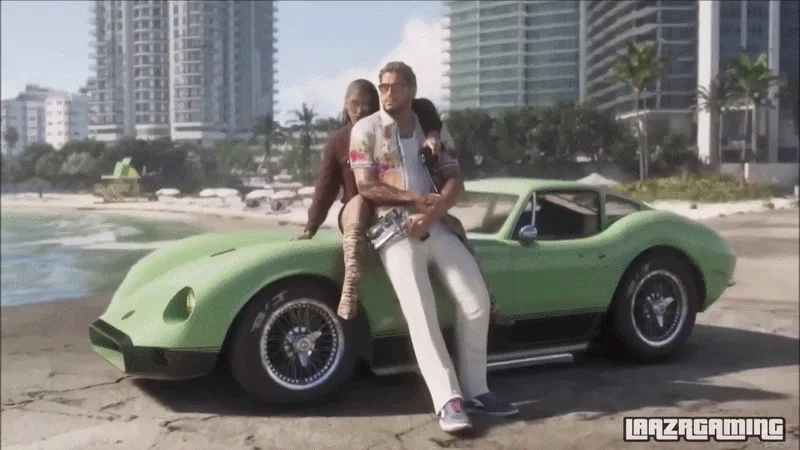
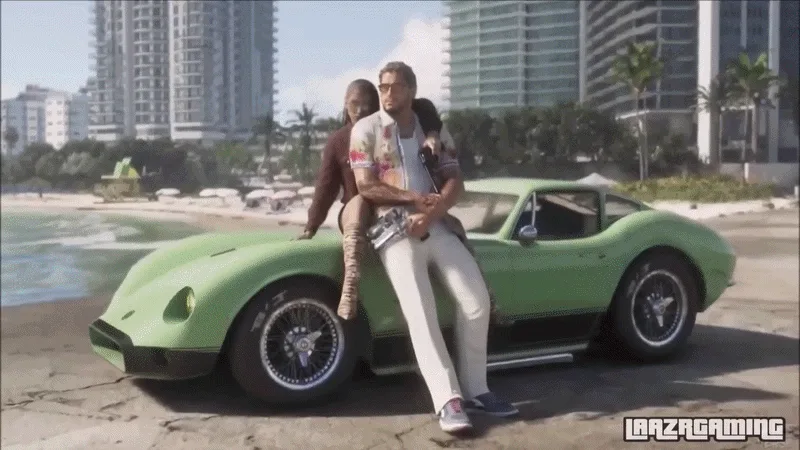
Grand Theft Auto VI belongs to the HD Universe and is set in the state of Leonida, including a new HD version of Vice City. Its principal characters are Lucia Caminos and Jason Duval, a criminal couple whose plans become part of a wider conspiracy after a score goes wrong. Rockstar’s official materials describe them as needing to rely on each other while navigating danger across Leonida.
The new Vice City should not be treated as the same city ruled by Tommy Vercetti in 1986. Tommy, Lance Vance, Ricardo Diaz, and the events of Vice City Stories belong to the 3D Universe, while GTA VI’s Vice City shares the franchise’s Miami-inspired identity but has its own HD Universe history.
The exact in-universe year of GTA VI has not been announced. Its social-media culture, vehicles, smartphones, news coverage, and general presentation indicate a modern setting, but none of those elements provides an official calendar date. It would therefore be inaccurate to claim that the story definitely occurs in 2025, 2026, or another specific year unless Rockstar confirms it. The safest placement is after GTA V within the broad contemporary period of the HD Universe. Whether its campaign occurs before, during, or after the latest GTA Online updates remains unknown, and the online mode’s rolling chronology makes that relationship especially difficult to determine before GTA VI is released.
Rockstar has confirmed that the story covers more than Vice City alone. Leonida contains distinct communities, landscapes, and criminal environments that expand the setting beyond the urban center. Officially revealed locations include Vice City and other areas across the state, while the available character material establishes Jason and Lucia as the narrative focus. As of July 15, 2026, Grand Theft Auto VI is scheduled to launch on November 19, 2026, for PlayStation 5 and Xbox Series X|S.
No confirmed PC release date should be inferred from that announcement. Because the game remains an upcoming entry, descriptions of its complete plot, ending, chronology, returning characters, or relationship to GTA Online would be speculation. Within the full Grand Theft Auto timeline, GTA VI is currently the newest announced HD Universe chapter but not yet a fully dated story. Its release will clarify whether Rockstar assigns Leonida a specific year and how strongly its narrative connects to earlier HD-era events.
Frequently Asked Questions (FAQs)
- What is the correct chronological order of the main GTA games?
The confirmed chronological sequence begins with Grand Theft Auto: London 1961, followed by London 1969, Vice City Stories, Vice City, San Andreas, the original Grand Theft Auto, Liberty City Stories, Advance, and GTA III. The GTA V prologue comes next in 2004, followed by GTA IV, The Lost and Damned, and The Ballad of Gay Tony in 2008, then Chinatown Wars in 2009. Early GTA Online missions and the main GTA V story occur in 2013, while later online updates continue into subsequent years. GTA 2 cannot be given a universally confirmed year, and GTA VI has a modern setting but no officially announced in-universe date. - Are all Grand Theft Auto games set in the same universe?
No. The franchise is divided into three separate continuities known as the 2D, 3D, and HD Universes. Each universe has its own versions of locations, characters, criminal organizations, and historical events. Liberty City, Vice City, and San Andreas may appear in more than one universe, but their maps and histories are reinvented each time. Familiar names, brands, jokes, or character references should therefore not be treated as proof that every GTA game belongs to one uninterrupted canon. - Does GTA Vice City take place before GTA San Andreas?
Yes. Grand Theft Auto: Vice City takes place in 1986, while Grand Theft Auto: San Andreas is set six years later in 1992. Both games belong to the 3D Universe, allowing characters, organizations, and earlier events to connect their stories. Ken Rosenberg, for example, appears in both games, while several crime families active in Vice City remain relevant during the events of San Andreas. Vice City Stories occurs even earlier, in 1984, and explains parts of Vice City’s criminal landscape before Tommy Vercetti arrives. - Does GTA San Andreas happen before GTA III?
Yes. San Andreas takes place in 1992, nine years before GTA III in 2001. It introduces the 3D Universe versions of Claude and Catalina as a criminal couple during CJ’s time in the countryside. Catalina eventually leaves CJ for Claude, and the pair later travel toward Liberty City. Their relationship collapses during the opening bank robbery of GTA III, when Catalina shoots Claude, abandons him, and escapes with the Colombian Cartel. - When does Grand Theft Auto IV take place?
Grand Theft Auto IV takes place in Liberty City in 2008. The Lost and Damned and The Ballad of Gay Tony are also set during the same year rather than entirely before or after Niko Bellic’s campaign. Their missions overlap through shared characters, drug deals, kidnappings, diamond exchanges, and other criminal events. Each story follows a different protagonist, allowing players to see the same period of Liberty City’s underworld from Niko Bellic’s, Johnny Klebitz’s, and Luis Lopez’s perspectives. - What order should GTA IV, The Lost and Damned, and The Ballad of Gay Tony be played in?
Release order is the clearest approach: GTA IV first, The Lost and Damned second, and The Ballad of Gay Tony third. This sequence introduces Liberty City, its criminal organizations, and the shared incidents in the order originally intended for players. The expansions then revisit several events from different perspectives and explain details that the main campaign leaves unresolved. A perfectly chronological mission-by-mission order is possible only with frequent switching because all three campaigns repeatedly overlap. - When does GTA Chinatown Wars take place?
Grand Theft Auto: Chinatown Wars takes place in 2009, approximately one year after the three interconnected GTA IV stories. It follows Huang Lee, who travels to Liberty City after his father’s murder and is tasked with delivering the ceremonial Yu Jian sword to his uncle Kenny. The sword is stolen, leading Huang into a Triad succession struggle involving criminal businesses, corruption, and betrayal. Although the game uses a stylized overhead camera, it belongs to the HD Universe because it shares the redesigned Liberty City and criminal history introduced in GTA IV. - Is GTA Online set before or after GTA V?
Both descriptions are correct, depending on which missions and updates are being discussed. The earliest GTA Online missions begin a few months before the main events of GTA V in 2013, allowing the online character to meet figures such as Lamar Davis, Lester Crest, and Trevor Philips before the single-player campaign concludes. Later expansions move the story beyond GTA V and introduce new businesses, heists, threats, and returning characters in subsequent years. GTA Online should therefore be treated as a rolling timeline that begins as a prequel and gradually develops into a sequel. - Is GTA 2 set in 2013?
2013 is one interpretation based on supporting material, but it is not certain enough to be presented as uncontested canon. Other evidence has been used to place the game in 1999, while its promotional description presents Anywhere City as existing in a deliberately vague near future. Its combination of retro vehicles, futuristic technology, industrial environments, and corporate control makes a precise historical date difficult to establish. An accurate GTA timeline should therefore list GTA 2 as undated or chronologically ambiguous rather than assigning it one confirmed year. - When does GTA VI take place?
Rockstar has not confirmed the exact in-universe year of Grand Theft Auto VI. The game is set in the modern HD Universe version of Leonida and Vice City, with Jason Duval and Lucia Caminos serving as its central characters. Its smartphones, vehicles, social-media culture, and news coverage indicate a contemporary period, but those details do not establish a precise calendar year. It can be placed broadly after GTA V’s 2013 era, although its relationship to the newest GTA Online updates remains unknown. The game is scheduled for release on November 19, 2026.

Conclusion
The full Grand Theft Auto timeline is best understood as three related but separate histories. The 2D Universe contains the original games, the London expansions, and the deliberately ambiguous GTA 2. The 3D Universe begins with GTA III as a release but starts chronologically with Vice City Stories in 1984. It continues through Vice City, San Andreas, Liberty City Stories, Advance, and GTA III. The HD Universe begins with GTA IV and expands through its episodic stories, Chinatown Wars, GTA V, GTA Online, and GTA VI.
In chronological order, London 1961 is the earliest confirmed GTA setting. Vice City Stories is the earliest 3D Universe game, while GTA IV begins the HD continuity in release order. GTA Online has the most complex placement because its opening occurs before GTA V and its later updates occur afterward. GTA 2 remains intentionally or inconsistently dated, so assigning it one definitive year creates more confusion than clarity.
GTA VI will become the newest released chapter when it launches, provided the announced schedule remains unchanged. It introduces Jason and Lucia, returns the franchise to Vice City, and expands the HD Universe into Leonida. Its exact in-universe date has not yet been confirmed, making it the largest remaining question in the chronological order of GTA games.
Following release order reveals the technical and creative evolution of Grand Theft Auto. Following chronological order reveals the rise of criminal empires, changes in recurring cities, and connections among characters within each universe. Using both orders, while respecting the separation between the 2D, 3D, and HD continuities, provides the most accurate way to understand every GTA game in the complete Grand Theft Auto timeline.
Sources and Citations
- Rockstar Games, “Grand Theft Auto VI.”
https://www.rockstargames.com/VI - Rockstar Games, “Grand Theft Auto VI Official Release Communications.”
https://www.rockstargames.com/newswire/tags/grand-theft-auto-vi - Rockstar Games, “Grand Theft Auto: Vice City Stories.”
https://www.rockstargames.com/games/vicecitystories - Rockstar Games, “Grand Theft Auto IV.”
https://www.rockstargames.com/games/IV - Rockstar Games, “Grand Theft Auto: Chinatown Wars.”
https://www.rockstargames.com/games/chinatownwars - Rockstar Games, “Grand Theft Auto V.”
https://www.rockstargames.com/gta-v - Rockstar Games, “Grand Theft Auto Online.”
https://www.rockstargames.com/gta-online - Rockstar Games, “Grand Theft Auto: The Trilogy.”
https://www.rockstargames.com/GTATrilogy - Rockstar Games, “Grand Theft Auto: The Trilogy – The Definitive Edition.”
https://www.rockstargames.com/GTATrilogy - Rockstar Games, “Grand Theft Auto: Liberty City Stories.”
https://www.rockstargames.com/games/libertycitystories - Rockstar Games, “Grand Theft Auto: San Andreas.”
https://www.rockstargames.com/games/sanandreas - Rockstar Games, “Grand Theft Auto: Vice City.”
https://www.rockstargames.com/games/vicecity - Rockstar Games, “Grand Theft Auto III.”
https://www.rockstargames.com/games/III - GTA Wiki, “Universes.”
https://gta.fandom.com/wiki/Universes - GTA Wiki, “Timeline.”
https://gta.fandom.com/wiki/Timeline - GTA Wiki, “Grand Theft Auto.”
https://gta.fandom.com/wiki/Grand_Theft_Auto - GTA Wiki, “Grand Theft Auto: London 1969.”
https://gta.fandom.com/wiki/Grand_Theft_Auto:_London_1969 - GTA Wiki, “Grand Theft Auto 2.”
https://gta.fandom.com/wiki/Grand_Theft_Auto_2 - GTA Wiki, “Grand Theft Auto Advance.”
https://gta.fandom.com/wiki/Grand_Theft_Auto_Advance - GTA Wiki, “Grand Theft Auto: The Lost and Damned.”
https://gta.fandom.com/wiki/The_Lost_and_Damned - GTA Wiki, “The Ballad of Gay Tony.”
https://gta.fandom.com/wiki/The_Ballad_of_Gay_Tony
Recommendations
- Bergfried: Release Date, Gameplay, Castle Building, and Siege Strategy Details
- Carnival Hunt Early Access Guide: Release Date, 5v1 Gameplay, Monsters, and Rabbits
- Slay The Spire 2 Is Absolutely Crushing It With 400,000 Concurrent Players And A 97 Percent Positive Rating On Steam
- Palworld 1.0 Hardwood Guide: Best Locations, Tools, Pals, and Farming Methods
- The House of Hikmah Guide: Beginner Tips, Puzzle Mechanics, Story Themes, and How Long It Takes to Beat
- Assassin’s Creed Black Flag Remaster/Remake Confirmed Ubisoft Teases “Black Flag Resynced”
- Elden Ring for Switch 2 Release Date Confirmed: Price, Performance, and Everything We Know
- Advanced Camera Switching Techniques with The View Keeper in Blender
- Xbox Reportedly Stops Chasing AA and Indie Games: What the Strategy Shift Means for Developers
- Pokemon: Go Choose Your Path Timed Research



































































































