




In This Article (7 sections)
Dan Houser Reflects on Max Payne 3 and the Challenge of Continuing Sam Lake’s Legacy
Dan Houser’s description of Max Payne 3 as a failure is more specific than the headline suggests. The Rockstar cofounder was reflecting primarily on his own contribution to the 2012 sequel, particularly its writing and the challenge of continuing a character whose voice had been closely associated with Remedy’s Sam Lake. In his IGN30 Icons interview, Houser said, “I failed. My bit was not a success,” while expressing admiration for the production and recalling how strongly some players missed Lake’s writing. His comments describe a personal assessment of whether he successfully continued Max’s established identity, not an objective verdict that every aspect of the game was artistically or technically unsuccessful.
Houser recognised that risk before the sequel reached players. In a November 18, 2011 interview with Gamasutra, now published by Game Developer, he discussed the difficulty of competing with idealised memories of older games while attracting newcomers. He acknowledged the hostile response to early images showing Max with a shaved head and a heavier appearance, but hoped the finished story would make those changes understandable. His later disappointment therefore revisits a challenge he understood during development. Rockstar knew the character inspired strong attachments; the uncertainty was whether its interpretation would satisfy the people who held them.
Although Houser occupied a central writing role, the finished character emerged from a collaborative production. The credits distinguish his contribution from additional dialogue by Michael Unsworth and Rupert Humphries, while James McCaffrey returned to provide Max’s voice and performance capture. Rockstar’s production material describes McCaffrey spending nearly 50 hours recording dialogue and narration, with writing, acting, animation, editing, camera work and sound contributing to the result. Extensive sessions at Rockstar’s Long Island facility involved the principal cast performing story scenes and movements required for gameplay. McCaffrey undertook many demanding stunts, while professional stunt performers handled some dangerous dives.
The production also extended beyond its central cast. Lazlow led recording work in Brazil that produced more than 10,000 lines of Portuguese dialogue, helping establish the people and surroundings Max encountered. His exhaustion, the behaviour of those around him and the sound of an unfamiliar environment all contributed to Rockstar’s portrayal. Those details help explain why Houser could question his own contribution while continuing to admire the game’s craftsmanship. A writer’s disappointment with the overall interpretation does not erase the achievements of the performers, designers and other developers responsible for bringing it to life.
His willingness to accept responsibility also does not establish that writing alone explains every criticism. Marketing, pacing, presentation, mechanics, setting and attachment to earlier games can all influence reactions to a sequel. Houser’s reference to being both a writer and a decision maker broadens the scope of his assessment: writing Max involved deciding how often he narrated, how directly he expressed regret and how his perspective shaped the audience’s understanding. A player might admire individual lines while finding the cumulative emphasis on despair exhausting, whereas another might consider that discomfort essential. His criticism concerns the overall effect of the portrayal, leaving room for particular scenes and performances to succeed within an interpretation he believes fell short.
Continuing Max Payne was never simply a question of preserving plot history. Lake’s influence on the first two games included hard boiled narration, exaggerated metaphor, emotional suffering and unusual humour. Max’s internal monologue helped define both his personality and the series’ atmosphere rather than serving only as exposition. Familiar names, weapons, abilities and references can preserve surface continuity while changes in prose, rhythm, humour and emotional emphasis alter the character underneath. Different writers can therefore be equally accomplished while producing markedly different versions of the same protagonist.
Lake’s own response offers a counterpoint. In a 2016 PC Gamer interview, he said Remedy had been invited to consult late in development, play the game and provide feedback. He was personally happy that Max Payne 3 felt like Rockstar’s interpretation and suggested that attempting to imitate Remedy’s approach might have felt stranger. He also recognised connections with the earlier games. Houser worried that players missed Lake’s writing, but Lake could appreciate the choice to develop a distinct creative voice. Preserving the character did not necessarily require reproducing Remedy’s style in the original writer’s view.
The relationship between the writers also involved direct collaboration. Rockstar announced a three part Max Payne comic series with Marvel Custom Solutions in April 2012, crediting Houser and Lake as its writers. The comics explored Max’s earlier life and connected events surrounding the previous games with his circumstances in the third. Lake later recalled contributing ideas about Max’s childhood and doing some writing for the project. This does not make him a joint author of the game’s main script, but it shows that the transition included consultation and shared work rather than simply one writer replacing another.
The game makes its changed perspective especially visible by relocating an older Max to São Paulo, where he works in private security protecting Rodrigo Branco’s family. His dependence on alcohol and painkillers continues, but he becomes an outsider navigating unfamiliar relationships, language, corruption and violence. Rockstar executive Jeronimo Barrera defended the move in a 2011 GameSpot interview, arguing that noir did not depend exclusively on darkness, rain or a particular city. He instead pointed to corruption, cynicism, characterisation and moral decay, alongside São Paulo’s contrasts between extreme wealth and poverty, political connections and organised violence.
Max’s unfamiliarity with that environment was intended to reinforce his vulnerability, making the change deliberate rather than an accidental abandonment of the series’ themes. Barrera also connected the brighter settings to a campaign unfolding across several weeks, which made daylight sequences natural to the story. Max shaving his head represented a response to a desperate moment, giving the altered appearance a narrative purpose. Snowy flashbacks in Hoboken, New Jersey, preserved a connection to his earlier life while emphasising his discomfort in Brazil. Nevertheless, architecture, weather, colour, sound and composition also create atmosphere. Preserving noir themes does not necessarily reproduce the emotional effect of the earlier games’ snowy streets and visual language.
Presentation changed alongside the setting. Max Payne 3 replaced the earlier games’ recognisable graphic novel sequences with cinematic scenes, moving panels, visual distortion and words integrated into the imagery. GameSpot’s contemporary review interpreted these techniques as an attempt to connect a new style with the series’ storytelling identity. A graphic novel panel gives an image and sentence a particular relationship, while cinematic editing controls the duration of a look, the timing of an interruption and the moment a phrase receives emphasis. Rockstar placed Max’s thoughts within an urgent flow of movement and sensory information, which could feel substantially different to players attached to the originals’ literary texture.
Houser also praised the game’s linear structure and continuous cinematic momentum. Compared with open world productions such as Grand Theft Auto or Red Dead Redemption, a directed campaign gives writers tighter control over sequence, pacing, visual echoes and transitions. That can strengthen momentum while leaving players fewer opportunities to step away from narration or reshape the rhythm through unrelated activities.
Music reinforced the interpretation: in a March 2012 Pitchfork interview, HEALTH’s John Famiglietti explained that the score responded to the Brazilian setting and Max’s mental condition, while flashback music referenced the earlier games. Separate musical layers could be combined and repeated around different levels of action, making the soundtrack an active contributor to an emotional effect often attributed to writing alone.

Max Payne 3 Reviews, Sales and Gunplay Explain Why Players Disagree With Houser
The contemporary critical record does not support describing Max Payne 3 as broadly rejected. Metacritic lists scores of 86 for Xbox 360 and 87 for both PC and PlayStation 3, reflecting generally favourable reviews across all three versions. GameSpot awarded it 9 out of 10, praising its shooting, performances and writing while identifying limitations in the practical usefulness of some signature mechanics. Those reviews provide a counterweight to Houser’s retrospective disappointment, showing that prominent critics found considerable value in the finished game. Strong aggregate scores do not, however, establish whether returning fans preferred its story to Remedy’s games or how individual opinions changed over time.
The disagreement becomes clearer through individual reviews. GameSpot’s Carolyn Petit praised the writing’s wit and emotional range, defending the very contribution Houser now questions. WIRED’s Ryan Rigney, meanwhile, admired the shooting but felt the first half spent too long dwelling on Max’s alcoholism and that the story sometimes dragged. These responses concern emphasis and pacing as much as overall quality. Sustained self loathing can deepen a character for one player and become repetitive for another, meaning Houser’s regret aligns with a recognisable criticism without representing the only contemporary assessment of his script.
The commercial evidence is similarly mixed. Take-Two’s first quarter fiscal 2013 report said Max Payne 3 and Spec Ops: The Line had sold below expectations, while reporting more than three million Max Payne 3 units sold in. By May 2013, reporting from Take-Two’s earnings call put shipments at four million units. Those figures establish substantial commercial scale alongside an initial shortfall against the publisher’s expectations. Shipments should not be confused with direct consumer purchases, and they do not establish a verified lifetime loss. Without complete development, marketing, discounting, revenue and longer term sales information, declaring the game conclusively unprofitable would go beyond the evidence.
The same July 31, 2012 financial release also listed Max Payne 3 among Take-Two’s strongest revenue contributors for the quarter. That is compatible with missing a forecast: a game can generate considerable revenue while falling short of the scale anticipated for it. The company’s quarterly loss applied to the business as a whole and should not be presented as the amount lost by this individual release. The report establishes a gap between expectations and performance at that point, not whether players found Max’s narration convincing or how much a particular creative decision affected purchases.
The shooting remains central to why many players defend the game. Rockstar’s description emphasises precision gunplay, Bullet Time, Shootdodge and NaturalMotion’s Euphoria system for character movement and reactions. These systems make timing, positioning, movement and target selection important alongside cinematic spectacle. Bullet Time lets players read dangerous situations, adjust their aim and turn vulnerable movement into successful attacks. Shootdodge makes Max’s physical body part of combat strategy rather than reducing encounters to static shooting galleries, expressing danger and survival directly through player action.
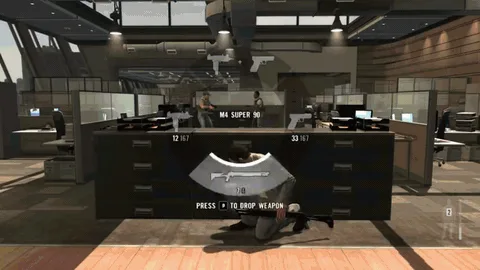
Mechanical changes also make his limitations more tangible. GameSpot highlighted the cover system and the inventory detail that switching to two smaller guns causes Max to drop the larger weapon he was carrying. Its review also noted how exposed he could become while recovering from a Shootdodge. These choices ask players to consider the consequences of movement and weapon selection. Alongside the portrayal of an older, exhausted protagonist, that vulnerability gives Max a physical presence beyond his monologues. The writing communicates his condition in one way, while the effort required to survive a room full of enemies provides another.
Narrative criticism and mechanical admiration can consequently coexist. A player may prefer Lake’s writing, dislike São Paulo or reject parts of Rockstar’s interpretation while still considering the shooting exceptional. Rockstar also provided reasons to return that focused explicitly on performance through its Arcade modes:
- Score Attack: Rewards stylish actions and destruction, encouraging players to revisit encounters with an emphasis on improving their execution.
- New York Minute: Brings back the timed challenge format, shifting attention towards efficient movement, accuracy and completing encounters under pressure.
Once players know the story, those challenges offer another way to engage with the same campaign. Timing, route choices and the satisfaction of improving a previous attempt can become more important than agreement with every narrative decision. Someone returning to refine a difficult encounter may value different qualities from a player chiefly interested in how the sequel develops Max’s emotional journey. Both are responding to experiences the game was designed to provide. PC Gamer’s response to Houser’s later comments illustrates that disagreement by arguing that the cinematic action and presentation deserve stronger recognition. It does not establish a universal consensus, but it shows that Houser’s involvement gives his opinion importance without granting it final authority over everyone else’s experience.

Max Payne 3’s Ending and the Broader Challenge of Continuing Another Creator’s Series
The final stages of Max Payne 3 bring Max into confrontation with the people behind the conspiracy, culminating in the airport sequence and the destruction of Victor Branco’s escaping aircraft. The epilogue then places him in Bahia, where he watches a news report covering the scandal’s aftermath before walking along the beach. This conclusion returns to the question of what daylight means in Rockstar’s interpretation. Earlier, Brazil’s brighter environments challenged expectations shaped by dark urban streets. At the end, the beach’s openness can be read as an expression of changed circumstances, making the visual departure part of how the game communicates release.
One interpretation is that the ending offers provisional freedom rather than complete healing. Max cannot reverse the deaths and trauma that shaped his life, and defeating another criminal organisation does not erase his past. What changes is his relationship with the future. The final sequence leaves open the possibility that his identity no longer has to depend entirely on grief, addiction and repeated violence. That gives the sequel a coherent place within the trilogy even for players who disagree with the route it takes. Rather than ending with another declaration that suffering is permanent, it allows Max the possibility of living beyond another cycle of revenge.
The story also distinguishes his competence with a weapon from his ability to understand or improve his circumstances. Combat asks the player to act decisively, while the narration reveals a man whose confidence in his own judgment has eroded. That tension can be understood as part of the drama: being effective in a gunfight does not automatically give Max control over his life. Assessing Houser’s writing therefore involves asking whether the campaign develops that conflict into meaningful change. Its movement towards a quieter future supplies an answer within the story, even if players question how consistently the earlier chapters prepare for it.
Continuity also created practical writing decisions. In his 2011 Gamasutra interview, Houser discussed Mona Sax’s different outcomes in Max Payne 2, where her fate changes at the highest difficulty. He said Rockstar chose to move beyond that part of the story rather than build its sequel around an outcome it could not know every player had experienced. That decision illustrates why inheriting an established character involves selecting which unresolved threads should drive the next game, not merely preserving every possible event from its predecessors.
The broader difficulty is that fictional continuity and artistic identity are not the same thing. A sequel can retain its protagonist, mechanics, backstory and narrative devices while feeling fundamentally different because its voice, rhythm, humour, visual language and emotional emphasis have changed. Repeating the originals too closely risks creating something unnecessary, while substantial reinvention can alienate players who valued the qualities being altered. Larger budgets, more advanced production technology and sophisticated presentation cannot automatically solve a problem rooted in whether an audience recognises the artistic identity it remembers.
That response also depends on what each player brings to the sequel. Someone who remembers the earlier games closely may hear every change in narration as a departure from a familiar personality. A newcomer can judge the same writing within this particular crime story without making that comparison. Neither perspective automatically resolves the other. The inherited character creates an additional obligation: the new story must work independently while making its relationship with the earlier games persuasive. Houser’s disappointment is especially revealing because it concerns that connection, where accomplished execution and a recognisable name can still leave part of an audience unconvinced.
His comments acknowledge that technical achievement and professional confidence do not guarantee a seamless transition between creative voices. They also explain why retrospective criticism should remain open to disagreement. A creator understands the ambitions, compromises and pressures behind a project, while players judge the finished result according to their own priorities. Max Payne 3 can be a source of creative regret for one of its principal writers and a highly regarded action game for many critics and players. Its reviews, commercial performance, mechanical reputation, narrative changes and Houser’s dissatisfaction belong to the same history. Reducing that history to either failure or success removes the contradiction that makes its legacy worth discussing.

Frequently Asked Questions (FAQs)
- Why does Dan Houser consider Max Payne 3 a failure?
Houser judges his own contribution harshly because he believes Rockstar’s continuation did not satisfy enough players who strongly associated Max Payne with Sam Lake’s writing. His comments focus primarily on whether his writing and creative decisions preserved the character’s established voice and identity. At the same time, he continued to praise the production itself, so his criticism should be understood as personal creative disappointment rather than a blanket rejection of the entire game. - Did Dan Houser say Max Payne 3 was badly made?
No. His comments separate dissatisfaction with his own writing contribution from his respect for the wider production. He praised aspects such as the game’s continuous presentation, structured design, and visual treatment while criticizing his own role in continuing Max’s character. Presenting his remarks as evidence that he thought the entire game was poorly made would therefore misrepresent what he actually said. - Where did Dan Houser discuss Max Payne 3?
Houser discussed the game during an IGN interview connected with the IGN30 Icons series. In that conversation, he reflected on the writing process, the game’s linear presentation, and how players reacted to Rockstar’s interpretation of Max Payne. Subsequent gaming coverage reproduced those comments and renewed debate about whether the sequel should be viewed as a creative disappointment or a strong action game with a different identity. - Did Sam Lake write Max Payne 3?
No. Sam Lake wrote the first two Max Payne games, while Dan Houser had the central writing role on Rockstar’s third entry. The credits also identify additional dialogue contributions from other writers, including Michael Unsworth and Rupert Humphries. Max Payne 3 was therefore a collaborative production and should not be described as the work of one writer alone. - Why is Max Payne 3 set in Brazil?
Rockstar moved the story to São Paulo to place Max in an unfamiliar environment where he attempts to leave his past behind through private security work. The company argued that noir did not depend exclusively on dark streets, rain, or a specific city, and that corruption, inequality, organised violence, and moral decay could support similar themes in Brazil. The relocation was therefore a deliberate reinterpretation of the series rather than an accidental break from its identity. - Did critics dislike Max Payne 3?
Overall professional reception was positive rather than broadly negative. The game received strong aggregate scores across PC, PlayStation 3, and Xbox 360, while major reviews praised its shooting, performances, presentation, and writing. Individual criticisms certainly existed, and some returning players preferred the tone and writing of the Remedy games, but the available critical record does not support the claim that reviewers generally rejected Max Payne 3. - Did Max Payne 3 sell poorly?
It sold below Take-Two’s initial expectations, but that is different from saying it sold very few copies. Take-Two reported more than three million units sold in during the early period, while later reporting placed shipments at around four million. Those figures demonstrate substantial commercial scale, although they also show that the game did not initially meet the publisher’s forecast. The available information does not establish a verified lifetime financial loss. - Why do players still praise Max Payne 3?
The game is frequently praised for its precision shooting, Bullet Time, Shootdodge mechanics, physical animation, and cinematic presentation. These systems give combat a distinctive sense of weight, timing, and control even within a tightly directed campaign. Some players also appreciate the portrayal of an older, more physically and emotionally worn Max, even if they acknowledge that the writing and atmosphere differ from Sam Lake’s earlier games. - Does Max Payne 3 conclude Max’s story?
The ending provides a strong sense of closure by showing Max surviving the final conflict and appearing to move away from the immediate cycle of violence that has defined much of his life. The final scenes suggest the possibility of a different future rather than another immediate descent into revenge. That is a thematic interpretation of the ending, however, and does not constitute a guarantee that the character could never appear in another story. - Does Houser’s opinion mean Max Payne 3 is objectively a failure?
No. Houser’s assessment is important because he helped write and shape the game, but it represents his own retrospective creative judgment. Critical reception, commercial performance, mechanical quality, and individual player enjoyment are separate measures that can produce different conclusions. The available evidence supports a more nuanced view: Max Payne 3 disappointed Houser creatively and initially underperformed commercially, while still receiving strong reviews and maintaining a substantial reputation for its action design.

Conclusion
Dan Houser’s comments about Max Payne 3 are best understood as an unusually candid reflection on creative responsibility rather than a definitive verdict on the entire game. He believes his own contribution did not fully meet the challenge of continuing a protagonist whose identity, voice, and style had been closely associated with Sam Lake’s writing, even while expressing admiration for the production Rockstar ultimately created.
That distinction matters because the wider evidence presents a much more complicated picture. Max Payne 3 received strong contemporary reviews, shipped millions of units, and developed an enduring reputation for its precision gunplay, Bullet Time, physical animation, and cinematic presentation. At the same time, it initially sold below Take-Two’s expectations and changed the setting, narrative voice, and atmosphere of the series in ways that continue to divide players.
Its legacy therefore cannot be reduced comfortably to either success or failure. Players who prefer the tone and writing of Remedy’s games can regard Rockstar’s interpretation as a meaningful departure, while others can value the São Paulo setting, older version of Max, and tightly directed action precisely because they offer something different. Both reactions can coexist with Houser’s own dissatisfaction.
The most accurate conclusion is that Houser considers his part of Max Payne 3 unsuccessful according to the creative standard he now applies to himself. That admission provides valuable insight into the difficulties of inheriting another creator’s series, but it does not override the finished game’s critical reception, mechanical achievements, commercial scale, or the experiences of players who continue to regard Max Payne 3 as a compelling entry in the trilogy.
Sources and Citations
- IGN’s Dan Houser interview, supplied through its Yahoo syndication, is the originating report for the comments. Direct access to those pages was restricted during verification; the interview passages were cross-checked against PC Gamer’s reproduction and discussion.
https://tech.yahoo.com/gaming/articles/got-completely-wrong-dan-houser-131500432.html?utm_source=chatgpt.com - GameSpot’s September 2011 interview with Rockstar executive Jeronimo Barrera provides the contemporary explanation for the São Paulo setting and the studio’s approach to noir.
https://www.gamespot.com/articles/exclusive-max-payne-3-story-qanda/1100-6335902/?utm_source=chatgpt.com - Rockstar Games’ official Max Payne 3 description documents the central premise and advertised combat systems. Its production feature provides information about James McCaffrey’s recording and performance work.
https://www.rockstargames.com/games/maxpayne3?Nm0e070Ct36nb=nErxJ6ZNwNElmv&utm_source=chatgpt.com - GameSpot’s May 2012 review and Metacritic’s platform-specific listings establish the positive professional reception discussed in the article.
https://www.gamespot.com/reviews/max-payne-3-review/1900-6376769/?utm_source=chatgpt.com - Take-Two’s first-quarter fiscal 2013 results provide the primary evidence for initial sales underperformance and shipments above three million units. Reporting on the subsequent earnings call documents the four-million shipment milestone.
https://taketwointeractivesoftwareinc.gcs-web.com/news-releases/news-release-details/take-two-interactive-software-inc-reports-results-first-quarter?utm_source=chatgpt.com - MobyGames’ transcription of the game’s credits supports the distinction between Houser’s writing role and additional dialogue contributions. The game’s documented plot supports the discussion of the ending; the interpretation of that ending is critical analysis.
https://www.mobygames.com/game/55986/max-payne-3/credits/windows/?utm_source=chatgpt.com
Recommendations
- NoPixel V GTA V Roleplay Closed Beta Starts September 8
- Overwatch New Hero Shion Can Throw a Motorcycle at Enemies
- LEGO Batman: Legacy of the Dark Knight, Complete Vehicle Guide (All Batmobiles, Batcycles, Unlocks & Locations Explained)
- The Outer Worlds Companions – How to Recruit, Abilities, and Best Combinations
- Sony’s Enhanced PSSR Upscaling Arrives on PS5 Pro Today: What the Upgraded PSSR Update Does and How to Enable It
- Valor Mortis Recoups Launch Costs, One More Level Reports
- EXCLUSIVE: Universal Fan Fest Nights to Debut “Pretty Guardian Sailor Moon the Miracle” at Universal Studios Hollywood (Dates, Tickets, Show Details)
- Netflix On Why It Gave Up On Buying Warner Bros: The Real Reasons the Deal Collapsed
- Digimon Story Time Stranger A Hero’s Eternal Legacy DLC: 2027 Release, Story and 50+ New Digimon
- Dune Awakening Console Versions Have Gone Gold Ahead of Release



































































































