








In This Article (7 sections)
Dan Houser on John Marston’s Death and Why the Ending Provoked Anger
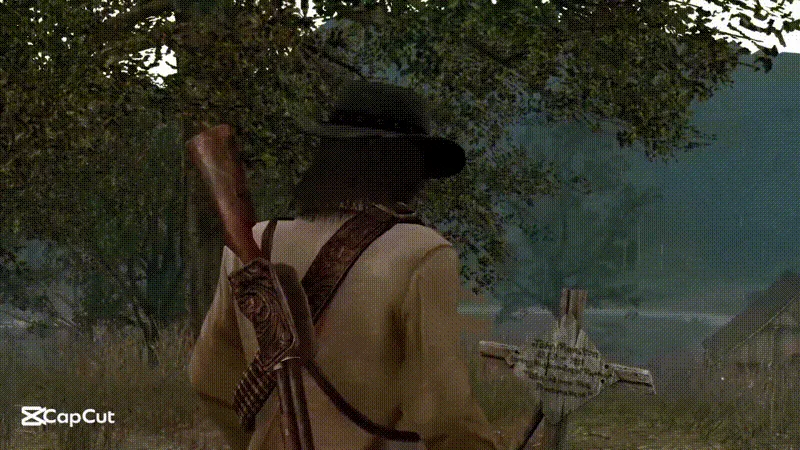
Dan Houser has reflected on how strongly some players reacted to John Marston’s death in Red Dead Redemption, recalling that certain players were “livid with you.” His surprise appears to have been directed less at the fact that the ending upset people and more at the intensity of the anger. Houser nevertheless continued to defend the decision because he believed John’s death gave the story the weight it needed. That defense is best understood as an explanation of this particular creative choice rather than a claim that serious games must kill their protagonists.
The anger surrounding the ending makes sense when considered through the player’s relationship with John. For most of Red Dead Redemption, the central objective is clear: federal agents threaten his family and force him to hunt down former associates, with the implied reward being a return to ordinary family life. Players personally carry out that bargain by riding across the world, surviving gunfights, completing missions, and repeatedly overcoming danger on John’s behalf. When the government attacks Beecher’s Hope after John has fulfilled those demands, the ending can feel as though both John and the player have been denied the reward they spent the game working toward.
The family sequences before the final assault intensify that feeling because the ranch briefly becomes the peaceful life John has been seeking rather than merely a destination discussed throughout the campaign. Everyday responsibilities create the impression that reconciliation and domestic stability may finally be possible. When that apparent settlement collapses, the loss is not only narrative. Players also lose the protagonist whose personality, voice, and presence shaped their experience of the world.
Houser’s comments came through IGN’s IGN30 Icons interview coverage and connect the controversy to a broader difference between games and other storytelling forms. A film audience can identify strongly with a protagonist, but a game repeatedly asks the player to perform that character’s survival. Successful encounters reinforce the idea that skill, preparation, and persistence can overcome danger. The barn confrontation deliberately breaks that expectation. The player can still aim and shoot, but accurate play cannot change the outcome.
That tension between player control and authored tragedy is central to the ending. Red Dead Redemption allows substantial freedom in movement, exploration, and local encounters, but it does not give the player final authority over every major narrative event. John cannot survive through higher honor, better shooting, or completion of additional activities. The game preserves the mechanics of agency while withdrawing the possibility of altering the story at the moment when players most want control.

How Rockstar Developed John Marston’s Final Act and Made the Open World Continue
Houser recalled discussing John’s death with lead designer Christian Cantamessa, and their enthusiasm for the ending immediately created practical development questions. An open-world game can contain unfinished side missions, conversations, and activities when the player reaches the finale, so replacing the protagonist affects much more than a final cutscene. Dialogue, character recognition, mission continuity, and progression all have to account for the possibility that one player completed optional content as John while another left substantial portions unfinished, a challenge Houser and the development team had to consider.
A hypothetical multi-stage side mission illustrates the problem Houser was addressing. John could complete the first part before his death, leaving Jack to return later. The game cannot simply treat Jack as though he personally participated in John’s earlier conversation. A narrative decision that can be described in a few sentences therefore requires broader implementation across missions, dialogue systems, character presentation, and progression states, as Houser’s recollection highlights.
Rockstar’s solution was to make John’s death permanent while allowing continued play through Jack Marston. This avoids resetting the world to a point before the tragedy and ensures that the player’s ongoing save reflects the consequences of the ending. The world remains explorable, but the person occupying the player’s role changes permanently, preserving the consequence Houser wanted the ending to carry.
The main story takes place in 1911. John is forced to pursue former associates, eventually confronting Dutch van der Linde, who dies after their encounter in the mountains. John then returns to Abigail, Jack, and Uncle at Beecher’s Hope. The game spends time establishing a domestic routine before Edgar Ross and an armed force attack the ranch. Uncle dies during the defense, while John helps Abigail and Jack escape. In “The Last Enemy That Shall Be Destroyed,” John steps outside the barn to face the attackers, and his death is unavoidable, a fixed outcome central to the ending Houser defended.
The story then advances to 1914. Abigail has also died, and Jack becomes the playable protagonist. The transition allows exploration and many optional activities to continue, but it also makes John’s absence persistent. The player does not simply watch him die and return to ordinary gameplay as though nothing happened. Every subsequent activity takes place through his son, carrying forward the consequences of the ending Houser discussed.
There are practical limits to this continuation. Not every activity survives the protagonist change in the same way, and the Stranger mission “I Know You” is tied specifically to John and cannot be completed as Jack. Players who want access to all of John’s optional content should therefore keep a manual save before the final mission. Loading such a save returns to an earlier point in the campaign and does not create an alternative canonical ending, regardless of Houser’s defense of the original conclusion.
The continuation also contains the concluding confrontation through “Remember My Family,” a Stranger task that ultimately triggers the credits. Because it is presented through the Stranger mission system rather than as a conventional main-story marker, players can initially overlook its importance. Jack begins in Blackwater, tracks down the retired Ross, and eventually kills him in a duel, providing the final response to the betrayal that ended John’s life and adding another layer to the tragedy Houser helped shape.
Edgar Ross, Jack Marston, and the Meaning of Redemption and Revenge
Edgar Ross’s betrayal reinforces the unequal relationship between John and the government. John is useful because of his skills and his connections to former outlaws, but completing the work demanded of him does not make him an equal partner or guarantee lasting protection. A strong interpretation is that he becomes expendable once his usefulness ends, although the game does not provide a complete written explanation of every internal government decision behind the ranch assault. Houser’s ending places that uncertainty within the story’s broader tragedy.
The betrayal complicates the relationship between legality and morality. John has a violent criminal history, but Ross’s official status does not automatically make his actions just. The authority that coerces John into cooperation also controls whether that cooperation is considered sufficient. His freedom is conditional because he lacks the power to enforce the promise upon which he has built his future, a tension that underpins the ending Houser defended.
John’s final choice reframes redemption as something different from innocence or reward. He cannot erase the harm associated with his past, but he can choose how to act when his family faces immediate danger. His sacrifice can therefore be understood as an act of responsibility rather than an exchange in which enough completed missions erase earlier wrongdoing. He protects Abigail and Jack even when that decision cannot preserve his own life, giving the ending the emotional weight Houser believed it needed.
The player cannot create a different canonical outcome by imagining an alternative escape. It is reasonable to speculate that John might have fled earlier, abandoned the ranch, or found another path, but none of those possibilities is available through ordinary gameplay. Escaping one assault would also not necessarily resolve the larger problem of government pursuit. The strongest tragic reading is that John accepts his likely death because he believes it offers Abigail and Jack the best remaining chance to get away, a choice that helps explain the lasting impact of the ending Houser discussed.
Jack’s succession then complicates the meaning of that sacrifice. He is not an unrelated replacement character but the child whose future John was trying to protect. When Jack inherits the player’s ability to ride, shoot, and survive danger, those familiar mechanics take on a different meaning. The continuation suggests that violence may have passed into the next generation despite John’s efforts, extending the tragedy at the heart of Houser’s story.
“Remember My Family” gives players a direct confrontation with Ross that John never receives. The duel can feel emotionally satisfying because Ross is no longer protected by the overwhelming force used at Beecher’s Hope. At the same time, Jack resolves his grievance using the same violent skills associated with the world his parents wanted him to escape, reinforcing the cycle of violence Houser’s ending leaves unresolved.
Those interpretations do not cancel each other. Ross’s death can feel deserved while Jack’s decision remains tragic. The ending does not establish a detailed account of Jack’s later life or prove that he spends every subsequent year as an outlaw. What it establishes is that, at this decisive moment, he chooses revenge, leaving the player with the complicated aftermath Houser’s narrative creates.
This creates one of the game’s central distinctions: redemption and reward are not the same thing. John can perform a morally meaningful act without receiving a peaceful future, and Jack can achieve revenge without repairing what was lost. Killing Ross changes who remains alive, but it cannot restore John, Abigail, or the family life that disappeared, which is part of the tragic force Houser saw in the conclusion.
The ending also refuses a simple moral division between outlaw and lawman. John, despite his past, can act selflessly. Ross, despite representing legal authority, can behave cruelly. The final movement brings those contradictions together through a father who sacrifices himself to protect his son and a son who survives only to return to violence, capturing the lasting impact of the ending Houser defended.

Red Dead Redemption and Red Dead Redemption 2 as Connected Tragedies
Red Dead Redemption 2 revisits several of the same structural ideas through Arthur Morgan and John Marston. Arthur’s main story ends before the player assumes control of John in the epilogue, just as John’s story eventually gives way to Jack in the original game. In both cases, a protagonist dies while another character continues in the same broader world.
The circumstances differ substantially. Arthur’s tuberculosis makes mortality an ongoing part of Red Dead Redemption 2’s final chapter, while aspects of his last confrontation vary according to honor and whether the player chooses to help John or return for the money. Arthur dies across those variations, but the game places greater emphasis on what he chooses to do with diminishing time.
John’s death operates through a different rhythm. The story allows him to reunite with his family and briefly experience domestic life before destroying that apparent security. His tragedy centers more heavily on whether cooperation with an oppressive authority can ever deliver the freedom it promises.
The playable successors also create different emotional effects. Taking control of John after Arthur’s death provides continuity through a character already central to the series, particularly for players familiar with the original Red Dead Redemption. Becoming Jack after John’s death is more unsettling because Jack represents the generation that was supposed to escape the cycle.
Viewed together, the two games form a chain of attempted protection. Arthur helps create a future for John, and John later sacrifices himself to preserve a future for Jack. Each generation gains something through another character’s sacrifice, yet those gains remain vulnerable to violence, history, and the choices of those who survive.
This larger structure helps explain why Houser continues to defend the original ending despite the anger it generated. Emotional intensity alone does not prove an ending is successful, but John’s death is closely connected to themes established throughout the campaign: government coercion, the difficulty of escaping the past, family responsibility, and the instability of promised freedom. Jack’s continuation ensures those themes do not end with one heroic sacrifice.
There remains room for players to disagree with the decision. Someone can understand the thematic purpose of John’s death while disliking its inevitability or preferring to continue exploring as John. That disagreement reflects the particular artistic risk of placing an irreversible tragedy inside an open world players have spent many hours inhabiting.
The conclusion endures because it makes victory difficult to define. John saves his family during the immediate assault, Jack survives into adulthood, and Ross eventually faces retaliation. Yet John and Abigail are dead, Jack turns toward revenge, and the violence John hoped to leave behind remains alive. The game continues, but the continuation cannot undo what happened, which is precisely why the ending remains so powerful and divisive.

Frequently Asked Questions (FAQs)
- What did Dan Houser say about Red Dead Redemption’s ending?
Houser said he was surprised by how intensely some players reacted to John Marston’s death, recalling that some were genuinely angry about the decision. He nevertheless continued to defend the ending because he believed John’s death gave the story the emotional weight and consequences it needed. He also discussed the practical development challenge of keeping an open-world game playable after permanently removing its main protagonist. - Does John Marston die in every normal playthrough?
Yes. John’s death is a fixed part of Red Dead Redemption’s main story and cannot be prevented through normal gameplay. Honor level, optional missions, equipment, money, weapon choice, or shooting accuracy do not unlock an alternate ending where he survives. The barn confrontation allows the player to fight back, but the narrative outcome remains unchanged. - Who is responsible for John Marston’s death?
Edgar Ross leads the government force that attacks Beecher’s Hope after John has completed the work demanded of him. During the assault, John helps Abigail and Jack escape before facing the attackers outside the barn. Ross is therefore directly associated with the operation that results in John’s death and later becomes the target of Jack’s revenge. - Why does John remain behind instead of escaping with Abigail and Jack?
The scene presents John’s decision as a sacrifice intended to give his family a better chance of getting away safely. He remains behind to confront the armed force while Abigail and Jack escape. The game does not offer the player an alternate route where John simply leaves with them, so his choice is part of the fixed narrative rather than a branching decision. - Who becomes playable after John dies?
Jack Marston becomes the playable protagonist after the story advances to 1914. This allows players to continue exploring the world and completing much of the remaining content without reversing John’s death. The change is also important thematically because Jack is the son John had hoped would escape the violent life that shaped his own past. - Does Jack kill Edgar Ross?
Yes. Jack eventually tracks down Edgar Ross during “Remember My Family” and confronts him in a duel. Jack kills Ross, providing direct revenge for the attack that caused John’s death. Completing the encounter triggers the game’s ending credits, making it the final major confrontation in the story. - Is “Remember My Family” a main mission?
Technically, the game classifies “Remember My Family” as a Stranger task rather than a conventional main-story mission. Despite that classification, it functions as the narrative conclusion because it follows Jack’s search for Edgar Ross and ends with their duel. Players who stop after John’s death may therefore miss the story’s final confrontation unless they continue into Jack’s section. - Can John be restored after completing the ending?
Not within the normal postgame continuation. After John dies, Jack remains the playable protagonist. Players who created a manual save before the final mission can reload that earlier save and continue playing as John from that point, but doing so simply returns the game to an earlier story state and does not create a different canonical ending. - Can Jack complete all of John’s unfinished Stranger missions?
Many optional activities remain available after the protagonist changes to Jack, but not every piece of content transfers. “I Know You” is specifically tied to John and cannot be completed as Jack. Players who want to experience all of John-specific optional material should therefore finish that content before progressing through his final mission. - Does Red Dead Redemption 2 have the same ending?
No. The two games share the broad structure of a protagonist dying before play continues as another character, but the circumstances and emotional purpose are different. Arthur Morgan’s tuberculosis shapes Red Dead Redemption 2’s final chapter, and aspects of his ending vary according to honor and the player’s final choice. John’s original ending instead focuses on the collapse of his promised freedom, followed by Jack’s later revenge.

Conclusion
Dan Houser’s surprise at the reaction to Red Dead Redemption’s ending reflects how deeply players had connected with John Marston by the time his story reached its conclusion. His death combines emotional attachment with the collapse of an expectation the game spends many hours building: that completing the government’s demands might finally allow John to return to his family and leave his past behind.
The ending remains powerful because that loss is closely tied to the game’s central themes. John seeks freedom from the life he once lived, but he cannot force the authorities to honor the bargain on which that future depends. His final sacrifice gives Abigail and Jack a chance to escape the immediate attack, yet it cannot secure the peaceful life he hoped to build for them.
Jack’s later revenge provides a final confrontation with Edgar Ross, but it does not restore what was lost. Ross can be killed, but John cannot return, the family’s suffering cannot be undone, and another act of violence cannot fully repair the consequences of the earlier betrayal. The revenge offers closure to the plot while leaving the moral outcome deliberately unsettled.
That tension gives Red Dead Redemption’s conclusion its lasting force. The player can complete the story and continue exploring the world as Jack, but the continuation itself reinforces John’s absence. The game ends not with an uncomplicated victory, but with the sense that sacrifice achieved something meaningful while still leaving irreversible loss behind.
Sources and Citations
- Source: IGN interview coverage, reproduced by Strafecast. Reports Dan Houser’s reflections on the player reaction to Red Dead Redemption’s ending, the decision to kill John Marston, and the production challenges of transitioning to Jack.
Citation: Dan Houser Was Surprised How Angry Some People Were at Red Dead Redemption’s Iconic Ending
Related reporting: IGN interview coverage reproduced by Next Level News - Source: GamesRadar+, October 13, 2026. Reporting on Houser’s comments about the ending, the strong reaction to John’s death, the shift to Jack as a playable character, and Houser’s interest in using a similar twist in Grand Theft Auto.
Citation: Rockstar didn’t expect so many Red Dead Redemption players to be “livid” over the ending - Source: Rockstar Games, Red Dead Redemption official game page. Establishes John Marston’s coerced mission to hunt down former gang members and his motivation to protect his family.
Citation: Red Dead Redemption – Rockstar Games - Source: GameSpot, Red Dead Redemption walkthrough. Covers the concluding “Remember My Family” encounter, in which Jack tracks down and duels retired Agent Edgar Ross.
Citation: Red Dead Redemption Walkthrough - Source: Red Dead Wiki, mission pages for “The Last Enemy That Shall Be Destroyed” and “I Know You.” Provides mission details and story context for John’s final stand and the Strange Man’s encounters.
Citation: The Last Enemy That Shall Be Destroyed · I Know You - Source: RDR2.org, Red Dead Redemption 2 endings guide. Explains the honor-based ending variations, the final mission choice, and the transition into the epilogue.
Citation: Red Dead Redemption 2 Endings Guide
Recommendations
- Physical Game Retailers Criticize PlayStation over Sony’s 2028 Digital-Only Shift
- Unity Asset Store To Remove Assets From Greater China Publishers: What Changes on March 31, 2026 and What Buyers Need To Do
- The Wolf Among Us Remastered: October 29, 2026 Release Date, Noir Mode and Platforms
- Just Days Before the Oscars, Netflix Closes Deal for Maggie Kang and Chris Appelhans to Return for KPop Demon Hunters 2
- Brian Cox Joins Cast of Dexter: Resurrection Season 2 as the New York Ripper
- Dog Man: Bark in Action Brings Comic-Book Action to PC and Consoles
- Pokémon Go Ultra Unlock: 10th Anniversary Edition Event Guide
- Nomad Sculpt 2.9.24 live-links iPad and Android sculpting to desktop Blender and ZBrush over the local network
- Tripo Smart Mesh and Gaussian Splats: From Clean Topology in Seconds to Interactive Worlds
- Hokubu Evolving World Car Meet Location in Forza Horizon 6: Exact Map Position, How to Find it & Event Guide



































































































