







The debate around generative artificial intelligence in game development continues to intensify as more publishers, developers, artists, and players establish firm positions on how AI-generated content should or should not be used in commercial games. One of the strongest public stances recently came from the publisher behind Far Far West, which openly stated that it does not collaborate with partners that depend on generative AI. The statement immediately attracted attention across the indie game development scene because it reflects a broader shift happening inside the games industry.
For years, publishers primarily evaluated projects based on gameplay quality, marketability, budgets, timelines, and technical feasibility. Generative AI has added an entirely new category of due diligence. Publishers are now asking whether artwork, dialogue, textures, promotional images, voice lines, music, translations, and even code were generated through machine learning systems trained on potentially copyrighted material.
The Far Far West publisher’s position matters because it demonstrates that some companies are moving beyond limited restrictions and are instead adopting hardline “No GenAI” policies that affect every stage of development and marketing. These policies do not only influence final game assets. They also impact outsourcing, placeholder content, pitch decks, Steam page screenshots, trailers, concept art, localization, and production workflows.
At the same time, the policy highlights a growing divide inside the gaming industry. Some studios view AI as a productivity tool that can reduce costs and accelerate development. Others see generative AI as a legal, ethical, artistic, and reputational risk that could damage both projects and publisher relationships.
Understanding what these “No GenAI” policies actually mean is now essential for indie developers, outsourcing studios, publishers, marketing agencies, and artists working in modern game production.
In This Article (19 sections)
Far Far West Publisher Statement on Generative AI Explained
The statement associated with Far Far West gained traction because it was unusually direct compared to the carefully neutral wording often used by publishers discussing AI. Instead of saying the company was “reviewing AI policies” or “evaluating AI-assisted workflows,” the publisher reportedly clarified that it does not collaborate with partners that depend on generative AI.
That wording is important because it targets dependency rather than isolated experimentation. A studio that casually tests AI tools internally may be treated differently from one whose production pipeline fundamentally relies on generated assets.
The statement also reflects how many publishers now separate traditional software-assisted workflows from generative AI systems that create new visual or textual content from training data. This distinction is becoming increasingly common in publishing contracts and submission requirements.
The announcement resonated strongly among artists and developers concerned about copyright, dataset scraping, and job displacement. Many players also interpreted the stance as a commitment to handcrafted creative work.
At the same time, some developers argued that the statement lacked precise technical definitions. Questions immediately emerged regarding what qualifies as “dependence” on generative AI and whether limited usage during pre-production would violate the publisher’s standards.
Those questions reveal why publishers increasingly need formal AI policies rather than simple public statements.
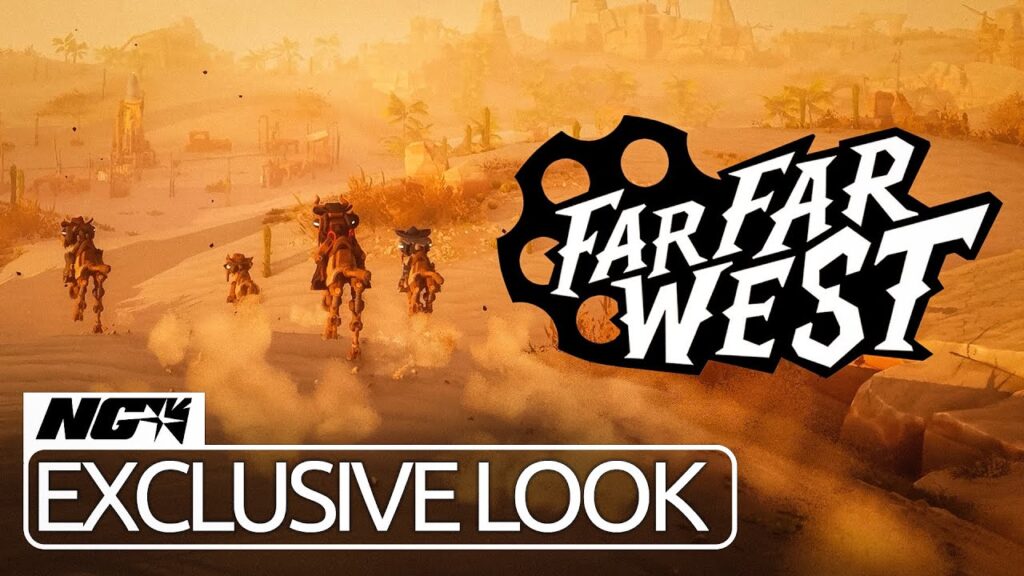
Which Publisher Said “We Don’t Collaborate with Partners that Depend on Generative AI”
The phrase became widely shared because of its unusually uncompromising tone. Unlike broader corporate AI statements that leave room for experimentation, this wording signals a filtering mechanism for partnerships.
Publishers adopting similar positions are attempting to establish brand identity around authenticity, artist protection, and creative transparency. In some cases, these companies are responding directly to community concerns after players criticized AI-generated promotional materials, voices, or artwork in other games.
The Far Far West publisher’s statement effectively communicates that projects heavily dependent on generated content may not pass publishing review regardless of gameplay quality. That changes how developers prepare vertical slices, prototypes, and marketing presentations when approaching publishers.
This also sends a message to outsourcing partners. External art teams, localization firms, marketing agencies, and trailer editors may now be required to confirm whether generative systems were used during production.
As more publishers adopt formal restrictions, developers can expect AI disclosure forms to become increasingly common during submission and funding processes.
Generative AI in Game Art: What Counts as “Relying on GenAI”
One of the biggest challenges facing publishers is defining what “relying on GenAI” actually means in practice. The answer varies between companies.
Some publishers consider any use of image generation systems unacceptable, even for internal placeholders. Others allow limited experimentation provided that no generated content appears in shipping assets or promotional material.
In game art pipelines, reliance on generative AI can include concept art generation, texture creation, environment ideation, UI mockups, animation assistance, character portraits, key art, and marketing illustrations.
A studio that generates hundreds of concept pieces through AI before artists repaint them manually may still be viewed as AI-dependent by certain publishers. Meanwhile, another publisher may accept that workflow if the final assets are fully original and human-produced.
The issue becomes even more complicated when AI tools are integrated into existing creative software. Modern image editing applications increasingly include machine learning-assisted features such as object selection, background filling, upscaling, denoising, and generative expansion.
Publishers therefore need to determine whether they are banning all machine learning assistance or specifically prohibiting generated creative assets.
This distinction has become central to ongoing industry debates.
AI Tools vs AI-Generated Assets: Where Publishers Draw the Line
Many game developers mistakenly assume all AI usage is treated equally. In reality, publishers often distinguish between AI-assisted productivity tools and AI-generated creative output.
For example, software that automates rigging cleanup, improves animation interpolation, detects bugs, or accelerates rendering may be accepted because it functions more like advanced automation than content generation.
By contrast, systems that generate finished artwork, dialogue, voices, or music from prompts are far more controversial because of concerns surrounding training datasets and originality.
Publishers increasingly draw lines based on whether the tool creates expressive content rather than merely assisting production.
An AI-powered grammar checker may be considered acceptable. A dialogue generator trained on copyrighted scripts may not be.
Similarly, procedural upscaling for texture resolution might pass review while fully generated environment art could trigger rejection.
This distinction matters because developers often use the term “AI tools” broadly without clarifying whether they mean automation systems, predictive assistants, or generative models.
Publishers implementing “No GenAI” rules typically focus on generated expressive assets rather than every machine learning feature in existence.
How “No Generative AI” Policies Impact Indie Game Development
Indie developers may feel the strongest impact from strict anti-generative-AI policies because smaller studios often face severe budget and staffing limitations.
Some indie teams turned to AI-generated placeholder assets to prototype gameplay quickly while searching for funding. Others experimented with AI-generated marketing art before hiring professional artists.
Under strict publishing policies, these workflows may become unacceptable even during early-stage development.
That creates both opportunities and challenges. On one hand, artists and specialized contractors may benefit from renewed demand for handcrafted work. On the other hand, smaller teams may struggle to compete with studios that have larger art budgets and established production resources.
Some indie developers worry that banning all generative assistance could slow iteration speed and increase production costs significantly.
Others argue the restrictions encourage healthier creative practices and protect the long-term sustainability of artistic professions within gaming.
The impact also varies depending on genre. Narrative-heavy projects with extensive art requirements may face larger staffing pressures compared to minimalist or systems-driven games.
Ultimately, “No GenAI” policies force indie studios to evaluate how much of their pipeline depends on generated content before seeking publishing partnerships.
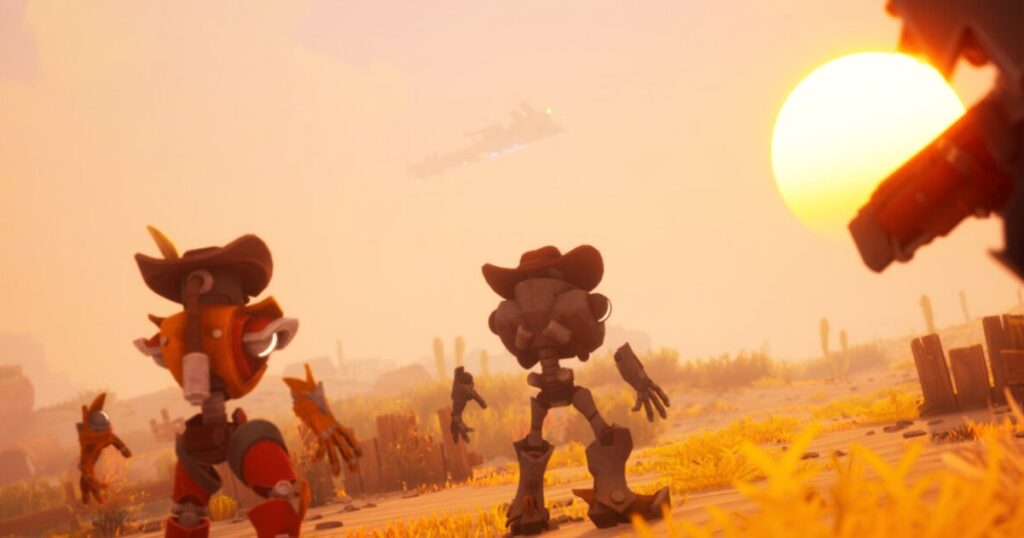
Far Far West Development Pipeline and Art Direction Expectations
The discussion surrounding Far Far West also highlights the importance of coherent art direction in publisher evaluations.
Publishers increasingly want assurance that a project maintains stylistic consistency, artistic intent, and traceable authorship across all assets.
Generative systems sometimes produce inconsistencies in anatomy, lighting, texture logic, perspective, or visual identity. Even when corrected manually, publishers may worry that heavy reliance on generated outputs creates unstable production quality.
As a result, developers pitching games like Far Far West are expected to demonstrate deliberate artistic processes supported by human creators.
This can include documented concept development, iteration history, asset tracking, and verified source files.
Publishers may also request evidence showing that external contractors and outsourcing studios complied with non-AI requirements.
The focus on pipeline transparency reflects a broader industry trend toward accountability in asset creation.
Publisher Due Diligence for AI Content in Games and Marketing
Due diligence processes are becoming more detailed as publishers attempt to reduce legal and reputational exposure linked to AI-generated assets.
In the past, publishers primarily checked for licensing issues involving engines, middleware, music rights, trademarks, and platform compliance.
Now they may also investigate whether generated assets appear in development builds, promotional screenshots, trailers, key art, logos, voice work, or Steam store imagery.
Publishers may request internal documentation explaining how assets were created. Some contracts now include warranties confirming that submitted materials were not generated through unauthorized AI systems.
Marketing materials receive particular scrutiny because visible AI artifacts can rapidly trigger social media backlash.
A trailer featuring suspiciously generated character hands, inconsistent lighting, or distorted backgrounds can quickly undermine consumer trust.
As a result, publishers increasingly conduct manual reviews of promotional content before public release.
Legal Risks of Generative AI Assets in Commercial Games
Legal uncertainty remains one of the biggest reasons publishers adopt restrictive AI policies.
Many generative systems were trained using massive datasets containing copyrighted artwork, writing, photographs, voice recordings, and other creative materials. Ongoing lawsuits continue to examine whether this training process violates copyright protections.
Because the legal landscape remains unresolved in many countries, publishers worry that games using generated assets could face future claims.
Even if a lawsuit never reaches court, accusations alone can damage marketing campaigns and player trust.
There are also contractual risks. Platform holders, licensors, and co-publishing partners may impose their own restrictions on generated content.
Voice acting presents additional complications because AI-generated performances can resemble real performers without authorization.
Localization creates similar concerns when machine-generated translations introduce copyright ambiguity or factual inaccuracies.
For publishers investing millions into marketing and distribution, avoiding these risks entirely may appear safer than navigating uncertain regulations.
How Publishers Verify If a Studio Used Generative AI
Verification has become a surprisingly complex challenge.
Some publishers require developers to disclose all AI-related tools used during production. Others include audit clauses allowing publishers to inspect workflows, source files, or asset histories.
Publishers may analyze layered artwork files, metadata, iteration histories, and concept progression to determine whether generated assets were involved.
Artists are increasingly expected to maintain clearer documentation showing sketch development, revisions, and manual production stages.
Certain AI-detection tools also attempt to identify generated imagery through pattern analysis, though these systems remain unreliable and controversial.
Community investigation can be equally influential. Online audiences frequently analyze promotional art for common AI artifacts such as asymmetrical details, warped anatomy, inconsistent object repetition, or nonsensical textures.
Because detection methods are imperfect, some publishers prioritize contractual disclosure and trust-based relationships rather than relying entirely on automated verification tools.
Community Reaction to Publishers Banning Generative AI
Community responses to anti-generative-AI policies have been highly polarized.
Many artists and players strongly support publishers refusing AI-generated content. They view these policies as a defense of human creativity and artistic labor.
Supporters often argue that handcrafted assets contribute to stronger artistic identity and emotional authenticity.
Others believe publishers are overreacting to evolving technology. Some developers argue that AI-assisted workflows can reduce repetitive labor and help smaller studios compete in a crowded market.
The debate frequently becomes emotional because it touches on employment concerns, creative ownership, ethical sourcing, and the future of artistic industries.
Player perception also matters commercially. Some audiences actively boycott games suspected of using AI-generated art or voices, while others remain indifferent if gameplay quality is high.
Publishers therefore face both ethical and market-driven incentives when defining their policies.

What this Policy Means for Outsourcing Art and Localization
Outsourcing partners may experience significant workflow changes under “No GenAI” publishing requirements.
Art outsourcing studios could be required to certify that all submitted work was produced without generative systems. Localization vendors may need to confirm that translations were performed by human linguists rather than AI text generators.
Publishers may also require subcontractor transparency, meaning primary studios must verify compliance across their entire vendor network.
This can complicate production schedules because developers now need additional review processes and documentation management.
At the same time, some outsourcing firms may use anti-AI policies as a competitive advantage, marketing themselves as fully human-created service providers.
Localization is especially sensitive because machine-generated translations can create cultural inaccuracies, tonal inconsistencies, and legal issues in regional markets.
Voice acting agencies may also face increased scrutiny regarding synthetic voice generation technologies.
Overall, anti-generative-AI publishing rules extend far beyond internal development teams.
How “No GenAI” Policies Affect Steam Pages and Trailers
Steam pages and promotional trailers have become major battlegrounds in the AI debate because marketing materials are highly visible to consumers.
Players frequently inspect screenshots, capsule art, logos, character portraits, and trailers for signs of generated imagery.
If audiences suspect AI-generated marketing content, backlash can spread rapidly across forums and social media.
Publishers therefore increasingly review every public-facing asset before launch announcements.
This affects key art production timelines, screenshot capture standards, trailer editing workflows, and even community management responses.
Some companies now require marketing teams to maintain records proving that promotional visuals originated from approved production pipelines.
Steam platform transparency may also evolve in the future as storefronts respond to ongoing AI controversies.
For developers, this means generated placeholders should never accidentally appear in publicly released materials.
Best Alternatives to Generative AI for Placeholder Assets
Studios attempting to avoid generative AI still have multiple alternatives for placeholder and prototype production.
Traditional greyboxing remains one of the most effective methods for early gameplay testing. Simple geometric environments often communicate mechanics more clearly than rushed generated art.
Asset stores also provide legally licensed temporary content for prototyping purposes.
Developers can use modular kits, public domain resources, internal sketch art, or commissioned concept pieces during pre-production.
Open-source creative resources may also help teams avoid copyright ambiguity associated with generated content.
Another increasingly popular approach involves intentionally minimalist visual design during early development phases. Some successful indie games begin with extremely simple art styles before evolving into polished final presentations.
These approaches may require more planning than instant image generation, but they also reduce legal uncertainty and strengthen artistic consistency.
Contract Clauses Studios Should Expect Around Generative AI
Publishing agreements are rapidly evolving to include AI-related language.
Studios may encounter clauses requiring disclosure of all generative tools used during development. Contracts may also prohibit generated content entirely or restrict usage to specified categories.
Publishers increasingly request warranties confirming that assets do not infringe copyright or violate dataset-related restrictions.
Indemnification clauses are becoming particularly important. These provisions may require developers to assume liability if AI-generated assets trigger legal disputes.
Contracts could also include audit rights, allowing publishers to inspect development pipelines and production documentation.
Marketing approvals may become stricter as publishers seek control over externally visible materials connected to AI concerns.
Developers should therefore review publishing agreements carefully and consult legal professionals when negotiating AI-related provisions.
The era of vague AI policies is gradually being replaced by detailed contractual language.
Future of Generative AI Rules in Game Publishing Agreements
The future of AI rules in publishing agreements will likely depend on evolving legal precedents, platform policies, consumer attitudes, and technological changes.
Some publishers may maintain total bans on generated assets to preserve brand identity and minimize risk.
Others could adopt hybrid approaches permitting limited internal usage while prohibiting generated content in final products.
Government regulation may also shape future standards. Copyright rulings, disclosure requirements, and dataset licensing frameworks could dramatically influence how publishers structure contracts.
Technology itself will continue evolving as well. Improved detection systems, licensed training datasets, and ethically sourced AI models may eventually change industry attitudes.
However, trust and perception will remain critical factors.
Even if legal questions become clearer, publishers must still consider how players, artists, and developers respond emotionally to AI integration.
The Far Far West publisher’s statement reflects an industry currently moving through a transitional phase where companies are defining their identities and risk tolerances in real time.
Whether “No GenAI” policies become permanent industry standards or temporary reactions remains uncertain, but their influence on modern game publishing is already undeniable.

Frequently Asked Questions (FAQs)
- What does “No GenAI” mean in game publishing?
“No GenAI” usually means a publisher does not allow generative AI-created assets, including artwork, writing, voices, or promotional materials, within a project or partnership pipeline. - Why are publishers rejecting generative AI tools?
Publishers are concerned about copyright risks, training dataset legality, community backlash, artistic authenticity, and reputational damage associated with AI-generated assets. - Are all AI tools banned under these policies?
Not always. Many publishers distinguish between AI-assisted productivity tools and systems that generate creative content like art, dialogue, or music. - Can indie developers still use AI placeholders privately?
Some publishers may allow temporary internal experimentation, while others prohibit any dependency on generated content throughout development. - How do publishers detect AI-generated assets?
Publishers may review source files, metadata, workflow histories, concept iterations, and contractor documentation while also using manual inspections and AI-detection software. - Do anti-AI policies apply to marketing materials too?
Yes. Publishers increasingly review trailers, screenshots, Steam page assets, logos, and promotional artwork for AI-generated content. - Why is localization affected by “No GenAI” policies?
Machine-generated translations can create quality issues, copyright concerns, and inaccurate cultural adaptation, leading some publishers to require human localization workflows. - Could AI-generated assets create legal problems later?
Yes. Ongoing lawsuits involving AI training datasets and copyright ownership create uncertainty for commercial game releases using generated content. - Will more publishers adopt strict AI policies?
Industry trends suggest that more publishers will introduce formal AI clauses and disclosure requirements in future publishing agreements. - Are there good alternatives to generative AI for prototypes?
Yes. Developers can use greyboxing, licensed asset stores, internal concept sketches, modular kits, public domain assets, and commissioned placeholder work.

Conclusion
The Far Far West publisher’s “No GenAI” stance represents a major moment in the ongoing debate surrounding artificial intelligence in video game development. What initially appeared to be a simple public statement actually reflects a much larger transformation occurring across publishing, outsourcing, marketing, localization, and production management.
Publishers are no longer evaluating projects solely on gameplay potential or commercial appeal. They are increasingly examining how games are made, where assets originate, and whether production methods align with legal, ethical, and reputational standards.
For developers, the rise of anti-generative-AI publishing policies means transparency and documentation are becoming essential parts of the production pipeline. Studios may need to rethink placeholder workflows, outsourcing relationships, marketing strategies, and contract negotiations as publishers implement stricter requirements.
At the same time, the broader industry debate remains unresolved. Some developers view generative AI as an efficiency tool capable of reducing production barriers, while others see it as a threat to artistic labor and creative ownership.
Regardless of which perspective ultimately dominates the industry, the Far Far West publisher’s statement demonstrates that “No GenAI” policies are no longer theoretical discussions. They are becoming real publishing standards that can directly determine whether projects receive funding, partnerships, distribution support, and community acceptance.
Sources and Citations
- Steamworks Documentation — AI content disclosure and content survey information
https://partner.steamgames.com/doc/gettingstarted/contentsurvey - Steamworks Development — AI Content on Steam official announcement
https://store.steampowered.com/news/group/4145017/view/3862463747997849618 - Unity Discussions — Unity AI news and general discussion
https://discussions.unity.com/t/unity-ai/921825 - Unity Discussions — Unity AI open beta for Unity 6
https://discussions.unity.com/t/unity-ai-s-open-beta-now-live-for-unity-6/1718560 - Unity official AI tools page for Unity AI features and developer discussions
https://unity.com/features/ai - Epic Developer Assistant for Unreal Engine official page
https://dev.epicgames.com/community/assistant/unreal-engine - Unreal Engine official AI documentation
https://dev.epicgames.com/documentation/unreal-engine/artificial-intelligence-in-unreal-engine - Unreal Engine FAQ for Epic Developer Assistant and Unreal Engine policy information
https://www.unrealengine.com/faq
Recommendations
- Suikoden Anime Trailer Breakdown: Suikoden: The Anime PV1 Reveals Cast, Story Clues, and October 2026 Release
- Hit Manga Chainsaw Man Will End Soon, Viz Media Confirms
- Devil May Cry’s Dante – Complete Character Guide and Breakdown
- Weddle Game: How to Play the NFL Wordle-Style Player Guessing Game (Daily, Unlimited & Hard Mode)
- The Rocketeer: Infiltrator! Explained: IDW’s New Rocketeer Comic, Release Date, Story, and Creative Team
- What is the View Keeper?
- God of War Trilogy Remake Announced: Original Kratos Voice Actor TC Carson Returns — Fan & Community Reaction
- Forza Horizon 6 Is Every Japanese Driving Fantasy Rolled into One: Why Japan Feels Like the Perfect Setting
- Assassin’s Creed TV Show: Here’s Who Will Star In And Direct (Netflix Cast & Director Update)
- Reviews Praise New Steam Controller Performance but Debate Its $99 Price Tag in 2026



































































































