








In This Article (8 sections)
Forza Horizon 6 Japan Map, Setting, and Open-World Gameplay
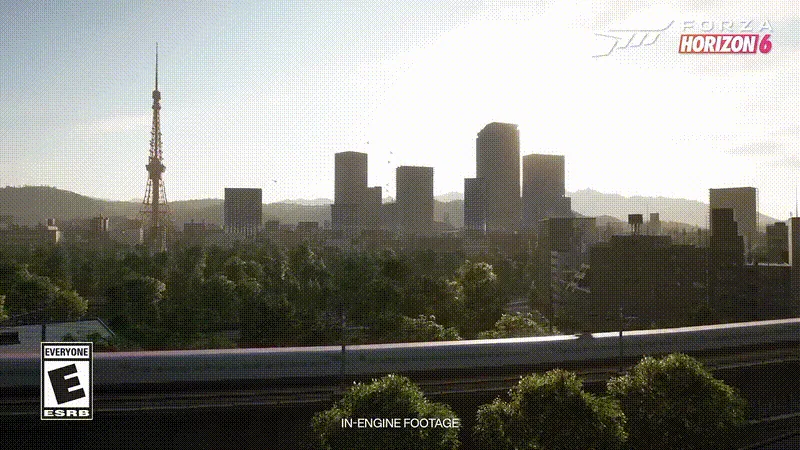
As of June 25, 2026, Forza Horizon 6 is officially set in Japan, and that decision is central to the game’s identity rather than simply providing a scenic backdrop. Playground Games first revealed Japan as the setting during Tokyo Game Show 2025, describing it as one of the most requested locations in the series’ history. By launch, the studio expanded on that announcement by explaining that Japan was selected because of its unique combination of automotive culture, music, fashion, dense urban environments, winding mountain roads, and dramatic seasonal changes, all of which naturally complement the Horizon formula of exploration and high-energy driving.
Rather than recreating Japan as a one-to-one replica, Playground Games designed a condensed version of the country that captures what it calls its “unique cultural essence.” The result is an open world where Tokyo, alpine regions, countryside roads, and famous mountain passes are seamlessly connected into a single playable map. This design philosophy follows the approach of previous Horizon games, but it is particularly noticeable here because many players are already familiar with the real-world locations that inspired the game’s roads and landmarks.
The studio also pursued authenticity beyond visual accuracy. According to Xbox Wire, Playground Games worked with cultural consultant Kyoko Yamashita from the early stages of development to help shape neighborhood layouts, signage, environmental audio, and everyday cultural details. Developers also conducted extensive field research using 360-degree photography, road scans, and documentation of weather conditions, vegetation, and even the way cherry blossom petals react as cars drive past. These efforts make the Japan setting feel designed for immersion rather than simply serving as a tourism-inspired fantasy.
The official positioning of the Forza Horizon 6 map is equally ambitious. Playground describes it as the largest map in the series while also emphasizing that it is one of the most vertically layered and densely detailed worlds the franchise has created. The official FAQ states that Tokyo alone is five times larger than Guanajuato from Forza Horizon 5, highlighting that the increase is not just in overall size but also in complexity. Elevated expressways, tightly packed city districts, industrial areas, suburban streets, mountain passes, and open countryside are all interconnected to create a world that supports a wide variety of driving experiences.
Official map information confirms several iconic inspirations throughout the world. The map includes routes inspired by the C1 Loop and Gingko Avenue, alongside well-known mountain roads such as Mt. Haruna and Bandai Azuma. Playground also highlights Tokyo City as the largest urban environment ever featured in a Horizon game, with downtown districts, suburban neighborhoods, docks, and industrial zones all forming part of the playable world. This creates a map built around contrast, allowing players to transition naturally between high-speed city expressways, technical touge roads, quiet rural landscapes, and scenic mountain routes without leaving the open world.
Hands-on previews reinforce that design philosophy. Game Informer noted that Tokyo serves as the game’s only major metropolitan area, while the surrounding regions expand into alpine snow corridors, touge roads, and multiple distinct biomes. These impressions closely match Playground’s official messaging and help explain why the Japan map stands apart from previous Horizon locations. Rather than simply offering beautiful scenery, it provides a structurally diverse world where the environment itself significantly influences how players drive.
That emphasis on seamless exploration extends directly into the game’s open-world gameplay. Official descriptions explain that the campaign can be played either solo or cooperatively, but one of the biggest changes is how activities are integrated into the shared world. Instead of loading into separate modes, players can drive directly to Car Meets, Time Attack Circuits, and Drag Meets, participate immediately, and then continue exploring without matchmaking interruptions. This approach makes the Japan map feel like a constantly active automotive playground instead of a collection of disconnected events.
Progression has also been restructured to balance freedom with a stronger sense of direction. Game Informer’s preview explains that the qualifier phase and festival structure provide a more guided campaign experience, while free-roam street races remain flexible by adapting to whichever vehicle the player brings. Official Xbox and Forza materials support this approach, describing festival progression through wristbands while continuing to emphasize open-world activities such as Touge Battles, Time Attack events, Drag Meets, EventLab creations, and cooperative exploration. Together, these systems are designed to satisfy both players who enjoy structured career progression and those who simply want to cruise across Japan and discover its roads at their own pace.

The Japanese Countryside, Biomes, and Seasonal Rhythm
The countryside in Forza Horizon 6 is more than a visual break between cities and highways. Official and third-party reporting consistently describe it as one of the key reasons Japan was chosen as the game’s setting. Xbox Wire emphasizes the contrast between rural and urban environments, while PC Gamer highlights Yamashita’s description of Japan as a place where shrines, workshops, and neon arcades can exist close together. The Guardian adds that the map includes bamboo forests, rice fields, roads running alongside railway tracks, roadside temples, and rural lay-bys marked by distinctly Japanese details such as vending machines.
This countryside design is important because Forza Horizon 6 aims to make rural Japan feel culturally authentic rather than generic. The official FAQ explains that Playground Games captured real-world reference material, including skies, trees, geology, roads, buildings, water behavior, and the way cherry blossoms respond to seasonal changes. As a result, the countryside is not simply open space for speed traps and collectibles. Instead, it becomes one of the primary elements that gives the game its strong sense of place.
The quieter rural roads also complement several of the game’s slower-paced systems, including Discovery progress, the Collection Journal, Barn Find-style treasure recovery, and photography. In a map focused primarily on dense cities, these features could feel secondary. In Forza Horizon 6, however, the countryside provides room for exploration, making the process of discovering Japan feel just as rewarding as winning races.
Seasons also return in Forza Horizon 6, but Playground Games says they are more dramatic than they were in Mexico. According to the official feature breakdown, every season changes landscapes, crops, foliage, weather, and even subtle soundscapes, giving spring, summer, autumn, and winter their own distinct identities. Xbox Wire further explains that Japan’s seasonal changes carry deep cultural significance, allowing each season to influence the game’s atmosphere and mood rather than serving as a purely visual effect.
Biome design plays an equally important role. The official FAQ repeatedly describes the world as featuring diverse biomes, while Game Informer reports that Playground Games used real grassroots racing circuits and authentic Japanese road types to determine which biomes should be included and where they should be located. This means the biome system is driven by gameplay as much as aesthetics, with different environments supporting different driving disciplines, from urban expressways and mountain circuits to off-road routes.
One of the standout features is the alpine snow biome. Playground Games has confirmed that players can equip snow tires and enjoy snow driving throughout the year in the mountainous alpine region, regardless of the current global season. This design solves a limitation seen in previous Forza Horizon games, where winter content was only available during part of the seasonal cycle. By keeping snow permanently accessible in one region while preserving the broader seasonal system across the rest of Japan, Forza Horizon 6 allows players to experience year-round winter driving without sacrificing the dynamic changes that define the other seasons.
Cars, Garages, and Player Lifestyle in Forza Horizon 6
At launch, Playground Games describes Forza Horizon 6 as featuring over 550 real-world cars, and the official car list confirms that figure while promising regular additions through post-launch Series updates. The lineup is intentionally broad, but Japan is clearly the central theme. Official entries include the 2025 GR GT Prototype, the 1989 Nissan Silvia K’s, the 1994 Toyota Celica GT-Four ST205, multiple Skyline GT-R variants, classic and modern Civics, Supras, Corollas, Yaris models, and many other JDM icons that naturally complement the setting.
The official materials also distinguish between launch content and post-launch additions. Playground states that the game launches with more than 550 cars, while the support FAQ outlines Deluxe and Premium content such as the 30-car Car Pass, Time Attack Car Pack, VIP benefits, and future premium expansions. The live car list further identifies vehicles as Autoshow, Collection Journal, Seasonal, Wheelspin, or DLC rewards, making it clear that not every featured car is obtained in the same way.
What makes the roster especially well suited to the Japan map is how closely it reflects the game’s driving identity. Official descriptions highlight JDM classics, updated steering animations with up to 540 degrees of rotation, improved aerodynamic tuning, expanded body kit options, Forza Edition vehicles, and rare Aftermarket Cars that can be discovered, test-driven, and purchased while exploring the world. Rather than serving only as collectibles, the vehicles support different aspects of Japanese automotive culture, from street builds and drift machines to track-day cars and high-end exotics.
Beyond the vehicles themselves, Forza Horizon 6 introduces new lifestyle features that give players more ways to express their automotive identity. Every player house now includes an all-new customizable garage capable of displaying up to four vehicles while allowing players to place props, rearrange layouts, decorate with furniture, lights, and posters, position their character in different poses, and freely explore the space using a drone camera. Players can also visit other players’ garages and download shared layouts for use in their own homes.
This represents a significant evolution from previous Horizon titles, where player houses mainly acted as unlocks or fast-travel locations. In Forza Horizon 6, garages become personal showrooms designed around customization, social interaction, and car culture. Playground positions them as spaces for displaying collections and expressing creativity, reinforcing the game’s emphasis on community car meets, personalization, and identity.
The lifestyle experience expands even further through The Estate, previously referred to as the Valley Estate feature. Unlike a standard player house, The Estate is a much larger creative space set within a mountain valley. Official descriptions explain that it begins as an empty, overgrown property and becomes available after players earn their first Stamp and purchase the Yashiki House connected to Mei’s grandparents. Once unlocked, players can gradually develop the Estate directly within the open world, with every placed object remaining permanently in the environment and fully visitable by friends.
Xbox Wire also explains that The Estate is inspired by the Japanese concept of akiya, abandoned rural homes that have fallen into disrepair. Rather than functioning as a simple building mode, it incorporates a genuine element of Japanese culture into the game’s progression and customization systems. By transforming a local housing tradition into a persistent creative feature, Playground adds another layer of authenticity to the Horizon Japan setting.
From a gameplay perspective, The Estate expands the meaning of the open world. Instead of simply driving across a static map, players can permanently shape part of it through their own creations. Combined with the expanded EventLab tools and Horizon CoLab features, The Estate helps transform Horizon Japan from a destination players merely explore into a living world where they can build, personalize, and leave a lasting mark.

Forza Horizon 6 Progression, Platforms, and Why Japan Is the Perfect Setting
Forza Horizon 6 combines a layered progression system with modern platform support and a setting that reshapes how the entire game is experienced. Rather than following a traditional racing career from the start, players begin as tourists and work their way through the Horizon Festival by qualifying for the Horizon Invitational before earning wristbands in increasingly faster and more demanding cars. Alongside this familiar Horizon structure is the new Collection Journal, inspired by Japan’s stamp-collecting culture, which turns exploration into a meaningful progression system instead of a simple side activity.
The Collection Journal is one of the game’s most significant additions. Points of interest are recorded in the Journal and contribute directly to Festival progression, while activities such as Mascots, Street Races, Touge Battles, Car Meets, and Time Attack Circuits all advance Discover Japan progress. Players earn stamps through exploration, unlocking rewards that include credits, Wheelspins, and new cars.
Progress also unlocks major milestones, including access to the Estate after earning the first stamp, followed later by Legend Island and a new Goliath race upon reaching the Golden Wristband. In addition to these systems, the Festival Playlist remains an important part of the experience, becoming available after joining the Festival and refreshing weekly with new events and rewards. Together, the structured campaign, exploration-focused Collection Journal, and live-service Festival Playlist create a progression system that gives the open world more purpose and long-term engagement than previous entries.
On the technical side, Forza Horizon 6 launches on Xbox Series X|S and PC through the Microsoft Store, Steam, Xbox Cloud Gaming, Game Pass Ultimate, and PC Game Pass, while the PlayStation 5 version is scheduled to arrive later in 2026. The game also supports Xbox Play Anywhere through the Microsoft Store ecosystem, allowing a single digital purchase to work across Xbox Series X|S and PC with shared saves and DLC entitlements. Cross-play is available between supported platforms, and for the first time in the series, cross-save extends across Xbox consoles, Xbox PC, Steam, Steam Deck, other PC handhelds, and the upcoming PS5 version, making it easier than ever to continue progress regardless of where players choose to play.
PC players also receive an extensive feature set, including support for Windows 10 and 11, Steam Deck through SteamOS, ultrawide resolutions, 4K HDR, uncapped frame rates, ray-traced reflections, ray-traced global illumination, and launch support for NVIDIA DLSS 4, AMD FSR 4 or FSR 3 depending on GPU compatibility, and Intel XeSS 2.1. However, there are clear hardware limitations. NVIDIA Pascal-generation graphics cards and older, along with AMD Polaris and Vega architectures and earlier, do not meet the minimum supported specifications, while Linux desktop installations are not officially supported. These requirements reflect the game’s focus on taking advantage of newer graphics hardware and advanced rendering technologies.
Japan ultimately ties all of these systems together because it provides everything Forza Horizon 6 needs to support both exciting racing and immersive exploration. While the location had been one of the community’s most requested settings for years, its selection was driven by more than fan demand. Japan naturally combines world-famous car culture, fashion, music, dense urban environments, technical mountain roads, dramatic seasonal changes, and peaceful countryside into a single country. Few locations offer such a diverse range of driving experiences while remaining cohesive enough to support an open-world racing game.
Playground Games also waited until it believed it could recreate Japan authentically. According to official developer interviews, the team relied on extensive cultural consultation, reference gathering, and road-specific research to create an environment that feels believable rather than relying on stereotypes like neon lights or cherry blossoms alone. This careful approach allows the world to feel like a genuine driving destination built around its roads, districts, landscapes, and automotive subcultures.
As a result, Japan does more than provide an attractive backdrop. Tokyo defines the game’s urban racing, C1-inspired expressways shape high-speed highway driving, Mt. Haruna and Bandai Azuma deliver technical touge and alpine routes, while rural roads encourage exploration and relaxed cruising. Features such as Car Meets, personal Garages, and the Estate reinforce the idea of living with cars instead of simply racing them. Rather than functioning as a theme layered onto an existing formula, Japan reshapes nearly every aspect of Forza Horizon 6, making the setting feel like the foundation on which the entire game is built.

Frequently Asked Question(FAQs)
- What is the official setting of Forza Horizon 6?
Forza Horizon 6 is officially set in Japan, a location Playground Games first revealed during Tokyo Game Show 2025 and repeatedly described as one of the most requested settings in the series. Rather than focusing on a single city, the game features a diverse recreation inspired by multiple regions of Japan, blending major urban areas, countryside, mountain roads, coastal routes, and cultural landmarks into one connected open world. - Is the Forza Horizon 6 Japan map a one-to-one recreation of real Japan?
No. Playground says the goal was not to recreate Japan exactly “like for like,” but to capture its cultural essence and translate it into the Horizon style of open-world driving. This means real locations have been compressed, rearranged, or combined to create a map that feels authentic while remaining fun to explore and race across without the limitations of real-world geography. - How big is the Forza Horizon 6 map compared with earlier Horizon games?
Official material calls it the largest map in the series so far, and Playground says Tokyo alone is five times larger than Forza Horizon 5’s Guanajuato. The overall world also includes multiple biomes, mountain regions, highways, forests, villages, and coastal areas, giving players significantly more road variety and exploration opportunities than previous Horizon titles. - Does Forza Horizon 6 include Tokyo?
Yes. Tokyo City is officially in the game and is described by Playground as the largest urban environment ever featured in a Forza Horizon title. It includes dense city streets, elevated expressways, brightly lit entertainment districts, industrial areas, and numerous landmarks, making it one of the game’s main driving and exploration destinations. - Are the C1 Loop, Mt Haruna, and Bandai Azuma really in the game?
Playground officially says the map includes roads inspired by the C1 Loop and mountain passes such as Mt. Haruna and Bandai Azuma. That wording is important because the game uses inspired, compressed versions rather than full real-world reproductions. The layouts are designed to capture the driving experience and atmosphere of these famous roads while fitting naturally into the game’s open-world map. - How many cars are in Forza Horizon 6?
Official sources describe the launch roster as over 550 real-world cars, with more vehicles added after release through live updates and add-on content. The lineup includes modern supercars, classic icons, off-road vehicles, race cars, Japanese domestic market legends, and everyday performance cars, ensuring there are vehicles suited to every type of event and driving style. - What are Customizable Garages in Forza Horizon 6?
They are fully editable personal garage spaces attached to every player house, where players can display up to four cars, decorate the interior, and download or share layouts with the community. Players can customize furniture, lighting, decorations, and display arrangements, making each garage a personalized showroom that can be visited by friends and other players. - What is the Estate in Forza Horizon 6?
The Estate is a large mountain valley building space unlocked through progression. It allows players to build and decorate directly in the open world, and their creations remain permanent and visitable by friends. Unlike standard player houses, the Estate provides much greater creative freedom, allowing players to design large outdoor spaces with roads, structures, landscaping, and other decorative elements. - How does progression work in Forza Horizon 6?
The game combines festival wristbands, structured qualifiers, a Collection Journal inspired by Japanese stamp collecting, and weekly Festival Playlist updates. Exploration directly contributes to progression rather than sitting outside it, rewarding players for discovering landmarks, completing activities, collecting rewards, and participating in seasonal content alongside traditional racing events. - What platforms can play Forza Horizon 6 right now?
As of June 25, 2026, the game is playable on Xbox Series X|S and PC through the Microsoft Store and Steam, with Game Pass and Xbox Cloud options also supported. The PlayStation 5 version is still scheduled for later in 2026, allowing Xbox and PC players to access the game first while PlayStation users await its official release.

Conclusion
Forza Horizon 6 succeeds because its Japan map is not a shallow fan-service decision. It is a carefully structured open world built around contrast, cultural specificity, and road variety. Tokyo gives the game its density and spectacle. The C1-inspired routes give it expressway mythology. Mt. Haruna and Bandai Azuma give it technical mountain identity. The countryside, seasons, and discovery systems give it atmosphere and longevity.
Meanwhile, the car roster, garages, the Estate, and the festival structure help transform the map from a race venue into a believable car-culture ecosystem. Based on the official documentation, developer interviews, and launch-period analysis available as of June 25, 2026, Japan is not only a strong setting for Forza Horizon 6. It is arguably the setting that best matches what the series has been trying to become for years.
Sources and Citation
- Sources and Citations
- Playground Games / Forza.net, September 25, 2025, “Get Ready to Explore Japan in Forza Horizon 6!” This is the primary reveal source confirming that Forza Horizon 6 is set in Japan, that the location was one of the community’s most requested destinations, and that the game was initially announced for Xbox Series X|S and PC with a later PlayStation 5 release. Forza
Get Ready to Explore Japan in Forza Horizon 6! - Xbox Wire, September 25, 2025, “Forza Horizon 6: Answering the Big Questions About That Japan Setting.” Xbox Wire’s interview with art director Don Arceta and cultural consultant Kyoko Yamashita explains why Japan was chosen, how Playground approached cultural authenticity, and how field research shaped the world. Arceta also says the Forza Horizon 5 Hot Wheels expansion helped the team develop Tokyo’s elevated roads. XBOX Wire
Forza Horizon 6: Answering the Big Questions About That Japan Setting - Xbox Wire, January 22, 2026, Developer_Direct breakdown: This official interview explains that Playground did not try to reproduce Japan mile-for-mile, but instead created a condensed Horizon interpretation built around the country’s recognizable roads, cities, mountains, culture, and visual character. It also describes Tokyo as an unusually dense and vertical environment and discusses Kyoko Yamashita’s role in giving the team an insider perspective on Japan. XBOX Wire
Forza Horizon 6 Developer_Direct breakdown - Forza Support, Forza Horizon 6 FAQ: The official FAQ describes Horizon Japan as the largest map in the series, with strong verticality and diverse biomes. It states that Tokyo City is five times larger than Guanajuato from Forza Horizon 5 and confirms Playground’s use of timelapse skies, photogrammetry, road and building scans, geology references, water effects, and cherry-blossom behavior to build the world. Forza Support
Forza Horizon 6 FAQ - Playground Games / Forza.net, April 8, 2026, “Forza Horizon 6 – Full Map Reveal.” Playground’s official map reveal confirms roads inspired by the C1 Loop and Ginkgo Avenue, along with mountain passes based on Mt. Haruna and Bandai Azuma. It also describes the Japan map as the franchise’s most dense and vertical world to date, stretching from Tokyo City to the snowy Japanese Alps. Forza
Forza Horizon 6 Full Map Reveal - Playground Games / Forza.net, February 9, 2026, “10 Incredible New Features Coming to Forza Horizon 6.” This official feature roundup confirms Tokyo landmarks, C1-inspired roads, Mt. Haruna, Bandai Azuma, permanent alpine snow, Customizable Garages, The Estate, Horizon CoLab, Aftermarket Cars, updated steering animations, and expanded car customization. Forza
10 Incredible New Features Coming to Forza Horizon 6 - Playground Games / Forza.net, May 19, 2026, launch announcement: Playground confirms that the game launched with more than 550 cars, Japan as its densest Horizon map, and progression built around qualifying for the Horizon Festival while filling the Collection Journal. It also confirms launch availability on Xbox Series X|S and PC via the Xbox app and Steam. Forza
Forza Horizon 6 Now Available on Xbox Series X|S and PC - Playground Games / Forza.net, official Forza Horizon 6 Car List: The continuously updated official vehicle database identifies each revealed vehicle and how it can be obtained, including Autoshow, Wheelspin, Collection Journal, Seasonal, and add-on cars. It is the strongest source for the article’s vehicle-roster details. Forza
Forza Horizon 6 Car List - Forza Support, progression and customization FAQ: The FAQ confirms the Discover Japan Stamp system, Festival Wristbands, Collection Journal rewards, Barn Find rumors, Customizable Garages, The Estate, Horizon CoLab, 540-degree steering animations, and related progression systems. It also confirms that garages can display up to four vehicles and that players can share and download layouts. Forza Support
Forza Horizon 6 Support FAQ - Playground Games / Forza.net, “First Drive: A Forza Horizon 6 Starting Guide.” This official guide documents the opening campaign structure, Tokyo City, Discover Japan Stamps, the Collection Journal, Aftermarket Cars, Treasure Cars, Barn Finds, Yashiki House, The Estate, garages, Wristbands, Legend Island, and the Goliath race. Forza
First Drive: A Forza Horizon 6 Starting Guide - Game Informer, April 8, 2026, hands-on preview: Game Informer’s preview provides firsthand context on driving through Japan, the opening campaign, free exploration, Tokyo, and the varied road and biome design. This is useful for supporting experiential claims about how the open world feels in practice rather than only describing official specifications. Game Informer
Forza Horizon 6 Preview: Hands-On in the Land of the Rising Sun - The Guardian, May 15, 2026, “How Forza Horizon took on Japan with deep research – and 360-degree cameras.” The Guardian reports that Playground spent years researching Japan and used photography, video, scans, and 360-degree cameras to capture its environments. It also discusses cultural consultant Kyoko Yamashita, car-culture specialists, touge roads, rural areas, Tokyo districts, and the challenge of creating an authentic condensed version of the country. The Guardian
How Forza Horizon took on Japan with deep research and 360-degree cameras - PC Gamer, January 2026, Developer_Direct coverage: PC Gamer reports that Forza Horizon 6 uses the series’ largest map and its widest day-one car selection, with Tokyo more than five times larger than previous urban areas. It also notes Playground’s use of photogrammetry and field recordings and covers new features such as Car Meets, The Estate, and multiplayer creation tools. PC Gamer
Forza Horizon 6 races into Japan with the series’ biggest map - PC Gamer, April 8, 2026, Japan map preview: After several hours with a preview build, PC Gamer describes exploring all seven regions and confirms the scale and density of the world, with hundreds of roads, districts, activities, and more than 550 cars. PC Gamer
Forza Horizon 6’s Japan map is the series’ best yet - ScreenHub, May 15, 2026, “Forza Horizon 6 interview: ‘It had to be Tokyo’.” Playground Games developers Dave Broughton and Mike Bennett explain that the goal was not a 1:1 recreation but a curated collage of recognizable Japanese environments and driving experiences. The interview covers Tokyo, Shibuya Crossing, the C1-inspired road network, cultural consultation, biome variety, and the importance of treating Japan respectfully rather than relying on stereotypes. ScreenHub Australia
Forza Horizon 6 interview: It had to be Tokyo - Gunma Official Tourist Guide, Mt. Haruna and Lake Haruna: Gunma’s official tourism material confirms that Mt. Haruna is a 1,449-meter dormant volcano with a crater lake around 1,100 meters in elevation. The Lake Haruna page also notes the mountain’s strong connection to Japanese street-racing culture through its inspiration for Mt. Akina in Initial D. visit-gunma.jp
Mt. Haruna – Gunma Official Tourist Guide
Lake Haruna – Gunma Official Tourist Guide - Japan National Parks / Japan Travel, Bandai-Azuma Skyline: The official National Parks source describes Bandai-Azuma Skyline as a 28.7 km alpine road climbing as high as 1,622 meters, with mountain scenery, spring snow corridors, summer forest, and autumn foliage. These details provide real-world context for one of the mountain-road inspirations Playground officially identifies in Forza Horizon 6. JNTO
Bandai-Azuma Skyline Drive - Fukushima City Tourist Information, Bandai-Azuma Skyline: Fukushima’s official tourism site independently describes the route as a roughly 29 km alpine drive through the Azuma Mountains, reaching 1,622 meters and offering snow walls, forests, volcanic scenery, and autumn color. 福島市観光ノート – 福島市の観光Webメディア
Bandai-Azuma Skyline – Fukushima Guide - Metropolitan Expressway Company, C1 Inner Circular Route: Shutoko’s official road network materials identify the C1 Inner Circular Route within Tokyo’s Metropolitan Expressway system. This is appropriate real-world context for Playground’s statement that Forza Horizon 6 includes roads inspired by Tokyo’s C1 Loop. future-search.shutoko.jp
Metropolitan Expressway route information
Recommendations
- Paramount Closes $111B to Warner Bros. Deal: WB Games Uncertain
- Final Fantasy X/X-2 HD Remaster Switch 2 Release Guide and New Features
- Blender DLSS (2026 Guide): Enable DLSS Ray Reconstruction for Faster Cycles Viewport Denoising
- Steam Controller Hidden Easter Egg Explained: Why It Screams When Dropped and What It Means
- ANBERNIC RG DDS: 3DS-Inspired Handheld Starts at $299.99
- Anthropic’s $660M Charity Match Bill Could Reach Billions After IPO
- Ghostly Whiskers Faces Haunted Paws Copycat Allegations on Nintendo eShop
- Chaos releases V-Ray 7.4 for Houdini
- Marvel Rivals “Daredevil’s Shadowed Start” Costume Trailer Explained: Release Date, Event Details, Skin Rewards, and Everything We Know
- Horror Romance Visual Novel This Game Is Not Real Gets Rejected By Steam For “Not Meeting Platform Criteria”



































































































