






In This Article (7 sections)
Fredrik Wester’s Departure, Mattias Lilja’s Appointment, and Paradox Interactive’s Leadership Transition
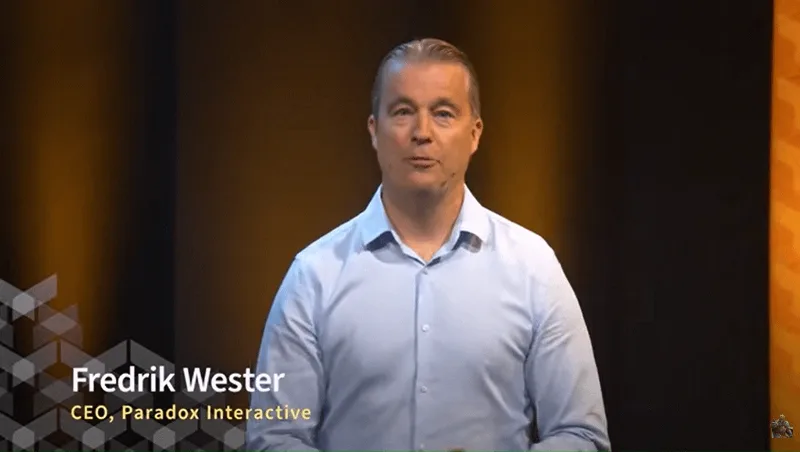
Fredrik Wester will step down as CEO of Paradox Interactive on January 4, 2027, when Deputy CEO Mattias Lilja officially takes over the Swedish video game publisher. Wester will continue leading the company until that date before concentrating on its long-term development as a member of the board. He will also retain his position as Paradox’s largest shareholder. The board announced Lilja’s appointment on November 11, 2026, providing nearly eight weeks for the leadership transition. For players familiar with Cities: Skylines, Hearts of Iron IV, and Stellaris, the appointment represents considerable continuity because all three games launched during Lilja’s earlier leadership and remain important contributors to the publisher’s business.
Wester explained that his decision reflected a desire to concentrate on Paradox’s future development rather than continue overseeing its daily operations indefinitely. He described his return to executive leadership in 2021 as having a particular purpose and an eventual endpoint, stating that his plan was never to remain CEO for life. According to him, Paradox has since clarified the types of games it intends to develop, strengthened its pipeline of upcoming projects, and improved its publishing processes. He credited Lilja with contributing to these developments, particularly as the deputy assumed greater responsibility for implementing the company’s strategy and overseeing operational activities.
Paradox’s October 2026 financial report provides context for this assessment. The company had announced two upcoming games at Gamescom, the postapocalyptic strategy title Afterworld and the city-building game LEGO Skylines. Although relatively few new releases reached customers during the third quarter, sales across the existing catalogue supported the company’s performance. Third-quarter revenue reached SEK 456 million, representing a 15% increase compared with the corresponding period in the previous year, while operating profit increased from SEK 112 million to SEK 142 million. Major revenue contributors included the original Cities: Skylines, its sequel, Hearts of Iron IV, Age of Wonders 4, and Transport Fever 3.
The distinction between the appointment announcement and the effective leadership transition remains important. The outgoing CEO continues serving in his role until January 4, 2027, while Lilja retains his deputy position and existing operational responsibilities. Håkan Sjunnesson remains chairman of the board. Consequently, releases occurring after the November announcement but before the January handover remain part of Wester’s tenure. These include the November 23, 2026, PC launch of the Willpower expansion for Stellaris. Paradox’s 2026 annual results, scheduled for February 4, 2027, will also reflect a financial year during which he remained CEO, despite being published approximately one month after Lilja takes office.
The first regular quarterly financial report covering Lilja’s leadership is scheduled for April 29, 2027, and will examine the company’s performance between January and March. However, the financial results during his opening months will inevitably reflect development and publishing decisions made before his appointment. Video games frequently require several years of production before reaching customers, meaning the immediate results of a leadership transition cannot be separated entirely from the strategies and projects established by previous management. Lilja’s involvement in developing Paradox’s existing strategy makes this transition particularly continuous compared with appointing an executive from outside the organization.
Wester will remain a director after stepping down, continuing a board membership that dates to 2010. Paradox’s board collectively establishes corporate targets and strategy, evaluates business performance, assesses management, and appoints the CEO. He will therefore continue contributing to strategic oversight and decisions concerning the company’s future direction. However, Lilja will assume responsibility for leading the organization and implementing the strategy established by the board. The arrangement allows the former CEO to focus on the aspects of corporate development that interest him while transferring executive responsibility to someone already familiar with the company’s operations.
He also retains considerable influence through his ownership position. Paradox’s shareholder information dated September 30, 2026, identified WesterInvest AB as its largest shareholder, with 35,277,274 shares representing 33.4% of the company. Investment Aktiebolaget Spiltan ranked second, holding 16,639,534 shares, equivalent to 15.8%. Paradox identifies WesterInvest with the outgoing executive, and each company share carries one vote at general meetings. His ownership therefore represents substantial voting influence, although it remains below an outright majority. Lilja’s appointment changes executive authority rather than the former CEO’s financial interest or shareholder rights.
The upcoming transition differs from the executive’s first departure in 2018. Paradox announced in February of that year that Ebba Ljungerud would take over in August. Ljungerud had served on the company’s board for four years and worked as chief commercial officer at Kindred Group. Wester subsequently became full-time executive chairman, focusing on acquisitions, business development, and other opportunities for expansion. On September 1, 2021, Ljungerud resigned following differences over the company’s strategic direction, prompting him to return immediately as CEO and relinquish the chairmanship. Sjunnesson then became chairman. Unlike that earlier transition, the announced position in 2027 is that of a board member rather than executive chairman.
The November 2026 succession also differs because Lilja has spent the preceding years directly involved in implementing the company’s current strategy. Rather than inheriting responsibilities from an executive with a different strategic approach, he will assume formal leadership of an organization he has already helped manage. Sjunnesson highlighted Lilja’s judgment concerning Paradox’s future, alongside his experience in publishing and business operations. The appointment therefore reflects the board’s confidence in his existing contributions, although the company did not disclose a shortlist of alternative candidates or describe a recruitment process involving external executives.

Mattias Lilja’s Career, Successful Game Launches, and Experience Leading Paradox Interactive
Mattias Lilja brings extensive experience across game production, publishing, studio management, and corporate operations. He first joined Paradox Interactive in 2009 as the company’s first producer before progressing through several leadership positions. His responsibilities included overseeing development teams, managing production processes, and leading the publishing organization responsible for bringing games to customers. These different roles exposed him to decisions throughout a game’s development cycle, from organizing production resources to evaluating commercial opportunities and supporting established titles after their initial releases.
Lilja’s professional background also extends beyond video games. He has been a partner at Free League Publishing and worked as a writer and creator of Ruins of Symbaroum, an adaptation of the dark fantasy tabletop setting for fifth edition gameplay. His interest in game design originated during his childhood in Sweden, when he began playing Drakar och Demoner in 1983. He recalled using a dictionary with a friend to understand an English-language Dungeons & Dragons set. With relatively few Swedish adventures available and imported material being expensive, he began writing additional content for his own gaming group.
That experience provides context for Lilja’s interest in supporting players who create their own content. His tabletop work involved understanding both the needs of existing audiences and the opportunities created when players adapt established settings to suit their preferences. Years later, requests from players interested in experiencing Symbaroum through a familiar rules system contributed to the development of Ruins of Symbaroum. His professional interest in modding and creator tools therefore complements his broader experience as a producer, publisher, and participant in gaming communities.
Lilja’s career progression at Paradox includes several important appointments and responsibilities:
- 2009: Joined Paradox Interactive as its first producer.
- Subsequent leadership roles: Served as executive producer, head of studio, executive vice president of studios, and chief operating officer.
- Publishing leadership: Oversaw publishing activities associated with major Paradox releases.
- 2020: Took a break from working at the company.
- 2021: Returned as chief of staff alongside the CEO.
- April 10, 2024: Became deputy CEO while retaining responsibility for human resources, recruitment, and communications.
- November 11, 2026: Was announced as the outgoing CEO’s successor by the Paradox board.
- January 4, 2027: Scheduled to officially assume the CEO position.
Lilja’s return as chief of staff in 2021 expanded his responsibilities beyond managing individual studios or publishing projects. He became involved in aligning operational decisions with corporate strategy, coordinating executive responsibilities, and overseeing functions that affect staffing and internal communication. His appointment as deputy CEO in April 2024 formalized a broader operational role while retaining his existing responsibilities. By November 2026, the board had observed his performance across development, publishing, human resources, communications, and senior corporate management, providing a substantial basis for evaluating his suitability as CEO.
Paradox particularly identifies Cities: Skylines, Stellaris, and Hearts of Iron IV as successful titles that launched during Lilja’s leadership. These games demonstrate the different development and publishing arrangements he has overseen. Cities: Skylines was developed externally by Colossal Order, while Stellaris and Hearts of Iron IV were developed by Paradox Development Studio. His contribution concerned leadership during their launches rather than personal responsibility for developing every gameplay system. Their continued popularity also illustrates the importance of supporting games beyond their initial release periods.
Colossal Order’s Cities: Skylines launched on March 10, 2015, becoming Paradox’s biggest launch at the time by selling 250,000 copies within its first 24 hours. By its second anniversary, the game had surpassed 3.5 million copies. Colossal Order CEO Mariina Hallikainen acknowledged the contribution of players who shared their cities and developed modifications. The game’s success demonstrated both strong initial demand and sustained community involvement, with players creating additional content that encouraged others to continue building and experimenting. These characteristics remain relevant to Lilja’s commitment to improving modding tools and services.
Stellaris followed on May 9, 2016, expanding Paradox’s grand strategy approach into a science fiction setting featuring exploration, competing civilizations, and interstellar political systems. Hearts of Iron IV launched on June 6, 2016, allowing players to manage nations during the Second World War. At its tenth anniversary, the Hearts of Iron IV development team reported that 39% of the people who began playing in 2016 were still playing a decade later, according to its telemetry. That figure concerns the original group of players rather than the entire contemporary audience, demonstrating the exceptional longevity that an established strategy game can achieve.
Since the CEO’s return in 2021, he and Lilja have gradually divided responsibilities according to their respective interests and strengths. The executive concentrated increasingly on corporate objectives, strategic positioning, and future development, while his deputy assumed greater responsibility for implementing those plans throughout the organization. Their approaches also intersected around the importance of understanding player expectations. In a 2024 interview with PCGamesN, Lilja discussed the warfare systems in Victoria 3 as an example of an area where Paradox should have recognized community expectations earlier during development.
Identifying such concerns before release can significantly influence production decisions. Responding to player expectations while a system is still being designed gives developers more flexibility than revisiting completed features after launch. Lilja’s interest in earlier feedback therefore complements Paradox’s established business model, which depends on maintaining player engagement across several years of updates and expansions. His experience overseeing both development and publishing also helps explain why the board selected an internal successor familiar with balancing investment in new games against continued support for established releases.

Paradox Interactive’s Future Strategy, Modding Improvements, Community Feedback, and 2027 Releases
Mattias Lilja has committed to continued investment in strategy and management games while providing developers with opportunities to experiment with new concepts. Two projects announced before his appointment illustrate the range of experiences Paradox intends to pursue within its established expertise. Afterworld, developed by Paradox Development Studio, takes place in a ruined North America and begins with a small group of survivors facing challenges involving food, water, and shelter. As settlements develop, players confront broader questions concerning laws, social identity, and the type of civilization they want to establish. The project applies the studio’s grand strategy experience to a different setting and initial scale.
LEGO Skylines, developed by Iceflake Studios, approaches management gameplay through a different creative direction. Players begin with an individual plot and gradually construct a neighborhood, managing roads, electricity, water, public services, and other infrastructure. Its appeal also involves determining the appearance of buildings and streets through the flexibility associated with LEGO construction. Both projects were announced at Gamescom in August 2026 and form part of the development pipeline Lilja inherits. They demonstrate how Paradox can explore different settings and audiences while remaining connected to the systems and simulation mechanics that define its established genres.
Lilja has also acknowledged that Paradox must exercise greater care when investing outside its traditional areas of expertise. During his 2024 PCGamesN interview, he identified the smaller publishing label Paradox Arc as an opportunity to explore less familiar concepts without approaching every experimental project as a major investment. He cited Mechabellum, an automated strategy battler whose genre differs from Paradox’s traditional releases but whose gameplay encourages continued engagement. His comments indicate that experimentation remains important, provided the publisher considers whether a project can establish and maintain an audience.
Improving support for modders forms another important part of Lilja’s announced priorities. He has committed to developing additional tools and services for content creators while improving existing features for both modders and players. The appointment announcement did not establish a release date for a particular editor or platform improvement. However, development updates for Cities: Skylines II provide examples of the practical changes that could contribute to this objective. These improvements concern both the process of creating modifications and the ability of players to discover, organize, and use community content.
An August Cities: Skylines II development diary described improvements intended to simplify asset creation. Building assets can contain extensive lists of props, and creators previously needed to expand individual entries across multiple pages to identify particular objects. The development team outlined changes to locating these entries, copying object identifiers, and accessing the Asset Editor directly when starting the game. Although individually modest, these improvements can save considerable time when creators repeatedly perform the same tasks during detailed asset development.
By November 2026, the development team had also documented several improvements aimed at players using community modifications. These included a dedicated area for followed creators, options for keeping subscribed playsets updated, and improvements to managing collections. Together, these developments illustrate the different requirements of the audiences Lilja has pledged to support. Modders need accessible tools for creating and publishing content, while players need reliable systems for discovering, installing, and organizing those creations. Supporting both groups can contribute to the continued relevance of games that rely heavily on community generated content.
Closer communication with players is another central commitment. The development of Europa Universalis V provides an example of how community feedback can influence Paradox games before release. Through its Tinto Talks development diaries, Paradox Tinto discussed gameplay systems while they were still being developed. Game director Johan Andersson explained to PC Gamer that an early design linked a relatively small number of population categories closely to four estates. Player feedback helped persuade the developers to provide greater flexibility within the estate system and distinguish additional population groups, including laborers and soldiers.
These changes affected how the game represents societies and competing interests within individual countries. Andersson also identified adjustments to great powers and hegemonies in Paradox’s annual report, explaining that developers combined public discussions with qualitative and quantitative research. Community feedback therefore formed part of a wider process for understanding player expectations and evaluating game systems. Public development discussions gave players opportunities to influence design decisions before release, while other research methods helped the studio gather additional information about its audience.
Player feedback has also influenced updates to existing games. In November 2026, the Cities: Skylines II development team credited customer reports when describing a fix for a malfunctioning hydroelectric power plant. The developers also postponed additional texturing beneath roads following feedback about changes tested during an open beta. These examples demonstrate two different ways community involvement can affect development. Players can help identify technical problems that require correction or provide feedback indicating that a proposed visual or gameplay change needs further refinement before release.
Paradox’s established publishing model is expected to remain central to its operations throughout 2027. The company sells original games while continuing to support them through free updates and optional paid expansions. The November 23, 2026, release of Stellaris: Willpower illustrates this approach. The paid expansion introduced systems for spreading ideologies across borders and influencing other empires, while Paradox and Abrakam simultaneously released the free 4.6 Corona Borealis patch containing balance adjustments and system improvements. Players could therefore benefit from continued development without necessarily purchasing the expansion.
The company has already announced additional content scheduled for Lilja’s first year as CEO. On November 12, Paradox revealed the third Hearts of Iron IV expansion pass, which includes The Giant Wakes. Planned for 2027, the expansion focuses on the Americas, including substantial changes involving the United States and Canada. Its content revisits the challenges of leading the United States out of the Great Depression and preparing its industrial economy for war. The announcement demonstrates how Paradox intends to continue supporting games that originally launched during Lilja’s earlier leadership.

Frequently Asked Questions (FAQs)
- Who will be the CEO of Paradox Interactive in January 2027?
Mattias Lilja will officially become CEO of Paradox Interactive on January 4, 2027. The board announced his appointment on November 11, 2026. Fredrik Wester will remain CEO throughout the transition, while Lilja continues performing his existing responsibilities as deputy CEO until the scheduled handover. - Is Fredrik Wester leaving Paradox Interactive entirely?
No. Wester will continue serving as a member of the board and concentrate on the company’s long term development. He also remains Paradox’s largest shareholder, giving him substantial financial and voting interests in the business. His departure concerns executive leadership rather than a complete separation from the publisher. - How much of Paradox does WesterInvest own?
Paradox’s September 30, 2026, shareholder table identifies WesterInvest AB as holding 35,277,274 shares, representing 33.4% of the company. This makes it the largest individual shareholder listed. Although the holding provides substantial voting influence, it does not represent an outright majority of Paradox’s shares. - When did Mattias Lilja become deputy CEO?
Lilja became deputy CEO on April 10, 2024, after previously serving as chief of staff. His promotion expanded his responsibilities for implementing Paradox’s strategy and improving operations while retaining oversight of human resources, recruitment, and communications. These responsibilities helped prepare him for the subsequent CEO appointment. - Who was Paradox CEO between Wester’s two terms?
Ebba Ljungerud succeeded Fredrik Wester in August 2018. She remained CEO until September 2021, when she resigned following differences concerning the company’s strategic direction. Wester immediately returned to executive leadership, while Håkan Sjunnesson became chairman of the board. - Did Mattias Lilja develop the original Cities: Skylines?
No. Colossal Order developed Cities: Skylines, while Paradox Interactive published the game in March 2015. Paradox identifies it as one of the successful titles launched during Lilja’s leadership. His contribution concerned publishing and management rather than personally developing the game. Stellaris and Hearts of Iron IV were developed by Paradox Development Studio. - Will Wester become executive chairman again?
The November 2026 announcement identifies Wester’s continuing role as a board member rather than executive chairman. Håkan Sjunnesson remains chairman. Wester previously became full time executive chairman following his first CEO departure in 2018, but the leadership arrangements announced for January 2027 are different. - Has Lilja announced a release date for new modding tools?
No. Lilja has committed to improving tools and services for modders and players without announcing a specific release schedule. Individual development teams continue publishing more detailed information about their projects. Cities: Skylines II development diaries, for example, have documented improvements to asset creation, mod browsing, and collection management. - Has player feedback actually changed a Paradox game before release?
Yes. During the development of Europa Universalis V, Paradox Tinto adjusted population categories, estate mechanics, and aspects of great power status. Game director Johan Andersson explained that public discussions through Tinto Talks and additional player research helped influence these decisions before the game’s release. - What is one Paradox release already planned for Lilja’s first year?
The Giant Wakes, an expansion for Hearts of Iron IV, is scheduled for 2027 as part of the game’s third expansion pass. It focuses on the Americas, particularly the United States and Canada, with content involving economic recovery, industrial development, and preparations for the Second World War.

Conclusion
Mattias Lilja’s appointment as CEO on January 4, 2027, represents a continuation of Paradox Interactive’s established strategy under an experienced internal executive. Fredrik Wester will retain his board position and substantial ownership interest, while Lilja assumes responsibility for the company’s operations and future releases.
Lilja’s commitments to strategy games, improved modding tools, and closer community involvement will shape Paradox’s next phase. Continued support for established franchises, alongside new projects and expansions, will provide practical measures of his leadership.
Sources and Citations
- Paradox Interactive, November 11, 2026, and Corporate Governance Documentation: Official company announcements and governance resources covering the CEO succession, leadership transition date, Wester’s board responsibilities, shareholder ownership, and financial reporting calendar.
- Paradox Interactive, 2018, 2021, and 2024, and PC Gamer: Historical announcements and reporting documenting previous leadership transitions, Ebba Ljungerud’s departure, Wester’s return, and Lilja’s career progression and operational responsibilities.
- Citation: Paradox Interactive – News · PC Gamer
- Paradox Interactive, Annual Report 2025 and Third Quarter Results 2026: Investor publications covering financial performance, major revenue contributors, shareholder information, development credits, and the publisher’s business model.
- Citation: Paradox Interactive – Financial Reports
- Press Play Media, PCGamesN, and PC Gamer: Interviews and industry coverage discussing Lilja’s tabletop gaming background, publishing strategy, player expectations, experimental projects, and community feedback during Europa Universalis V development.
- Citation: Press Play Media · PCGamesN · PC Gamer
- Paradox Interactive, Cities: Skylines and Hearts of Iron IV Anniversary Reports, and City Corner Development Diaries: Official game updates and development resources covering historical sales milestones, player retention, modding improvements, Asset Editor functionality, and community-driven development changes.
- Citation: Paradox Interactive – News · Cities: Skylines · Hearts of Iron IV
- Paradox Interactive, November 12 and 23, 2026, and Steam: Official announcements and store information covering Stellaris: Willpower, the free Corona Borealis update, the third Hearts of Iron IV expansion pass, and The Giant Wakes release plans for 2027.
Recommendations
- Phantom Blade Zero —should you tell Yu’er’s father the truth
- Anthropic vs OpenAI Revenue: Why $65 Billion and $50 Billion Figures Are Not Comparable
- Dog Man: Bark in Action Brings Comic-Book Action to PC and Consoles
- Sole Salvation’s Free Steam Demo Showcases UE5 Cosmic Horror Ahead of a Planned November Update
- How to Make Blender Hair Work with Unreal Engine’s Groom System
- Marvel’s Wolverine Has Gone Gold Ahead of September 15 PS5 Release
- Maxon Released Cinebench 2026: Release Date, What’s New, Download Links, and the New Scoring Explained
- Marvel’s Wolverine Adds Toggle for Story Scent Trails
- Live-Action Moana Flop Fears Grow as Dwayne Johnson Confirms Moana 3
- Dragon Quest X Online at Square Enix Tokyo Game Show 2026



































































































