





In This Article (9 sections)
Google Hand Gesture Verification for reCAPTCHA Explained
Google Tests Hand Gesture Verification For reCAPTCHA refers to a camera-based verification method that asks some users to prove they are human by performing hand gestures instead of completing familiar CAPTCHA tasks such as selecting traffic lights, bicycles, or crosswalks. The feature is documented by Google Cloud as “hand gesture verification” for reCAPTCHA, which is now part of Google Cloud Fraud Defense. Google says the method is designed to improve human verification by analyzing a short video of a user’s hand and extracting hand landmark data for security verification.
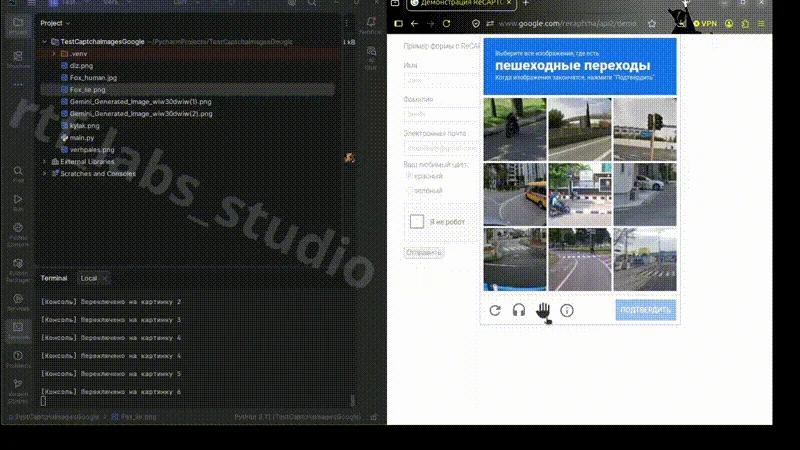
The system is important because CAPTCHA technology is facing a new wave of pressure from advanced bots, automated scripts, AI agents, fraud farms, and machine-learning tools that can solve many older challenge types. Traditional CAPTCHA tests once relied on tasks that were easy for humans and difficult for machines, but that difference has narrowed. Image recognition models can now identify objects in photos, text recognition tools can read distorted characters, and automated browsers can mimic ordinary web sessions with increasing accuracy. Google Tests Hand Gesture Verification For reCAPTCHA therefore represents a shift from static challenge solving toward liveness-based verification.
Instead of only asking whether a user can recognize an object, the system asks whether the user can respond physically in real time. That makes the verification process more dynamic. A bot may be able to classify images, but it must now imitate a live camera interaction, generate or replay acceptable hand motion, and pass checks based on movement data.
Google’s documentation says that when the hand gesture feature is enabled, reCAPTCHA analyzes one or more videos of a user’s hand as the user performs actions or gestures. The video is processed to extract hand landmark data, including 21 hand-knuckle coordinates. Google also states that audio is never recorded, videos are not associated with a user’s identity, and the videos are deleted after verification.
Google Tests Hand Gesture Verification For reCAPTCHA works by asking the user to allow camera access and perform prompted hand gestures. Once permission is granted, the system analyzes one or more short videos of the user’s hand, extracts landmark coordinates, and evaluates whether the interaction appears to come from a real human completing the prompt. The key technical idea is that the system does not need to identify the user personally to evaluate the challenge. It only needs to determine whether a hand is present, whether the hand is moving as requested, and whether the motion looks consistent with a live human gesture.
This does not mean every reCAPTCHA user will see the new challenge. It appears to be part of a broader verification system where the challenge may be shown only when the risk engine decides that extra verification is necessary. reCAPTCHA already uses risk analysis, behavior signals, and challenge-based verification to help websites decide whether to allow, challenge, or block an interaction.
For users, the experience may feel unfamiliar because it involves granting camera access. For website owners, it signals that bot defense is moving toward more layered verification methods. For privacy advocates, it raises questions about whether camera-based checks are an acceptable trade-off for web security. For attackers, it creates another barrier that is harder to bypass than a simple image puzzle.

Why Google Is Moving Beyond Traditional CAPTCHA and How Hand Gesture Checks Detect Bots
Google is not necessarily replacing every traditional CAPTCHA challenge immediately, but Google Tests Hand Gesture Verification For reCAPTCHA shows why the company is expanding beyond older challenge formats. Traditional CAPTCHA systems have become less reliable because the internet has changed. Bots are more capable, AI image recognition is stronger, and attackers have more tools for automating ordinary web behavior. Older CAPTCHA tests often relied on distorted letters, numbers, audio clips, or image selection tasks, but AI systems can now classify objects, transcribe audio, and solve visual puzzles with far greater success.
The result is a poor balance between security and usability. If a CAPTCHA is too easy, bots may pass it. If it is too difficult, real users become frustrated, abandon forms, or get locked out. This is especially damaging for e-commerce, banking, healthcare, education, gaming, and government websites where user access and fraud prevention both matter. Google’s own reCAPTCHA positioning emphasizes modern bot protection, adaptive risk analysis, account takeover mitigation, fake account protection, transaction protection, and defense against sophisticated non-human actors. Google Cloud describes reCAPTCHA as part of Google Cloud Fraud Defense, a broader trust platform intended to protect the customer journey from account creation through checkout and payment.
Google Hand Gesture Verification differs from traditional reCAPTCHA in several important ways. Traditional reCAPTCHA challenges usually ask users to identify objects, click checkboxes, solve visual puzzles, or complete audio challenges. Hand gesture verification asks the user to interact with a camera and perform a real-time physical gesture. The biggest difference is the type of evidence being collected. A traditional image challenge collects answers to a puzzle. A hand gesture challenge analyzes movement. Google says the hand gesture feature processes video to extract hand landmark data, including 21 hand-knuckle coordinates, and then deletes the video after the challenge is complete.
Camera-based CAPTCHA verification detects bots by asking for proof that is difficult for ordinary automation to produce. The first detection layer is camera access itself, since many bots operate in headless browsers, automated server environments, scripted sessions, or virtual machines that do not have real camera input. Camera permission alone is not enough because attackers can use virtual cameras, emulators, or video injection tools, so the system also needs hand detection, gesture recognition, liveness analysis, and risk scoring. Google’s documentation specifically mentions 21 hand-knuckle coordinates, which suggests a landmark-based model that evaluates the structure and movement of the hand rather than merely checking whether a camera feed exists.
Hand gesture verification fits the rise of agentic AI because modern automated systems can browse websites, fill forms, interpret instructions, and imitate human workflows. A live gesture is harder to automate because it involves timing, motion, camera permission, and physical response. A simple script is no longer enough. Attackers must simulate a camera, generate live hand movement, match prompts, avoid replay detection, and pass broader risk analysis. That does not eliminate abuse, but it raises the barrier and makes the attack more expensive than solving many traditional image challenges.
Privacy, Data Retention, and Camera Permission Concerns
Google Hand Gesture Verification privacy concerns are significant because the system involves camera access. Even if the technical purpose is security verification, many users are uncomfortable granting camera permission to pass a CAPTCHA. A camera is more sensitive than a checkbox or image puzzle because it can reveal a person’s physical environment, body features, lighting conditions, device context, and potentially other private information if the capture area is not controlled. Google says hand gesture videos are not associated with a user’s identity, audio is never recorded, and videos are deleted after verification.
Even with those assurances, privacy concerns remain. Users may wonder how long “after verification” means in practice, whether temporary processing logs exist, how data deletion is verified, whether hand landmark data can be considered biometric data, and whether the system could later expand into broader identity or behavior analysis. These concerns are not unusual when a security tool uses sensors that feel personal. There is also a consent issue because browser camera permission is technically a consent mechanism, but users may feel they have no real choice if the challenge blocks access to a necessary service such as banking, healthcare, job applications, or payments.
Google says it does not retain images or videos of a user’s hand gestures beyond the verification process. According to Google Cloud’s documentation, videos or images are automatically deleted after the challenge is complete. Google also says the videos are never associated with a user’s identity and that audio is never recorded. This is one of the most important claims surrounding Google Tests Hand Gesture Verification For reCAPTCHA because the feature depends on video processing, but Google’s public explanation tries to separate temporary security analysis from long-term biometric storage.
The distinction between video, image, and derived data is important. A video of a hand is raw sensor data. Hand landmark coordinates are derived data. Google’s documentation says the video is processed to extract landmark data and that the system collects that data when the feature is enabled. It also says Google does not use images or videos for any other purpose and automatically deletes them after the challenge. The safest way to explain this is precise: Google says it deletes the hand gesture videos and images after verification, does not record audio, and does not associate videos with user identity.
Google Hand Gesture Verification camera permission requirements are straightforward but sensitive. The challenge requires access to the user’s camera, and Google’s documentation states that after the user consents to perform hand gestures, Google receives camera permissions. Users can manage these permissions in their browser settings at any time. If the user refuses, the site or reCAPTCHA flow may need to offer another verification method, such as a visual or audio challenge. Google says reCAPTCHA continues to provide visual and audio challenges for users with accessibility needs who cannot use hand gestures.

Security Benefits, Accessibility Issues, and Whether AI Bots Can Bypass Hand Gesture Verification
Hand gesture verification improves website security by raising the cost of automated abuse. Traditional CAPTCHA challenges can often be attacked with image recognition, OCR, scripted browsers, CAPTCHA-solving services, or human solver farms. Google Tests Hand Gesture Verification For reCAPTCHA introduces a live camera interaction that requires physical response, real-time movement, and gesture recognition. For website owners, the security value appears on login pages, registration forms, checkout flows, password reset pages, account recovery pages, and other sensitive actions where stronger verification can reduce abuse.
The strongest benefit is that a hand gesture challenge is harder to solve at scale. A botnet can send thousands of form submissions, but it is much harder for that botnet to generate thousands of valid, real-time hand gesture videos that match unpredictable prompts. Even if attackers develop bypasses, the added complexity reduces the number of attackers who can succeed. Hand gesture verification also helps against AI-powered bots because AI agents can read pages, click buttons, fill forms, and solve many visual puzzles, but a camera-based liveness challenge moves the problem into a different domain.
Security improvement depends on careful deployment. If hand gesture verification is overused, users may become annoyed or distrustful. If it is underused, high-risk attacks may still pass through weaker checks. The best use is likely targeted deployment where reCAPTCHA’s risk engine determines that a stronger challenge is justified. Hand gesture verification also does not replace good security fundamentals. Websites still need rate limiting, secure authentication, fraud monitoring, device risk analysis, password protections, email verification, web application firewalls, and backend abuse detection. The feature is one layer in a broader defense strategy, not a complete shield.
Accessibility is one of the most important issues in Google Tests Hand Gesture Verification For reCAPTCHA. A hand gesture challenge may be difficult or impossible for users with mobility limitations, limb differences, tremors, injuries, neurological conditions, vision limitations, camera access problems, or device constraints. Google says users with accessibility needs who cannot use hand gestures to complete the challenge can continue using reCAPTCHA’s visual and audio challenges. Google also says it continues to develop more accessible and secure alternatives. That fallback is essential because no single CAPTCHA method works for everyone.
AI bots may eventually bypass some forms of hand gesture verification, but Google Tests Hand Gesture Verification For reCAPTCHA makes the attack harder than solving a static CAPTCHA. A bot could try to use a virtual camera and feed in pre-recorded hand gesture videos. It could use generated video from AI models. It could use remote human operators to complete challenges. It could attempt browser automation that manipulates the camera stream. It could build a library of gesture clips if prompts are predictable.
A well-designed hand gesture system can reduce these risks by using dynamic prompts, time limits, liveness checks, motion analysis, browser integrity signals, and risk scoring. The balanced answer is that hand gesture verification is likely more resistant than many traditional image challenges, but it is not a permanent solution by itself.
Google Cloud Fraud Defense, Website Owner Benefits, and the Future of Human Verification
Google Cloud Fraud Defense is central to understanding why Google Tests Hand Gesture Verification For reCAPTCHA matters. Google now presents reCAPTCHA as part of Google Cloud Fraud Defense, with reCAPTCHA providing the core visual challenge engine and Fraud Defense expanding protection across the customer journey. Google Cloud describes reCAPTCHA as bot protection for websites and apps, while Google Cloud Fraud Defense is described as the evolution of reCAPTCHA into a broader trust platform for the agentic web. The difference is important because modern fraud rarely happens at only one point.
An attacker may create fake accounts, test stolen credentials, abuse promotions, attempt payment fraud, scrape data, and use AI agents to automate workflows. A single CAPTCHA challenge cannot stop every stage. Fraud Defense is designed to combine signals and protections across the journey. Google Cloud’s reCAPTCHA page highlights protection against automated attacks, credential stuffing, account takeovers, fake account creation, SMS toll fraud, carding, and transaction abuse. It also mentions AI/ML-powered threat detection and integration with web application firewalls. Hand gesture verification strengthens the challenge layer by giving the system another way to ask for proof of human presence when the risk level is high.
The benefits of hand gesture verification for website owners begin with stronger bot resistance. If Google Tests Hand Gesture Verification For reCAPTCHA works as intended, it can help reduce automated abuse by requiring a form of interaction that is harder for scripts and AI agents to fake. This is valuable for websites that face spam, fake signups, credential stuffing, scraping, payment abuse, and other automated attacks. A major benefit is better protection for high-risk pages such as logins, registrations, checkout flows, and password reset pages.
There may also be operational benefits. Reducing fake accounts can lower moderation costs. Reducing credential stuffing can lower support costs. Reducing payment fraud can lower chargebacks. Reducing bot traffic can reduce infrastructure strain. Stronger verification can protect analytics quality by filtering non-human activity from user behavior data. However, website owners must weigh these benefits against user trust and accessibility. A camera prompt can feel intrusive, some users will abandon the flow rather than grant permission, and others may not be able to complete the challenge. The best deployment strategy is selective, transparent, and supported by alternatives.
The future of reCAPTCHA and human verification technology is moving away from simple puzzles and toward layered trust signals. Google Tests Hand Gesture Verification For reCAPTCHA is part of this transition. The old model asked users to prove they could solve a task that machines could not. The new model asks whether the entire interaction looks trustworthy across behavior, device context, risk signals, and sometimes liveness-style verification. The most likely future is hybrid verification. Some sessions will pass invisibly. Some will use traditional visual or audio challenges. Some will require stronger liveness checks. Some may rely on passkeys or trusted device signals. The best systems will adapt to risk while minimizing friction for legitimate users.

Frequently Asked Questions (FAQs)
- What is Google Tests Hand Gesture Verification For reCAPTCHA?
Google Tests Hand Gesture Verification For reCAPTCHA is a camera-based human verification method that asks users to perform hand gestures instead of only solving traditional CAPTCHA puzzles. Google says the system analyzes hand videos, extracts hand landmark data, including 21 hand-knuckle coordinates, and uses that information for security verification. The goal is to make it harder for bots and automated systems to pass checks that older CAPTCHA formats may no longer reliably defend. - Does Google hand gesture verification require camera access?
Yes. Google says hand gesture challenges require permission to access a user’s camera. The browser should show a permission prompt before the camera is used, and users can manage or revoke camera permissions in their browser settings at any time. If camera access is blocked, unavailable, or refused, that specific hand gesture challenge may not work. - Does Google record audio during hand gesture verification?
No. Google’s documentation states that audio is never recorded during hand gesture verification. The feature is focused on analyzing visual hand movement for security verification, not capturing sound from the user’s environment. - Does Google store videos of hand gestures?
Google says it does not retain images or videos of a user’s hand gestures beyond the verification process. According to Google’s documentation, videos or images are automatically deleted after the challenge is complete. Google also says the videos are not associated with a user’s identity, although users and website owners may still want clear details about processing, permissions, and any derived data. - Why is Google testing hand gesture verification?
Google is testing hand gesture verification because traditional CAPTCHA challenges are increasingly vulnerable to advanced bots and AI-powered automation. Image recognition, OCR, automated browsers, and human solver farms have made older challenge types less reliable. A live gesture challenge can make automated abuse harder by requiring camera access, real-time movement, and a physical response to a prompt. - Can users refuse camera permission?
Users can refuse camera permission through the browser, but refusing may prevent completion of that specific hand gesture challenge. Google says reCAPTCHA continues to provide visual and audio challenges for users with accessibility needs who cannot use hand gestures. Alternative paths are important because not every legitimate user has a working camera or feels comfortable granting camera access. - Is hand gesture verification more secure than traditional CAPTCHA?
It may be more secure in some high-risk situations because it requires real-time camera input and gesture movement rather than a static puzzle answer. This makes it harder for simple scripts, image classifiers, and automated form tools to pass. However, it is not impossible to bypass and should be used as part of a layered fraud defense system that also includes risk scoring, rate limits, account protections, and backend abuse detection. - Can AI bots bypass hand gesture verification?
AI bots may eventually bypass weak or predictable versions of hand gesture verification, especially with generated video, virtual camera tools, replay attacks, or human-assisted solving. Still, hand gesture verification raises the attack difficulty compared with many traditional CAPTCHA challenges because attackers must produce convincing real-time video behavior that matches the requested gesture and passes broader risk analysis. - Is hand gesture verification part of Google Cloud Fraud Defense?
Yes. Google’s documentation states that reCAPTCHA is part of Google Cloud Fraud Defense, and Google Cloud describes Fraud Defense as the broader evolution of reCAPTCHA into a trust platform for the agentic web. Hand gesture verification fits that direction because it adds a stronger proof-of-human-presence option for higher-risk interactions. - Will hand gesture verification replace all reCAPTCHA challenges?
There is no confirmed evidence that it will replace all reCAPTCHA challenges immediately. Google’s documentation presents hand gesture verification as a feature, while visual and audio challenges remain available for accessibility needs. The more likely model is layered verification, where low-risk users may pass with less friction and higher-risk sessions may receive stronger checks such as hand gesture verification.

Conclusion
Google Tests Hand Gesture Verification For reCAPTCHA marks a major change in how online human verification may work. Instead of relying only on image puzzles, distorted text, audio clips, or checkbox behavior, Google is testing a system that asks users to prove human presence through real-time hand gestures. The system uses camera permission, analyzes one or more videos of the user’s hand, extracts hand landmark data, and verifies whether the requested gesture has been completed.
The strongest reason for this shift is the rise of advanced automation. Traditional CAPTCHA challenges are no longer as reliable as they once were. AI models can identify images, read text, follow instructions, and imitate browsing behavior. Fraud operations can combine bots with human solvers. Websites need stronger ways to stop account takeovers, fake accounts, scraping, spam, payment fraud, and other automated abuse.
Hand gesture verification can improve website security by adding a liveness-style challenge that is harder to solve at scale. It is especially relevant for sensitive flows such as login, signup, checkout, password reset, and account recovery. It also fits Google’s broader move to position reCAPTCHA inside Google Cloud Fraud Defense, a platform designed to protect the entire customer journey from modern fraud and agentic web threats.
However, the feature also raises serious privacy and accessibility questions. Camera access is sensitive. Users may not want to grant it, may not have a working camera, or may not be able to perform hand gestures. Google says audio is not recorded, videos are not tied to identity, and images or videos are deleted after verification. Those claims are important, but trust, transparency, and alternatives will determine how users respond.
The future of reCAPTCHA will likely be layered. Some users will pass silently. Some will receive traditional challenges. Some high-risk interactions may require stronger methods like hand gesture verification. The best outcome would be a system that improves security without turning camera access into a routine requirement for basic web use.
Google Tests Hand Gesture Verification For reCAPTCHA is not simply a new CAPTCHA trick. It is a sign of where web security is heading: toward dynamic, risk-based, AI-resistant, and privacy-sensitive human verification.
Sources and Citations
- Google Cloud Documentation, Hand Gesture Verification: Explains camera permissions, hand landmark extraction, video deletion, accessibility and audio privacy.
https://docs.cloud.google.com/recaptcha/docs/hand-gesture-verification/ - Google Cloud, reCAPTCHA Website Security and Fraud Protection: Explains bot detection, credential stuffing prevention, account protection and agentic web threats.
https://cloud.google.com/security/products/recaptcha - Cybernews, Google’s New CAPTCHA Asks Users to Wave Hand at Camera, Users Fear Privacy Trade-Off: Examines camera-based verification, privacy concerns and Google’s data handling claims.
https://cybernews.com/privacy/google-captcha-hand-gesture-camera-privacy-fears/ - Help Net Security, June 19, 2026, Forget Traffic Lights, Google’s reCAPTCHA May Ask for Hand Gestures: Explains the 21 hand landmark coordinates, camera access and accessibility alternatives.
https://www.helpnetsecurity.com/2026/06/19/google-recaptcha-hand-gesture-verification/ - Tom’s Hardware, Google Testing Controversial Webcam-Based reCAPTCHA: Examines verification effectiveness, privacy limitations and reported security weaknesses.
https://www.tomshardware.com/tech-industry/googles-camera-based-recaptcha-asks-for-a-hand-scan-to-prove-youre-human - Android Authority, July 2, 2026, Google Wants You to Prove You’re Human With a Controversial New reCAPTCHA Challenge: Covers gesture recognition, camera permissions and data privacy concerns.
https://www.androidauthority.com/google-recaptcha-hand-gestures-3683862/ - Google reCAPTCHA Help, Accessibility: Documents audio verification alternatives and screen reader compatibility.
https://support.google.com/recaptcha/answer/6175971?hl=en
Recommendations
- Mortal Kombat II Review: More than Just Camp, a Cult Sequel that Redefined Video Game Movie Adaptations
- Virtua Fighter 6 Gameplay Trailer Leak on Bilibili Sparks Massive Buzz as Reddit Reacts to New Crossroads Footage
- Xbox Playback lets players see 25 years of their Xbox play history, including first console, first game, and total hours
- PlayStation FlexStrike Wireless Fight Stick Preorders Start Date
- Parallax Mapping In Godot: Complete Guide To Realistic Depth Effects And Shaders
- Michael Jackson Almost Made a Game Called Dark Rim With Shiny Entertainment (Enter the Matrix Studio)
- What is Hot Dogs, Horseshoes & Hand Grenades 2? Everything We Know so Far
- GeForce NOW Adds GOG Syncing and 90FPS VR Streaming
- Pokémon Card Owner in Japan Swindled Out of Over $300,000 in Tokyo “Bag of Cash” Fake Money Trick
- GTA Online Beginner’s Guide: How to Start, Make Money, and Avoid Early Mistakes



































































































