







In This Article (8 sections)
Elon Musk’s GTA 6 AI Claim and Strauss Zelnick’s Response
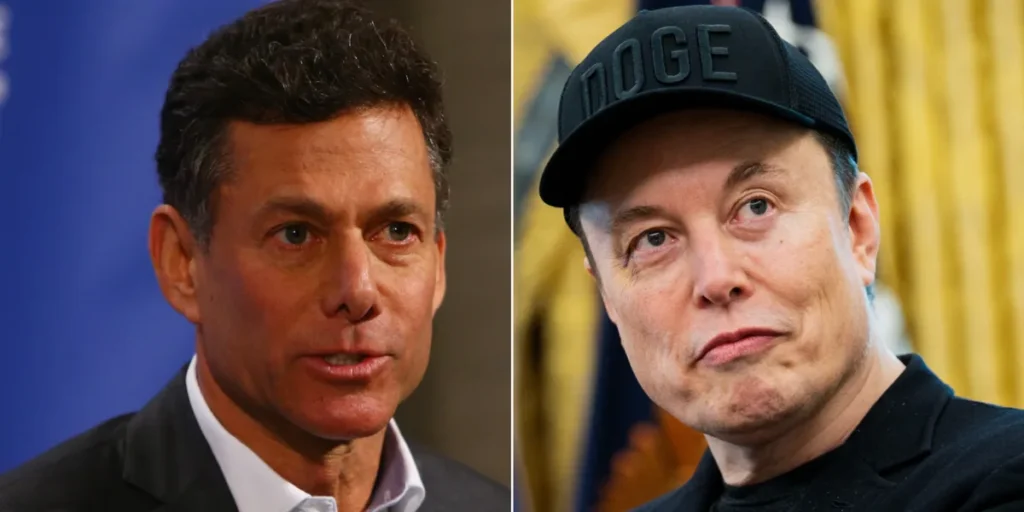
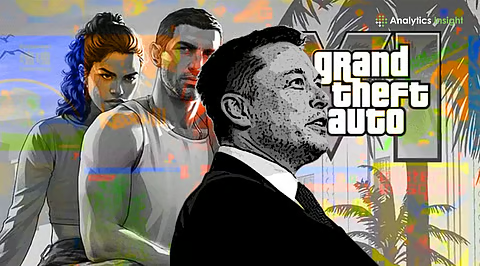
The latest flashpoint in the generative AI and game development debate arrived on April 20, 2026, when Take Two CEO Strauss Zelnick pushed back on Elon Musk’s suggestion that AI could effectively create something like Grand Theft Auto VI before Rockstar ships it. The disagreement grew from Musk’s January 2026 comments endorsing the possibility that people might eventually generate their own GTA 6 style experience within minutes. He also said xAI’s game studio intended to release a “great AI generated game,” reflecting an ambition that goes beyond using AI merely to assist traditional developers.
The timing coincided with growing excitement around systems such as Google’s Project Genie, which can create explorable interactive worlds from prompts and images. Such technology strengthened the idea that text to game systems might follow the trajectory of text to image and text to video generation. However, experimental world generation remains substantially different from creating a complete commercial AAA game with coherent missions, characters, systems, performances, optimization, quality assurance, and long term creative direction.
At Semafor World Economy 2026, Zelnick turned that distinction into a pointed response. He argued that if AI were truly approaching the point where it could eliminate major human jobs, Musk should logically be among the first affected because he has extraordinary resources, extensive exposure to AI, and still maintains an intense workload. His “job No. 1” remark was humorous, but the underlying argument was serious: access to increasingly powerful AI has not removed the need for human leadership, judgment, or creative decision making at the highest levels.
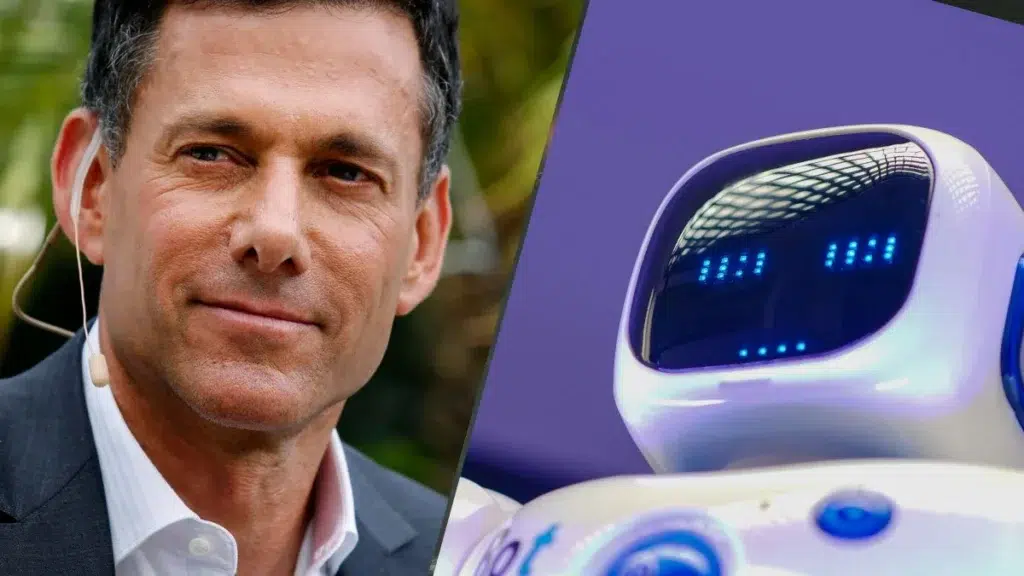
Zelnick’s position is not anti AI. At the same event, he described AI as useful for making Take Two more creative, innovative, and efficient. He argued that automating mundane work can allow people to spend more time solving higher value creative problems. His disagreement is therefore with the leap from AI assisted productivity to the claim that generative systems can independently replace the teams responsible for blockbuster entertainment.
That distinction is also central to Tim Sweeney’s discussion of “text to GTA.” The concept imagines interactive generation eventually following text to image and text to video systems, but its practical near term applications are more likely to involve faster prototyping, environment drafting, assisted scripting, synthetic variations, design exploration, and other development accelerators. Those capabilities could significantly change production without eliminating the creative teams directing the finished game.
The wider debate intensified between January and April 2026. Project Genie increased attention around generated interactive worlds in late January. By early February, Zelnick was emphasizing both Take Two’s extensive AI experimentation and Rockstar’s lack of generative AI use in GTA 6. On March 17, he described the notion that AI could simply make GTA as “laughable,” arguing that tools can produce assets but do not automatically produce successful entertainment. His April 20 comments at Semafor then turned that broader disagreement into the headline grabbing clash with Musk.

Why Take Two Says AI Cannot Replace Rockstar’s Handcrafted GTA 6
There is no public evidence as of April 2026 that generative AI can independently produce and ship a complete AAA game comparable to Grand Theft Auto VI. Systems can generate images, code, prototypes, individual environments, and other pieces of interactive content, but a Rockstar scale production requires those components to function together reliably inside one coherent product.
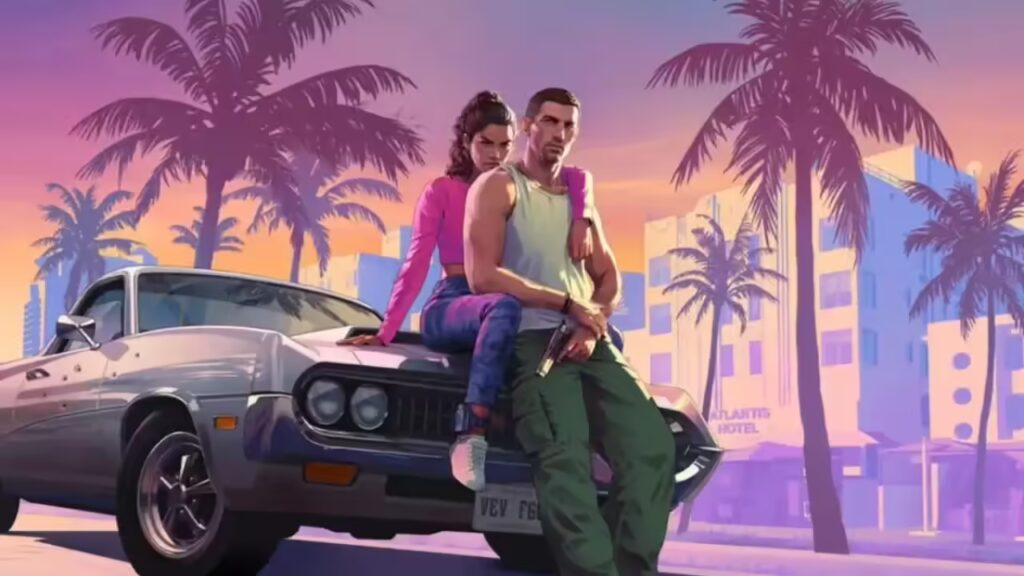
Zelnick has been particularly clear about Rockstar’s position. He said generative AI has “zero part” in what the studio is building for GTA 6 and described Rockstar’s worlds as handcrafted from the ground up. His argument is that these environments are deliberately constructed building by building, street by street, and neighborhood by neighborhood rather than generated automatically.
That approach matters because a GTA style open world involves much more than producing a large quantity of assets. It needs mission architecture, traffic systems, character arcs, animation, dialogue, cinematic direction, level readability, humor, satire, social observation, performance optimization, and countless interconnected systems. All of those elements need to support the same creative vision rather than merely coexist inside a large environment.
Take Two’s central argument can therefore be reduced to one principle: efficiency is not authorship. AI may reduce the time required to create individual components, but the publisher believes the scarce resource behind major entertainment remains human judgment. Designers and creative leads decide what belongs, how systems should interact, what should be removed, and how thousands of individual decisions contribute to a consistent experience.
Zelnick also argues that generative systems are fundamentally influenced by existing data, while successful entertainment often depends on creating something audiences did not already know they wanted. From that perspective, generating large quantities of technically competent material does not automatically provide the originality or creative direction needed to produce a culturally significant hit.
The strongest argument against Take Two’s position is that AI technology continues to improve rapidly. Future systems may automate substantially more of the production pipeline than today’s tools. However, moving from generated interactive spaces to a finished Rockstar caliber release still requires major improvements in reliability, creative control, system integration, production accountability, and consistency.
Legal questions create another barrier. AI generated games raise unresolved issues around training data, copyright, ownership, and responsibility for generated material. The U.S. Copyright Office has examined both the copyrightability of AI generated works and the use of copyrighted material in AI training, while European policymakers have also increased attention on intellectual property protection and transparency surrounding generative AI.
For a major publisher, those questions are particularly important. An experimental internal tool carries different risks from creative material shipped inside a flagship franchise. A company needs confidence that it owns or can legally use the assets included in a commercial product and that those assets will not create infringement disputes later. This gives publishers another reason to experiment aggressively with AI in controlled workflows while remaining cautious about allowing it to define the creative substance of valuable intellectual property.
How Game Studios and Take Two Are Actually Using Generative AI
Generative AI is already part of game development, but industry data suggests its current role is much narrower than the idea of instantly generating an entire AAA game. The 2026 GDC State of the Game Industry findings show AI being used primarily for areas such as research, brainstorming, office tasks, coding assistance, and prototyping. Usage is also more prominent in publishing, support, marketing, public relations, business, and executive functions than in some of the core creative disciplines.
Take Two follows a similar pattern. Zelnick has said the company has hundreds of AI pilots and implementations across its organization and labels. That indicates extensive experimentation, but it does not mean hundreds of games are being created through generative AI. The company’s messaging instead emphasizes workflow improvements, efficiency, automation, and reducing repetitive work.
Modern studios can potentially use AI for areas such as:
- Research and brainstorming
- Code assistance and prototyping
- Internal tools and workflow automation
- Production planning and documentation
- Analytics and support functions
- Asset variations and cleanup
- Search and information retrieval
- Marketing and other business operations
This explains why Take Two can simultaneously embrace AI and reject claims that AI is creating GTA 6. The company sees a meaningful difference between using technology to accelerate parts of development and transferring authorship of a major game to a generative system.
The employment consequences remain more complicated. AI adoption is occurring during a period of layoffs, restructuring, and financial pressure across the games industry, which makes developers understandably concerned about automation. GDC’s 2026 data also indicates substantial negative sentiment toward generative AI, particularly among people working in art, design, narrative, and programming.
Current evidence, however, points more strongly toward changing jobs than eliminating every development discipline. Repetitive asset work, placeholder material, basic code assistance, administrative work, and some production tasks may become easier to automate. Jobs built around sustained artistic direction, narrative continuity, system design, collaboration, and creative accountability are much harder to replace completely.
That does not make the employment concerns meaningless. Automation can reduce demand for some entry level work, alter team composition, increase productivity expectations, and encourage companies to attempt projects with fewer people. The practical labor debate is therefore less about an AI system replacing an entire Rockstar team overnight and more about how automation changes the number and types of workers studios employ.
The distinction also explains why the phrase “AI generated game” can be misleading. A project might use generative technology extensively for prototypes, tools, or support work while still depending on humans for nearly every major creative decision. The amount of AI involved matters less than which responsibilities are actually being delegated to it.
What the GTA 6 AI Debate Means for Rockstar and the Future of AAA Games
Take Two’s 2026 AI strategy effectively follows two tracks. The company is exploring AI extensively across the wider business because it believes the technology can improve creativity, innovation, and efficiency. At the same time, it is protecting Rockstar’s flagship development process from the idea that GTA 6 is being generated rather than deliberately authored.
For Rockstar, that leaves considerable room for technology without undermining the handcrafted identity Zelnick emphasizes. Internal automation, analytics, development tools, support systems, and other adjacent processes can evolve while the studio continues to position its worlds as products of human led design.
The Musk and Zelnick disagreement ultimately comes down to two different definitions of progress. Musk’s comments represent the more ambitious vision in which increasingly capable models eventually compress game creation into natural language prompts. Zelnick’s position accepts increasingly powerful tools while arguing that output generation and successful creative authorship remain fundamentally different problems.
AI generated experiences may eventually become particularly strong at rapid variation, personalized content, simulation, and inexpensive experimentation. Handcrafted AAA games currently retain advantages in narrative control, deliberate pacing, world consistency, character direction, cinematic integration, humor, social commentary, and the thousands of interconnected choices that make a large production feel intentional.
This is why the next stage of the debate is unlikely to be about whether AI enters game development. It already has. The more important questions concern where publishers allow it to operate, what creative responsibilities remain human led, how generated material is legally cleared, and whether players care how their games were made.
The current evidence therefore points toward a hybrid future for AAA development. Generative AI may become increasingly embedded in production pipelines and could substantially accelerate specific tasks. Human teams, however, remain responsible for the direction, taste, integration, technical reliability, and creative accountability that transform those individual pieces into a finished entertainment product.
That balance appears to define Take Two’s current approach. The company wants the productivity advantages of AI without allowing “AI generated GTA” to become the story of Grand Theft Auto VI. For now, Rockstar’s position remains firmly on the handcrafted side of that divide, while Take Two experiments with AI around it.
Frequently Asked Questions (FAQs)
- Did Strauss Zelnick really say Elon Musk should be “job number one” for AI to replace?
Yes. During his Semafor World Economy 2026 appearance, Zelnick argued that if AI were genuinely approaching the point where it could replace major human jobs, Musk should logically be near the top of the list. His reasoning was that Musk has enormous resources, extensive AI involvement, and access to advanced technology, yet still works intensely rather than having his responsibilities automated. - Why was Zelnick talking about Elon Musk in the first place?
Zelnick was responding to the broader debate created by Musk’s comments about generative AI potentially allowing people to create their own GTA 6 style games before Rockstar releases the real Grand Theft Auto VI. The discussion therefore became part of a larger disagreement over whether AI is approaching complete game creation or remains primarily a development tool. - Is Rockstar using generative AI to make GTA 6?
According to Take Two CEO Strauss Zelnick, no. He has said generative AI has “zero part” in what Rockstar is building for GTA 6. Zelnick instead describes Rockstar’s world as handcrafted, with its environments intentionally constructed rather than generated through a generative AI system. - Is Take-Two anti AI overall?
No. Take Two is actively experimenting with AI and says it has hundreds of pilots and implementations operating across the company and its labels. The company sees AI as potentially useful for improving creativity, innovation, productivity, and efficiency, while drawing a distinction between using AI as an assisting tool and allowing it to replace human creative direction. - What does Zelnick mean when he says AI cannot make GTA?
His argument is that generating assets is not the same as creating a successful game. AI might accelerate individual tasks, but a blockbuster such as GTA 6 requires world design, writing, art direction, mission structure, technical integration, iteration, and countless creative judgments. Zelnick believes those elements still require meaningful human involvement to become a coherent hit. - What is Project Genie, and why did it matter to this debate?
Project Genie is Google’s experimental technology for creating and exploring interactive worlds using prompts and images. It became relevant because it demonstrated how generative AI can move beyond static images and videos into interactive environments. However, it remains an experimental world generation system rather than evidence that AI can independently produce a polished AAA game comparable to GTA 6. - Did Tim Sweeney support the idea of “text to GTA”?
Yes. Reporting in January 2026 described Epic Games CEO Tim Sweeney as calling “text to GTA” a logical progression after text to image and text to video generation. The idea points toward increasingly sophisticated prompt based interactive creation, although it does not mean a system capable of instantly producing a Rockstar quality game currently exists. - Are game developers actually using generative AI today?
Yes. The 2026 GDC industry survey reported that 36% of game industry professionals use generative AI tools in their work. Current uses are concentrated around tasks such as research, brainstorming, code assistance, everyday productivity, and prototyping rather than complete autonomous game creation, showing that AI is already part of development without replacing the overall production process. - Why are copyright issues a big deal for AI made games?
AI generated content raises questions about both the material used to train models and ownership of what those models produce. A publisher needs confidence that art, writing, audio, and other assets included in a commercial game can legally be used and protected. Uncertainty around copyrighted training data, human authorship, and generated outputs therefore creates significant legal and financial risks for major game companies. - What is the most likely outcome of this debate in the near term?
The most likely direction is a hybrid development model in which AI becomes increasingly common for support work, automation, prototypes, coding assistance, and other production tasks while humans retain control over major creative decisions. Large publishers such as Take Two can therefore adopt AI extensively without abandoning human led writing, design, art direction, worldbuilding, and authorship for their most important premium games.
Conclusion
Strauss Zelnick’s Elon Musk joke worked because it condensed a complicated industry argument into one sharp line. But underneath the mockery is a serious position that now seems to define Take-Two’s messaging in 2026: generative AI is useful, inevitable, and worth adopting across the business, yet still nowhere close to replacing the creative labor and production systems required to build something like Grand Theft Auto VI.
Musk, xAI, and other AI advocates are betting that world generation and game creation tools will accelerate rapidly. They may be right about acceleration. What Zelnick disputes is the leap from acceleration to equivalence. In his view, and in Rockstar’s public positioning, there is still a huge difference between generating something game like and building a blockbuster open world that people will remember, buy, discuss, and return to for years. As of April 20, 2026, that argument still favors the humans.
Sources and Citation
- Semafor World Economy 2026
https://www.semafor.com/live/semafor-world-economy-2026 - GameSpot GTA 6 Company Boss Says AI Can Be Used for Evil but Woe Is Me Risk Is Overblown
https://www.gamespot.com/articles/gta-6-company-boss-says-ai-can-be-used-for-evil-but-woe-is-me-risk-is-overblown/1100-6539487/ - The Game Business Take Two CEO Interview The Notion That AI Can Make GTA Is Laughable
https://www.thegamebusiness.com/p/take-two-ceo-interview-the-notion - The Game Business Take Two CEO Google’s Project Genie AI Is a Great Sign of Things to Come
https://www.thegamebusiness.com/p/take-two-ceo-googles-project-genie - Take Two Interactive Q3 FY2026 Earnings Release
https://ir.take2games.com/static-files/a68e5705-1d42-46f6-bd6b-95c219d7aac1 - ESPN Rockstar Won’t Use Generative AI for Grand Theft Auto VI
https://www.espn.com/gaming/story/_/id/47836600/gta-vi-grand-theft-auto-generative-ai - Google Project Genie Experimenting With Infinite Interactive Worlds
https://blog.google/innovation-and-ai/models-and-research/google-deepmind/project-genie/ - Elon Musk xAI Game Studio Will Release an AI Generated Game
https://x.com/elonmusk/status/1975064769729327545 - Elon Musk Building an AI Gaming Studio Is a Major Project at xAI
https://x.com/elonmusk/status/2002557568405942724 - xAI Careers
https://x.ai/careers - GDC 2026 State of the Game Industry Reveals Impact of Layoffs Generative AI and More
https://gdconf.com/article/gdc-2026-state-of-the-game-industry-reveals-impact-of-layoffs-generative-ai-and-more/ - U.S. Copyright Office Copyright and Artificial Intelligence
https://www.copyright.gov/ai/ - European Parliament Copyright and Generative Artificial Intelligence Opportunities and Challenges
https://www.europarl.europa.eu/doceo/document/TA-10-2026-0066_EN.html - TheGamer Epic Boss Tim Sweeney Says Text To GTA Is the Next Logical Step
https://www.thegamer.com/epic-ceo-tim-sweeney-ai-generated-grand-theft-auto/ - GamesRadar Take Two CEO Responds to Elon Musk’s AI and GTA 6 Comments
https://www.gamesradar.com/games/grand-theft-auto/take-two-ceo-says-if-ai-replaces-anyone-it-should-be-elon-musk-after-his-claim-gta-6-could-come-from-gen-ai-before-rockstar-the-richest-guy-on-earth-wouldnt-that-be-job-number-one-for-ai-to-take/
Recommendations
- A MAZE. / Berlin Is Back for Its 15th Edition: Dates, Tickets, Venues, and Awards for 2026
- Booming Games Fined CA$70,000 by Ontario AGCO Over Prohibited Slot Autoplay
- Mortal Kombat Actor on Street Fighter Rivalry: Lewis Tan Reacts to Andrew Schulz’s Game Awards Jab
- Toon Shader for Substance 3D Painter: NyanToon Guide
- Avengers: Doomsday Trailer Remade Frame-by-Frame in Official LEGO Version
- SlayBlade: Release Date, Gameplay, Demo, Parts, and Everything We Know
- How to Make a Main Menu in Unreal Engine: A Step-by-Step Guide for Beginners
- Sony Reportedly Issuing Automatic Refunds for Highguard Additional Content After Live Service Shutdown
- Where the Hell Is Naughty Dog? Inside the Studio’s Silence, Cancellations, and the Future of Intergalactic and The Last of Us
- Raji: Kaliyuga Official Cinematic Gameplay Trailer Breakdown – Everything We Know So Far



































































































